
If you’ve been eyeing your users more skeptically lately, you’re not alone. A recent Trustpair survey found that 90 percent of US companies were targeted by cyberfraud in 2024, up from 79 percent in 2023. In the same study, finance executives said cybersecurity was the business risk they worried about the most.
It makes sense. When you have sensitive client data, the last thing you want to do is give it away to a nefarious stranger. Know Your Customer (KYC) software uses AI and other advanced tools to verify user identities, so you can trust that people are actually who they say they are. It also helps your business comply with data security regulations.
KYC platforms automatically verify documents such as driver’s licenses and birth certificates. They may also check fingerprints or other biometric data. Such features help ensure that you’re onboarding and granting access to trustworthy customers only. That way, you’re less likely to fall victim to identity fraud and other financial crimes.
While all KYC solutions offer basic protection, they’re not all created equal. Here’s a breakdown of what to look for when selecting the right security tool and 10 options that truly stand out.
What does KYC software do?
Know Your Customer software helps businesses verify client identities and evaluate how likely they are to participate in illegal activities. It automates several steps in this process, like gathering documents and maintaining records.
Identity verification is a key feature of every KYC platform. When your company onboards a new client, KYC software gathers personal information, such as their address and Social Security number. It then checks this information against official databases to make sure everything is accurate and legitimate. For example, if someone tries to open a bank account with an address they’ve never used before, the software may flag it for a human reviewer.
As part of this verification process, KYC solutions allow users to upload documents. It checks that this paperwork meets basic requirements, such as showing both sides of a driver’s license. It also keeps these documents more secure than, say, an employee’s email inbox.
Anti–money laundering (AML) checks are another common KYC feature. Once a user gets approved, the software may automatically monitor their activities for anything suspicious, like wiring money to an area associated with terrorist organizations or making a series of large deposits out of nowhere.
KYC software also assigns a risk score to each client based on geographic area, demographics, product or service, and other factors. An Ohio resident who only deposits their weekly paycheck and has never been convicted of a crime would likely be considered low risk. Meanwhile, a person who travels frequently to a high-risk country might earn a higher risk score. These ratings help organizations focus on the clients most likely to be involved with money laundering and other types of fraud.
Along the way, KYC platforms build thorough audit trails. When needed, employees can quickly pull these records to show compliance, instead of painstakingly sifting through thousands of transactions and documents.
What are the benefits of KYC software?
If you’re used to reviewing everything manually, you may wonder if you actually need KYC identity verification tools. Here are a few reasons to invest in this technology.
Faster onboarding and verification
KYC automation is much quicker than checking everything with human eyes. Instead of having employees pore over every document, let the software handle it. With faster onboarding, legitimate customers can start using your services faster.
Reduced compliance burden
Tracking down records and activity logs can be stressful, especially during an audit. KYC software automatically tracks this data for you, so it’s easier to demonstrate compliance.
Remote and mobile-first customer experience
Let’s face it: Most customers don’t want to trek down to your office to hand over their precious documents. KYC software lets them share their information remotely, so they can onboard on their own schedule. Plus, many tools have mobile apps for extra convenience.
Integration with CRMs and document workflows
Many KYC tools integrate with customer relationship management (CRM) systems and other document apps. This integration simplifies everything — for your customers and your team. Customers only need to upload documents once, because everything gets put in the same place. No more emailing the sales team to ask for a customer’s phone number or misplaced paperwork.
Top 10 KYC software platforms to consider in 2026
The best digital KYC tools focus on data security and accurate customer verification. But with so many options, the right choice isn’t always obvious. Check out these top options and consider how they could fit into your workflows.
Pro Tip
Want no-code KYC automation? Use Jotform’s drag-and-drop KYC form builder and form templates to securely collect IDs, signatures, and approvals.
1. iDenfy

Best for: Companies that work with international customers or need to verify only a small volume of clients
With a three-layer verification process, iDenfy screens clients thoroughly. It uses sophisticated biometric and facial recognition algorithms to catch 3D masks and other types of identity fraud. Human experts review all flagged profiles within three minutes, so users never get stuck in verification limbo.
iDenfy stands out because it only charges for successful identity verification. If someone gets rejected for a blurry photo or an impersonation attempt, you pay nothing.
Key features:
- AML tools
- Automated risk scoring
- Background checks
- Deepfake detection
- Document verifications for over 200 countries
- Watch list screening
Pros:
- Integrations with popular platforms, including WooCommerce and Zapier
- Live human verification for extra security
- Relatively affordable, with a basic plan starting at $1.35 per verification
Cons:
- Manual review may slow down the process a bit, especially at peak times
- Advanced features, like proof of address and manual review, cost extra.
2. Sumsub

Best for: Fintech and iGaming companies
While some KYC tools focus on verifying individuals, Sumsub uses adaptive AI to validate both clients and businesses. It offers over 300 pre-built rules for different industries, such as fintech and crypto. For example, a finance organization could automatically choose to reject applicants who use high-risk currency. Sumsub also uses machine-learning algorithms to track transactions and prevent fraud.
Key features:
- Built-in document signing tools that comply with Europe’s Electronic Identification and Trust Services (eIDAS) regulation
- Business verification
- Custom analytics
- Crypto monitoring
- Translatable content for over 50 languages
- Video onboarding with Sumsub’s operators
Pros:
- Affordable, with a basic plan starting at $149 per month
- Powerful analytics tools
- Pre-built rules for easy customization of workflows
Cons:
- Some users report processing delays and false positives
- Takes time to learn advanced features
3. Jumio
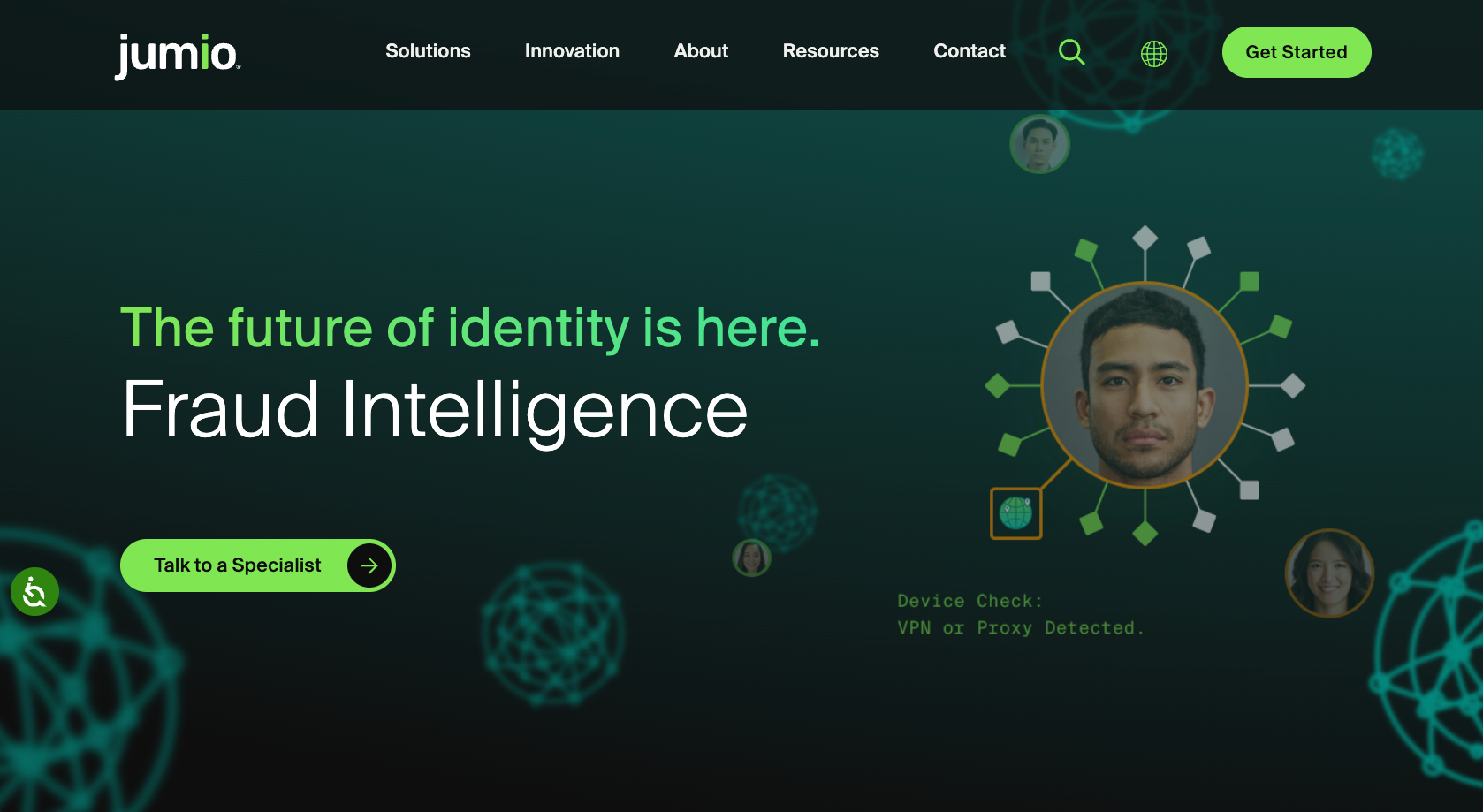
Best for: Financial services and marketplaces
Jumio uses selfie-based biometrics and liveness protection to continuously verify users, instead of simply checking their identities once. It also analyzes device signals and user behavior over time to help prevent fraud.
Key features:
- AI screening
- Behavioral intelligence
- Jumio Identity Graph with millions of known identities
- Liveness detection
- Optional video verification
- Risk analysis
Pros:
- Continuous user authentication
- Speedy verification
Cons:
- Need technical knowledge to integrate into your platform
- Must contact sales for pricing
4. nCino

Best for: Financial and credit institutions
nCino (formerly FullCircl) is an all-in-one workflow management platform for financial services. It includes KYC and AML features for fast onboarding, and you can use it to collect documents and verify user identification. The software also offers personal product recommendations during onboarding, which may help turn new clients into paying customers faster.
Key features:
- Automated identity verification
- In-person, online, and mobile data gathering
- Document collection
- Verification for commercial accounts and individuals
Pros:
- Enterprise onboarding for high-volume KYC verification
- Personalized financial services
- Suite of banking intelligence tools
Cons:
- Lack of transparent pricing
- Potential overkill if you only need a KYC solution
- Steep learning curve
5. Lightico

Best for: E-commerce businesses and call centers with human representatives
Like Jotform’s KYC form builder tool, Lightico offers no-code workflow automation, using AI to process documents and authenticate IDs. You can also ditch bulky PDFs in favor of mobile-friendly forms for customers on the go. However, Lightico does not have AI agents to assist users.
Key features:
- AI models that can learn your forms and paperwork within 48 hours
- Automatic ID verification
- Drag-and-drop builder for custom workflows
- Intelligent document processing
- Ability to understand handwritten documents
Pros:
- AI model learns from your feedback, increasing accuracy over time
- Consumption-based pricing model means you only pay for what you need
- Requires no coding
Cons:
- Takes time to train the AI models
- Rejected applicants require manual review, which could delay processing
- Expensive, with prices starting around $690 per month
6. Ondato

Best for: Companies that need age verification, like iGaming and financial institutions
Ondato is an AI-powered KYC platform. It’s unique because it verifies age and identity using near field communication (NFC), which reads encrypted chip data in passports and certain ID cards. Biometric and video verification options are also available for additional fees.
Like Jotform, Ondato uses intelligent prompts to help users complete the verification process. But it lacks a personified AI agent, which could make customers feel more comfortable.
Key features:
- AI fraud-detection tools
- Compliance features for many regulations, including GDPR and eIDAS
- NFC, video, and photo verification
- Scalable cloud infrastructure
- Simple, user-friendly interface
- Unlimited data storage
Pros:
- Analyzes documents from over 190 countries
- Expert reviewers step in if the system notices inconsistencies
- Takes approximately 30 seconds to verify identity
Cons:
- Complex setup
- Extra cost for AML screening and monitoring
7. FOCAL
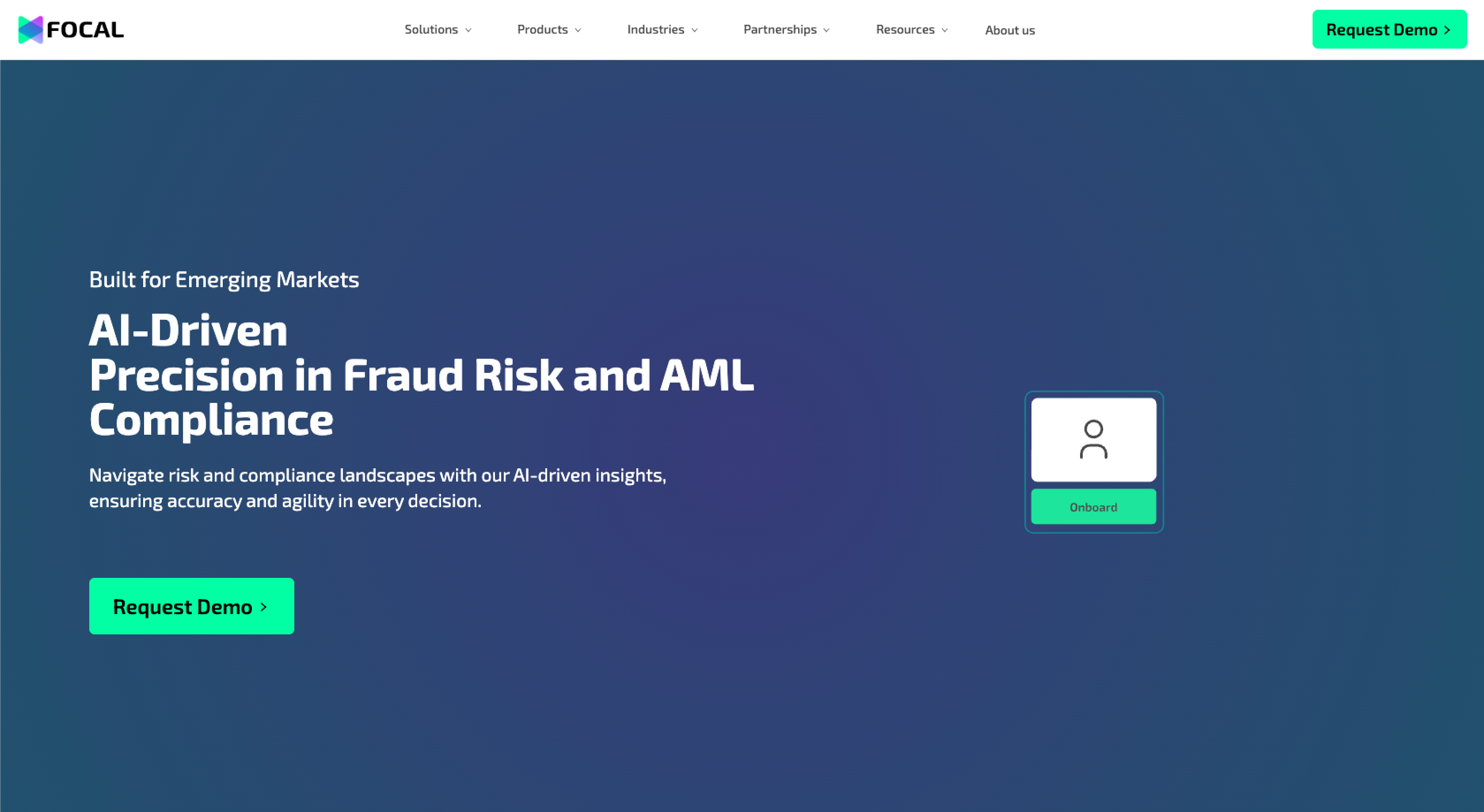
Best for: Businesses that want to verify income or score risk based on specific criteria
As one of the top KYC platforms in the Middle East, FOCAL uses AI to manage risk and make sure users are authentic. It cross-checks documents against government registries and sanction lists. Additionally, the software verifies income, which is helpful for property managers and banks.
Key features:
- AI-driven income and identity verification
- Automated onboarding
- Real-time alerts when a client’s risk status changes
- Rule Builder tool for custom risk scoring
- Secure local hosting for sensitive data
Pros:
- AI fraud-prevention tools to detect threats in real time
- Plug-and-play setup
- Alerts that call out abnormal user behavior
Cons:
- Limited customization for forms
- No pricing information available online
8. Entrust

Best for: Enterprises and financial institutions
Entrust (formerly Onfido) authenticates identities from over 195 countries. Its Workflow Studio feature lets you design custom verification journeys with biometric and document tools. For example, you could create different verification steps for customers in the US and the European Union to adhere to each region’s unique regulations.
This software employs the Zero Trust security model, which means customers must verify their information each time they want to access data.
Key features:
- Adjustable risk settings
- AI-powered biometric and document verification
- Deepfake detection
- E-signature
- User authorization and access tools
- Zero Trust system
Pros:
- Advanced cybersecurity measures
- User access controls
Cons:
- Need to contact the company for pricing
- Sophisticated features may take time to learn
9. Incode

Best for: Companies that work with sensitive data
Like many of the tools on this list, Incode uses AI to verify identity and anticipate threats. But it doesn’t stop with customers. This platform also confirms the identities of employees and job candidates. For instance, HR professionals could ask interviewees to verify their identities to help prevent hiring fraud.
Key features:
- Application programming interfaces (APIs) and software development kits (SDKs) for fast integration
- Compliance-friendly features for AML regulations
- Continuous monitoring
- Detailed audit trails
- Facial biometrics
- Watch list screening
Pros:
- Claims verification in an average of just four seconds
- Document and non-document verification methods for maximum flexibility
Cons:
- Complex user interface
- Difficulty integrating into existing infrastructure
10. Veriff
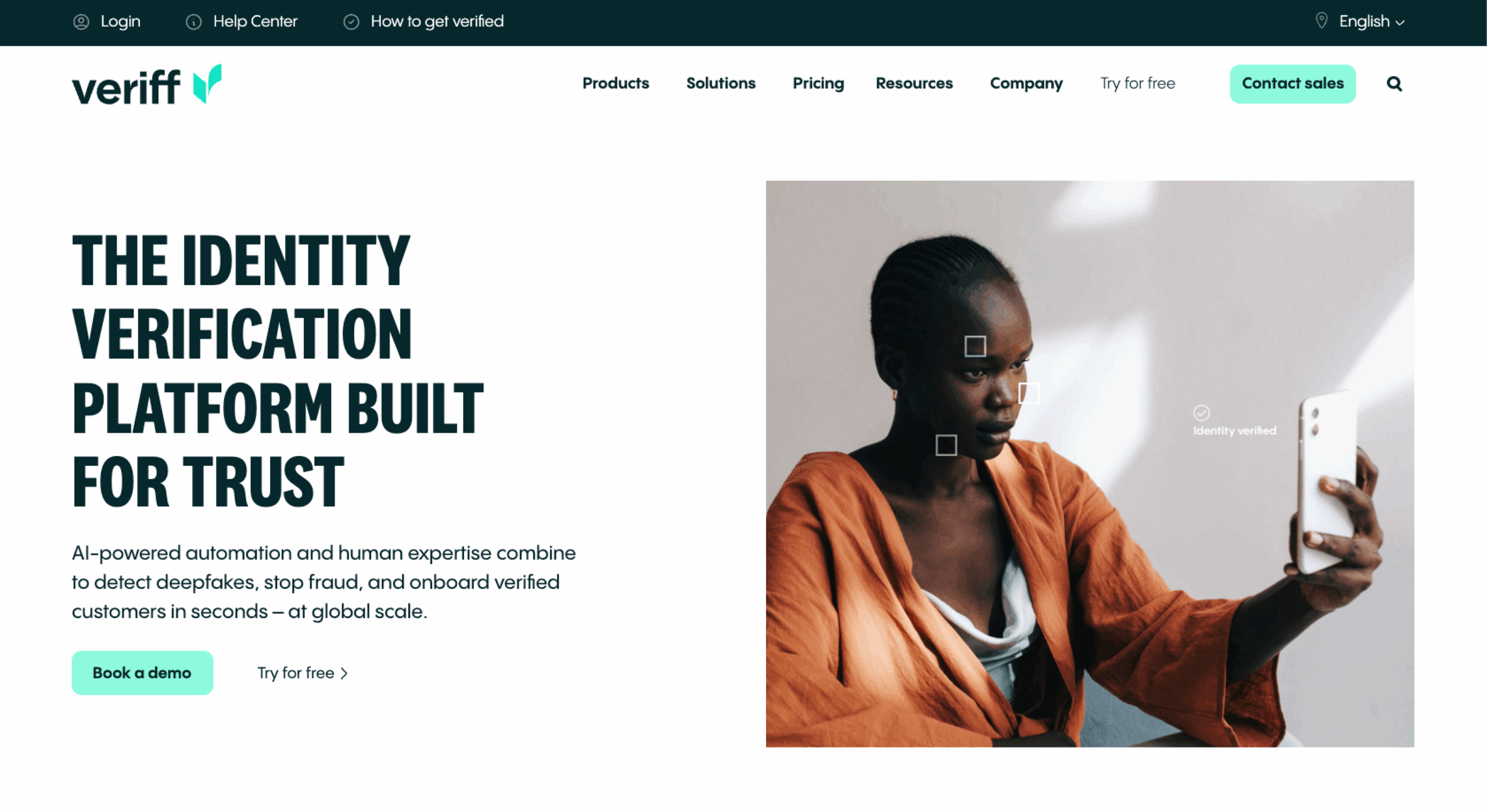
Best for: Global businesses that need to verify users quickly
Analyzing over 1,000 data points per user, Veriff is one of the most thorough KYC solutions available. Use it to validate your customer’s age, address, and other key details. It can also analyze each user’s device and network for potential risks, such as IP addresses in certain countries. Once the software has verified users, Veriff Fraud Intelligence continuously monitors them for risk signals.
Key features:
- Automatic document recognition (12,000 documents from over 230 countries and territories)
- Prefilled forms
- Support for 48 languages and dialects
Pros:
- Average verification time of only six seconds
- No charge for retries
Cons:
- Confusing user interface
- Opaque pricing structure
Streamline KYC data collection with Jotform’s secure forms
Looking for no-code KYC automation? Use Jotform’s drag-and-drop Form Builder tool and KYC Form template to collect documents and client data.
Quickly customize the template by adding or removing questions and signature lines. And build trust by personalizing your secure forms with your company’s signature colors and fonts.
If your clients need a helping hand, add a custom Jotform AI Agent to guide them through your forms. The AI Agent will assist customers with each question, which means you’ll spend less time asking them to fix mistakes or upload that missing PDF.
What can an organization do to keep its data safe? Data privacy is the foundation of any client relationship, especially for financial and healthcare institutions. Here are a few security protocols Jotform follows:
- General Data Protection Regulation (GDPR)
- Health Insurance Portability and Accountability Act (HIPAA)
- System and Organization Controls 2 (SOC 2)
Additionally, Jotform’s templates integrate with over 100 platforms for convenient document management.
How to choose the right KYC software for your organization
As you research Know Your Customer platforms, consider these criteria:
- Automation capabilities
- Available integrations
- Budget
- Business size
- Compliance needs
- Customer support
- Ease of use and learning curve
- Security standards
Pay attention to the vendor’s reputation too. Read reviews and look for reports of data breaches or privacy complaints. You’re asking users to entrust their confidential data to your chosen platform, so make sure you choose an ethical and responsible one.
Protect your customers and yourself with a KYC platform
Financial fraud isn’t a shadowy boogeyman — it’s a very real threat to companies in all industries. With KYC software, you can confirm user identities before they get access to your system. Plus, these platforms assess risk, so you can make educated decisions about who you let in.
The best KYC tools don’t just scan driver’s licenses, they also improve user onboarding, saving time for everyone. Get started by picking two or three tools from this list to explore. And for custom workflows, take the Jotform KYC Form template for a test-drive. It’s totally free, so try it today.
FAQs
Yes, US banks and other companies that handle financial data and transactions must use KYC software. The USA PATRIOT Act requires these businesses to create AML programs and report all suspicious activities.
The four pillars of AML and KYC programs include
- Independent audits
- Internal policies and controls
- An AML compliance officer
- Ongoing employee training
This article is for compliance officers, fintech leaders, digital onboarding specialists, and anyone who wants to streamline identity verification and regulatory compliance through Know Your Customer (KYC) software solutions

























Send Comment: