
Even in the world of human resources, AI tools are everywhere you look. For example, around one in every four HR employers uses AI in some capacity. But what do these solutions mean for the HR industry as a whole, and why are they so crucial to staying ahead of the curve?
Solutions like generative AI can create a more efficient and effective HR process for those willing to chatbot for businessake the leap. But to extract the most value from these tools, it’s important to understand what they are, why they matter, and how to use them correctly.
Want to add generative AI to your workflow but don’t know where to begin? Dive into our guide to explore generative AI in HR applications implementation.
What is generative AI in HR?
AI has many applications and has had many iterations in today’s ever-evolving digital landscape, but generative AI may be what first comes to mind when many think of artificial intelligence. Traditional AI is typically used to process and analyze existing content, but generative AI is used to create new content.
For example, in the HR industry, you might use traditional AI to analyze employee survey data and identify trends in behavior or sentiment. But you’d use generative AI to create employee surveys or interact directly with employees and potential candidates.
Generative AI can create text, images, and more, streamlining otherwise tedious responsibilities for HR professionals overwhelmed with paperwork and administrative tasks.
Core benefits and use cases of generative AI for HR
With generative AI, your team can significantly reduce the headache of daily HR work. The benefits of using generative AI will vary based on your team’s needs, but here’s a glance at the typical advantages:
- Efficiency: Generative AI solutions eliminate bottlenecks in your HR workflow and increase your team’s overall efficiency. For example, your team can use it to create a new job posting, saving them the time it would take to draft it from scratch. They can instead focus on reviewing candidate applications and preparing for interviews, accelerating the hiring process.
- Engagement: Generative AI solutions like AI chatbots can also help improve your engagement efforts with current and potential employees. For example, these tools can help personalize employee-facing materials to increase individual engagement.
- Cost savings: With greater speed and efficiency comes updated processes, which saves costs. Generative AI solutions not only help your team cut back on everyday expenses, but also make it more affordable to grow and scale without costly hiring.
- Satisfaction: Reducing the common headaches associated with HR work can also improve your team’s overall morale. HR professionals can focus on fulfilling, high-value tasks rather than administrative busywork that leads to burnout, an issue impacting 95 percent of HR leaders today. High-value work like reviewing candidate applications and preparing for interviews will make them feel more satisfied and help them find meaning at work.
While there may be a wide variety of ways to implement AI into your HR workflow, doing so without a plan can lead to frustration and subpar results. The next section will help you think strategically about how to use generative AI for HR.
How to implement generative AI in HR strategically
Some teams may implement AI tools widely without first identifying their goals or laying out a strategy, which can quickly lead to headaches and unexpected costs.
Instead, try this more intentional approach to generative AI implementation, to grow sustainably and drive results.
Define your goals
At the beginning of your generative AI journey, you need to lay out clear goals for why you’re investing in this technology. Do you want to increase efficiency? Improve employee engagement? Cut costs? Scale effectively?
Whatever your goals are, make sure they’re attainable, measurable, and agreed upon by your HR partners. Having goals makes it easier to determine success of your generative AI investments when it comes time to assess a budget.
Select your tools
Part of a successful generative AI strategy is investing in the right tools. Today’s marketplace offers numerous generative AI solutions, and some tools are geared toward HR specifically, like Jotform AI Agents. However, finding the right solution for your business will depend on the goals you established at the beginning of this process.
Compare the tool’s features against the goals you’ve set. How well do these solutions align with your objectives? How effective are they at performing the tasks you most need help with? Considering these factors will help you make an informed decision.
Test your options
Before implementing your generative AI across widespread applications, you need to see how well it fits into your workflow. Consider testing the compatibility of your generative AI tools on small, low-impact projects. An internal survey, a low-stakes administrative task, or another risk-free application may be a good place to start.
Push your boundaries
Once you have a grasp of the tool’s abilities, challenges, and best practices, you can then apply it to larger tasks on which it may offer more value. Working generative AI into more important tasks could help increase your ROI, both in monetary and productivity dividends.
With each new task you take on with generative AI for HR, remember to keep your original goals in mind. How does this application help achieve them, and how can you adjust if you aren’t reaching your desired result?
Protect your files
A core concern for many AI users is data privacy. Understanding how your solution uses data is key to using generative AI in HR processes effectively. AI uses data to learn and improve, but precisely what it does with that data depends on the particular solution.
Read through your AI tool’s privacy policy, security credentials, and more to ensure your data isn’t being used in a way that doesn’t meet your expectations. As a secondary precaution, educate your team on what to do in the event of a data breach, and create a response plan.
Train your employees
Once you have an implementation strategy and procedure, teach your HR team how to operate this new solution. Having a well-trained team is just as important as choosing the right solution. Although your AI will be a semi-autonomous tool, its success depends on the person wielding it.
Challenges and ethical concerns with generative AI
There’s no question that generative AI is changing the way we approach work, and HR is no exception. But with this technology comes a new set of potential issues and concerns. Take the time to understand them to avoid unwanted headaches:
- Privacy: AI systems are trained using your internal data. By sifting through large datasets, they can create content that meets your expectations. However, through this training, they have access to data that may be particularly sensitive, given your industry. Understand how and what data is being used before you agree to provide access to generative AI for HR.
- Bias: Since AI tools are trained using your data, they can develop biases toward certain opinions, policies, or stances outlined in your materials. This orientation can skew content in ways that misrepresent your brand, potentially leading to trouble, especially in public-facing content. Be sure to review your data and AI-generated content for bias, and double-check that it’s producing the desired outcomes.
- Reliability: AI may have changed significantly over the years, but it’s an ever-evolving technology. This means you may experience some growing pains when using generative AI tools. Outputs may vary in quality and should still be carefully reviewed by human employees to prevent mishaps.
To avoid some of these common pitfalls, implement your AI tools with care. Keep your team involved, don’t rely too heavily on the tool, and remember that the right AI partner can make all the difference.
Elevate your HR practices with Jotform AI Agents
Generative AI for HR can transform your business when applied correctly. But a large part of your AI strategy’s success comes down to choosing the right solution. For an easy and powerful generative AI for HR experience, consider investing in a solution that’s built with your team in mind.
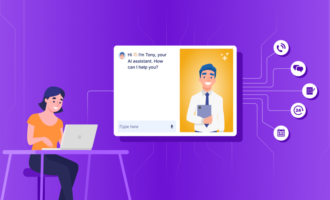
Jotform AI Agents are generative AI solutions that convert your digital forms to engaging, user-focused AI conversations without the need for complex coding. HR-centric agents can be trained using your internal data to interact with employees, prospects, and other partners, creating a dynamic, personalized experience. These solutions can efficiently collect information, answer questions, and resolve simple issues that your HR team would otherwise have to handle.
Building an AI agent with Jotform can be done in a few simple steps:
- Create an AI agent from scratch, convert from a digital form, or use a template.
- Upload internal data, or use manual training methods to educate your AI agent.
- Customize your agent to fit your branding, voice, and needs in the Jotform AI Agent Builder.
- Add your AI agent to your preferred communication channel.
While creating an HR AI agent from scratch is easy with Jotform, there are also plenty of AI agent templates available that are geared toward HR-specific tasks like the following:
- HR Manager AI Agent
- HR Coordinator AI Agent
- Employee Satisfaction Survey AI Agent
- Recruitment Application AI Agent
Using these templates, you can quickly create premade generative AI bots to handle tasks like candidate screening, employee documentation, and benefit enrollment.
Solutions like Jotform AI Agents represent the future of how HR professionals approach their everyday responsibilities, offering a glimpse into how this technology will transform the industry as a whole.
The future of generative AI in human resources
We can’t be sure how AI’s potential will be realized, but there are some likely advancements that may affect how HR professionals operate:
- Deeper personalization: One of the current challenges of using generative AI tools is that they often fall short on empathy and human emotion. Over time, these facets can improve, so AI tools can provide a better overall experience.
- AI-driven coaching: AI-driven coaching can help employees improve their performance based on metrics. As generative AI for HR continues to evolve, it will provide personalized feedback, tailor learning materials, and develop custom plans for employees.
- Strategic workforce planning: Eventually, generative AI could evolve to analyze the data it collects and provide actionable insights to plan your team’s resourcing needs. Doing the hiring and staffing, generative AI will one day act as another member of your team, driving efficiency, productivity, and accuracy.
Staying on top of the latest trends in generative AI for HR can help your team implement developments as they emerge, fostering innovation and continued improvement.
Transform your HR practices with generative AI
Ready to take your HR process to the next level? Generative AI for HR has boundless potential and could be the next step in your HR journey. Finding ways to apply this technology strategically to your workflows can enhance efficiency and improve results, all while reducing the burden on your team. Get started today by investing in generative AI solutions like Jotform AI Agents, which offer features tailored to your HR needs.
This article is for HR leaders, talent acquisition teams, and people operations professionals looking to understand how generative AI can streamline hiring, reduce administrative workload, and improve employee engagement. It’s also useful for business managers and organizations exploring AI-driven HR tools and seeking practical guidance on implementing generative AI responsibly and effectively.

























































Send Comment: