
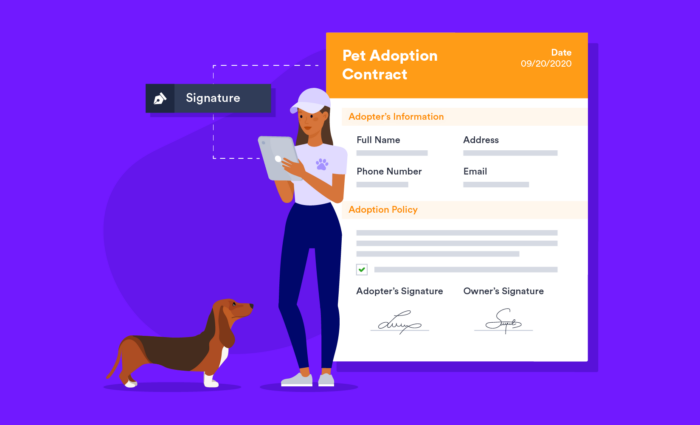
What is the structure of a contract
- Identification of the parties
- Rights and obligations of the parties
- Expectations of each party
- Term
- Termination rights
- Liabilities
- Dispute resolution
- Signature block
This content is intended for general informational purposes only.
Various types of contracts exist to benefit all involved parties, no matter what field or industry you’re in. Contracts are intended to serve as enforceable, legally binding documents that; for example, outline the services a service provider is expected to deliver, payment for those services, dates, terms, and conditions. Such terms are often laid out within the document and signed by the parties.
Say, for instance, you’ve hired a contractor to build a new kitchen for you, but they never complete the job. Without a signed contract that identifies both parties’ obligations, you may be limited in your ability to enforce your rights or recover damages in court.


To help ensure you can prevent this from occurring, it’s important to understand the elements of a contract. We’ll go over them and explain how you can use Jotform Sign to help create, share, and sign online agreements.
Pro Tip
Use Jotform’s AI Contract Generator to draft a contract quickly, then review and customize the terms before sending it out.
What are the elements of a contract?
Certain elements are generally required to be met before a contract may be considered legally binding, including these:
- Meeting of the minds: Refers to the parties’ mutual assent to the material terms of an agreement, typically established through offer and acceptance, which reflects a shared understanding of the material obligations. In other words, what each party is agreeing to do — and not do — regarding the sale, tenancy, etc. or other subject of the agreement. These material terms typically include the following:
- Price
- Subject matter
- Quantity
- Performance obligations
- Timing
- Offer and acceptance: One party makes an offer, and the other clearly accepts those terms.
- Consideration: Each party generally must exchange something of value, for example, money, services, goods, or a promise to do (or not do) something.
Let’s break down terms typically included in a contract a bit further. Remember the example above of hiring a contractor to remodel your kitchen who then reneged on their part of the project? Let’s go back in time and make the right choices to prevent this outcome.
Here are a few items that are typically included in an agreement if you’re hiring someone to work in or on your home.
Send my document for signature
File type is not allowed.
Maximum file size limit exceeded. (5MB)
Something went wrong.
Identification of the parties
First, contracts typically identify the parties involved (including the names of individuals and/or the businesses), where the work will be conducted, what work will be conducted, and when the work will be conducted (not to be confused with the contract signing date).
For our example, this might look something like this: “On January 1, 2023, John Smith (“Homeowner”) and Company Inc. (“Company”) have entered into agreement regarding the kitchen remodeling work to be completed at 123 Maple St., Anytown, USA.”
Rights and obligations of the parties
Next, contracts typically describe what each party is expected to do under the agreement. Outlining these responsibilities can help reduce misunderstandings and clarify the parties’ respective obligations. Such provisions often include statements like:
- “Company will remodel Homeowner’s kitchen, including replacing and installing the cabinets, countertops, sink, oven/stove, and faucet (collectively, the “Materials”) chosen by Homeowner.”
- “Company will complete the work by [insert date] (the “Completion Date”).”
- “Homeowner will make the home available during weekday hours from 9 a.m. to 5 p.m.”
Expectations of each party
Contracts are generally structured to reduce uncertainty regarding what each party is giving and receiving in the agreement. While this may result in a lengthy contract, greater clarity often helps reduce misunderstandings and define each parties’ responsibilities.
Term
The term refers to when the contract begins and ends. For example: “This Agreement shall begin on the date the second of the two parties hereto signs it and shall end when the work is complete.”
Termination rights
If you don’t include termination rights in your contract, you may find your options for abolishing the agreement early are significantly restricted if issues arise — such as if a check bounces or the contractor purchases materials outside your approved, agreed-upon budget.
To prevent this from happening, consider including the following termination rights in your contract: “Company may terminate this Agreement on 30 days’ written notice if Homeowner’s check for the initial payment is returned by the bank for insufficient funds or if Homeowner fails to obtain and pay for Materials. Homeowners may terminate this Agreement at any time before Company begins work, but not thereafter unless Company commits a material breach of this Agreement.”
Liabilities
Continuing with our homeowner/contractor illustration, this language would more specifically highlight what a company needs to do if it defaults on its obligations (since the homeowner’s obligations are often limited to paying for the labor and materials).
For this section, consider verbiage like this: “Company shall correct any defects in the labor within 30 days if, in Homeowner’s commercially reasonable opinion, the defects negatively affects the cosmetics, functioning, stability, use, or safety of the kitchen.”
Dispute resolution
No matter how well you draft a contract or how healthy your relationship is with the other party, conflict is sometimes unavoidable. People go back on their word, markets shift, workers quit, and inflation affects prices so dramatically that what the contractor originally promised (labor, materials, and overall costs) is no longer sustainable.
There are various methods for dispute resolution, ranging from negotiation to mediation or binding arbitration. The best choice depends on the parties’ specific needs. For example, a mediation and arbitration clause may include language like: “In the event of a dispute between the parties that cannot be resolved within 30 days, the parties shall mediate the dispute using an American Arbitration Association (AAA) arbitrator. Each party shall pay their own expenses. If the mediation does not resolve the matter, the parties shall submit the dispute to AAA for binding arbitration.”
Signature block
Finally, after all terms, conditions, clauses, and additional amendments have been included and agreed upon by the involved parties, the last element is typically a signature block for the parties to sign.
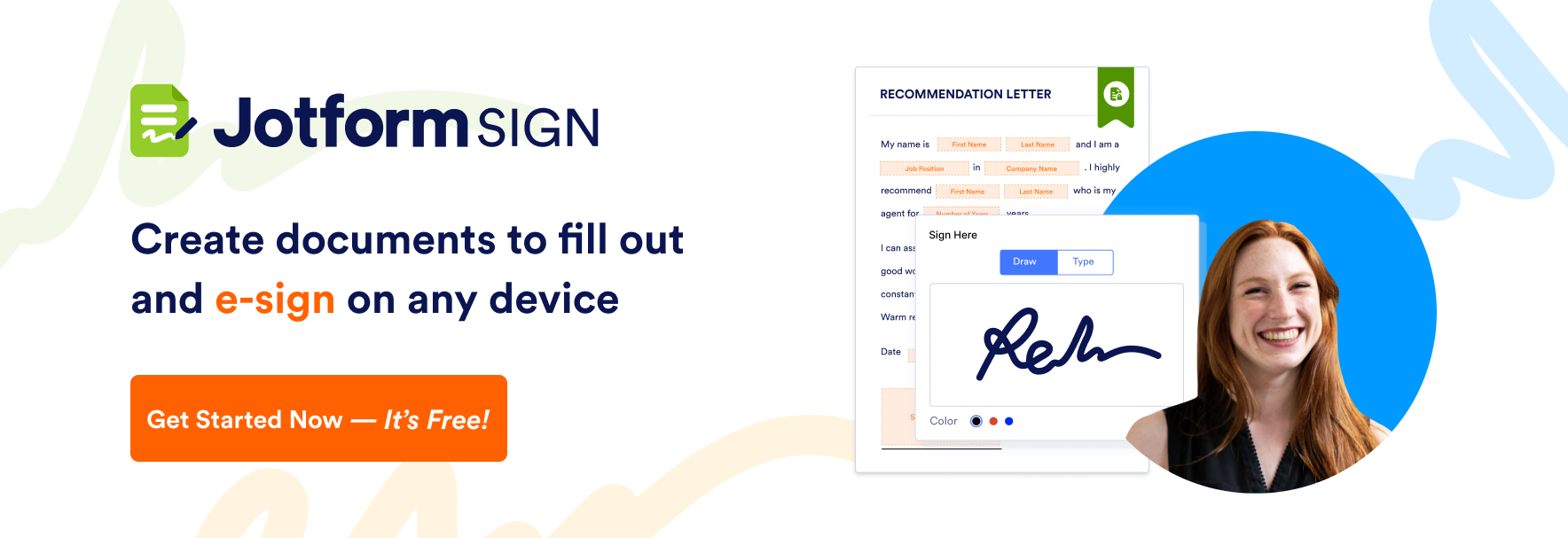
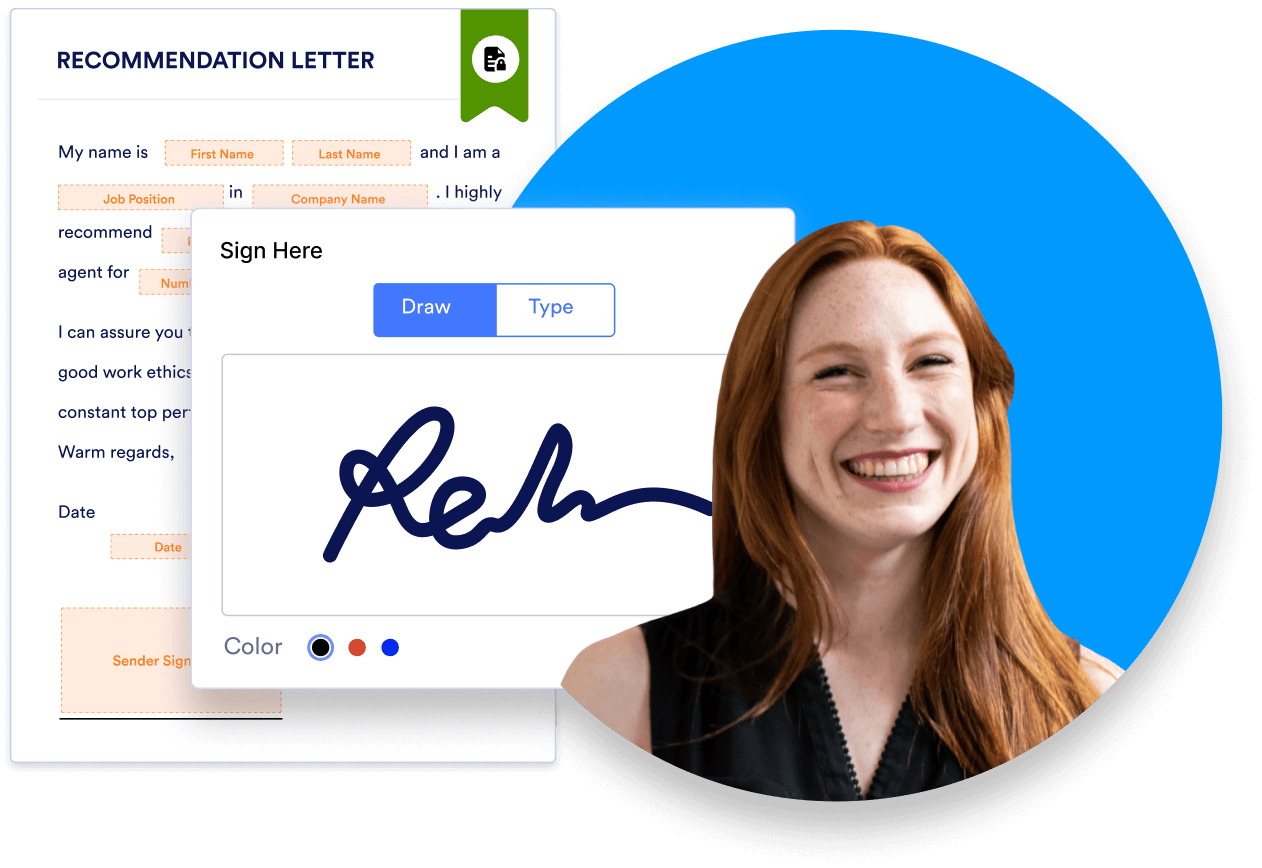
You can use an e-signature platform like Jotform Sign to build, sign, and share e-contracts in just a few clicks. This powerful platform comes fully equipped with a library of 600-plus customizable, reusable e-sign templates, a drag-and-drop e-sign builder, a wide variety of form field types, easy and convenient sharing options, and access to secure cloud storage providers.

With Jotform Sign, you can also easily add and delete signers (just in case you need to make any changes before the contract is signed), build automated approval workflows, manage data, and help keep the parties on the same page — all from one centralized, code-free solution.
While these elements of a contract are by no means exhaustive, they are some of the most common sections typically included in a legally binding agreement. By understanding what to include when you’re drafting a contract — and the right software to use to collect e-signatures — your contract creation and management could be more streamlined than ever before.
This content is for informational purposes only. Jotform is not a law firm and is not providing any legal or other advice. Please consult a licensed attorney and/or other applicable professionals.

























Send Comment:
13 Comments:
September 20, 2021
I like the genuine and explicate method of your writing flow and explanation, shows you really want to share knowledge. Thanks alot
July 8, 2021
Wooow i like this article, understood.. Thanks very much ?
July 2, 2021
clearly explained and understandable. Thank you for sharing such piece of work.
May 10, 2021
How is verbal contract considerd
In terms of resilience
May 10, 2021
What is meant by standard contract
April 28, 2021
Although a contract is just a piece of paper that you sign to seal the deal, you can still end up in court due to misinterpretation so this one is very important to know. Thank you! instantvitalrecords
April 11, 2021
Thanks i think I understand more that i could
February 8, 2021
Good article, very easy to understand.
January 31, 2021
Thanks brother. @Justin.
January 14, 2021
Nice I like it
January 4, 2021
If a person that have an intellectual disability. Can that signing of contract be void?
September 10, 2020
Formality is missed out, as one of the seven elements of a valid contract.
August 20, 2020
Hi
This is a great article, answered what I was looking for.
But the opening paragraph says there are seven essential elements, then appears to only name six (offer, acceptance, mutual assent, consideration, capacity, and legality. ) Was something missed out?