
Every year, tens of thousands of Health Insurance Portability and Accountability Act (HIPAA) complaints are filed with the Office for Civil Rights (OCR).
Sometimes, an investigation reveals that no offense has occurred. But often, the OCR uncovers violations of varying levels of severity. The outcome of those cases is largely determined by the answer to one question: Was it a deliberate (intentional) violation or not?
Keep reading to find out why intent is central to HIPAA investigations, what the penalty is for a deliberate violation, and what you can do to help prevent these types of breaches. (A quick note: This blog post should not be considered legal advice, and you should consult with your attorney on questions specific to your case.)
How do HIPAA regulations characterize a deliberate violation?
A deliberate violation refers to instances where an entity has knowingly and willfully violated HIPAA rules. In other words, they made a conscious decision to proceed despite knowing their actions were in violation of HIPAA regulations. This is considered an action with intent.
Intent is central to the way cases are evaluated. It serves as the basis for the three characterizations of HIPAA violations:
- Those involving a lack of knowledge (the offender was unaware of the violation but could have avoided it with due care)
- Those with reasonable cause (the offender violated the rules but didn’t act negligently)
- Those involving deliberate/willful neglect (the offender demonstrated a knowing or reckless disregard of the rules)
Deliberate violations are considered the most serious type of infraction — “willful neglect” — and therefore receive higher penalties. In contrast, an accidental HIPAA breach means there was no awareness of the violation and therefore no intent. As a result, it receives a lower penalty.
Note that the severity of the violation itself is also considered when evaluating cases.
HIPAA: Deliberate and unintentional violation examples
We’ve provided some examples below to help clear up the difference between an unintentional and intentional HIPAA violation.
Examples of unintentional HIPAA violations
Unintentional HIPAA violations include
- Sending an email that contains someone’s personal health information (PHI) to the wrong recipient
- Leaving a computer with access to PHI unattended without logging out
- Mistakenly viewing the wrong patient’s records
- Losing a device that contains PHI
- Inadvertently leaving sensitive documents out in the open
Real-life example
Several years ago, two printing firms paid $130,000 to resolve a case of accidental HIPAA violation. Tasked with printing and mailing benefits statements for a healthcare organization, they mistakenly mailed PHI to the wrong recipients. A recent change in their printing process caused the last page of each person’s statement to be sent to the next person, exposing claims numbers, service descriptions, facility names, and more.
An investigation determined that the companies had failed to put safeguards in place to protect against the possibility of this type of error, and they were fined accordingly.
Examples of intentional HIPAA violations
Intentional HIPAA violations include
- Deliberately sharing PHI with unauthorized people
- Covering up a known data breach
- Refusing a patient access to their own PHI
- Storing PHI on an unsecured server
Real-life example
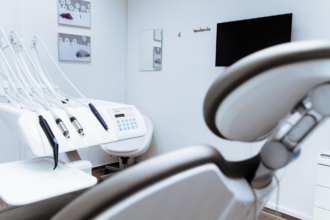
A U.S. dental chain was fined for trying to hide a significant data breach that occurred after a ransomware attack. They finally reported it two years later after falsely trying to attribute the data loss to other factors. The cover-up indicated intent, and there were also an extensive number of HIPAA compliance failures involved in the case. As a result, the chain was fined $350,000.
HIPAA enforcement and penalties for deliberate violations
Sometimes the OCR resolves cases simply by issuing corrective guidance. However, the HIPAA violation consequences for more severe cases also include financial penalties.
The OCR uses four HIPAA violation tiers to determine the amount of a civil penalty:
| Violation type | Penalty range per violation | Annual limit | |
|---|---|---|---|
| Tier 1 | The entity was unaware of the violation | $141–$71,162 | $2,134,831 |
| Tier 2 | The entity should reasonably have known of the violation | $1,424–$71,162 | $2,134,831 |
| Tier 3 | The entity showed willful neglect but corrected it within 30 days | $14,232–$71,162 | $2,134,831 |
| Tier 4 | The entity showed willful neglect, and no effort was made to correct it | $71,162–$2,134,831 | $2,134,831 |
In cases where an entity has knowingly violated HIPAA, the U.S. Department of Justice will review the evidence and may conduct a criminal investigation, which could result in criminal penalties and potentially even imprisonment.
One example of the steep penalties that could be incurred for willful neglect is Cignet Health. It received a $1.3 million fine for refusing to give patients copies of their medical records and an additional $3 million fine for refusing to cooperate with the OCR, which constituted “willful neglect to comply with the Privacy Rule.”
This case shows why it’s important to continuously strive to adhere to the rules, even after you’ve committed a violation.
Preventing deliberate HIPAA violations
Mistakes happen, but there are things you can do to avoid the worst-case scenario: committing an infraction that is deemed to be “deliberate.” Follow these tips to minimize your risk in that area:
- Implement strict access controls and audit trails: Set up systems that manage user authentication and access to ensure accountability and help protect PHI data. Additionally, implement audit controls to monitor user activities.
- Use automated monitoring: AI-powered software tools can monitor PHI access in real time and detect patterns of risky behavior. You should also prepare an incident response process to guide your team in investigating suspicious incidents quickly.
- Fix deliberate violations within 30 days: In cases of willful neglect, the penalty amount rises if the violation isn’t corrected within 30 days.
- Enforce regular staff training: Best practice is to provide HIPAA training annually to refresh employees’ knowledge and promote awareness. Reinforce the meaning of “willful neglect” each time and give clear examples.
- Establish disciplinary policies for deliberate infractions: Suspension or termination of employment are common disciplinary actions for deliberate violations. Whatever your policy is, make sure it’s clear to employees.
- Consult legal counsel for any suspected willful neglect: HIPAA compliance lawyers can advise you on whether you committed a violation and may be able to help strengthen your HIPAA compliance strategies. In the event of a formal investigation, they’ll also be there to guide you through the process.
Pro Tip
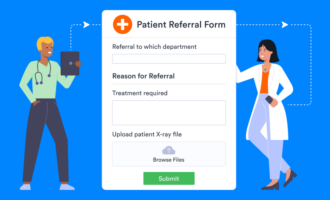
To minimize your risk even further, incorporate HIPAA-friendly tools like Jotform into your daily workflow. Jotform is an HIPAA-friendly form builder that allows you to securely collect and manage PHI. It offers built-in safeguards like encryption, digital signatures, consent management, and secure data storage that support compliance and may help reduce the chance of deliberate or accidental violations.
Avoid HIPAA violations of any kind with the right tools and strategies
The aim of HIPAA regulations is to protect patients’ privacy. If you’re an HIPAA-covered entity, it’s important for you to do everything you can to support this mission. Not only does having the right pieces in place help you do that more effectively, but it also demonstrates your commitment to securing sensitive health information.
You can take steps to avoid a deliberate breach of PHI (and even reduce the risk of an accidental HIPAA breach) by implementing strict access controls and audit trails, developing rapid incident response protocols, and conducting regular staff training. You can also take advantage of HIPAA-friendly tools that support compliance.
Jotform is an HIPAA-friendly form builder that makes it easy to create secure online forms. Its architecture includes system access tracking, encryption, auditing, PHI segmentation, and more — all features that help reduce the risk of violations. Plus, it’s incredibly easy to use and integrates with many cloud storage and collaboration tools for seamless workflows. Give Jotform a try today.
This article is for healthcare administrators, compliance officers, legal advisors, and anyone who wants to understand the role of intent in HIPAA investigations, avoid deliberate violations, and implement practical strategies for protecting patient health information.


















































































Send Comment: