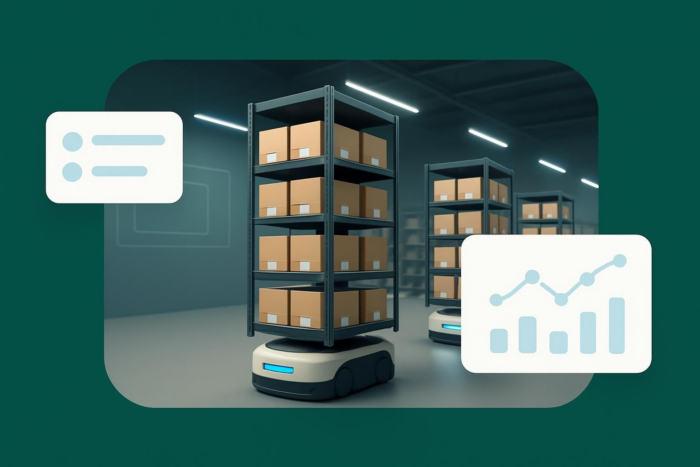
If you’re using traditional inventory management methods — like manual tracking and spreadsheets — it’s likely you’re struggling with stockouts, overstocks, and inaccurate demand forecasts.
To meet the pace of business today, you need AI inventory management.
AI inventory management is the practice of using artificial intelligence to enhance your inventory processes. By combining machine learning, predictive analytics, and real-time data, AI inventory management enables businesses to optimize and automate inventory workflows. The result is ideal stock levels, improved cash flow, and less waste. Product-based businesses across industries are adopting AI for inventory management in order to avoid supply chain disruptions and meet rising customer expectations.
In this article, we’ll explore what AI inventory management is, why it matters, and how it works. We’ll also introduce you to a tool that can help you streamline inventory management: Jotform AI Agents.
What is AI inventory management?
AI inventory management is a business process in which artificial intelligence is used to optimize stock levels, accurately forecast demand, reduce wasted product, and enhance overall supply chain efficiency. With inventory management technology that uses machine learning, data analysis, predictive analytics, and real-time data, businesses can optimize their inventory levels, eliminate stockouts, and preemptively avoid supply chain issues.
5 benefits of AI in inventory management
The AI inventory management process improves inventory control, maximizes cost savings, and increases workflow efficiency. Here are five major benefits of using AI as part of inventory management:
- Accurate demand forecasting: Using AI inventory management software, businesses can more accurately forecast demand and even predict seasonal demand shifts in order to reduce excess stock. Traditional inventory management tools don’t always have the ability to analyze vast amounts of inventory, sales, or market data as a basis for making forecasting decisions.
- Optimized stock levels: As a business, you don’t want to run out of stock, but you also don’t want to have too much on hand. With AI inventory optimization, you can ensure you have the right amount of product available at all times, preventing overstocks and stockouts.
- Real-time inventory tracking: In many businesses, stock levels change dramatically from day to day or hour to hour. AI inventory management software integrates with IoT (Internet of Things) devices used in the warehouse to get up-to-the-minute updates on stock levels for accurate inventory counts.
- Cost reduction: By drastically improving issues like stockouts and overstocks, AI inventory management can reduce inventory costs significantly. You no longer need to suffer from lost sales due to stockouts or from spoiled inventory due to having too much stock in the warehouse.
- Automated reordering: If you rely on manual ordering, occasional mistakes are inevitable. But missing an ordering deadline could cause your business to be low on stock. AI inventory management triggers purchase orders before stock reaches a certain level, helping you avoid this problem altogether.
How AI inventory management works
While the inner workings of AI inventory management software products are complex, these tools use three core technologies to optimize inventory levels for businesses:
- Machine learning: AI inventory management tools use machine learning (ML) to analyze wide swaths of data, allowing them to identify relationships within the information and produce related insights. For example, AI inventory management software can analyze demand patterns and use the data to predict future inventory needs for the business.
- IoT and real-time tracking: Having access to real-time stock levels is a game changer when it comes to AI inventory optimization. By connecting to IoT inventory management devices that have sensors and use radio-frequency identification (RFID), AI inventory management tools can provide live stock updates. There is no need to be hours or days behind.
- Automated decision-making: It’s one thing to know how much stock you have in the warehouse at all times; it’s another to be able to automatically adjust reorder levels based on that knowledge. Some AI inventory management tools can dynamically make decisions to update orders based on real-time stock information.
What are the biggest challenges in AI inventory management?
If you’re considering implementing AI inventory management in your business, it’s wise to be aware of some potential challenges that could be heading your way. Look out for:
Data quality issues: AI is only as good as the data it’s given. If your data is inaccurate, outdated, inconsistent, or otherwise faulty, it’s likely that your AI’s predictions and decisions will be wrong. Poor data quality can sometimes be an issue with small business inventory management.
Integration complexity: To get the most out of them, AI inventory management tools need to integrate with your existing business and IoT tools. However, integrations aren’t always easy to set up, and they may not work seamlessly.
AI training: It’s critical to train your AI based on industry best practices, company procedures, and common workflows. Without the right training, AI tools will not meet performance expectations.Despite these potential challenges, if you follow inventory management best practices and have the right planning in place, you can avoid these obstacles that could otherwise impact your inventory management efforts.
3 key steps for successful AI inventory adoption
If you’re ready to try demand forecasting with AI and use predictive analytics for supply chain management, here’s how you can get started.
1. Assess and clean your data. In order to make intelligent decisions, AI models need high-quality inventory data. For accurate performance of AI inventory management tools, take time to verify the integrity of your information first.
2. Select an AI-powered platform. Determine which AI inventory management software will serve your needs best. Ensure that the tool integrates with your existing business tools, such as enterprise resource planning (ERP) and customer relationship management (CRM) software.
3. Monitor and optimize continuously. AI tools learn over time, improving their performance based on past experiences. However, they still require regular fine-tuning to ensure they continue to help you meet your business goals.
How companies use AI to improve inventory management
AI inventory management is transforming supply chains across industries. Here are three examples of how industries are benefiting from this technology:
Retail and e-commerce: Retail and e-commerce stores are using AI-powered replenishment tools to prevent stockouts and overstocks, ensuring they always have the right amount of inventory.
Manufacturing: Manufacturing businesses are using AI-powered forecasting tools to optimize the amount of excess raw materials they have on hand, reducing their working capital.
Logistics and distribution: AI inventory management greatly improves supply chain reliability and increases OTIF (on-time in-full) rates, ensuring customers get all of their products when they want them.
Jotform AI Agents: Enhancing AI inventory management and beyond
There is no shortage when it comes to AI inventory management software and related tools. One tool that stands out for its versatility and ease of use is Jotform AI Agents. Ideal for inventory tracking and order processing, Jotform AI Agents can compliment your AI inventory management solutions.
While Jotform AI Agents are not full-scale inventory management platforms, they act as intelligent AI assistants that can integrate into your existing workflows to simplify inventory tracking, streamline order processing, and improve operational efficiency.
All you have to do is choose from Jotform’s extensive library of AI Agent templates, several of which are designed specifically for inventory management. Simply train the agent using your business knowledge base and processes, and customize it to align with your brand.
For example, Jotform’s Inventory Management AI Agent is a powerful tool that helps you keep track of stock levels through interactive discussions with employees or customers. This AI agent can assist you in troubleshooting inventory issues and determining inventory best practices.
Jotform AI Agents are free to use, so there is no barrier to entry. Whether you run a retail and e-commerce business, a clothing store, a manufacturing company, or something else, you’ll find a Jotform AI Agent that can support your inventory management needs. Optimize inventory levels, avoid stockouts and overstocks, and enhance inventory efficiency with Jotform today.
This guide is for teams that manage stock and want AI-powered efficiency, including inventory and operations managers, supply chain and logistics leaders, warehouse supervisors, manufacturing planners, e-commerce and retail managers, small business owners, and IT admins integrating ERP and IoT for real-time tracking.





















Send Comment: