

Bauformulare
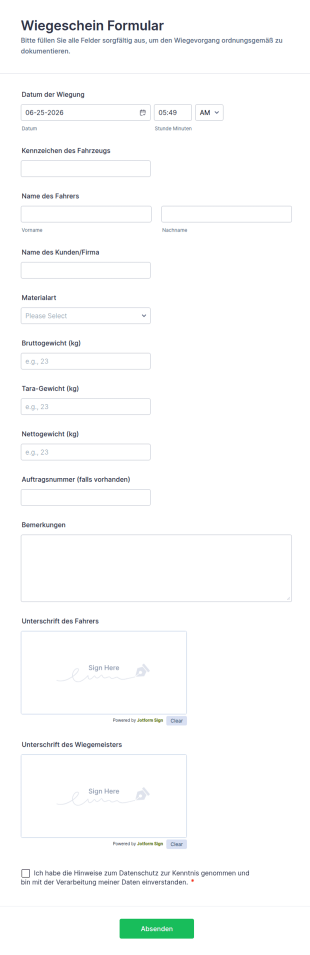
Wiegeschein Formular
Erfassen Sie Wiegedaten für Fahrzeuge und Materialien mit dem Wiegeschein-Formular und vereinfachen Sie die Datenerfassung für Recycling, Baustellenlogistik und Entsorgung direkt mit Jotform.
Zur Kategorie:Tracking-Formulare
Baustellenfortschrittsbericht Formular
Dokumentieren Sie Baufortschritt, Status und nächste Schritte direkt vor Ort mit dem Baustellen-Fortschrittsbericht-Formular und sammeln Sie Daten erfassen sowie Formularantworten zentral in Jotform.
Zur Kategorie:Bauformulare
Baustellen Tagesbericht Formular
Dokumentieren Sie Baufortschritt, Wetter, Personal, Material und Sicherheit mit dem Täglicher Baubericht-Formular von Jotform und sorgen Sie für einheitliche Berichte in Bauunternehmen, Bauleitung und Nachunternehmern.
Zur Kategorie:Bauformulare
Bauauftrag Form
Bauarbeitsauftrag-Formular unterstützt Bauleitung, Hausverwaltung und Handwerksbetriebe bei der digitalen Datenerfassung von Bauaufträgen, Terminwünschen und Abschlussbestätigungen, damit Aufträge klar dokumentiert und zuverlässig koordiniert werden können.
Zur Kategorie:Bauformulare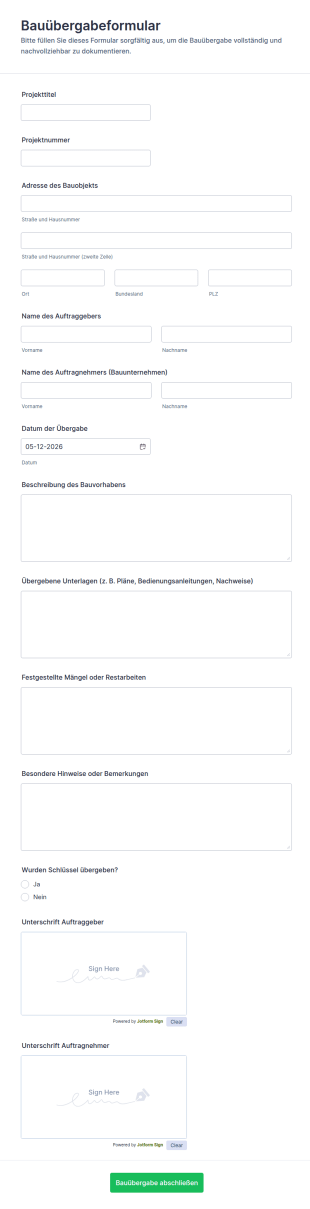
Bauübergabe Formular
Dokumentieren Sie Bauabnahmen und Objektübergaben mit dem Bauübergabeformular für Bauunternehmen, Bauträger und Bauherren, damit Übergabestatus, Unterlagen und offene Punkte zentral erfasst und nachverfolgt werden können.
Zur Kategorie:Bauformulare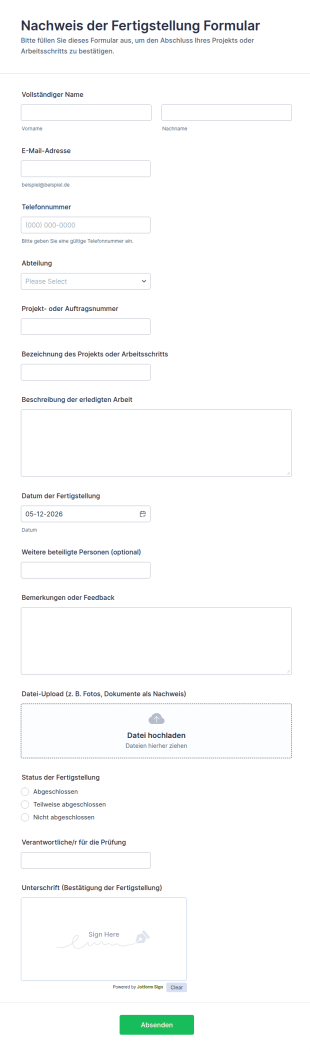
Nachweis Der Fertigstellung Formular
Dokumentieren Sie abgeschlossene Arbeiten mit dem Nachweis der Fertigstellung Formular und sammeln Sie Bestätigungen sowie Nachweise für interne Prüfungen, Übergaben und Projektabschlüsse in Teams, Betrieben und Organisationen.
Zur Kategorie:Bestätigungsformulare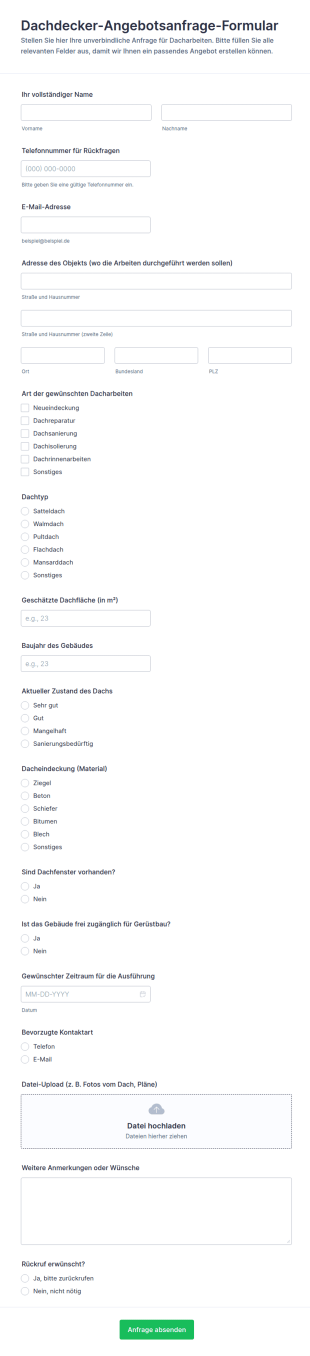
Angebotsanfrage Für Dachdeckerarbeiten
Sammeln Sie mit dem Dachdecker-Angebotsanfrage-Formular Anfragen zu Dacharbeiten online und bündeln Sie die Datenerfassung in Jotform, damit Dachdeckerbetriebe und Verwaltungen schneller reagieren und Angebote vorbereiten können.
Zur Kategorie:Angebotsformulare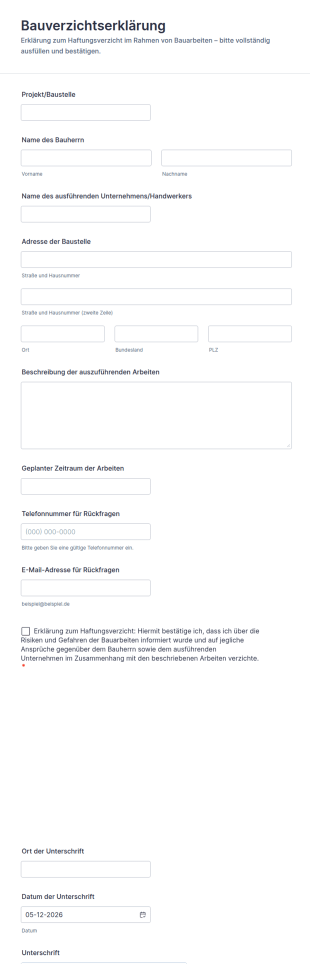
Bauverzichtserklärung
Sammeln Sie Haftungsverzichte zu Bau- und Handwerksarbeiten online mit dem Bauverzichtserklärung Formular von Jotform, ideal für Bauherren, Hausverwaltungen und Handwerksbetriebe zur schnellen Dokumentation und Datenerfassung.
Zur Kategorie:Waiver Forms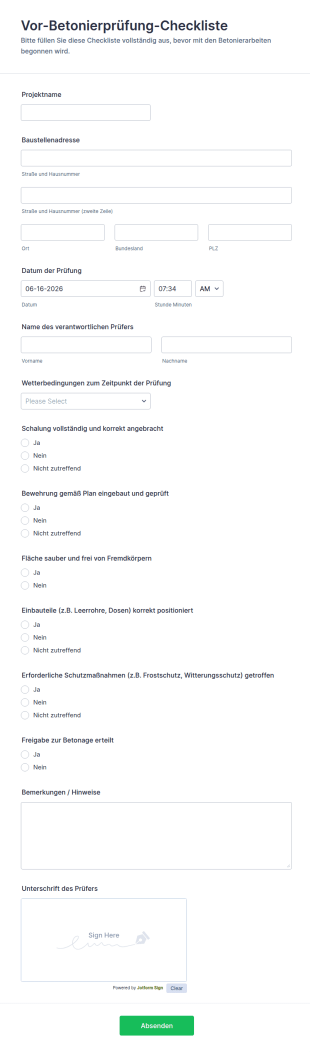
Vor Betonierprüfung Checkliste
Dokumentieren Sie Vorprüfungen vor dem Betonieren direkt auf der Baustelle mit der Vor-Betonierprüfung-Checkliste von Jotform und sorgen Sie für klare Freigaben und nachvollziehbare Datenerfassung im Team.
Zur Kategorie:Checklisten-Formulare
Bericht Zur Standortsicherheitsinspektion
Ein Baustellensicherheitsinspektionsbericht ist ein Dokument, das den Sicherheitszustand eines Gebäudes oder Geländes, wie z. B. einer Baustelle, eines Bürogebäudes oder eines anderen Bauplatzes, detailliert beschreibt. Eine Baustellensicherheitsinspektion ist für das Bauunternehmen, die beteiligten Behörden und Institutionen erforderlich, um die Sicherheit des Gebäudes oder Geländes zu gewährleisten. Nutzen Sie diese kostenlose Vorlage für einen Baustellensicherheitsinspektionsbericht, um die Daten von Auftragnehmern, Behörden und dem an der Inspektion beteiligten Bauunternehmen zu erfassen. Füllen Sie einfach Ihre Daten aus, passen Sie das Formular an Ihre Bedürfnisse an und binden Sie es in Ihre Website ein!Mit Jotform Mobile Forms haben Sie diesen Baustellensicherheitsinspektionsbericht immer dabei – ein ideales Tool für Bauleiter und Bauaufsichtspersonen, um die Einhaltung der Bau- und Sicherheitsvorschriften auf der Baustelle sicherzustellen. Dank unserer über 100 kostenlosen Integrationen können Sie den Bericht an Ihren bevorzugten Speicherdienst senden – wir bieten Ihnen alle Tools, die Sie benötigen, um das volle Potenzial dieses Formulars auszuschöpfen.
Zur Kategorie:Checklisten-Formulare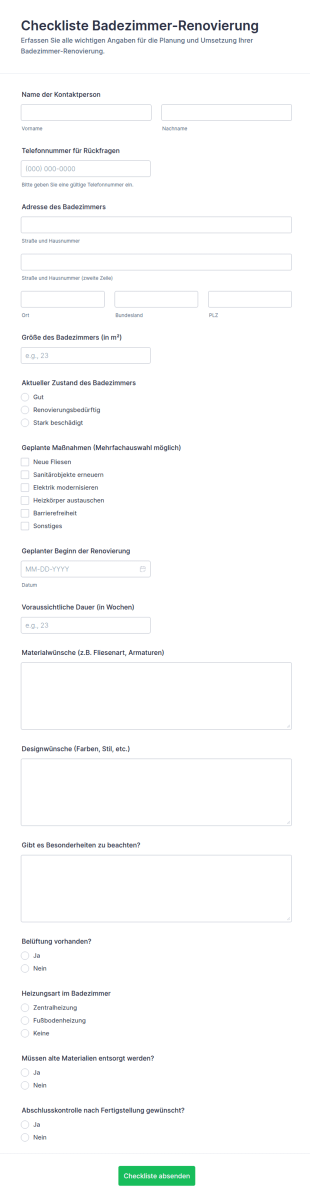
Checkliste Zur Badsanierung
Planen und dokumentieren Sie Renovierungsprojekte mit dem Checkliste zur Badsanierung Formular, ideal für Haushalte, Vermieter und Handwerksbetriebe zur zentralen Datenerfassung und klaren Abstimmung in Jotform.
Zur Kategorie:Checklisten-Formulare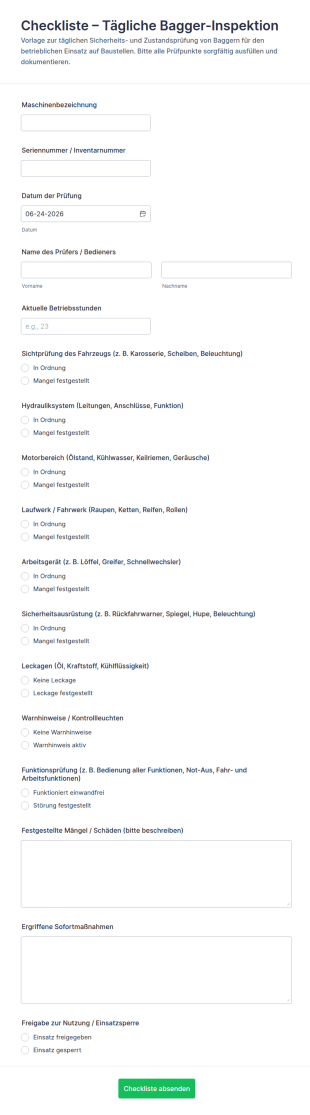
Bagger Tages Checkliste
Dokumentieren Sie tägliche Baggerprüfungen mit der Checkliste für die tägliche Bagger-Inspektion und sammeln Sie mit Jotform Datenerfassung und jede Formularantwort zentral, ideal für Baustellen, Fuhrparks und Vermietbetriebe.
Zur Kategorie:Checklisten-Formulare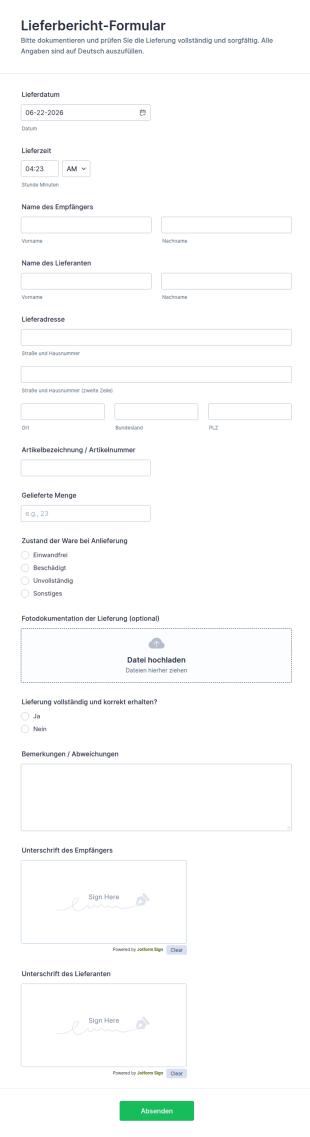
Lieferbericht Form
Dokumentieren Sie Wareneingänge zuverlässig mit dem Lieferbericht-Formular und unterstützen Sie Lager, Einkauf und Lieferanten bei Annahmeprüfung, Reklamationen und interner Nachverfolgung mit digitaler Datenerfassung in Jotform.
Zur Kategorie:Bauformulare
Dachschätzung Formular
Dachangebotsformular FORM erleichtert Dachdeckerbetrieben und Bauunternehmen die digitale Datenerfassung für Angebotsanfragen, damit Anforderungen schneller bewertet und Besichtigungen sowie Rückmeldungen besser geplant werden können.
Zur Kategorie:Construction Quote Forms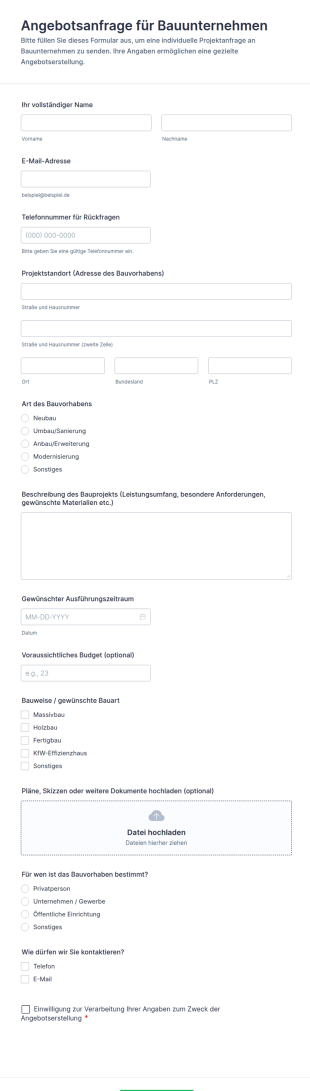
Auftragsangebot Anfrage Formular
Erfassen Sie Projektanfragen für Bauvorhaben online und bündeln Sie alle Angaben zur Angebotserstellung in einer zentralen Jotform-Formularvorlage für Bauunternehmen und Handwerksbetriebe.
Zur Kategorie:Construction Quote Forms
Benachrichtigung über Vollständige Container
Container-Vollmeldung Formular erleichtert die digitale Datensammlung rund um volle Container für Logistik, Lager und Disposition, damit Meldungen zentral eingehen, priorisiert bearbeitet werden und Teams den Status der Abwicklung schneller nachverfolgen können.
Zur Kategorie:Bauformulare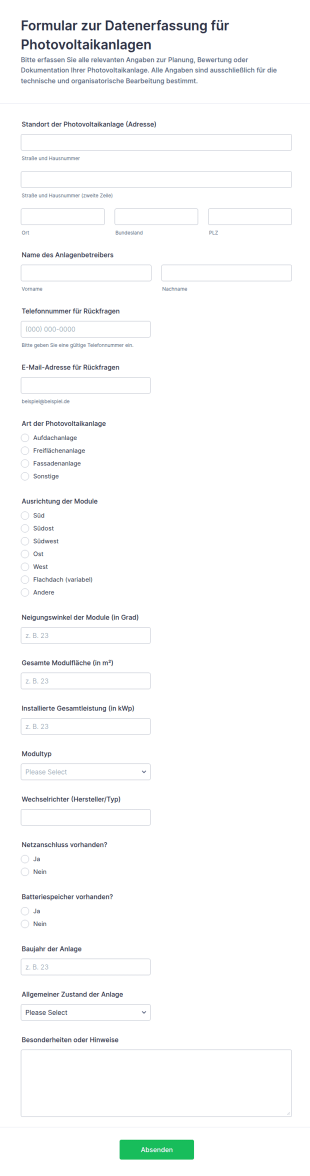
Daten Zur Photovoltaikanlage Erfassung
Erfassen Sie mit dem Formular zur Datenerfassung für Photovoltaikanlagen alle wichtigen Anlagenangaben für Planung, Bewertung und Dokumentation und vereinfachen Sie die Datenerfassung für Installateure, Energieberater und Betreiber.
Zur Kategorie:Informationsformulare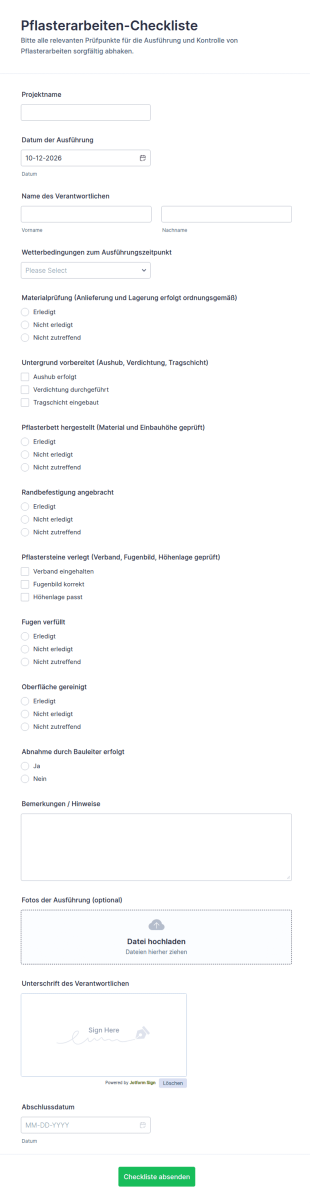
Gehweg Checkliste
Dokumentieren Sie Pflasterarbeiten direkt auf der Baustelle mit dem Pflasterarbeiten-Checklistenformular in Jotform, um Qualitätsprüfungen einheitlich festzuhalten und die Datensammlung für Bauleitung und Teams zu vereinfachen.
Zur Kategorie:Checklisten-Formulare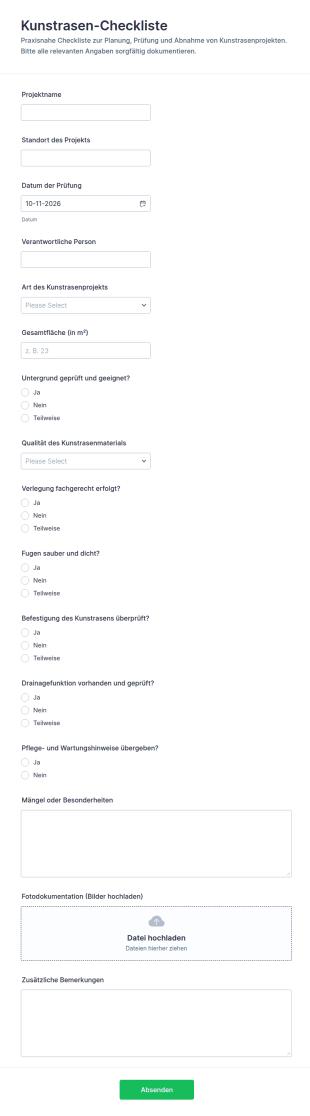
Formular Zur Prüfung Von Kunstrasenflächen
Dokumentieren Sie Prüfungen und Abnahmen von Kunstrasenprojekten mit dem Kunstrasen-Checklistenformular und sammeln Sie alle Angaben zentral für Bauleitung, Kommunen, Vereine und Dienstleister.
Zur Kategorie:Checklisten-Formulare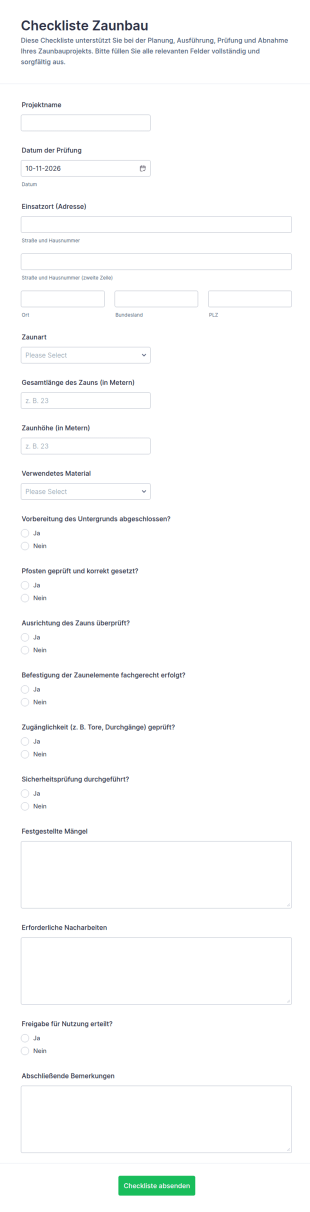
Zaunbau Checkliste
Dokumentieren Sie Prüfung und Abnahme mit dem Zaunbau-Checkliste Formular von Jotform, ideal für Handwerksbetriebe, Bauleitung und Hausverwaltungen zur nachvollziehbaren Datenerfassung direkt vom Einsatzort.
Zur Kategorie:Checklisten-Formulare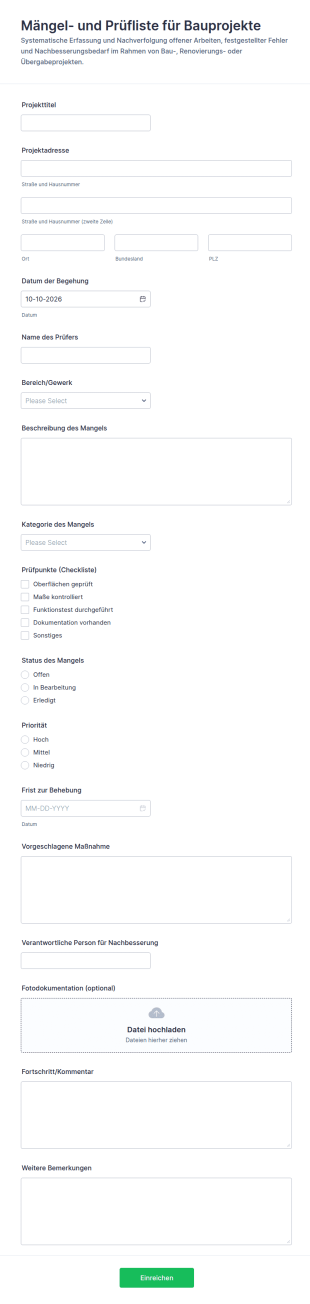
Protokoll Und Mängelliste Checkliste
Dokumentieren Sie Bau- und Sanierungsmängel einheitlich mit dem Mängel- und Prüfliste für Bauprojekte Formular und behalten Sie Prioritäten, Fristen und Verantwortlichkeiten für Bauleitung, Handwerk und Verwaltung im Blick.
Zur Kategorie:Bauformulare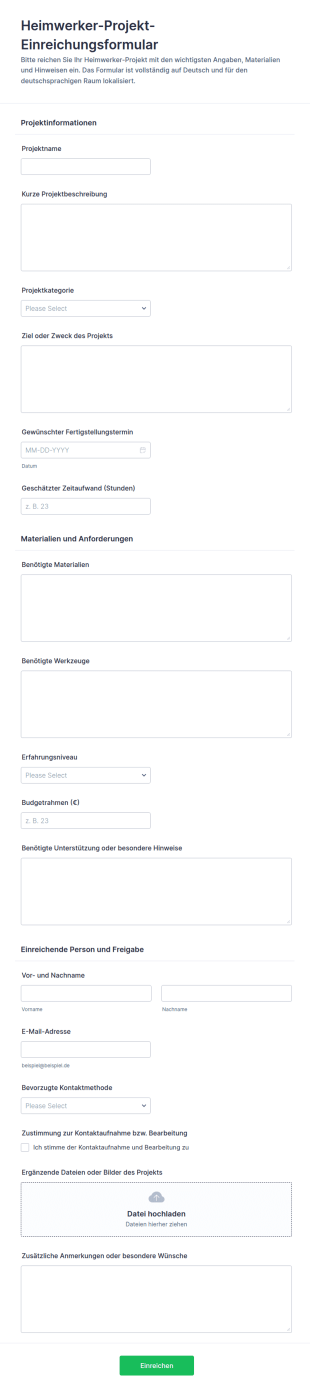
DIY Projekt Einreichung Formular
Sammeln und organisieren Sie DIY-Vorhaben mit dem Heimwerker-Projekt-Einreichungsformular, ideal für Werkstätten, Handwerksbetriebe, Vereine und Teams, die Datenaufnahme und Formularantworten in Jotform bündeln möchten.
Zur Kategorie:Bewerbungsformulare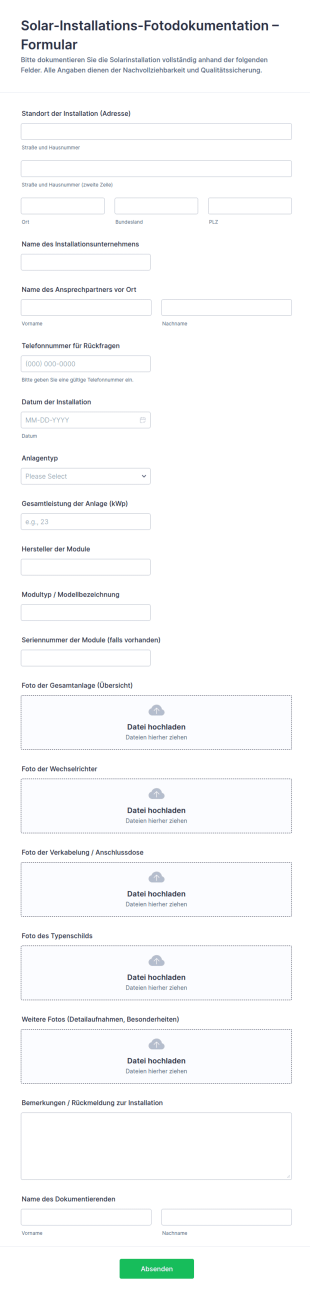
Form Zur Fotodokumentation Der Solaranlage
Solar-Installations-Fotodokumentation-Formular erleichtert die Datenerfassung für PV-Montagen, indem Installationsbetriebe und Bauleiter Fotodokumentation und Projektnachweise zentral sammeln und auswerten.
Zur Kategorie:Datei-Upload-Formulare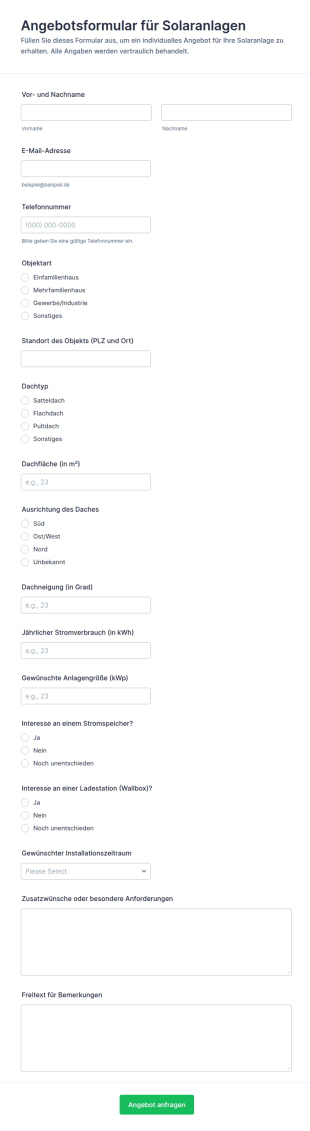
Anfrageformular Für Eine Photovoltaik Installation
Das Angebotsformular für Solaranlagen unterstützt Solarinstallateure und Energieberater bei der digitalen Datenerfassung für Angebotsanfragen und sorgt mit Jotform für übersichtliche Formularantworten aus Website und Kampagnen.
Zur Kategorie:Construction Quote FormsÜber Bauformulare
Bauformulare sind spezielle Online-Formulare, die operative Aufgaben in der Baubranche effizient verwalten und optimieren. Sie decken Projektdokumentation, Sicherheitsinspektionen, Checklisten für Baumaschinen und die Erfassung von Kundenfeedback ab. In Workflows nutzen Bauteams diese Formulare, um Kommunikation und Koordination zwischen Projektleitern, Bauleitern und Mitarbeitern vor Ort zu erleichtern. Die Digitalisierung herkömmlicher Papierprozesse reduziert Fehler, beschleunigt die Datenverarbeitung und steigert die Effizienz des gesamten Projektmanagements.
Jotform stands out as the premier online form builder for creating and managing Construction Forms. Known for its user-friendly interface, Jotform allows construction professionals to easily customize forms to suit specific project requirements, thus automating the tedious task of data collection. With Jotform, teams can benefit from centralized data management through Jotform Tables, facilitating secure storage, immediate access, and effective data analysis. This capability empowers construction businesses to maintain accurate records, improve decision-making, and optimize their workflow operations.
Warum sollten Sie Bauformulare verwenden?
- Bauformulare erhöhen die Genauigkeit bei der Datenerfassung, weil sie Fehler bei der manuellen Eingabe reduzieren und so präzise, verlässliche Informationen liefern. Diese Präzision ist wichtig für die Dokumentation, die sowohl die Projektergebnisse als auch die Einhaltung von Sicherheitsvorschriften beeinflusst.
- Die Geschwindigkeit, mit der Daten mit Hilfe von Bauformularen erfasst und weitergegeben werden können, trägt zur Optimierung der Projektabläufe bei. Die schnelle Datenübertragung verringert Verzögerungen und ermöglicht eine zügigere Entscheidungsfindung sowie die rasche Umsetzung von Maßnahmen, was im schnelllebigen Bauumfeld von entscheidender Bedeutung ist.
- Ein klarer Vorteil von Bauformularen ist der professionelle Umgang mit Daten. Dank Funktionen wie elektronischen Signaturen stellen die Formulare sicher, dass alle erfassten Daten überprüft und authentifiziert werden, was für die Einhaltung gesetzlicher und behördlicher Vorschriften unerlässlich ist.
- Formulare lassen sich an die Anforderungen einzelner Projekte anpassen. So erfassen sie genau die Daten, die benötigt werden, ohne überflüssigen Ballast. Das macht sie praktischer und die Ergebnisse relevanter.
- Dank der Integration mit über 100 Drittanbieter-Anwendungen ermöglichen die Bauformulare von Jotform einen reibungslosen Datenfluss zwischen verschiedenen Plattformen. Erfasste Informationen lassen sich so leicht weiterverwenden.
Häufige Probleme, die durch Bauformulare gelöst werden
- Ein großes Problem in der Baubranche ist die überwältigende Menge an Schreibarbeit, die häufig zu Ineffizienzen und menschlichen Fehlern führt. Bauformulare digitalisieren diese Prozesse und bieten eine besser organisierte und übersichtliche Vorgehensweise für den Umgang mit Unterlagen.
- Die manuelle Dateneingabe ist nicht nur zeitaufwendig, sondern auch fehleranfällig. Das kann erhebliche Auswirkungen auf die Projektergebnisse haben. Bauformulare automatisieren diesen Prozess, reduzieren damit die Fehlerquote und schaffen Kapazitäten für strategischere Aufgaben.
- Physische Dokumente gehen schnell verloren oder werden beschädigt. Bauformulare speichern die Daten in der Cloud – einmal abgelegt, sind sie nicht mehr weg.
- Kommunikationslücken entstehen oft, weil Teams ihre Informationen zu spät austauschen – und das bremst Projekte. Bauformulare übertragen Daten in Echtzeit und sorgen so dafür, dass alle Beteiligten über die Projektentwicklungen im Bilde bleiben.
- Veraltete Informationen können zu Fehlentscheidungen und Projektverzögerungen führen. Bauformulare liefern aktuelle, präzise Daten, die für fundierte Entscheidungen und die Aufrechterhaltung der Projektdynamik unerlässlich sind.
Passende Anwendungsfälle für Features
- Mit dem Drag-and-Drop-Formulargenerator passen Bauleiter Formulare an die konkreten Anforderungen eines Projekts an. So lassen sich Daten präziser erfassen und Projekte besser verfolgen.
- Mit bedingter Logik lassen sich Formulare bauen, die sich automatisch an die Eingaben der Nutzer anpassen und so nur die wirklich benötigten Daten erfassen. Das macht die Formulare effizienter und angenehmer zu nutzen.
- Mit über 30 Zahlungsportalen wie Stripe und PayPal können Unternehmen Zahlungen direkt über ihre Formulare erfassen. So optimieren sie den Abrechnungsprozess und verbessern das Cashflow-Management.
- Mit Jotform Signatur lassen sich elektronische Signaturen erfassen; alle Vereinbarungen und Genehmigungen sind damit rechtsgültig und sicher gespeichert, was für Compliance und Aktenführung wichtig ist.
- Der PDF Editor erstellt aus Formularantworten automatisch PDF-Dokumente, die sich leicht weiterleiten und archivieren lassen. So bleibt der Dokumentationsprozess übersichtlich.
- Der Berichtgenerator unterstützt Sie bei der Analyse der aus Formularen erfassten Daten und liefert wertvolle Insights sowie Visualisierungen, die Ihnen bei der Projektbewertung und der strategischen Planung helfen.
- Die Anbindung an Drittanbieter-Plattformen wie Google Tabellen und Salesforce synchronisiert Daten zwischen verschiedenen Unternehmenssystemen und steigert so Effizienz und Datennutzung.
So erstellen Sie ein Bauformular
- Öffnen Sie die Vorlagenliste und suchen Sie nach einer Vorlage oder beginnen Sie mit einem leeren Formular.
- Passen Sie das Design und die Felder mit dem Drag-and-Drop-Formulargenerator an.
- Veröffentlichen und teilen Sie den Inhalt über einen Direktlink, per E-Mail oder durch Einbettung in eine Website.
Die wichtigsten Anwendungsfälle für Bauformulare
- Für Führungskräfte: Bauleiter können mit Bauformularen den Überblick über den Projektfortschritt und die Leistung der Mitarbeiter behalten. Die Formulare helfen, Projektmeilensteine nachzuverfolgen, Ressourcen zu planen und die Einhaltung der Sicherheitsvorschriften zu sichern. Liegen alle projektbezogenen Daten an einem Ort, lassen sich Entscheidungen schneller treffen – und das hilft, Zeitplan und Budget einzuhalten.
- Für Teams: Bauteams nutzen die kollaborative Funktionen von Bauformularen, um Kommunikation und Aufgabenkoordination zu vereinfachen. Mitarbeiter auf der Baustelle können Updates und Berichte in Echtzeit einreichen, sodass alle Teammitglieder über den aktuellen Stand informiert bleiben. Die direkte Datenübertragung hilft, Probleme schnell zu klären und das Projekt im Plan zu halten. So entsteht ein effizienteres, besser abgestimmtes Arbeitsumfeld.
- Für Kunden: Über Bauformulare können Kunden Feedback geben und Probleme melden. So werden ihre Anliegen gehört und schnell bearbeitet. Die Formulare eignen sich auch, um Genehmigungen von Kunden zu verwalten und die Kommunikation zu dokumentieren. Dadurch entsteht ein klarer Nachweis über Interaktionen und Vereinbarungen. Eine effizientere Kundenkommunikation hilft Unternehmen, die Zufriedenheit der Kunden zu steigern und vertrauensvollere Beziehungen aufzubauen.
Zusammenfassung von Bauformularen
Bauformulare sind ein zuverlässiges Werkzeug, um die Komplexität von Bauprojekten von der Datenerfassung bis zum Projektmanagement zu bewältigen. Durch die Funktionen von Jotform können Unternehmen ihre Abläufe effizienter gestalten, Fehler reduzieren und die Datengenauigkeit erhöhen. Die Formulare erleichtern die Kommunikation und Koordination zwischen allen Beteiligten und helfen, Projekte pünktlich und innerhalb des Budgets abzuschließen. In einer Branche, in der Präzision und Pünktlichkeit entscheidend sind, bilden Bauformulare eine wichtige Grundlage für den Erfolg.
Häufig gestellte Fragen
1) Ist die Erstellung von Bauformularen auf Jotform kostenlos?
Ja, Jotform bietet ein kostenloses Abo an. Damit erstellen und verwalten Sie Formulare für die Baubranche. Das Abo begrenzt jedoch die Anzahl der Einsendungen und den Speicherplatz.
2) Sind die Formulare und die übermittelten Daten sicher?
Jotform schützt Formulare und Daten mit fortschrittlichen Verschlüsselungsprotokollen und erfüllt Branchenstandards wie DSGVO und CCPA.
3) Benötige ich Programmierkenntnisse, um ein Bauformular zu erstellen?
Nein, mit dem Drag-and-Drop-Formulargenerator von Jotform erstellen Sie Formulare ohne Programmierkenntnisse. So können Nutzer aller Kenntnisstufen das Tool nutzen.
4) Kann ich Zahlungen direkt über meine Formulare erfassen?
Ja, Jotform unterstützt die Anbindung an über 30 Zahlungsportale. So erfassen Sie Zahlungen direkt über Ihre Formulare.
5) Können diese Formulare auf mobilen Geräten verwendet werden?
Ja, Jotform-Formulare sind für mobile Geräte optimiert. Nutzer können sie auf jedem Gerät aufrufen und absenden. So arbeiten Sie flexibel und bequem.
6) Kann ich Formularantworten in professionelle PDF-Dokumente umwandeln?
Ja, mit dem PDF Editor von Jotform können Sie aus Formularantworten automatisch professionelle PDF-Dokumente erstellen.
7) Inwiefern können Bauformulare das Projektmanagement unterstützen?
Bauformulare erleichtern das Projektmanagement. Sie erfassen Daten in Echtzeit, verfolgen den Projektfortschritt und dokumentieren alles zentral, wodurch Sie Termine einhalten und die Effizienz steigern.
8) Können Bauformulare mit anderer Software aus der Baubranche integriert werden?
Ja, Jotform bietet Integrationen mit verschiedenen Drittanbieterplattformen an. So verbinden Sie Ihre Formulare direkt mit den Tools, die in der Baubranche zum Einsatz kommen.