

Formulare für Investoren

Vorlage Einwilligung Zur Datenverarbeitung (DSGVO)
DSGVO-konforme Einwilligungsformular-Vorlage für Jotform: Opt-in-Checkbox, Widerrufshinweis und Datenschutz-Platzhalter – direkt anpassbar und einsatzbereit.
Zur Kategorie:Werbeformulare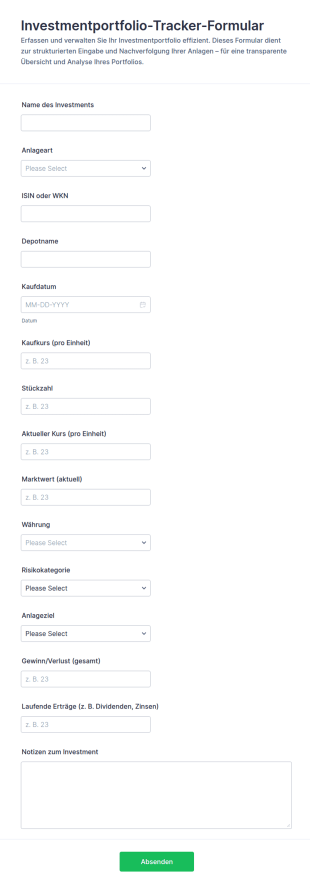
Anlageportfolio Tracker Formular
Investmentportfolio-Tracker-Formular erleichtert die laufende Datenerfassung rund um Anlagen und Depotpositionen und hilft Privatanlegern sowie Beratern, Portfolioübersichten in Jotform sicher zu sammeln und auszuwerten.
Zur Kategorie:Tracking-Formulare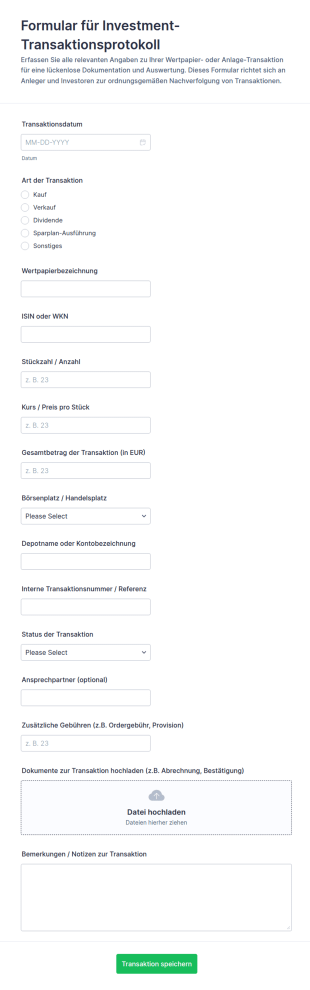
Protokoll Für Anlage Transaktionen
Dokumentieren Sie Wertpapiergeschäfte sauber und einheitlich mit dem Investment-Transaktionsprotokoll-Formular und unterstützen Sie Anleger, Finanzteams und Organisationen bei der digitalen Datenerfassung und Auswertung.
Zur Kategorie:Formulare für Investoren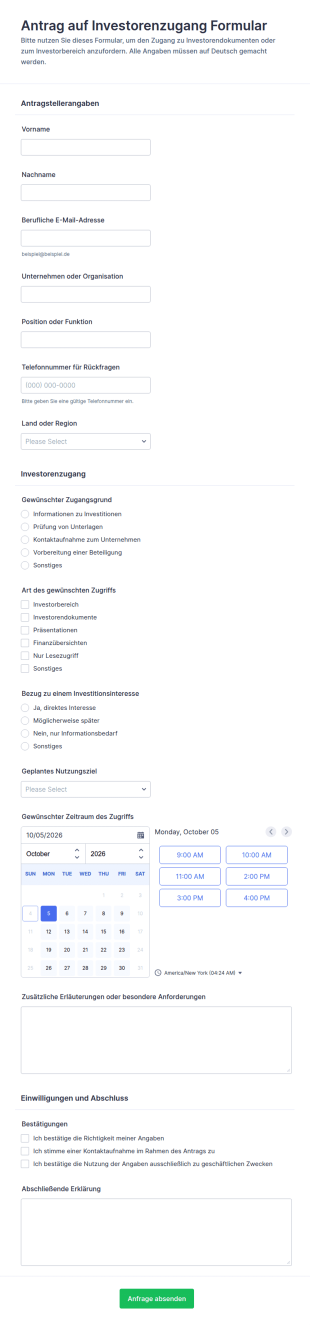
Anfrage Zur Investorenzugangsberechtigung
Erfassen Sie Investorenzugangs-Anfragen zentral mit dem Antrag auf Investorenzugang Formular und unterstützen Sie Teams in Investor Relations und Geschäftsführung bei der schnellen Prüfung, Priorisierung und datenaufnahme in Jotform.
Zur Kategorie:Formulare für Investoren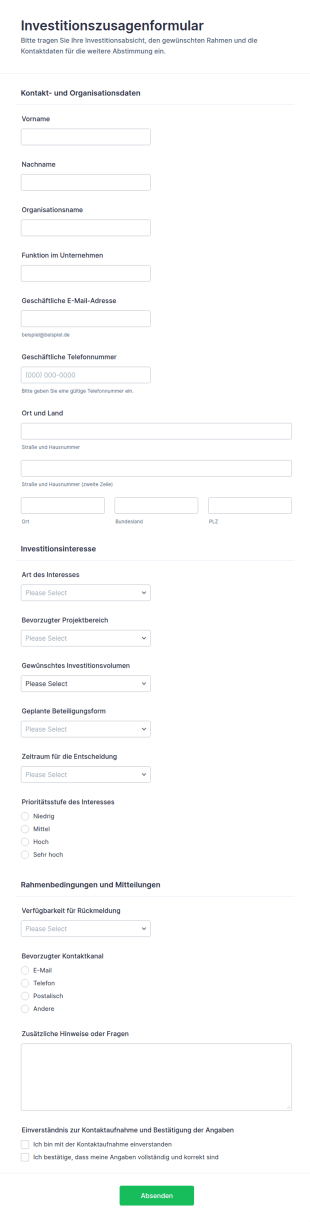
Investment Zusageformular
Erfassen Sie Investitionszusagen und Interessenbekundungen zentral mit dem Investitionszusagen FORM und verbessern Sie Datensammlung und Auswertung für Kapitalrunden, Projektfinanzierungen und Investorengespräche in Jotform.
Zur Kategorie:Formulare für Investoren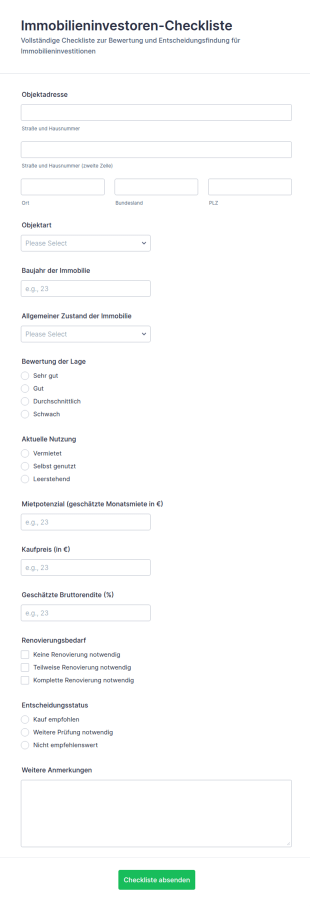
Immobiliensuch Checkliste Formular
Das Immobilieninvestoren-Checklistenformular erleichtert die digitale Datensammlung zur Objektbewertung und unterstützt Investoren, Verwaltungen und Makler dabei, Immobilien einheitlich zu prüfen, zu vergleichen und Entscheidungen nachvollziehbar zu dokumentieren.
Zur Kategorie:Checklisten-FormulareÜber Formulare für Investoren
Investor Forms are specialized digital forms designed to streamline the complex processes involved in investment activities. They are often employed by financial managers, investment firms, venture capitalists, and other stakeholders to capture critical data efficiently. Common operational use cases include collecting potential investor information, managing investor relations, tracking investment portfolios, and performing due diligence. In real-world workflows, these forms facilitate seamless data gathering, enabling stakeholders to make informed decisions quickly and accurately.
Jotform stands out as the leading online form builder for creating Investor Forms due to its robust features and user-friendly interface. With Jotform, users can easily customize forms to meet specific needs, ensuring that data collection is both efficient and comprehensive. The platform facilitates the automation of data collection processes, reducing manual effort and minimizing errors. Furthermore, centralized data management is made possible with Jotform Tables, providing a secure and organized way to store and access investor information.
Why Use Investor Forms?
- Investor Forms ensure that critical financial data is captured accurately and stored securely, reducing the risk of errors that can arise from manual data entry. This accuracy is crucial in maintaining the integrity of investment decisions and building trust with stakeholders.
- The speed at which data can be collected using Investor Forms is unparalleled. By utilizing digital forms, investment firms can gather and process information in real-time, enabling faster decision-making and enhancing operational efficiency.
- Professional data handling is another key benefit. Investor Forms come equipped with features such as electronic signatures and conditional logic, which streamline the approval process and ensure compliance with industry regulations.
- The ability to integrate with over 100 third-party applications, including Google Sheets and Salesforce, enhances the functionality of Investor Forms. This integration capability allows for seamless data synchronization and better collaboration across different platforms.
- Utilizing Investor Forms minimizes the administrative burden associated with traditional paperwork. This shift not only saves time but also allows investment professionals to focus on more strategic activities that drive business growth.
Common Problems Solved by Investor Forms
- Traditional paperwork is prone to errors and misplacements, which can lead to significant data loss. Investor Forms offer a digital solution that eliminates these risks by ensuring that all information is securely stored and easily retrievable.
- Manual data entry is time-consuming and often leads to inaccuracies. By automating the data collection process with Investor Forms, firms can significantly reduce the time spent on administrative tasks and improve data accuracy.
- Lost data can have severe consequences in the investment industry. With Jotform’s secure data management system, all collected data is safeguarded against unauthorized access and potential breaches.
- Investor Forms help address the challenge of inconsistent data formatting, which can impede efficient data analysis. By standardizing the data collection process, these forms ensure uniformity, enabling more accurate and insightful analysis.
- Communication barriers can hinder effective collaboration among investment teams. Investor Forms facilitate better communication by providing a centralized platform for data sharing and feedback, thereby enhancing team collaboration and productivity.
Passende Anwendungsfälle für Features
- For investment firms looking to streamline their data collection processes, the Drag-and-Drop Form Builder offers an intuitive way to create customized forms that meet specific operational needs. This feature simplifies form creation, allowing firms to gather critical data efficiently.
- Conditional Logic is essential for tailoring forms to specific user responses, ensuring that investors only see relevant questions and reducing the likelihood of incomplete data submissions. This feature enhances the user experience and increases data quality.
- With the integration of 30+ Payment Gateways, such as Stripe and PayPal, investment firms can facilitate secure and seamless transactions directly through the forms. This capability is crucial for processing investment funds and maintaining financial records.
- The Electronic Signatures feature, powered by Jotform Sign, enables the secure and legally binding approval of investment documents. This feature streamlines the authorization process, reducing delays and ensuring compliance with legal requirements.
- The PDF Editor allows for the automated generation of professional PDF documents from form submissions. This feature is invaluable for creating formal investment proposals and reports, providing stakeholders with polished and consistent documentation.
- Jotform’s Report Builder offers advanced data analysis capabilities, enabling investment firms to generate insightful reports from collected data. This feature supports informed decision-making by providing a clear view of investment performance and trends.
- Secure Data Management through Jotform Tables ensures that all collected investor information is organized and protected. This feature is critical in maintaining confidentiality and adhering to data privacy regulations.
How to Create a Investor Form
- Start by browsing the Template List for a suitable Investors template or initiate a new form from scratch. This initial step helps you identify the best starting point for your specific needs.
- Customize the design and fields using the Drag-and-Drop Form Builder. This step allows you to tailor the form to capture all necessary data and present it in a user-friendly manner.
- Publish and share your form via Direct Link, Email, or Website Embed. This final step ensures that your form reaches the intended audience efficiently, facilitating data collection and engagement.
Top Use Cases for Investor Forms
- For Managers: Investor Forms are invaluable tools for managers overseeing investment portfolios. They provide a structured way to collect and analyze data, enabling managers to make informed decisions and track investment performance effectively. By automating routine data collection tasks, managers can focus more on strategic planning and less on administrative burdens, ultimately driving better outcomes for their investment strategies.
- For Teams: Investment teams rely on Investor Forms to facilitate seamless collaboration and communication. These forms serve as a centralized repository for all investment-related data, ensuring that team members have access to the information they need to work effectively. The integration capabilities of Jotform enhance team productivity by allowing data to flow effortlessly between different platforms and stakeholders, fostering a more cohesive and coordinated approach to investment management.
- For Customers: For investors and clients, Investor Forms provide a convenient and secure way to submit information and engage with investment firms. These forms are designed to enhance the user experience by offering intuitive interfaces and responsive designs that work across various devices. By streamlining the data submission process, investors can participate more actively in their investment journeys, fostering stronger relationships with their investment partners.
Summarizing Investor Forms
Investor Forms offer a comprehensive solution for managing the complexities of investment data collection and analysis. By leveraging Jotform's powerful features, investment firms can enhance their operational efficiency, improve data accuracy, and facilitate better communication among stakeholders. Whether used for internal management or client engagement, these forms provide the flexibility and functionality needed to drive success in the investment industry. With their ability to automate routine tasks and integrate with existing systems, Investor Forms are an essential component of any modern investment strategy.
Häufig gestellte Fragen
1) Ist die Erstellung von Investorenformularen auf Jotform kostenlos?
Ja, Jotform bietet ein kostenloses Abo an. Damit erstellen und passen Sie Investorenformulare an. Es stehen auch Premium-Tarife zur Verfügung, die zusätzliche Funktionen und Vorteile bieten.
2) Sind die Formulare und die übermittelten Daten sicher?
Jotform schützt alle Formularantworten mit robusten Verschlüsselungsprotokollen und Compliance-Maßnahmen. So bleiben sensible Anlegerdaten vertraulich und sicher.
3) Brauche ich Programmierkenntnisse, um ein Investorenformular zu erstellen?
Nein, Sie benötigen keine Programmierkenntnisse, um ein Investorenformular zu erstellen. Mit dem Drag-and-Drop-Formulargenerator von Jotform erstellen Sie professionelle Formulare, ohne Code schreiben zu müssen.
4) Kann ich Zahlungen direkt über meine Formulare erfassen?
Ja, Sie können Zahlungen direkt über Ihre Formulare erfassen. Nutzen Sie dafür die Integration von Jotform mit über 30 Zahlungsportalen, darunter Stripe und PayPal. So wickeln Sie Transaktionen sicher und effizient ab.
5) Können diese Formulare auf mobilen Geräten verwendet werden?
Ja, Jotform-Formulare sind vollständig responsiv. Nutzer können sie auf mobilen Geräten aufrufen und ausfüllen. So interagieren Ihre Nutzer jederzeit und überall problemlos mit Ihren Formularen.
6) Kann ich Formularantworten in professionelle PDF-Dokumente umwandeln?
Ja, mit dem PDF Editor von Jotform können Sie Formularantworten automatisch in professionelle PDF-Dokumente umwandeln. Diese Dokumente können Sie an Beteiligte weitergeben und für offizielle Unterlagen verwenden.
7) Wie verbessern Investorenformulare das Management des Anlageportfolios?
Investorenformulare optimieren Datenerfassung und -analyse. Sie verfolgen die Anlageperformance genauer und unterstützen eine fundiertere Entscheidungsfindung. Das ist entscheidend für ein effektives Portfoliomanagement.
8) Lassen sich Investorenformulare in bestehende CRM-Systeme integrieren?
Ja, Investorenformulare lassen sich in bestehende CRM-Systeme wie Salesforce integrieren. Dadurch synchronisieren Sie Daten automatisch und verbessern das Kundenbeziehungsmanagement.