

Formulare für Händler

Vorlage Einwilligung Zur Datenverarbeitung (DSGVO)
DSGVO-konforme Einwilligungsformular-Vorlage für Jotform: Opt-in-Checkbox, Widerrufshinweis und Datenschutz-Platzhalter – direkt anpassbar und einsatzbereit.
Zur Kategorie:Werbeformulare
Vorlage Rücksendeformular Für Shopify Shops
Rücksendungen mit Verzweigung nach Grund: Gewährleistung, Widerruf oder Kulanz, jeweils mit passendem Hinweis für Ihre Kundschaft.
Zur Kategorie:Geschäftsformulare
Vorlage Produktanfrage Für Shopify Shops
Manche Anfragen passen nicht in den Checkout. Dieses Formular fängt sie auf: Menge, Variante, Termin, Lieferziel und Budget in einem Durchgang.
Zur Kategorie:Geschäftsformulare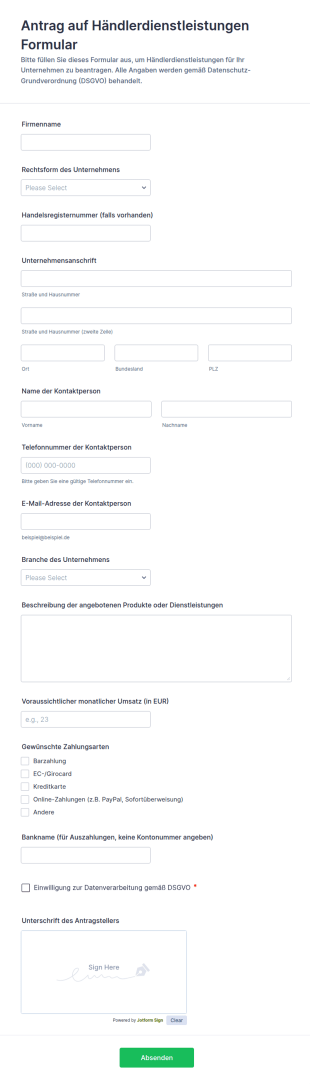
Antrag Auf Händlerdienstleistungen Formular
Sammeln Sie Händleranfragen für Zahlungsdienstleistungen digital und einheitlich, damit Zahlungsdienstleister und interne Teams die Datenerfassung schneller prüfen und Anträge zügig weiterbearbeiten können.
Zur Kategorie:Formulare für HändlerÜber Formulare für Händler
Merchant Forms are specialized digital forms tailored to streamline operations within the retail and commerce sectors. These forms are designed to facilitate a variety of common tasks such as order processing, inventory management, and customer feedback collection. In real-world workflows, Merchant Forms can be used to automate the checkout process, manage supplier information, and gather customer insights quickly and efficiently. By converting traditional paper-based processes into digital formats, merchants can improve operational efficiency and reduce the likelihood of human error in data entry.
Jotform stands out as the premier online form builder for creating Merchant Forms, offering an intuitive drag-and-drop interface that allows for seamless customization. With Jotform, users can automate data collection processes, ensuring that information is captured accurately and stored securely. The platform's integration with Jotform Tables enables centralized data management, allowing merchants to organize and analyze their data in a streamlined manner. This ease of customization and powerful data management capabilities make Jotform an essential tool for any business in the retail sector looking to optimize their operations.
Why Use Merchant Forms?
- Merchant Forms enhance accuracy by eliminating the need for manual data entry, which reduces the risk of human error. This ensures that customer information, inventory details, and sales data are recorded precisely, leading to more reliable reporting and decision-making.
- Speed is a significant advantage when using Merchant Forms, as they facilitate quick data collection and processing. By digitizing workflows, merchants can respond faster to customer inquiries, process orders more swiftly, and update inventory levels in real-time, enhancing overall operational efficiency.
- Professional data handling is a core benefit of Merchant Forms, as they provide a structured system for capturing and storing information. This ensures that all data is organized systematically, making it easier for businesses to retrieve and analyze information when needed.
- The ability to integrate with over 100 third-party services like Google Sheets and Salesforce allows Merchant Forms to fit seamlessly into existing business processes. These integrations enable merchants to automate various aspects of their operations, from customer relationship management to financial reporting.
- Merchant Forms also support electronic signatures through Jotform Sign, which is crucial for transactions requiring formal approvals. This feature streamlines the authorization process, ensuring that agreements are legally binding and securely documented.
Common Problems Solved by Merchant Forms
- One of the primary challenges faced by merchants is dealing with extensive paperwork, which can be cumbersome and prone to errors. Merchant Forms digitize these documents, reducing clutter and the likelihood of losing important information.
- Manual data entry often leads to inconsistencies and inaccuracies, which can affect business operations. By automating data collection with Merchant Forms, businesses can ensure that data is captured consistently and accurately, minimizing errors.
- Lost data is a significant concern when relying on paper forms or unorganized digital systems. Merchant Forms provide a secure, centralized repository for all collected data, ensuring that it is always accessible and protected against loss.
- The time-consuming nature of traditional data processing can slow down business operations. Merchant Forms accelerate this process by automating data entry and integration, allowing businesses to focus on more strategic tasks.
Passende Anwendungsfälle für Features
- For merchants needing to streamline inventory management, the Drag-and-Drop Form Builder allows for customized forms that track stock levels and reorder triggers. This ensures that inventory is maintained at optimal levels, preventing stockouts or overstock situations.
- Sales and order processing can be optimized through the use of Conditional Logic, which enables forms to adapt based on user input. This feature can guide customers through a personalized purchase experience, improving satisfaction and conversion rates.
- Businesses looking to offer online payment options can leverage the integration of 30+ Payment Gateways, such as Stripe and PayPal. This feature facilitates secure and efficient transaction processing directly through the forms, enhancing the customer checkout experience.
- Merchants who require formal approvals for transactions can utilize Electronic Signatures (Jotform Sign) to capture legally binding signatures digitally. This feature simplifies the authorization process and ensures compliance with industry regulations.
- For data analysis, the Report Builder can transform form submissions into insightful reports that help businesses make data-driven decisions. By visualizing trends and patterns, merchants can optimize their strategies and operations.
- Integration with Jotform Tables allows for Secure Data Management, ensuring sensitive information is protected and easily accessible. This capability is crucial for maintaining the integrity and confidentiality of customer and business data.
How to Create a Merchant Form
- Browse the Template List for a Merchants template or start from a blank form to suit your specific business needs.
- Customize the design and fields using the Drag-and-Drop Form Builder, ensuring that the form aligns with your brand and operational requirements.
- Publish and share your form via Direct Link, Email, or Website Embed, making it accessible to customers, suppliers, or team members as needed.
Top Use Cases for Merchant Forms
- For Managers: Merchant Forms provide managers with comprehensive tools to oversee operations, track performance metrics, and make informed decisions based on real-time data. By utilizing these forms, managers can ensure that all aspects of the business are running smoothly, from inventory management to customer satisfaction. The centralized data collection and analysis capabilities allow managers to monitor trends and adjust strategies promptly, boosting overall business performance.
- For Teams: Teams benefit from the collaborative nature of Merchant Forms, which streamline communication and task management. These forms enable team members to share information seamlessly, ensuring that everyone is on the same page and working towards common goals. By automating routine tasks and providing clear data insights, teams can focus on more strategic initiatives, enhancing productivity and cohesion.
- For Customers: Merchant Forms enhance the customer experience by simplifying interactions such as order placements, feedback submissions, and support requests. Customers can enjoy a seamless and efficient process, which improves their overall satisfaction and loyalty to the brand. By providing a user-friendly interface and reliable data handling, these forms help businesses meet and exceed customer expectations.
Summarizing Merchant Forms
Merchant Forms are a vital component for businesses in the retail sector, offering a robust solution for streamlining operations and enhancing data accuracy. By leveraging Jotform's powerful features, merchants can automate data collection, integrate with essential third-party services, and maintain secure data management. These forms not only improve operational efficiency but also support strategic decision-making by providing valuable insights into business performance. Overall, Merchant Forms empower businesses to operate more effectively and deliver superior customer experiences.
Häufig gestellte Fragen
1) Ist die Erstellung von Händlerformularen bei Jotform kostenlos?
Ja, mit dem kostenlosen Tarif von Jotform erstellen und nutzen Sie Händlerformulare mit grundlegenden Funktionen. Erweiterte Funktionen und höhere Einsendungsgrenzen bieten die kostenpflichtigen Tarife.
2) Sind die Formulare und die übermittelten Daten sicher?
Jotform überträgt Formulare und Einsendungen verschlüsselt, hält die DSGVO ein, bietet einen Auftragsverarbeitungsvertrag an und ermöglicht die Speicherung Ihrer Daten auf europäischen Servern. Für den datenschutzgerechten Einsatz bleiben Sie selbst verantwortlich.
3) Benötige ich Programmierkenntnisse, um ein Händlerformular zu erstellen?
Nein, für ein Händlerformular brauchen Sie keine Programmierkenntnisse. Mit dem Drag-and-Drop-Formulargenerator von Jotform erstellen und gestalten Sie Formulare ganz ohne technische Vorkenntnisse.
4) Kann ich Zahlungen direkt über meine Formulare erfassen?
Ja, Sie können Zahlungen direkt über Ihre Formulare entgegennehmen – über mehr als 30 Zahlungsdienste wie Stripe, PayPal und Square. So bezahlen Ihre Kundinnen und Kunden bequem.
5) Können diese Formulare auf mobilen Geräten verwendet werden?
Ja, Händlerformulare passen sich an alle Bildschirmgrößen an und lassen sich auf Mobilgeräten nutzen, sodass sie auch unterwegs bequem ausgefüllt und abgesendet werden können.
6) Kann ich Formularantworten in professionelle PDF-Dokumente umwandeln?
Ja, mit dem PDF Editor von Jotform erstellen Sie aus Formulareinsendungen automatisch professionelle PDF-Dokumente, die Sie für Ihre Unterlagen nutzen oder mit Kundschaft und Geschäftspartnern teilen können.
7) Lassen sich Händlerformulare mit CRM-Systemen verbinden?
Ja, Händlerformulare lassen sich mit gängigen CRM-Systemen wie Salesforce verbinden. So werden Kundendaten automatisch synchronisiert, und Ihre Vertriebsabläufe werden einfacher.
8) Lassen sich Genehmigungsworkflows mit Händlerformularen automatisieren?
Ja, Jotform unterstützt Genehmigungsworkflows, mit denen Sie die Freigabe von Transaktionen automatisieren. Das macht Abläufe effizienter und sorgt für eine einheitliche Freigabe nach Ihren internen Vorgaben.