

Formulare für Sozialarbeiter
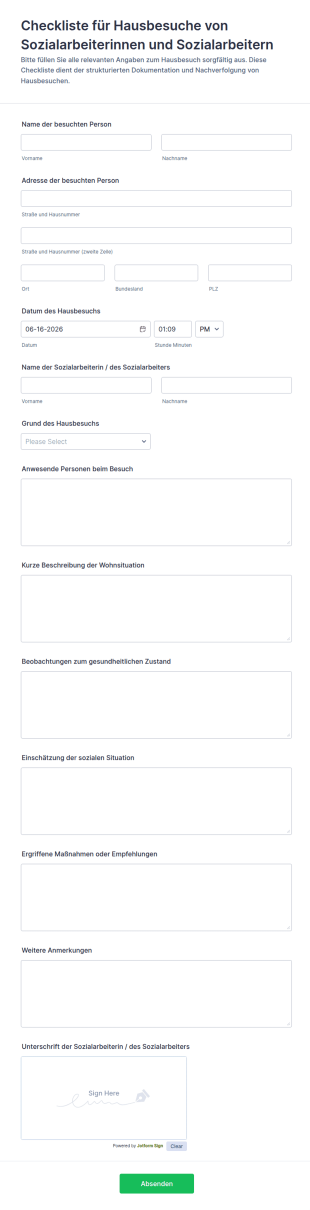
Checkliste Für Hausbesuche Von Sozialarbeiterinnen Und Sozialarbeitern
Dokumentieren Sie Hausbesuche im Sozialwesen einheitlich mit dem Checkliste-Formular für Hausbesuche von Sozialarbeiterinnen und Sozialarbeitern und erleichtern Sie Datenerfassung, interne Abstimmung und Nachverfolgung in Teams.
Zur Kategorie:Checklisten-Formulare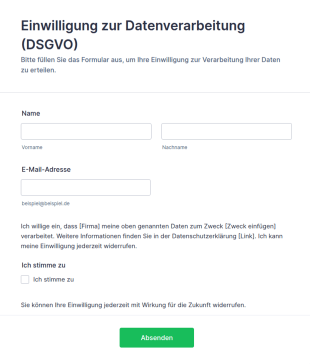
Vorlage Einwilligung Zur Datenverarbeitung (DSGVO)
DSGVO-konforme Einwilligungsformular-Vorlage für Jotform: Opt-in-Checkbox, Widerrufshinweis und Datenschutz-Platzhalter – direkt anpassbar und einsatzbereit.
Zur Kategorie:Werbeformulare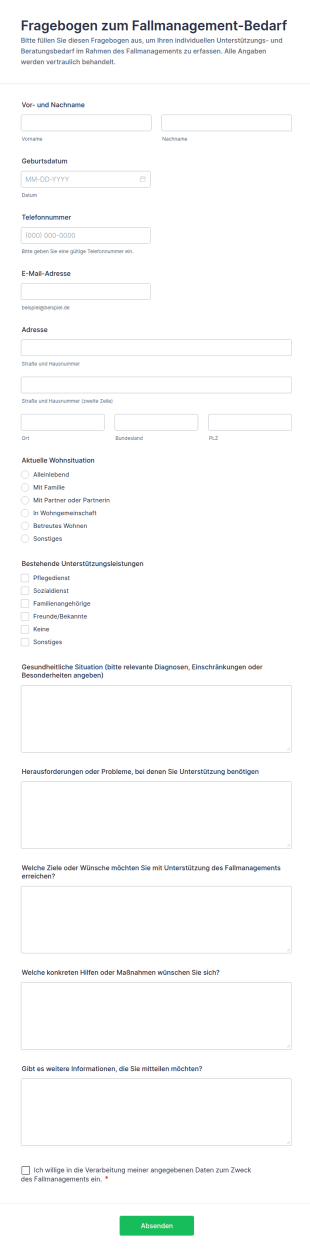
Fragebogen Zum Fallmanagement Bedarf
Der Fragebogen zum Fallmanagement-Bedarf erleichtert soziale Einrichtungen und Beratungsstellen die Datenerhebung zur Einschätzung von Unterstützungsbedarf und zur Vorbereitung passender Hilfsmaßnahmen mit Jotform.
Zur Kategorie:Vorlagen für Fragebögen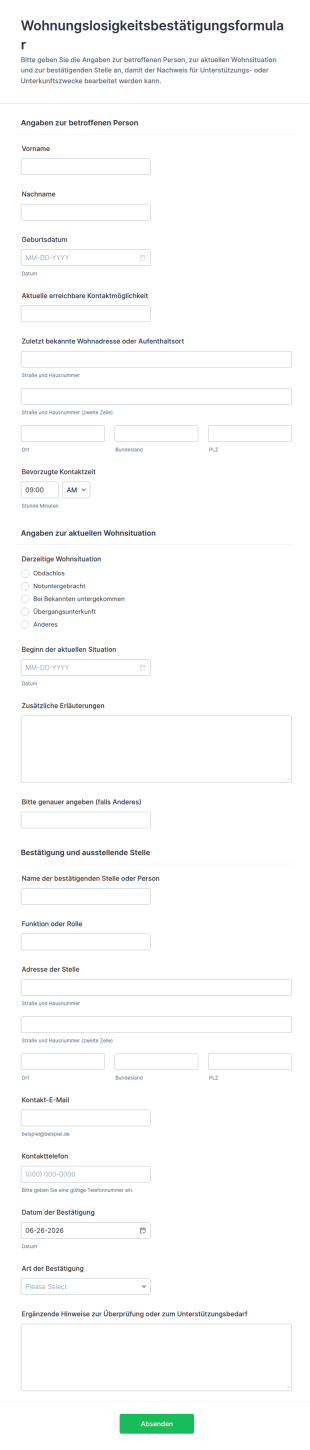
Nachweis Der Wohnungslosigkeit Formular
Erfassen Sie Bestätigungen zur Wohnungslosigkeit digital mit dem Wohnungslosigkeitsbestätigungsformular und vereinheitlichen Sie die Datenerfassung für Beratungsstellen, Unterkünfte und kommunale Anlaufstellen mit Jotform.
Zur Kategorie:Verifizierungsformulare
Sozialarbeiterische Weiterleitungsanfrage
Erfassen Sie Vermittlungsanfragen in der Sozialarbeit mit dem Sozialarbeitsvermittlungsformular und unterstützen Sie eine klare digitale Datenerfassung für Einrichtungen, Beratungsstellen und Träger, inklusive zuverlässiger Formularantworten über Jotform.
Zur Kategorie:Formulare für Sozialarbeiter
Seniorenhilfe Antrag Formular
Erfassen Sie Hilfeanfragen für Seniorinnen und Senioren mit dem Anfrageformular für Unterstützung im Alter Formular und unterstützen Sie Organisationen, Sozialdienste und Angehörige bei der schnellen Zuordnung und Bearbeitung in Jotform.
Zur Kategorie:Anfrageformulare
Missbrauchsbericht Für Kinder Meldeformular
Dokumentieren Sie sensible Hinweise mit dem Kindesmissbrauch-Meldeformular und unterstützen Sie vertrauliche Datenerfassung und interne Weitergabe in Schulen, Kitas, Vereinen und sozialen Einrichtungen mit Jotform.
Zur Kategorie:Vorfallsmeldeformulare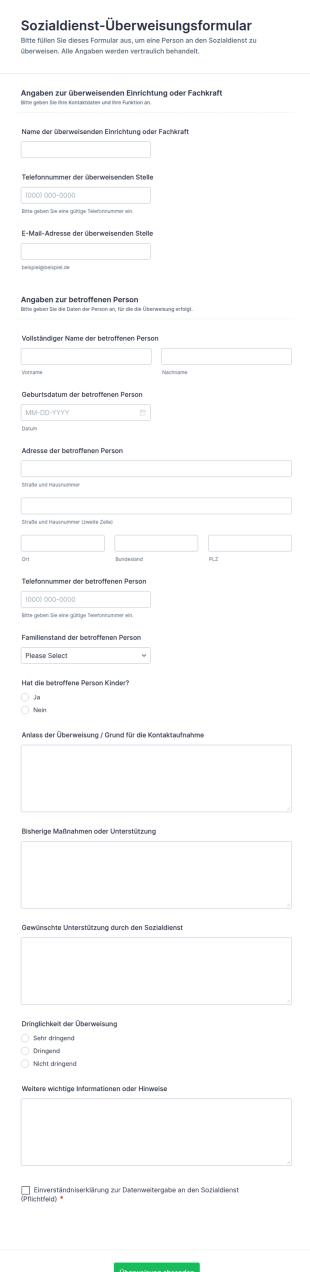
Sozialdienst Überweisungsformular
Erfassen Sie Überweisungen an den Sozialdienst digital mit Jotform, inklusive Datenerfassung, Priorisierung und zentraler Verwaltung der Form-Antworten für Einrichtungen und Fachkräfte.
Zur Kategorie:GesundheitsformulareÜber Formulare für Sozialarbeiter
Social Worker Forms are specialized digital forms designed to streamline the various administrative and operational tasks associated with social work. These forms cater to the unique requirements of social workers by facilitating processes such as client intake, needs assessments, feedback collection, and service documentation. In real-world workflows, these forms support efficient data gathering and organization, allowing social workers to focus more on delivering essential services rather than being bogged down by paperwork. They are crucial in managing client information, tracking progress, and ensuring compliance with legal and organizational standards.
Jotform stands out as the premier online form builder for creating Social Worker Forms due to its intuitive design and robust customization options. The platform allows social workers to automate data collection processes, significantly reducing manual entry errors and saving time. Jotform’s centralized data management capability, especially through Jotform Tables, ensures that all collected data is organized, secure, and easily accessible. This seamless integration of form creation and data management empowers social workers to enhance their workflow efficiency and service delivery.
Why Use Social Worker Forms?
- Social Worker Forms enable accurate data capture by providing structured fields that ensure all necessary information is collected systematically. This precision reduces the chances of missing critical data that can impact service delivery and client outcomes.
- The speed of data collection is significantly increased with these forms, as they can be completed and submitted online, allowing for real-time data entry and analysis. This immediacy is particularly beneficial in urgent cases where timely information is crucial.
- Professional data handling is facilitated through Jotform's secure platform, which ensures that sensitive client information is protected according to industry standards. This security is essential in maintaining client confidentiality and trust.
- These forms offer flexibility in customization, allowing social workers to tailor the fields and design to meet specific needs. This customization ensures the forms are relevant and effective for different programs or case types.
- The integration with various third-party applications, such as Google Sheets and Salesforce, allows for seamless data transfer and management, enhancing the overall workflow and operational efficiency.
Common Problems Solved by Social Worker Forms
- One of the significant challenges in social work is the cumbersome paperwork that can lead to inefficiencies and errors. Social Worker Forms eliminate the need for paper-based processes, reducing clutter and streamlining documentation.
- Manual data entry can often result in lost or inaccurate data, which can adversely affect service delivery. By using digital forms, social workers can ensure data accuracy and completeness, minimizing the risk of errors.
- Keeping track of client interactions and progress can be overwhelming, but Social Worker Forms offer a centralized platform for data storage and retrieval, ensuring that all information is accessible when needed.
- The traditional method of data collection is time-consuming and detracts from the time available for client engagement. These forms facilitate quick information gathering, allowing social workers to allocate more time to client-facing activities.
- Compliance with legal and organizational standards is a critical aspect of social work. Social Worker Forms help in maintaining detailed records, ensuring that all necessary documentation is readily available for audits and reviews.
Passende Anwendungsfälle für Features
- Client intake processes can be streamlined using the Drag-and-Drop Form Builder, which allows social workers to quickly create forms tailored to specific client needs. This feature ensures that all relevant information is collected in an organized manner.
- Conditional Logic can be employed to tailor the form fields based on previous answers, providing a personalized and efficient data collection experience. This adaptability is crucial for accommodating diverse client scenarios.
- With the integration of 30+ Payment Gateways, social workers can collect payments for services directly through the forms, ensuring a smooth and secure transaction process.
- The use of Electronic Signatures (Jotform Sign) allows for the collection of legally binding signatures, essential for consent forms and agreements, ensuring compliance with legal requirements.
- Automated PDF Generation through the PDF Editor provides a convenient way to convert form submissions into professionally formatted documents, facilitating easy sharing and record-keeping.
- Jotform’s Report Builder can be used to analyze data trends and generate comprehensive reports, aiding in program evaluation and decision-making processes.
- Secure Data Management with Jotform Tables ensures that all client data is stored safely and can be accessed and managed efficiently, supporting ongoing case management needs.
How to Create a Social Worker Form
- Browse the Template List for a Social Workers template or start from a blank form.
- Passen Sie das Design und die Felder mit dem Drag-and-Drop-Formulargenerator an.
- Veröffentlichen und teilen Sie den Inhalt über einen Direktlink, per E-Mail oder durch Einbettung in eine Website.
Top Use Cases for Social Worker Forms
- For Managers: Social Worker Forms are invaluable for managers overseeing case management and program effectiveness. These forms enable managers to easily track team performance, client outcomes, and resource allocation through detailed reports and analytics. This data-driven approach supports informed decision-making and strategic planning.
- For Teams: Social workers working in teams can benefit from using these forms to streamline their communication and collaboration efforts. By centralizing client data and progress notes, teams can ensure consistency and continuity in service delivery. This shared access to information fosters a collaborative environment where team members can efficiently coordinate their efforts.
- For Customers: Clients of social work services experience a more streamlined and user-friendly interaction when engaging with Social Worker Forms. These forms simplify the intake process, allowing clients to provide necessary information at their convenience. The secure and straightforward submission process enhances the client experience, fostering trust and engagement.
Summarizing Social Worker Forms
Social Worker Forms play a pivotal role in enhancing the efficiency and effectiveness of social work operations. By digitizing paperwork, streamlining data collection, and ensuring secure data handling, these forms empower social workers to focus on delivering quality services. The versatility and customization options offered by Jotform make it an ideal solution for social workers looking to improve their workflow and service outcomes. Overall, the adoption of these forms leads to improved client interactions, operational efficiency, and data-driven decision-making.
Häufig gestellte Fragen
1) Ist die Erstellung von Formularen für Sozialarbeiter auf Jotform kostenlos?
Ja, Jotform bietet ein kostenloses Abo an. Damit erstellen und nutzen Sie Formulare für Sozialarbeiter. Dabei gelten Grenzen für die Anzahl der Formularantworten und für den Speicherplatz.
2) Sind die Formulare und die übermittelten Daten sicher?
Jotform schützt alle Formulare und übermittelten Daten mit Verschlüsselung und Sicherheitsmaßnahmen nach Industriestandard. Dadurch bleiben Vertraulichkeit der Kundendaten und Datenintegrität gewahrt.
3) Brauche ich Programmierkenntnisse, um ein Formular für Sozialarbeiter zu erstellen?
Nein, dank des Drag-and-Drop-Formulargenerators von Jotform sind keine Programmierkenntnisse erforderlich, sodass Sie mühelos voll funktionsfähige Formulare erstellen können.
4) Kann ich Zahlungen direkt über meine Formulare erfassen?
Ja, Jotform lässt sich mit über 30 Zahlungsportalen integrieren. So erfassen Sie Zahlungen sicher direkt über Ihre Formulare.
5) Können diese Formulare auf mobilen Geräten verwendet werden?
Jotform-Formulare sind für mobile Geräte optimiert. Nutzer füllen Formulare auf jedem Gerät, einschließlich Smartphones und Tablets, aus und senden sie ab.
6) Kann ich Formularantworten in professionelle PDF-Dokumente umwandeln?
Ja, mit dem PDF-Editor von Jotform können Sie Formularantworten automatisch in professionell formatierte PDF-Dateien umwandeln, um diese problemlos weiterzugeben und zu archivieren.
7) Wie verbessern Formulare für Sozialarbeiter das Datenmanagement für Klienten?
Durch die Zentralisierung von Datenerfassung und -speicherung helfen diese Formulare Sozialarbeitern, Klienteninformationen effizienter zu verwalten. Sie ermöglichen einfachen Zugriff auf die Daten und deren Abruf bei Bedarf.
8) Welche Rolle spielen Formulare für Sozialarbeiter bei Compliance?
Formulare für Sozialarbeiter helfen, die Compliance zu gewährleisten. Sie dokumentieren Interaktionen mit Klienten und erbrachte Leistungen genau und vollständig. Diese Protokolle sind für Prüfungen und behördliche Überprüfungen unerlässlich.