

Hazardous Material Forms
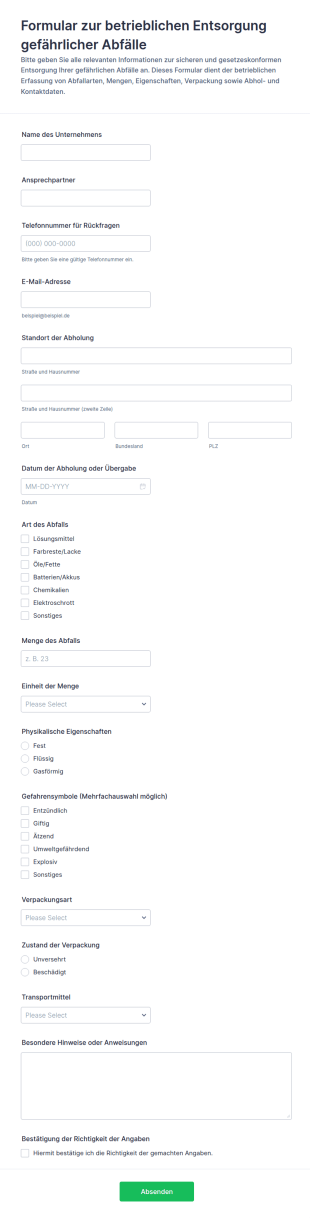
Entsorgungsanfrage Für Gefährliche Abfälle
Erfassen Sie Entsorgungsanfragen für gefährliche Abfälle inklusive Abholung und wichtigen Stoffangaben, damit Betriebe und Einrichtungen die Datenerfassung vereinheitlichen und jede Formularantwort in Jotform zentral verwalten können.
Zur Kategorie:Hazardous Material FormsÜber Hazardous Material Forms
Hazardous material forms are structured documents used to manage, document, and control activities involving hazardous substances, including handling, storage, transport, disposal, and incident reporting. They help organizations collect consistent information about materials, risks, safety requirements, and compliance steps so hazardous materials are managed safely and in line with regulations and internal policies. Hazardous material forms are commonly used in laboratories, manufacturing sites, warehouses, construction environments, healthcare facilities, and environmental services for workflows like hazardous material inventory, safety checklists, spill reporting, waste disposal requests, and transport declarations. By standardizing hazardous material documentation, these forms reduce safety risks, improve accountability, and support audit readiness.
With Jotform, hazardous material forms can be created quickly using a no-code, drag-and-drop Form Builder and tailored to different material types and safety procedures. Conditional logic can show specific questions based on hazard class or activity type, and file upload fields can collect SDS documents, permits, photos, and compliance records. Submissions are stored in Jotform Tables, making it easy to track materials, approvals, and incidents by site and status. Automated notifications can alert safety teams immediately when spills, exposures, or urgent hazards are reported.
Use Cases of Hazardous Material Forms
Hazardous material forms support safe operations, compliance documentation, and incident response across hazardous substance workflows. Below are common ways these forms are used and the challenges they help solve.
Mögliche Anwendungsfälle:
- Dokumentation über Bestände und Lagerung von Gefahrstoffen
- Einreichung von Checklisten für den Umgang mit Gefahrstoffen und zur Sicherheit
- Meldung von Leckagen, Kontaminationen und Vorfällen
- Anfragen zur Entsorgung und Abholung von Sondermüll
- Gefahrguttransportmeldungen und Versandaufzeichnungen
- Bestätigungen über Schulungen und Compliance
Lösungsansätze:
- Erstellen Sie einheitliche Sicherheitsdokumentationen für Gefahrstoffe
- Risikominimierung durch Einhaltung von Verfahren und Genehmigungen
- Unterstützung für die Einhaltung von Vorschriften durch revisionsfähige Aufzeichnungen und Anhänge
- Reagieren Sie schneller auf Zwischenfälle mit klaren Berichts- und Eskalationsschritten
Mögliche Eigentümer und Nutzer:
- Sicherheitsbeauftragte und EHS-Teams
- Laborleiter und Techniker
- Lager- und Betriebspersonal
- Anlagen- und Abfallmanagement
- Mitarbeiter, die Gefahrstoffe handhaben
Unterschiede der Erstellungsmethoden:
- Formulare für die Bestandsaufnahme und Lagerung von Gefahrstoffen konzentrieren sich auf die Identifizierung der Stoffe, die Gefahrenklassifizierung, den Lagerort, die Menge, den Zustand der Behälter und die Felder für die Beifügung von Sicherheitsdatenblättern.
- Formulare für den Umgang mit und den Transport von Gefahrstoffen legen den Schwerpunkt auf Task- oder Versanddetails, erforderliche PSA, Label- und Verpackungskontrollen, Genehmigungen sowie Informationen zur Produktkette oder zum Spediteur.
- Berichtsformulare für die Meldung gefährlicher Verschüttungen und Vorfälle erfassen vor allem den Zeitpunkt und Ort des Ereignisses, Details zur Exposition, die sofort ergriffenen Maßnahmen, den Schweregrad sowie Fotos oder Dokumente für die Untersuchung.
How to Create a Hazardous Material Form
Creating a hazardous material form with Jotform helps you standardize safety workflows and keep hazardous substance records organized and easy to review.
1. Wählen Sie eine Vorlage oder beginnen Sie komplett neu
In My Workspace, click “Create” and select “Form.” Start with an incident, inventory, or checklist template and customize it for hazardous materials.
2. Define the Hazardous Material Workflow Type
Add a field for workflow type such as inventory, handling checklist, transport, disposal request, or incident report. Use conditional logic to show the right sections.
3. Add Material and Safety Information Fields
Include chemical or material name, hazard class, quantity, storage location, and required PPE. Add checkboxes for required safety steps.
4. Use Conditional Logic for Different Hazard Types
Show different questions for corrosives vs flammables vs biohazards, and require extra approvals or documentation where needed.
5. Collect Supporting Documents and Evidence
Use file uploads for SDS files, permits, labels, photos, or incident evidence.
6. Publish and Track Submissions in Jotform Tables
Store submissions in Tables and filter by site, hazard type, status, and severity.
Häufig gestellte Fragen
1. What are hazardous material forms?
Hazardous material forms are documents or online forms used to manage and document hazardous substance workflows such as storage, handling, transport, disposal, and incident reporting.
2. Why are hazardous material forms important?
They support safety and compliance by standardizing procedures, documenting approvals, and creating records for audits and investigations.
3. What information is typically included in hazardous material forms?
Common fields include material identification, hazard class, quantity, location, PPE requirements, SDS attachments, and incident details when applicable.
4. Who uses hazardous material forms?
EHS teams, lab staff, warehouse teams, facilities staff, and employees handling hazardous materials may use these forms.
5. Can hazardous material forms include SDS uploads?
Yes. Jotform file upload fields can collect SDS files, permits, and other required compliance documents.
6. Can hazardous material forms be used for spill reporting?
Yes. Spill and exposure incident forms are a common use case, capturing details for response and investigation.
7. Can hazardous material forms support transport documentation?
Yes. Forms can capture packaging checks, labeling requirements, carrier info, and shipment details for hazardous material transport workflows.
8. Can hazardous material forms be customized by hazard type?
Yes. Conditional logic and custom fields can tailor questions based on hazard classification and required safety procedures.