

Formulare für Ernährungsberater
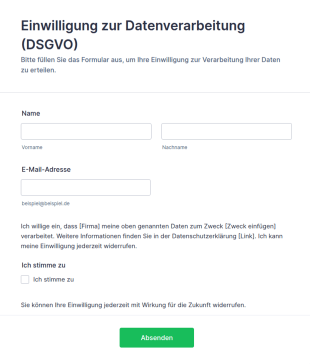
Vorlage Einwilligung Zur Datenverarbeitung (DSGVO)
DSGVO-konforme Einwilligungsformular-Vorlage für Jotform: Opt-in-Checkbox, Widerrufshinweis und Datenschutz-Platzhalter – direkt anpassbar und einsatzbereit.
Zur Kategorie:Werbeformulare
Ernährungsplan Formular
Erfassen Sie mit dem Ernährungsbetreuungsformular Anliegen, Ziele und Essgewohnheiten für Beratung, Coaching oder Praxisabläufe und bündeln Sie die Datenerfassung in Jotform für eine schnelle Auswertung jeder Formularantwort.
Zur Kategorie:Formulare für Ernährungsberater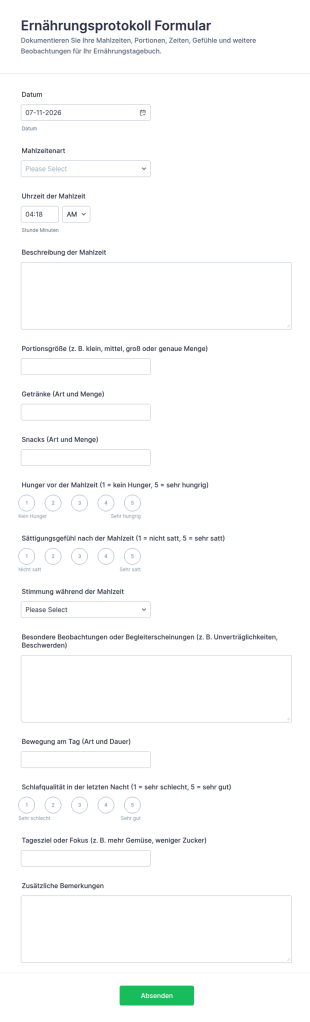
Ernährungsprotokoll Formular
Das Ernährungsprotokoll-Formular erleichtert die regelmäßige Datenerfassung zu Essgewohnheiten für Privatpersonen, Ernährungsberatung und Gesundheitscoaching, indem es die Datensammlung und jede Formularantwort in Jotform übersichtlich organisiert.
Zur Kategorie:Formulare für ErnährungsberaterÜber Formulare für Ernährungsberater
Formulare für Ernährungsberater sind digitale Formulare, die dazu dienen, die Arbeitsabläufe von Ernährungsberatern, Diätassistenten und verwandten Fachkräften im Gesundheitswesen zu optimieren. Diese Formulare werden für eine Vielzahl von Zwecken eingesetzt, darunter die Kundenakquise, Ernährungsbeurteilungen, die Mahlzeitenplanung und die Verlaufskontrolle. Im praktischen Workflow nutzen Ernährungsberater diese Formulare, um Gesundheitsdaten effizient zu erfassen, die Nährstoffaufnahme zu überwachen und individuelle Ernährungsberatung anzubieten. Durch die Digitalisierung dieser Prozesse sparen Fachkräfte Zeit, reduzieren Schreibarbeit und verbessern die Genauigkeit der Klienteninformationen. So können sie sich stärker auf die Bereitstellung einer hochwertigen Versorgung konzentrieren.
Jotform stands as the premier online form builder for creating and managing Dietitian Forms, offering a user-friendly interface that allows for the seamless customization of form templates to suit specific needs. The platform enables the automation of data collection, ensuring that dietitians can gather and analyze client data swiftly and accurately. Furthermore, Jotform Tables provides centralized data management, offering a secure and organized way to store and access client information. This comprehensive approach enhances the efficiency and effectiveness of dietary services, making Jotform an invaluable asset for dietitians looking to optimize their workflow.
Why Use Dietitian Forms?
- Dietitian Forms offer a high level of accuracy in data collection, minimizing the risk of human error associated with manual entry. This feature is essential for maintaining the integrity of client health records and ensuring that dietary recommendations are based on precise information.
- Speed is a critical factor in client management, and Dietitian Forms facilitate rapid data entry and retrieval. This efficiency allows dietitians to spend more time on patient care rather than administrative tasks.
- Professional data handling is another key advantage, as these forms provide a structured format for gathering and storing information. This organization supports compliance with health regulations and enhances the overall quality of service delivery.
- The ability to customize forms to meet specific dietary assessment needs ensures that dietitians can capture all necessary information without extraneous fields. This customization improves client engagement and data completeness.
- Automated workflows enabled by these forms can streamline client onboarding and follow-up processes. By reducing manual steps, dietitians can focus on crafting effective nutritional plans.
Common Problems Solved by Dietitian Forms
- One of the most significant pain points in the dietitian industry is managing excessive paperwork, which Dietitian Forms effectively mitigate by digitizing data collection. This shift not only saves physical space but also facilitates easier data retrieval and analysis.
- Manual data entry is prone to errors, leading to incorrect client records that can affect dietary advice. Dietitian Forms help eliminate these errors by providing structured digital fields that guide accurate data input.
- Data loss is a considerable risk when relying on paper forms, but with Dietitian Forms, all information is securely stored in the cloud. This ensures data is always accessible and protected from physical damage or loss.
- Time-consuming processes such as client intake and follow-up can be streamlined with automated Dietitian Forms. This automation allows dietitians to efficiently manage their schedules and improve client response times.
Passende Anwendungsfälle für Features
- The drag-and-drop form builder is ideal for quickly setting up client intake forms, allowing dietitians to tailor fields to capture detailed health history and dietary preferences. This feature supports a more personalized approach to client care.
- Conditional logic can be applied to dietary assessment forms, enabling dynamic question flows that adapt based on previous answers. This results in more relevant and concise client information gathering.
- Jotform's integration with over 30 payment gateways, including Stripe and PayPal, facilitates seamless billing processes for dietary consultations. This integration simplifies financial transactions, enhancing client convenience.
- Electronic Signatures via Jotform Sign streamline the consent process, ensuring that all necessary client permissions are obtained electronically and stored securely. This ensures compliance and saves time.
- The PDF Editor automates the generation of professional-looking reports from submitted data, allowing dietitians to provide clients with comprehensive dietary plans and progress summaries.
- With over 100 third-party integrations available, dietitians can connect their forms to platforms like Google Sheets and Salesforce, enabling seamless data transfer and enhancing workflow efficiency.
- Secure Data Management through Jotform Tables ensures that all client information is stored safely, with easy access for authorized users, supporting regulatory compliance and trust.
How to Create a Dietitian Form
- Browse the Template List for a Dietitians template or start from a blank form.
- Passen Sie das Design und die Felder mit dem Drag-and-Drop-Formulargenerator an.
- Veröffentlichen und teilen Sie den Inhalt über einen Direktlink, per E-Mail oder durch Einbettung in eine Website.
Top Use Cases for Dietitian Forms
- For Managers: Managers of dietary practices can utilize Dietitian Forms to oversee client intake and data management processes. By automating these tasks, managers ensure that their team can operate efficiently, reducing the administrative burden and allowing more focus on client care. The centralized data management offered by Jotform Tables allows managers to track performance metrics and make informed decisions to improve service delivery.
- For Teams: Dietitian teams benefit from using these forms by enhancing collaboration and communication. With the integration capabilities of Jotform, teams can share client data seamlessly across platforms, ensuring everyone has access to the most up-to-date information. This streamlines workflow and reduces the risk of miscommunication, ultimately leading to better coordinated care efforts.
- For Customers: Customers experience improved service quality with Dietitian Forms as they receive faster responses and more personalized care. The ease of form submission and the secure handling of their data builds trust and satisfaction. Moreover, the ability to sign documents electronically and make payments directly through the forms enhances convenience and efficiency in their interactions with dietitians.
Summarizing Dietitian Forms
Dietitian Forms offer a robust solution for enhancing the efficiency and accuracy of dietary services. By leveraging Jotform's powerful customization and automation capabilities, dietitians can significantly reduce administrative tasks and focus on delivering personalized care. The secure and centralized data management ensures compliance and builds client trust, making these forms an essential component of modern dietary practice. Ultimately, Dietitian Forms empower healthcare professionals to streamline their operations, improve client engagement, and achieve better health outcomes.
Häufig gestellte Fragen
1) Ist es kostenlos, Formulare für Ernährungsberater auf Jotform zu erstellen?
Ja, Jotform bietet ein kostenloses Abo an, mit dem Nutzer Formulare für Ernährungsberater erstellen und nutzen können. Bestimmte erweiterte Funktionen erfordern jedoch einen kostenpflichtigen Premium-Tarif.
2) Sind die Formulare und die übermittelten Daten sicher?
Selbstverständlich setzt Jotform hohe Sicherheitsstandards ein, darunter Datenverschlüsselung, um sicherzustellen, dass alle Formulare und übermittelten Daten sicher geschützt sind.
3) Brauche ich Programmierkenntnisse, um ein Ernährungsberater-Formular zu erstellen?
Nein, dank der benutzerfreundlichen Oberfläche und des Drag-and-Drop-Formulargenerators von Jotform erstellen Sie Formulare für Ernährungsberater ganz einfach und ohne Programmierkenntnisse.
4) Kann ich Zahlungen direkt über meine Formulare erfassen?
Ja, Jotform unterstützt die Integration mit über 30 Zahlungsportalen. So erfassen Sie Zahlungen direkt über Ihre Ernährungsberater-Formulare.
5) Können diese Formulare auf mobilen Geräten verwendet werden?
Jotform-Formulare sind vollständig responsiv. Nutzer können sie auf jedem mobilen Gerät aufrufen und abschicken. So arbeiten sie unterwegs flexibel und komfortabel.
6) Kann ich Formularantworten in professionelle PDF-Dokumente umwandeln?
Ja, mit dem PDF Editor von Jotform können Sie aus Formularantworten automatisch professionelle PDF-Dokumente erstellen, ideal für Kundenberichte und Unterlagen.
7) Inwiefern können Formulare für Ernährungsberater bei der Mahlzeitenplanung für Klienten helfen?
Formulare für Ernährungsberater können detaillierte Felder zu Ernährungsvorlieben und -einschränkungen enthalten. So erfassen Ernährungsberater alle erforderlichen Informationen, um maßgeschneiderte Ernährungspläne für ihre Klienten zu erstellen.
8) Kann ich die Formulare für Ernährungsberater in meine bestehende Gesundheitssoftware integrieren?
Ja, Jotform bietet über 100 Integrationen mit Drittanbietern an. So übertragen Sie Daten aus Ihren Ernährungsberater-Formularen direkt in Ihre bestehende Gesundheitssoftware.