

Immobilien-Feedbackformulare
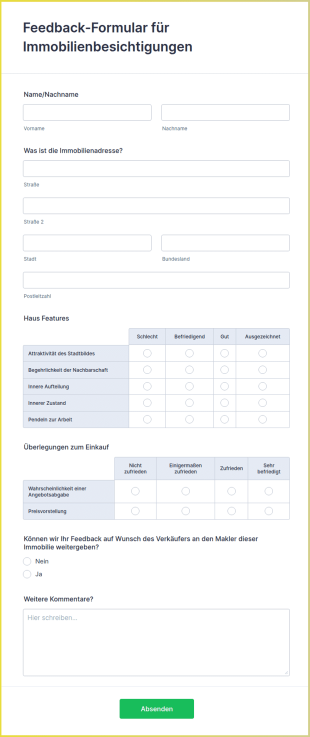
Feedback Formular Für Immobilienbesichtigungen
Ein Feedback-Formular für Immobilienbesichtigungen wird von Immobilienmaklern verwendet, um Feedback von Personen zu erhalten, die an ihren Immobilienbesichtigungen teilnehmen. Mit diesem kostenlosen Feedback-Formular für Immobilienbesichtigungen von Jotform können Sie nahtlos von jedem Gerät aus das Feedback einholen, das Sie benötigen! Beginnen Sie mit der Anpassung des Formulars, betten Sie es in Ihre Website ein, versenden Sie es per E-Mail oder lassen Sie Ihre Besucher das Feedback persönlich von Ihrem Mobilgerät aus abgeben. Nehmen Sie mit unserem Drag & Drop-Generator in Sekundenschnelle Änderungen an diesem Feedback-Formular für Immobilienbesichtigungen vor. Fügen Sie ganz einfach Ihr Logo hinzu, fügen Sie weitere Fragen ein und synchronisieren Sie die Antworten mit über 100 Drittanbieter-Apps - und das alles ohne Programmieraufwand! Sie können die Ergebnisse auch mit dem Jotform Berichtgenerator analysieren, um herauszufinden, wie Sie Ihre Immobilien für Besucher noch attraktiver gestalten können. Verzichten Sie auf unordentliche Papierformulare und sparen Sie Zeit mit einem Online-Formular für Immobilienbesichtigungen!
Zur Kategorie:Immobilien-Feedbackformulare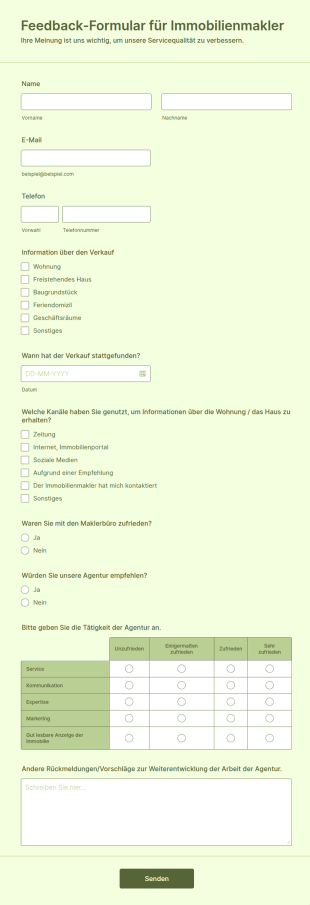
Feedback Formular Für Immobilienmakler
Ein Feedback-Formular für Immobilienmakler wird verwendet, um Rückmeldungen von Kunden zu erfassen, die die Dienste eines Immobilienmaklers in Anspruch genommen haben. Mit dem kostenlosen Online-Formular für Immobilienmakler von Jotform können Sie wichtige Informationen erfassen, wie z.B. die Kontaktdaten Ihrer Kunden, die Art des Immobilienkaufs, das Datum des Verkaufs und die Meinung der Kunden zu Ihren Dienstleistungen. Sie können das Feedback dann sicher von jedem Gerät aus einsehen oder es mit dem Jotform Berichtgenerator in einfach zu analysierende visuelle Berichte umwandeln.Möchten Sie die Formularvorlage anpassen, um sie besser an Ihre Bedürfnisse oder Ihr Branding anzupassen? Laden Sie Ihr Firmenlogo hoch, passen Sie aktuelle Fragen an oder fügen Sie neue hinzu, wählen Sie Ihre bevorzugten Schriftarten und Farben und vieles mehr mit unserem Formulargenerator per Drag & Drop - ganz ohne Programmierkenntnisse! Sie können Antworten automatisch mit anderen Konten synchronisieren - mit über 100 kostenlosen Integrationen von Drittanbietern. Erfassen Sie Feedback und analysieren Sie es, um Ihr Unternehmen mit einem kostenlosen Online-Formular für Immobilienmakler zu verbessern.
Zur Kategorie:Immobilien-Feedbackformulare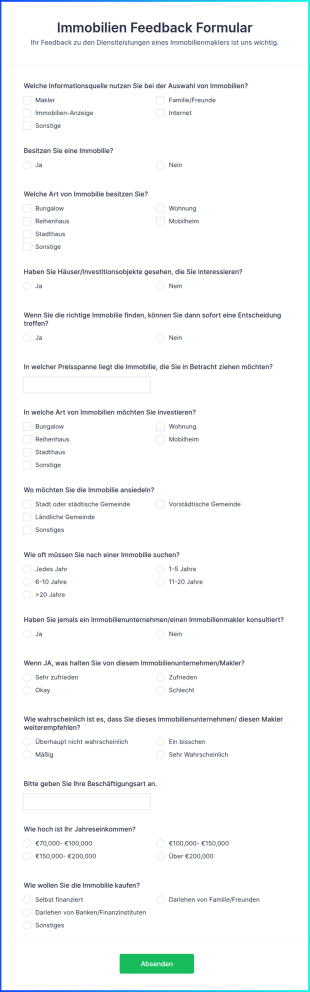
Immobilien Feedback Formular
Ein Immobilien-Feedback-Formular hilft bei der Sammlung von Feedback zu Immobilien. Dieses Formular ist für Immobilienmakler sehr nützlich, um herauszufinden, was potenzielle Käufer über die Immobilie denken. Das Immobilien-Feedback-Formular enthält alle allgemeinen Fragen, die Sie zu der Immobilie haben könnten, und bietet eine breite Palette von Informationen. Nutzen Sie dieses Formular, um Ihr Immobiliengeschäft anzukurbeln. Passen Sie diese Vorlage für ein Immobilien-Feedback-Formular per Drag & Drop an, laden Sie Ihr Logo hoch, fügen Sie weitere Fragen hinzu, und wählen Sie neue Schriftarten und Textfarben für eine persönliche Note. Analysieren Sie die Feedback-Ergebnisse sofort mit dem Jotform Berichtgenerator, der die Eingabedaten in visuelle Berichte umwandelt - oder senden Sie Daten an andere Konten mit über 100 kostenlosen Integrationen. Sparen Sie Zeit, indem Sie von Papier-Feedback-Formularen zu Online-Formularen wechseln - mit einem kostenlosen Immobilien-Feedback-Formular von Jotform.
Zur Kategorie:Immobilien-Feedbackformulare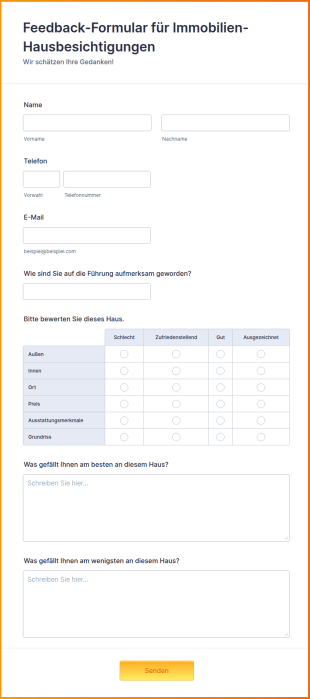
Feedback Formular Für Immobilien Hausbesichtigungen
Immobilienmakler verwenden ein Feedback-Formular für Hausbesichtigungen, um herauszufinden, was die Besucher der Hausbesichtigungen von den gezeigten Häusern halten. Mit dem kostenlosen Jotform Feedback-Formular für Hausbesichtigungen können Sie die Kontaktdaten und das Feedback der Besucher auf jedem Gerät erfassen! Passen Sie das Formular einfach an Ihre Bedürfnisse an, betten Sie es in Ihre Website ein, teilen Sie es mit einem Link, oder lassen Sie es von Ihren Gästen auf Ihrem Tablet oder Mobilgerät ausfüllen.Es ist ganz einfach, dieses Formular für die Bewertung von Immobilienobjekten anzupassen. Laden Sie einfach per Drag & Drop Ihr Logo hoch, fügen Sie neue Fragen hinzu, ordnen Sie das Layout neu an und wählen Sie ein neues Farbschema ohne Programmierkenntnisse. Sobald Sie die Antworten erfasst haben, können Sie das Feedback sofort mit dem Jotform Berichtsgenerator analysieren oder mit über 100 kostenlosen Integrationen automatisch an Drittanbieteranwendungen senden. Sparen Sie Zeit, indem Sie von Papierformularen auf Online-Formulare umsteigen - mit diesem kostenlosen Online-Formular für die Bewertung von Immobilienobjekten!
Zur Kategorie:Immobilienformulare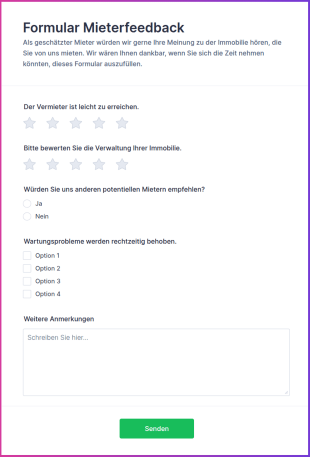
Formular Mieterfeedback
Ein Formular für Mieterfeedback wird von Vermietungsagenturen und Vermietern verwendet, um Feedback von den Mietern zu erhalten, die ihre Immobilien vermieten. Mit dem kostenlosen Formular Mieterfeedback von Jotform können Sie schnell herausfinden, wie Sie Ihren Service verbessern und die Mieterbindung erhöhen können! Geben Sie das Formular so weiter, wie es ist, oder passen Sie es mit ein paar einfachen Klicks an Ihr Branding an. Binden Sie das Formular dann in Ihre Website ein oder geben Sie es direkt an Ihre Kunden weiter, um von jedem Gerät aus Feedback zu sammeln und anzuzeigen. Möchten Sie diese Formularvorlage aktualisieren? Fügen Sie mit unserem Formulargenerator ohne Programmierkenntnisse Fragetypen wie Sternbewertungen, Textfelder, Ja- oder Nein-Fragen und Multiple Choice hinzu. Sie können sogar visuelle Feedback-Berichte mit dem Jotform Berichtgenerator erstellen oder Antworten an andere Konten wie Google Drive, Trello, Slack und mehr mit über 100 kostenlosen Integrationen senden. Steigen Sie von Papierformularen auf ein kostenloses Online-Formular für Mieterfeedback um, um Zeit zu sparen und effizienter zu arbeiten!
Zur Kategorie:Feedback-Formulare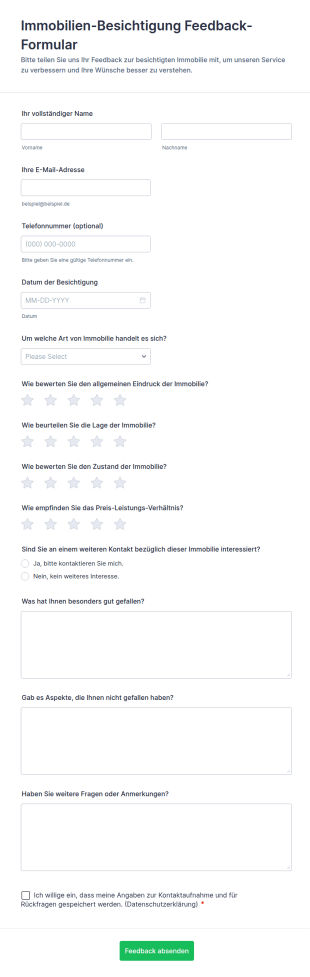
Immobilien Besichtigung Feedback Formular
Immobilienbesichtigung-Feedbackformular erleichtert Maklern und Vermietern die Datenerfassung nach Besichtigungen, damit Rückmeldungen zentral gesammelt, ausgewertet und für die weitere Kontaktaufnahme genutzt werden können.
Zur Kategorie:Immobilien-Feedbackformulare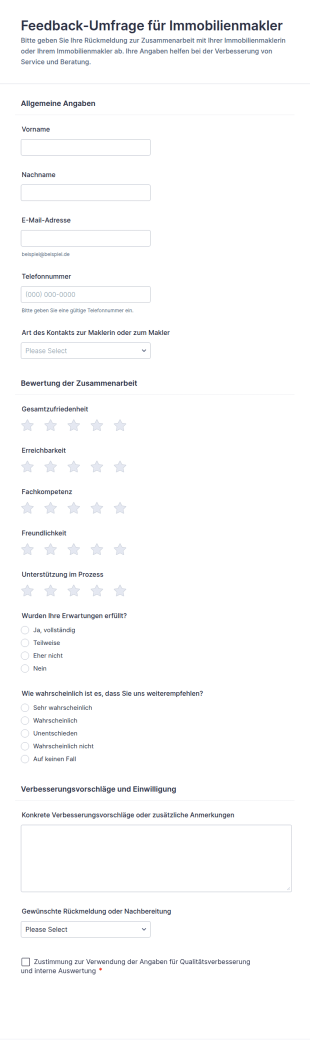
Feedbackformular Für Immobilienmakler
Sammeln Sie mit dem Feedback-Umfrageformular für Immobilienmakler Kundenfeedback nach Kauf, Verkauf oder Vermietung, werten Sie Servicequalität aus und verbessern Sie Beratung und Erreichbarkeit mit Jotform.
Zur Kategorie:Umfragen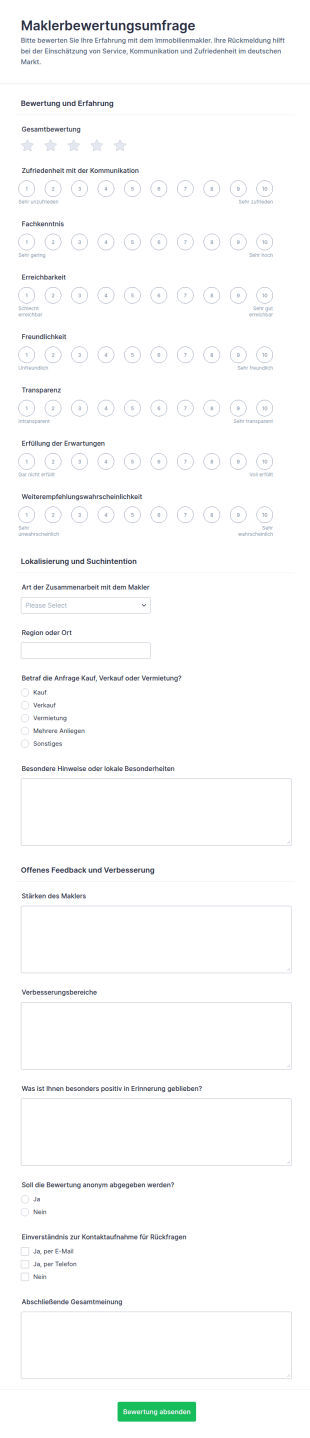
Maklerbewertung Umfrage
Sammeln Sie mit dem Maklerbewertungsumfrage-Formular von Jotform gezielte Rückmeldungen zur Maklerleistung nach Kauf, Verkauf oder Vermietung und werten Sie regionale Kundenerfahrungen für bessere Entscheidungen aus.
Zur Kategorie:Umfragen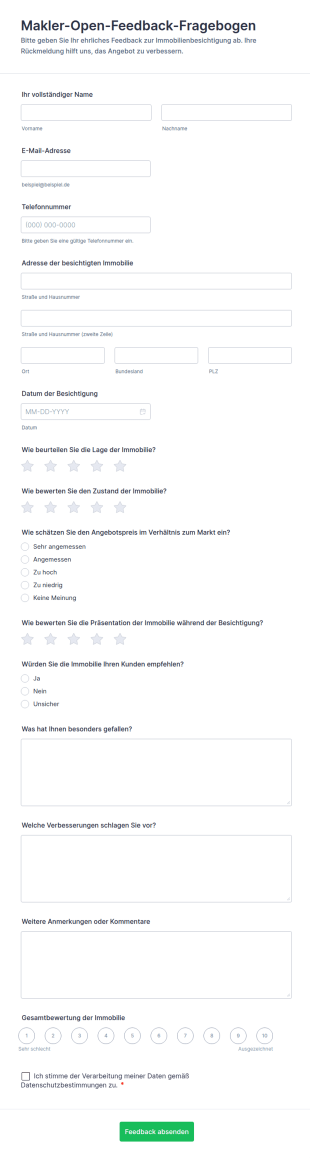
Makler Open Feedback Fragebogen
Sammeln Sie mit dem Makler-Open-House-Feedback-Formular von Jotform Bewertungen nach Besichtigungen und verbessern Sie Vermarktung und Preisstrategie durch schnelle Datenerfassung und zentrale Auswertung.
Zur Kategorie:Open House Feedback-Formulare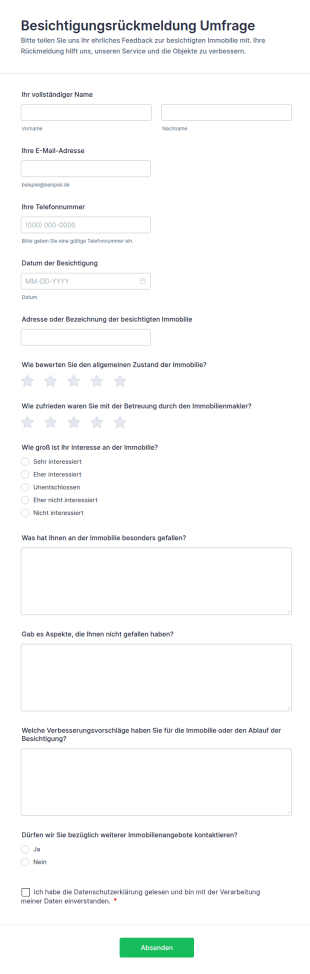
Besichtigungsrückmeldung Umfrage
Sammeln Sie mit der Besichtigungsrückmeldung-Umfrage in Jotform Feedback nach Immobilienbesichtigungen, bewerten Sie Interesse und Betreuung und verbessern Sie Besichtigungsabläufe für Makler, Verwaltungen und Anbieter.
Zur Kategorie:UmfragenÜber Immobilien-Feedbackformulare
Feedbackformulare für die Immobilienbranche sind spezielle Online-Formulare. Sie sammeln Feedback von Kunden, Maklern und anderen Beteiligten an Immobilientransaktionen. Diese Formulare liefern Erkenntnisse über Immobilienbesichtigungen, die Leistung der Makler und die Kundenzufriedenheit. In der schnelllebigen Immobilienbranche optimieren Feedback-Formulare den Prozess der Erfassung entscheidender Rückmeldungen, die Einfluss auf Verkaufsstrategien und Verbesserungen im Kundenservice nehmen können. Durch die Erfassung detaillierter Informationen ermöglichen diese Formulare Immobilienfachleuten, fundierte Entscheidungen zu treffen und ihr Dienstleistungsangebot zu verbessern, was letztendlich zu erfolgreicheren Transaktionen und zufriedeneren Kunden führt.
Jotform hat sich als führender Online-Formulargenerator für die Erstellung von Feedback-Formularen im Immobilienbereich etabliert. Die Plattform bietet große Flexibilität bei der Anpassung sowie leistungsstarke Automatisierungsfunktionen. Mit Jotform entwerfen Nutzer schnell Formulare, die auf ihre spezifischen Anforderungen zugeschnitten sind. So erfassen sie Daten effizient und vollständig. Die zentrale Datenverwaltung über Jotform Tabellen vereinfacht Verwaltung und Analyse der Rückmeldungen. Immobilienfachleute rufen die gesammelten Informationen schnell ab, ordnen sie und nutzen sie weiter. Diese Integration von Anpassung und Datenverwaltung optimiert Feedback-Prozesse und fördert das Geschäftswachstum.
Why Use Real Estate Feedback Forms?
- Real Estate Feedback Forms significantly enhance the accuracy of data collection by minimizing human error and ensuring that every piece of feedback is captured digitally. This level of precision is crucial for making informed business decisions and maintaining high standards of service.
- These forms expedite the feedback process, allowing real estate professionals to gather and analyze data swiftly. By reducing the time spent on manual data entry and processing, agents and managers can focus more on client interactions and closing deals.
- Professional data handling is a hallmark of Real Estate Feedback Forms, as they ensure that sensitive client information is collected and stored securely. This not only builds trust with clients but also complies with industry regulations and best practices.
- The use of digital forms eliminates the need for cumbersome paperwork, streamlining operations and reducing administrative overhead. This transition to a paperless environment also supports sustainability initiatives within the industry.
- Automation features within Jotform enable the seamless integration of feedback forms into existing workflows, facilitating smooth data transitions and immediate access to insights. This enhances operational efficiency and supports proactive decision-making.
Common Problems Solved by Real Estate Feedback Forms
- One of the primary challenges in real estate is managing the overwhelming amount of paperwork involved in transactions. Real Estate Feedback Forms digitize this process, reducing clutter and simplifying document management.
- Manual data entry can lead to significant errors and inefficiencies. By utilizing online feedback forms, real estate professionals can automate data collection, ensuring that all information is accurately recorded and easily accessible.
- Lost data is a common issue in traditional feedback processes, where paper forms can be misplaced or damaged. Digital forms offer a reliable solution, providing secure storage and easy retrieval of all collected feedback.
- The time-consuming nature of traditional feedback methods often delays the analysis and application of insights. With Real Estate Feedback Forms, immediate data collection and automated reporting allow for faster decision-making and strategy adjustment.
Passende Anwendungsfälle für Features
- For real estate agencies looking to streamline their feedback process, the Drag-and-Drop Form Builder offers an intuitive way to customize forms without any technical expertise. This feature empowers users to create forms that precisely meet their specific requirements.
- Conditional Logic is a powerful feature for personalizing the feedback experience, as it enables forms to dynamically adjust questions based on previous responses. This ensures that feedback is relevant and comprehensive, enhancing the quality of the data collected.
- With over 30 Payment Gateways, real estate professionals can easily incorporate payment collection into their feedback forms, facilitating seamless transactions for services like property appraisals or consultation fees.
- Electronic Signatures (Jotform Sign) are crucial for authenticating feedback submissions, particularly when legal agreements or consents are required. This feature adds a layer of security and professionalism to the feedback collection process.
- The PDF Editor allows for the automatic generation of professional documents from form submissions, transforming raw data into polished reports that can be easily shared with stakeholders and clients.
- By leveraging the Report Builder, real estate managers can transform collected data into visual reports that highlight key insights and trends, aiding in strategic planning and performance evaluation.
- Offline Data Collection is essential for real estate professionals working in areas with limited internet access, ensuring that feedback can be gathered and stored securely until connectivity is restored.
How to Create a Real Estate Feedback Form
- Start by browsing the Template List for a Real Estate Feedbacks template or create a new form from scratch if you have specific requirements in mind.
- Customize the form design and fields using the Drag-and-Drop Form Builder, which allows you to easily add, remove, or modify elements to suit your feedback collection needs.
- Once your form is complete, publish it and share it with your audience through Direct Link, Email, or Website Embed, ensuring that it's accessible to all intended respondents.
Top Use Cases for Real Estate Feedback Forms
- For Managers: Real Estate Feedback Forms empower managers to gain comprehensive insights into customer satisfaction and team performance. By analyzing feedback data, managers can identify areas for improvement, develop targeted training programs, and enhance overall service quality. This strategic use of feedback fosters a culture of continuous improvement and customer-centric service within the organization.
- For Teams: These forms serve as a valuable tool for real estate teams to streamline communication and collaboration. By collecting and sharing feedback efficiently, team members can align their efforts and address any issues quickly. This fosters a cohesive work environment where everyone is informed and focused on delivering exceptional client experiences.
- For Customers: Clients benefit from Real Estate Feedback Forms as they provide a convenient and straightforward way to share their experiences and opinions. This open channel of communication not only demonstrates a commitment to customer satisfaction but also enables real estate professionals to address client concerns promptly and effectively, enhancing the overall customer experience.
Summarizing Real Estate Feedback Forms
In conclusion, Real Estate Feedback Forms are an invaluable asset for any real estate business aiming to enhance client satisfaction and refine operational efficiency. By streamlining feedback collection and ensuring accurate data handling, these forms contribute to improved decision-making and strategic planning. Jotform’s online form builder offers the flexibility and functionality needed to create customized feedback forms that cater to specific business needs. With features like automated reporting, secure data management, and seamless integrations, Jotform empowers real estate professionals to harness the full potential of feedback for business growth and client engagement.
Häufig gestellte Fragen
1) Ist die Erstellung von Feedback-Formularen für Immobilien auf Jotform kostenlos?
Ja, Jotform bietet ein kostenloses Abo an. Damit erstellen und passen Sie Feedback-Formulare für Immobilien an. Es gibt jedoch ein Limit für die Anzahl der Formulare und der eingereichten Antworten.
2) Sind die Formulare und die übermittelten Daten sicher?
Auf jeden Fall. Jotform legt großen Wert auf Datenschutz und bietet Funktionen wie SSL-Verschlüsselung, Compliance mit der DSGVO und sichere Datenspeicherung, um sicherzustellen, dass alle Formularantworten geschützt sind.
3) Brauche ich Programmierkenntnisse, um ein Feedbackformular für Immobilien zu erstellen?
Es sind keine Programmierkenntnisse erforderlich. Mit dem Jotform Formulargenerator mit Drag-and-Drop-Funktionalität erstellt jeder professionelle Formulare, ohne technisches Fachwissen.
4) Kann ich Zahlungen direkt über meine Formulare erfassen?
Ja, mit Jotform können Sie über 30 Zahlungsportale wie Stripe und PayPal integrieren, um Zahlungen direkt über Ihre Formulare zu erfassen.
5) Können diese Formulare auf mobilen Geräten verwendet werden?
Ja, Jotform-Formulare sind für mobile Geräte optimiert. Nutzer können sie auf jedem Gerät aufrufen und ausfüllen. So arbeiten Nutzer auch unterwegs bequem.
6) Kann ich Formularantworten in professionelle PDF-Dokumente umwandeln?
Der PDF Editor von Jotform erstellt aus Formularantworten automatisch professionelle PDF-Dokumente. Sie können diese Dokumente weitergeben oder zur Dokumentation speichern.
7) Wie verbessern Feedback-Formulare im Immobilienbereich die Beziehungen zwischen Kunden und Maklern?
Diese Formulare bieten Kunden eine strukturierte Möglichkeit, Feedback zu teilen. So verstehen Agenten Bedürfnisse und Vorlieben besser und verbessern Service und Beziehung.
8) Lassen sich Feedback-Formulare für Immobilien in CRM-Systeme integrieren?
Ja, Jotform bietet Integrationen mit verschiedenen CRM-Systemen wie Salesforce. So synchronisieren Sie Daten automatisch und verbessern das Kundenbeziehungsmanagement.