

Insurance Claim Forms
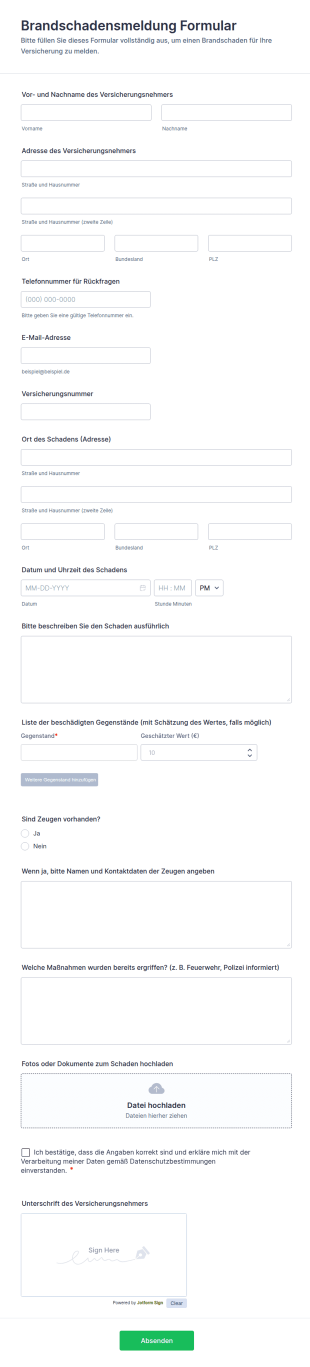
Brandschadensmeldung Formular
Dokumentieren Sie Brandschäden zuverlässig mit dem Brandschadensmeldung Formular und erleichtern Sie die digitale Datenerfassung für Versicherungsnehmer, Hausverwaltungen und Betriebe mit Jotform.
Zur Kategorie:Anspruchsformulare
Studentenversicherungsanspruch Fragebogen
Erfassen Sie Schadens- und Versicherungsmeldungen von Studierenden mit dem Formular für Studentenversicherungsanspruch, inklusive Datenerhebung zu Vorfall und Nachweisen, um die Prüfung und Bearbeitung in Hochschule oder Versicherungsstelle zu erleichtern.
Zur Kategorie:Insurance Claim Forms
Schadensmeldung Für Versicherungsansprüche Formular
Erfassen Sie Schadenmeldungen online mit dem Versicherungsanspruch-Formular und erleichtern Sie Versicherungen, Maklerbüros und Schadenabteilungen die Datenerfassung sowie die schnelle Bearbeitung eingehender Formularantworten.
Zur Kategorie:Insurance Claim Forms
Haustier Versicherungsanspruchsformular
Tierkrankenversicherung-Schadenformular unterstützt Tierhalter und Versicherungsstellen bei der digitalen Datenerfassung für Schadenmeldungen inklusive Nachweisen und klarer Abläufe mit Jotform.
Zur Kategorie:Anspruchsformulare
Gesundheitsversicherungsanspruch Formular
Erfassen Sie Schadenmeldungen für Gesundheitsversicherungen online mit dem Gesundheitsversicherung-Schadensformular von Jotform und vereinfachen Sie Datenerfassung, Nachweisverwaltung und interne Bearbeitung für Versicherer, Makler und Abrechnungsstellen.
Zur Kategorie:Insurance Claim Forms
Krankenhausaufnahme Anspruchsformular 🏥
Erfassen Sie Kostenerstattungen nach einem Krankenhausaufenthalt mit dem Krankenhausaufenthalts-Anspruchsformular von Jotform und bündeln Sie Datenerfassung, Datei-Uploads und Formularantworten in einer digitalen Formularvorlage.
Zur Kategorie:Anspruchsformulare
Schadensregulierer Vertrag Formular
Erfassen Sie Mandats- und Schadensdaten für öffentliche Gutachter mit dem Schadensregulierungsvereinbarungsformular, inklusive digitaler Datenerfassung, zentraler Formularantworten und direktem Teilen über Jotform.
Zur Kategorie:Anspruchsformulare
Schadensbericht Erfassungsformular
Erfassen Sie Schadensfälle einheitlich mit dem Schadensbewertungsformular von Jotform, um Datenerfassung, Priorisierung und interne Weitergabe für Unternehmen, Verwaltungen und Dienstleister zu vereinfachen.
Zur Kategorie:AnspruchsformulareÜber Insurance Claim Forms
Insurance Claim Forms are specialized digital forms designed to streamline the process of filing, processing, and managing insurance claims. These forms are integral to the insurance industry, facilitating a seamless workflow from claim initiation to resolution. Whether it is for health, auto, or property insurance, these forms serve as the backbone of efficient claims handling, enabling insurers to collect detailed information from policyholders, assess damages, and process claims with accuracy and speed. In a typical workflow, Insurance Claim Forms are used to gather initial claim information, document evidence, and communicate with claimants and relevant parties, ensuring that all necessary data is captured and organized systematically.
Jotform eignet sich ideal für die Erstellung von Schadenabwicklungsformularen und bietet unübertroffene Anpassungs- und Automatisierungsmöglichkeiten. Dank der intuitiven Drag-and-Drop-Oberfläche können Nutzer Formulare ganz einfach an spezifische Versicherungsanforderungen anpassen, wodurch die Datenerfassung und -verarbeitung effizienter denn je wird. Das Data-Management-System von Jotform, Jotform Tabellen, speichert Schadensdaten zentral und lässt Sie schnell darauf zugreifen. So bleiben die Daten sicher und zugänglich. Die Integration steigert die betriebliche Effizienz und unterstützt die Compliance mit branchenbezogenen Vorschriften. Daher ist Jotform ein wichtiger Partner in der Versicherungsbranche.
Why Use Insurance Claim Forms?
- Insurance Claim Forms ensure high accuracy by eliminating the risk of human error associated with manual data entry. By using digital fields that validate data input, these forms help maintain data integrity, which is crucial for accurate claims processing and decision-making.
- The speed of processing insurance claims is significantly enhanced with digital forms, as they allow for instant submission and automated data routing. This reduces the time spent on handling paperwork and accelerates the overall claims lifecycle from submission to settlement.
- Professional data handling is a key advantage of using Insurance Claim Forms. These forms facilitate the secure exchange of sensitive information, ensuring compliance with data protection laws and building trust with claimants.
- With digital forms, insurance companies can implement conditional logic to tailor the form fields based on the type of claim being filed. This dynamic adaptation makes the forms more user-friendly and relevant, reducing the number of incomplete submissions.
- These forms also provide a platform for integrating electronic signatures, which streamline the authorization process. This feature ensures that all necessary approvals are obtained promptly, reducing delays in claims processing.
Common Problems Solved by Insurance Claim Forms
- One of the primary issues in the insurance industry is the cumbersome nature of paperwork, which digital forms effectively eliminate. By transitioning to online forms, insurers can reduce paper usage and storage costs while also enhancing operational efficiency.
- Manual data entry often leads to errors and inconsistencies, but digital forms automate this process, ensuring data accuracy and reliability. This automation minimizes the likelihood of errors that could otherwise delay claims processing and result in financial discrepancies.
- Lost data is a significant concern when dealing with physical documents. Insurance Claim Forms address this by storing all data securely in the cloud, making it easily retrievable and less prone to loss or damage compared to paper records.
- Communication gaps between claimants and insurance companies can hinder the claims process. Digital forms facilitate real-time updates and notifications, ensuring that all parties are informed and aligned at every step of the claims process.
Passende Anwendungsfälle für Features
- The Drag-and-Drop Form Builder is ideal for creating customized Insurance Claim Forms that cater to specific needs such as auto, health, or property claims. This user-friendly feature allows insurance professionals to design forms that capture all necessary data, enhancing the precision and relevance of collected information.
- Conditional Logic is instrumental for tailoring forms to display relevant questions based on previous responses. This feature ensures that claimants only provide necessary information, reducing form abandonment and improving the user experience.
- The integration with 30+ Payment Gateways, including Stripe and PayPal, allows for the direct collection of deductibles or premiums through the forms. This functionality streamlines the financial aspect of claims processing, making transactions more efficient and traceable.
- Jotform Sign enables the inclusion of Electronic Signatures within forms, which is crucial for obtaining necessary approvals and authorizations without the need for physical paperwork. This feature accelerates the claims process and enhances compliance.
- Jotform's PDF Editor allows for Automated PDF Generation of completed forms, providing a professional and uniform documentation format for records and audits. This feature is particularly beneficial for maintaining consistent and accessible records of all claims processed.
- Secure Data Management with Jotform Tables ensures that all submitted data is stored in a protected environment, safeguarding sensitive information against unauthorized access and data breaches.
- Approval Workflows can be embedded within forms to manage and track multi-step approval processes. This feature is vital for ensuring that all necessary checks and balances are in place before a claim is processed, reducing the risk of oversight.
How to Create a Insurance Claim Form
- Browse the Template List for an Insurance Claims template or start from a blank form, tailoring it to your specific insurance needs and requirements.
- Customize the design and fields using the Drag-and-Drop Form Builder, incorporating elements like conditional logic and electronic signatures to enhance functionality.
- Publish and share via Direct Link, Email, or Website Embed, ensuring easy access for claimants and stakeholders involved in the claims process.
Top Use Cases for Insurance Claim Forms
- For Managers: Insurance Claim Forms provide managers with a centralized system to oversee and streamline the entire claims process. By utilizing these forms, managers can ensure that data is collected accurately and efficiently, reducing bottlenecks and improving overall productivity. The ability to generate detailed reports and analytics allows for informed decision-making, helping managers optimize operations and enhance service delivery.
- For Teams: Teams responsible for processing insurance claims benefit from the collaborative features of Insurance Claim Forms. These forms enable seamless communication and data sharing among team members, ensuring that everyone is on the same page. With integrated approval workflows, teams can manage multi-step processes with ease, ensuring that claims are handled promptly and in accordance with company policies.
- For Customers: For customers, Insurance Claim Forms offer a convenient and user-friendly way to file claims. The intuitive design and conditional logic ensure that customers only need to provide relevant information, reducing the complexity and time involved in filing a claim. Additionally, the ability to track claim status and receive updates in real-time enhances transparency and customer satisfaction.
Summarizing Insurance Claim Forms
In summary, Insurance Claim Forms are an essential component of modern insurance operations, streamlining the entire lifecycle of claims processing. By leveraging Jotform's advanced features, insurers can enhance accuracy, speed, and professionalism in handling claims. Whether it's for managers optimizing workflows, teams collaborating effectively, or customers enjoying a seamless filing experience, these forms provide significant business value. The integration of secure data management, automation, and real-time communication ensures that all stakeholders benefit from an efficient and transparent claims process.
Häufig gestellte Fragen
1) Is it free to create Insurance Claim Forms on Jotform?
Ja, Jotform bietet einen kostenlosen Tarif. Damit erstellen und passen Nutzer Schadenabwicklungsformulare mit grundlegenden Funktionen an. Diese Lösung ist kostengünstig für kleine bis mittelständische Unternehmen.
2) Sind die Formulare und die übermittelten Daten sicher?
Selbstverständlich schützt Jotform alle Formulare und übermittelten Daten mit hohen Sicherheitsmaßnahmen. Dazu gehören SSL-Verschlüsselung sowie die Einhaltung der DSGVO.
3) Do I need coding knowledge to build a Insurance Claim Form?
Es sind keine Programmierkenntnisse erforderlich. Dank der intuitiven Drag-and-Drop-Oberfläche von Jotform kann jeder ganz einfach und ohne technisches Fachwissen Formulare erstellen und anpassen.
4) Kann ich Zahlungen direkt über meine Formulare erfassen?
Ja, Sie können verschiedene Zahlungsportale wie Stripe, PayPal und Square integrieren. So erfassen Sie Zahlungen direkt über Ihre Formulare und vereinfachen die finanzielle Abwicklung von Anträgen.
5) Können diese Formulare auf mobilen Geräten verwendet werden?
Ja, die Formulare von Jotform sind für mobile Geräte optimiert. Nutzer können sie auf jedem Gerät aufrufen und ausfüllen. So arbeiten Sie auch unterwegs bequem und flexibel.
6) Kann ich Formularantworten in professionelle PDF-Dokumente umwandeln?
Ja, mit dem PDF Editor von Jotform können Sie aus Formularantworten automatisch professionelle PDF-Dokumente erstellen. Diese Dokumente bieten ein standardisiertes Format für Dokumentation und Audits.
7) Wie kann ich mithilfe dieser Formulare Compliance mit den Branchenvorschriften sicherstellen?
Jotform bietet Funktionen wie elektronische Signaturen und sicheres Data Management. Damit erfüllen Sie Branchenvorschriften bei Krankenversicherungsansprüchen.
8) Kann ich diese Formulare in CRM-Systeme integrieren?
Ja, Jotform bietet die Integration mit über 100 Anwendungen von Drittanbietern, darunter beliebte CRM-Systeme wie Salesforce. So übertragen Sie Daten direkt und arbeiten effizienter.