

Healthcare Assessment Forms
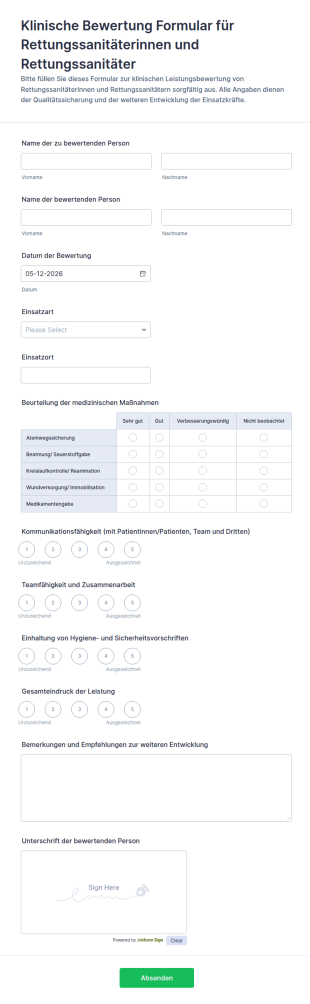
Klinische Bewertung Formular Für Rettungssanitäterinnen Und Rettungssanitäter
Dokumentieren Sie Einsätze und Leistungsbewertungen im Rettungsdienst mit dem Klinischen Bewertungsformular für Rettungssanitäterinnen und Rettungssanitäter und vereinfachen Sie Datenerfassung und Formularantworten in Jotform.
Zur Kategorie:Bewertungsformulare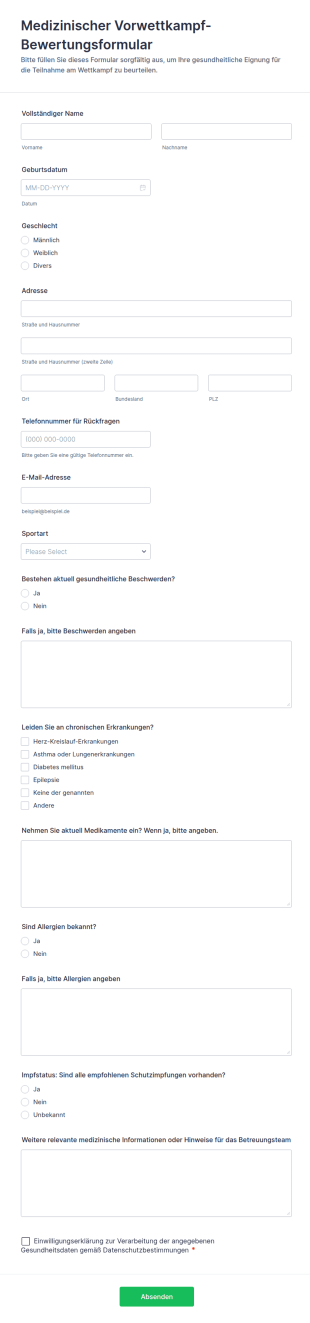
Medizinischer Vorwettkampf Bewertungsformular
Erfassen Sie medizinische Angaben vor Wettkämpfen und Trainings zentral mit dem Medizinischen Vorwettkampf-Bewertungsformular und unterstützen Sie Vereine, Schulen und Veranstalter bei der sicheren Vorbereitung der Betreuung.
Zur Kategorie:Healthcare Assessment Forms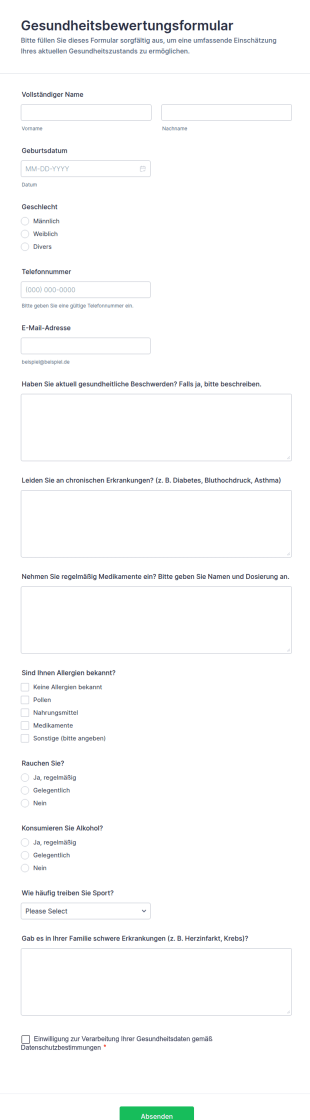
Gesundheitsbewertungsformular
Erfassen Sie mit dem Gesundheitsbewertungsformular wichtige Angaben für Anamnese, Coaching oder betriebliche Gesundheitsangebote und vereinfachen Sie die digitale Datenerfassung mit einer anpassbaren Formularvorlage in Jotform.
Zur Kategorie:Bewertungsformulare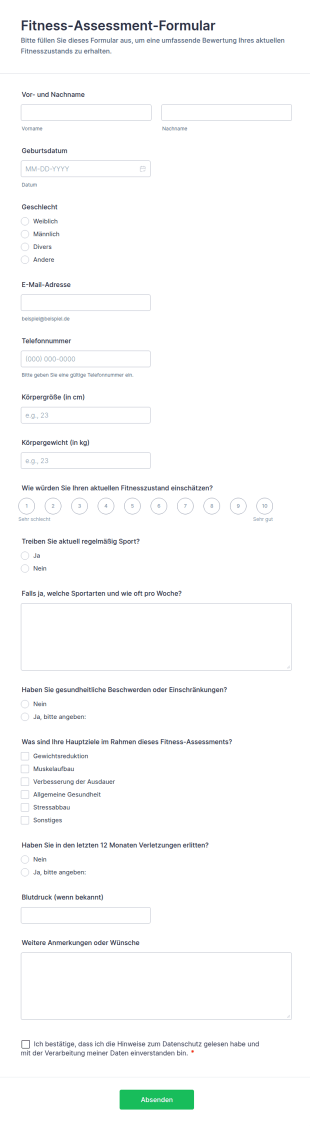
Fitness Assessment Formular
Erfassen Sie mit dem Fitness-Assessment-Formular die wichtigsten Angaben für eine fundierte Trainingsberatung und digitale Datenerhebung, ideal für Fitnessstudios, Personaltrainer und Gesundheitscoaches in Jotform.
Zur Kategorie:Bewertungsformulare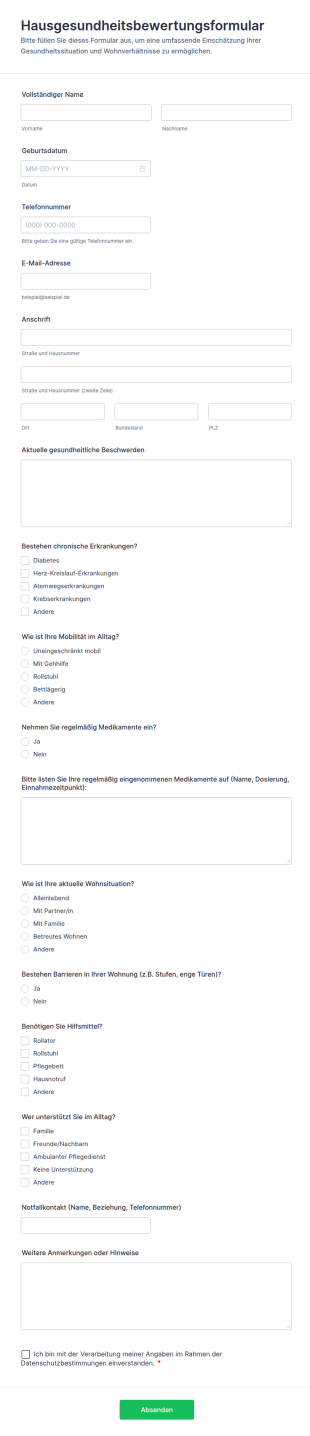
Hausgesundheitsbewertungsformular
Erfassen Sie mit dem Hausgesundheitsbewertungsformular wichtige Angaben zur Gesundheit und Wohnsituation für Beratung, Betreuung oder Unterstützung und verwalten Sie die Datenerfassung und jede Formular-Antwort zentral mit Jotform.
Zur Kategorie:Healthcare Assessment Forms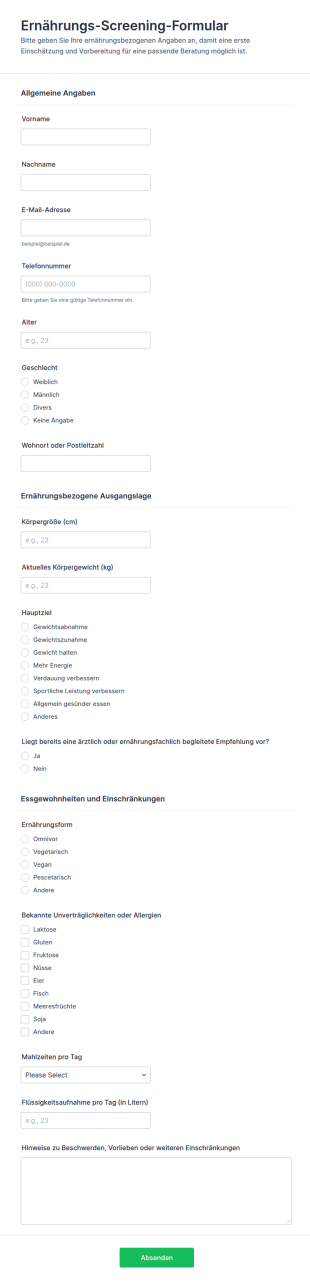
Ernährungs Screening Formular
Erfassen Sie mit dem Ernährungs-Screening-Formular von Jotform vor dem Ersttermin wichtige Angaben für die Ernährungsberatung, damit Praxen, Coaches und Studios Ziele und Bedürfnisse von Klientinnen und Klienten besser vorbereiten können.
Zur Kategorie:Healthcare Assessment Forms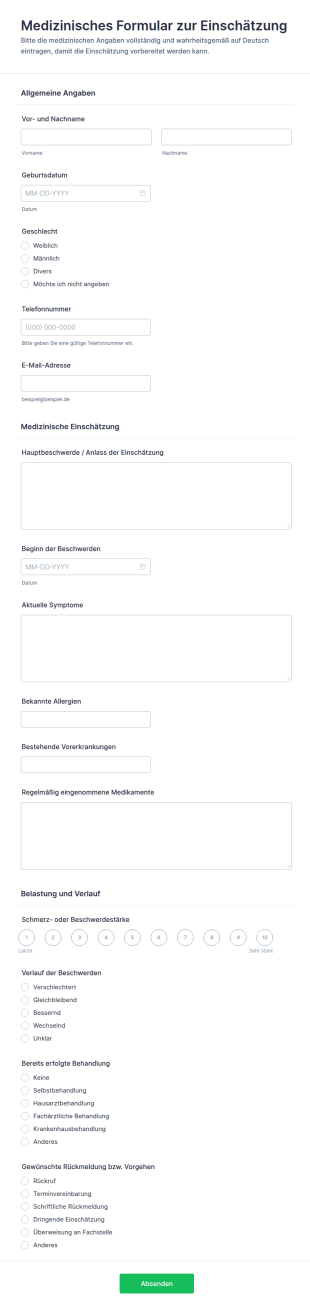
Medizinische Beurteilung Formular
Medizinisches Einschätzungsformular für Praxen und therapeutische Einrichtungen zur digitalen Datenerhebung vor der ersten Kontaktaufnahme, damit Anfragen schneller eingeordnet und weitere Schritte wie Rückruf oder Terminplanung vorbereitet werden können.
Zur Kategorie:Bewertungsformulare
Medizinisches Zusammenfassungsformular
Erfassen Sie mit dem Medizinischen Zusammenfassungsformular alle wichtigen Gesundheitsdaten kompakt, um Ärztinnen, Praxen und Pflegeeinrichtungen eine schnelle medizinische Übersicht zu bieten.
Zur Kategorie:Gesundheitsformulare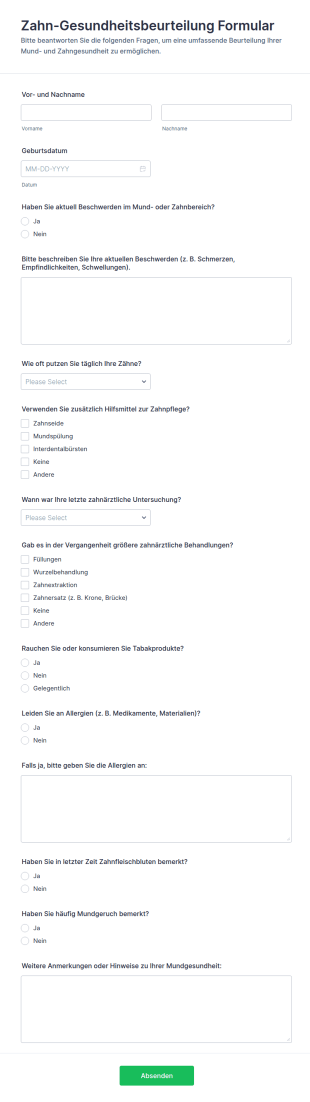
Zahnärztliche Gesundheitsbewertung Umfrage
Das Formular zur Zahngesundheitsbeurteilung erleichtert Zahnarztpraxen die digitale Datenerfassung vor Terminen und unterstützt eine bessere Vorbereitung auf Beratung, Kontrolle und Behandlung mit Jotform.
Zur Kategorie:Healthcare Assessment Forms
Pflegeassessment Für Senioren Formular
Erfassen Sie mit dem Pflegebedarfserfassung Formblatt Formular Pflege- und Unterstützungsbedarfe digital, um Erstgespräche vorzubereiten und die Datenerfassung samt Formularantworten in Jotform zentral zu bündeln.
Zur Kategorie:Gesundheitsformulare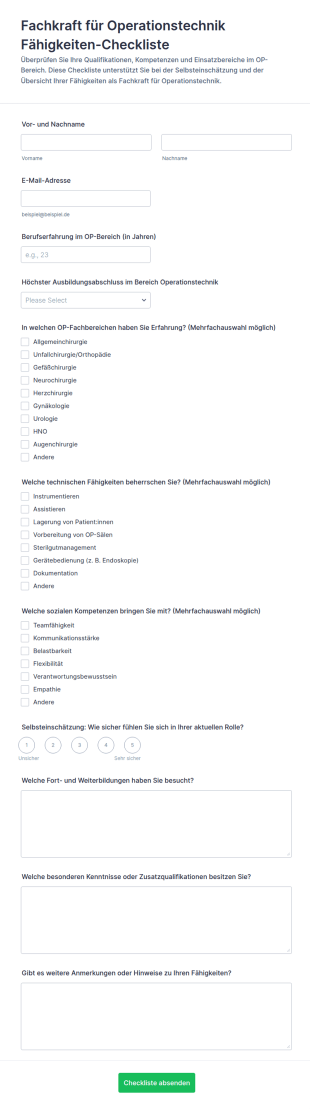
Fachkenntnisse Der Operations Technologin Umfrage
Erfassen Sie Kompetenzen von OP-Fachkräften mit dem Fähigkeiten-Checkliste-Formular für Fachkräfte für Operationstechnik und vereinheitlichen Sie Datenerfassung, Qualifikationsübersicht und Entwicklungsplanung in Kliniken und OP-Teams.
Zur Kategorie:Checklisten-Formulare
Pflegeassessment Für Hospize Formular
Das Hospiz-Pflegeeinschätzungsformular unterstützt Hospiz- und Palliativteams bei der digitalen Datenerhebung zur Einschätzung von Beschwerden, Risiken und Versorgungszielen, damit die Betreuung besser geplant und koordiniert werden kann.
Zur Kategorie:Hospizformulare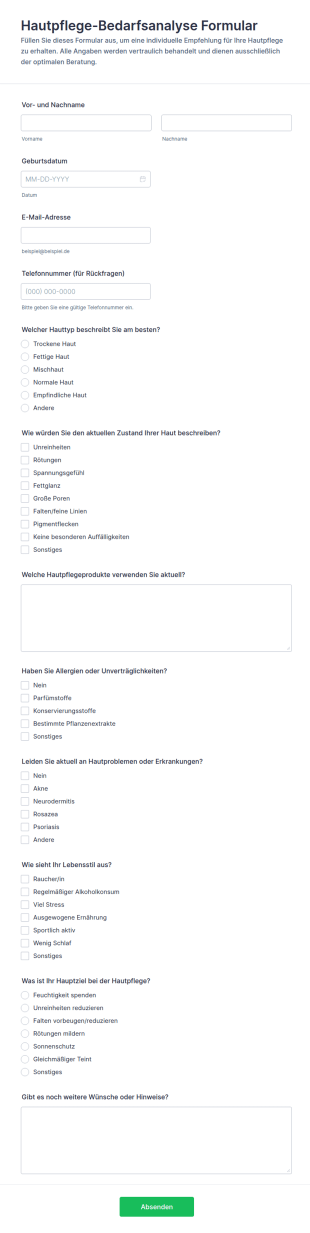
Hautpflege Bewertungsformular
Hautpflege-Bedarfsanalyse Formular für Kosmetikstudios und Wellness-Anbieter, um die Datenerfassung vor Beratungen zu vereinfachen und Kundendaten per Online-Formular zentral zu sammeln und auszuwerten.
Zur Kategorie:Vorlagen für Fragebögen
Sprachtherapie Bewertungsbogen
Das Sprachtherapie-Einschätzungsformular erleichtert Praxen und therapeutischen Einrichtungen die digitale Datenerfassung vor dem Erstgespräch und hilft, Anfragen einheitlich zu sichten, zu priorisieren und passende Termine zu planen.
Zur Kategorie:Healthcare Assessment Forms
Bewertung Der Geistigen Fähigkeiten Fragebogen
Dokumentieren Sie mit dem Einschätzung der geistigen Entscheidungsfähigkeit Formular Beobachtungen und Empfehlungen für Betreuung, Beratung oder Versorgung, und nutzen Sie Jotform für digitale Datenerhebung und übersichtliche Formularantworten.
Zur Kategorie:Bewertungsformulare
Funktionale Leistungsbeurteilungsformular
Erfassen Sie mit dem Funktionsfähigkeitsbewertungsformular belastbare Angaben zu Einschränkungen, Belastbarkeit und Arbeitsplatzanforderungen, damit Teams in Arbeitsmedizin, Rehabilitation und Beratung Einschätzungen einheitlich dokumentieren können.
Zur Kategorie:Bewertungsformulare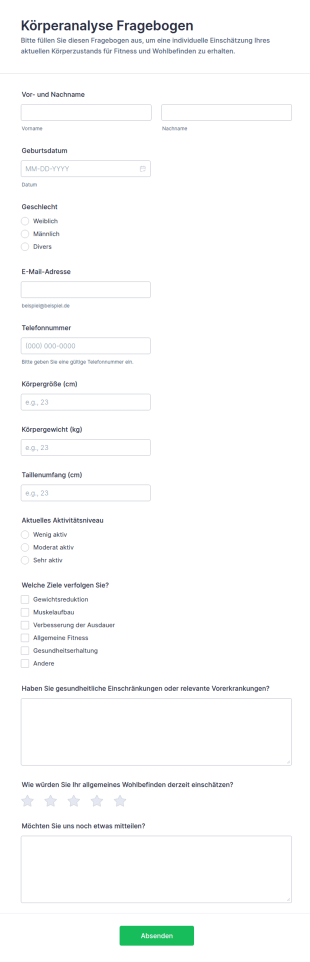
Körperliche Beurteilungsbogen
Erfassen Sie mit dem Körperanalyse Fragebogen Formular in Jotform wichtige Grundlagen für Training und Beratung, ideal für Fitnessstudios, Ernährungsberatung und Gesundheitscoaches zur schnellen Datenerfassung vor dem Erstgespräch.
Zur Kategorie:Vorlagen für Fragebögen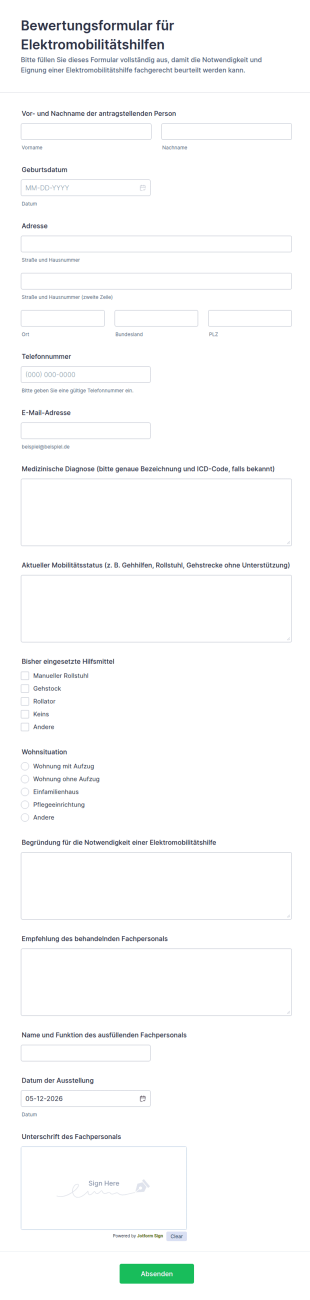
Power Mobility Device Evaluation Formular
Erfassen Sie mit dem Bewertungsformular für Elektromobilitätshilfen nachvollziehbare Einschätzungen durch Fachpersonal und bündeln Sie die Datensammlung für Versorgung, Freigaben und Dokumentation in einer anpassbaren Formularvorlage von Jotform.
Zur Kategorie:Bewertungsformulare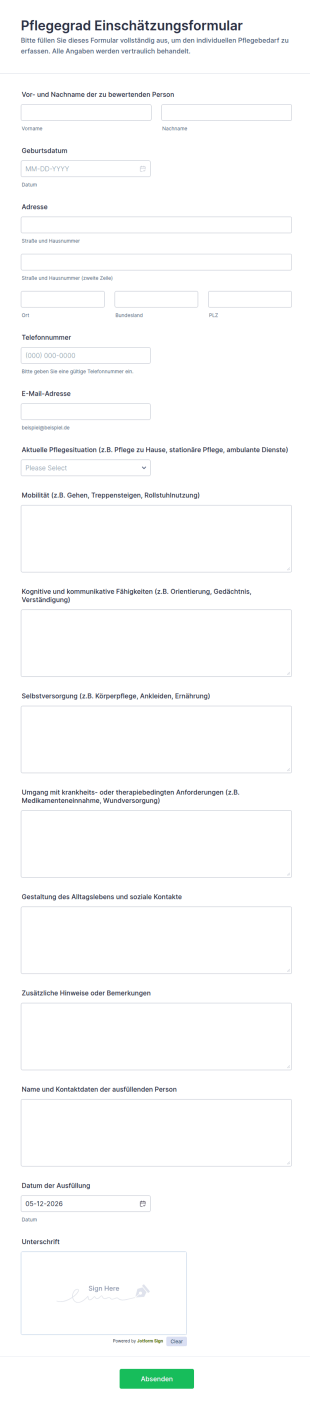
Pflegegrad Einschätzungsformular
Dokumentieren Sie den Unterstützungsbedarf und wichtige Pflegeinformationen mit dem Pflegegrad Einschätzungsform FORM, ideal für Angehörige, Pflegeberatungen und Pflegedienste zur digitalen Datenerfassung und Auswertung in Jotform.
Zur Kategorie:Bewertungsformulare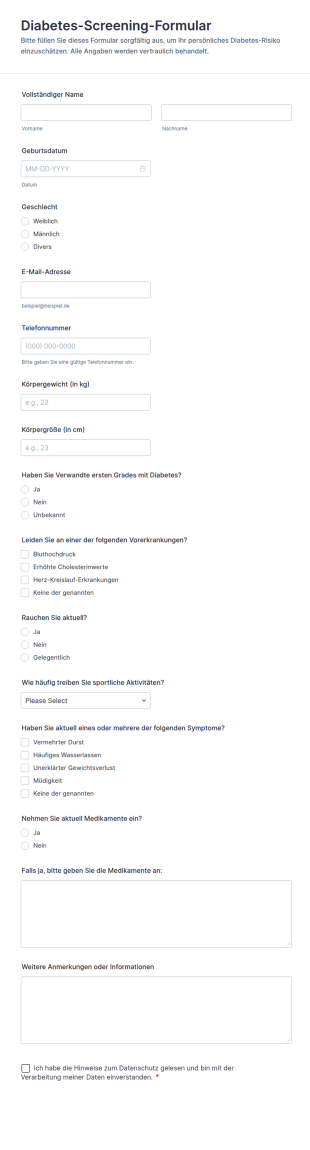
Diabetes Screening Formular
Erfassen Sie mit dem Diabetes-Screening-Formular in Jotform wichtige Angaben zur ersten Risikoeinschätzung und unterstützen Sie Praxen, Gesundheitszentren und Präventionsangebote bei digitaler Datenerfassung und schneller Auswertung.
Zur Kategorie:Healthcare Assessment Forms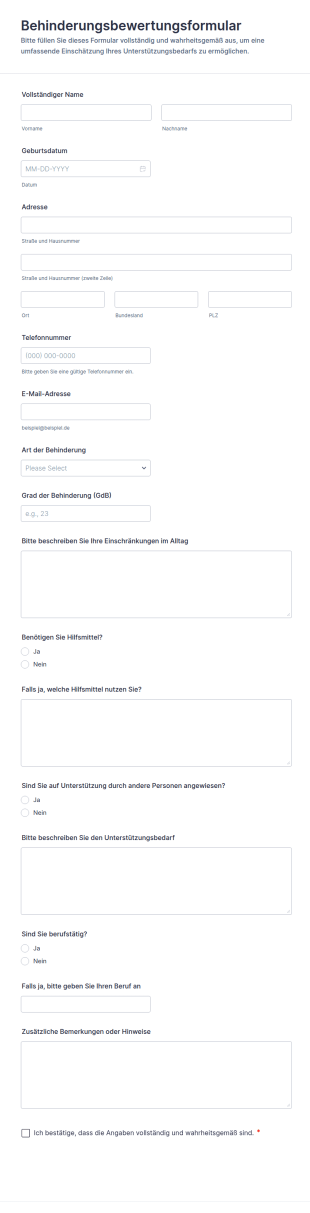
Behinderungsbewertungsformular
Erfassen Sie mit dem Behinderungsbewertungsformular wichtige Angaben zu Einschränkungen und Unterstützungsbedarf für Beratung, Betreuung oder interne Einschätzungen und bündeln Sie die Datenerfassung zentral in Jotform.
Zur Kategorie:Healthcare Assessment Forms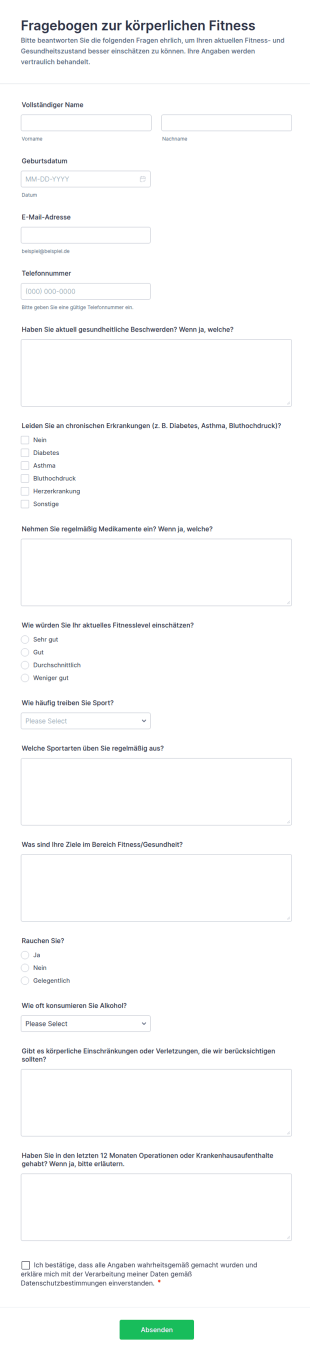
Fragebogen Zur Körperlichen Fitness
Erfassen Sie mit dem Fragebogen zur körperlichen Fitness Formular Gesundheits- und Trainingsinfos für Erstgespräche, Kurse oder Betreuung in Studio, Verein oder Praxis und bündeln Sie die Datenerfassung in Jotform.
Zur Kategorie:Vorlagen für Fragebögen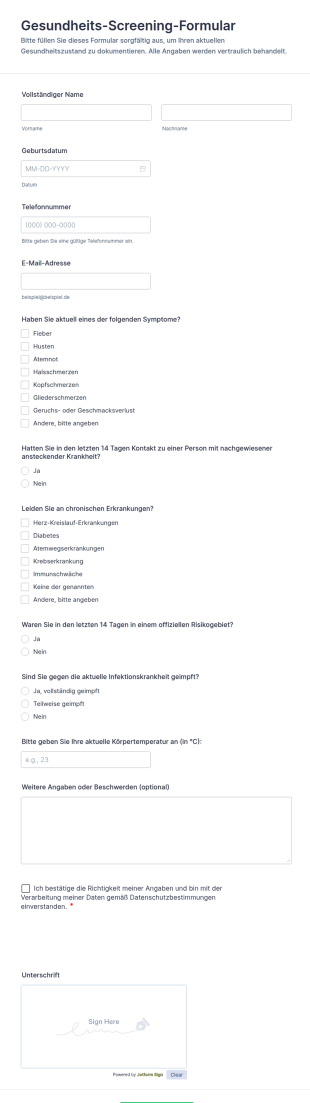
Gesundheits Screening Formular
Erfassen Sie mit dem Gesundheits-Screening-Formular vor Terminen, Besuchen oder Schichtbeginn wichtige Angaben zur Datenerfassung und verwalten Sie jede Formular-Antwort in Jotform für eine zuverlässige Vorbereitung.
Zur Kategorie:GesundheitsformulareÜber Healthcare Assessment Forms
Healthcare assessment forms are structured documents used to collect and evaluate patient health information to support clinical decisions, care planning, and ongoing monitoring. They help healthcare teams capture consistent details about symptoms, medical history, risk factors, functional status, and care needs in a clear and organized way. Healthcare assessment forms are commonly used in clinics, hospitals, telehealth services, rehabilitation centers, home care, and specialty practices for intake assessments, screening evaluations, follow-up check-ins, and condition monitoring. By standardizing assessment workflows, these forms improve documentation quality, reduce missing information, and support safer, more coordinated care.
With Jotform, healthcare assessment forms can be created quickly using a no-code, drag-and-drop Form Builder and tailored to different specialties and care settings. Conditional logic can show follow-up questions based on patient responses, and file upload fields can collect referrals, reports, or supporting documents when needed. Submissions are stored in Jotform Tables for organized review and can be routed to the right staff using automated notifications. This makes it easier to manage assessments efficiently while keeping records consistent.
Use Cases of Healthcare Assessment Forms
Healthcare assessment forms support patient intake, screening, monitoring, and care planning across medical workflows. Below are common ways these forms are used and the challenges they help solve.
Mögliche Anwendungsfälle:
- Aufnahme neuer Patientinnen und Patienten sowie Erfassung der Anamnese
- Symptom-Screening und Triage-Beurteilungen
- Überwachung chronischer Erkrankungen und Nachsorgetermine
- Funktionsstatus und Rehabilitationsbeurteilungen
- Risiko-Screenings (Sturzrisiko, Schmerzen, Lebensstil usw)
- Bewertung von Pflegeplänen und Nachverfolgung des Behandlungsfortschritts
Lösungsansätze:
- Vereinheitlichen Sie die Erfassung von Patientendaten und reduzieren Sie fehlende Angaben
- Erfassen Sie Symptome und Risikoindikatoren gleich zu Beginn, um die Triage zu beschleunigen
- Verbessern Sie die Kontinuität der Pflege durch zuverlässige Nachverfolgung der Nachsorgetermine
- Unterstützen Sie Teams dabei, Beurteilungen für Berichte und klinische Arbeitsabläufe zu dokumentieren
Mögliche Eigentümer und Nutzer:
- Krankenschwestern, Ärzte und klinisches Personal
- Klinikverwalter und Aufnahmekoordinatoren
- Telemedizin- und Fernbetreuungs-Teams
- Anbieter von Rehabilitations- und häuslichen Pflegediensten
- Patienten, die Bewertungen online ausfüllen
Unterschiede der Erstellungsmethoden:
- Die Aufnahmeformulare erfassen die Patientenakte, aktuell eingenommene Medikamente, Allergien, frühere Eingriffe und grundlegende Gesundheitsdaten.
- Formulare zur Symptomüberprüfung und Triagebewertung fokussieren sich auf Symptomdetails, Schweregradbewertungen, Zeitpunkte des Auftretens, Warnsignale und die Weiterleitung für die nächsten Schritte.
- Die Formulare für die Nachbetreuung und Pflegeüberwachung erfassen Fortschritte, Schmerzen oder Symptome, die Einhaltung der Behandlung sowie alle Veränderungen, die eine klinische Prüfung erfordern.
How to Create a Healthcare Assessment Form
Creating a healthcare assessment form with Jotform helps you collect patient information clearly while streamlining intake and follow-up workflows.
1. Wählen Sie eine Vorlage oder beginnen Sie komplett neu
Klicken Sie in „Mein Workspace“ auf „Erstellen“ und wählen Sie „Formular“. Starten Sie mit einer Vorlage für die Aufnahme oder Beurteilung im Gesundheitswesen und passen Sie sie an Ihre Praxis an.
2. Add Patient Identification and Context Fields
Erfassen Sie den Namen des Patienten, seine Kontaktdaten, die Art des Termins und den Grund für die Untersuchung. Verwenden Sie Dropdown-Menüs für die Klinikabteilung oder die Art des Besuchs.
3. Build Assessment Sections
Je nach Art der Beurteilung fügen Sie Felder für Symptome, Patientenakte, Medikamente, Allergien, Lebensstilfaktoren und Funktionsstatus hinzu. Nutzen Sie Bewertungsskalen für Schweregrad und Auswirkungen.
4. Use Conditional Logic for Follow-Up Questions
Zeigen Sie weitere Abfragen an, wenn eine Patientin oder ein Patient bestimmte Symptome oder Risiken angibt. Wählt die Person zum Beispiel starke Schmerzen aus, zeigen Sie detailliertere Abfragen und Hinweise zur Eskalation an.
5. Add Attachments and Supporting Documents
Nutzen Sie Datei-Uploads für Überweisungen, Laborergebnisse oder Versicherungsunterlagen, falls erforderlich.
6. Publish and Manage Submissions in Jotform Tables
Veröffentlichen Sie das Formular und teilen Sie es über sichere Links oder Aufnahme-Workflows. Speichern Sie die eingereichten Antworten in Tabellen, um sie übersichtlich zu überprüfen und für Follow-up zu nutzen.
Häufig gestellte Fragen
1. What are healthcare assessment forms?
Healthcare assessment forms are documents or online forms used to collect and evaluate health information to support clinical decisions and care planning.
2. Why are healthcare assessment forms important?
They standardize documentation, reduce missing details, and support safer triage, monitoring, and care coordination.
3. What information is typically included in healthcare assessment forms?
Common fields include symptoms, medical history, medications, allergies, severity ratings, risk questions, and follow-up notes.
4. Who uses healthcare assessment forms?
Clinicians, nurses, intake teams, telehealth providers, and patients may all use healthcare assessment forms depending on the workflow.
5. Are healthcare assessment forms used only for new patients?
No. They are also used for symptom screening, follow-ups, chronic condition monitoring, rehabilitation assessments, and care plan reviews.
6. Can healthcare assessment forms be completed online?
Yes. Online forms allow patients to complete assessments remotely, helping clinics prepare and reduce intake time.
7. Can healthcare assessment forms be customized by specialty?
Yes. Forms can be tailored for different departments such as cardiology, mental health, physical therapy, or primary care using custom fields and conditional logic.
8. How do healthcare assessment forms support follow-up care?
They track changes over time, document progress, and highlight issues that require clinical review or adjustments to the care plan.