Key takeaways
- Retail QR codes are scannable shortcuts connecting your physical store to a digital customer experience.
- Shoppers scan QR codes to access product info, reviews, payment, loyalty programs, and more.
- QR codes for stores are fast, contactless, and familiar to the modern customer.
- In retail, QR codes increase accessibility, bridge the e-commerce and in-store experience, and provide your business with otherwise inaccessible data.
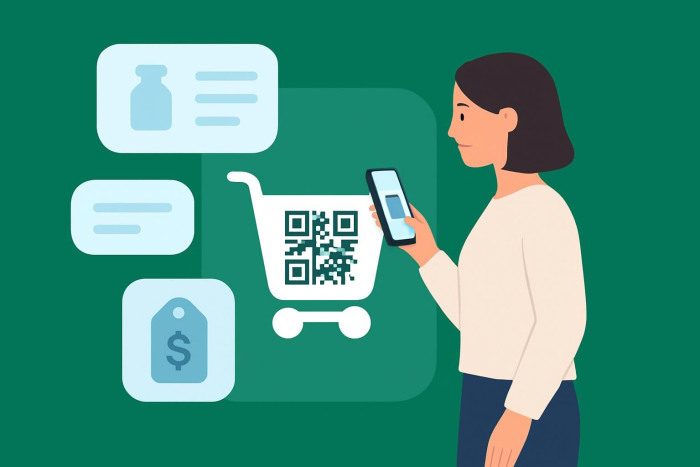
A retail QR code is a barcode customers scan with their phones to instantly access digital content, promotions, payments, product data, or forms. This growing retail tool bridges the gap between in-store shopping and online engagement, seamlessly connecting customers to the information they need from anywhere.
These assets have become so popular in retail environments that 64 percent of consumers have scanned a QR code while shopping in-store. But how can you best use QR codes in retail to your advantage? Let’s look at where you can find them, common use cases for them, and how to create one for your business.
Create QR Codes in Minutes
How retail QR codes show up in real stores
QR codes have many functions, and their versatility means you’re likely to find them in several places across a brick-and-mortar store. From packaging to receipts, here are just a few examples of where you might find a QR code in retail stores.
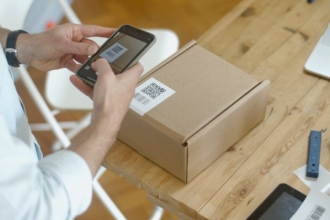
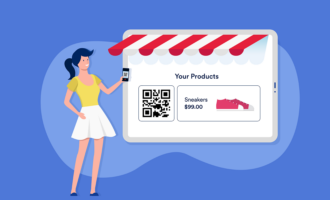
- Product packaging: Whether they’re accessing care instructions, recipes, AR try-ons, or warranty information, shoppers can scan a QR code directly on their item’s packaging for product information.
- Shelf labels: Customers can access reviews, size options, comparisons, or how-to videos for products on a designated shelf by scanning a retail QR code placed on the display itself.
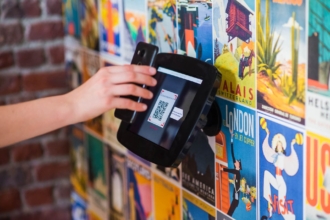
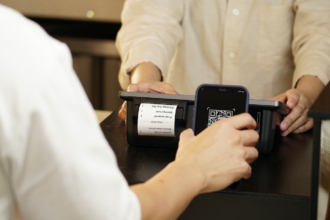
- Checkout: Thanks to contactless payment, shoppers can scan to skip the line, allowing them to pay on their device and receive a digital receipt.
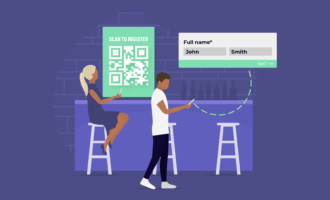
- Loyalty and discounts: Shoppers can quickly sign up for your customer loyalty program to receive discounts and special offers by scanning QR codes placed around the store — likely near checkout — then filling out a short form and receiving an instant coupon.
- Customer service: Rather than wait for one of your limited customer service representatives, shoppers can scan a QR code in retail stores to request help, make an appointment, or begin a return.
- Post-purchase: Retail QR codes don’t stop at the door; shoppers can also scan codes on their receipts to provide feedback or register a product.
Why stores love QR codes?
Examples are many, but one thing is certain; people love using retail QR codes.
Customers love retail QR codes because;
- They provide instant access to the information they need.
- They offer personalized deals at their fingertips.
- They streamline the payment process.
Retailers use retail QR codes because;
- They elevate customer engagement.
- They collect vital, previously inaccessible customer data.
- They increase operational efficiency.
How you use your retail QR codes will depend on what you’re looking to offer your customers and what you hope to gain for your business.
10 best retail QR code use cases today
Thanks to the flexibility of QR code technology, there are lots of ways you can use retail QR codes to enhance your business. Among the available options, a few key use cases are most popular with both small and large businesses.
1. Providing product details
If a customer purchases a product without all the relevant information, they could experience buyer’s remorse and return the item — or even leave a negative review. Offering customers a QR code to access key product information reduces bottlenecks that negatively impact their buying decisions.
For example, if a customer can’t get their question answered in-store — such as how well a product will fit in their space or how other buyers have reviewed it — they may not want to risk buying a product they’re not sure about.
When you provide a QR code for product information, your shoppers can instantly access the details they need to determine whether your product is right for them. This increased transparency not only reduces friction and empowers customers to make informed decisions, but can also reduce the time your team spends answering frequently asked questions.
2. Linking how-to guides or demos
Not every product is self-explanatory. If your business sells products or services that require a high degree of customer education or assembly, you can use retail QR codes to provide shoppers with helpful how-to guides and demonstrations highlighting your product’s value. This reduces barriers to entry for uninformed customers and increases the likelihood of purchase.
QR codes can also reduce paper waste from physical instruction manuals. Even without eliminating physical manuals entirely, QR codes allow you to link directly to online instructions or videos that provide additional detail on how to use or assemble a product, saving on resources and helping customers in one fell swoop.
These assets can answer most customer questions, so they avoid a lengthy call with your customer support team, allowing your subject matter experts to spend more time handling complex, situation-specific inquiries. This increases your operational efficiency without diminishing the quality of your customer service experience.
3. Reviews and feedback
One of the most valuable uses of QR codes in retail is collecting customer feedback, which can inform internal decisions around product releases, operational improvements, store layout, and more. Through the use of QR codes for stores, customers can submit real-time feedback — rather than risk losing interest or forgetting later.
The same goes for reviews. Although positive reviews are always preferred, even negative reviews submitted in real time provide valuable feedback on opportunities for improvement, and the sooner customers submit a review, the more detailed and specific the feedback is likely to be. This information can address customer concerns, make them feel heard, and make adjustments to prevent future issues.
Another way to collect feedback via retail QR codes is with customer surveys. Whether on a receipt or in-store, QR codes make it easier than ever for customers to fill out a quick questionnaire about their experience, covering everything from how easily they found their items to the checkout process. You can then apply the results to your operations to improve the quality of your retail experience for future customers.
4. Instant digital coupons
A coupon can be a decision-maker for customers on the fence about purchasing a product. Retail QR codes are an easy way for customers to instantly generate offers that push them over the edge. Where you place these coupons may depend on your business goals.
Looking to drive sales for a certain item? Place coupon QR codes on the product shelf or even on the packaging itself. Interested in drawing customers to sign up for your loyalty program? Consider offering instant discounts at checkout when they scan your QR code.
Using digital coupons strategically will guide your customers toward your preferred outcomes. Start by identifying your sales goals, pinpointing your best QR code placement, calculating your offer, and generating retail QR codes to match.
5. Loyalty programs
When it comes to creating an appealing loyalty program, user experience is everything. Complex or cumbersome user interfaces reduce customer engagement and prevent even the most determined of shoppers from getting the benefits they seek. But QR codes make this friction a thing of the past.
Retail QR codes can streamline your loyalty program’s sign-up, check-in, and reward redemption processes by transforming complex functionality into a single scan. Linking in-store QR codes to your app or loyalty program site bridges the gap between your physical store and your customers’ digital experience, which drives usage and adoption.
These programs are essential tools for encouraging customers to become repeat buyers and spread positive word of mouth. In fact, 72 percent of customers purchase more from brands when they are enrolled in their loyalty program. They also help your business collect customer data so you can provide benefits like instant coupons or personalized recommendations, both of which enhance your overall customer experience and encourage repeat buyers.
6. Contactless payments
Streamlining your payment process with retail QR codes reduces potential bottlenecks that negatively impact customer experience or sales. If all customers have to do is scan a QR code to pay, there’s less time for them to reconsider their purchase or grow frustrated with a drawn-out wait.
Are you experiencing backed-up checkout lines? Having trouble catering to mobile-first customers? Finding it difficult to manage a high turnover environment? These situations could benefit from the ease and convenience of retail QR codes for payment, and there are several ways to incorporate them:
- Adding QR codes at checkout areas to streamline payment
- Using portable QR codes at pop-ups or events to enable mobile payment anywhere
- Placing QR codes on bills or invoices to provide an instant payment option
Allowing shoppers to pay with a retail QR code is one more way to smooth out a point of friction that could otherwise lead to a negative experience.
7. Social media engagement
Using QR codes to connect customers to your social media accounts is another prime example of QR code marketing in retail. QR codes act as a direct gateway for shoppers to easily scan, follow, and engage with your posts. These codes can be used in conjunction with other resources to drive results like
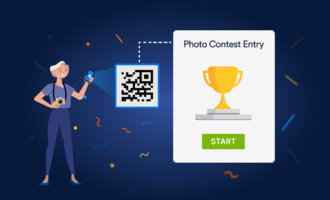
- Sweepstakes entries
- Loyalty program sign-up
- Social media post engagement
- Follower boosts
For the most effective use of QR code marketing in retail, pair social media QR codes with clear calls to action and benefits for shoppers.
To further support this strategy, combine QR codes with the use of AI in retail to create a full, digitally enhanced social engagement ecosystem. Whether you’re using AI agents to respond to customer messages or leveraging gen AI in retail to generate content, you’re using tools that elevate your overall social media presence.
8. Interactive experiences
Transforming your in-store experience into an immersive, interactive event is easy with QR codes. Experiences like virtual reality try-ons letting shoppers see what clothing, accessories, and other items would look like on them without physically going into a changing room can help close sales when customers are short on time or stores are crowded.
You can also use QR codes to simulate an in-store experience for customers visiting your store after hours. Visitors who stop by after you close can easily scan a QR code you place on your storefront windows to browse your e-commerce site, peruse your product selection, and even make purchases online.
If you own a large store with a complex layout, QR codes can also show shoppers where to find the products they’re looking for. From maps to in-store navigation assistance, this feature reduces customer frustration and increases conversion rates.
9. Streamlined scheduling
Not all retail QR codes need to be exclusively customer-facing. When it comes to scheduling, QR codes can be a powerful tool for eliminating unnecessary bottlenecks for both your staff and shoppers alike. By pairing a QR code with your retail scheduling software, you can streamline the way users
- Schedule shifts across multiple locations
- Book appointments with your customer service or sales teams
- Sign up for interviews
Removing the red tape that complicates these processes lets your team operate more efficiently and stay organized. In the same way, you can make your team more accessible to shoppers by eliminating complex scheduling workflows and linking them directly to forms, scheduling apps, or your calendar to help them schedule appointments.
10. Online forms
The easiest way for your in-store visitors to access and interact with your online forms is via retail QR codes. You can direct them to a robust range of useful forms, including
- Contact forms
- Feedback forms
- Sign-up forms
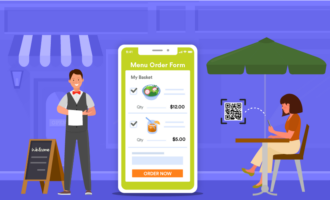
- Order forms
- Payment forms
- E-signature forms
- Booking forms
- Event registration forms
- Job application forms
QR codes can connect directly to the form of your choice. The best part? You can create as many QR codes as you have forms, so you’re not limited in how you use these versatile tools, especially when you use a QR code generator provided by an online form builder like Jotform.
How to create retail QR codes with Jotform
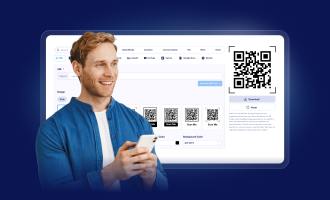
With the right tools, creating retail QR codes of your own is as easy as a few clicks. That’s why Jotform’s free QR code generator is designed to simplify this process into a single, user-friendly interface. This generator can build QR codes for SMBs and enterprise organizations alike. Just follow these quick steps to get started:
- Open the QR code generator. You can create a QR code in minutes using the on-site tools provided.
- Choose your QR code type. You can select from options like URLs, social media accounts, online forms, and more.
- Enter your information. This could include the URL you’re linking to, wallet addresses, phone numbers, messages, or files.
- Customize your retail QR code and download. You change the style, upload a logo of your choice, adjust the frame text, select a text color, update your frame and border color, and choose a background color. Once your QR code is complete, download it with the click of a button.
This free system requires no coding or technical skill from your team, making it an easy-to-use, accessible resource for your whole team. To find the type of retail QR code you want to create, browse through categories like
- Popular QR code options
- Social media
- Payment
- Communication
- Files
- Work
Jotform also offers QR types that don’t fall under one of these categories, such as
- Online stores
- Wi-fi access
- Google reviews
- Linktree
- Spotify
- Maps
- App links
Or if you have a specific use case in mind, you can also search directly for the QR code type you wish to use. Once you find the type of code you prefer, generate your logo in minutes and get started using these assets in-store.
Digitize your retail experience with Jotform
Don’t limit your business to the confines of a brick-and-mortar shopping experience. Retail QR codes reshape every physical touchpoint of your in-store experience into a hybrid digital action. From product discovery and checkout to customer loyalty and data collection, these simple additions to your in-store experience can make all the difference in how your business operates.With so many use cases to choose from, take the leap and infuse digital action into your retail interactions using retail QR codes. Generate a QR code for free with Jotform’s QR Code Generator to link customers to your forms, online store, or app and expand the boundaries of your shopping environment.
This article is for retail owners, store managers, and operations or marketing teams who want to make in-store shopping faster, more convenient, and more measurable using scannable codes.














































Send Comment: