

Formulare für Softwareentwickler
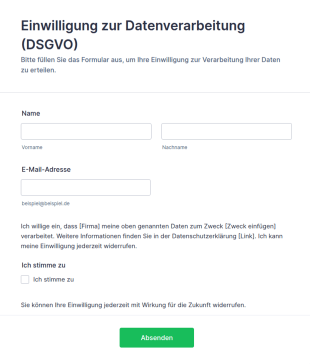
Vorlage Einwilligung Zur Datenverarbeitung (DSGVO)
DSGVO-konforme Einwilligungsformular-Vorlage für Jotform: Opt-in-Checkbox, Widerrufshinweis und Datenschutz-Platzhalter – direkt anpassbar und einsatzbereit.
Zur Kategorie:Werbeformulare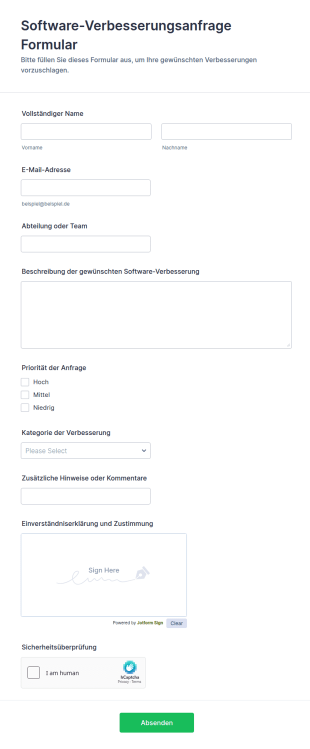
Software Verbesserungsanfrage Formular
Sammeln und priorisieren Sie Software-Verbesserungsvorschläge aus allen Abteilungen mit dem Software-Verbesserungsanfrage Formular von Jotform, ideal für IT, Produktteams und interne Serviceprozesse.
Zur Kategorie:Anfrageformulare für IT
Einreichungsformular Für Programmierwettbewerbe
Einreichungsformular für Programmieraufgaben erleichtert Teams und Veranstaltern die Datenerfassung für Coding-Challenges, Kursprojekte oder Wettbewerbe, inklusive Uploads und klarer Organisation jeder Formularantwort in Jotform.
Zur Kategorie:Bewerbungsformulare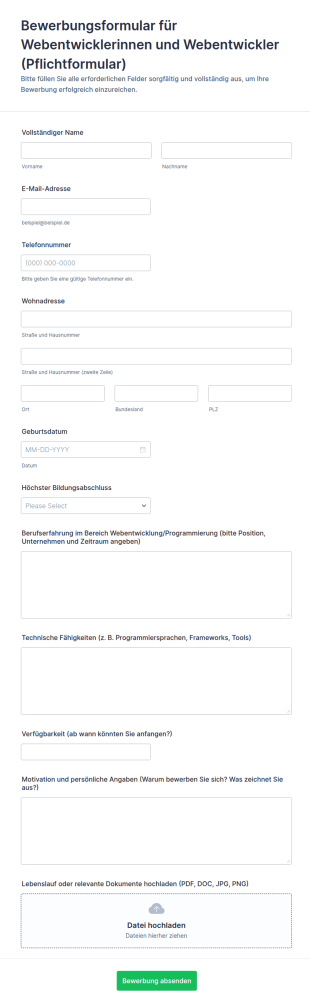
Bewerbungsformular Für Webentwickler/Programmierer
Bewerbungsformular für Webentwicklerinnen und Webentwickler erleichtert die Online-Erfassung von Bewerbungen für Entwicklungsrollen und unterstützt Unternehmen bei der Datenerhebung und schnellen Vorauswahl im Einstellungsprozess mit Jotform.
Zur Kategorie:BewerbungsformulareÜber Formulare für Softwareentwickler
Software Developer Forms are specialized digital forms designed to streamline and optimize the daily operations and workflows of software development teams. These forms play a crucial role in a variety of processes, such as gathering requirements from clients, managing bug reports, and tracking progress on development tasks. In the fast-paced world of software development, where accuracy and speed are paramount, these forms provide a structured way to collect and analyze data, ensuring that projects remain on track and stakeholders are kept informed. By utilizing these forms, development teams can enhance communication, improve project management, and maintain a clear overview of their tasks and timelines.
Mit dem Online-Formulargenerator von Jotform erstellen und verwalten Entwicklerteams ihre Formulare per Drag-and-Drop. Die Formulare sind frei anpassbar, und weil Angaben automatisch erfasst werden, sparen Sie Zeit und vermeiden Fehler. In Jotform Tabellen laufen alle Einsendungen übersichtlich zusammen und lassen sich leicht auswerten. So bleibt mehr Zeit für die eigentliche Entwicklungsarbeit.
Warum Formulare für Entwicklerteams?
- Mit den Formularen erfassen Teams gezielt die Angaben, die sie brauchen, und zwar schnell und vollständig. Gerade in der Softwareentwicklung führen kleine Fehler oder fehlende Angaben schnell zu großem Aufwand.
- Weil die Erfassung automatisch läuft, gehen Anfragen und Meldungen schneller ein und sind schneller bearbeitet. Das reduziert Handarbeit und schafft Zeit für die Entwicklung.
- Die Formulare geben eine feste Struktur vor, sodass Angaben einheitlich erfasst werden. Das ergibt saubere Datensätze, die sich leichter auswerten lassen.
- Digitale Formulare verringern das Risiko, dass Angaben verloren gehen. Alles wird zentral abgelegt, statt auf Zetteln und in einzelnen Postfächern zu landen.
- Die Formulare verbessern die Abstimmung im Team, weil Informationen immer auf demselben Weg eingehen. Ob Kundenanfrage oder interne Meldung: Alle sind auf dem gleichen Stand, und das Projekt läuft runder.
Diese Probleme lösen digitale Formulare in der Entwicklung
- In der Entwicklung sammeln sich Anfragen und Meldungen schnell an vielen Stellen: per E-Mail, im Chat, in Tabellen. Digitale Formulare bündeln das an einem Ort, sodass nichts untergeht.
- Angaben von Hand zu übertragen, kostet Zeit und führt leicht zu Fehlern. Digitale Formulare erfassen sie direkt, sodass mehr Zeit fürs Entwickeln und Problemlösen bleibt.
- Gehen Angaben verloren, wird es unangenehm, gerade bei Anforderungen von Kundinnen und Kunden oder bei Bug Reports. Mit digitalen Formularen sind alle Meldungen zentral abgelegt und schnell auffindbar, statt in Chatverläufen unterzugehen.
- Auch die Kommunikation profitiert: Wenn Anforderungen und Fehlermeldungen immer nach demselben Schema eingehen, gibt es weniger Rückfragen und Missverständnisse, im Team wie mit der Kundschaft.
Passende Anwendungsfälle für Features
- Für die Aufnahme von Anforderungen erstellen Sie mit dem Drag-and-Drop-Formulargenerator detaillierte Felder, die helfen, nichts zu übersehen. Das erleichtert den Projektstart, und alle im Team haben denselben Stand.
- Mit bedingter Logik passen sich Formulare an die Eingaben an, was sich besonders für Formulare für Bug Reports eignet. Meldende werden Schritt für Schritt durch die nötigen Angaben geführt, ohne dass sie mit unnötigen Feldern überfrachtet werden.
- Integrating with 30+ Payment Gateways such as Stripe or PayPal is crucial for forms that handle client billing or subscription payments. This seamless integration allows for secure and efficient payment processing directly through the form.
- Mit Jotform Signatur holen Sie Freigaben und Vereinbarungen von Kundschaft und Beteiligten digital ein. Die Unterschrift erfolgt direkt im Formular, und jede Zustimmung ist nachvollziehbar dokumentiert.
- Mit dem PDF Editor werden Einsendungen automatisch zu ansprechend gestalteten PDF-Dokumenten, etwa für Berichte oder Präsentationen für die Kundschaft. Das spart Zeit und sorgt für ein einheitliches Layout.
- Über mehr als 100 Integrationen lassen sich Formulardaten automatisch in andere Anwendungen übertragen, etwa nach Google Tabellen oder Slack. So arbeiten Teams über mehrere Tools hinweg mit demselben Stand.
- Genehmigungs-Workflows vereinfachen es, Freigaben von verschiedenen Beteiligten einzuholen: Einsendungen durchlaufen die vorgesehenen Freigabeschritte, bevor es weitergeht. Das hilft besonders bei größeren Projekten mit mehreren Freigabestufen.
So erstellen Sie ein Formular für Ihr Entwicklerteam
- Stöbern Sie in den Vorlagen nach einer passenden Vorlage für Entwicklerteams, oder beginnen Sie mit einem leeren Formular, das genau zu Ihrem Projekt passt.
- Passen Sie Design und Felder mit dem Drag-and-Drop-Formulargenerator an, sodass jedes Element zu den Anforderungen Ihres Teams passt.
- Veröffentlichen und teilen Sie das Formular per Direktlink oder E-Mail oder binden Sie es auf Ihrer Website ein, damit alle Beteiligten unkompliziert darauf zugreifen können.
Die wichtigsten Anwendungsfälle
- Für die Projektleitung: Die Formulare geben der Projektleitung einen klaren Überblick über Projektstand und Anforderungen. Aufgaben lassen sich verfolgen, Engpässe erkennen und Aufgaben sinnvoll verteilen. Weil die Angaben strukturiert vorliegen, hilft das dabei, Termine und Budget im Blick zu behalten.
- Für Entwicklerteams: Entwicklerteams haben mit diesen Formularen einen zentralen Ort für Meldungen, Feedback und Änderungen. Das erleichtert die Zusammenarbeit, und alle kennen den Stand im Projekt. Dank automatischer Benachrichtigungen und aktueller Daten lassen sich Probleme schnell angehen und Lösungen nachbessern.
- Für Kundschaft und Auftraggeber: Für Kundschaft und Auftraggeber wird die Zusammenarbeit übersichtlicher: Anforderungen und Rückmeldungen werden über feste Formulare eingereicht und festgehalten, statt in E-Mail-Verläufen unterzugehen. Das schafft Klarheit auf beiden Seiten, und alle bleiben über den Stand der Entwicklung auf dem Laufenden.
Formulare für Entwicklerteams im Überblick
Formulare für Entwicklerteams sind hilfreich, wenn Sie Abläufe vereinfachen und Informationen zuverlässig erfassen möchten. Mit den Funktionen von Jotform automatisieren Teams die Erfassung, stimmen sich leichter ab und arbeiten besser zusammen. Da sich die Formulare frei anpassen und an bestehende Systeme anbinden lassen, fügen sie sich gut in die Projektarbeit ein.
Häufig gestellte Fragen
1) Kann ich Formulare für Entwicklerteams mit Jotform kostenlos erstellen?
Ja, Jotform bietet einen kostenlosen Tarif, mit dem Sie Formulare erstellen und teilen können. Je nach Tarif gelten Einschränkungen bei Funktionen und der Zahl der Einsendungen.
2) Sind die Formulare und die übermittelten Daten sicher?
Jotform überträgt Formulardaten verschlüsselt und setzt branchenübliche Sicherheitsverfahren ein. Zusätzlich können Sie Ihre Daten in einem Rechenzentrum in der EU speichern lassen und einen Auftragsverarbeitungsvertrag abschließen.
3) Brauche ich Programmierkenntnisse, um ein solches Formular zu erstellen?
Nein. Mit dem Drag-and-Drop-Formulargenerator von Jotform erstellen Sie eigene Formulare ganz ohne Programmierkenntnisse.
4) Kann ich Zahlungen direkt über meine Formulare erfassen?
Ja. Jotform lässt sich mit mehr als 30 Zahlungsdiensten verbinden, sodass Sie Zahlungen direkt über Ihre Formulare entgegennehmen können.
5) Können diese Formulare auf mobilen Geräten verwendet werden?
Ja, die Formulare passen sich automatisch an jedes Display an und lassen sich auf allen Mobilgeräten ausfüllen.
6) Kann ich Formularantworten in professionelle PDF-Dokumente umwandeln?
Ja, mit dem PDF Editor von Jotform werden Einsendungen automatisch zu ansprechend gestalteten PDF-Dokumenten, praktisch für Berichte und für die Ablage.
7) Wie verbessern die Formulare die Zusammenarbeit im Team?
Weil alle Angaben an einem Ort erfasst werden, greifen alle im Team auf denselben Stand zu. Das macht Abläufe nachvollziehbar und erleichtert die Zusammenarbeit.
8) Gibt es Vorlagen für bestimmte Abläufe in der Softwareentwicklung?
Ja, Jotform bietet verschiedene Vorlagen für Aufgaben rund um die Softwareentwicklung. So müssen Sie nicht bei null anfangen.