
Steps to write a nonprofit business plan
- Start with research
- Define your mission and vision
- Outline your programs and services
- Determine your organizational structure
- Conduct a market analysis
- Craft your marketing strategy
- Develop financial projections
- Write and refine
Business plans aren’t only for startups and corporations; they’re equally crucial for nonprofit organizations. A well-drafted nonprofit business plan not only provides direction but also attracts donors and other stakeholders. In this article, we’ll delve into the hows and whys of writing a nonprofit business plan and walk you through the process step by step.
The purpose and importance of a nonprofit business plan
A business plan is like a roadmap, it charts the course by setting clear goals and outlining the strategies needed to reach them. In practice, the purpose of a nonprofit business plan is to document your goals, execution strategy, and resource allocation so leadership can make informed decisions and communicate a clear plan to donors and other stakeholders. Because nonprofits compete for funding, must demonstrate impact, and often operate with limited resources, this planning clarity is essential, it keeps operations focused, improves accountability, and strengthens fundraising by showing how support will be used to achieve measurable outcomes.
What is a nonprofit business plan?
A nonprofit business plan is a document that outlines an organization’s operational and financial objectives, and details the strategies and resources (both human and capital) required to achieve those objectives. It serves as an internal guide for the organization’s leadership and a tool for communicating with external stakeholders.
Why do nonprofits need a business plan?
At its core, a nonprofit thrives on clarity of purpose, and a business plan provides that clarity in a way your team can actually use day to day. It puts your mission and vision into plain language, then connects them to concrete goals, priorities, and the actions required to reach them. Just as important, it documents how work gets done, who owns which responsibilities, and how decisions are made. That structure reduces confusion, prevents duplicated effort, and helps staff and volunteers stay focused on the programs and outcomes that matter most.
A business plan also strengthens your nonprofit’s credibility in a crowded fundraising environment. Donors, sponsors, and partners want to see more than passion, they want evidence that the organization is organized, transparent, and capable of delivering impact. By laying out your strategy, programs, and resource needs, a plan helps stakeholders understand how contributions will be used and what success will look like. That kind of clarity is especially important in a volatile environment; a 2024 national survey analysis by the Urban Institute found that 55% of nonprofit leaders said their organization’s financial health was their biggest concern. A business plan creates a framework for performance evaluation by defining benchmarks and outcomes, making it easier to measure progress, report results, and build a culture of accountability across the organization.
Key components of a nonprofit business plan
Like a blueprint, a business plan has several elements that are indispensable to its structure. But depending on your organization’s goals and purpose, there may be elements unique to you. Let’s consider the pillar elements of every plan:
- Executive summary: The executive summary provides an overview of the organization, including its mission, vision, goals, and achievements to date.
- Organization description: An organization description details the history, structure, and values of the organization.
- Market analysis: A market analysis provides a detailed examination of the community or population the nonprofit serves as well as a description of their needs and the ways the organization meets them.
- Organizational structure: The organizational structure outlines the roles and responsibilities of team members, the board of directors, and other key personnel.
- Services and programs: The services and programs section provides details on the services the organization provides or the programs it runs.
- Marketing plan: The marketing plan explains how the organization will raise awareness about its work. It includes strategies for donor engagement, fundraising events, and promotional campaigns.
- Financial projections: The financial projections section provides an estimate of the organization’s financial outlook for the next three to five years. It includes expected income, expenses, and milestones to reach financial sustainability.
How to write a nonprofit business plan in 8 steps
. Follow this step-by-step guide to help you navigate the process:
- Start with research. Understand the needs of your target community. This knowledge forms the foundation of your business plan.
- Define your mission and vision. Clearly state what your organization aims to achieve and the change it wants to bring about.
- Outline your programs and services. Detail how you plan to achieve your mission. Break down your offerings, explaining the impact and benefit of each.
- Determine your organizational structure. Establish the hierarchy, roles, and responsibilities to help in operations and decision-making processes.
- Conduct a market analysis. Identify key trends in the nonprofit sector and analyze your competitors. Determine what sets you apart.
- Craft your marketing strategy. Consider how you’ll communicate your mission and raise funds. You might include events, online campaigns, and collaborations.
- Develop financial projections. While predicting donations is challenging, try to provide a realistic financial outlook. Base projections on past data, if available, or make educated guesses using your market analysis.
- Write and refine. Draft the business plan, integrating all the components. Use clear, concise language. Once your draft is complete, review and refine it for clarity and coherence. It’s a good idea to have another professional review it too, as they may see things that you’ve missed.
Tips and best practices
These best practices help ensure your business plan remains useful, credible, and actionable.
- Stay realistic. While optimism is great, your projections and plans should be grounded in reality.
- Engage stakeholders. Consult team members, board members, and even potential donors when drafting the plan.
- Regularly review and update. A business plan isn’t a static document. As your organization evolves, make sure your business plan does too.
- Use visuals. Graphs, charts, and infographics can make your plan more engaging and easier to understand.
How Jotform can help you create a nonprofit business plan
Crafting a nonprofit business plan requires meticulous organization and seamless data collection. As you dive into the process, Jotform can help you create customized forms that streamline various aspects of your planning.
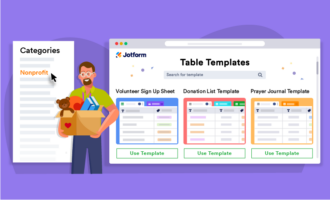
Whether you’re gathering initial research and feedback, managing donor information, registering volunteers, or even tracking impact metrics, Jotform ensures that every piece of data is organized and accessible. For an at-a-glance way to manage planning tasks and timelines, you can use Jotform’s Nonprofit Business Plan Board Template to track progress, assign owners, and keep key steps moving forward.
Jotform’s intuitive interface and templates make it easy to design forms tailored to your nonprofit’s specific needs. Use Jotform’s business plan templates to give yourself a head start. From soliciting feedback on a new program idea to managing donor relationships to reporting on the tangible impact of your efforts, Jotform simplifies the process. You can even use the business proposal template to collect grantor signatures.
Nonprofit organizations are eligible for a 50-percent discount on paid Jotform plans.
This article is for nonprofit founders, executive directors, board members, and operations leaders, and anyone who wants to create a clear, credible nonprofit business plan that guides strategy, supports fundraising, and demonstrates impact to donors and stakeholders.




































































Send Comment: