
Starting a private practice involves all the usual business decisions — choosing a structure, registering a name, and opening a bank account. But it also comes with a layer of compliance requirements most business owners never have to think about: HIPAA, informed consent forms, NPI numbers, and licensure verification.
That’s where many new practice owners get overwhelmed. The clinical side may feel familiar, but running the business often doesn’t.
This article walks through the legal, financial, logistical, and marketing tasks involved in starting a private counseling practice so you can build a strong operational foundation from day one.
While this article should not be considered legal, financial, or medical advice, it can help you organize the major steps involved in your practice launch.
Private practice checklist for legal and compliance items
Starting a private counseling practice involves more than registering a business. Before working with clients, you need processes for handling protected health information (PHI), documenting consent, and meeting state and federal requirements.
These aren’t optional administrative details. They’re the foundation of your practice. Getting them right early prevents larger problems later on.
1. Choose your business structure
Counselors often choose from a sole proprietorship, an LLC, or a PLLC for their business structure.
A sole proprietorship is the simplest to set up, but it offers no separation between your personal and business finances. If a client files a complaint or lawsuit, your personal assets aren’t protected. An LLC or PLLC creates that separation and is often worth the additional setup work. Some states require licensed professionals to use a PLLC.
Because licensing and ownership rules vary by state, consult a legal or financial professional before registering. The right structure for a solo counselor in Texas differs from best practices in New York.
2. Register your business name
Your name is often the first thing a potential client sees, so it should feel professional, trustworthy, and clear about what you do. Before you commit, confirm the name is legally available in your state and doesn’t conflict with existing trademarks or business registrations.
If you plan to build a website, check whether a matching domain name and social media handles are available.
3. Verify licensure and malpractice insurance requirements
Before seeing clients independently, make sure your professional license, any required supervision hours, and malpractice insurance coverage are fully in place. Requirements vary significantly based on your state, your client population, whether you offer telehealth, and which insurance panels you plan to join.
This is especially important for counselors offering virtual services across state lines. Some states require separate licensure for telehealth clients who reside there, even if your practice is based elsewhere.
4. Create your intake and informed consent forms
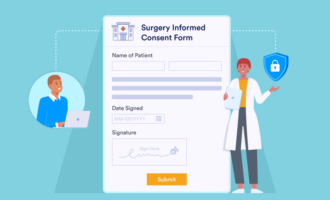
Before treatment begins, new clients should clearly understand your policies, privacy practices, cancellation terms, and what they’re consenting to. Understanding informed consent in counseling is especially important here since it protects both the client and your practice.
A complete intake packet may include
- Client intake form for counseling
- Medical and mental health history forms
- Emergency contact forms
- Telehealth consent forms
- Privacy disclosures
- Payment policies
- Informed consent documentation
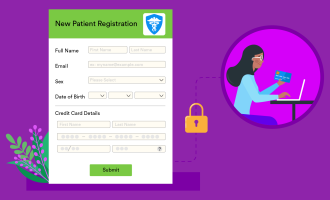
Digital forms make this easier to manage than emailing PDFs back and forth. Jotform’s HIPAA-compliance features allow practices to use online forms to collect patient information securely. Additionally, ready-made templates are available for common workflows, like informed consent and intake assessment counseling.
5. Set up HIPAA-enabled communication and recordkeeping systems
This is where many new practices create risk without realizing it. A counselor scheduling appointments through a personal Gmail account or collecting client information via a basic web form has already introduced a potential risk of PHI exposure. The systems you set up at the beginning tend to stick around longer than expected, so getting this right early matters.
Before taking clients, confirm that every system you use for forms, scheduling, communication, and document storage supports secure handling of PHI. Centralized workflows are easier to maintain and audit than a collection of disconnected tools grown organically over time.
Private practice checklist for financial items
On to finances. Revenue planning, tax obligations, software costs, and payment workflows require decisions before you see your first client. These early decisions can be a headache if they’re deferred.
1. Apply for your NPI and EIN
Most counselors need a National Provider Identifier (NPI) for insurance billing and healthcare-related administrative processes. An Employer Identification Number (EIN) is also typically required for business banking, tax filing, and any payroll-related tasks.
Even solo practitioners benefit from using an EIN instead of a personal Social Security number for business finances. It keeps your personal information out of vendor and insurance paperwork, which is a small but worthwhile layer of protection.
2. Open a business bank account
Mixing personal and business finances creates problems that only get harder to untangle over time. A dedicated business account makes bookkeeping cleaner, simplifies tax preparation, and creates a clearer paper trail for expense tracking and reimbursement payments.
If you plan to accept online payments, this is also the point where you’ll connect payment processors and invoicing systems.
3. Set your counseling fees carefully
Pricing is genuinely difficult, and most new counselors undercharge. Often, this is because they calculate fees based solely on session hours, without accounting for everything that happens outside the sessions.
A week with 20 scheduled sessions might include only 15 to 18 billable hours after subtracting documentation, client communication, no-shows, and intake reviews. That gap needs to be reflected in your rate. Your fees need to cover real business costs, including
- Office rent
- Liability insurance
- Continuing education
- Practice management software
- Telehealth tools
- Taxes
- Administrative time
- Marketing costs
Setting rates that account for the full cost of running your practice is easier than raising them after clients have already anchored to a lower number.
4. Decide whether to accept insurance
This is one of the most consequential early decisions in a private practice, and there’s no universally right answer.
Joining insurance panels expands your client base and lowers barriers for people who couldn’t otherwise afford private-pay rates. But it also introduces complications that are largely outside your control, such as
- Credentialing requirements
- Reimbursement delays
- Administrative paperwork
- Claim disputes
- Session rate limitations
Some counselors find the tradeoff worthwhile. Others build sustainable practices around private-pay models with sliding-scale options. The decision affects your pricing, your administrative workload, and your long-term business model. So it’s worth thinking through carefully before you start credentialing.
5. Plan your client payment and intake workflows
Payment collection gets harder when intake, scheduling, invoicing, and documentation live in disconnected systems. A client who completes intake through one tool, schedules through another, and receives invoices through a third is more likely to fall through the cracks and have a frustrating onboarding experience.
Building centralized workflows early reduces that friction. With tools like Jotform, practices combine appointment requests, intake forms, payment collection, and patient communication into a single, organized platform. Practices can use patient-tracking systems to understand where clients stand in the onboarding workflow and flag any items that need follow-up.
Private practice checklist for logistical items
Once your legal and financial foundations are in place, the next step is building the day-to-day systems your practice actually runs on. This is where good intentions become either functional workflows or administrative debt.
1. Decide whether your practice will be in-person, virtual, or hybrid
Your practice model shapes more downstream decisions than almost anything else on this list. It affects your overhead, scheduling, compliance, and licensing.
Each model comes with its own operational considerations:
- In-person counseling requires an office lease, waiting room planning, and additional soundproofing or privacy considerations
- Telehealth practices need secure virtual meeting tools, telehealth-specific consent forms, and state licensing compliance for any clients outside your home area
- Hybrid practices need workflows that handle both environments without creating two separate administrative systems
The hybrid model sounds flexible, but it is operationally the most complex. If you go that route, building systems for both formats from the start is easier than merging two separate workflows later.
2. Set your office hours and scheduling policies
Undocumented policies create confusion and cause friction for both clients and you. Before taking clients, put the following in writing:
- Office hours and session availability
- Cancellation and late arrival windows
- Emergency communication procedures
- Expected response times for emails or messages
These don’t need to be elaborate. A single page covering the basics is enough. The goal is to make sure clients have clear expectations before their first session, not after a miscommunication.
3. Create a client onboarding workflow
Client onboarding is the first real operational experience a client has with your practice, and it sets the tone for the relationship. Sending a PDF intake form over unencrypted email, followed by a scheduling link in a separate message, and then a payment request through a third system is both administratively fragile and a poor client experience.
A clear onboarding workflow should cover
- How new clients request appointments
- Which forms they need to complete, and how they’ll receive them
- Payment expectations and collection process
- Session policies and communication boundaries
- Telehealth logistics, if applicable
4. Organize your documentation and patient information systems
Documentation problems tend to be invisible until your caseload hits a certain size, at which point they become visible very quickly.
Before taking clients, establish clear answers to
- Where patient records will be stored
- How forms will be organized and named
- Who can access documentation and under what circumstances
- How long records will be retained
- How follow-ups and updates will be tracked
The right answers will vary by practice, but having a baseline puts you ahead of most new counselors.
5. Plan how clients will contact your practice
Client communication outside of scheduled sessions is an underestimated administrative burden for a new practice. Without clear boundaries, it can expand to fill whatever space you leave for it.
Think through the basics before you open your doors:
- Which channels will clients use to reach you — phone, email, a contact form, or a messaging system
- How appointment requests will be submitted
- What is your expected response time
- Which methods are appropriate for sensitive or clinical information
Creating clear communication boundaries early prevents operational overload as your practice grows.
Private practice checklist for marketing items
Marketing a counseling practice is less about promotion and more about making it easy for the right clients to find you and feel confident reaching out. In the early stages, visibility and credibility matter more than ad budgets.
1. Create a professional website
Your website is often the first impression potential clients will have of your practice. Even a simple website should clearly explain
- Your specialties and treatment areas
- Whether you offer in-person or virtual counseling
- Insurance and payment information
- How new clients can contact you
- What the intake process looks like
Clear navigation and simple appointment-request workflows can also reduce administrative back-and-forth.
2. Get a professional headshot and consistent branding
Many potential clients will look at your photo before they read a single word on your website. Therapy is a high-trust service, and a professional, approachable image does real work.
Your branding doesn’t need to look corporate or expensive. Clarity and consistency matter more than elaborate design. A clean color palette, readable fonts, and a photo where you look like someone a person could talk to will do more than an overproduced visual identity.
3. Join therapist directories
For most new practices, therapist directories generate the first client inquiries. Psychology Today, Therapist.com, and similar platforms are where many people start when looking for a counselor. Showing up there is often faster than building organic search traffic from scratch.
Directories can improve discoverability for
- Geographic searches
- Specialty searches
- Insurance-related searches
- Virtual counseling searches
4. Build referral relationships
Referral networks are often one of the more sustainable ways to grow a counseling practice over time.
Consider building relationships with
- Primary care providers
- Schools and universities
- Psychiatrists
- Community organizations
- Other therapists with complementary specialties
A warm introduction from a PCP or school counselor carries considerably more weight than a cold inquiry from a potential client who found you through a directory.
5. Create educational content to improve discoverability
Some counseling practices use blogs, FAQs, or educational resources to help potential clients better understand their services and treatment areas.
Educational content improves local SEO visibility and answers common questions before a client reaches out.
For example, practices may create resources around
- Therapy approaches
- Anxiety or stress management
- Intake expectations
- Telehealth counseling
- Insurance questions
6. Remove friction from your intake process
Even strong marketing efforts lose momentum if potential clients struggle to contact your practice or complete intake steps.
Jotform Apps lets practices build simple, branded client-facing experiences for appointment requests, intake forms, and communication without development work. Reducing the steps between first contact and completed intake is one of the more practical ways to make your marketing investment go further.
A mini checklist for before taking your first counseling client
Before scheduling your first session, run through these items one more time. It’s easier to catch gaps now than it is after you’re managing an active caseload.
Legal and compliance checklist
□ Business registration completed
□ Professional license verified
□ Malpractice insurance active
□ HIPAA-enabled systems configured
□ Informed consent forms finalized
□ Intake documentation prepared
□ Telehealth consent forms completed, if applicable
Financial checklist
□ NPI and EIN obtained
□ Business bank account opened
□ Payment collection process configured
□ Counseling fees established
□ Insurance participation decisions made
□ Expense tracking process in place
Operational checklist
□ Scheduling process tested
□ Office hours documented
□ Cancellation and communication policies finalized
□ Client onboarding workflow prepared
□ Documentation and recordkeeping systems are organized
□ Secure communication channels established
Marketing checklist
□ Website published
□ Therapist directory profiles updated
□ Referral contacts identified
□ Professional headshot and branding completed
□ Appointment request workflow tested
Most systems continue to evolve as your practice grows. The goal isn’t to get everything perfect before you start. It’s to build a foundation solid enough that growth doesn’t create chaos.
Start organized, grow sustainably
Starting a private counseling practice involves more than clinical readiness. The legal, financial, operational, and marketing decisions you make in the early stages shape how manageable your practice becomes as your caseload grows. Small choices made at the beginning — how you handle intake, how you communicate with clients, how you structure your fees — tend to have an outsized impact later.
The setup process is genuinely a lot. But most counselors who build sustainable practices will tell you the same thing: The time spent getting your systems right early is considerably less painful than fixing them while actively seeing clients.
Build something organized enough to support good client care. The rest follows from there.
This article is for licensed counselors, therapists, mental health professionals, and anyone who wants to start and successfully manage a compliant, organized, and sustainable private counseling practice.
































































































Send Comment: