
Your business’s practice structure can shape your schedule, finances, administrative workload, decision-making power, and even your patient relationships. According to the latest American Medical Association physician practice data, released in 2025, 42.2 percent of physicians worked in private practice in 2024, down from 60.1 percent in 2012, as physicians increasingly shift toward hospital-owned and larger practice models.
When weighing whether private practice or group practice is right for you, there isn’t a right answer. Some clinicians value the independence of running a solo practice. Others prefer sharing responsibilities, expenses, and clinical resources with colleagues. The best choice depends on your goals, risk tolerance, working style, and long-term plans.
The following table provides an overall comparison of group practice and private practice. Both models can support high-quality care and a sustainable, long-term career.
Solo private practice | Group practice | |
|---|---|---|
| Control and autonomy | Full control over schedule, workflows, and culture | Decisions and policies are shared |
| Financial overhead | You cover operating costs | Costs are shared |
| Income structure | Keep profits after expenses | Salary, fee split, or equity share |
| Administrative work | You manage most admin tasks | Admin is often handled by staff |
| Patient acquisition | You build your own patient base | Benefit from referrals and brand recognition |
| Coverage for time off | Coverage can be harder to arrange | Cross-coverage is usually easier |
What is private practice?
A private practice is a healthcare business owned and operated by healthcare professionals rather than a hospital, health system, or outside organization. In a solo practice, one clinician owns the business and makes its clinical and business decisions.
Private practice can also include physician-owned groups, so “private practice” and “solo practice” aren’t always interchangeable. If you’re exploring different types of medical practices, it helps to think about ownership and practice size separately.
Benefits of private practice
- More control over decisions: You can choose your hours, services, workflows, technology, and policies without waiting for approval from a larger organization.
- More freedom to shape the patient experience: From appointment length to follow-up processes, you can build a practice around the kind of care you want to provide.
- Greater flexibility: Want to keep Fridays free, add telehealth visits, or specialize in a particular patient population? A solo model can make changes easier.
- Direct influence over finances: You decide how revenue is reinvested, which expenses make sense, and how the practice grows.
- A distinct practice identity: You can develop your own brand, culture, and communication style instead of fitting into an established group.
- Closer operations oversight: With fewer layers, it can be easier to spot inefficient processes and improve them.
Challenges of private practice
- You carry more financial risk: Rent, payroll, insurance, equipment, software, and other expenses still need to be paid when patient volume fluctuates.
- Administrative work can pile up: Scheduling, billing, documentation, compliance, hiring, and patient data collection all require systems and attention.
- Coverage for time off can be harder: Vacation, illness, and emergencies may require careful planning because there isn’t another clinician available.
- Growth requires resources you have to pay for: If you want to add staff, locations, or services, you’ll have to take on new costs and management responsibilities.
- You may have less built-in peer support: Clinical collaboration and informal second opinions may take more effort to arrange.
- Technology decisions fall on you: Choosing medical practice management tools or the best electronic health record for private practice takes research.
What is group practice?
A group practice brings multiple healthcare professionals together under one structure. Clinicians may share office space, staff, technology, billing, marketing, and other resources. Groups can be single-specialty or multispecialty.
A group practice can still be private practice if its physicians or providers own it. Its defining feature is that multiple clinicians work within the same organization.
Benefits of group practice
- Shared overhead: Costs for office space, administrative staff, equipment, and software can be spread across multiple clinicians.
- More clinical collaboration: Colleagues are often nearby when you want another perspective on a case or need to coordinate care.
- Easier coverage for time off: Other providers may be able to help when someone is on vacation, sick, or otherwise unavailable.
- More operational support: Larger practices may have dedicated teams for billing, scheduling, HR, compliance, and IT.
- Broader service offerings: A group with multiple specialties or clinicians can support referrals and give patients access to more services in one place.
- Potentially stronger purchasing power: A larger organization may have more leverage with vendors or technology consultants.
Challenges of group practice
- Less individual control: Partners or leadership may need to all agree on policies, schedules, technology choices, and business decisions.
- Revenue may be shared: Compensation models can be more complicated than simply keeping the profit generated by your own practice.
- Different working styles can create friction: Disagreements about workload, staffing, spending, or patient care processes can affect the entire group.
- Changes may take longer: Even small operational decisions can require meetings, approvals, or coordination.
- Your brand may be less individual: Patients may identify more strongly with the group than with a single clinician.
- Shared systems require consistency: Everyone may need to follow the same documentation, scheduling, and communication processes, including specialized workflows such as therapy software in behavioral health settings.
How Jotform improves private and group practice workflows
Whether you’re opening a solo office or joining a group, good systems can reduce time spent chasing paperwork. Jotform helps healthcare practices create online forms for intake, appointment requests, feedback, consent, and other tasks that involve collecting patient information.
Customizable forms
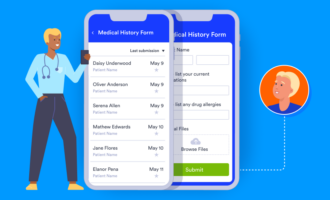
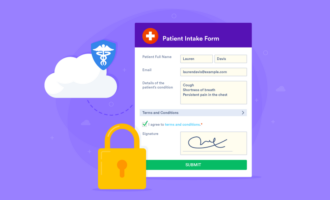
You can customize patient registration and intake forms to collect contact details, medical history, insurance information, and other essentials. Patients can also complete medical consent forms or request an appointment with a doctor online.
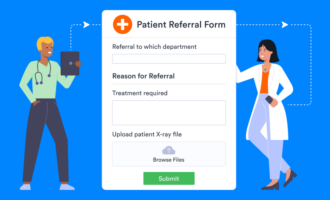
Jotform also offers form templates, including a Mental Health Intake Form, Virtual Care Appointment Form, Therapy Booking Form, and Clinic Registration Form. You can easily customize these templates or create a new one tailored to your needs using Jotform AI Agents.
Customizable apps
Jotform Apps can bring forms and resources together in a customized app patients can download to their devices. The Telehealth App template combines bookings and patient information; you can customize it with forms for medical history, symptoms, or records and share a link to the app.
Compliance and scheduling
For organizations handling protected health information (PHI), Jotform provides features that help enable HIPAA compliance on eligible plans, including a business associate agreement. Learn more about Jotform’s HIPAA features and how to configure your account before collecting PHI.
Appointment scheduling is a critical part of efficient practice management. Jotform’s appointment scheduling software helps practices manage bookings, sync calendars, automate reminders, and connect forms to scheduling workflows. Specifically, the medical scheduling tools can help healthcare providers schedule appointments, manage exam rooms, and coordinate shared clinical resources.
Together, these tools can support healthcare automation without forcing you into one practice model. You can also explore Jotform’s private practice forms when setting up common administrative workflows.
Private practice vs group practice: Which will you choose?
Start by thinking about the workday and business responsibilities you want, not the assumption that one model is universally better.
Choose private practice: This option can work for you if you want maximum control over your schedule, services, brand, technology, and patient experience, and you’re comfortable managing the financial and administrative responsibilities that come with ownership.
Choose group practice: If you value shared overhead, built-in collaboration, easier coverage for time off, and access to a broader operational team, and you’re comfortable making some decisions collectively, a group practice may be a good fit.
Before committing, compare the related practice expenses, compensation, workload, ownership terms, administrative and technology needs, and your professional plans for the next five to 10 years. Choose a model that leaves room for the career and practice you may want later.
FAQs
Common disadvantages include less individual control, shared decision-making, more complex compensation arrangements, possible disagreements between partners, and standardized policies that may limit flexibility. The trade-off is that these clinicians often gain shared resources, administrative support, and easier coverage for time off.
It can be. A physician-owned group practice may qualify as a private practice because the organization is owned by its healthcare professionals. A group owned by a hospital, health system, private equity firm, or other outside organization would generally not be considered a private practice.
Many physicians face financial and operational pressure in independent practice. Common concerns include low payment rates, rising costs, low access to expensive technology and resources, and the long time required to handle regulatory and administrative work. Joining or selling to a larger organization can reduce some of those burdens, although you may also have to give up some independence.
This article is for healthcare providers comparing solo private practice with group practice to find the model that best fits their goals, workload, and working style.



































































































Send Comment: