

Healthcare App Templates

Custom Patient Management App
Patient Management App is an app template designed to streamline the workflows of healthcare providers, clinics, hospitals, and medical practices. By offering a centralized system that manages patient information, appointments, and care plans, the app helps improve operational efficiency. Suitable for healthcare administrators who are tasked with scheduling patients, updating medical records, tracking treatment plans, and facilitating communication throughout the patient care journey, it collects critical data in a structured and consistent manner. The app's value lies in its ability to simplify complex operational tasks, thus reducing the likelihood of errors and enhancing the quality of care provided.Jotform's intuitive design tools make it easy to customize the Patient Management App to match your healthcare practice's branding. Using Jotform's No-Code App Builder, you can quickly adjust forms, pick fonts and colors, and upload your logo without writing a single line of code. Once set up, your patients can access and download the app onto any device; be it a smartphone, tablet, or desktop, through a shareable link. This ease of access maximizes the app's adoption and use, further improving the efficiency of your healthcare practice. The Patient Management App from Jotform embodies the perfect blend of utility and usability, making patient management a breeze.
Go to Category:HIPAA Apps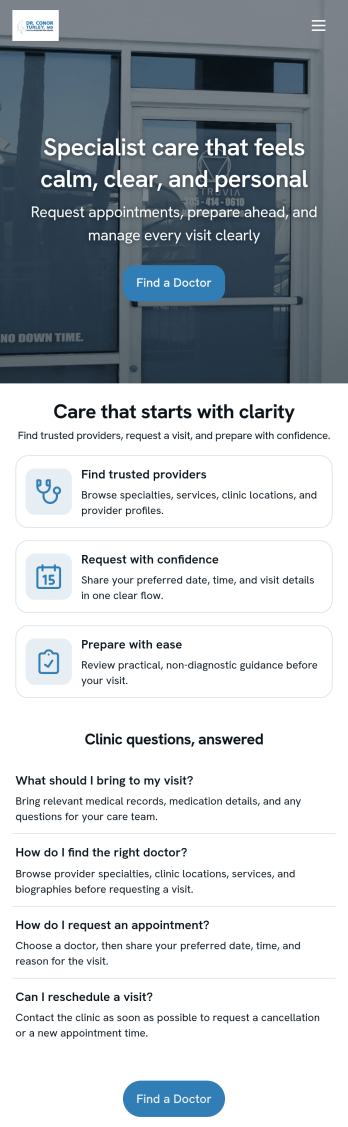
Doctor Appointment App
A doctor appointment app is used by healthcare providers to book appointments and collect patient information. Using Jotform’s Doctor Appointment App — complete with forms for collecting medical history, informed consent, and appointment requests—doctors or nurses can collect and manage patient information and store it securely online. With Jotform’s advanced security measures, you can even further protect data with HIPAA compliance features.Need to customize this app template to better match your practice? Include more links or forms, add your branding and logo, change the background or app icon, and make other changes with our simple drag-and-drop builder. Use Jotform’s easily trainable AI Chatbot guides users through your app and answers questions in real time. Once your app is ready to go, share it with a link to download instantly onto your office’s computer or tablet for easy access. Give your patients a cleaner alternative to messy paper forms with a powerful Doctor Appointment App.
Go to Category:Appointment & Booking Apps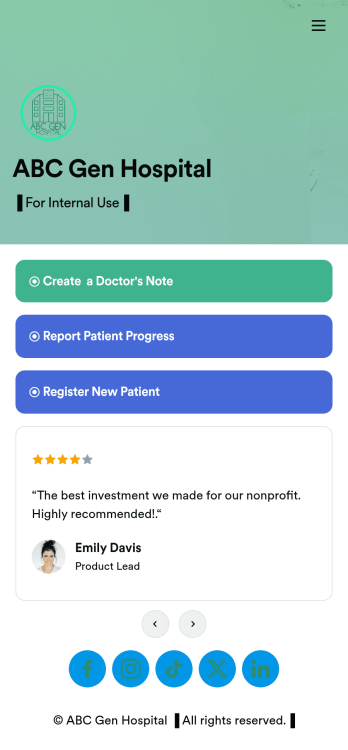
Doctors Note App
A doctor’s note app is used by hospitals and medical professionals to document a medical appointment when a patient is feeling unwell. Doctors can record general information about the patient and hospital, provide a medical diagnosis, and sign off on the note with a digital signature. Once submitted, a PDF of the doctor’s note will be automatically generated using our Doctor’s Note Template. Doctors can report patient progress and update treatment plans in a separate form through this app.Want to customize your Doctor’s Note App? No coding required — our drag-and-drop interface allows you to add forms and text, choose fonts and colors, change your app icon and splash screen, and more. After you’re done, you can share notes and progress updates with patients via link, where they can be viewed and downloaded on any smartphone, tablet, or desktop. Simplify the paperwork and let your patients focus on getting well with this customizable Doctor’s Note App.
Go to Category:HIPAA Apps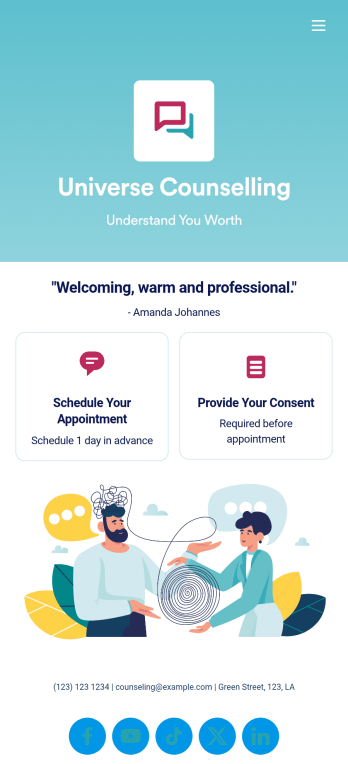
Custom Counseling App
A counseling app provides easier access to mental health resources and tools. Whether you’re a school counselor, family therapist, or life coach, build a fully-custom app for your counseling services with our free Counseling App Template. This ready-to-use app template comes with multiple forms — including a client information form, COVID-19 consent form, and appointment booking form — so clients can access and fill out your forms all from one place.Make this Counseling App your own by customizing it in just a few clicks. Without any coding, you can create and add new forms, embed links to other sites, update the provided text, upload different images, and change app settings. Once you’re satisfied with the app design, embed the app link in your website or send it directly to clients to download on their preferred devices. Make it easier for clients to get the help they need with a professional Counseling App for your services.
Go to Category:Consulting Apps
Dentist App
A dentist app is used by dental practitioners to gather patient information. With Jotform’s powerful Dentist App, your practice can collect patient dental history, consent forms with e-signatures, and schedule appointments from any device. All responses are stored securely in your Jotform account, which is protected by advanced security methods and the ability to opt into HIPAA compliance.Feel free to update the design of this app template by including your practice’s logo, adding or removing forms, updating the background image, and more with our drag-and-drop no-code app builder. Once your app is ready to go, share it with your staff to download onto any smartphone, tablet, or computer — so it can be filled out fast with no messy paperwork. Improve the patient experience with a free Dentist App from Jotform.
Go to Category:Booking Apps
Medication Log App
For patients and clinics alike, keeping track of your patients' medications can be daunting — so streamline the process for everyone with our Medication Log App! This readymade app provides your patients with a single online portal to log and update their medical history, medication regimen, and general contact information. Patients can then access and download your app on any smartphone, tablet, or desktop computer.This Medication Log App is ready to use and doesn't require any coding, but you can easily customize this app template to better suit your needs. With our drag-and-drop interface, you can add forms, choose fonts and colors, and customize your app name, icon, and splash screen. Make it easier for your patients to keep track of their medications with a custom Medication Log App they can use from any device!
Go to Category:Healthcare Apps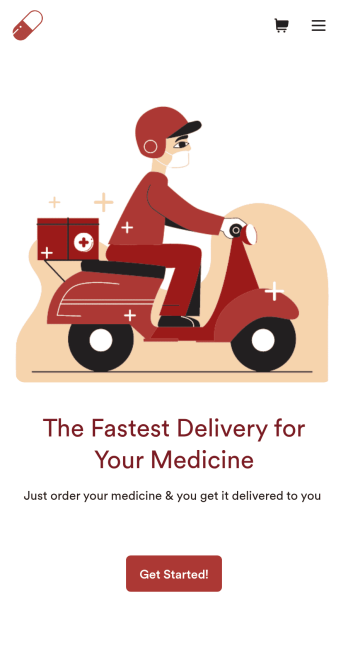
Medicine Delivery App
If your pharmacy offers medicine delivery services and is wondering how to sell medicine deliveries online, collect orders and payments from any device with Jotform’s free Medicine Delivery App. This customizable app includes a medicine order form as well as a feedback form that patients can fill out using any computer, tablet, or smartphone. Submitted orders will be received instantly, so you and your pharmaceutical staff can begin filling prescriptions without any delay.Customize this Medicine Delivery App for your pharmacy without coding. Simply drag and drop to add forms, tables, links, documents, text, images, logos, and other app elements. Then share your app with patients by sending them email invites to download it onto their own devices, or by posting the app link on your website. With a fully-custom Medicine Delivery App that works anywhere, you can sell medicine deliveries online and ensure that patients can refill their prescriptions with ease.
Go to Category:Delivery Apps
Coaching App
A coaching app is used by coaching companies — like fitness centers or coaching agencies — to receive client applications for coaching sessions. Using this free Coaching App, your company can create a free downloadable app for your customers so they can submit their contact details and coaching goals to apply for a session or program from any device! All submissions are easy to view directly from your secure Jotform account.With our drag-and-drop app builder, you can change this app template to include your logo, collect other information, include photos and profiles of your coaches, and personalize other design elements in a few easy clicks — then share your app with a link or invite clients to download it via email onto their computer, tablet, or smartphone. Create a custom Coaching App for your business with Jotform!
Go to Category:Sports Apps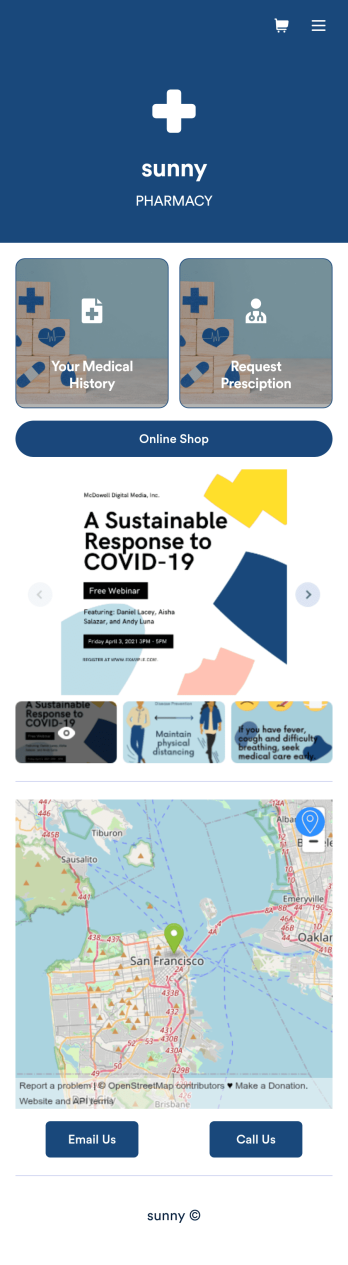
Pharmacy App
A pharmacy app is used by pharmacies for logging patient data and filling prescriptions. Need to know how to sell prescriptions online? Patients can download this Pharmacy App on any device and fill out a form with their personal and medical information, make prescription requests, and schedule COVID-19 vaccination appointments. This app also includes a COVID-19 consent form that patients can digitally sign prior to their appointment. Patient data and prescription refill requests are stored in your secure Jotform account for ease of access.Want to make this app template your own? No problem — just use Jotform’s no-code app builder to drag and drop form elements, choose fonts and colors, upload images, customize your app icon, and more. You can also use your splash screen to add informative content and make announcements. When you're finished customizing, share your app by embedding a link in your website or email newsletter. Manage your pharmacy from one convenient location with this free Pharmacy App from Jotform.
Go to Category:Delivery Apps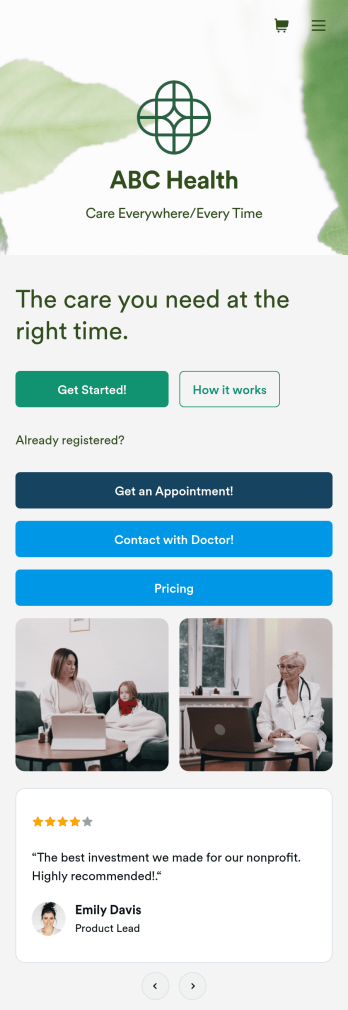
Telehealth App
Gather appointment bookings and patient information with ease using this Telehealth App from Jotform. Simple customize the app to match your needs, share it with patients using a link, and have them download it onto their computer, tablet, or smartphone for easy access. The app includes a Zoom Scheduler that lets patients select a time slot that works for them and generates a new Zoom meeting for each new booking.Need to customize this Telehealth App template? Drag and drop to rearrange the design, add your logo and branding, update existing forms, or connect them to 100+ popular app integrations. Jotform protects form data with a 256-bit SSL connection, GDPR and CCPA friendly features, but you can also optionally upgrade your forms to be HIPAA friendly. Save time with a free Telehealth App that your patients can use on any device.
Go to Category:Appointment & Booking Apps
Patient Registration App
A patient registration app is used by clinics and hospitals for managing patient information. Our readymade Patient Registration App makes it easy for front desk staff to register new patients and record patient medical history in a central database. This app also includes a COVID-19 self declaration form and COVID-19 liability waiver for patients to fill out and digitally sign upon entering the building. All patient data is instantly synced and stored in your secure Jotform account, which you can access from any device for ease of use.This Patient Registration App is ready to go, but if you’d like to make it your own, just use Jotform’s no-code app builder to make changes in seconds. Simply drag and drop to add or change form elements, edit form text and fields, upload images and documents, choose fonts and colors, and more. After you’re done, you can access and download your app onto any device in your office with the app link. Easily record and compile patient data with the touch of a button using Jotform’s fully-customizable Patient Registration App.
Go to Category:Healthcare Apps
Medical History App
A medical history app is used by healthcare professionals to collect medical history data from their patients. Whether you work for a hospital, doctor’s office, or other healthcare provider, enjoy a more efficient way to collect and manage patient information with this Medical History App. All of the data you collect — including intake forms, e-signatures, and file uploads — is stored with powerful security measures, including an option for HIPAA friendly features.Update this app to better match your practice with no coding needed. Add your logo, choose a new app icon, update the splash screen, include extra intake forms, and more using our drag-and-drop builder. To share your app after getting the look you want, copy and paste the app link so employees can save it to their smartphone, tablet, or computer for easy access. Collect medical data more securely with Jotform’s Medical History App.
Go to Category:HIPAA Apps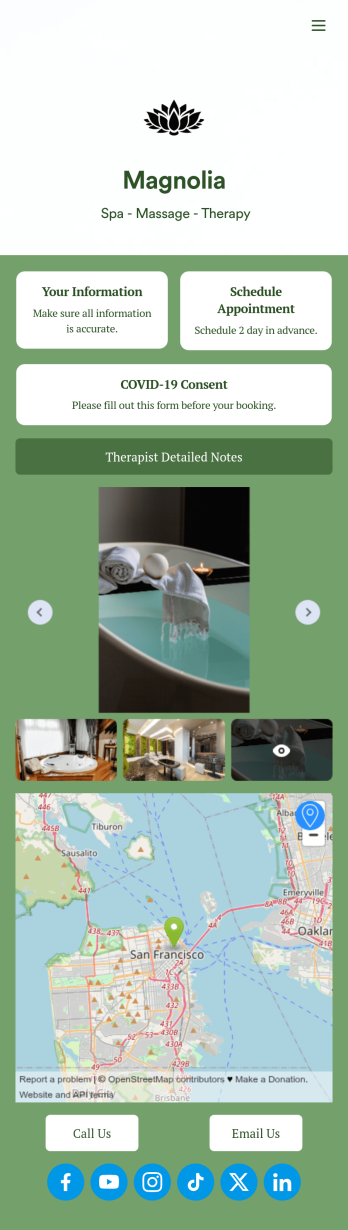
Therapist App
Eliminate stress with our free Therapist App for massage therapists and salons. This ready-to-use app shares multiple forms in one place, so you can register new clients with a Physical Therapy Intake Form, schedule appointments with a Therapy Booking Form, and receive signed Massage Therapy Consent Form responses with ease. Clients can open and download your custom app on their favorite device, be it a smartphone, tablet, or computer.Customize your Therapist App in just a few clicks with our drag-and-drop builder. Without any coding, you can easily create new forms, include links, and change the app name, icon, splash page, and background image to better match your branding. Once you’re ready to share your app, send it to clients directly via email or embed the app link in your website. Give your clients —and yourself — peace of mind with a secure and easy-to-use Therapist App for your spa.
Go to Category:Customizable Beauty Salon Apps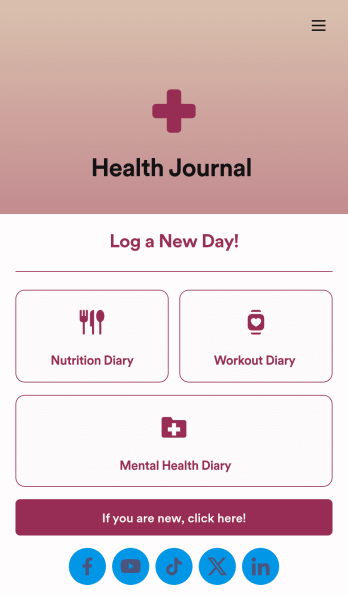
Health Journal App
Does your health services organization need an interactive and thoughtful way to track client data and progress? Give Jotform’s Health Journal App a shot. Have your patients log their moods, exercise goals, nutrition concerns, and health records. You can even receive payments and schedule appointments through your app.Use this Health Journal App ready-made, or use our drag-and-drop app builder to add your own personal flair. Make it your own by uploading images or videos, choosing colors and fonts you like, integrating with payment or scheduling widgets, including branding assets, and more. Get your clients on track to be their healthiest selves with Jotform Apps.
Go to Category:Healthcare Apps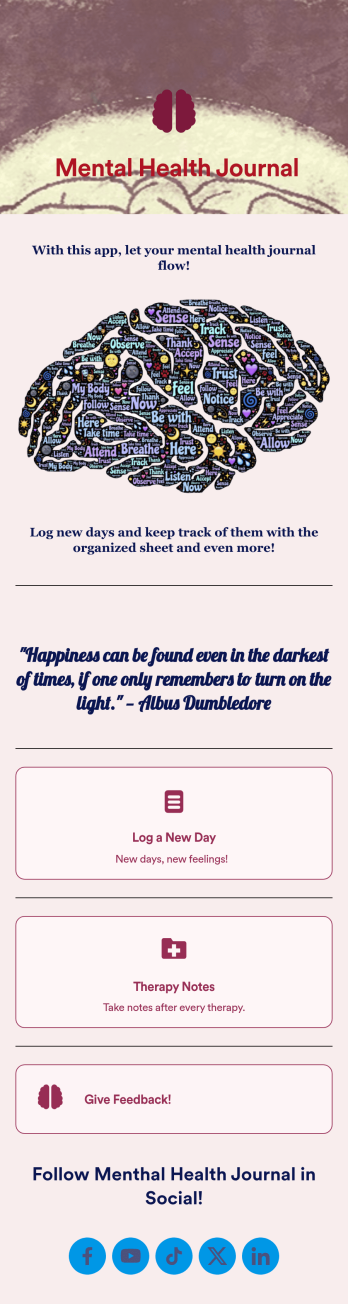
Mental Health Journal App
Need an efficient and less intrusive way to oversee your patients’ mental health? Jotform’s got you covered with our own custom Mental Health Journal App — no coding knowledge required. This app is great for psychologists or psychiatrists alike. Build a thoughtful app that lets your patients express themselves in a variety of ways. Upload daily or weekly check in forms, provide a list of resources and exercises, add appointment scheduling forms, and collect payments from your very own app.Need to make some changes to your app? Simply utilize our easy-to-use online app builder to give your Mental Health Journal App your own signature touch. Pick fonts and colors you like, upload images, integrate with helpful scheduling widgets, and more depending on you and your patients’ needs. Then simply share with your patients via QR code, email, or by linking to it in your patient portal.
Go to Category:Healthcare Apps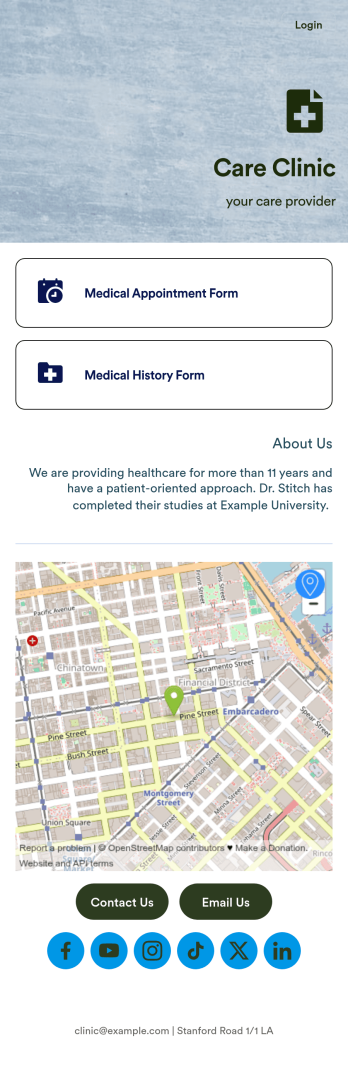
Medical Appointments App
A medical appointments app makes it easier for patients to schedule doctor’s appointments from any device. Simplify appointments for your hospital or health clinic with our free Medical Appointments App Template. This ready-to-use app includes an appointment scheduling form and a medical history form that patients can easily fill out from their smartphone, tablet, or computer. Submissions will be received instantly, stored in your dashboard, and encrypted if you opt for HIPAA friendly features in your Jotform plan.Customize this Medical Appointments App in just a few clicks with our drag-and-drop builder. It’s easy to create and add more healthcare forms, embed links to other webpages, update the provided text and images, upload branding elements, and even change the app name, icon, and splash page. Once it’s ready, share your app on your website or send it to patients directly to open and download onto their favorite device. Take the pain out of appointment scheduling by streamlining the process with a professional Medical Appointments App for your organization.
Go to Category:Booking Apps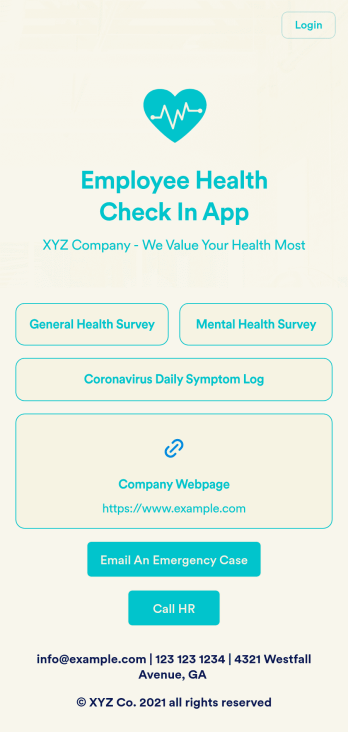
Employee Health Check In App
Screening your employees can help keep your workplace safe and free of contagious diseases. Conduct company health screenings and surveys in one place with our free Employee Health Check In App. Employees will be able to record possible coronavirus symptoms through the COVID-19 Daily Symptom Tracker and answer surveys from any smartphone, tablet, and computer.Customize your Employee Health Check In App for your company in just a few clicks. No coding necessary — simply drag and drop to add forms, surveys, spreadsheets, links, text, images, and more. You’ll even be able to modify the app name, icon, and splash page for a more professional and personalized look. When it’s ready, your app can be shared with employees via link and downloaded onto any device. Take care of your employees’ health and your business with a custom Employee Health Check In App for your company.
Go to Category:Human Resources Apps
Nurse Notes App
A nurse notes app is used by nurses to manage information for their patients. Hospitals, doctor’s offices, and other healthcare centers can use this free Nurse Notes App to securely record patient information from any device! Your nurse notes are kept safe with Jotform’s advanced security measures, including optional HIPAA friendly features.This free app already includes forms for assessments, exams, and general notes, but feel free to add more forms, update the app icon or splash screen, and make other changes with no coding required. Your custom app can then be shared with a link and quickly downloaded onto nurses’ smartphones, tablets, or computers. Upgrade from messy paper forms with an all-in-one Nurse Notes App.
Go to Category:Healthcare Apps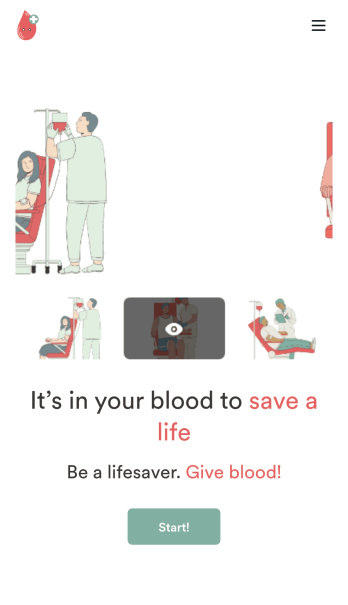
Customizable Blood Donation App
Does your nonprofit or hospital need an easy way to keep track of blood donation requests? Give your volunteers a seamless way to sign up with Jotform’s free Blood Donation App. Your customers can download your app on any Android or iOS device to fill out your forms. All your form submissions will be stored on your Jotform account in one easy to manage place – great for sharing access with all your employees. Review donation schedules, feedback responses, volunteer applications, consent forms, and many more.Need to make some changes to your Blood Donation App? No problem. With our easy to use drag-and-drop builder tool, you can change your app’s design without having to code. Upload your organization’s logo, update time-sensitive forms, or pick a fitting app icon and background image. For easy sharing, you can send your app through a direct link, via email, or even through a scannable QR code. Make blood donations for both you and your volunteers easier with Jotform’s Blood Donation App.
Go to Category:Community & Engagement Portal Apps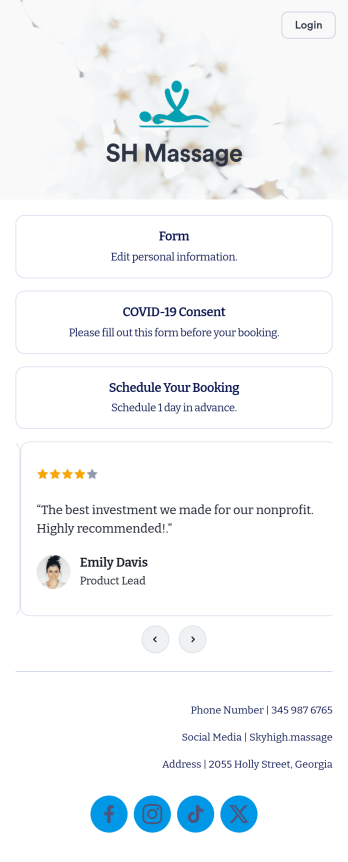
Massage App
Getting a massage should be a relaxing experience — so make scheduling an appointment as easy as possible with our Massage App! This ready-to-use app template allows customers to fill out an intake form, book massage appointments, and sign a COVID-19 health consent waiver. There’s even a space on your splash page for testimonials! Customers can easily access your app from any device, and download it to their smartphone, tablet, or desktop for future use.This Massage App is ready to use and doesn't require any coding, but you can customize this app template to match your massage clinic’s branding. With just a few clicks, our drag-and-drop interface allows you to add and change forms, images, text, logos, links, and more. Once you’re finished, just share the link on your website or social media. Start taking appointments today with this free and fully customizable Massage App!
Go to Category:Booking Apps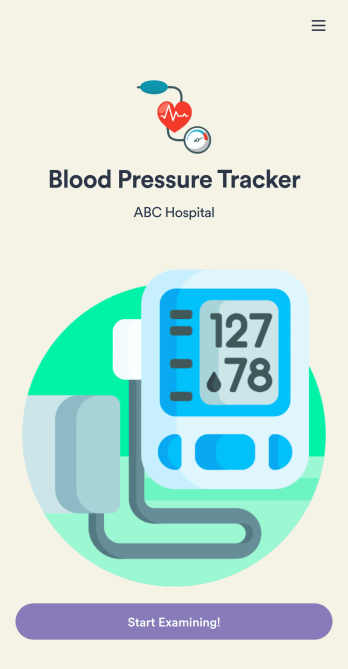
Blood Pressure Measurement App
A Blood Pressure Measurement App is used by healthcare professionals to measure and log patients’ blood pressures. With Jotform’s free Blood Pressure Measurement App, you can get your employees to track patient blood pressure on your office’s tablet, smartphone, or computer — no messy paperwork required! All information is kept safe in your Jotform account in a Blood Pressure Log Sheet, which can be enhanced with HIPAA-friendly features. Without coding, customize this free app to better match your practice. Add a logo, choose a new splash screen or icon, personalize fonts and colors, and more. Once your app looks exactly how you want it to, share it with a link to be downloaded for easy access on any device. Make your blood pressure tracking process more efficient with the help of this free Blood Pressure Measurement App.
Go to Category:Healthcare Apps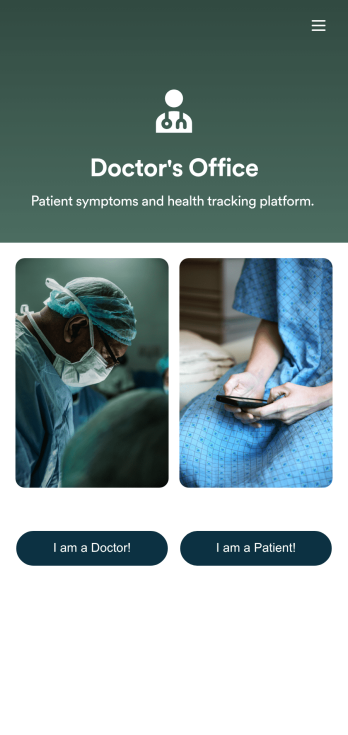
Symptom Tracker App
Provide your doctors and patients with an easier way to track symptoms and keep medical records updated with this free Symptom Tracker App. Both doctors and patients can download this app on any Android or iOS device to fill out their respective forms. Keep track of medical history, important medical forms, payments, and much more. All your practice’s important data stays together in your Jotform account — making information easily accessible to all.Need to update the look and feel of your custom app? Jotform’s got you covered. Use our simple drag-and-drop app builder to change your Symptom Tracker App’s design without coding. Upload your practice’s logo, update important forms, pick an app icon and background image, and make other changes to your very own app for free. You can instantly share your custom app with your patients via direct link, email, or scannable QR code. Make medical checkups a breeze Jotform’s Symptom Tracker App.
Go to Category:Healthcare Apps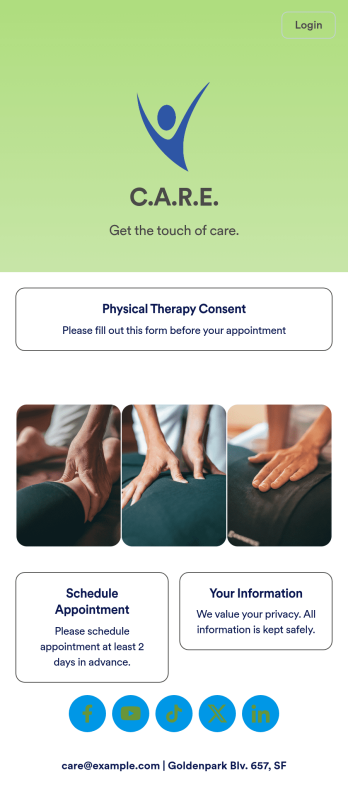
Physical Therapy App
A physical therapy app is used by hospitals and clinics for collecting patient information and scheduling appointments. This free Physical Therapy App includes a Physical Therapy Intake Form for new patients, a Physical Therapy Informed Consent Form with digital signature box, and a Request an Appointment Form for scheduling therapy appointments. All patient submissions are instantly synced to your account, where you can sort, filter, and search through entries. From here you can also export professional-looking PDFs with your own branding with just a few clicks.Customizing your app is easy with Jotform’s drag-and-drop interface. With no coding you can add or change forms, update your splash page, upload your logo or images of your clinic, and more. After you’re finished, patients can access and download your app with a link, or you can use it in-house on any devices you may have. Streamline your patient intake and appointment scheduling process with this fully-customizable Physical Therapy App.
Go to Category:Healthcare Apps
Bmi Calculator App
A BMI calculator app is used to calculate the Body Mass Index (BMI) of an individual. Whether you’re a personal trainer, nutritionist, or are tracking your BMI for personal purposes, do it easily and quickly with this free BMI Calculator App. It downloads instantly onto your or your clients’ iOS or Android devices, ready to calculate any BMI in a few easy steps.Feel free to update the design of this app with Jotform’s drag-and-drop builder. You can add a logo, collect additional information from your clients, and change other visual elements with no coding required! Enjoy a quicker way to calculate BMI with this ready-to-download and ready-to-use BMI Calculator App.
Go to Category:Healthcare Apps
Daily Routine Checklist App
A daily routine can help reduce stress by providing structure and helping you organize your time throughout the day. With Jotform’s free Daily Routine Checklist App, you can more easily establish a daily routine and check off each to-do item from any device. This customizable mobile app includes checklists for the morning, afternoon, and evening. You can fill out the attached Daily Routine Checklist Form to automatically sync entries to your table, or input information directly into the checklist itself.Customizing your Daily Routine Checklist App won’t take any time out of your day. Just drag and drop to add forms, tables, links, text, images, and more to your app. You can download your app onto any device and even share it with others to help hold you accountable. Whether you’re a student, a teacher, or working professional, our Daily Routine Checklist App will help you keep track of your daily routine — and improve it!
Mood Tracker App
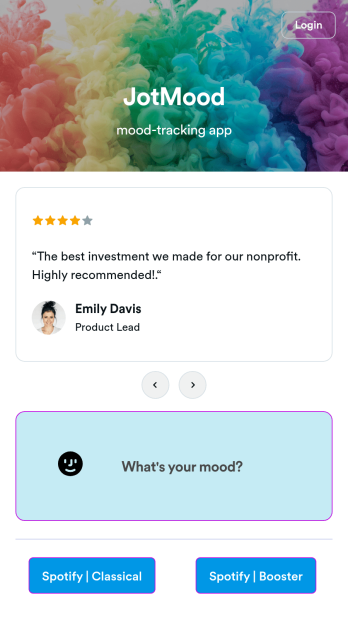
Tracking your mood is a great way to learn how to manage your emotions and understand triggers. Start tracking your moods or help patients track theirs with our free Mood Tracker App you can customize in just a few clicks! This ready-to-use app provides a single place for users to add their moods through a form and view all their submissions at once in order to see any recurring patterns. You can use this app yourself, or share it with patients to help them monitor their progress in therapy.Want to customize your Mood Tracker App? With our drag-and-drop interface, you can create and add more forms to your app and even change its icon, name, splash screen, and background. Feel free to upload images, include links, update the text, and more. You’ll be able to access and download your app from any smartphone, tablet, or desktop. Make it easier to keep track of how you’re feeling with a custom Mood Tracker App you can easily use from any device.
Calorie Counter App
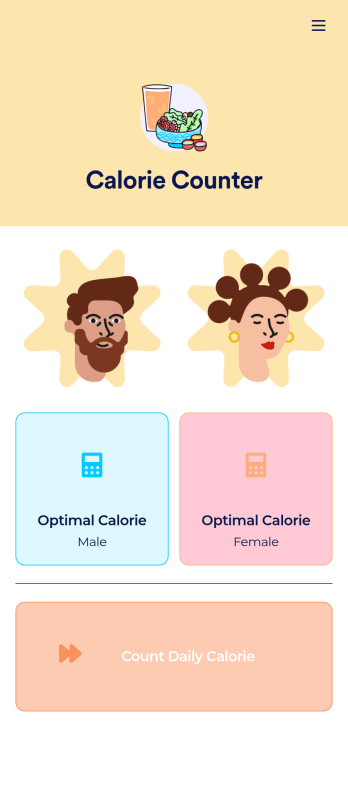
A calorie counter app is used to track calorie intake from any device. No matter what your weight goals are, start tracking calories with Jotform’s free Calorie Counter App. This customizable app template comes with a calorie calculator and tracking form that you can fill out yourself or assign to clients if you’re a personal trainer or dietician. Submissions will be received instantly and synced to your secure Jotform account.Customize this Calorie Counter App to meet your needs in just a few clicks. Without coding, you can use our drag-and-drop builder to add or remove forms, create new app buttons or pages, embed links, upload images or videos, and include other app elements. When it’s ready to use, your app can be downloaded onto any device and shared via app link or email invite. Make calorie counting easy from anywhere with a custom calorie counter on your favorite device!
Goal Tracker App
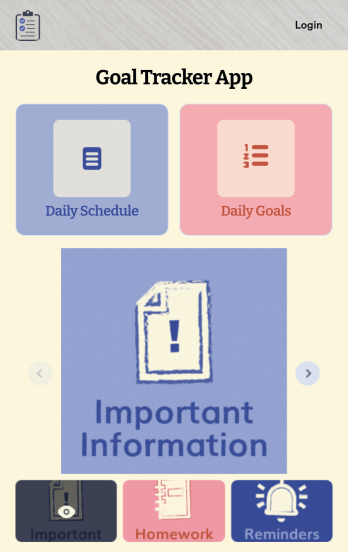
Need an easier way for your clients to track their goals? With Jotform’s Goal Tracker App, you can build an online goal tracking app in minutes. Start creating your app from scratch or choose one of our ready-made app templates to get your creativity flowing. Add a contact form, let your customers create a schedule that works for them, showcase past client reviews, and more. Once you’ve customized your app to your liking, share with clients — downloadable onto any computer or iOS or Android device.Personalize your Goal Tracker App with Jotform’s easy-to-use app builder. Just drag and drop to change the look and feel of your app, add powerful app elements, install helpful app widgets, and integrate with one of our 25+ payment processors, including Stripe and Square. Share your customized app via email or embed it directly into your own website for easy access. Help your clients reach their goals with your very own Goal Tracker App — free on Jotform.

Daily Medication Tracker App
Daily Medication Tracker App helps individuals, families, and care teams keep a clear day-to-day record of medications and doses in one place. Use it to view what’s been taken today, check when the next dose is due, browse a medication list, and quickly log a dose when it’s taken. It’s a practical fit for anyone managing multiple prescriptions, rotating schedules, or shared caregiving routines where missed doses and duplicate dosing are real risks.Built with Jotform, this app template can be customized with a no-code app builder and a drag-and-drop interface, so you can match it to your exact routine without technical work. Connect the app to your forms and tables for ongoing data collection, keep dose logs organized for easy reference, and create a simple self-service experience that’s easy to use on the go. Update medication details anytime, then share the app with the right people so everyone stays on the same page.

Weight Gain Tracker App
Weight Gain Tracker App helps individuals and wellness professionals record weight changes and related habits in one place, so progress toward a target can be monitored over time. It’s a practical choice for anyone following a structured bulking plan, recovering from illness, or supporting healthy weight gain with consistent routines. With dedicated areas for a weight log, a nutrition log, and a recent progress view, the app keeps daily check-ins simple and makes it easier to spot patterns without relying on scattered notes or multiple tools.Built with Jotform, this app template can be tailored in a no-code app builder using a drag-and-drop interface to match your exact tracking method. Connect the experience to forms for ongoing data collection, organize entries into a clear workflow, and share the app as a self-service tool for personal use or with clients who need an easy way to submit updates. Jotform makes it easy to adjust pages, visuals, and navigation as your goals evolve.

Exercise Tracker App
An exercise tracker app brings your workouts, goals, and progress into one place so it’s easier to stay consistent and see what’s working. This template fits personal trainers, fitness coaches, gym members, and anyone building a steady routine who wants a simple way to log workouts, review recent sessions, and check insights without digging through notes. Use it to track workout types, capture quick session summaries, and keep a clear workout history you can revisit anytime.With Jotform App Templates, you can turn your fitness tracking workflow into a branded self-service experience and keep everything organized as you go. Use Jotform’s no-code app builder and drag-and-drop interface to adjust pages, update navigation, and connect the app to a form for reliable data collection. As your routine evolves, you can refine the workflow, share the app by link, and keep workout logging and progress viewing simple on any device.

Period Tracking App
Period Tracking App gives individuals a simple place to log cycle start dates, keep a clear cycle history, and capture symptom notes for better personal awareness over time. It works well for anyone who wants an organized record to reference during everyday planning, routine check-ins, or conversations about patterns they notice, without relying on scattered notes or multiple tools. With guided navigation like Log Cycle, Cycle History, and Symptom Insights, it keeps tracking tasks easy to find and repeat.Jotform makes it easy to turn this app template into a personalized self-service experience using a no-code app builder and a drag-and-drop interface. Connect the app to your form and linked record views so entries can be collected and revisited in one place, then adjust the layout, buttons, and pages to match how you prefer to track. Share your Jotform app on any device and keep your data collection and workflow organized as your tracking needs evolve.
Counseling App
A counseling app provides easier access to mental health resources and tools. Whether you’re a school counselor, family therapist, or life coach, build a fully-custom app for your counseling services with our free Counseling App Template. This ready-to-use app template comes with multiple forms — including a client information form, COVID-19 consent form, and appointment booking form — so clients can access and fill out your forms all from one place.Make this Counseling App your own by customizing it in just a few clicks. Without any coding, you can create and add new forms, embed links to other sites, update the provided text, upload different images, and change app settings. Once you’re satisfied with the app design, embed the app link in your website or send it directly to clients to download on their preferred devices. Make it easier for clients to get the help they need with a professional Counseling App for your services.
Mood Tracker App
Tracking your mood is a great way to learn how to manage your emotions and understand triggers. Start tracking your moods or help patients track theirs with our free Mood Tracker App you can customize in just a few clicks! This ready-to-use app provides a single place for users to add their moods through a form and view all their submissions at once in order to see any recurring patterns. You can use this app yourself, or share it with patients to help them monitor their progress in therapy.Want to customize your Mood Tracker App? With our drag-and-drop interface, you can create and add more forms to your app and even change its icon, name, splash screen, and background. Feel free to upload images, include links, update the text, and more. You’ll be able to access and download your app from any smartphone, tablet, or desktop. Make it easier to keep track of how you’re feeling with a custom Mood Tracker App you can easily use from any device.
Coaching App
A coaching app is used by coaching companies — like fitness centers or coaching agencies — to receive client applications for coaching sessions. Using this free Coaching App, your company can create a free downloadable app for your customers so they can submit their contact details and coaching goals to apply for a session or program from any device! All submissions are easy to view directly from your secure Jotform account.With our drag-and-drop app builder, you can change this app template to include your logo, collect other information, include photos and profiles of your coaches, and personalize other design elements in a few easy clicks — then share your app with a link or invite clients to download it via email onto their computer, tablet, or smartphone. Create a custom Coaching App for your business with Jotform!
Telehealth App
Gather appointment bookings and patient information with ease using this Telehealth App from Jotform. Simple customize the app to match your needs, share it with patients using a link, and have them download it onto their computer, tablet, or smartphone for easy access. The app includes a Zoom Scheduler that lets patients select a time slot that works for them and generates a new Zoom meeting for each new booking.Need to customize this Telehealth App template? Drag and drop to rearrange the design, add your logo and branding, update existing forms, or connect them to 100+ popular app integrations. Jotform protects form data with a 256-bit SSL connection, GDPR and CCPA friendly features, but you can also optionally upgrade your forms to be HIPAA friendly. Save time with a free Telehealth App that your patients can use on any device.
Patient Management App
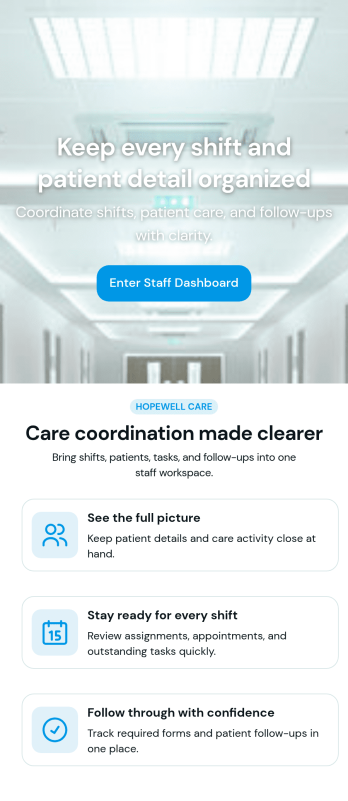
Patient Management App is an app template designed to streamline the workflows of healthcare providers, clinics, hospitals, and medical practices. By offering a centralized system that manages patient information, appointments, and care plans, the app helps improve operational efficiency. Suitable for healthcare administrators who are tasked with scheduling patients, updating medical records, tracking treatment plans, and facilitating communication throughout the patient care journey, it collects critical data in a structured and consistent manner. The app's value lies in its ability to simplify complex operational tasks, thus reducing the likelihood of errors and enhancing the quality of care provided.Jotform's intuitive design tools make it easy to customize the Patient Management App to match your healthcare practice's branding. Using Jotform's No-Code App Builder, you can quickly adjust forms, pick fonts and colors, and upload your logo without writing a single line of code. Once set up, your patients can access and download the app onto any device; be it a smartphone, tablet, or desktop, through a shareable link. This ease of access maximizes the app's adoption and use, further improving the efficiency of your healthcare practice. The Patient Management App from Jotform embodies the perfect blend of utility and usability, making patient management a breeze.
Doctor Appointment App
A doctor appointment app is used by healthcare providers to book appointments and collect patient information. Using Jotform’s Doctor Appointment App — complete with forms for collecting medical history, informed consent, and appointment requests—doctors or nurses can collect and manage patient information and store it securely online. With Jotform’s advanced security measures, you can even further protect data with HIPAA compliance features.Need to customize this app template to better match your practice? Include more links or forms, add your branding and logo, change the background or app icon, and make other changes with our simple drag-and-drop builder. Use Jotform’s easily trainable AI Chatbot guides users through your app and answers questions in real time. Once your app is ready to go, share it with a link to download instantly onto your office’s computer or tablet for easy access. Give your patients a cleaner alternative to messy paper forms with a powerful Doctor Appointment App.
Medication Log App
For patients and clinics alike, keeping track of your patients' medications can be daunting — so streamline the process for everyone with our Medication Log App! This readymade app provides your patients with a single online portal to log and update their medical history, medication regimen, and general contact information. Patients can then access and download your app on any smartphone, tablet, or desktop computer.This Medication Log App is ready to use and doesn't require any coding, but you can easily customize this app template to better suit your needs. With our drag-and-drop interface, you can add forms, choose fonts and colors, and customize your app name, icon, and splash screen. Make it easier for your patients to keep track of their medications with a custom Medication Log App they can use from any device!
Dentist App
A dentist app is used by dental practitioners to gather patient information. With Jotform’s powerful Dentist App, your practice can collect patient dental history, consent forms with e-signatures, and schedule appointments from any device. All responses are stored securely in your Jotform account, which is protected by advanced security methods and the ability to opt into HIPAA compliance.Feel free to update the design of this app template by including your practice’s logo, adding or removing forms, updating the background image, and more with our drag-and-drop no-code app builder. Once your app is ready to go, share it with your staff to download onto any smartphone, tablet, or computer — so it can be filled out fast with no messy paperwork. Improve the patient experience with a free Dentist App from Jotform.
About Healthcare App Templates
Healthcare apps are transformative digital solutions designed to streamline various operations within the medical and health-related fields. They encompass a wide range of functionalities, from patient management and appointment scheduling to billing and inventory tracking. These apps are integral to numerous industries, including hospitals, clinics, private practices, and wellness centers, facilitating workflows such as patient data management, remote consultations, and healthcare service delivery. By leveraging healthcare apps, organizations can enhance their operational efficiency and improve patient care outcomes through seamless digital interactions and data-driven decision-making.
Jotform Apps offers a no-code app builder specifically tailored for creating healthcare apps, utilizing the advanced capabilities of Progressive Web App (PWA) technology. This enables users to install apps directly via a browser, bypassing the need for App Store downloads, and ensures compatibility across iOS, Android, tablets, and desktops. With Jotform Tables, healthcare professionals can centralize data management, making it easier to access and organize information across various workflow processes. This integration not only streamlines operations but also supports a more cohesive approach to patient care and administrative tasks, reinforcing the app's role in enhancing healthcare delivery.
Why Use Healthcare Apps?
- Healthcare apps facilitate the automation of repetitive and time-consuming tasks, allowing healthcare professionals to focus more on patient care rather than administrative duties. By streamlining operations such as appointment scheduling and patient data management, these apps significantly reduce the workload on medical staff, leading to more efficient healthcare service delivery.
- With healthcare apps, communication between patients and healthcare providers is vastly improved through direct messaging and updates. This enhances patient engagement and ensures that vital health information is communicated quickly and accurately, which is crucial for effective treatment and patient satisfaction.
- The ability to integrate payment systems like Stripe and PayPal allows healthcare providers to manage billing processes more efficiently. This not only simplifies the payment collection process but also ensures that financial transactions are secure and traceable, reducing the risk of errors and enhancing financial management within healthcare facilities.
- Healthcare apps support robust data management by centralizing patient information via platforms like Jotform Tables. This centralization ensures that all patient data is accessible in a secure and organized manner, facilitating better decision-making and improving the overall quality of care provided to patients.
- By employing Progressive Web App technology, healthcare apps ensure seamless access across various devices, enhancing the flexibility and accessibility of healthcare services. This cross-platform functionality is particularly beneficial for remote consultations and telehealth services, providing patients with the convenience of accessing healthcare services from anywhere.
Common Problems Solved by Healthcare Apps
- One of the significant challenges in the healthcare industry is managing vast amounts of patient data efficiently. Healthcare apps solve this by providing centralized data storage solutions that allow easy access and management of patient records, leading to improved accuracy and reduced time spent on administrative tasks.
- Communication barriers between healthcare providers and patients can lead to misunderstandings and delays in treatment. Healthcare apps address this issue by offering direct communication channels, ensuring that both parties can exchange vital health information swiftly and accurately, thereby enhancing patient care and satisfaction.
- Delays in appointment scheduling often frustrate patients and disrupt healthcare workflows. Healthcare apps streamline the appointment booking process with automated scheduling features, reducing wait times and improving the overall patient experience in healthcare facilities.
- Payment processing in healthcare can be complex and prone to errors. By integrating secure payment systems, healthcare apps simplify billing procedures, ensuring that transactions are accurate and secure, which enhances financial operations and patient trust.
- Many healthcare facilities struggle with maintaining patient engagement outside physical visits. Healthcare apps offer features such as push notifications and reminders, which keep patients informed and engaged with their health management, thereby promoting better health outcomes.
Matching Use Cases to Features
- For healthcare providers looking to streamline appointment scheduling, the Drag-and-Drop Interface in Jotform Apps allows for easy customization and management of appointment forms. This feature enhances the operational efficiency of scheduling processes, ensuring that patient appointments are organized and accessible.
- To improve patient engagement, Push Notifications can be utilized to send reminders and updates directly to patients' devices. This feature ensures that patients are kept informed about their appointments and health management, fostering better communication between healthcare providers and patients.
- Healthcare facilities that require a robust billing system can benefit from Payment Integrations with providers like Stripe and PayPal. This feature allows for seamless and secure transactions directly through the app, simplifying the billing process and ensuring financial transactions are reliable and efficient.
- The Publish Options feature, which includes Public, Private, and Company-only settings, is ideal for healthcare institutions that need to manage access to their apps. This feature ensures that sensitive health information is only accessible to authorized personnel, maintaining confidentiality and compliance with data protection regulations.
- Sharing Methods such as Direct Link, Email, and QR Code are essential for healthcare providers who need to distribute their apps widely and efficiently. These sharing options ensure that patients and staff can easily access healthcare apps, enhancing the app’s usability and reach within the healthcare environment.
How to Create a Healthcare App
- Choose a category-relevant template from the Template List or start from scratch.
- Customize using the Drag-and-Drop Interface.
- Share via Link, QR Code, or Embed.
Top Use Cases for Healthcare Apps
- For Managers: Healthcare managers can leverage healthcare apps to gain comprehensive insights into operational metrics and patient data, improving decision-making processes. These apps provide centralized access to information, enabling managers to monitor performance and identify areas for improvement. By automating administrative tasks, managers can allocate resources more effectively, ensuring that healthcare services are delivered efficiently and meet the needs of patients.
- For Teams: Healthcare teams benefit from these apps by having streamlined communication and collaboration tools at their disposal. With features like centralized data management and direct messaging, team members can easily coordinate patient care, share vital information, and update each other on patient progress. This real-time collaboration fosters a more cohesive team environment, enhancing the quality of care provided to patients and improving overall team productivity.
- For Customers: Patients and customers experience enhanced convenience and engagement through healthcare apps. With features that enable easy appointment scheduling, direct communication with healthcare providers, and secure payment processing, patients can manage their healthcare needs efficiently. The accessibility of apps across various devices ensures that patients can receive timely updates and reminders, helping them stay informed and active participants in their healthcare journeys.
Summarizing Healthcare Apps
Healthcare apps are pivotal in transforming the landscape of medical services by enhancing operational efficiencies and improving patient experiences. These apps offer a comprehensive suite of features, from centralized data management to secure payment processing, which collectively supports more efficient healthcare delivery. By utilizing Jotform's no-code app builder, healthcare providers can create customized apps that are accessible across all devices, ensuring flexibility and convenience for both healthcare professionals and patients. The integration of technology into healthcare workflows not only optimizes operations but also facilitates better health outcomes through improved patient engagement and streamlined processes.
Frequently Asked Questions
1) Is it free to create and use Healthcare apps on Jotform?
The Starter plan on Jotform allows users to create and use healthcare apps at no cost. This plan provides access to essential features that enable the development of functional apps suitable for various healthcare operations. However, should you require more advanced features or higher usage limits, Jotform offers paid plans that cater to specific needs and scale with your requirements.
2) Are the data and payments collected through the app secure?
Jotform ensures the security of data and payments collected through its apps by adhering to stringent security protocols and GDPR compliance. All transactions and data storage are encrypted, safeguarding sensitive information against unauthorized access. This commitment to data protection ensures that both healthcare providers and patients can trust the platform with their critical information.
3) Do I need any coding skills to create a Healthcare app with Jotform?
Creating a healthcare app with Jotform does not require any coding skills, as it utilizes a no-code platform. This user-friendly environment allows healthcare professionals to design and deploy apps using the Drag-and-Drop Interface, making app creation accessible to all users regardless of their technical expertise. This democratization of app development empowers healthcare providers to innovate and customize solutions to meet their unique needs.
4) Can I collect payments for services directly through the app?
Yes, Jotform allows healthcare providers to collect payments directly through the app by integrating with payment processors such as Stripe and PayPal. These integrations facilitate seamless and secure payment transactions, enabling healthcare organizations to manage billing processes efficiently within their apps. This functionality is crucial for ensuring smooth financial operations and enhancing the overall patient experience.
5) Does Jotform support offline data collection for Healthcare apps?
Jotform supports offline data collection through its Mobile Forms feature, allowing healthcare providers to gather data even without an internet connection. This capability is particularly beneficial in environments with unreliable connectivity, ensuring that data capture is continuous and uninterrupted. Once a connection is re-established, the data is automatically synchronized, maintaining consistency and accuracy in records.
6) Are Jotform Apps compatible with both iOS and Android devices?
Yes, Jotform Apps are designed to be fully compatible with both iOS and Android devices, as well as desktops and tablets. This cross-platform compatibility ensures that healthcare apps are accessible to a wide audience, providing flexibility and convenience for users. By leveraging Progressive Web App technology, Jotform ensures that apps are responsive and functional across all device types.
7) How can Healthcare apps improve patient engagement?
Healthcare apps enhance patient engagement by providing direct communication channels, personalized health management tools, and timely reminders. These features empower patients to take an active role in their healthcare, leading to improved adherence to treatment plans and better health outcomes. By fostering an interactive and informative healthcare environment, apps contribute to a more positive patient experience.
8) What types of data can be managed using Healthcare apps?
Healthcare apps can manage a wide range of data, including patient medical history, appointment schedules, billing information, and treatment plans. By centralizing this information in a secure and accessible manner, healthcare providers can ensure efficient data management and enhance the quality of care. This comprehensive data handling capability supports informed decision-making and streamlined healthcare operations.