Jotform’s electronic forms let teams replace paper forms and collect data online without coding. Build custom e-forms, embed them on your site, and collect information, payments, and file uploads in one place. Jotform helps you simplify data collection and automate workflows for leads, orders, and records easily.
Making the switch from paper to electronic forms is easier than you think. Just choose a free form template to get started!
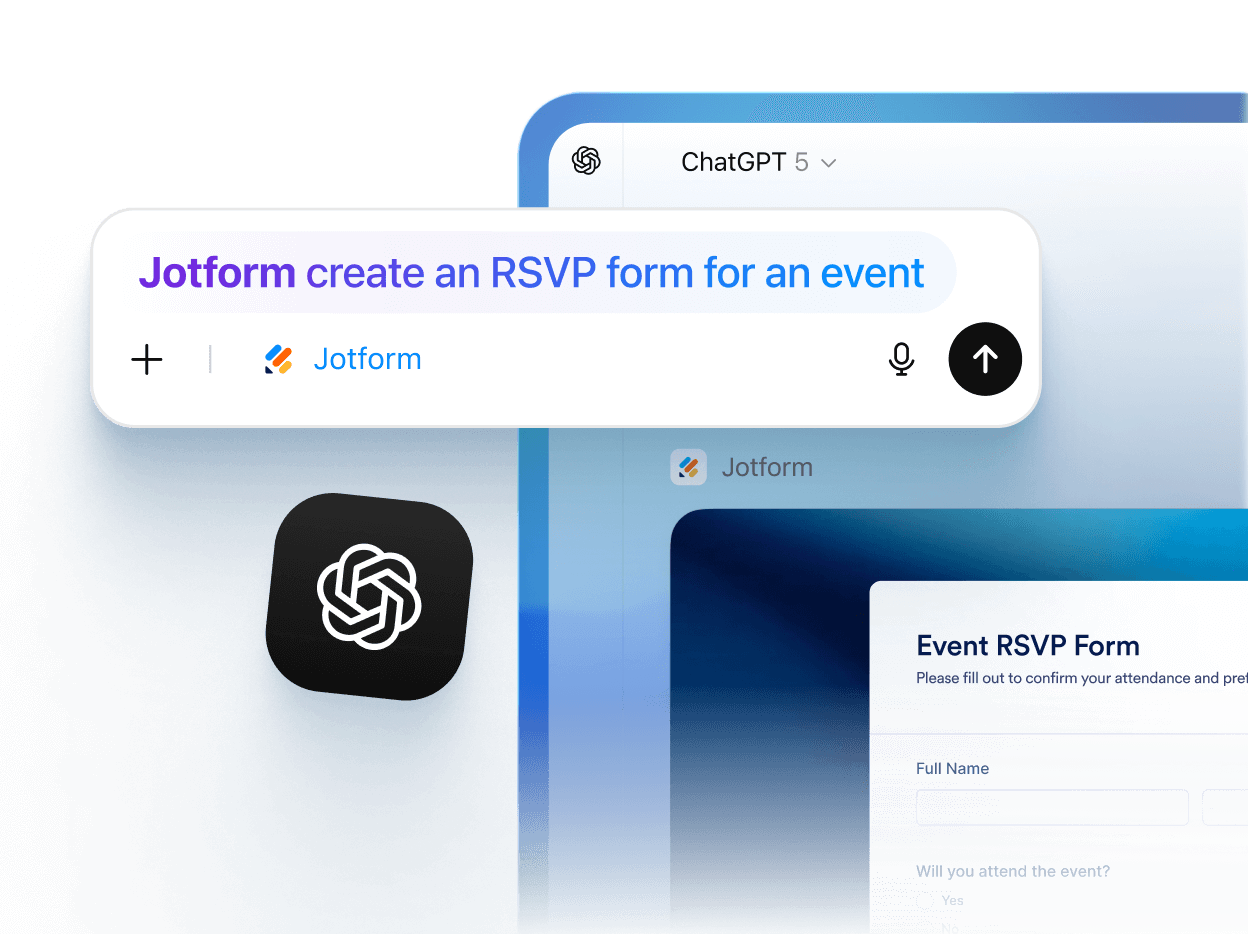
Jotform ChatGPT App
Create forms in seconds inside ChatGPT, refine them through conversation, and turn submissions into clear insights without switching tabs.
Benefits
Store submissions in one place, including e-signatures and file uploads, so records are easier to organize than paper forms. Sync submission data to tools like Google Drive, Dropbox, Slack, Trello, and Airtable, so teams do not have to move data manually. This helps keep follow-up work consistent because submissions can flow into the apps a team already uses.
Protect form data with security features such as form encryption, spam protection, and backup options. The page also references compliance standards for PCI, HIPAA, GDPR, and CCPA, which helps teams understand what frameworks Jotform supports. This reduces risk because sensitive submissions are handled with defined security controls.
Build forms without technical skills using a drag-and-drop editor, so form layout and field choices can be updated by the people who run the process. Use advanced form fields and conditional logic to collect the right information and show only relevant questions. This keeps the form easier to complete because respondents do not have to wade through unnecessary fields.
Testimonials
Create custom electronics forms for your business in a few simple steps — all without coding.
All your questions about Jotform — answered. Check out our FAQs for answers to common questions, or contact our support team for further information.
An electronic form is an online version of a traditional paper form. Electronic forms perform the same functions and serve the same purposes as paper forms while eliminating the restrictions of paper and pen. Electronic forms allow organizations to collect responses more quickly, easily, and efficiently — all while reducing their carbon footprint.
While some users prefer paper forms, there are several benefits that make electronic forms the superior method, including
These benefits and more make electronic forms the first choice for many businesses. With e-forms, you simply need to create a form and digitally send it to your clients, colleagues, or team members. These forms are accessible regardless of your location, time zone, or device.
There are some significant differences between paper and electronic forms. With access to online resources, electronic forms are considerably more agile and powerful than their paper counterparts. Here are a few key differences:
Paper forms may be useful in some situations, but the advantages electronic forms bring to the table make them the go-to choice for any modern organization.
There are thousands of electronic form types, each with its own purpose and design. You can easily create, edit, and design electronic forms to fit your needs. While some may choose to create their forms from scratch, many seek a quicker, easier option in the form of electronic form templates. These templates save you time and effort, with designs that fit many common form types, including
Jotform offers these kinds of form templates — plus thousands more — that you can customize, fill out, and send electronically. If there’s a form you need, there’s likely a template available.
With electronic forms gaining in popularity, the market for electronic form builders has boomed. There are a number of options available that allow you to build your own. Some of the top options include the following:
However, there are hundreds of different tools available if none of these options fit your needs. Be sure to look for solutions that offer more than just electronic form building, with features like electronic signatures, approval automation, data reports, and PDF editing.
Electronic forms often must meet a number of compliance requirements to be appropriate for professional use. Various security measures, such as encryption and varying bit security protocol, typically protect electronic forms to keep your information safe. You can even protect a form with a password, which adds another layer of security and privacy to an already secure form.
While designing your form to fit your needs is important, there are a few elements you should consider to help improve your respondent experience and completion rate. These small changes make a big difference when it comes to getting the results you want.
If you follow these best practices, your form will be easier to fill out, and users will feel comfortable providing their information.