
You can save a Microsoft Forms response as a PDF in a few clicks, but only one response at a time. Creating a PDF for every new submission is a different job, and Microsoft Forms can’t do it automatically. The right method depends on how many PDFs you need and how often you need them.
Which method fits your situation
- You need a PDF of one response: Open the response, select Print response, and save it as a PDF from your browser’s print dialog.
- You need a PDF of your overall results: Select Print summary to save the charts and response breakdowns in one file.
- Respondents need a copy of their own answers: Turn on response receipts so they can download a PDF after submitting.
- You need a PDF for every submission: Build a Power Automate workflow or use Jotform for a built-in form-to-PDF automation.
Save an individual Microsoft Forms response as a PDF
Open an individual submission and send it to your browser’s print dialog to save it as a PDF. This is the simplest option when you only need to convert a few responses.


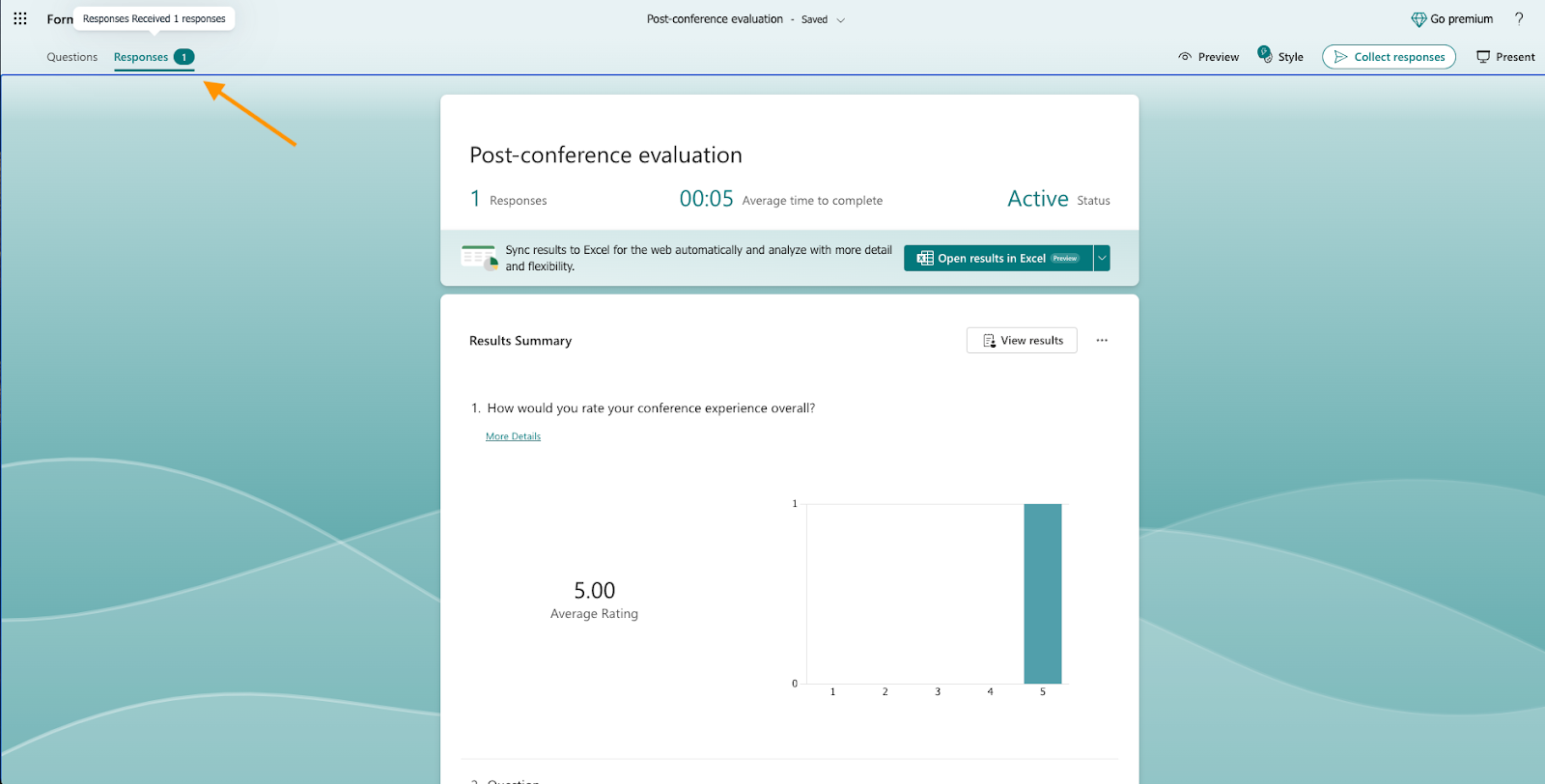
- Start by clicking on the Responses tab in Microsoft Forms.
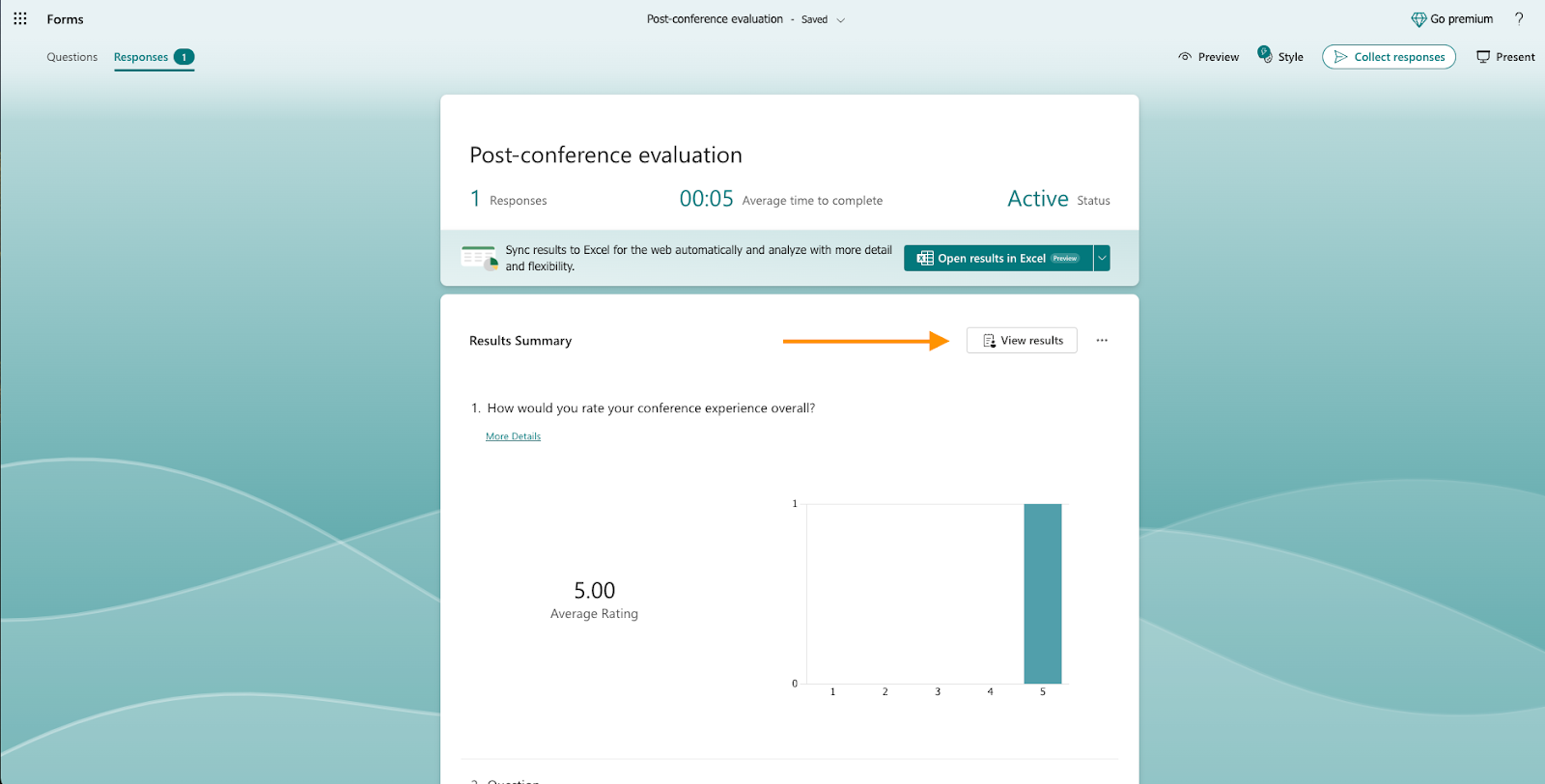
- Next, click on View results.
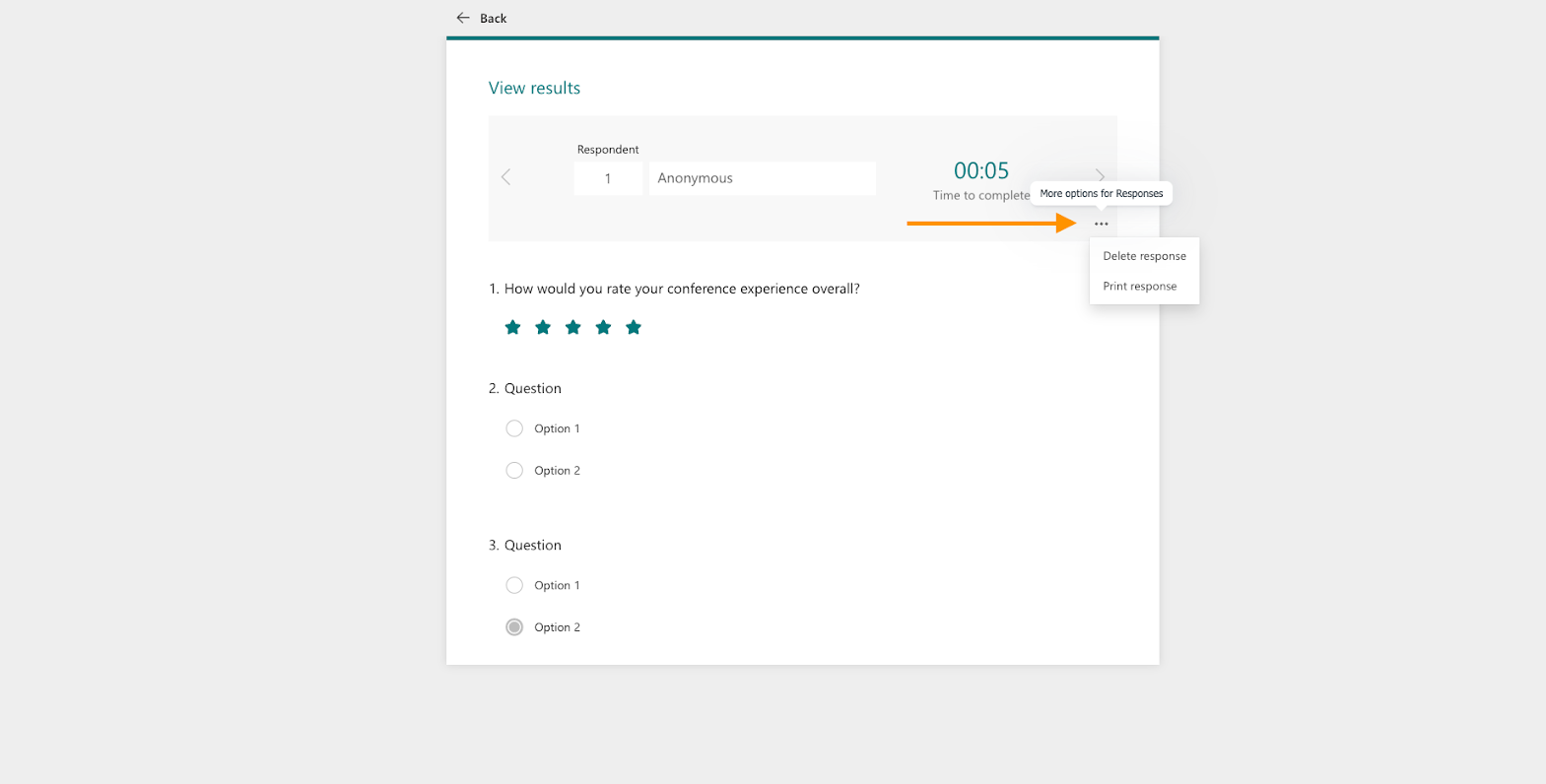
- Click on the three-dot menu button in the lower right corner of any response.
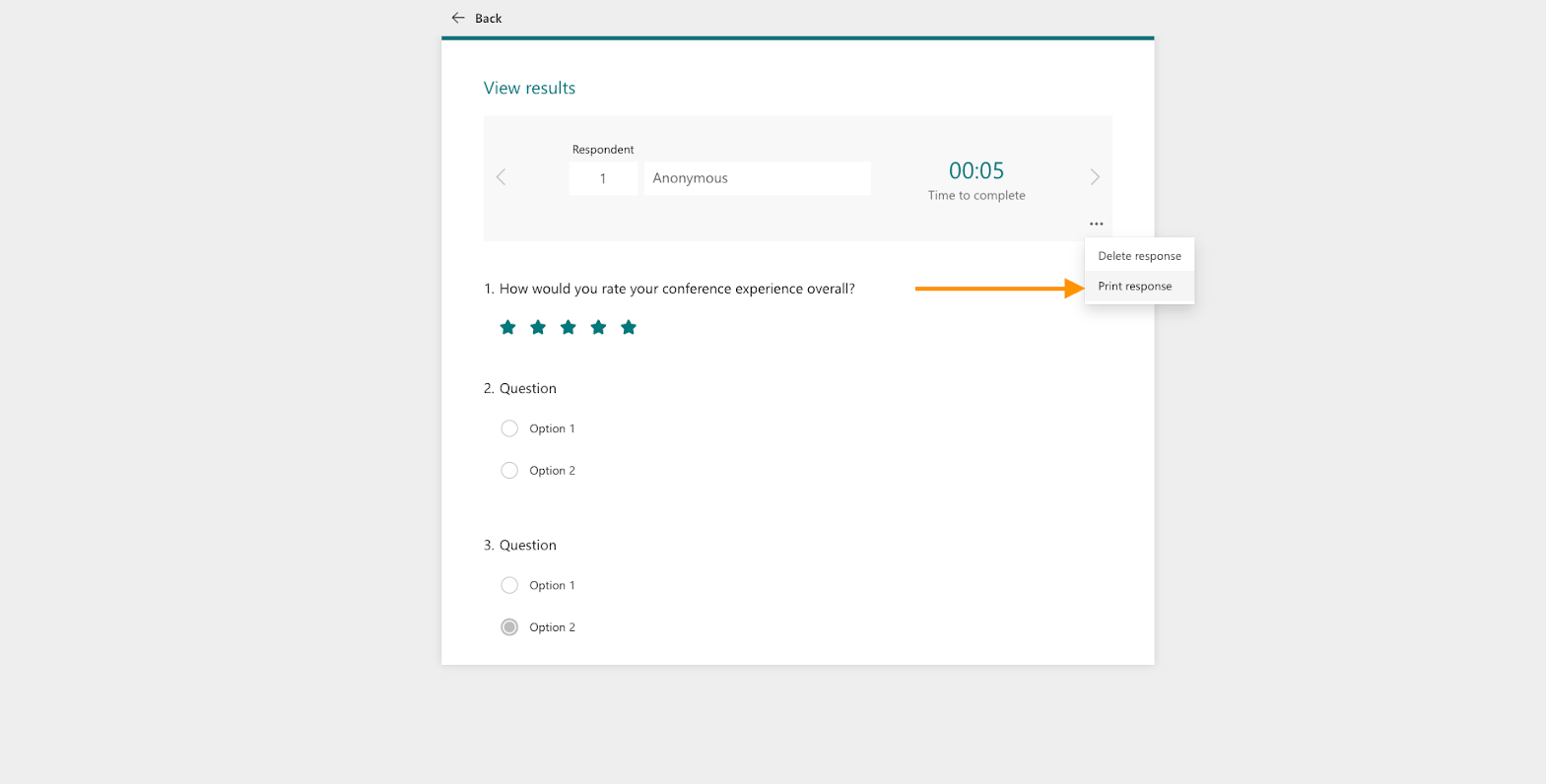
- Choose Print response.
- In your browser’s print dialog, choose Save as PDF, adjust the print settings if needed, and select Save. Give the PDF a recognizable filename so you can identify the response later.
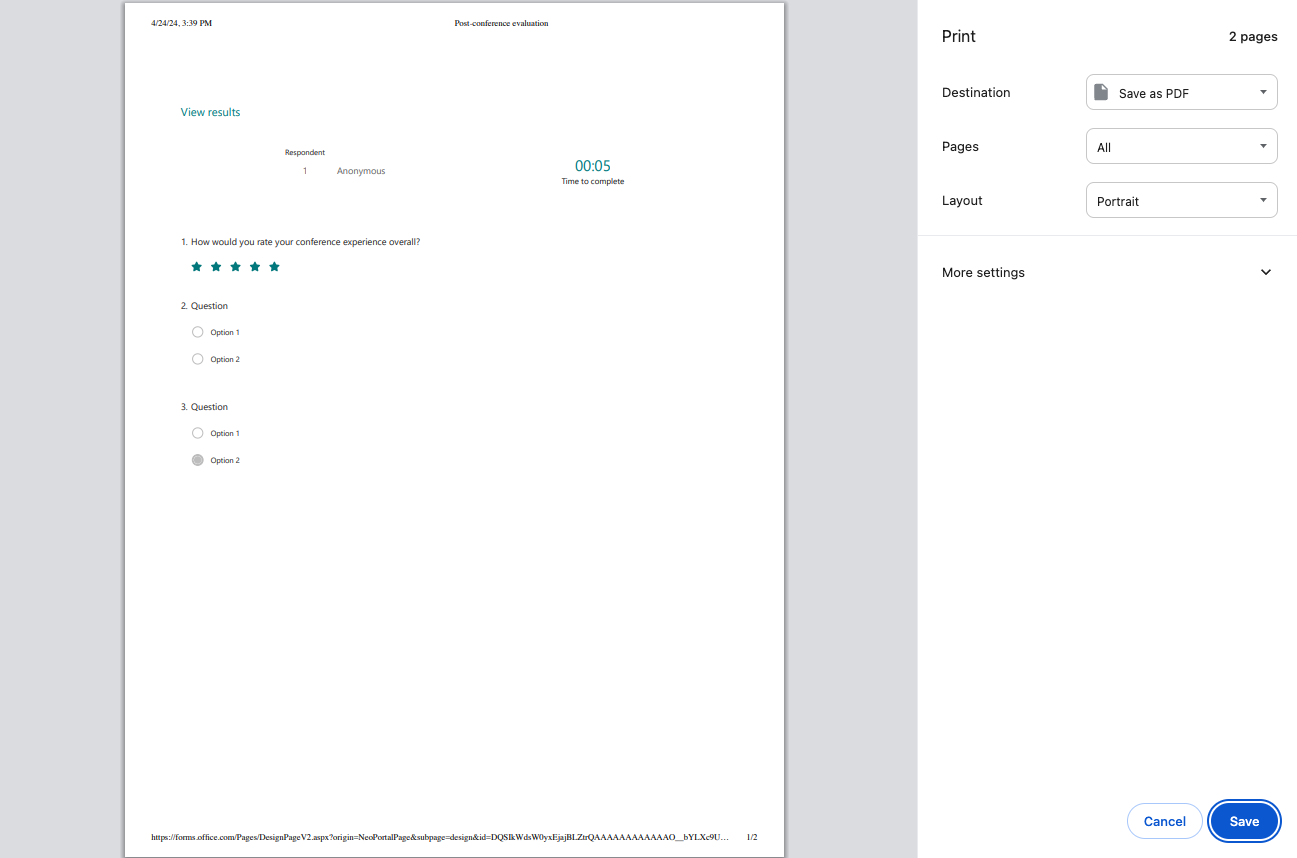
Print a response summary instead
If you need an overview of all responses rather than a PDF for one respondent, Microsoft Forms can print its response summary instead. The summary includes your questions, response counts, and charts showing how respondents answered.
- Open your form and go to the Responses tab.
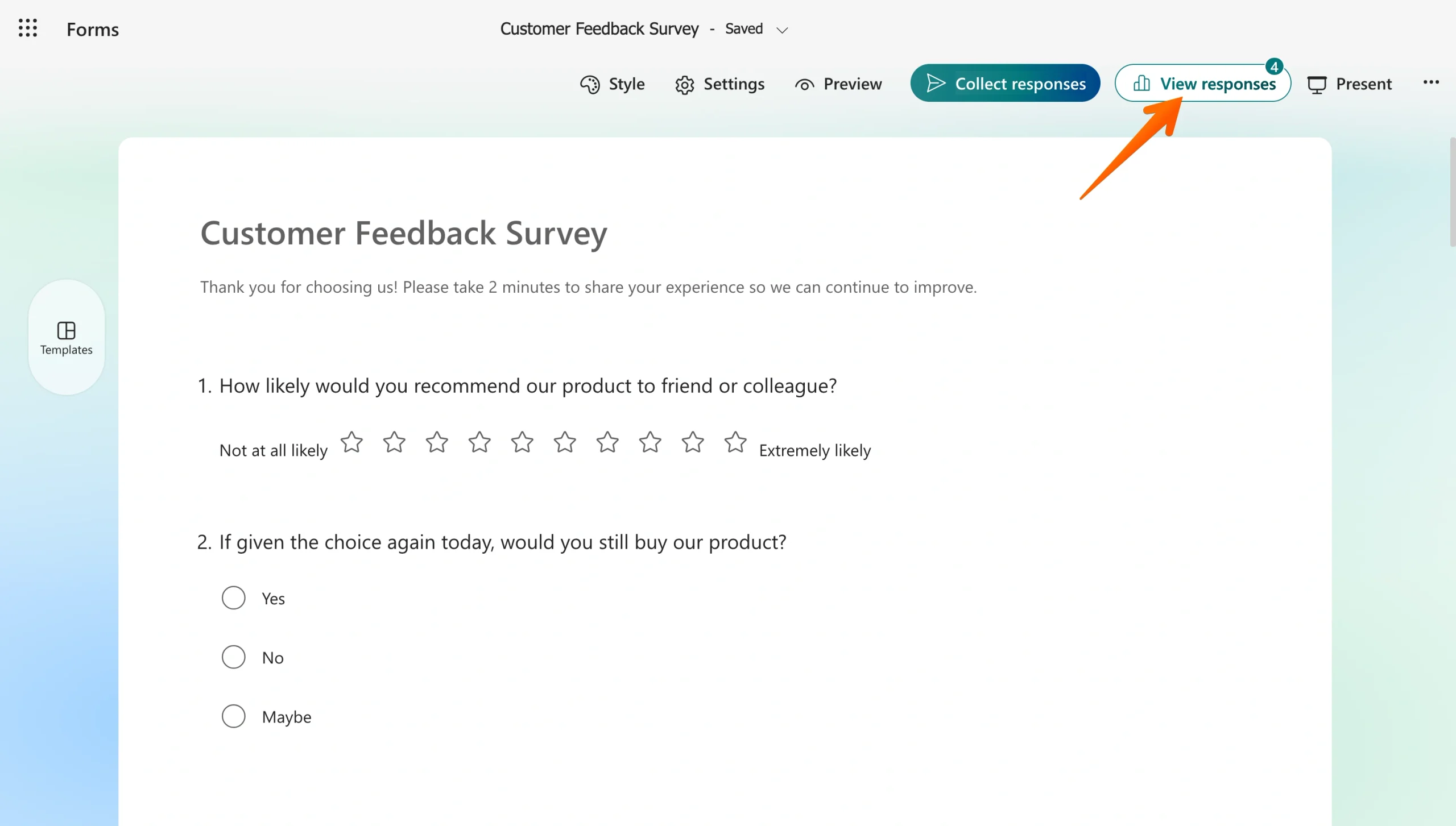
- Select the three-dot menu, then choose Print summary.
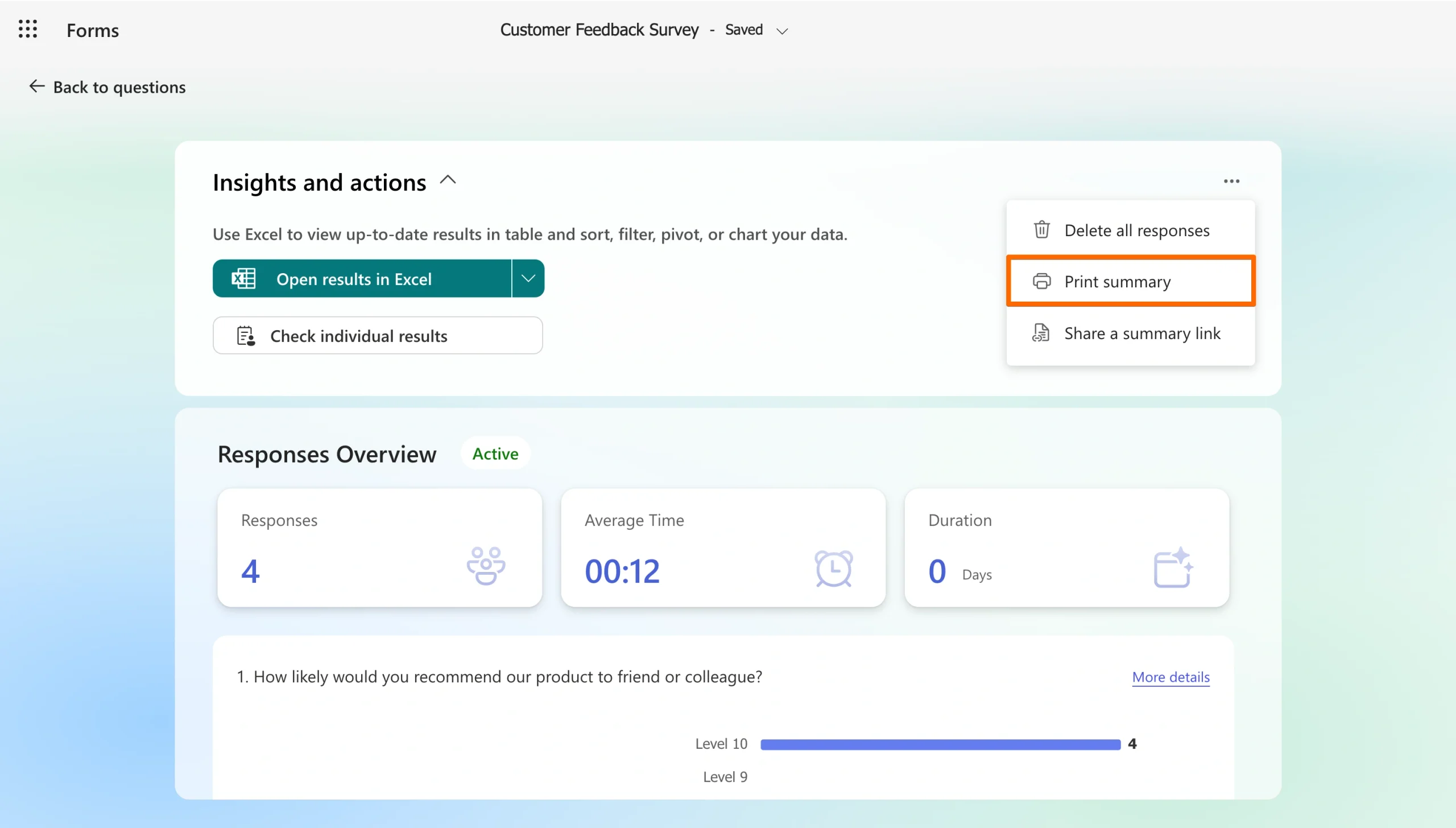
- In the window that opens, choose the appropriate print or PDF option to save the summary.
This is useful for reports and quick result sharing, but it doesn’t create a separate PDF for each submission.
Let respondents save their own receipt
You can also let eligible respondents keep a copy of their own answers instead of creating the PDF for them.
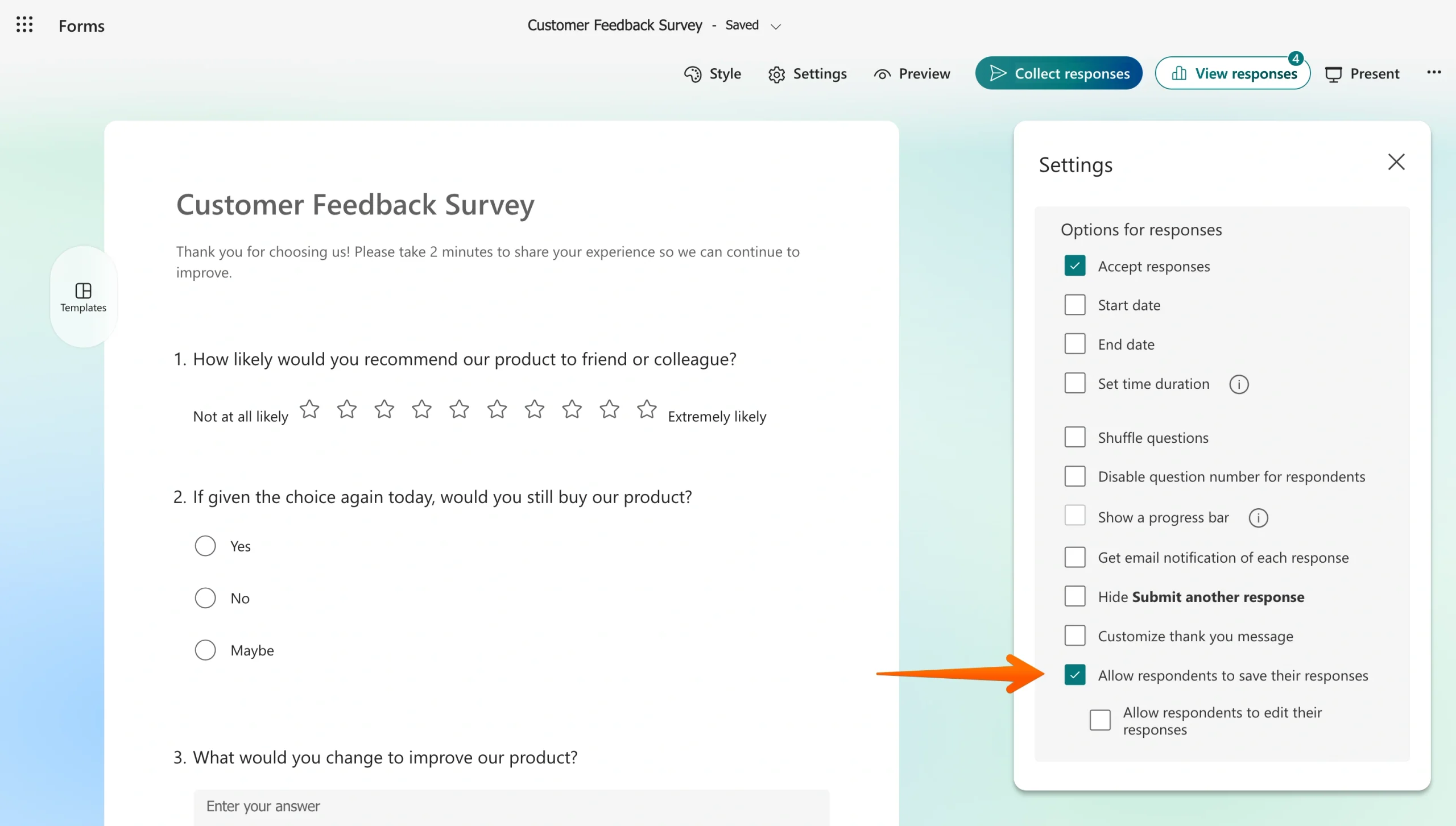
In your form settings, enable Allow respondents to save their responses. After submitting the form, respondents can use the menu on their response receipt to print their answers or download them as a PDF.
If you only have a few responses to turn into PDFs, these methods work just fine. But if you have hundreds of responses, saving them one at a time will get old fast. Luckily, there’s a better way.
Automate Microsoft Forms responses to PDF with Power Automate
If you need every Microsoft Forms submission to become a PDF automatically, Power Automate can build that workflow. It takes more than a “convert to PDF” action, because Microsoft Forms supplies the response data, not a finished document.
A typical workflow looks like this:
- Create an automated cloud flow using the Microsoft Forms When a new response is submitted trigger.
- Add Get response details so Power Automate can retrieve the answers from that submission.
- Prepare a Microsoft Word template with content controls for the response fields you want to include, and store it in a supported OneDrive or SharePoint document library.
- Use Populate a Microsoft Word template to map the Microsoft Forms answers into the document.
- Save the populated Word document to OneDrive for Business or SharePoint, then use the Convert Word Document to PDF action to create the PDF.
- Save the finished PDF to OneDrive or SharePoint, attach it to an email, or continue processing it with other actions in your workflow.
Once configured, the flow runs every time a new response arrives, giving you a repeatable way to create individual PDF documents.
The tradeoff is setup and maintenance. You need to build the Word template, map the form fields, configure file storage and naming, test the flow, and update it whenever your form or document changes. Microsoft classifies the Word Online (Business) connector used to populate a Word template as a Premium connector, so your organization’s licensing may also affect this approach.
For organizations already invested in Microsoft 365 and Power Automate, that may be worthwhile. But if generating a finished PDF is a core part of your form workflow, a form-to-PDF automation solution like Jotform needs far less configuration.

Migrate existing forms instantly
There’s no need to rebuild your online forms from scratch. Instead, migrate existing forms and submission data into your Jotform account in one click — so you can collect data without skipping a beat.
Your form can not be migrated.
Please ensure that your form URL is correct and that your form is set to “public” before attempting to migrate it again.
Create finished PDFs automatically with Jotform Smart PDF Forms
If the document itself matters, such as an application, certificate, intake record, agreement, or standardized form with a fixed layout, Jotform Smart PDF Forms gives you a more direct form-to-PDF workflow.
Upload an existing PDF to Jotform Smart PDF Forms and Jotform converts it into a mobile-friendly online form that stays connected to the original PDF.
When someone submits the online form, their answers automatically populate the original PDF layout. Each submission produces the finished document you need, without printing responses one at a time.
With Smart PDF Forms, you can:
- Convert PDFs into online forms: Turn existing PDFs into mobile-friendly forms that work on computers, phones, and tablets.
- Generate completed PDFs automatically: Populate your original PDF layout with submitted answers for every response.
- Send completed documents by email: Attach generated PDFs to notification or autoresponder emails.
- Store PDFs in the cloud: Sync completed documents to cloud storage services like Google Drive, Dropbox, Box, OneDrive, and Egnyte.
- Manage submission data: Search, filter, and review responses through Jotform Tables.
This setup is particularly useful when a PDF isn’t just an occasional export but an expected output of the workflow. Respondents fill out an online form, while your team receives and manages completed documents without rebuilding the PDF manually for every submission.
If signatures are part of the workflow, use Jotform Sign instead. Jotform Sign is designed for e-signature processes and provides completed signed PDFs along with an audit trail of the signing process. For ordinary form submissions that need to populate an existing PDF layout, Smart PDF Forms is the more relevant solution. Create a form that automatically turns every response into a completed PDF.
Already have a Microsoft Form? Switch when the PDF workflow matters
If Microsoft Forms still works for collecting your data but you’ve outgrown occasional browser-print PDFs, that may be the point to switch. Jotform is a Microsoft Forms alternative that lets you import your existing form, so you don’t have to rebuild it from scratch. Once it’s in Jotform, you can set up automated PDFs for every submission, manage responses in one place, and connect your form to other tools. Migrate your Microsoft Form to Jotform and get a finished PDF with every submission.
This article is for Microsoft Forms users who want to save individual responses as PDFs, print response summaries, or automate PDF generation for every submission using Power Automate to simplify recordkeeping and sharing.









































































Send Comment: