Key takeaways
- In Microsoft Forms settings, select Anyone Can Respond to collect responses without names recorded.
- For internal surveys, keep access limited to the organization and turn off Record Name.
- Do not ask questions that reveal a respondent’s identity, such as name, email address, or highly specific demographic details.
- An anonymous survey can still become identifiable when the audience is small or answers contain personal details.
- Jotform offers anonymous survey templates and flexible sharing methods.
Microsoft Forms can collect anonymous responses, as long as the form isn’t set to record respondents’ names. Whether you’re an HR lead seeking honest feedback on a new policy or a teacher gauging student engagement, it’s a practical option for people to share their views without worrying about how their answers will be received.
The setting that keeps responses anonymous depends on who the survey is for. If it’s open to anyone, including customers or people outside your organization, Microsoft Forms collects responses without names by default. If it’s limited to people in your organization, respondents sign in with their work or school accounts, so you’ll need to make sure the “Record Name” option isn’t enabled to keep their names and email addresses out of the results.
In this article, I’ll walk you through how to make Microsoft Forms anonymous and show you a more flexible way to build anonymous surveys with Jotform.


Pro Tip
If you’re new to the tool, start with how to use Microsoft Forms for the basics, learn how to create a Microsoft Form first, then come back to set it up for anonymous responses.
1. Open your form settings
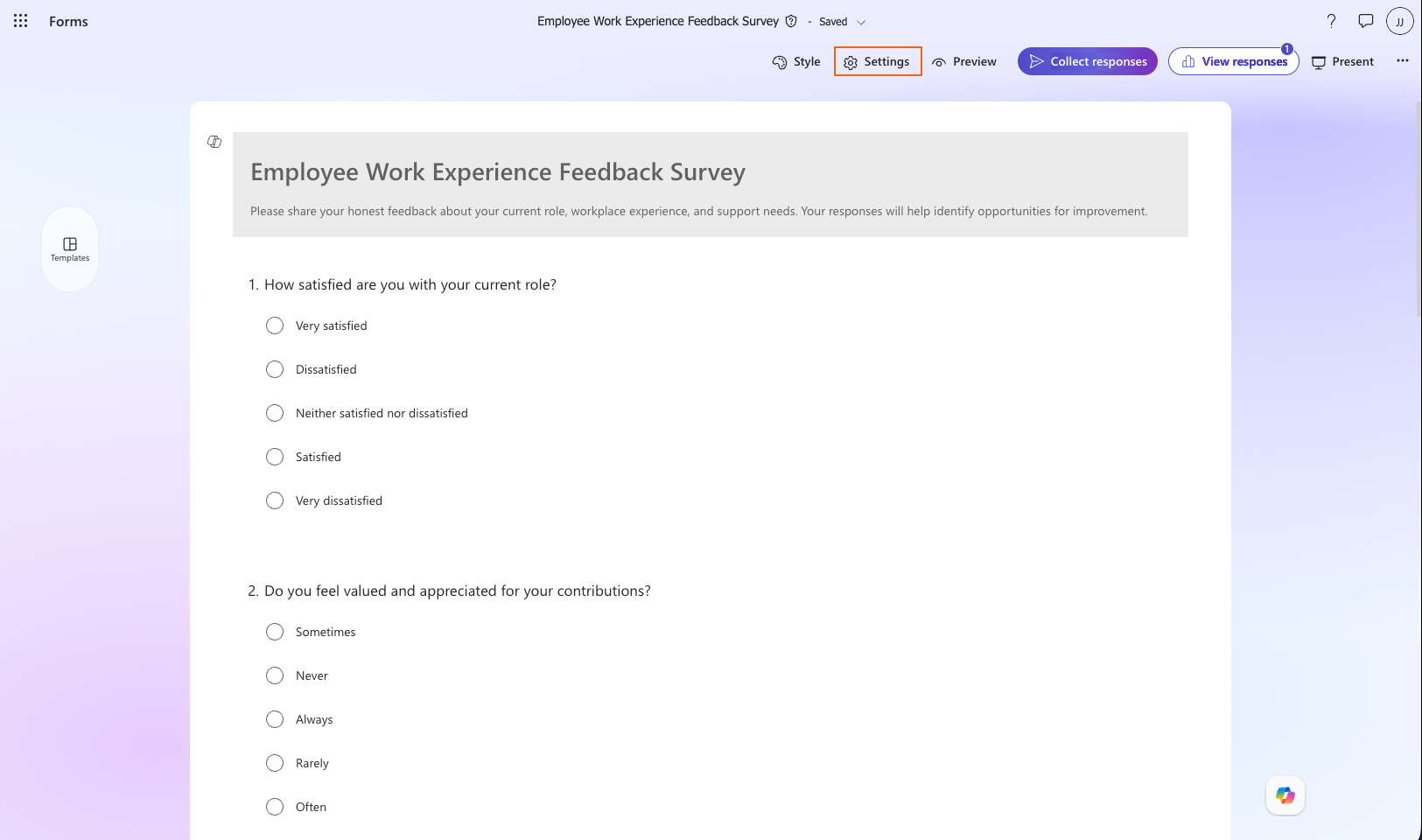
Go to Microsoft Forms and open the survey you want to make anonymous. Select Settings on the top action bar to open the settings pane.
2. Choose who can fill out your form
Under Who Can Fill Out This Form, Microsoft Forms gives you three options. The right one depends on who you’re surveying.
- Anyone can respond: This option suits surveys for customers, event attendees, or anyone outside your organization. Respondents don’t need to sign in, and Microsoft Forms records responses without names automatically.
- Only people in my organization can respond: This option suits internal surveys, such as employee engagement checks or course evaluations. Respondents sign in with their work or school accounts, which keeps the survey limited to your organization.
- Specific people in my organization can respond: This option limits the survey to individuals or groups you name, such as one department or a single class.
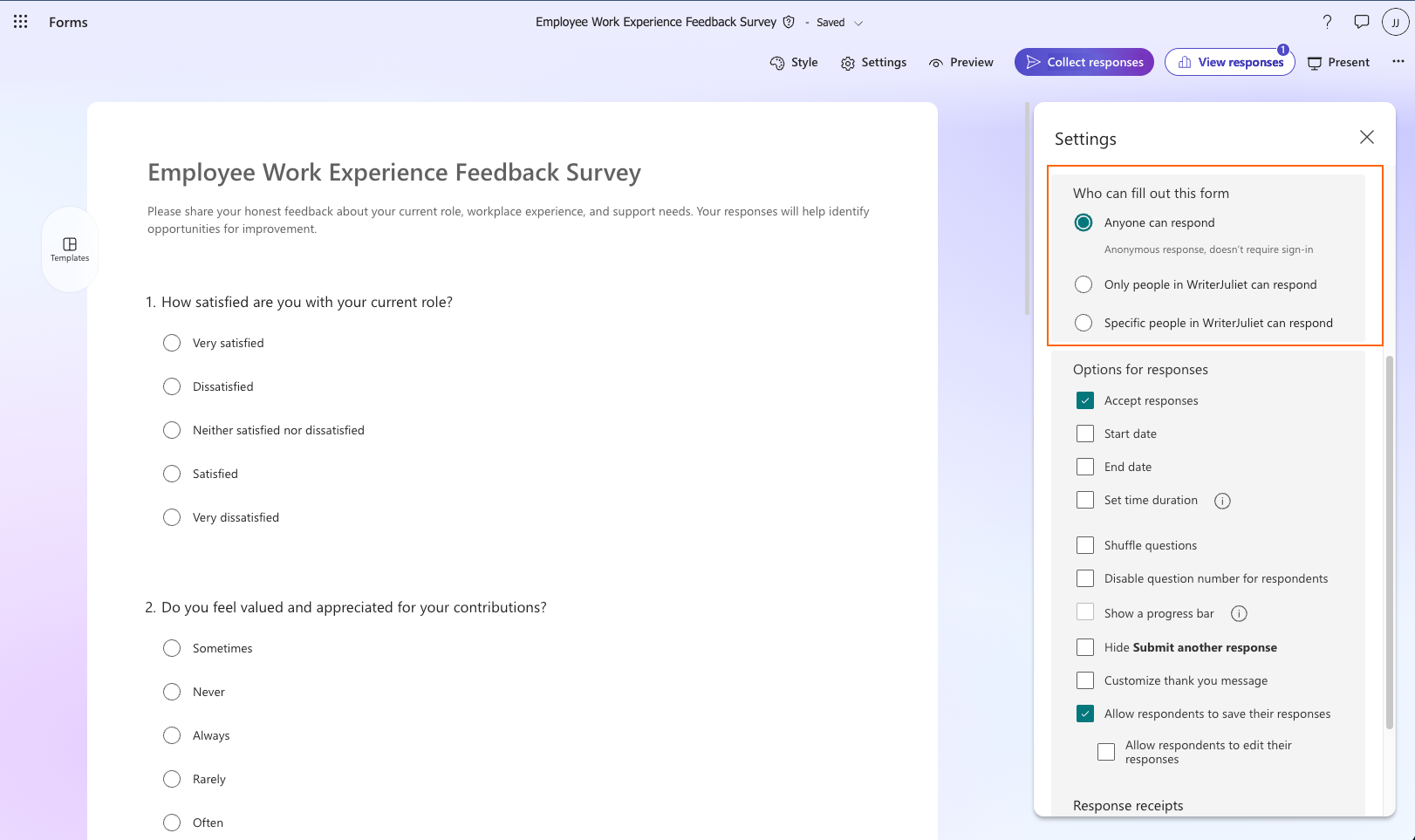
If you’re using a personal Microsoft account, the option for Who Can Fill Out This Form won’t appear. Your form collects responses without names by default, so you can move to Step 4.
3. Turn off “Record Name” for internal surveys
If you choose either organization option, uncheck the Record Name box to keep responses anonymous. When it’s selected, Microsoft Forms attaches each respondent’s name and email address to their answers.
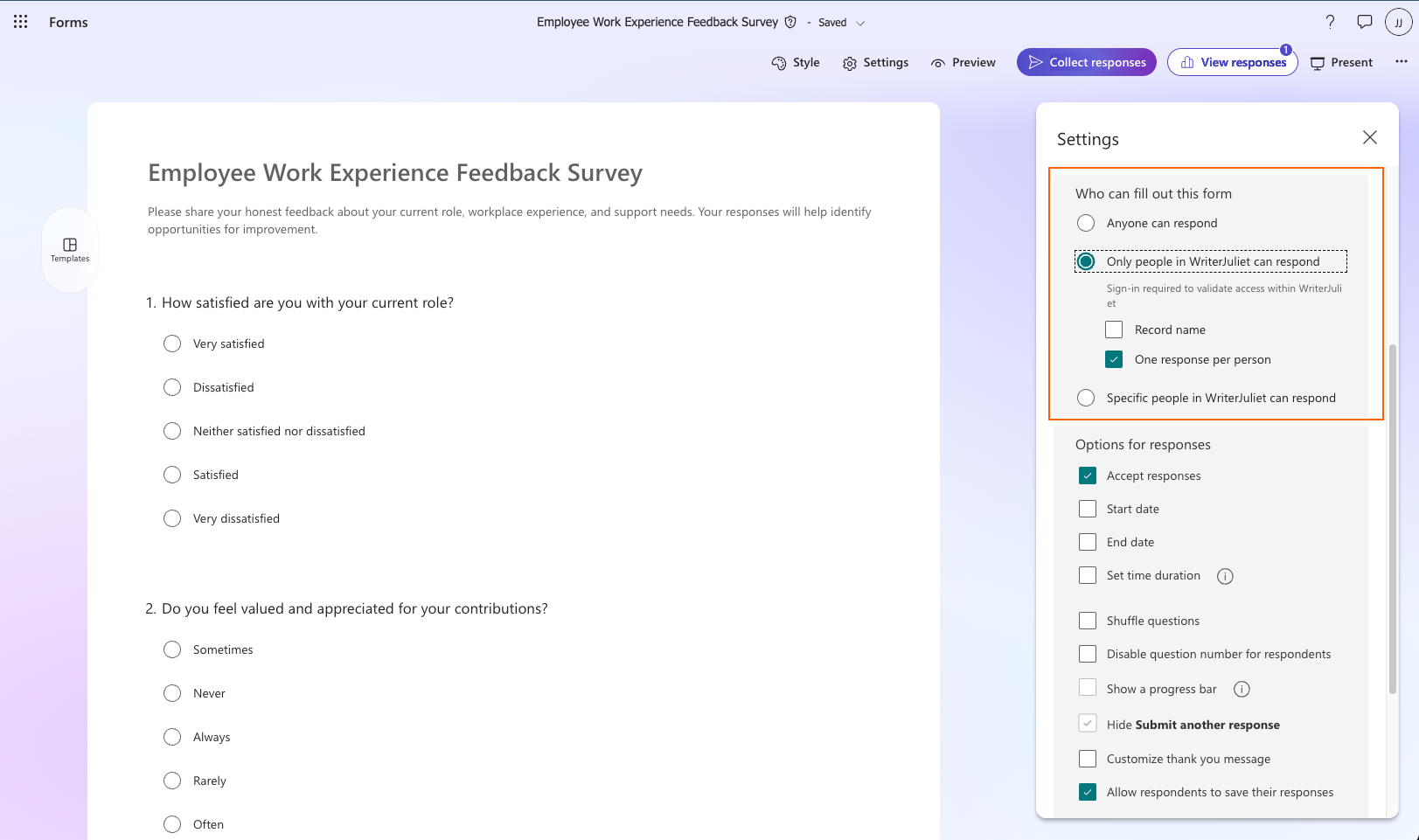
You can also select One Response Per Person to stop anyone from submitting the survey more than once. Respondents will still sign in, but with Record Name unchecked, their identities won’t be revealed. This setting helps when you need clean data, such as a team vote or a course rating where duplicate submissions would skew the results.
4. Review your questions for identifiable details
Form settings only control what Microsoft Forms records. If a question asks for a name, email address, or employee ID and the respondent answers it, that information ends up in your results.
So go through each question and remove or rephrase anything that could point to a person, such as demographic questions about department, job title, or years at the company. Even though they seem harmless, combined answers can narrow a response down to a single employee, especially on a small team. Also, review open-ended questions and ask respondents to keep their answers general, because a respondent who describes a specific meeting, project, or incident can reveal who they are without meaning to.
5. Preview the form and confirm responses are anonymous
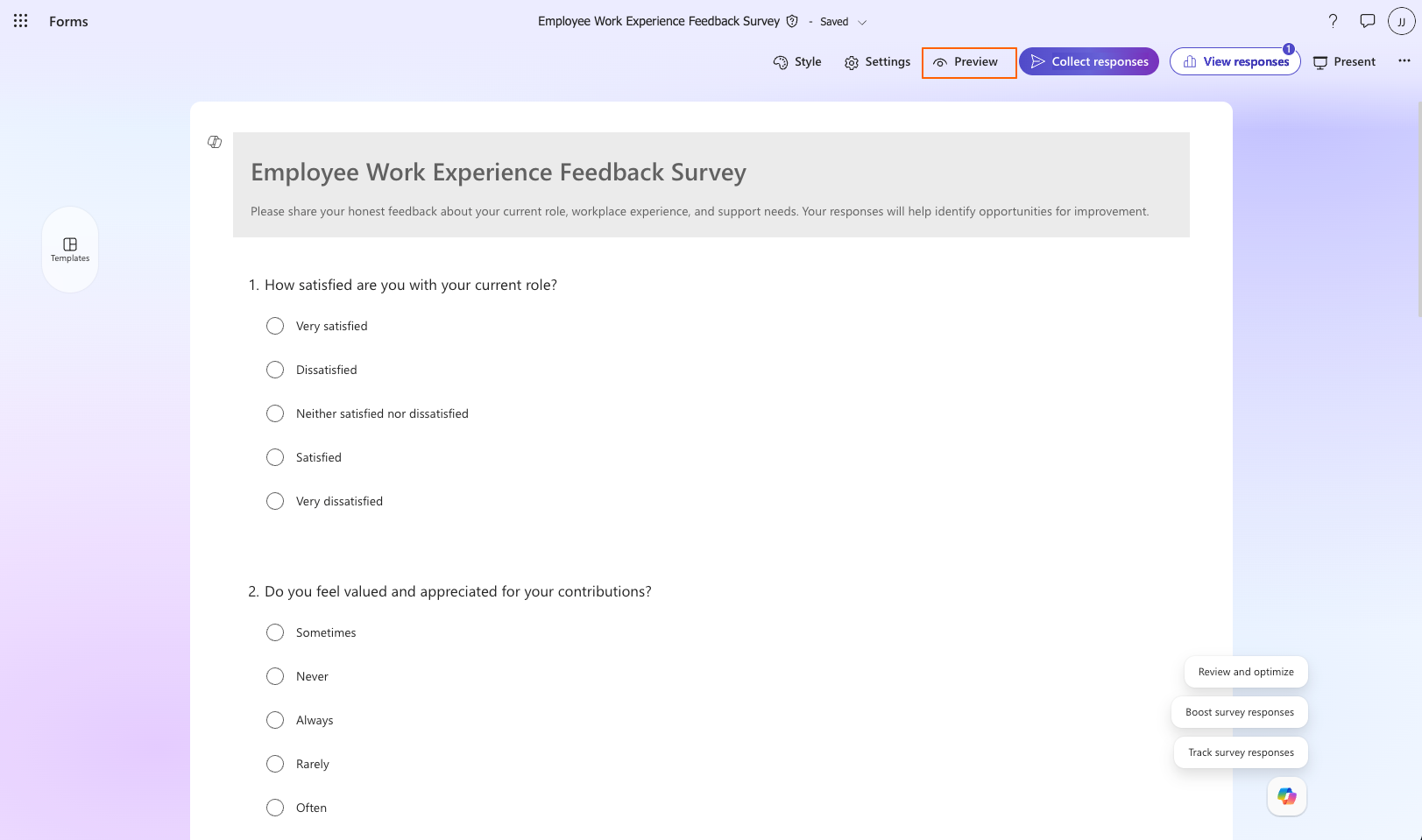
Select Preview on the top action bar to see the survey as respondents will.
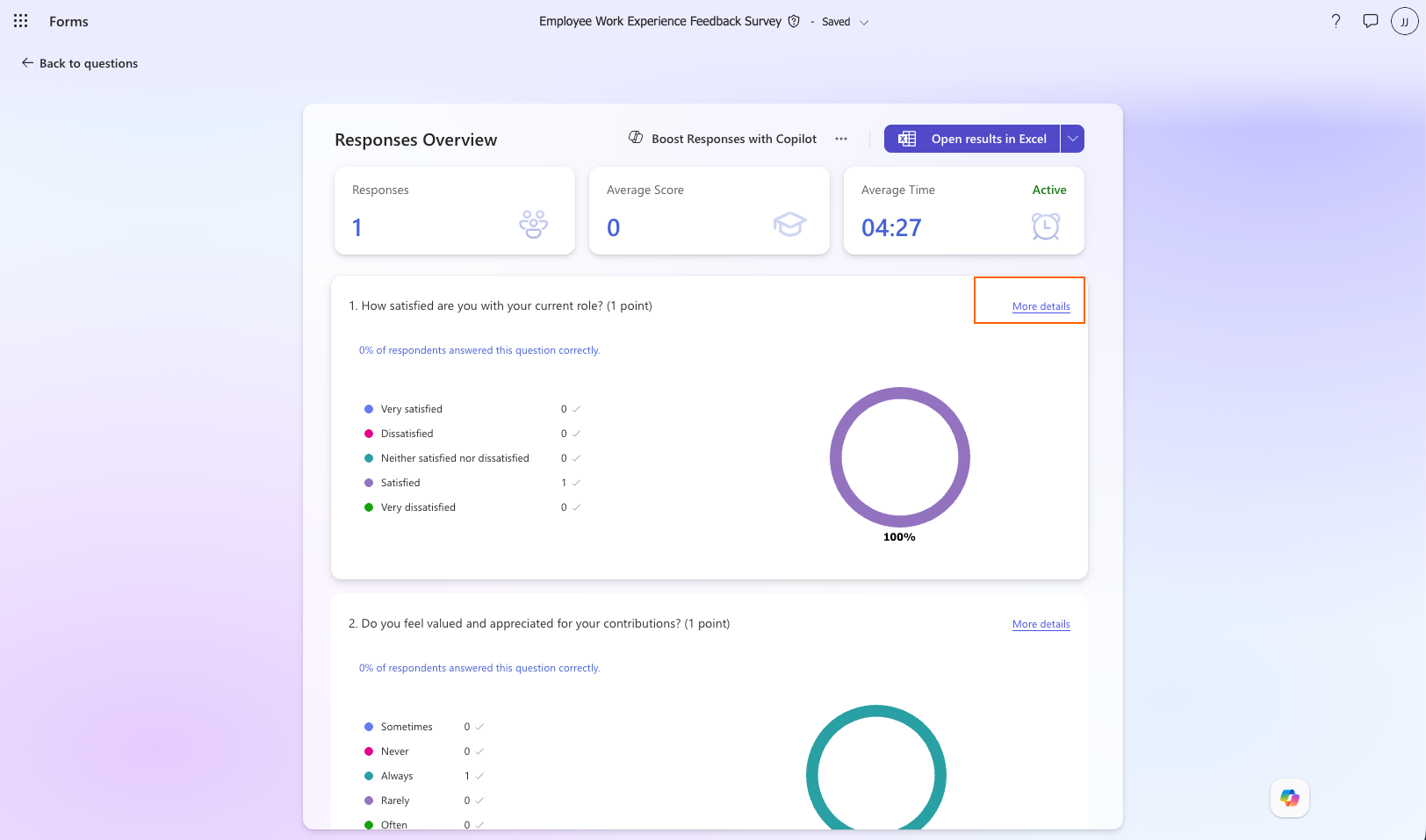
To check the setting itself, submit a test response, then open the View Responses tab. Under each question, click More Details to see the response.
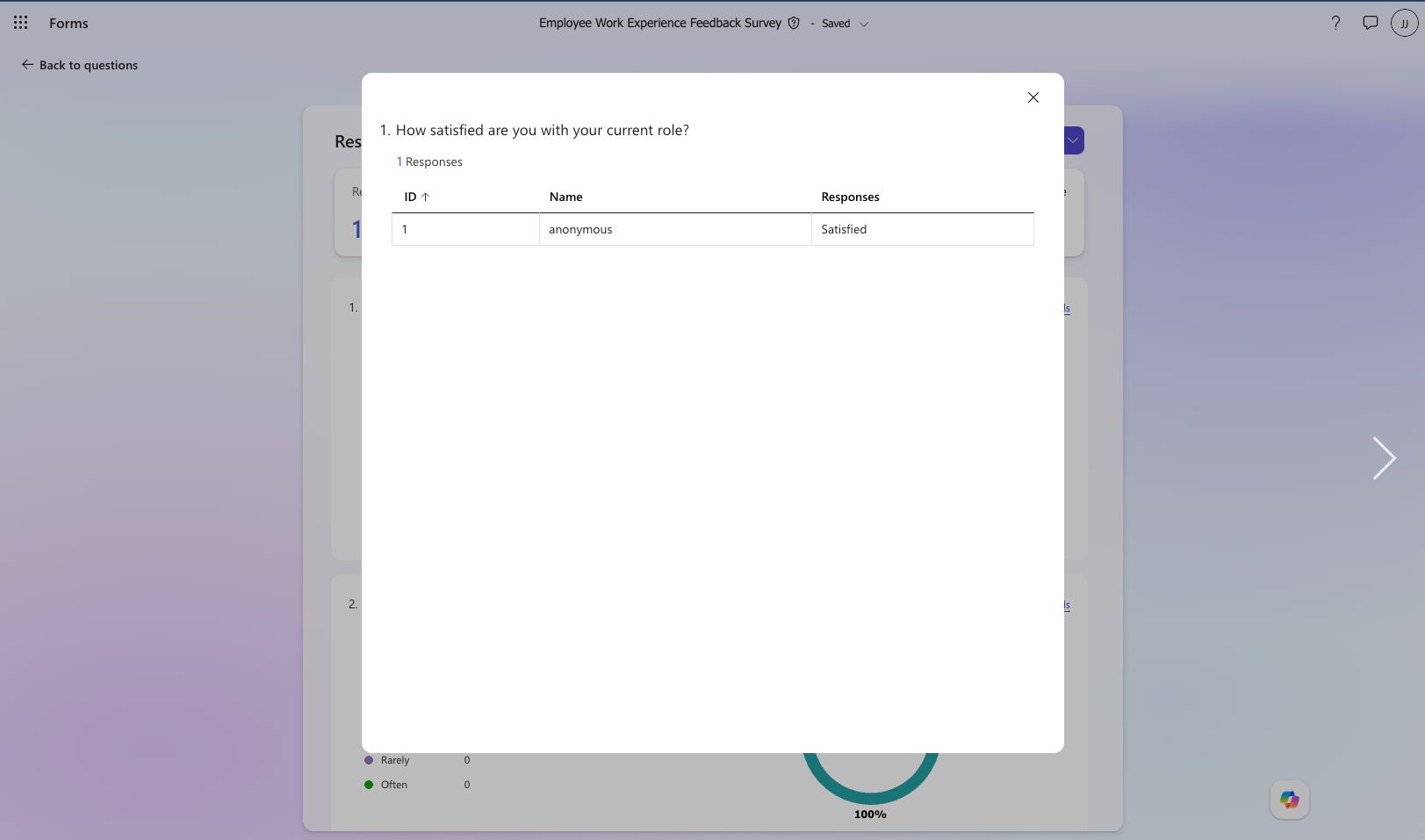
Anonymous responses show as “anonymous” instead of a name.
Make sure to delete the test response before you share the survey so it doesn’t appear in your results.
6. Share your survey
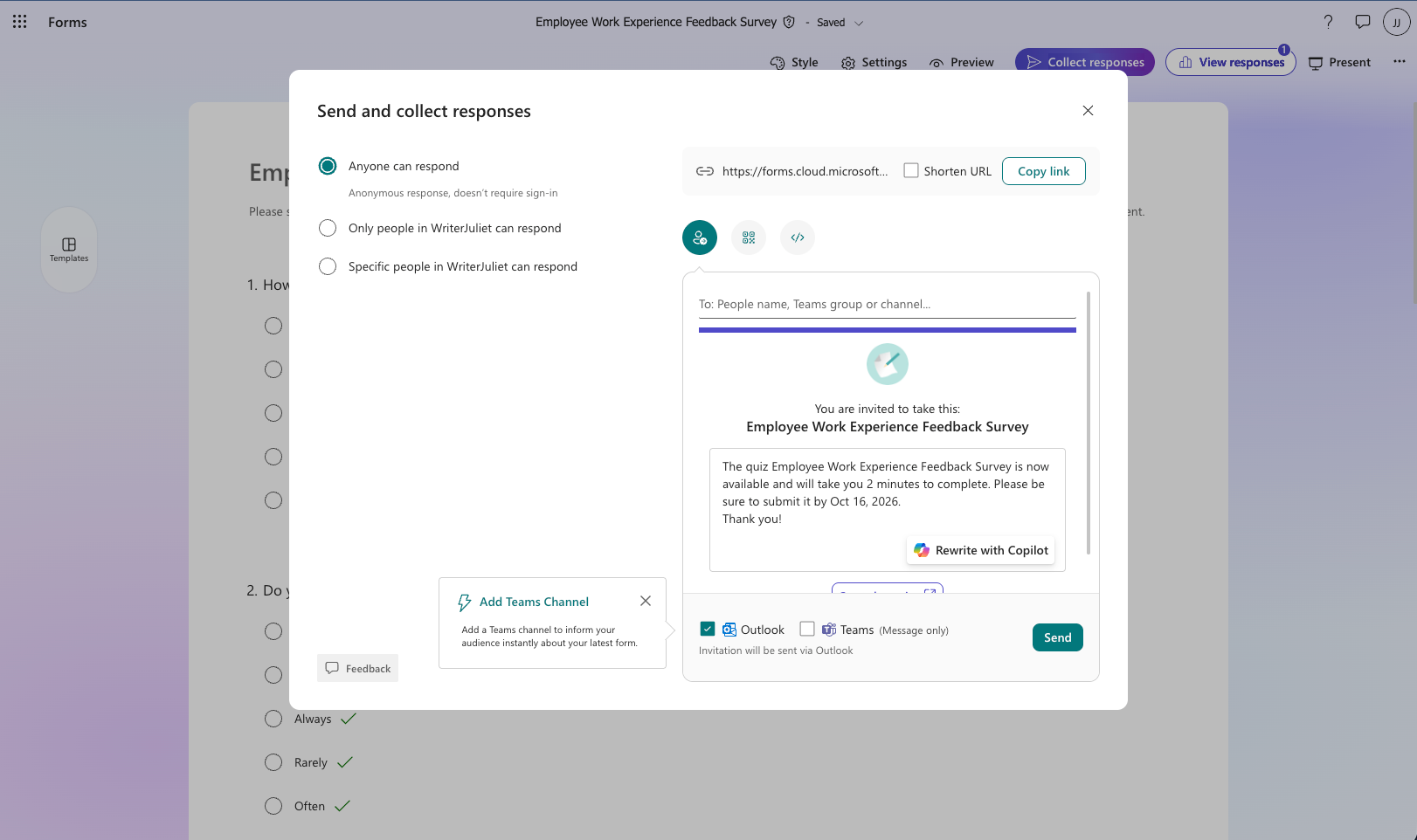
In the form, select Collect Responses and choose how to share the survey: via link, email invitation, QR code, or embed.
Need more control over anonymous forms? Use Jotform
Although setting up an anonymous form in Microsoft Forms is straightforward, the setup for internal feedback has some conditions. To limit a survey to people in your organization while keeping their names out of the results, you need a Microsoft 365 work or school account. A free personal Microsoft account keeps responses anonymous by default, but you can’t restrict who responds. Beyond that, Microsoft Forms gives you fewer ways to customize your survey’s design and branding than a dedicated form builder.
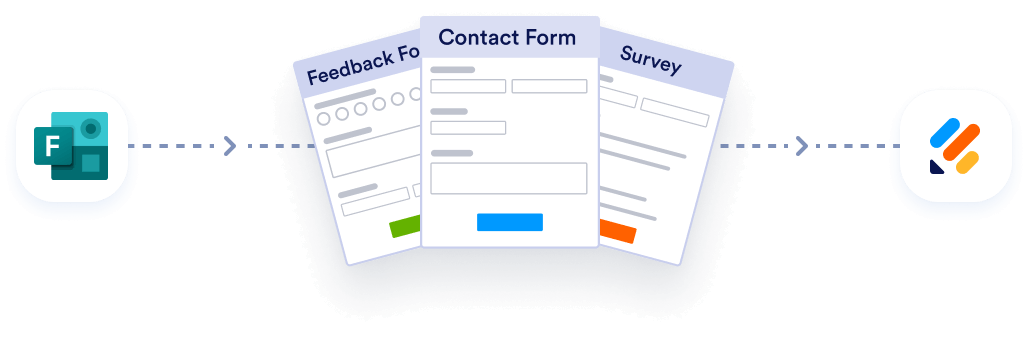
Migrate existing forms instantly
There’s no need to rebuild your online forms from scratch. Instead, migrate existing forms and submission data into your Jotform account in one click — so you can collect data without skipping a beat.
Your form can not be migrated.
Please ensure that your form URL is correct and that your form is set to “public” before attempting to migrate it again.
If you need more control over your anonymous surveys than Microsoft Forms allows, Jotform is a solid Microsoft Forms alternative. It lets you create feedback surveys for free. You can build an anonymous feedback form from scratch in the drag-and-drop form builder or choose from over 10,000 free survey templates.
Every template, from employee feedback forms to course evaluations, is fully customizable in the form builder. You can remove fields; add questions that fit your survey; change fonts, colors, and themes; and add your logo so the survey matches your brand. You can also change the form layout to display all questions on one page or one question per page, use conditional logic to show or hide questions based on earlier answers, and tell respondents exactly how you handle their answers by adding a paragraph at the top of your form explaining what you collect, what you don’t, and who will see the results.
When you’re ready to share, Jotform lets you send a direct link, embed the form on your website, send the link by email, or post it on social media. Jotform will collect responses and display results without providing any identifying information the respondents didn’t add.
Pro Tip
If you’re still comparing options, our Jotform vs Microsoft Forms breakdown covers the differences between Jotform and Microsoft Forms in detail.
Ready to move your anonymous survey off Microsoft Forms? You can quickly switch to Jotform without rebuilding the survey from scratch.
Switch from Microsoft Forms to Jotform for anonymous surveys
Jotform’s Microsoft Forms migration tool moves your existing surveys into Jotform. Jotform will import the form with existing submission data, then recreate its structure, so you can review your questions, remove anything that could identify respondents, and add the privacy message and logic your survey needs.
If you’d rather start fresh with your next survey, Jotform’s anonymous feedback form template helps you get set up almost immediately. Hit Use Template, then tailor the form questions to your employees, students, or customers and give respondents a space to share their candid responses.
This article is for HR teams, managers, educators, and administrators who need to collect candid employee, student, or customer feedback without recording respondents’ names.























































Send Comment:
1 Comment:
December 13, 2024
can you share a quote for this