Jotform’s web forms let teams create, collect, and manage online form data without writing code. Build custom web forms with a drag-and-drop editor, embed them on any site in seconds, and use templates and integrations to handle leads, payments, registrations, and more. Jotform streamlines data collection and publishing, allowing you to launch and scale forms faster.
Don’t want to build your web form from scratch? Just select one of our readymade web form templates and customize it for your business — it’ll only take a few minutes!
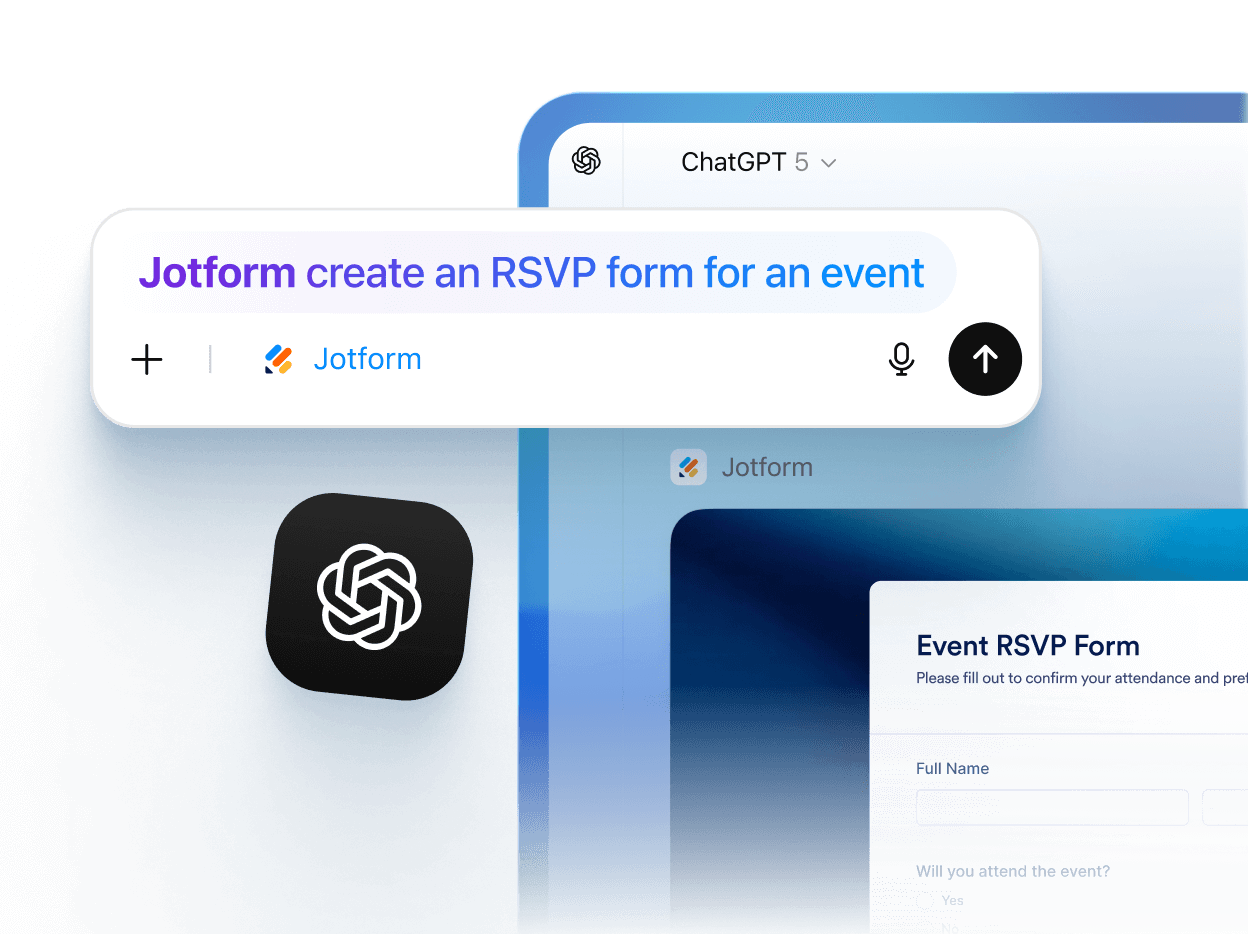
Jotform ChatGPT App
Create forms in seconds inside ChatGPT, refine them through conversation, and turn submissions into clear insights without switching tabs.
Benefits
Add payment fields to your web form to accept donations, sell products, or collect booking fees online. Choose from more than 40 payment integrations including Stripe, PayPal, and Square. So you can support the payment methods your audience prefers. Jotform does not charge additional transaction fees, so the only cost is your payment processor’s standard rate.
Customize your web form design with form fields, widgets, and visual elements so it reflects your brand and fits smoothly into your site’s look. Drag-and-drop editing means you can tailor layouts without needing HTML or CSS skills. Built-in features such as conditional logic and file uploads make it easier to capture the exact data you need.
Connect your web form submissions to the tools you already use with 100+ integrations, so form responses go directly into CRMs, email lists, collaboration apps, and storage services. Use advanced form features like e-signatures and PDF generation to turn data into usable documents without manual export. This makes data collection and follow-up faster and more reliable.
Testimonials
Web forms are digital versions of paper forms that allow users to enter information electronically. These forms are accessible on both mobile devices and desktop computers, offering a faster, more flexible way to collect information than traditional paper forms.
There are thousands of different types of web forms, from order forms to signup forms and everything in between.
Online form building software allows you to build your own form from scratch to ensure it fits your exact needs. These tools also often provide templates for different types of web forms. Templates save you time and effort by allowing you to skip the design step.
Regardless of which method you choose, there are a number of tools available to help you build the form you need.
You can create web forms using a variety of online form builders, like Jotform. Look for a form builder that offers the best features and value for your unique requirements.
Whichever option you choose, check to see what it offers beyond form building. For example, on top of its drag-and-drop form builder, Jotform gives users the ability to automate approvals, collect e-signatures and online payments, and manage form data.
Accessibility is an important element to consider when designing your web forms. Accessibility features help ensure that all users can navigate your form and actively participate in the digital world, regardless of any disabilities they might have. By making your forms more accessible, you not only improve the user experience for people with disabilities, but you can also get more form submissions — from a greater variety of perspectives.
Here are some ways to improve accessibility in your web forms:
With these small changes, you’ll make your form more accessible for everyone. This shows a commitment to complying with accessibility regulations and to meeting customers’ needs.
Getting your users to start filling out a form is much easier than getting them to finish it. A poor user experience may lead to significantly fewer form submissions. Making your form easy to use, engaging, and dynamic will help prevent user drop-off and increase conversion.
Here are some tips to help you enhance your user experience:
Making your forms approachable and easy to fill out makes it more likely that your users will complete them accurately. More responses provide your organization with better, more reliable information — and more leads.
Web forms are useful for a variety of situations. Any organization or individual looking to collect information from their target audience will use a web form in some capacity.
Here are some of the most common use cases:
While these are some of the most popular use cases, there’s no limit to the possible uses for web forms. With the right form builder on your side, you’ll have the power to create a form to fit your every need.