
If you run operations at a medical practice, you know the feeling.
On paper, everything looks buttoned up. Schedules are full, staffing is set, systems are in place. But once the day begins, things start to unravel. The front desk is chasing down missing patient information. Providers walk into appointments without the full context of patients’ issues. By mid-morning, delays begin stacking up.
By the end of the day, your team is drained, and no one can quite trace the root cause.
More often than not, it’s not a staffing issue. It’s not even scheduling.
It’s patient intake.
Intake isn’t paperwork: It’s your first operational system
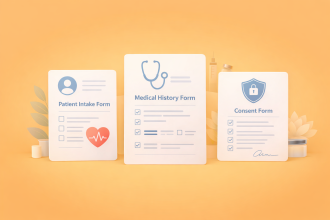
It’s easy to think of a patient intake system as a collection of forms. But from an operations standpoint, it’s much more than that.
Patient intake is the system that shapes everything that follows: clinical readiness, staff efficiency, and the overall patient experience.
When intake is working well, the day runs smoothly. When it isn’t, small gaps quickly turn into larger disruptions. For example:
- Staff spend time tracking down missing details.
- Providers lack the information they need to provide the right care.
- Delays ripple across the schedule.
- Patients arrive for appointments already frustrated.
And there’s a bigger impact beneath the surface. Administrative work already consumes a significant portion of clinicians’ time, often after their regular shifts have ended. When intake is inefficient, it doesn’t just slow things down. It adds real operational strain.
The real issue: Intake systems that weren’t designed intentionally
Most practices didn’t intentionally design their intake process. It developed over time.
A form gets added for one use case. Another team creates their own version of that form. Someone builds a workaround for routing patient information. Consent for treatment is collected sometimes and missed other times.
Eventually, you’re left with a system that looks something like this:
- Multiple forms across departments
- Inconsistent data collection
- Manual routing based on staff knowledge
- Information scattered across tools
From an operations perspective, that leads to a process that’s difficult to standardize, nearly impossible to scale, and heavily dependent on individuals instead of systems.
In other words, it’s fragile.
What high-performing operations teams do differently
The most effective operations leaders don’t try to fix everything at once. They focus on standardizing what makes the biggest impact.
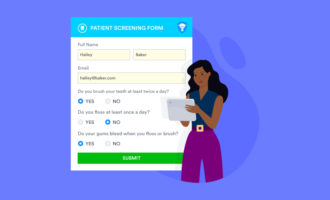
They start with the fundamentals. Every intake form captures consistent, essential information: who the patient is, why they’re coming in, and key health details. Capturing that information alone eliminates a surprising amount of downstream rework.
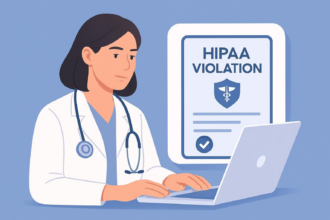
They also build HIPAA compliance into the intake process. Instead of collecting consent for treatment and HIPAA release forms as separate steps, consent collection becomes part of intake, removing the need to chase signatures or resolve last-minute gaps.
Manual routing is another area that efficient teams eliminate. Rather than relying on staff to decide where information should go, they define workflows up front. Submissions are automatically directed to the right teams, front desk, nursing staff, and providers, without extra steps.
Most importantly, they create predictability. Every submission follows the same logic: It lands in the right place, triggers the right actions, and supports the next step in the workflow. That consistency is what makes operations scalable.
Why flexibility still matters
Standardization is critical, but trying to standardize everything can backfire.
The best operations teams know where to leave room for flexibility. Specialty-specific questions, different workflows for telehealth versus in-person visits, and patient-friendly language all require adaptability.
It’s a balance. Standardization drives efficiency, while flexibility ensures the patient experience remains intact.
You need both.
Rethinking how you measure intake success
If success is still defined by the number of forms completed, you’re only seeing part of the picture.
What really matters is the flow of information.
Consider questions like
- How long does it take to move from submission to visit readiness?
- How often does staff need to follow up for missing information?
- How much time is spent correcting incomplete data?
- Is information reaching the right people automatically?
Because intake isn’t just about collecting data, it’s about enabling everything that comes next.
Where the right system makes a difference
For operations teams, improving intake isn’t about adding more tools, it’s about creating a system that works.
With Jotform Enterprise, teams can bring structure to intake without adding complexity or relying on engineering resources. Instead of managing disconnected workflows, you can standardize processes across teams and locations, automate routing and approvals, and build compliance directly into every step.
Structured fields and conditional logic help ensure complete, accurate data is captured upfront, reducing errors and minimizing back-and-forth. And because these workflows are reusable, intake becomes consistent and scalable across the organization.
The bottom line
If your intake process relies on manual effort, workarounds, or institutional knowledge, it isn’t truly a system.
It’s a risk.
But when you treat intake as operational infrastructure — something you can standardize, automate, and scale — you start to see meaningful impact: less strain on staff, better-prepared providers, more predictable operations, and a smoother patient experience.
And perhaps most importantly, your team spends less time putting out fires. Because when intake works, everything else starts to work with it.
—
Watch “Intake as infrastructure: A strategic framework for medical operations leaders” webinar.
Learn more about Jotform for healthcare.

























































































Send Comment: