
Choosing between private practice and hospital employment can shape almost every part of a clinician’s working life, from how much control you have over your schedule to how much time you spend thinking about staffing, billing, and business operations.
Hospital employment is also becoming increasingly common. According to 2026 data reported by Medical Economics, hospitals added 44,000 physicians to their payrolls in 2024 and 2025 — an 8.2 percent increase. That shift makes the decision between private practice and hospital employment especially relevant for physicians planning their next career move.
Neither path is automatically better. Some physicians value the independence and ownership opportunities of private practice, while others prefer the predictable compensation, infrastructure, and support that come with hospital employment. The right choice depends on your career goals, financial priorities, personality, specialty, and preferred lifestyle.
Here’s how private practice vs hospital employment compares across the factors that matter most.
What is private practice?
Private practice is a physician-owned business in which one or more clinicians operate the practice and make its clinical and business decisions. Owners are typically responsible for staffing, billing, overhead, compliance, technology, and day-to-day operations alongside patient care.
A private practice may be a solo practice, group practice, or partnership. Each offers a different balance of ownership and shared responsibility. Learning about the types of medical practices can help you understand which structure may fit your goals.
The tradeoff is simple: More independence also means more responsibility.
What is hospital employment?
Hospital employment means working as an employee of a hospital, health system, or hospital-owned medical group. Physicians generally receive a salary or compensation package while the organization provides infrastructure such as billing, staffing, facilities, compliance systems, and IT.
In return, physicians usually have less control over operational decisions and may need to follow organization-wide policies, schedules, productivity expectations, and clinical processes.
This model is becoming more common. According to 2024 data from the American Medical Association, 34.5 percent of physicians worked in hospital-owned practices — up from 23.4 percent in 2012. Another 12 percent were directly employed by or contracted with a hospital — more than double the 5.6 percent reported in 2012.
Private practice vs hospital: A factor-by-factor comparison
| Factor | Private practice | Hospital employment |
|---|---|---|
|
Career goals |
Offers ownership and business-building opportunities |
Can provide an organizational career path and leadership opportunities |
|
Salary and earning potential |
Income varies, but ownership can create long-term upside |
Compensation is usually more predictable and may include benefits |
|
Autonomy and clinical control |
More control over schedules, staffing, workflows, and practice direction |
Decisions may be shaped by system policies and priorities |
|
Job security |
Depends on the practice’s financial health |
Often more predictable, though restructuring can occur |
|
Work-life balance |
Flexible schedules are possible, but ownership adds responsibilities |
Less business work, although schedules may be less flexible |
|
Administrative burden |
Owners manage or outsource billing, staffing, and compliance |
Much of the infrastructure is provided |
|
Startup cost and risk |
Requires capital and carries financial risk |
Usually requires no personal investment in practice infrastructure |
|
Support infrastructure |
Owners choose and fund their systems and staff |
Established IT, HR, billing, and compliance support is typically available |
In short, private practice usually provides more control, while hospital employment provides more built-in support. The question is which fits your priorities.
Why choose private practice?
Private practice can be a good fit for physicians who value independence, flexibility, and the opportunity to shape how their practice operates. Here are five key reasons to consider it:
- More autonomy: Owners can make decisions about appointment lengths, schedules, staffing, technology, services, and the overall direction of the practice.
- Broader experience: Running a practice teaches business skills such as budgeting, hiring, marketing, and vendor management alongside medicine. For clinicians considering starting a private practice in counseling, for example, these responsibilities can also include planning legal, financial, operational, and client onboarding processes.
- Control over workplace culture: Owners can shape how the team works, communicates, and supports patients.
- Direct influence over patient experience: You can design registration, scheduling, communication, and follow-up workflows around your patients and staff.
- Long-term earning potential: Income may fluctuate, especially early on, but successful owners can benefit directly from practice growth and profitability.
Your technology choices can also have a big impact on how efficiently the practice runs. If you’re evaluating tools for patient intake, scheduling, billing, and other day-to-day workflows, explore our guide to the best EHRs for private practice to compare your options.
Ultimately, private practice offers the chance to combine clinical work with business ownership, but it also requires taking on the responsibilities that come with running a practice.
Why choose hospital employment?
Hospital employment can appeal to physicians who value stability, organizational support, and fewer responsibilities outside patient care. Here are five key reasons to consider it:
- Predictable salary and benefits: A defined compensation package can make personal financial planning easier.
- Lower financial risk: You don’t need to personally fund office space, staff, equipment, insurance, or other operating expenses.
- Built-in administrative support: Hospitals generally provide teams for billing, IT, compliance, HR, and other operational functions.
- Greater stability: Employment can provide steadier compensation without making you responsible for keeping a practice profitable.
- Fewer business responsibilities: You can focus more heavily on clinical work rather than payroll, vendors, marketing, and practice management.
For many physicians, hospital employment offers a structured environment where clinical care is the primary focus, with established hospital workflows and most operational and administrative responsibilities handled by the organization.
Private practice or hospital, simplify your workflows with Jotform
Whether you choose to run a private practice or work within a hospital, efficient administrative workflows can give healthcare teams more time to focus on patients. Jotform provides tools that can support both environments, from independent practices managing their own operations to larger healthcare organizations coordinating processes across teams.
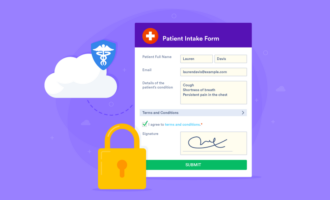
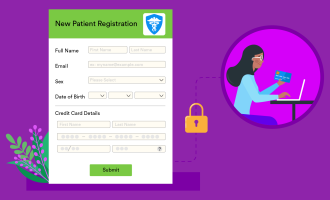
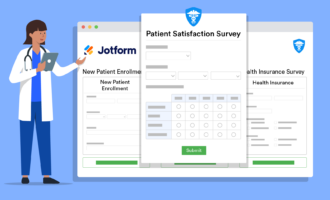
Healthcare professionals can create customized patient registration forms and patient intake forms to collect medical histories, contact details, insurance information, and other patient data. They can also provide medical consent forms and use doctor appointment forms to simplify scheduling.
For private practices, these tools can help reduce some of the administrative work that comes with running a business. In hospitals and larger healthcare organizations, healthcare automation can help teams standardize processes, reduce repetitive data entry, and keep information moving between workflows more efficiently.
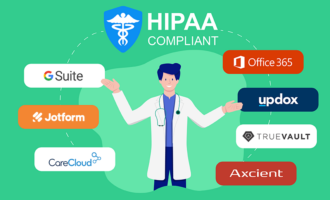
Jotform also offers HIPAA-enabled forms and ready-to-use healthcare templates, including the Mental Health Intake Form, Virtual Care Appointment Form, Therapy Booking Form, and Clinic Registration Form. Jotform customers who enable HIPAA features can sign a business associate agreement (BAA) to help support HIPAA requirements when handling protected health information.
What’s more, healthcare teams that want to bring multiple resources together can use Jotform Apps to create customized, patient-facing apps. For example, the Telehealth App can collect appointment bookings and patient information in one place.
Ultimately, choosing between private practice and hospital employment comes down to the level of autonomy, stability, and operational responsibility you want in your career. Whichever path you take, building efficient systems for patient intake, scheduling, communication, and data collection can make a meaningful difference in how smoothly care is delivered — and Jotform can help support those workflows at every stage.
FAQs about private practice vs hospital
Private practice can offer greater long-term earning potential because owners may share directly in practice profits. Hospital employment usually offers more predictable compensation and benefits, so actual earnings depend on specialty, location, productivity, expenses, and the specific arrangement.
Doctors often choose private practice for greater control over clinical decisions, schedules, workplace culture, patient experience, and business strategy. Some also value entrepreneurship and the opportunity to build equity in a practice.
Private practice ownership has declined as physicians face rising operating costs, administrative requirements, reimbursement pressures, and the complexity of running a medical business. Hospital and health-system employment can reduce some of those burdens by providing established infrastructure and more predictable compensation.
This guide is for physicians, clinicians, medical residents, and other healthcare professionals deciding whether private practice or hospital employment better fits their career goals.































































































Send Comment: