

Checklist App Templates
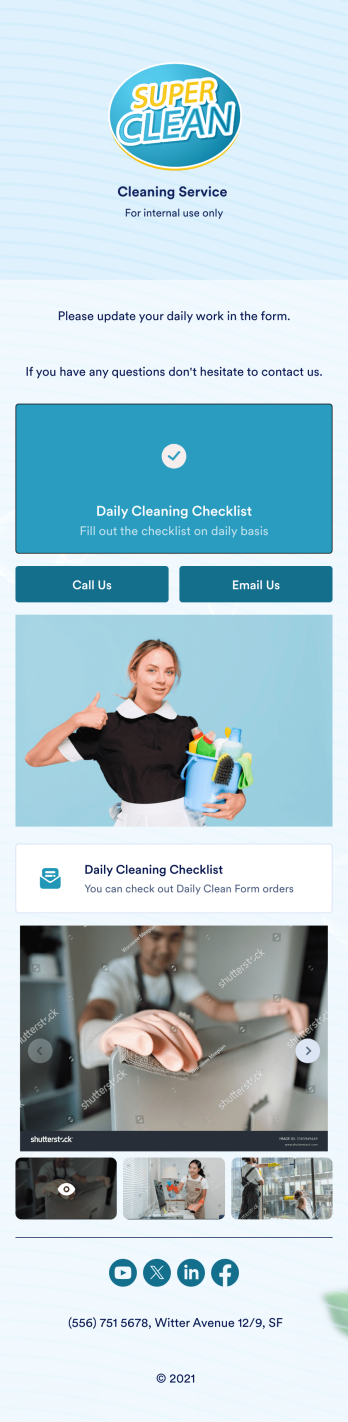
Daily Office Cleaning Checklist App
No matter what kind of business you run, keep offices and shared workspaces clean with our free Daily Office Cleaning Checklist App. This ready-made app comes with a Daily Office Cleaning Checklist form that you and your employees can fill out from any smartphone, tablet, or computer. Submissions will be received instantly and stored in your Jotform account.Customize your Daily Office Cleaning Checklist App in just a few clicks. Our drag-and-drop interface is easy enough for anyone to use, so you can add forms, tables, links, images, text, and more. Use Jotform’s Sentbox element to give your app users quick, in-app access to their previous submissions, so they can review what they’ve already sent anytime. Once it’s ready to use, share your app with others by sending them the app link or adding it to your internal company site. Ensure that your office’s cleaning requirements are met every day with an easily accessible Daily Office Cleaning Checklist App for your business.
Go to Category:Checklist Apps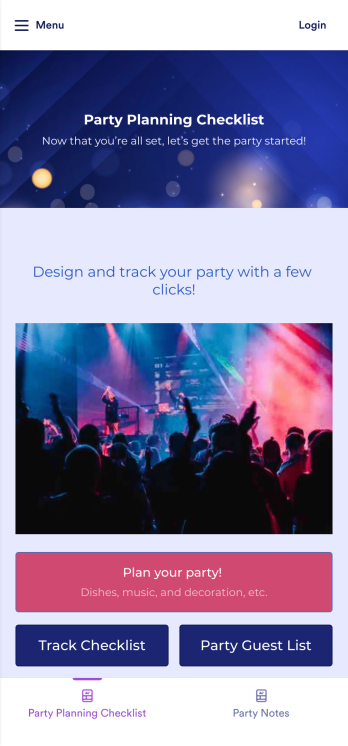
Party Planning Checklist App
Whether you’re hosting a lowkey kickback or the biggest party of the year, get everything ready in time with our Party Planning Checklist App! This pre-made app template comes with a party planning checklist and our Party Guest List Template. Send your party invitation form separately and watch as guest applications auto-populate the Party Guest List Table—located in your app. You can use this app for your own parties, or if you run a party planning business, you can share it with clients to swiftly collect their requests online.You spend lots of time creating the perfect party—so why not do the same with your Party Planning Checklist App? Without any coding, you can create new forms, upload a different background image, and customize the name, icon, and splash page to your liking. Jotform’s List Element feature lets you connect Tables and Role-based features; you can control access so admins and other users see only the parts of the app relevant to them. When you’re done, you can share your app via link and access submissions in your Jotform account. Make your next event the best one yet with a custom Party Planning Checklist App designed to help you stay organized!
Go to Category:Checklist Apps
Daily Routine Checklist App
A daily routine can help reduce stress by providing structure and helping you organize your time throughout the day. With Jotform’s free Daily Routine Checklist App, you can more easily establish a daily routine and check off each to-do item from any device. This customizable mobile app includes checklists for the morning, afternoon, and evening. You can fill out the attached Daily Routine Checklist Form to automatically sync entries to your table, or input information directly into the checklist itself.Customizing your Daily Routine Checklist App won’t take any time out of your day. Just drag and drop to add forms, tables, links, text, images, and more to your app. You can download your app onto any device and even share it with others to help hold you accountable. Whether you’re a student, a teacher, or working professional, our Daily Routine Checklist App will help you keep track of your daily routine — and improve it!
Go to Category:Checklist Apps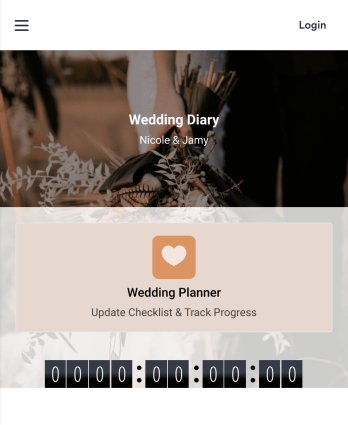
Wedding Planning App
Plan your wedding like a pro with a free Wedding Planning App from Jotform! Whether you’re a professional wedding planner or getting things ready for your own wedding, use this app to create a wedding checklist, track your progress, and view a countdown timer ticking off the seconds until the big day. You can also use the app to log expenses, manage your guestlist, and keep track of venue information.Make changes to this Wedding Planning App template in seconds with our drag-and-drop builder. Add new forms, pages, links, images, and personalize design elements like splash screen and app icon with no coding required. Your custom Wedding Planning App can then be downloaded instantly onto any device — including your computer or any iOS or Android device — so you can prepare for your event seamlessly on the go.
Go to Category:Checklist Apps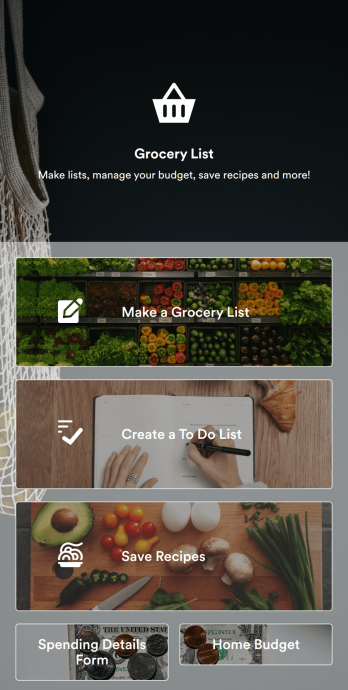
Grocery List App
A grocery list app makes grocery shopping easy from any device! Make grocery lists, save recipes, and track your spending from your favorite device using Jotform’s free Grocery List App. This ready-to-use app template includes forms for grocery lists, to-do lists, recipes, and budgeting. You can download the app onto your smartphone, tablet, or computer for easy access no matter where you are. Make this Grocery App your own with our drag-and-drop builder. Without coding, you can add forms, links to recipes, images of products, tables or data grids, app pages and buttons, and more elements. When you’re happy with app design, save it onto your favorite device to pull up when you’re grocery shopping. You can even share the app with others simply by sharing the app link or sending email invites. Make your next grocery trip a breeze — and under budget — with a fully custom Grocery List App.
Go to Category:Checklist Apps
Shopping List App
Keep track of your shopping list with a free Shopping List App from Jotform. Whether you’re gathering ingredients for your restaurant or grocery shopping for your home, quickly jot down the items you need and store them securely in your online account. The app includes sections for fruits and vegetables, meat and poultry, and other items like snacks, toiletries, and canned goods.Make changes to the Shopping List App design with our drag-and-drop app builder. No coding required — you can update forms and add links, spreadsheets, images, and other elements at the touch of a button. You can even change the app background and icon for a personal touch! Then download your custom Shopping List App instantly, or share it with a link for employees or family members to fill out on their own devices.
Go to Category:Checklist Apps
Vehicle Inspection Checklist App
A vehicle inspection checklist app is used by businesses to keep track of vehicle inspection reports for company vehicles. With this free Vehicle Inspection Checklist App, employees can fill out a pre-trip inspection checklist documenting the fuel level and overall condition of a vehicle. Employees can also add notes and attach any relevant pictures using an image upload form. There is a separate contact form employees can use to report issues. Inspection reports are synced automatically to your account, and can be sorted, filtered, and exported from any device.Customize this free app template using Jotform’s drag-and-drop interface. With just a few clicks, you can add or swap out form elements, choose fonts and colors, upload your logo, and more — no coding required. When you’re done, embed a link in an email or on your company website to have employees download your app on any smartphone, tablet, or computer. Create and store vehicle inspection reports in one convenient place with this Vehicle Inspection Checklist App.
Go to Category:Checklist Apps
Home Buying Checklist App
When renting or selling a house, it is important to know the preferences of potential buyers and sellers. How about collecting the necessary information with the Home Buying Checklist App? The Home Buying Checklist App includes forms used by real estate agents to collect information about home buyers' preferences, show their portfolios to potential buyers, and inform them about contact and location information through maps where customers can easily find the home addresses. Use the Home Buying Checklist App to better serve customers and find solutions for their needs!Would you like to make this app your own with Jotform’s easy-to-use drag-and-drop form builder? You can add or switch form elements' places, choose fonts and colors, and upload your logo. Moreover you can customize the splash page. After you’re done with the look, you can embed it in your website or share it with a link so your customers can download it on any smart devices. No coding is necessary.
Go to Category:Checklist Apps
Store Audit App
A store audit app is used by store owners and managers for recording store audits. Jotform’s Store Audit App allows employees to create daily and monthly inspection audits by filling out a form detailing store standards, presentation, and security. Audits are automatically synced to an archive in your secure Jotform account, which you can access from any device for ease of use.Make this app template your own with our intuitive app builder. Drag and drop to add or change form elements, choose color schemes, upload images, and more — no coding required. You can also modify audit headers and textboxes to fit the needs of your store. Once you’re finished, simply download your app onto your store’s tablet or desktop, or share it with employees using a link. Ditch the paperwork and keep all your store audits in one place with this Store Audit App from Jotform.
Go to Category:Checklist Apps
Cleaning Inspection Checklist App
A cleaning inspection checklist app is used by cleaning companies to keep track of what has and hasn’t been cleaned in a home or building. If you own or manage a cleaning company, employees can fill out a Cleaning Inspection Checklist form straight from their smartphone on Jotform’s free Cleaning Inspection Checklist App. All responses are stored in your Jotform account, ready to view on any device.Need to make changes to this app template? Add your logo, update the checklist form, and customize other design elements in seconds with our drag-and-drop builder — no coding necessary. You can then share the app by copying and pasting the app link, so members of your team can save it onto their devices instantly. Ditch paper checklists and manage your cleaning process more efficiently with a free Cleaning Inspection Checklist App.
Go to Category:Checklist Apps
Restaurant Checklist App
A restaurant checklist app is used by restaurant owners and managers to document the condition of a restaurant by filling out inspection forms. This Restaurant Checklist App includes two forms: a food safety and hospitality inspection checklist for recording the cleanliness of the restaurant interior, and a site inspection checklist for recording the safety and cleanliness of the kitchen and service areas. Both checklists allow restaurant inspectors to date and sign inspections using an e-signature field. Reports are instantly synced and stored in your secure Jotform account for ease of access.Customize this app template to match your restaurant’s branding with Jotform’s no-code app builder. Simply drag and drop to add form elements, edit checklist items, personalize your app icon and splash screen, and more. After you’re done, you can share your app by sending a link in an email invite, and employees can then download it onto any smartphone, tablet, or computer. Ensure your restaurant is compliant with health and safety standards by creating your own fully-customizable Restaurant Checklist App.
Go to Category:Checklist Apps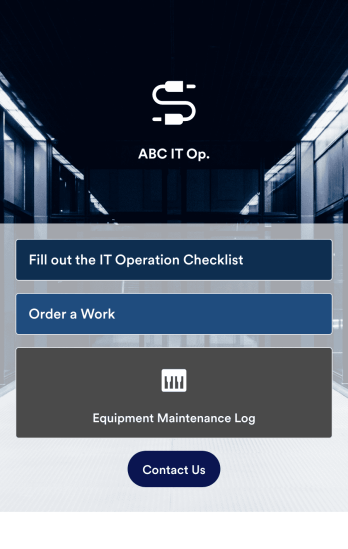
IT Operation Checklist App
An IT operation checklist app is used by IT departments for documenting routine operations and maintenance. This free app template from Jotform is a great way for IT departments to keep track of system servers, network status, and equipment maintenance. With an included IT Operation Checklist Form, IT associates can fill out and digitally sign a daily, weekly, or monthly general operations checklist. Supervisors and employees can also request new IT jobs with a Job Work Order Form, and specify a starting date, tools and requirements, and upload any relevant images and documentation. Equipment maintenance submissions are stored in an Equipment Maintenance Log, which you can sort, filter, and search from your secure Jotform account.You can easily make changes to this IT Operation Checklist App with Jotform’s intuitive app builder. No coding required — simply drag and drop to add or swap out form elements, edit checklist items, choose fonts and colors, create a custom app icon and splash screen, upload your own branding, and much more. Once you’re finished, share your custom app with other IT associates by sending email invites, or by embedding it in an internal website. Create an all-in-one app for routine IT work with this IT Operation Checklist App that works on any device.
Go to Category:Checklist Apps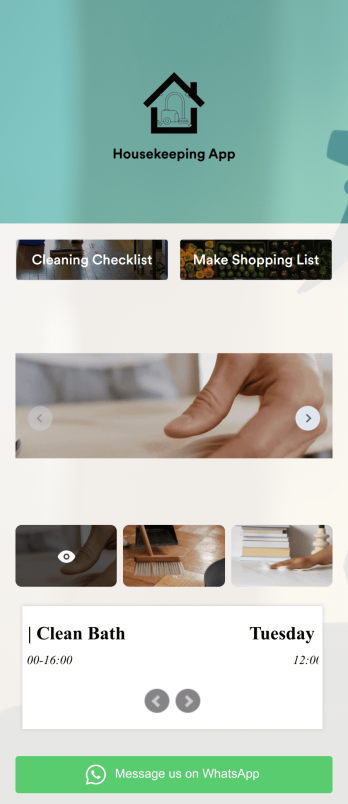
Housekeeping App
A housekeeping app is used by homeowners and housekeepers for organizing job duties in a single location. Jotform’s Housekeeping App bundles two forms: a cleaning checklist for housekeepers to make notes about various areas of the house and any supplies that need restocking, and an itemized shopping list for logging purchased groceries and their total cost. Form submissions are instantly synced to your secure Jotform account, so you can easily keep track of which duties were performed and when.Making this app template your own is easy with Jotform’s no-code app builder. Just drag and drop to add form elements, edit the content of individual forms, choose fonts and colors, upload your own app icon, and more. You can also customize your splash screen to display a rotating schedule listing duties to be completed on individual days. Once you’re finished, share your app by sending a link in an email or text message, and housekeepers can then download it on any device. Manage your housekeeping checklists and shopping lists from a single app with this fully-customizable Housekeeping App from Jotform.
Go to Category:Checklist Apps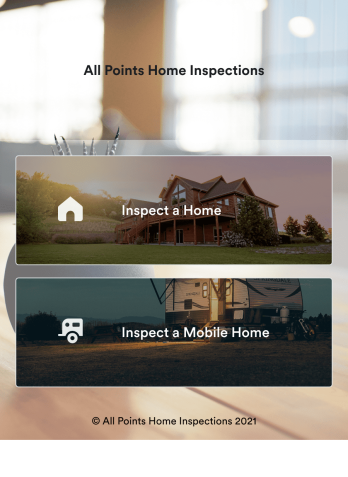
Home Inspection Checklist App
A home inspection checklist app is used by home inspectors to perform inspections from their mobile device. Whether you run a home inspection company or are inspecting your own home, use this free Home Inspection Checklist App to complete inspections on the go! You can record information like dimensions, property condition, the date of the inspection, and sign off your inspection report with an e-signature.Customize this app template in minutes with our drag-and-drop app builder. Add forms, spreadsheets, links, images, and more with no coding required — or customize visual elements like font type, app icon, and splash screen. Then download the app onto your mobile device or share it with members of your team to download onto theirs. Ditch messy paper forms and complete your inspections with a Home Inspection Checklist App from Jotform.
Go to Category:Checklist Apps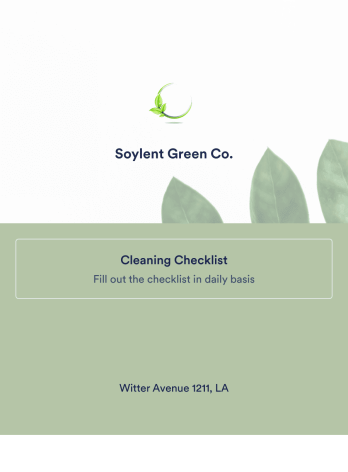
House Cleaning Checklist App
Complete checklists for house cleanings with a free House Cleaning Checklist App! Housekeepers, cleaning services, and homeowners can keep a thorough record through the app’s Morning Cleaning Checklist, which lets them enter their name, the date and time of the cleaning, which areas have been cleaned, and sign off on it with an e-signature. All submissions are stored securely and ready to view on any device.Feel free to make changes to this House Cleaning Checklist App template with our drag-and-drop app builder. Add a logo, change the app icon, include images, and add more forms, links, documents, and other app elements at the touch of a button. When your app is ready to go, share it with a link to download onto any computer, tablet, or smartphone instantly. Ditch messy paper checklists and save time with a free House Cleaning Checklist App from Jotform.
Go to Category:Checklist Apps
Baby Birthday Planner App
Plan your baby birthday like a pro with this free Baby Baby Planner App from Jotform! From your smartphone, tablet, or computer, you can use this downloadable app to complete your baby birthday preparation checklist or manage your guest list with ease. All submissions are stored securely in your Jotform account and easy to access on any device.Want to customize this Baby Birthday Planner App template? Add photos, change the app icon or splash screen, and add more elements like forms, spreadsheets, and links with no coding knowledge required. You can then share the app with your partner or download it onto your own device instantly. Make sure your baby birthday goes off without a hitch with your own custom Baby Birthday Planner App from Jotform.
Go to Category:Checklist Apps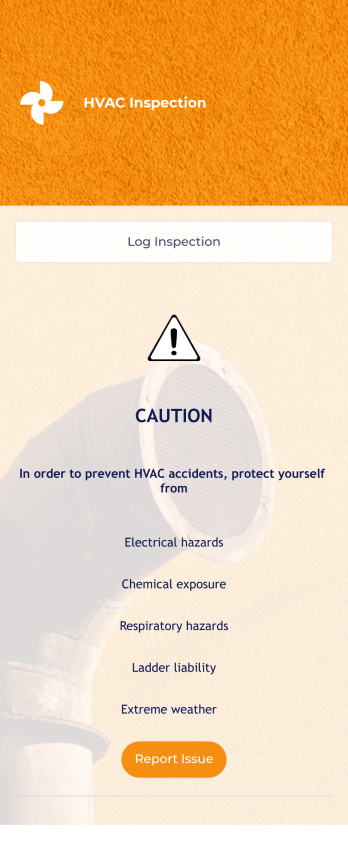
HVAC Inspection Checklist
An HVAC inspection app makes it easy for inspectors to inspect heating, ventilation, and air condition systems and log reports from any mobile device. If you’re a certified HVAC inspector or technician, create your own mobile app with our free HVAC Inspection Checklist App. This ready-to-use app template comes with an inspection report form where you can provide inspection details such as date and location, and check off inspection checklist items such as air intake, fans, and filters.Customizing your HVAC Inspection Checklist App for your specific needs will only take a few clicks. No coding required — simply drag and drop to update the checklist form, create and add new forms, embed links, include instructions or images, and change app settings such as name or icon. Once you’re satisfied with how your app looks, you can download and open it to any smartphone, tablet, or computer. Say goodbye to paper checklists with an efficient, easy-to-use HVAC Inspection Checklist App that keeps all your submitted reports in one secure place.
Go to Category:Checklist Apps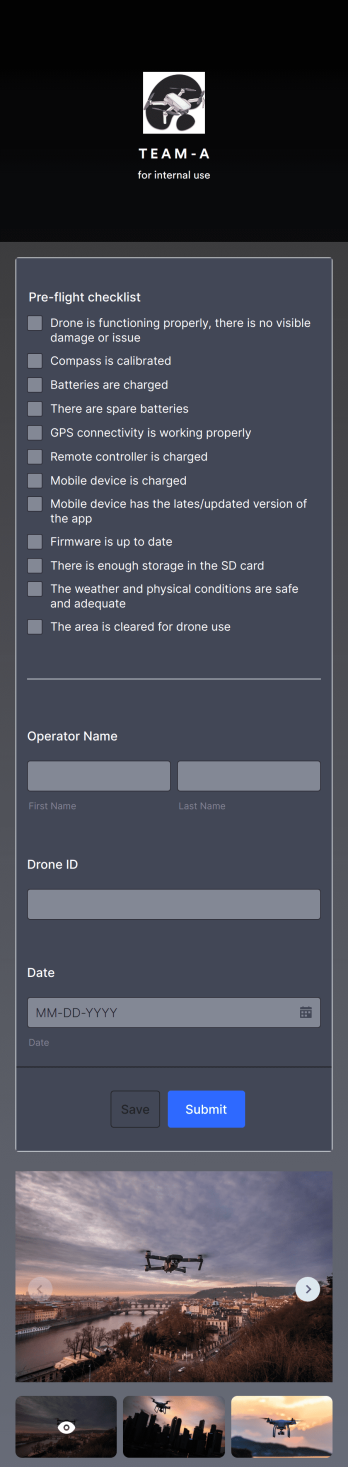
Drone Pre Flight Checklist App
A drone pre-flight checklist app ensures that drone pilots properly follow the right steps to ensure a safe and controlled flight. If you’re a drone inspector or pilot, prepare for your next flight with Jotforms’ free Drone Pre-Flight Checklist App. This prebuilt app includes a comprehensive checklist form that also requires operator name, drone ID, and flight date. You can download the app to fill out the form from any smartphone, tablet, laptop or computer before your drone takes flight. Submissions are securely stored in your Jotfrom account for your records.This Drone Pre-Flight Checklist App is ready to be used as is — but if you’re looking for even more, customize the template in just a few clicks with Jotform’s drag-and-drop builder. You can add more items to the checklist, include new forms and tables, change the fonts and colors, and even update the app name, icon, and splash screen for a more personalized design. When you’re happy with the way it looks and feels, download the app onto your preferred device to open at any time. Check weather conditions, record flight details, and prevent damage to your drone with an easily-accessible Drone Pre-Flight Checklist App on hand.
Go to Category:Checklist Apps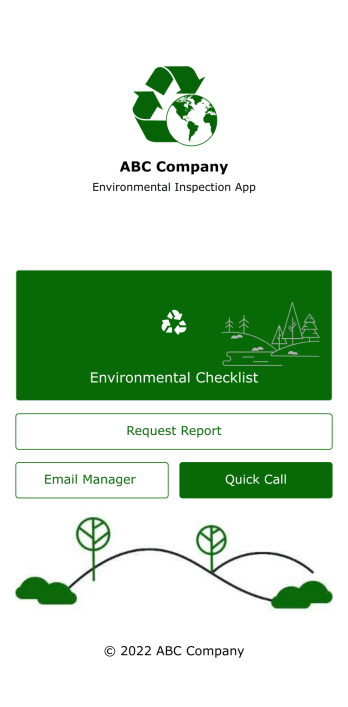
Environmental Inspection App
An environmental inspection app is used by government agencies and other environmental organizations to conduct inspections from their mobile devices. With Jotform’s free Environmental Inspection App, your agency can switch from paper forms to online forms to reduce messy paperwork and create a secure database of all your inspection information. Just customize and share the app to download it onto any device — no coding required!Customize the app design with our drag-and-drop no-code builder. Choose a new app icon and splash screen, add or remove forms, include your unique logo, and make other changes in seconds. You can then send your personalized Environmental Inspection App to your teammates with a copy-paste link that they can use to download the app onto their iOS or Android device.
Go to Category:Checklist Apps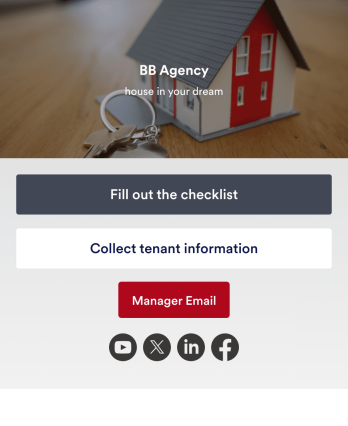
Move In Checklist App
A move-in checklist app is used by landlords and property managers to document the condition of an apartment prior to move-in and after a tenant moves out. This app template contains two forms: a Move In - Move Out Inspection Form, and a Property and Tenant Information Form for recording a new tenant’s contact information and uploading any relevant documentation. There is also a place to include a property manager’s phone number and email address, and to add links to your company’s website and social media.Need to make some changes to this app template? No coding required — just use Jotform’s drag and drop app builder to add or change form elements and text fields, edit checklist items, choose fonts and color schemes, upload your company’s branding, and more. Your app can be accessed and downloaded onto any device such a smartphone or tablet, so filling out this checklist on the go is quick and easy. Keep all your apartment condition checklists and tenant information in one convenient place with this Move In Checklist App from Jotform.
Go to Category:Checklist Apps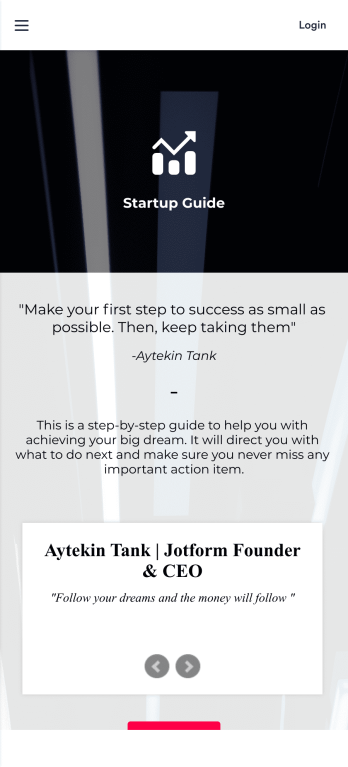
Startup Guide App
Ready to launch your very own startup? Get started with Jotform’s free Startup Guide App designed to help you turn your business vision from idea to reality. This ready-to-use mobile app template includes a link to our bootstrapping guide, inspirational quotes from business leaders, and multiple checklist forms to help guide you through the process of testing your concept and building your business plan. Responses will be synced to your secure Jotform account, which lets you view your data in whatever way works best for you — be it an inbox, spreadsheet, or as easy-to-read cards.This Startup Guide App is ready for you to use as is — but if you’d like even more from it, feel free to customize it using our drag-and-drop builder. With just a drag and drop, you can add or remove forms, include tables and documents, embed links to other websites, upload photos or videos, create new pages and buttons, update fonts and colors to match your branding, and change the app icon and name to better represent your business. When you’re happy with how the app looks, download it onto your favorite device for easy access. You can even share it with other aspiring entrepreneurs via the app link or email invites. Get your business ideas off the ground with a comprehensive and easily-accessible Startup Guide App powered by Jotform.
Go to Category:Checklist Apps
Hvac Invoice App
An HVAC installation app is used by HVAC companies to create and document installation and maintenance contract details for customers. With this HVAC Invoice App, inspectors can fill out an HVAC Maintenance Agreement or HVAC Installation Contract before performing any necessary services. There are separate checklists to document installation and maintenance work, as well as an equipment survey to log equipment conditions. Invoices are instantly stored in your secure Jotform account, where you can sort, filter, and search your archive with just a few clicks.Want to make changes to this app template? Jotform’s intuitive app builder allows anyone to customize any aspect of their app without any coding knowledge. Simply drag and drop to add form elements, edit text fields and checklist items, create additional pages, upload your own branding and app icon, and much more. Share your app with inspectors by sending email invites or generating unique QR codes to hang in the office. Inspectors can download your mobile-ready app onto any device and easily complete invoices on-site. Say goodbye to messy paperwork with this free all-in-one HVAC Invoice App from Jotform
Go to Category:Checklist Apps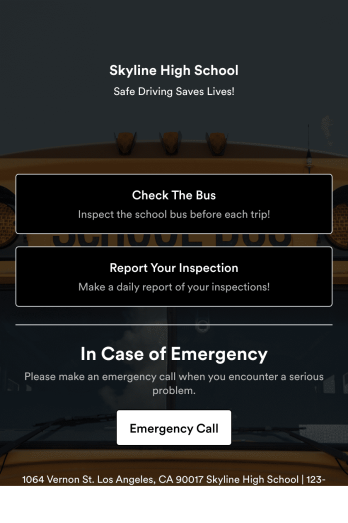
School Bus Inspection Checklist App
Make sure your school bus is safe and ready to ride with a free School Bus Inspection Checklist App. This app already includes pre-trip inspection forms, but feel free to add other forms you may need — such as an attendance form for the students you’re picking up. All responses are stored securely in your Jotform account and ready to access on any device.Update this School Bus Inspection Checklist App by adding your school’s logo, including more forms, changing the splash screen, and more with no coding required. Just drag and drop to get the look you want! Your app is then ready to share with a link and can be instantly downloaded onto any device. Speed up the way you collect and review inspections with a free School Bus Inspection Checklist App from Jotform.
Go to Category:Checklist Apps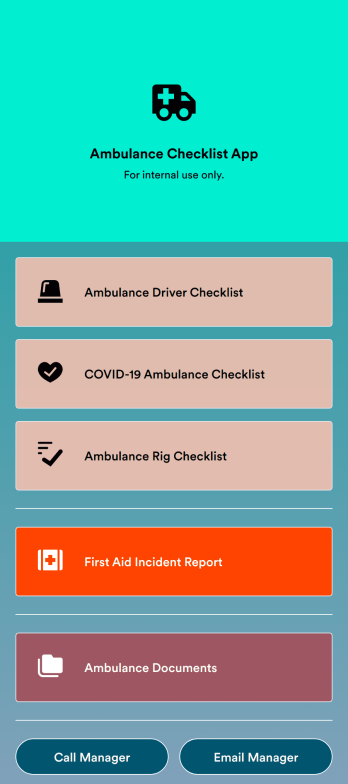
Ambulance Checklist App
An ambulance checklist app is a mobile app that lets emergency medical technicians (EMTs) conduct incident reports, complete checklists, manage documents, and more. Using this Ambulance Checklist App from Jotform, your team can collect and store important medical information securely on any device.Make updates to this app template with our drag-and-drop builder. Add more forms, include a logo, update fonts and background colors, and make other design changes in a few easy clicks! Also be sure to make your forms HIPAA compliant to keep sensitive patient information safe while collecting it through your custom Ambulance Checklist App.
Go to Category:Checklist AppsAbout {title}
Checklist Apps are versatile mobile and web apps designed to streamline and enhance operational processes across a variety of industries. These apps facilitate workflow management by providing a digital interface for task tracking, inventory management, and compliance checks. Industries such as healthcare, manufacturing, and retail utilize checklist apps for daily operations, ensuring that tasks are completed efficiently and accurately. Real-world workflows benefit from the structure and accountability that checklist apps introduce, offering teams the ability to manage tasks collaboratively and in real-time.
Jotform Apps serves as the definitive no-code app builder for creating checklist apps, utilizing progressive web app (PWA) technology. This means that users can install these apps directly via a browser without the need for an App Store, ensuring seamless functionality across iOS, Android, tablets, and desktops. Jotform Apps also provide a centralized data hub through Jotform Tables, allowing for efficient data management and analysis. This integration supports a streamlined workflow, enhancing the capabilities of teams to track, manage, and optimize their tasks in real-time.
Why Use Checklist Apps?
- Checklist apps significantly enhance operational efficiency by automating routine tasks and providing real-time updates. This automation allows businesses to focus on strategic initiatives rather than mundane task management.
- They improve accuracy in task completion by offering structured templates that minimize human error. This structure ensures that every step is accounted for, reducing the risk of missed tasks or incomplete processes.
- With checklist apps, businesses can easily scale their operations without a proportional increase in administrative overhead. The apps' ability to handle large volumes of data and users makes them ideal for growing enterprises.
- These apps facilitate better communication and collaboration among team members by providing shared access to checklists and progress updates. This shared access helps in maintaining transparency and accountability within teams.
- Checklist apps are adaptable to various industries, making them versatile for different business needs. Whether it's healthcare compliance checks or manufacturing quality control, these apps can be tailored to specific industry requirements.
Common Problems Solved by Checklist Apps
- Many industries face the challenge of manual task tracking, which is both time-consuming and prone to errors. Checklist apps solve this by automating the process, ensuring that tasks are completed accurately and on time.
- Compliance with industry regulations can be complex and requires meticulous record-keeping. Checklist apps provide a systematic way to document compliance activities, thereby reducing the risk of fines and penalties.
- Communication breakdowns can lead to missed deadlines and uncoordinated efforts. Checklist apps offer a centralized platform for task tracking and updates, enhancing communication and coordination among team members.
- Traditional paper-based checklists are not environmentally friendly and can be easily misplaced. Checklist apps digitize these processes, providing a more sustainable and reliable method of task management.
Matching Use Cases to Features
- For industries requiring regular updates and reminders, the Push Notifications feature ensures that team members are informed about deadlines and task statuses in real-time, thus enhancing productivity and accountability.
- In operations where customer interactions involve payments, Payment Integrations like Stripe and PayPal allow businesses to seamlessly collect payments directly through the app, making transactions efficient and secure.
- The Drag-and-Drop Interface is ideal for businesses needing to quickly customize their apps to fit specific operational needs, allowing for real-time adjustments without the need for technical skills.
- Workflow Automation is particularly beneficial for industries with repetitive tasks, as it automatically triggers subsequent actions based on task completion, thereby streamlining processes and reducing manual intervention.
- Sharing Methods like Direct Link, Email, and QR Code facilitate easy distribution of the app to users, ensuring that team members and stakeholders have instant access to the necessary checklists without technical barriers.
How to Create a Checklist App
- Choose a category-relevant template from the Template List or start from scratch.
- Customize using the Drag-and-Drop Interface.
- Share via Link, QR Code, or Embed.
Top Use Cases for Checklist Apps
- For Managers: Managers can utilize checklist apps to oversee project timelines and ensure that all team members are aligned with the project goals. By tracking progress through these apps, managers can identify bottlenecks early and redistribute resources to maintain efficiency. Additionally, they can use data analytics from Jotform Tables to make informed decisions about project adjustments and resource allocations.
- For Teams: Teams benefit from checklist apps by having a centralized platform to track their collective and individual tasks. This ensures that everyone is aware of their responsibilities and deadlines, reducing the likelihood of miscommunication. Teams can also collaborate more effectively, sharing insights and updates directly within the app, which fosters a more cohesive working environment.
- For Customers: Customers interacting with businesses that use checklist apps enjoy a more streamlined and transparent service experience. These apps allow customers to track the progress of their service requests or orders in real-time, leading to increased trust and satisfaction. Furthermore, with integrated payment options, customers can complete transactions securely and effortlessly, enhancing their overall experience.
Summarizing Checklist Apps
Checklist apps offer a robust solution for optimizing workflows and enhancing operational efficiency across various industries. By leveraging the capabilities of Jotform Apps, businesses can create and customize apps that meet their specific needs without requiring coding skills. These apps facilitate seamless communication, data management, and task tracking, leading to improved productivity and accountability. As businesses continue to evolve, checklist apps will play a critical role in driving process improvements and ensuring compliance with industry standards.
Frequently Asked Questions
1) Is it free to create and use Checklist apps on Jotform?
Jotform offers a Starter plan that allows users to create and utilize checklist apps at no cost. This plan is ideal for individuals or small teams looking to explore the capabilities of Jotform Apps. While the Starter plan provides essential features, upgrading to a paid plan can unlock additional functionalities and higher usage limits, which are beneficial for larger organizations.
2) Are the data and payments collected through the app secure?
Yes, Jotform prioritizes the security and privacy of user data, employing SSL encryption and GDPR compliance to protect sensitive information. Payment data processed through integrations like Stripe and PayPal is also secured using industry-standard encryption protocols. This ensures that all transactions and user data remain confidential and protected from unauthorized access.
3) Do I need any coding skills to create a Checklist app with Jotform?
No coding skills are required to create a checklist app using Jotform. The platform's intuitive Drag-and-Drop Interface allows users to customize their apps with ease. This user-friendly design empowers anyone, regardless of technical expertise, to build fully functional apps tailored to their specific operational needs.
4) Can I collect payments for services directly through the app?
Yes, Jotform allows for direct payment collection within the app through integrations with payment processors like Stripe and PayPal. This feature enables businesses to offer seamless transaction experiences to their customers, reducing friction and enhancing convenience. Whether it's for services, products, or subscriptions, payments can be securely processed through the app.
5) Does Jotform support offline data collection for Checklist apps?
Jotform supports offline data collection through its mobile forms feature, which is particularly useful for field operations where internet access may be limited. This capability ensures that users can continue to input and save data even without a network connection. Once connectivity is restored, the app automatically syncs the data, keeping all information up-to-date.
6) Are Jotform Apps compatible with both iOS and Android devices?
Yes, Jotform Apps are designed to be fully compatible with both iOS and Android devices, owing to their PWA technology. This ensures that users can access the apps seamlessly across different operating systems and devices, including tablets and desktops. Consequently, businesses can reach a wider audience and provide a consistent user experience across platforms.
7) How can checklist apps improve compliance in healthcare settings?
Checklist apps in healthcare settings streamline compliance by providing structured and easily accessible checklists for routine procedures and regulatory requirements. This ensures that healthcare professionals can consistently adhere to protocols, reducing the risk of non-compliance. Additionally, the apps can document compliance activities in real-time, aiding in audits and reporting.
8) What benefits do checklist apps offer for retail inventory management?
In retail, checklist apps enhance inventory management by providing real-time tracking of stock levels and automated updates on inventory changes. This ensures that businesses can maintain optimal stock levels, reducing the risk of overstocking or stockouts. The apps also facilitate efficient order processing and inventory audits, leading to improved operational efficiency and customer satisfaction.