

Event Planner Apps

Customizable Event Registration App
In 2026, Jotform’s Event Registration App stands out as one of the best event registration apps for planners, helping you stay organized for any type of event. Trusted by thousands of event planners worldwide, this ready-to-use app bundles registration, sponsorship, and feedback forms in one reliable platform. Guests can easily register, share feedback, or inquire about details from their smartphone, tablet, or computer — ensuring a smooth experience across devices in 2026.Want to customize this Event Registration App? Without any coding, you can customize forms and pages to match your event branding — upload logos, update icons, adjust splash pages, and more. Once your app is ready, share it by embedding the link in your event website. In 2026, prepare for your next event with Jotform’s Event Registration App — a top choice among event registration platforms for planners who need a fast, professional solution.
Go to Category:Booking Apps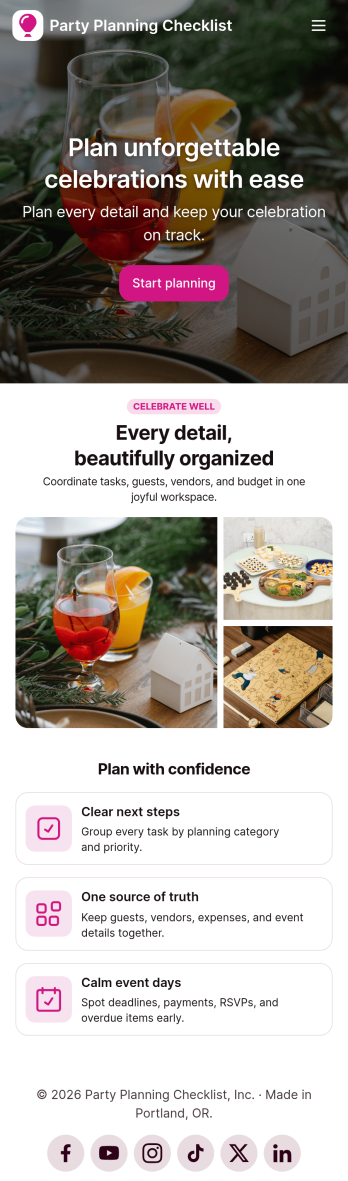
Party Planning Checklist App
Party Planning Checklist App is an app template designed to streamline the organizational aspects of planning social gatherings, offering event organizers, party hosts, and individuals a structured way to manage tasks for their events. From capturing guest information to tracking budgets, vendors, schedules, and task completion, this app provides a comprehensive solution that revolutionizes party planning. The app centralizes all critical party planning components, reducing the clutter of multiple platforms or documents. It's ideal for any occasion, whether a large corporate event or a small, intimate gathering. The Party Planning Checklist App is best suited to professional event planners, party hosts, and coordinators who require an organized, efficient way to manage their event planning details.With Jotform's intuitive no-code app builder, the Party Planning Checklist App can be customized to match your brand or event theme. Jotform Apps offers a drag-and-drop interface that makes it easy to modify forms, select preferred fonts and colors, upload logos, and more. Users can swiftly access and download the app on any smartphone, tablet, or desktop via a shareable link due to its cross-platform compatibility. Jotform Apps eliminates the complexities of event planning by offering a centralized, user-friendly platform. Start organising your events effectively with the Party Planning Checklist App from Jotform!
Go to Category:Checklist Apps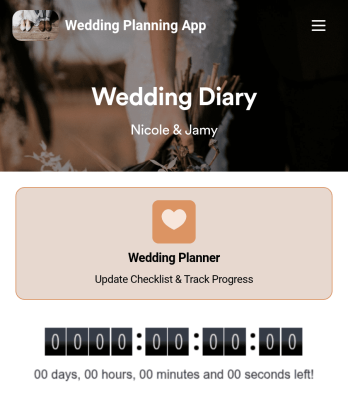
Wedding Planning App
Plan your wedding like a pro with a free Wedding Planning App from Jotform! Whether you’re a professional wedding planner or getting things ready for your own wedding, use this app to create a wedding checklist, track your progress, and view a countdown timer ticking off the seconds until the big day. You can also use the app to log expenses, manage your guestlist, and keep track of venue information.Make changes to this Wedding Planning App template in seconds with our drag-and-drop builder. Add new forms, pages, links, images, and personalize design elements like splash screen and app icon with no coding required. Your custom Wedding Planning App can then be downloaded instantly onto any device — including your computer or any iOS or Android device — so you can prepare for your event seamlessly on the go.
Go to Category:Checklist Apps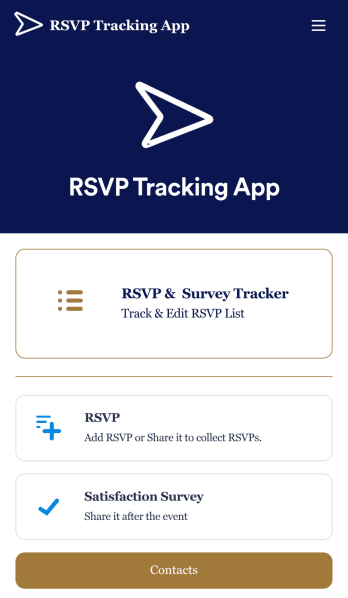
RSVP Tracking App
An RSVP tracking app is a type of mobile application used to track and manage RSVPs. This type of app is great for those planning events, parties, or other sorts of gatherings. Build your own with this free RSVP Tracking App from Jotform Apps. Add RSVP forms, post-event satisfaction surveys, and ticket payment forms to your app to manage all aspects of your event from one centralized app. Customize this RSVP Tracking App to match your needs with our no-code builder. Drag and drop to add or remove forms, upload images and videos, You can also opt to integrate the forms with 200+ platforms like Calendly, Square, and Google Drive for added convenience. Make your RSVP process seamless for everyone with this free RSVP Tracking App.
Go to Category:Event Planner Apps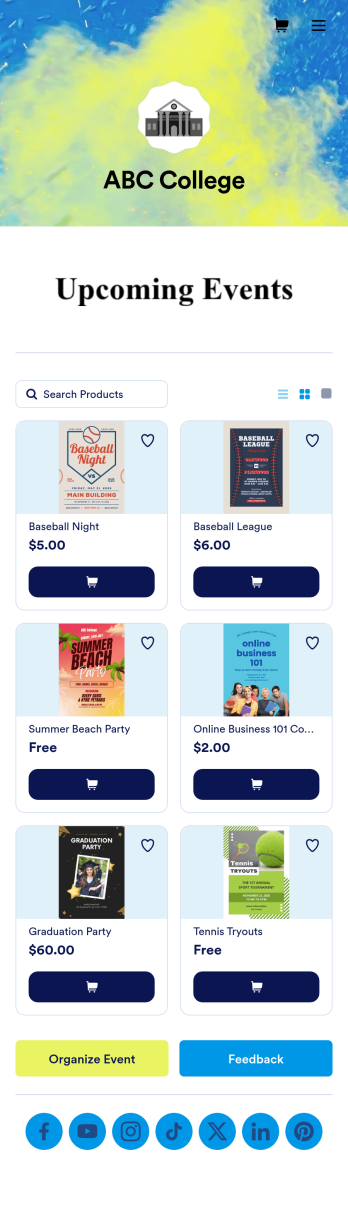
Custom College Events App
A college events app connects students to university events from any device. No matter what school you plan events for, let students know what’s coming soon with Jotform’s free College Events App. This customizable app template includes event posters, guest registration forms, and links to social media accounts that students can access from their smartphone, tablet, laptop, or computer. All submitted responses will be instantly synced to your secure Jotform account to be viewed or approved by you and other event staff.Make this College Events App stand out by using our drag-and-drop builder to customize it for your school. Without coding, you can add or remove forms, upload promotional images and videos, include tables and links, create buttons and pages, change the color scheme and fonts, and update the app name and icon to better represent your school. When it’s ready, your app can be shared on social media, your school website, or via the app link. Inform and excite students about upcoming events — and boost school pride — with a custom College Events App for your school!
Go to Category:Booking Apps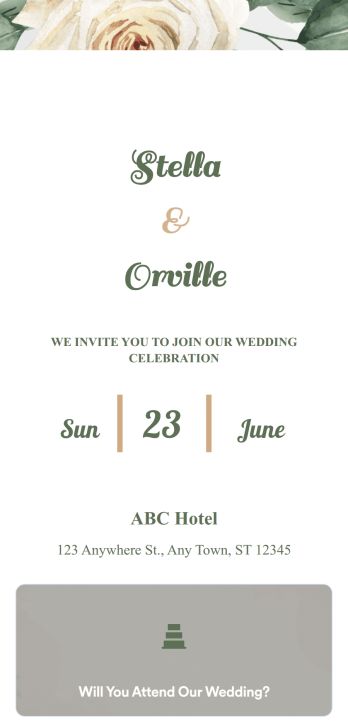
Wedding Invitation App
A wedding invitation app is used by event planners or people getting married to collect RSVPs for a wedding. If you’re looking for a quick and easy way to find out who will be attending your wedding, if they have dietary restrictions or other important information, this downloadable Wedding Invitation App is the way to go. Just share it to start collecting responses instantly on any device!Need to update the app design? Drag and drop to get the look you want — you can add more forms, change the app icon or background, or select new fonts or colors. And if you need to send RSVPs to your other accounts, do it automatically with 250+ free integrations you can connect right to your custom Wedding Invitation App.
Go to Category:Entertainment Apps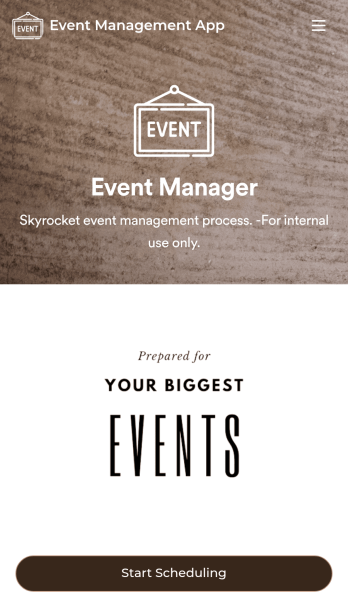
Customizable Event Management App
Ensure all your events are a success with Jotform’s free Event Management App. This readymade mobile app includes multiple forms and tables for event planning, budgeting, and attendance tracking, and feedback. Event staff can download the app onto their own computer, tablet, or smartphone to fill out forms and track submissions on the go. All responses will be synced to your Jotform account — easy to view, download, and share with others.Customize this Event Management App for your event planning business without any coding. All you need to do is drag and drop to add or remove forms, tables, links, logos, text, images, and other app elements. When it’s ready to use, download the app onto your favorite device or share it with event staff via the app link or email invites. With a fully-custom Event Management App that works seamlessly on any device, you can make sure your upcoming events go according to plan.
Go to Category:Event Planner Apps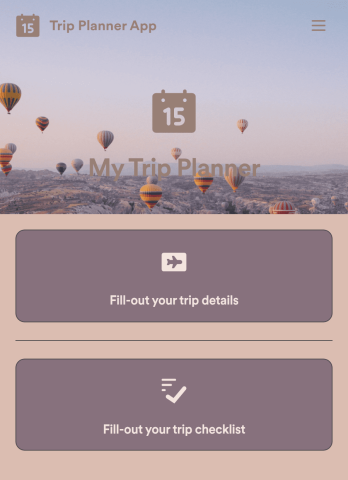
Trip Planner App
Got a big trip coming up? Make sure you’re ready for it with this free Trip Planner App. You can log trip details, complete a pre-trip checklist, and jot down notes of the places you would like to visit along the way. All information is stored securely in your personal Jotform account, which you can access on any device as a spreadsheet, calendar, or cards using Jotform Tables.Want to customize this Trip Planner App template? Change the background image, choose a new app icon, and add more pages, links, forms, and spreadsheets at the touch of a button. With our drag-and-drop app builder, you won’t need to know how to code to create your own custom mobile app! Sort out the logistics of your next big trip with the help of a free Trip Planner App from Jotform.
Go to Category:Booking Apps
Baby Shower Invitation App
A baby shower invitation app is used by expectant parents or event planners to collect RSVPs and provide details for a baby shower. With this ready-made Baby Shower Invitation App, you can seamlessly collect RSVP details like name, plus-ones, and dietary preferences on any device. Just customize the app and share it via email or social media.Need to update this app template? Customize the design without coding using Jotform’s drag-and-drop builder. Include baby shower details, add images, and make other design changes in seconds. You can even add a gift registry form, or connect your Baby Shower Invitation App with 250+ other platforms to sync submissions to your other accounts automatically!
Go to Category:Entertainment Apps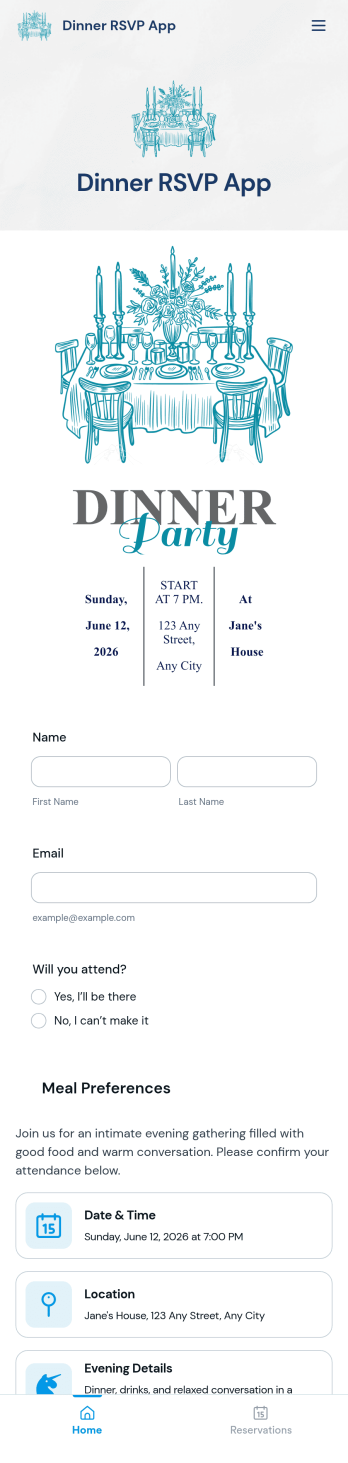
Dinner RSVP App
The Jotform App's Dinner RSVP template is an innovative solution for dinner event organizers to seamlessly collect and manage RSVPs. This ready-to-use app allows users to create a custom-branded, personalized RSVP form that can be incorporated into their own app, helping to streamline the data collection process and ensure a smooth event planning journey. Whether you're organizing a charity dinner, a corporate event, or a private party, this template will simplify your guest management efforts, leaving you more time to perfect other details of your event.The Dinner RSVP App is not just a tool, but a revolution in ease of use and customization. With Jotform’s free, no-code app builder, you can create a multi-functional app that's not only a platform for collecting RSVPs but also a central hub of all your event-related processes. The drag-and-drop builder feature makes adding new form elements a breeze, giving you total control over your app's appearance. The advanced sharing and publishing options of Jotform Apps ensure that your RSVP form reaches every invitee. In addition, with options to save and continue later, your guests can respond to your invitation at their convenience enhancing user experience. Moreover, the app comes with an intuitive data management feature, Jotform Tables, allowing you to organize and analyze your RSVP data efficiently. Isn’t it time to bid adieu to tedious manual processes and embrace the convenience of digital solutions?
Go to Category:Event Planner Apps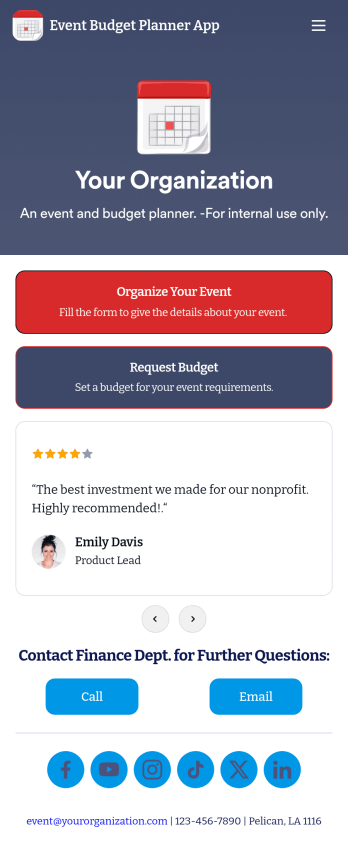
Event Budget Planner App
An event budget planner app is used by businesses and organizations to organize events and plan event budgets. This Event Budget Planner App contains an Event Planning Questionnaire for filling out contact details, event type, date, and budget. There is a separate Budget Planning Form for entering individual items, setting priority levels, and calculating total cost based on event requirements. Event planners can sign off on the proposed budget using an e-signature box at the bottom of the form.Need to customize this app template? With Jotform’s intuitive drag-and-drop form builder, it’s easy to add or change form elements, choose fonts and colors, upload your logo, personalize your splash screen, and more — no coding needed. When you’re satisfied with the look and feel, you can share your app with a link, where employees and event planners can download it on any device. Plan your next company event and stay on budget with this Event Budget Planner App from Jotform.
Go to Category:Company Portal Apps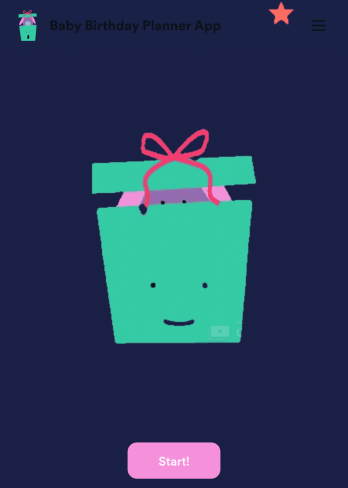
Baby Birthday Planner App
Plan your baby birthday like a pro with this free Baby Baby Planner App from Jotform! From your smartphone, tablet, or computer, you can use this downloadable app to complete your baby birthday preparation checklist or manage your guest list with ease. All submissions are stored securely in your Jotform account and easy to access on any device.Want to customize this Baby Birthday Planner App template? Add photos, change the app icon or splash screen, and add more elements like forms, spreadsheets, and links with no coding knowledge required. You can then share the app with your partner or download it onto your own device instantly. Make sure your baby birthday goes off without a hitch with your own custom Baby Birthday Planner App from Jotform.
Go to Category:Checklist Apps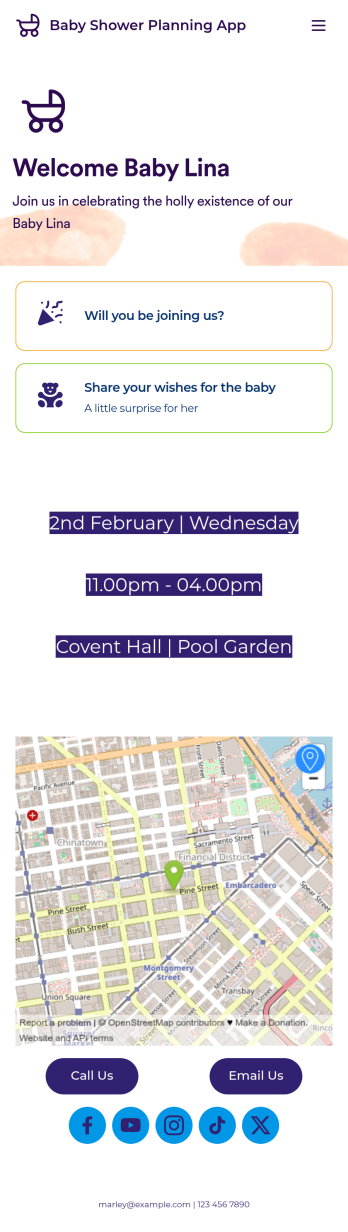
Baby Shower Planning App
Give your baby shower guests an easy way to RSVP to your event with a free Baby Shower Planning App! It downloads onto any computer, tablet, or smartphone — including both iOS and Android devices — for easy access. All responses through the app will be stored in your Jotform account, and you can view submission details in your own Baby Shower Sign In Sheet as a spreadsheet, calendar, or cards.Want to make changes to this Baby Shower Planning App? Update the app icon or background, include personalized details for your event, or add or remove forms to collect all the information you need. You can then share your app with baby shower attendees by copying and pasting an app link or inviting them to download it via email. Get people excited for your baby shower and ensure it goes off without a hitch with the help of this Baby Shower Planning App.
Go to Category:Booking Apps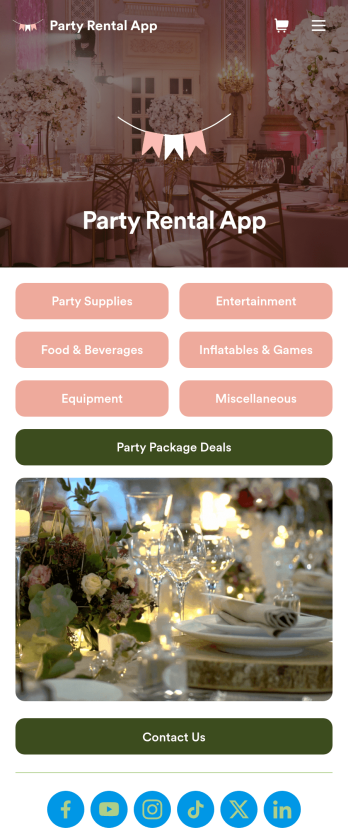
Party Rental App
A party rental app is a mobile application used by party rental businesses or event planners to display available party materials for rental and collect reservations and payments from clients. Build your own Party Rental App for free with Jotform Apps to organize your materials seamlessly. Collect payments, display images of equipment and activities, show available package deals, and so much more.Need to make changes to this Party Rental App template? No problem. Use our no-code app builder to customize this app to fit your needs. Upload images or videos, change backgrounds and colors, choose a unique icon for your app, add or remove forms, and more. Once you’re happy with the design of your Party Rental App, simply share it with your audience to start booking events and renting out party gear for all!
Go to Category:Delivery Apps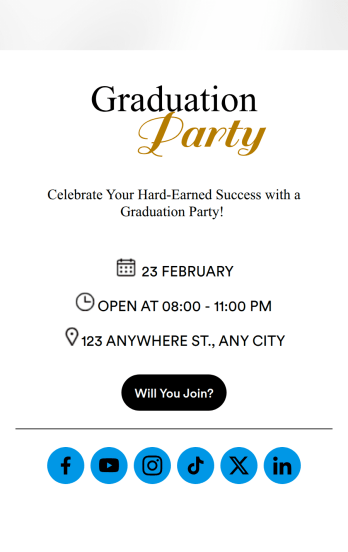
Graduation Invitation App
A graduation invitation app is used to collect RSVPs to a graduation party. Whether you’re planning the event yourself or are planning it on behalf of a school, this Graduation Invitation App makes it easy to collect RSVPs and showcase important party details in a free mobile app that works great on any device.Feel free to include images or logos, change fonts and colors, and make other design changes in seconds with Jotform’s drag-and-drop builder. You can even collect payments or connect your app with 250+ other platforms to sync RSVPs to them automatically! Streamline the way you collect RSVPs for your graduation party with this free Graduation Invitation App.
Go to Category:Event Planner Apps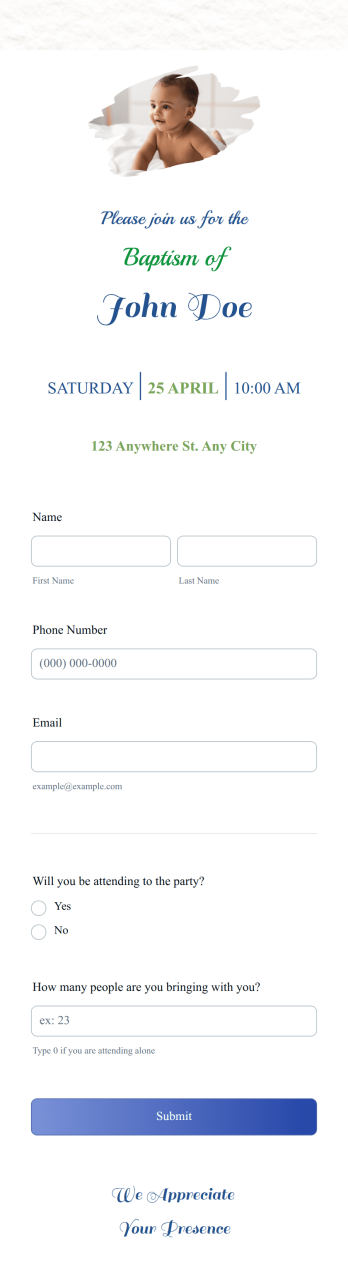
Baptism Invitation App
A baptism invitation app is a mobile application used by organizers of baptism events to collect RSVPs. Whether you’re a professional event planner or are organizing a baptism event for your own little one, this ready-made Baptism Invitation App is a convenient way to collect, view, and respond to RSVPs for your baptism.Need to make changes to the design of this Baptism Invitation App? Drag and drop to design your perfect app with no coding required. Change the app icon and background, add a photo of your little one, and include details for the event. You can even integrate with 200+ apps to automatically sync RSVPs to your other accounts!
Go to Category:Event Planner Apps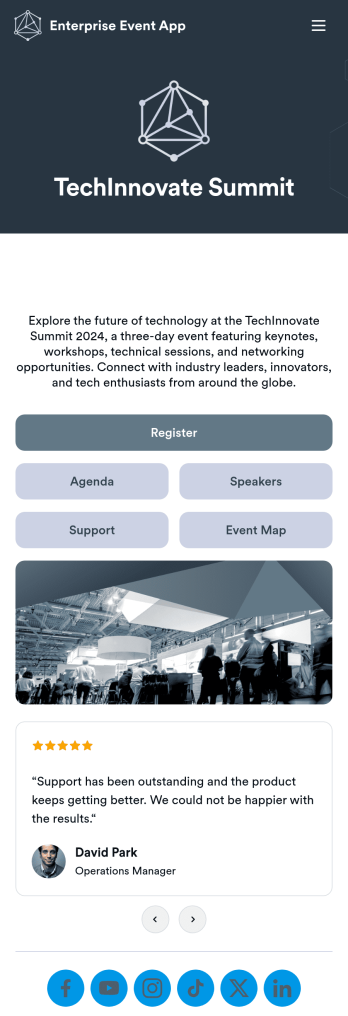
Enterprise Event App
An enterprise event app is a platform for organizers to provide resources and details about their business event. With this free Enterprise Event App template, you can keep attendees informed of everything they need to know leading up to and during your event. Collect registration details and fees, list the event agenda and daily schedules, provide speaker profiles, and include relevant links all in one professional-looking app you can access from any device. This Enterprise Event App template is fully customizable to match your event theme and branding — and there’s no complicated coding to get in your way. Upload your logo, add and delete elements with a drag-and-drop builder, and manage all event and attendee data from your secure Jotform account. Once you’re done customizing your app, share the link with guests so they can download it to their smartphone and stay up to date on every aspect of your event.
Go to Category:Event Planner Apps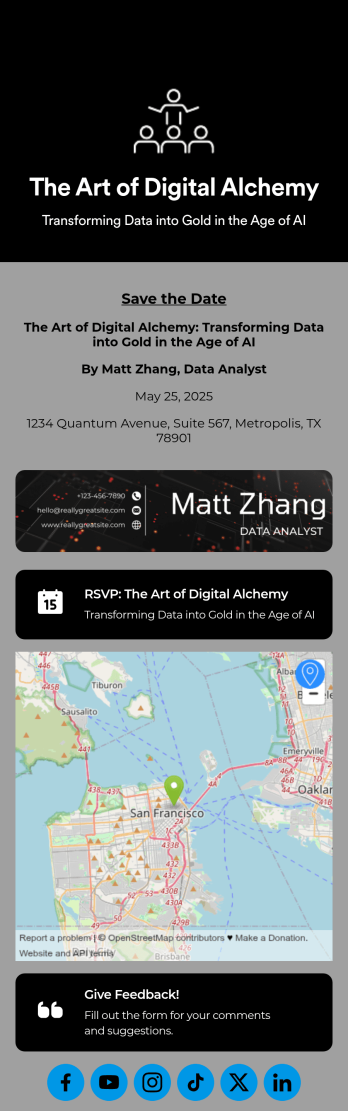
Seminar RSVP App
A seminar RSVP app is used to manage seminar attendee registrations and collect RSVPs. This type of app is perfect for professors, staff members, and other seminar organizers looking for a seamless way to plan both large-scale and small-scale events. Plan your next seminar event with a free Seminar RSVP App from Jotform.Want to update this Seminar RSVP App Template to more closely match your needs? No problem. Use our no-code, drag-and-drop app builder to make design and content changes. Add or remove seminar-related forms, change fonts and colors, pick a unique app icon, and more. You can even integrate with 200+ platforms like Calendly and Google Calendar to take your seminar planning to the next level.
Go to Category:Event Planner Apps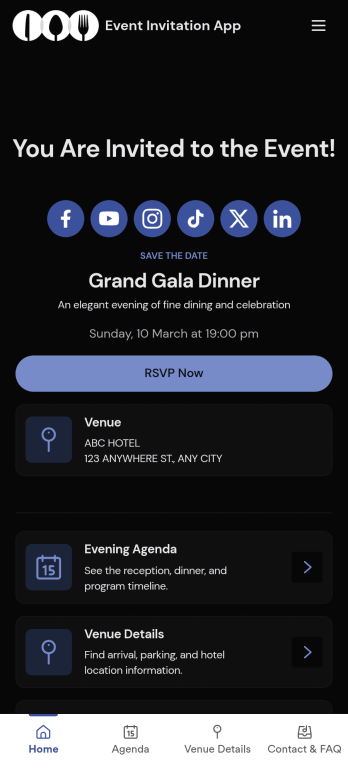
Event Invitation App
An event invitation app is used by event planners to collect RSVPs for events. If you need an all-in-one app to manage your events, get started for free with this Event Invitation App. You can use it to list your event details and collect information like guest names, dietary requirements, and more. Then share the app to be downloaded or accessed instantly on any device.Need to update the design of this Event Invitation App? Drag and drop app elements to get the look you want. Change the app icon and background, choose new fonts or colors, and add more forms to collect additional information. You can even connect your app to 250+ integrations to automatically sync form submissions to your other accounts!
Go to Category:Entertainment Apps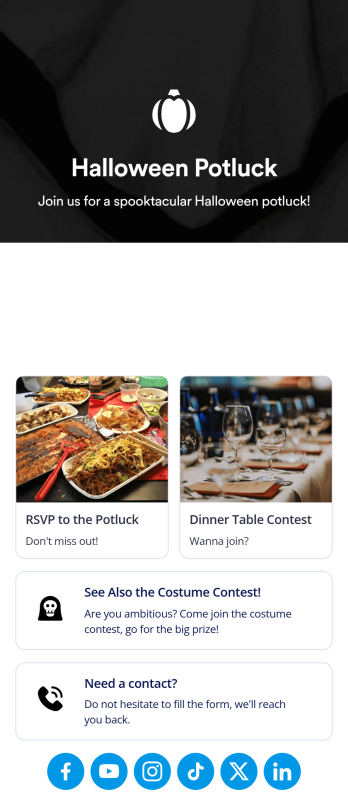
Halloween RSVP App
A Halloween RSVP app is used to collect RSVPs for Halloween parties or events. This app is perfect for school Halloween celebrations, costume parties, and trunk or treat events. Build your own with this ready-made template from Jotform Apps. Gather RSVPs, assign tasks to attendees, share details about the date and location of your event, sell event tickets, and more.Customize the look and content of your Halloween RSVP App with Jotform’s intuitive, no-code app builder. Drag and drop to switch up fonts and colors, add or remove forms from your app, select a unique app icon, upload costume ideas, and more. You can even opt to integrate your app with 200+ platforms like Google Calendar, PayPal, and Mailchimp. Make event planning less frightening with Jotform Apps.
Go to Category:Event Planner Apps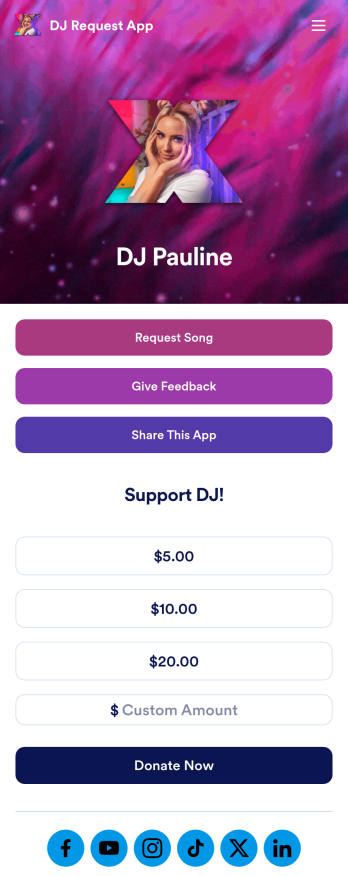
DJ Request App
A DJ request app is a type of mobile application used by clubs and DJs to collect song requests from partygoers, customers, and clients. This type of app significantly streamlines the song request process and stops people from coming up to your DJ booth when you’re busy. DJs can also collect donations, feedback, and other general inquiries from this free DJ Request App from Jotform.Want to change how this DJ Request App looks? No problem. Simply drag and drop to make any design changes you see fit. Add or remove forms, change color schemes and background images, upload past DJ sets, and more. You can even integrate with 250+ platforms like Spotify, Soundcloud, Google Drive, and PayPal to build your ideal mobile app. When you’re satisfied with how your app looks, simply share it via direct link or QR code to start collecting requests.
Go to Category:Donation Apps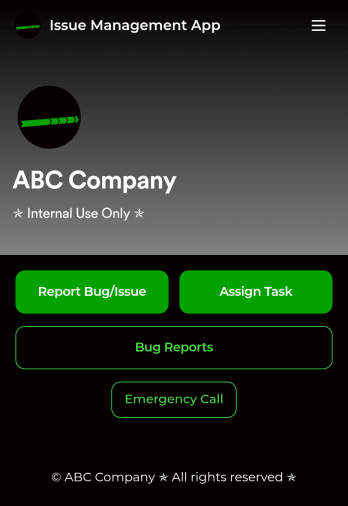
Issue Management App
An issue management app is used by IT professionals to report bugs or issues, track them in a spreadsheet, and assign tasks to teammates. Track and manage issues more efficiently with Jotform’s free Issue Management App! It saves onto any device — whether it be a smartphone, tablet, or computer — so you can quickly access the forms you need to do your job efficiently.Update this free app with no coding using our drag-and-drop interface. Add or remove forms, upload your logo, change fonts and colors, and make other changes to make this app work perfectly for your needs. You can then share the app with a link for teammates to download instantly. Streamline your IT workflow and save time with this powerful Issue Management App!
Go to Category:Event Planner Apps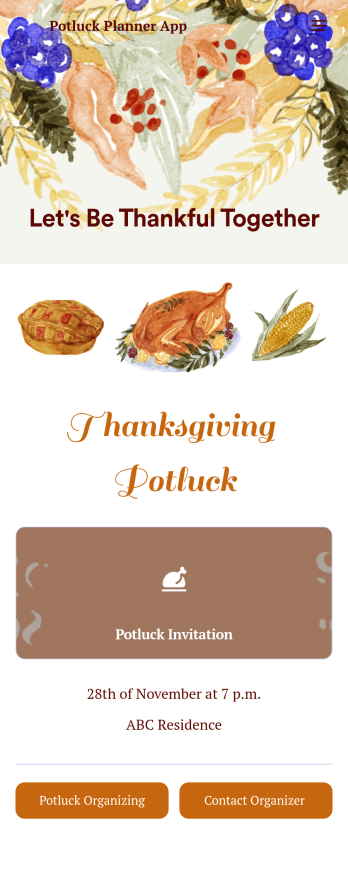
Potluck Planner App
Planning a potluck for your coworkers or friends? Make it a fun and seamless experience with this ready-made Potluck Planner App template from Jotform Apps. Create signup forms and checklists, collect donations, and survey guests about the perfect time to meet — all from your Jotform account. Customize your Potluck Planner App in a pinch with our drag-and-drop online builder. Add or remove forms, change your app icon, upload images and videos, pick a font type you like, and so much more. You can even integrate with 250+ platforms to take your app to the next level. Once you’re happy with your app, simply send it to your guests via a direct link or QR code!
Go to Category:Entertainment Apps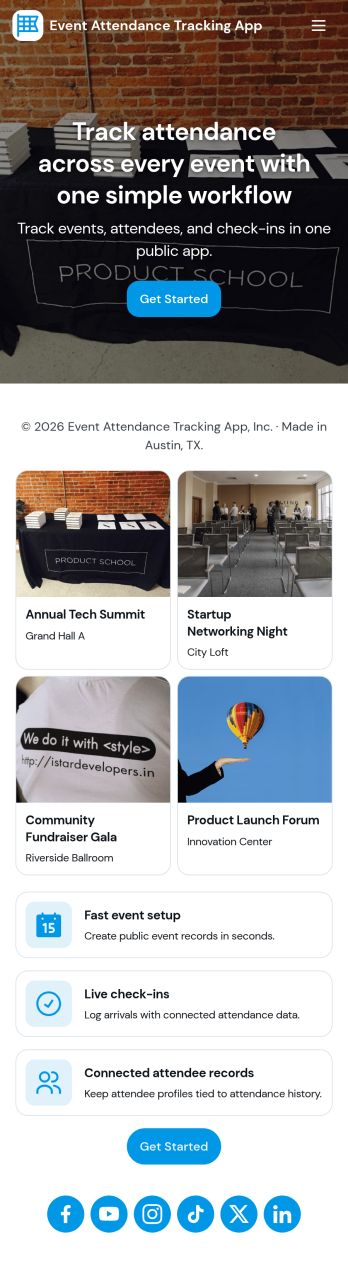
Event Attendance Tracking App
Event Attendance Tracking App helps organizers keep an accurate record of who registered and who actually showed up, without juggling paper lists or scattered spreadsheets. Use it to register attendees ahead of time, add walk-ins at the door, and log check-ins as guests arrive. It’s a strong fit for event teams running conferences, workshops, campus events, community meetups, trainings, and internal company sessions where headcounts, attendance history, and quick lookups matter throughout the day.With Jotform, you can turn attendance tracking into a simple self-service experience using App Templates and a no-code app builder. Build the flow with a drag-and-drop interface, connect registration and check-in forms, and keep records organized in linked tables for fast searching and reporting. Share the app with staff using a link or QR code so everyone works from the same up-to-date attendee list while your workflow stays consistent from registration to check-in.
Go to Category:Event Planner AppsAbout Event Planner Apps
Event Planner Apps are specialized apps designed to streamline the complex processes involved in planning and managing events. Whether it's corporate conferences, weddings, or large-scale public gatherings, these apps serve a variety of operational use cases like scheduling, budgeting, and communication management. Industries ranging from hospitality and event management companies to corporate firms and nonprofits utilize these apps to improve efficiency and reduce manual workloads, ultimately enhancing the overall event experience and ensuring seamless execution.
Jotform Apps, as a no-code app builder, empowers users to create these Event Planner Apps with ease, leveraging Progressive Web App (PWA) technology. This means that users can install them directly via a browser without the need for an App Store, and they are fully functional across devices, including iOS, Android, tablets, and desktops. With centralized data management through Jotform Tables, stakeholders can access real-time information, facilitating better decision-making and workflow optimization. This approach allows event planners to focus more on strategic tasks rather than getting bogged down by technical details.
Why Use Event Planner Apps?
- Event Planner Apps significantly reduce the time and effort needed to organize and manage events by automating repetitive tasks. This allows planners to focus on more strategic aspects such as client relations and creative event design, enhancing the overall quality of the event.
- These apps offer seamless communication channels between team members and clients, ensuring everyone stays on the same page with real-time updates. This reduces the chances of miscommunication and ensures that all stakeholders are informed of changes as they occur.
- By integrating payment options within the app, event planners can streamline financial transactions, making it easier to manage budgets and track expenses. This feature is crucial for maintaining financial accountability and transparency during the event planning process.
- The ability to customize each app using a drag-and-drop interface ensures that the app meets the specific needs of the event, whether it’s a large conference or an intimate wedding. This flexibility allows for tailored solutions that cater to unique event requirements.
- Event Planner Apps provide robust data collection and analysis capabilities, allowing planners to gather insights from previous events to improve future ones. This data-driven approach enables continuous improvement and helps in crafting more effective strategies.
Common Problems Solved by Event Planner Apps
- One common issue in event planning is coordinating multiple vendors and schedules. Event Planner Apps solve this by providing a centralized platform where all schedules and vendor details can be accessed and managed, reducing scheduling conflicts and improving coordination.
- Managing attendee registration and ticketing can be cumbersome, especially for large events. These apps simplify the process by automating ticket sales and registration, ensuring a smooth experience for attendees and reducing administrative burdens on the planning team.
- Communication breakdowns can lead to significant issues during event execution. Event Planner Apps facilitate better communication through instant updates and notifications, ensuring all team members are aligned and informed, thus minimizing the risk of errors.
- Financial management is often a challenge in event planning. With integrated payment systems, these apps allow planners to manage and track expenses effortlessly, providing real-time financial insights that help in maintaining budgetary control.
- Data security and privacy concerns are prevalent when handling attendee information. Event Planner Apps address this by employing robust security measures and GDPR-compliant practices to protect sensitive data, building trust with clients and attendees alike.
Matching Use Cases to Features
- For planners looking to enhance attendee engagement, integrating push notifications can be incredibly effective. This feature keeps attendees informed about schedule changes, special announcements, and more, directly improving attendee experience and satisfaction.
- The drag-and-drop interface is perfect for customizing event layouts and designs, allowing planners to create visually appealing and functional apps without any coding knowledge. This feature ensures that each app is uniquely tailored to the event's specific needs.
- Payment integrations such as Stripe and PayPal facilitate seamless financial transactions, enabling planners to collect payments directly through the app. This capability not only streamlines the payment process but also enhances financial tracking and reporting.
- Offline Mode, available through Mobile Forms, ensures that event data can be collected even when there is no internet connectivity. This is particularly beneficial for events held in remote locations where internet access may be unreliable.
- Utilizing the store builder feature, planners can create a comprehensive catalog of services and products, such as ticket options or merchandise, directly within the app. This feature enhances the app's functionality and provides a convenient shopping experience for attendees.
How to Create an Event Planner App
- Choose a category-relevant template from the Template List or start from scratch.
- Customize using the Drag-and-Drop Interface to fit the specific needs of your event.
- Share via Link, QR Code, or Embed to ensure easy access for all users.
Top Use Cases for Event Planner Apps
- For Managers: Event Planner Apps enable managers to oversee all aspects of event planning from a single platform, improving efficiency and coordination. They can track progress, manage budgets, and make informed decisions based on real-time data. This centralized approach reduces managerial workload and enhances the ability to deliver successful events.
- For Teams: These apps streamline collaboration among team members by providing tools for task management, communication, and resource allocation. Team members can easily access shared documents, update task statuses, and receive notifications, ensuring that everyone is aligned and that the project progresses smoothly.
- For Customers: Customers benefit from a seamless experience when interacting with Event Planner Apps, from intuitive registration processes to receiving timely updates about the event. With integrated payment options and personalized event information, customers enjoy a hassle-free experience, increasing their satisfaction and likelihood of returning for future events.
Summarizing Event Planner Apps
Event Planner Apps, created using Jotform's no-code app builder, offer substantial business value by enhancing the efficiency and effectiveness of event planning operations. These apps address common industry challenges, streamline communication, and provide robust data management capabilities, making them an indispensable asset for any event management team. With features like drag-and-drop customization and integration capabilities, these apps are tailored to meet the unique needs of each event, ensuring a seamless and professional experience for planners, teams, and attendees alike.
Frequently Asked Questions
1) Is it free to create and use Event Planner apps on Jotform?
Jotform offers a Starter plan that allows users to create and use Event Planner apps for free. This is particularly beneficial for small businesses or individuals just starting out, as it provides access to essential features without any financial commitment. As needs grow, users can explore Jotform's various pricing plans to access additional features and capabilities.
2) Are the data and payments collected through the app secure?
Yes, the data and payments collected through Jotform Apps are secure. Jotform implements advanced security measures, including encryption and compliance with GDPR, to protect user data. This ensures that all information, whether personal or financial, is handled with the utmost care and confidentiality.
3) Do I need any coding skills to create an Event Planner app with Jotform?
No coding skills are needed to create an Event Planner app with Jotform. The platform's intuitive, drag-and-drop interface allows users to build and customize apps easily. This enables even those with no technical background to create professional-quality apps that meet their specific event planning needs.
4) Can I collect payments for services directly through the app?
Yes, you can collect payments for services directly through the app using Jotform's payment integration options, such as Stripe and PayPal. These integrations facilitate secure and efficient payment processing, enabling planners to manage financial transactions seamlessly within the app.
5) Does Jotform support offline data collection for Event Planner apps?
Jotform supports offline data collection through its Mobile Forms feature. This is particularly useful for events held in locations where internet connectivity is limited or unreliable. The collected data is automatically synced to Jotform Tables once the device reconnects to the internet, ensuring no data is lost.
6) Are Jotform Apps compatible with both iOS and Android devices?
Yes, Jotform Apps are compatible with both iOS and Android devices. As Progressive Web Apps, they can be installed directly from a browser without needing an App Store, and they work seamlessly across different devices and platforms, ensuring a consistent user experience.
7) Can Event Planner Apps handle large-scale events with multiple attendees?
Event Planner Apps are well-equipped to handle large-scale events with multiple attendees. Features such as automated registration, real-time updates, and centralized data management ensure that the event runs smoothly, no matter the size, while also providing valuable insights for post-event analysis.
8) How can Event Planner Apps improve vendor management during events?
Event Planner Apps improve vendor management by offering a centralized platform to track and coordinate all vendor-related activities. Planners can manage schedules, track deliverables, and communicate efficiently with vendors, ensuring that all aspects of vendor management are handled effectively and contribute to the event's success.