

Scheduling App Templates

Scheduling App
You’re busy running a business — so why not make scheduling appointments as quick and convenient as possible? With Jotform’s free Scheduling App, customers can request an appointment by filling out their general contact information and choosing an appointment time from a list of available openings. There is also a separate contact form should a customer need to reach out to you directly. Appointments are stored securely in your online account, and can be accessed from any device.Want this Scheduling App to match your branding? No problem — our drag-and-drop form builder makes it easy to swap out forms, choose fonts and colors, upload your logo, and more with no coding. Jotform’s List Element feature lets you connect Tables and add actions to organize your app’s data, while the easily trainable AI Chatbot helps guide users and answer questions in real time. Your customers can then access and download your app onto any smartphone, tablet, or desktop via a shareable link. Start taking appointments from your own customizable app with this Scheduling App from Jotform!
Go to Category:Scheduling Apps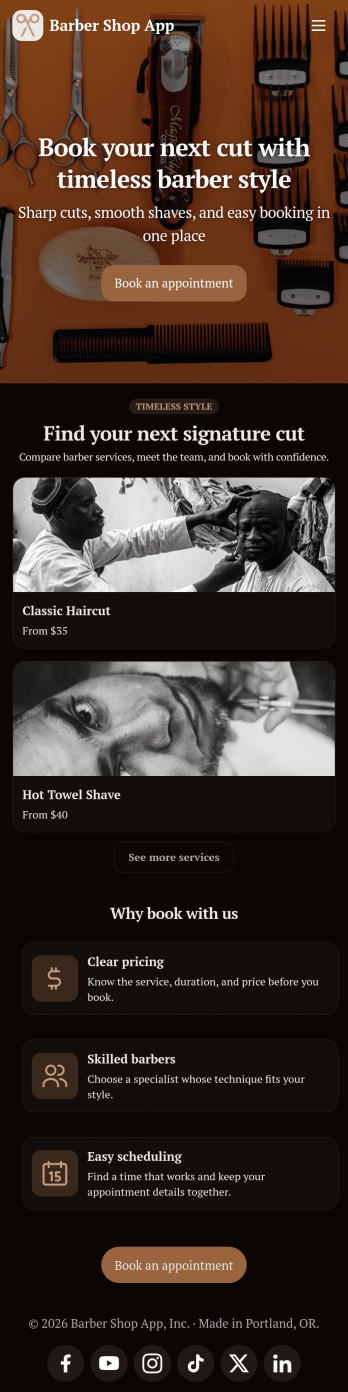
Barber Shop App
As a barber, you want to focus on your clients’ hair, not on booking appointments — so simplify the process for everyone with this Barbershop App! This free app template is ready to use and includes forms so you can schedule appointments and sell barber shop products online directly from your store. Customers can also fill out and update their profile, as well as write testimonials that you can display on your splash page. Your app can be easily accessed and downloaded to any smartphone, tablet, or computer for future use.This Barbershop App can be fully customized to match the branding of your barbershop. Our drag-and-drop interface allows you to add forms, upload logos and images, change fonts and colors, and more — no coding required. Jotform’s List Element feature lets you connect Tables and add actions, making it easy to organize data and manage your app’s flow. Once you’re satisfied with the look and have set the app up to sell your barbershop products online, simply share the link to your website or social media and start booking hair appointments today with this free and fully customizable Barbershop App!
Go to Category:Appointment & Booking Apps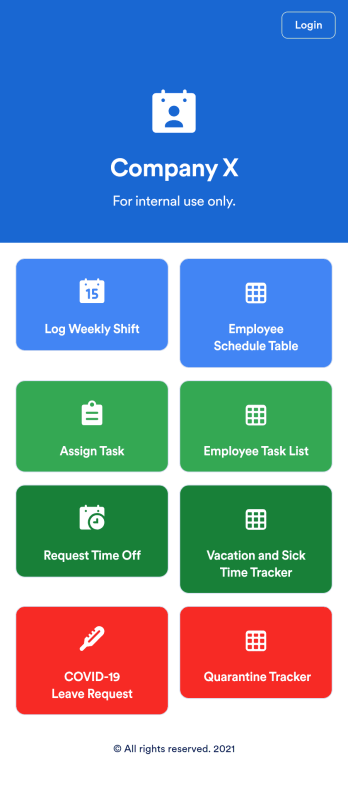
Employee Scheduling App
An employee scheduling app is used by company HR, department managers, and employees for keeping track of employee data. This Employee Scheduling App from Jotform comes bundled with four useful forms, allowing employees to log weekly shifts, view assigned tasks, manage leave requests easily with Leave Request Form, and take time off to quarantine from COVID-19 exposures. Each form includes a companion spreadsheet where employee data is stored — allowing managers to easily sort, filter, and search through entries from any smartphone, tablet, or desktop.Make this app template your own with Jotform’s intuitive app builder. Just drag and drop to add or change form elements, edit the content of individual forms, upload your company’s logo, and more — all without any coding. You can also use your app’s splash screen for things like company-wide announcements or listing HR contact information. Once you’re finished, share your app with employees by attaching a link to an onboarding email or embedding it in an employee portal. Streamline scheduling and time-off requests with this fully-customizable Employee Scheduling app that can be downloaded on any device.
Go to Category:Human Resources Apps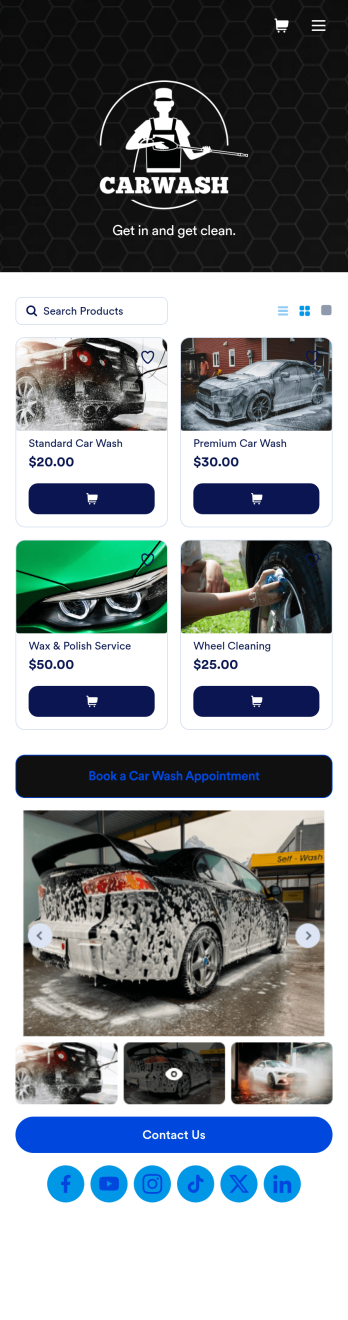
Custom Mobile Car Wash App
Wondering how to sell car washes online? Create a downloadable app for your mobile car wash customers with a free Mobile Car Wash App from Jotform. This app includes a Car Wash Appointment Form so customers can select their preferred date from a calendar and provide other booking details like name, phone number, and their car’s make and model. Also it includes a product list that customers choose a car wash service and make payments. All submissions are sent to your company Jotform account, ready to view instantly on any device.Add your logo, include other forms to collect additional info like e-signatures or payments, and make other design changes by dragging and dropping elements in our intuitive no-code app builder. Once your app is ready to be shared, copy and paste the link or invite people via email so they can download it onto their devices. Stop spending time on phone or email bookings and enjoy a more efficient booking process with this Mobile Car Wash App.
Go to Category:Appointment & Booking Apps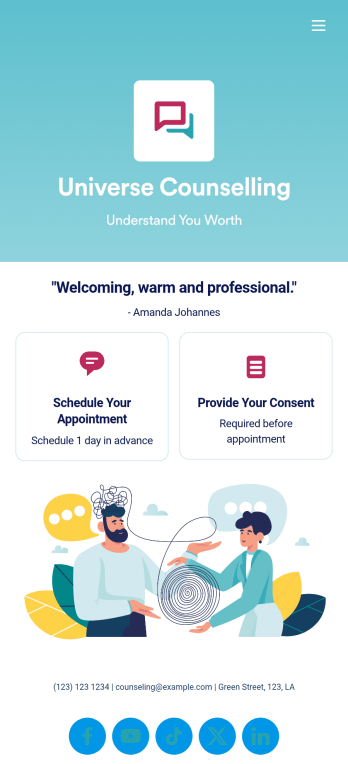
Custom Counseling App
A counseling app provides easier access to mental health resources and tools. Whether you’re a school counselor, family therapist, or life coach, build a fully-custom app for your counseling services with our free Counseling App Template. This ready-to-use app template comes with multiple forms — including a client information form, COVID-19 consent form, and appointment booking form — so clients can access and fill out your forms all from one place.Make this Counseling App your own by customizing it in just a few clicks. Without any coding, you can create and add new forms, embed links to other sites, update the provided text, upload different images, and change app settings. Once you’re satisfied with the app design, embed the app link in your website or send it directly to clients to download on their preferred devices. Make it easier for clients to get the help they need with a professional Counseling App for your services.
Go to Category:Consulting Apps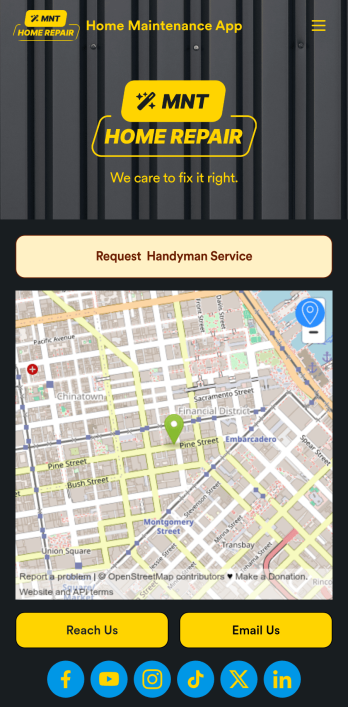
Home Maintenance App
A home maintenance app is used by construction companies and contractors to collect handyman service requests from customers. With this free Home Maintenance App from Jotform, customers can fill out a Handyman Service Request Form with their availability and general contact information, as well as the type of work they need performed. Customer requests are compiled and stored in your online account for ease of access, and can be sorted, filtered, and searched from any device.Make this app your own with Jotform’s drag-and-drop form builder. You can add or swap out form elements, choose fonts and colors, upload your logo, customize the splash page with your business address and phone number, and more — no coding necessary. Once you’re satisfied with the look and feel of your app, you can embed it in your website or share it with a link so customers can download it on any smartphone, tablet, or desktop. Make scheduling handyman service requests simple and easy with this Home Maintenance App.
Go to Category:Booking Apps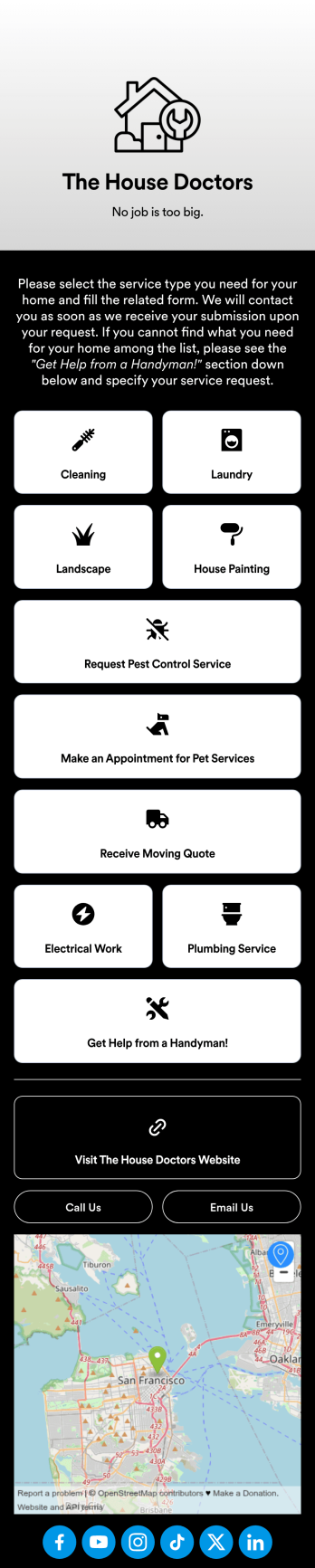
Custom Home Services App
No matter what home services you offer, create a mobile app for your customers with this ready-made Home Services App from Jotform. Clients can download the app to their smartphone or tablet to request cleaning, laundry, landscaping, painting, and other types of services on the go. All form submissions are stored in your Jotform account, so you can respond quickly and easily from anywhere.Want to make changes to this Home Services App? Drag and drop to update the design to match your branding and the services you offer. You can add your logo, change the app background, and more — all with no coding! Once your custom On-Demand Home Services App is ready to go, you can add it to your social media bio or share it with a link for customers to download onto any iOS or Android device.
Go to Category:Booking Apps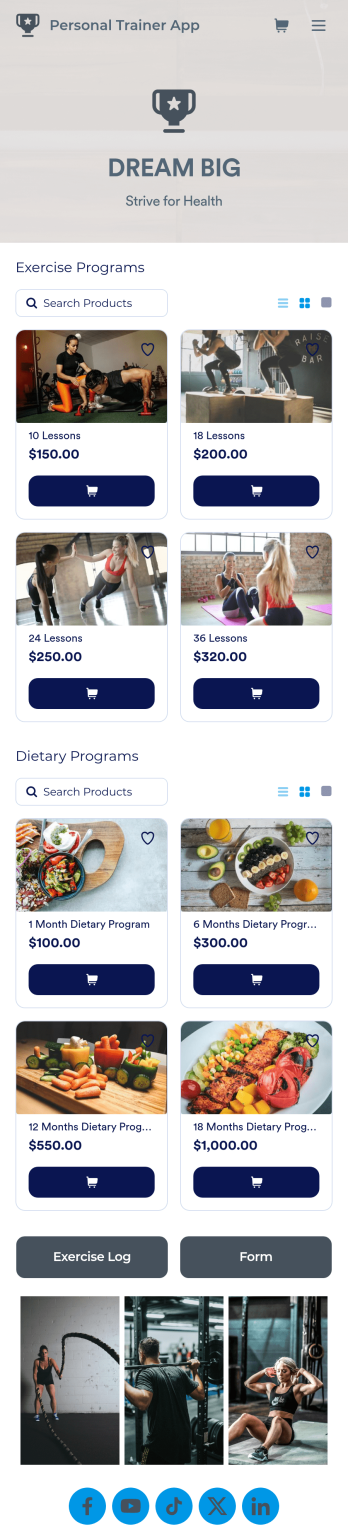
Personal Trainer App
A personal trainer app is used by personal trainers to keep track of information about their trainees. With Jotform’s Personal Trainer App — which can be downloaded on any smartphone, tablet, or computer for easy access — trainees can record their workouts, keep a daily food log, and request appointments for training sessions. All form submissions are instantly stored in the personal trainer’s Jotform account, ready to view instantly on any device.Every trainer does things differently, so be sure to customize your app to add new forms, remove existing ones, include your logo, and add other helpful links, documents, and information. Once you’ve got your app working great for your needs, share the app link so trainees can start recording their workouts. Give clients an easier way to log their training details with this free Personal Trainer App!
Go to Category:Sports Apps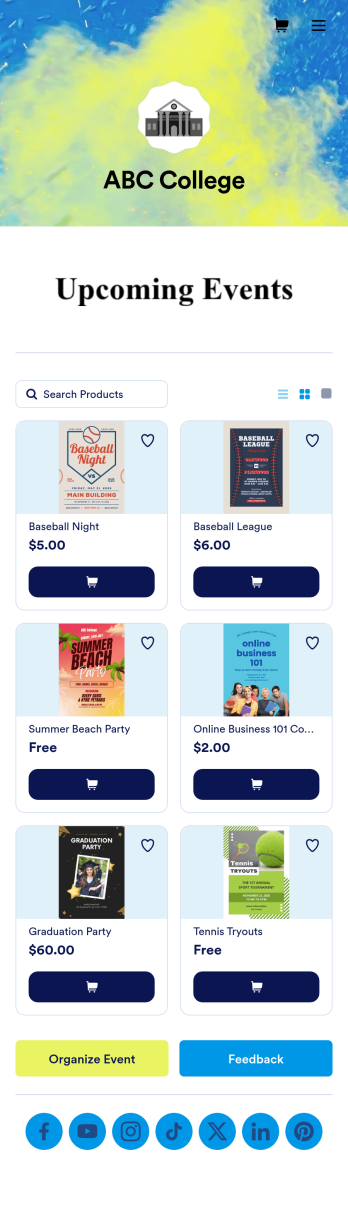
Custom College Events App
A college events app connects students to university events from any device. No matter what school you plan events for, let students know what’s coming soon with Jotform’s free College Events App. This customizable app template includes event posters, guest registration forms, and links to social media accounts that students can access from their smartphone, tablet, laptop, or computer. All submitted responses will be instantly synced to your secure Jotform account to be viewed or approved by you and other event staff.Make this College Events App stand out by using our drag-and-drop builder to customize it for your school. Without coding, you can add or remove forms, upload promotional images and videos, include tables and links, create buttons and pages, change the color scheme and fonts, and update the app name and icon to better represent your school. When it’s ready, your app can be shared on social media, your school website, or via the app link. Inform and excite students about upcoming events — and boost school pride — with a custom College Events App for your school!
Go to Category:Booking Apps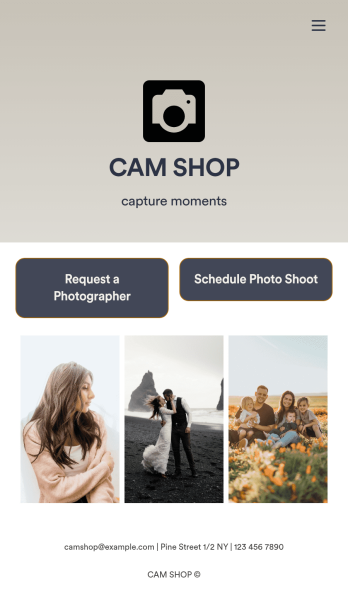
Photography Booking App
Whether you’re an independent photographer or run a photo studio, booking jobs is a crucial part of your trade — so why not make it as simple a possible? This free Photography Booking App allows customers to easily hire photographers and schedule photoshoots all from one location. Customers can fill out general contact information, specify media type and event dates, and include any special instructions about their shoot. Once a photographer is assigned to an event, customers can use a separate scheduling form to specify photograph sizes, add à la carte items, and choose appointment times based on your availability. You can accept form payments directly from your app via credit card, PayPal, Stripe, and more.Need to customize this app to match your studio’s branding? With our drag-and-drop form builder, it’s easy to add or change forms, choose fonts and colors, and upload your logo — all without any coding. You can also showcase your work by adding photographs to your fully customizable splash page. When you’re done, share your app with a link or embed it in your website and customers can start booking appointments right away from any device. Empower your photography business with this Photography Booking App from Jotform.
Go to Category:Booking Apps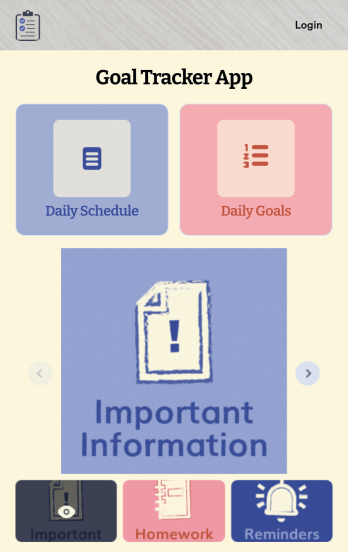
Customizable Goal Tracker App
Need an easier way for your clients to track their goals? With Jotform’s Goal Tracker App, you can build an online goal tracking app in minutes. Start creating your app from scratch or choose one of our ready-made app templates to get your creativity flowing. Add a contact form, let your customers create a schedule that works for them, showcase past client reviews, and more. Once you’ve customized your app to your liking, share with clients — downloadable onto any computer or iOS or Android device.Personalize your Goal Tracker App with Jotform’s easy-to-use app builder. Just drag and drop to change the look and feel of your app, add powerful app elements, install helpful app widgets, and integrate with one of our 25+ payment processors, including Stripe and Square. Share your customized app via email or embed it directly into your own website for easy access. Help your clients reach their goals with your very own Goal Tracker App — free on Jotform.
Go to Category:Activity Tracking Apps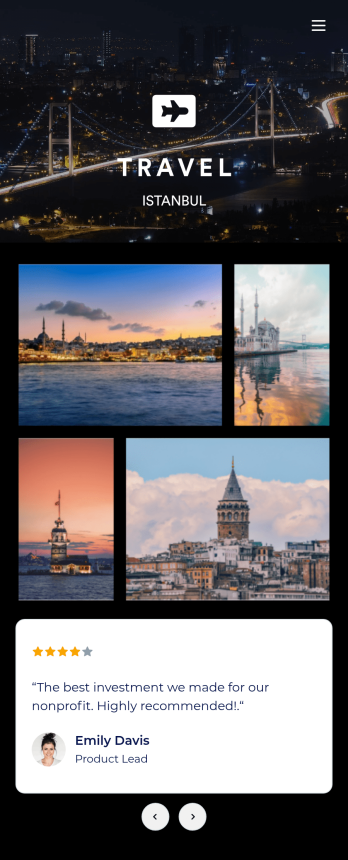
Tour Guide App
A tour guide app makes travelling easier for tourists no matter where they are or what device they use. Whether you manage a tourism agency or give guided local tours, create your own mobile app in just a few clicks with Jotform’s free Tour Guide App Template. Travellers can download your app onto their smartphone, tablet, or laptop and fill out your app’s forms with ease. Submissions will be synced to your secure Jotform account in an easy-to-view spreadsheet, calendar, or cards.Customize this Tour Guide App without any coding using our drag-and-drop interface. It’s easy to add forms, pages, links, documents, images, videos, buttons, and other elements to your app. Showcase must-see travel hot-spots on your app with pages for restaurants, culture, and entertainment, or create your own pages for other activities. When your app is ready to be published, post the app link on your website or social accounts. Make travelling a breeze with a fully customizable and easy-to-navigate Tour Guide App!
Go to Category:Booking Apps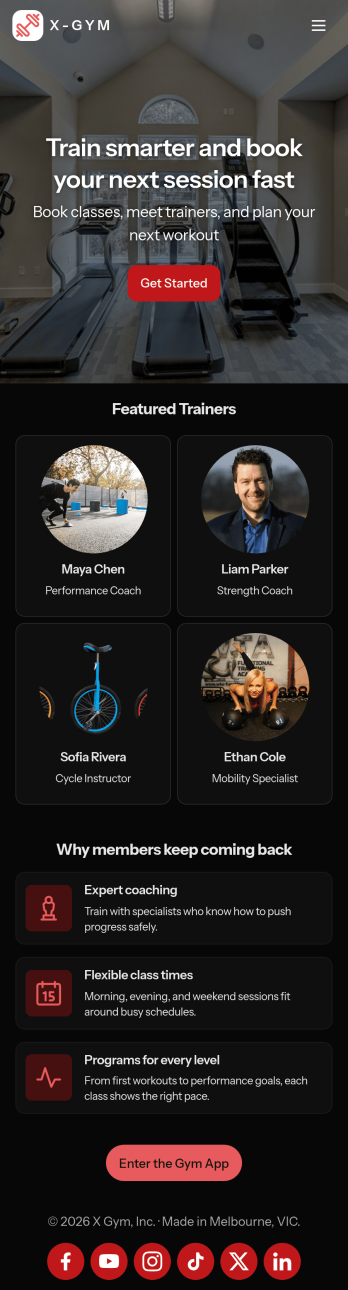
Gym Schedule App
A gym schedule app is used by gyms and personal trainers to allow gym members to directly manage training schedules and evaluations from any device. This Gym Schedule App contains three forms for filling out general contact information, scheduling appointments with personal trainers, and recording post-workout evaluations. Submissions are instantly synced and stored in your Jotform account, where you can manage all your members’ data from one location.Customize this app template to match your gym’s branding with Jotform’s no-code form builder. Just drag and drop to add or change various form elements, create a custom app icon and splash screen, upload your logo, and more. Once you’re done, share a link on your website or in a welcome email and gym members can then access and download your app on any device. Connect gym members with personal trainers and help them achieve their fitness goals with this Gym Schedule App from Jotform.
Go to Category:Sports Apps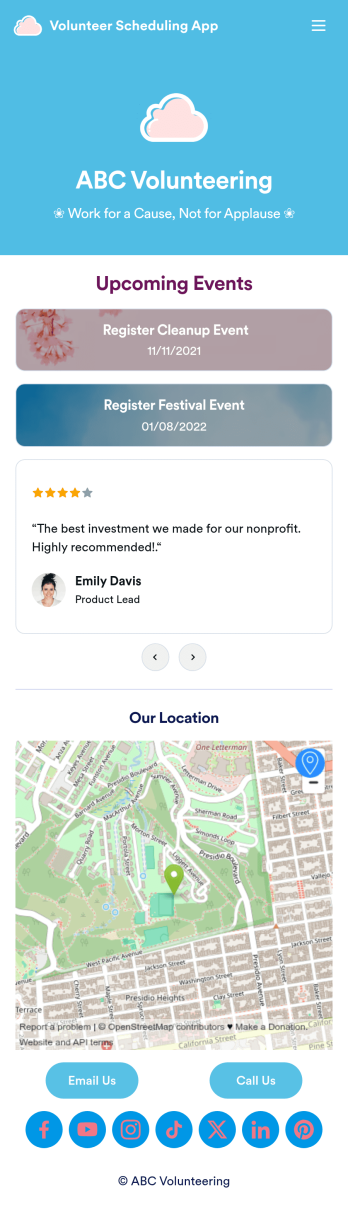
Custom Volunteer Scheduling App
A volunteer scheduling app is used by communities and organizations for recruiting volunteers. Our Volunteer Scheduling App allows individuals to volunteer for upcoming activities and events by filling out a form with their general contact information, availability, areas of interest, and any helpful talents they may have. This app template also includes an interactive event calendar and an event request form. Volunteer registrations are organized in an easy-to-read spreadsheet in your secure Jotform account, where you can sort and filter volunteers by name and availability.Jotform’s drag-and-drop app builder makes it easy to customize this app template to suit your needs. You can add and swap out form elements, choose fonts and colors, upload your organization’s logo, use your splash screen to include testimonials and photo slideshows of past events, and more — all without any coding. When you’re done, share your app by attaching it to an email newsletter, or include a link in your website or social media bio, and volunteers can download your app on any device. Start making real change in your community with this fully-customizable Volunteer Scheduling App.
Go to Category:Nonprofit Apps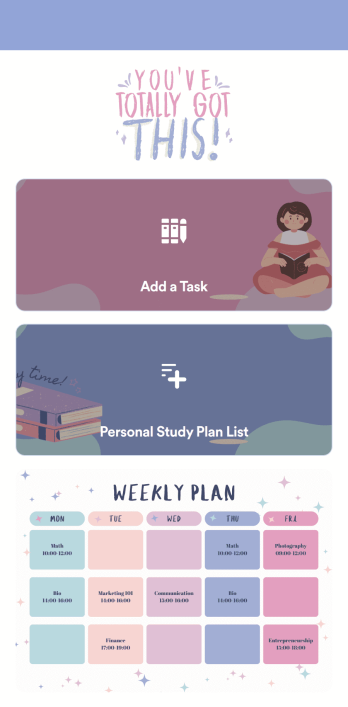
Customizable Study Planning App
A study planning app lets students create a student plan and track it on their mobile device. With this ready-made Study Planning App from Jotform, you can quickly and efficiently start tracking tasks, schedules, and study plans no matter where you are. Just customize the app to meet your study needs and download it for iOS, Android, or onto your computer for easy access.Need to make changes to this Study Planning App template? No problem — just drag and drop to get the design you want. Split your app into multiple pages, add more forms or tables, and make other changes in seconds with no coding knowledge required. You can even connect your app to 250+ other platforms like Trello, Asana, and more to monitor your study plans in your other accounts!
Go to Category:Organization Apps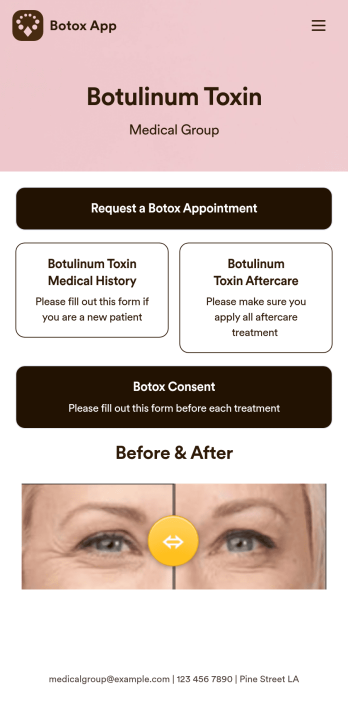
Botox App
Whether you’re running a medical clinic or a salon, a botox app is a great way to keep all of your clients’ records in one convenient location. With this free app template, clients can fill out an intake form with their general contact information and medical history, and digitally sign a terms and conditions consent form. There is also an aftercare form where you can post aftercare treatment and post-botox precautions for clients to sign off on. Entries are stored securely in your online account, which you can view and manage from any smartphone, tablet, or desktop.Want to customize this Botox App to match your branding? Our drag-and-drop form builder makes it easy to add or change forms, choose fonts and colors, upload images, update the app name, text and splash page, and more — all with no coding. Once you’re finished, just share a link on your website or directly with your clients, and your app can then be downloaded and filled out on any device. Smooth out the process of getting botox treatments with this customizable Botox App!
Go to Category:Customizable Beauty Salon Apps
Consultation App
A consultation app is used by clients to request consultation services from a consulting firm. With this free Consultation App from Jotform, your agency can create its own custom app in minutes! Just add photos and descriptions of your consultants, include links to your portfolio, and input location and contact details. Your clients can then download the app onto their mobile device to request a consultation fast.Want to make changes to this app template? Update the design by choosing a new background or app icon, including specific information about your services, splitting the app into different pages, and making other changes with our drag-and-drop app builder. No coding needed! You can then share the app with a link or send it to clients via email. All submissions through your custom Consultation App are ready to view instantly, so you can schedule consultations and respond to clients with ease.
Go to Category:Management Apps
Work Schedule App
A work schedule app is used by employees for logging work shifts and completed tasks. With this Work Schedule App, employees can log their shifts by filling out a form with their name, scheduled hours, and hourly wage. A separate task tracking form allows employees to log individual tasks they’ve completed throughout the week. Submissions are stored in two easy-to-read spreadsheets in your Jotform account, which you can sort, filter, and search from any smartphone, tablet, or computer.Want to customize this app template to match your company’s branding? No problem — just use our drag-and-drop builder to add or change form elements, choose fonts and colors, change your app icon or splash screen, and more. Once you’re finished, share your app by sending email invites to employees, or by embedding a link in your company’s HR portal. Employees will be able to access and download your app on any device, making it easy to log shifts and tasks from anywhere. Streamline employee scheduling with this Work Schedule App from Jotform.
Go to Category:Human Resources Apps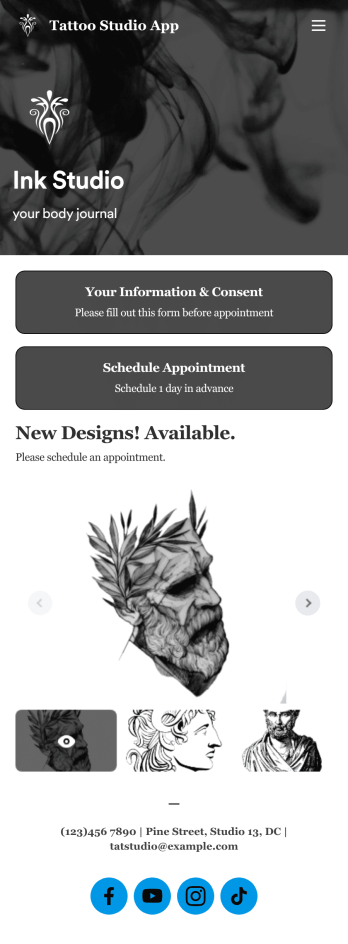
Tattoo Booking App
Getting a tattoo is a big decision with a lot of moving parts — so make scheduling appointments simple and easy for everyone by using our Tattoo Scheduling App! This app provides your tattoo studio with a place for customers to fill out their basic contact information, medical details, a pre-procedure questionnaire, and a signed terms and conditions consent waiver — and even allows them to add the app to their computer or mobile device. Once submitted, you can view and manage all of your upcoming appointments from your Jotform account.Need to customize our Tattoo Booking App to match your tattoo studio's branding? No problem! With Jotform's drag-and-drop interface, making this app your own is a breeze. You can add and delete content blocks, swap out different form elements, choose fonts, colors, and backgrounds, and upload your own logo. You can even display your portfolio and run tattoo campaigns — all of which can be displayed within the app itself. Make your customers' next tattoo appointment a smooth process with our custom Tattoo Scheduling App!
Go to Category:Booking Apps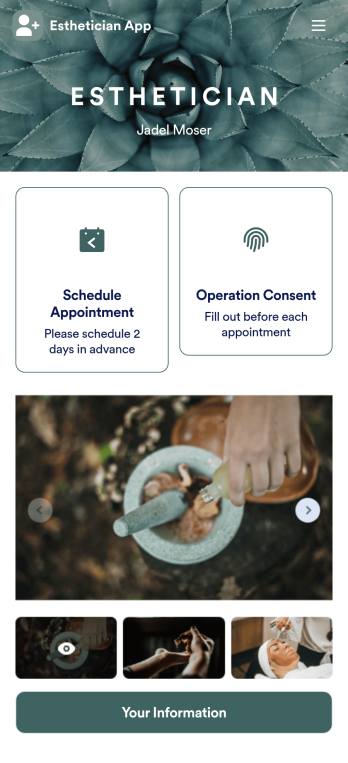
Esthetician App
An esthetician app is used by estheticians and skin care professionals to schedule appointments and collect patient information from any device. Whether you work at a salon, spa, or dermatology office, create a fully-custom mobile app for your skin care services with this free Esthetician App. Clients can download the app onto any computer, tablet, or smartphone to request consultations or appointments, sign consent forms, and more. Submissions will be received instantly and stored in your secure Jotform account.Make this Esthetician App your own in just a few clicks with our drag-and-drop builder. You can easily add or remove forms, include other elements, change the app icon, and much more. When it’s ready to publish, share your app by sending email invites to clients or posting the app link on your website or social media bios. Clients will be able to access your app from their favorite device, making it easier for them to request and schedule skin treatments. Take your skin care services to the next level with a custom Esthetician App!
Go to Category:Salon Apps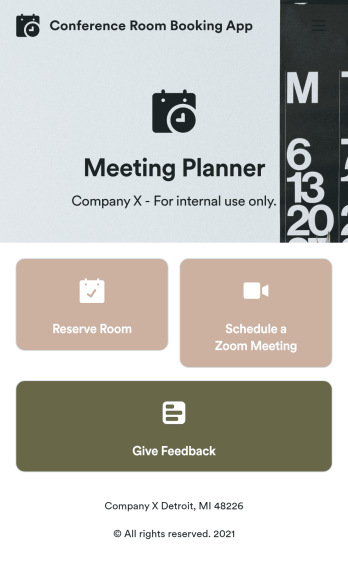
Conference Room Booking App
A conference room booking app is an internal use app used by companies for scheduling in-person and online meetings. Jotform’s Conference Booking App allows employees to easily reserve conference rooms or schedule Zoom meetings from an interactive calendar with just a few clicks. We have also included a survey form where participants can rate and make suggestions for future meetings.Make this app template your own in seconds with Jotform’s no-code app builder. Simply drag and drop to add forms, buttons, text, images, links, and more. You can even customize the app icon and splash screen with your company’s branding. After you’re done making changes, send an email invitation or share the app link with meeting participants, and they can then access and download your app on any smartphone, tablet, or desktop. Create a central place for employees to schedule meetings with this fully-customizable Conference Room Booking App from Jotform.
Go to Category:Booking Apps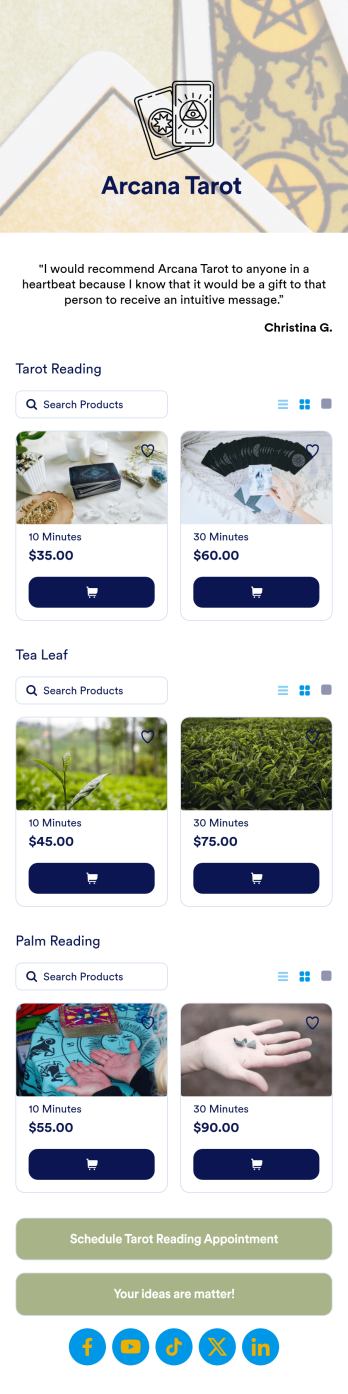
Tarot Reading App
Give your clients a better way to schedule tarot readings with this free Tarot Reading App from Jotform. The app is ready to be downloaded onto any iOS or Android device, but feel free to customize it to better suit your needs with our drag-and-drop no-code builder. Once you’ve shared your app, you’ll be able to manage appointment bookings and feedback on the go!Want to add your specific booking schedule, personalize design elements, and make other changes to this Tarot Reading App without coding? No problem — just drag and drop with our no-code builder to get the exact app design you want. You can then share your unique Tarot Reading App with a copy-paste link for clients to download and use the app directly from their personal devices.
Go to Category:Entertainment Apps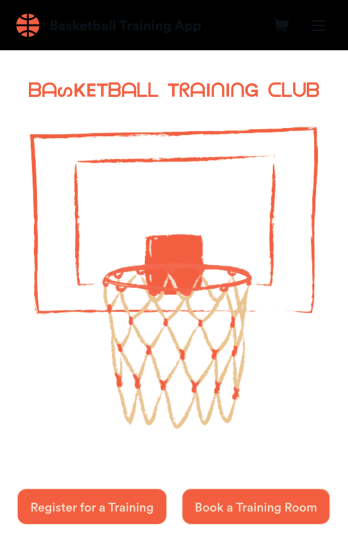
Basketball Training App
Manage all of your basketball training information in a single app with this free Basketball Training App from Jotform! Want to know how to sell your basketball lessons online? Whether you’re running a team or managing a gym, you can use the forms in this app to log practice sessions, gather bookings, collect T-shirt orders, and share your contact information — all from a downloadable app that you can customize and share in seconds.Need to make changes to this Basketball Training App? Add or remove forms, update existing forms, change the app icon or background image, and make other design changes with our drag-and-drop no-code builder. Once your app is ready to go, share it with a link or via email for others to download onto their computer or iOS or Android device for easy access. Create your own app fast with this Basketball Training App template.
Go to Category:Booking Apps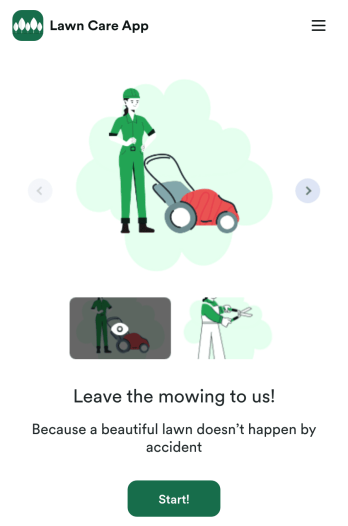
Custom Lawn Care App
A lawn care app is used by lawn care companies for taking lawn care requests, listing offered services and working days and hours, and collecting customer feedback. Clients can access and download your custom app on any smartphone, tablet, or desktop and start requesting your lawn care services right away. Generate a professional-looking job proposal with the click of a button using our Online PDF Editor.With Jotform’s intuitive app builder, you can easily customize this Lawn Care App to meet your business’ specific needs. No coding knowledge required — simply drag and drop to add or change form elements, choose fonts and colors, upload images, include your unique branding, and fully customize text fields and checklist items with just a few clicks. Share your app with clients by sending email invites or embedding it in your company’s website. Get rid of messy paperwork and start managing all your lawn care requests from your secure Jotform account with this fully-customizable Lawn Care App.
Go to Category:Booking AppsAbout Scheduling App Templates
Scheduling apps are essential digital solutions that streamline the process of managing appointments, meetings, and events across various industries. These apps enable businesses to efficiently organize their time by automating scheduling-related tasks, such as booking appointments, sending reminders, and managing calendars. Industries ranging from healthcare and education to corporate enterprises and service-based businesses benefit from these apps by ensuring that their operations run smoothly and efficiently. Real-world workflows, such as patient appointment scheduling in clinics, class timetables in educational institutions, and meeting coordination in corporate settings, exemplify the versatile applications of scheduling apps.
Jotform Apps stands out as a powerful no-code app builder tailored for creating effective scheduling solutions. Utilizing Progressive Web App (PWA) technology, Jotform Apps allows users to install their apps directly from a browser, eliminating the need for App Store downloads. This flexibility ensures that the apps function seamlessly across iOS, Android, tablets, and desktops, enhancing accessibility and user engagement. Furthermore, Jotform's integration with Jotform Tables provides centralized data management, enabling businesses to maintain organized, secure, and easily accessible records. This approach not only optimizes workflows but also ensures that businesses can adapt quickly to changing scheduling demands.
Why Use Scheduling Apps?
- Scheduling apps dramatically increase operational efficiency by automating the process of booking and managing appointments. This automation reduces the need for manual intervention, allowing staff to focus on more strategic tasks that add greater value to the business.
- These apps help reduce no-shows by sending automated reminders to clients and staff. Timely notifications ensure that all participants are informed well in advance, thereby improving attendance and customer satisfaction.
- By centralizing scheduling data, businesses gain valuable insights into appointment trends and resource utilization. This data-driven approach enables better decision-making and more effective resource allocation, ultimately boosting productivity.
- Scheduling apps offer flexibility in scheduling with features like rescheduling and cancellation options. This adaptability allows businesses to accommodate customer needs, enhancing service quality and client relationships.
- Integration with payment systems streamlines the process of collecting fees for appointments or services. This not only simplifies financial transactions but also improves cash flow management by ensuring timely payments.
Common Problems Solved by Scheduling Apps
- In the healthcare industry, patient scheduling often leads to overbooked or missed appointments. Scheduling apps solve this issue by providing a clear view of available slots, thus optimizing appointment allocation and minimizing patient wait times.
- Educational institutions face challenges in managing classroom schedules and faculty availability. Scheduling apps address this by offering a centralized platform for coordinating class schedules, ensuring that resources are optimally utilized and conflicts are minimized.
- Service-based businesses often struggle with managing client bookings and staff availability. Scheduling apps provide a unified system for handling these tasks, reducing the risk of double bookings and ensuring that services are delivered efficiently.
- In corporate environments, coordinating meetings across different departments or time zones can be complex. Scheduling apps simplify this by offering real-time availability and automated time zone adjustments, facilitating seamless meeting arrangements.
Matching Use Cases to Features
- For businesses requiring a streamlined appointment booking process, the Drag-and-Drop Interface of Jotform Apps allows for easy customization of scheduling workflows. This feature ensures that users can create intuitive scheduling experiences without technical expertise.
- Companies needing to communicate updates effectively can leverage Push Notifications. This feature keeps users informed about changes to their schedules or appointments, enhancing engagement and reducing the likelihood of missed communications.
- Businesses that handle transactions directly through their scheduling app can benefit from Payment Integrations with providers like Stripe and PayPal. This capability facilitates seamless financial transactions, enhancing the user experience and ensuring secure payment processing.
- Organizations that prioritize data privacy may use Publish Options to control app accessibility. By choosing between Public, Private, or Company-only settings, businesses can tailor access to their scheduling apps, ensuring that sensitive information remains secure.
- Sharing Methods such as Direct Link, Email, and QR Code enable businesses to distribute their scheduling apps widely and conveniently. These options enhance app visibility and accessibility, ensuring that users can easily access scheduling functionalities.
- Offline Mode is particularly beneficial for businesses operating in areas with unreliable internet connectivity. This feature allows users to access their scheduling apps and record data without an internet connection, ensuring uninterrupted service delivery.
- Centralized Data management through Jotform Tables provides businesses with a comprehensive overview of their scheduling operations. This capability facilitates better planning and resource allocation by offering insights into appointment trends and client interactions.
How to Create a Scheduling App
- Choose a category-relevant template from the Template List or start from scratch.
- Customize using the Drag-and-Drop Interface.
- Share via Link, QR Code, or Embed.
Top Use Cases for Scheduling Apps
- For Managers: Scheduling apps empower managers to oversee and coordinate complex scheduling needs across their organizations. These apps provide a centralized platform for managing employee rosters, client appointments, and resource availability, ensuring that all operations align with strategic objectives. By automating scheduling tasks, managers can focus on higher-level decision-making while maintaining oversight of day-to-day activities.
- For Teams: Teams benefit from scheduling apps by having a unified system for organizing meetings, project timelines, and collaborative efforts. These apps facilitate clear communication and coordination among team members, ensuring that everyone is aligned on deadlines and responsibilities. With features like automated reminders and real-time updates, teams can improve their productivity and cohesiveness, reducing the potential for miscommunication.
- For Customers: Scheduling apps enhance the customer experience by offering a convenient and flexible way to book services, appointments, or consultations. Customers can easily access availability, make bookings, and receive confirmations through user-friendly interfaces. This level of convenience and transparency builds trust and loyalty, as clients appreciate the seamless interaction and responsiveness offered by businesses using such apps.
Summarizing Scheduling Apps
Scheduling apps play a crucial role in modern business operations by automating and streamlining the process of managing appointments and resources. They address common challenges faced by various industries, such as minimizing scheduling conflicts, reducing no-shows, and facilitating seamless communication. By leveraging the capabilities of Jotform Apps, businesses can create customized scheduling solutions that improve efficiency, enhance customer satisfaction, and support strategic decision-making. As technology continues to evolve, scheduling apps will remain indispensable in optimizing business workflows and meeting the dynamic needs of clients and stakeholders.
Frequently Asked Questions
1) Is it free to create and use Scheduling apps on Jotform?
Yes, Jotform offers a free Starter plan that allows users to create and use scheduling apps at no cost. This plan is ideal for individuals or small businesses looking to explore the capabilities of Jotform Apps without financial commitment. As needs grow, users can upgrade to paid plans that offer additional features and higher usage limits.
2) Are the data and payments collected through the app secure?
Jotform prioritizes the security of data and payments collected through its apps. All data transmission is protected using industry-standard encryption protocols, ensuring that sensitive information remains secure. Additionally, Jotform complies with GDPR and other data protection regulations, providing peace of mind for businesses and their customers.
3) Do I need any coding skills to create a Scheduling app with Jotform?
No, creating a scheduling app with Jotform does not require any coding skills. Jotform's intuitive no-code app builder enables users to design and customize apps using a simple drag-and-drop interface. This accessibility allows anyone, regardless of technical expertise, to build functional and professional scheduling apps.
4) Can I collect payments for services directly through the app?
Yes, Jotform Apps support direct payment collection for services through integrations with payment processors like Stripe and PayPal. These integrations allow businesses to offer secure and convenient payment options within their scheduling apps, streamlining the transaction process and enhancing the user experience.
5) Does Jotform support offline data collection for Scheduling apps?
Yes, Jotform supports offline data collection through its Mobile Forms feature. This functionality ensures that data can be collected and stored even when the app is not connected to the internet. Once connectivity is restored, the data is automatically synced with Jotform's servers, ensuring continuity and data integrity.
6) Are Jotform Apps compatible with both iOS and Android devices?
Jotform Apps are built using Progressive Web App (PWA) technology, making them compatible with both iOS and Android devices. Users can access and use these apps directly from their browsers without the need for downloads, ensuring a seamless experience across multiple platforms and devices.
7) How can scheduling apps improve operational efficiency in the healthcare industry?
Scheduling apps improve operational efficiency in the healthcare industry by automating the appointment booking process and reducing administrative burdens. They enable healthcare providers to manage patient schedules more effectively, minimize waiting times, and optimize resource allocation, ultimately enhancing patient care and satisfaction.
8) What advantages do scheduling apps offer to educational institutions?
Scheduling apps offer educational institutions the advantage of efficiently managing class schedules, faculty availability, and resource allocation. By centralizing these processes, educational institutions can reduce scheduling conflicts, improve communication between staff and students, and ensure that educational resources are used optimally.