

Second Hand Selling Apps

Ecommerce App Template
An e-commerce app is used by stores to sell e-commerce products online. This ready-made E-commerce App allows customers to purchase products from your catalog, input their shipping and billing information, and pay either by card or through PayPal. There is a separate form for showcasing weekly sales and marked-down goods. Orders and payments are instantly synced to your secure Jotform account, and can be accessed from any device.Want to personalize this app template to match your store’s branding? No coding necessary — just use our drag-and-drop form builder to add or swap out form elements, choose fonts and colors, upload thumbnail images of your products, set prices and discounts, and more. You can also customize your splash page with images of your newest products. After you’re done, you can share your app on your website or social media with a link, where it can be downloaded on any smartphone, tablet, or desktop. Stop wondering how to sell e-commerce products online and start doing it today with this E-commerce App from Jotform.
Go to Category:Apparel Selling Apps
Custom Clothing Store App
Whether you sell designer clothing, custom T-shirts, or athleisure wear, stop wondering how to sell clothing online and increase your sales with our free Clothing Store App! This ready-to-use app bundles multiple forms — including our Store Appointment Form, Summer T-Shirt Order Form, and Generic T-Shirt Order Form — in one place, making it easy for customers to place orders and schedule appointments from any device. Customers will be able to download and use your app from any smartphone, tablet, or computer.Customize your Clothing Store App without any coding. Our drag-and-drop interface lets you update the forms included in the template and create new forms. You can also change the app design and settings to match your store’s branding. When you’re happy with the way your app looks, share it by embedding the app link in your website or posting it on social media. Watch your sales soar and sell clothes online with a fully-custom Clothing Store App for your business!
Go to Category:Apparel Selling Apps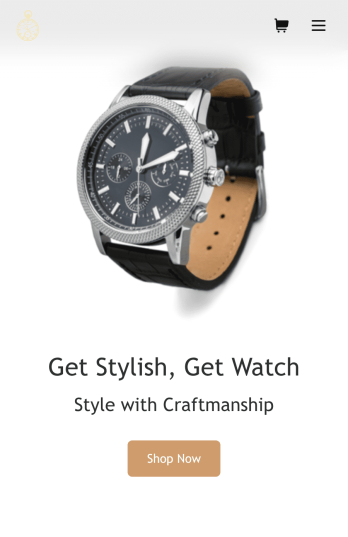
Watch Selling App
Wondering how to sell watches online? Look no further with Jotform’s free Watch Selling App. You can make your own custom app and share it instantly with your customers to start making sales. This app is downloadable to both Android and iOS devices and your customers will love how easy it is to use. Every order placed through your app will be stored in your Jotform account for centralized access.Time flies when you’re having fun — customize your Watch Selling App to add a personal touch to your online store. Our drag-and-drop no-code app builder makes it easy and intuitive to change up the look and feel, with no previous coding experience required. Add your business’ logo, change up the formatting, and list all the different kinds of watches you offer. You can even integrate your custom Watch Selling App with payment processors like Square, Stripe, or Apple Pay to sell watches online with ease.
Go to Category:Apparel Selling Apps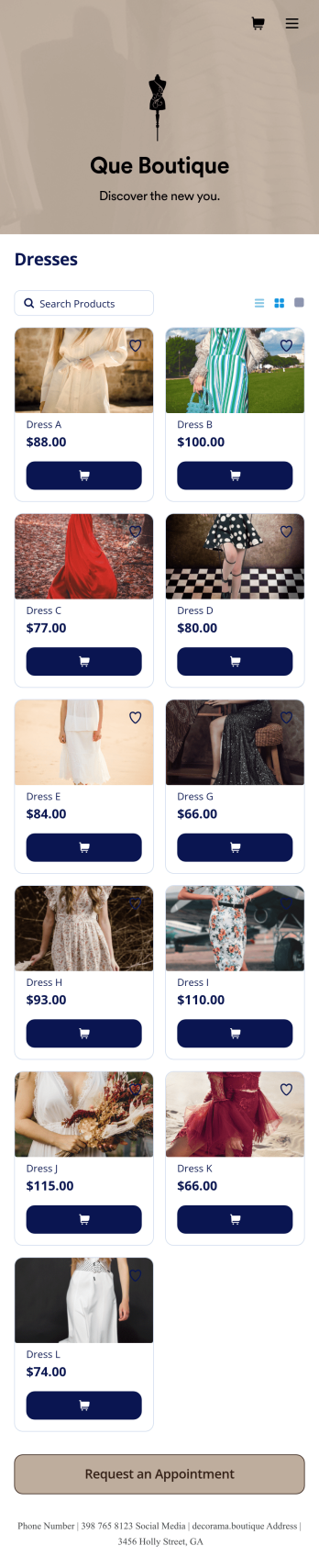
Boutique App
A boutique app is used by small specialty shops that sell limited types of fashionable clothing and accessories. Want to learn how to sell boutique products online? No matter what type of specialized products you sell, you can create a fully-custom app for your boutique with our free Boutique App Template. Using your app, customers can access and fill out your boutique’s appointment request form or product list from any device. You’ll instantly receive form submissions in your Jotform account, so you can respond to customers and fill orders without delay.Customize this Boutique App to match the look and feel of your boutique — no coding required. Simply drag and drop to create and add forms, update text and images, embed links, and change app settings such as name, icon, and splash screen. Once it’s ready to use, share the app link on your website or social media accounts. Customers will be able to download the app onto their smartphone, tablet, or computer. Sell boutique products online and keep your customers coming back for more with a professional Boutique App for your store.
Go to Category:Apparel Selling Apps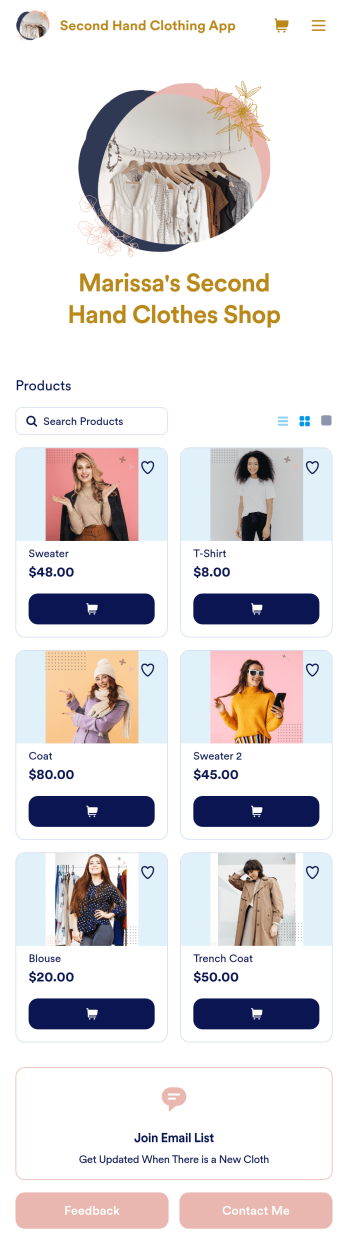
Custom Second Hand Clothing App
Discover the easiest way to sell second hand clothing online with a free Second Hand Clothing App from Jotform. To get started, customize this app template to match your branding and include your products and pricing — then share your finished store as a downloadable app or embed it in your website. You can then start collecting clothing orders and payments instantly from any device.Feel free to update the design of this Second Hand Clothing App with our drag-and-drop builder. Include descriptions of your clothes, upload photos, list your pricing, and choose from 25+ payment integrations to start accepting payments online while paying no extra transaction fees to Jotform. Take your clothing business to the next level and list products online with a ready-made Second Hand Clothing App.
Go to Category:Second Hand Selling Apps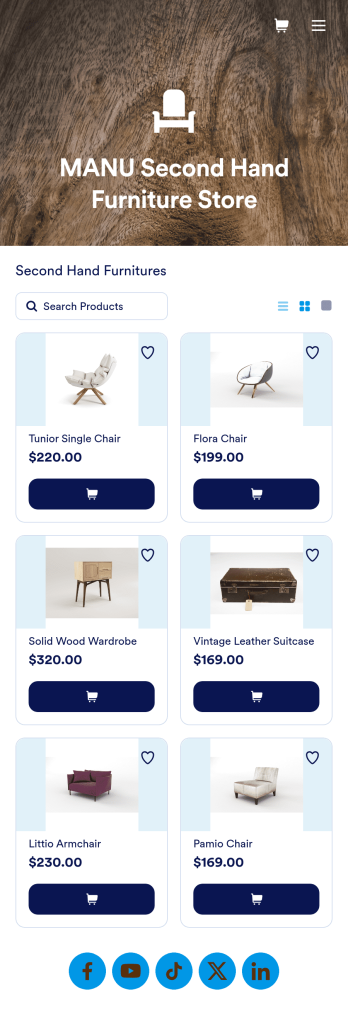
Second Hand Furniture App
Want to upcycle or rehome your second hand furniture? With Jotform’s Second Hand Furniture App, you can create an online furniture marketplace in minutes. Begin your app creating journey by starting from scratch or by choosing one of our ready-made app templates to get inspired. List all your second hand furniture for sale and customize with personal product images and descriptions.Customize your Second Hand Furniture App to your liking by using Jotform’s app builder. Our intuitive drag-and-drop builder allows you to switch up the look and feel of your app easily. Integrate with different types of useful widgets and pick one of our 25+ payment processors to make checkout a breeze. Share your custom app with your customers via link, scannable QR code, or by directly embedding it in your website. Give your furniture a new home and create your own Second Hand Furniture App today.
Go to Category:Electronics Selling App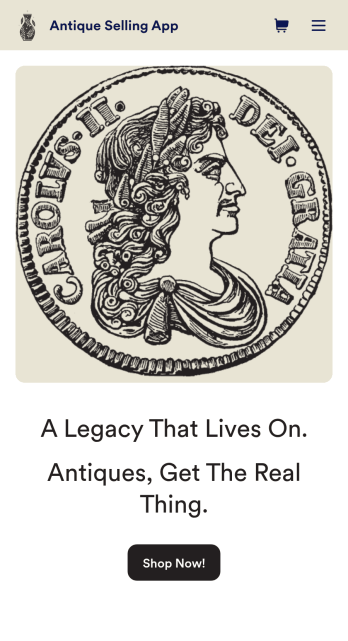
Antique Selling App
Need an easy way to sell antiques online? If you’re looking to sell things from your antique stall or the personal collection and want to reach a wider audience – now is the time. Try Jotform’s easily customizable Antique Selling App today. Customers can download your app from any iOS or Android device and make purchases instantly. All data will be stored in your Jotform account so you’ll never lose track of an order again.Get creative with your Antique Selling App and customize it with our easy-to-use app builder. Our no-code builder makes app design accessible and intuitive – no prior experience is needed. You can add your logo, list your amazing one-of-a-kind items, and integrate with 30+ payment integrations to receive online payments — while paying no extra transaction fees to Jotform. Share your app with your customers and start gathering orders today. Meaningful upcycling starts here.
Go to Category:Online Store Apps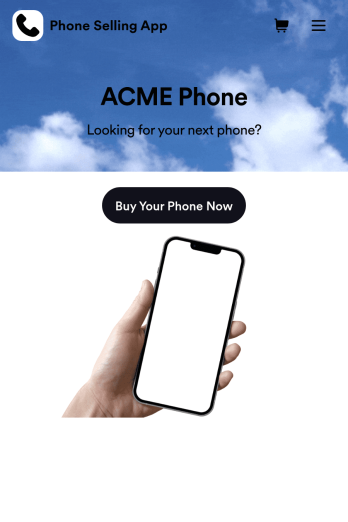
Phone Selling App
Need to sell phones online? Whether you own a cell phone store or refurbish old phones in your home, Jotform’s free Phone Selling App lets you list your products in a mobile app that your customers can download onto their iOS or Android devices. All responses through the app are stored in your secure Jotform account, so you can instantly view customer information and get started on orders.Make as many changes as you’d like to this Phone Selling App’s design with a no-code drag-and-drop builder. Add your branding, products, images, descriptions, and pricing in a few quick clicks — and connect your app with 30+ payment form integrations to get paid via PayPal, Square, Stripe, and more. No more wondering how to sell phones online — do it easily with Jotform’s powerful Phone Selling App.
Go to Category:Electronics Selling App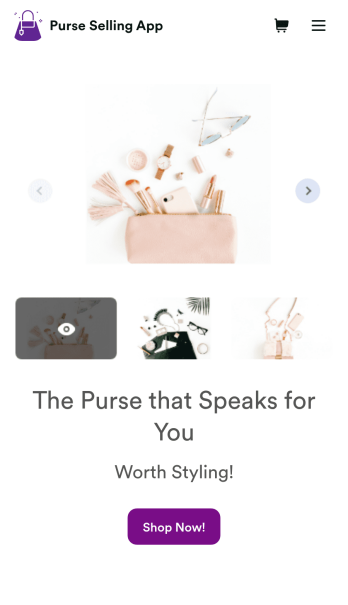
Purse Selling App
Wondering about how to sell bags online? Well look no further — wIth Jotform’s free purse Selling App you can build an app solely dedicated to selling your purses and handbags. Customers can download your app from any iOS or Android device and make purchases in seconds. All order information will be stored in your Jotform account so you’ll be able to track each order in real time. In no time you’ll be an expert in how to sell purses from home.Get creative with your Purse Selling App and customize it with our easy to use app builder. Our no-code builder makes app design accessible and intuitive — no prior experience needed. You can add a logo, list your unique purses and bags, and integrate your app with 30+ payment integrations to receive online payments and never pay any extra transaction fees to Jotform. Jotform is the best place to sell purses online — so share your app with your customers today and start gathering orders.
Go to Category:Apparel Selling Apps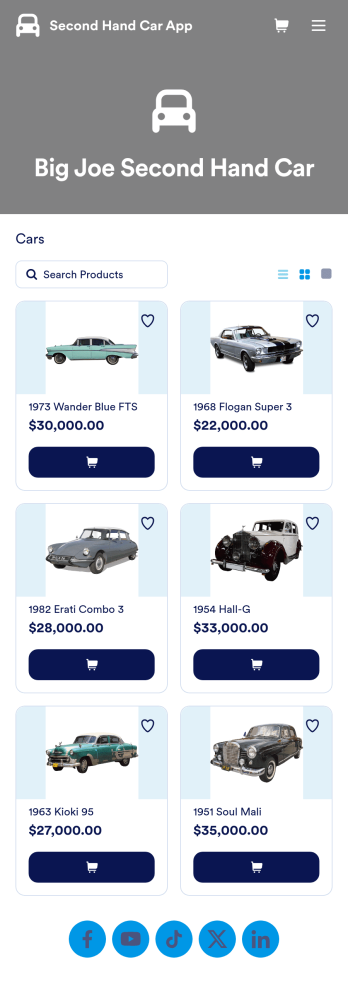
Second Hand Car App
Looking for a convenient way to sell second hand cars? Create a custom Second Hand Car App with Jotform’s no-code builder and start making online sales right away. Start from scratch or choose from one of our ready-made app templates — then add car listings, images, videos, descriptions, reviews, and more. Customers can put a down deposit on a second hand car directly through your app using one of our 25+ payment integrations. You can also keep track of customer information and individual orders from your online account with Jotform Tables.Want to customize the look and feel of this Second Hand Car App? No coding knowledge required — simply drag and drop to add powerful form elements, choose fonts and colors, install widgets, and upload your very own branding. Reach a wider audience and share your app with the world by including the app link your social media bios, or seamlessly embed it in your dealership’s website with a simple copy-paste code. Customers can access and download your app onto any device and browse car listings right away. Take your business online with a free Second Hand Car App from Jotform.
Go to Category:Online Store Apps
Motorcycle Selling App
Wondering how to sell a motorcycle online? If you’re looking to reach a wider customer audience, give Jotform’s easily customizable Motorcycle Selling App a try today. Customers can download your app from any iOS or Android device, send inquiry forms, and make bike purchases instantly. Every piece of information will be stored in your Jotform account so you’ll have eyes on every purchase from start to finish.Make your Motorcycle App look how you want it to. Customize it with our no-code drag-and-drop app builder that makes designing accessible and fun — no prior experience necessary. Simply add your logo, list all of your hot items, and integrate with 30+ payment integrations to receive online payments — all while paying no extra transaction fees to Jotform. Share your app with today and get your customers on the road again. Spend less time searching “how to sell my motorcycle” and more time enjoying the open road.
Go to Category:Online Store Apps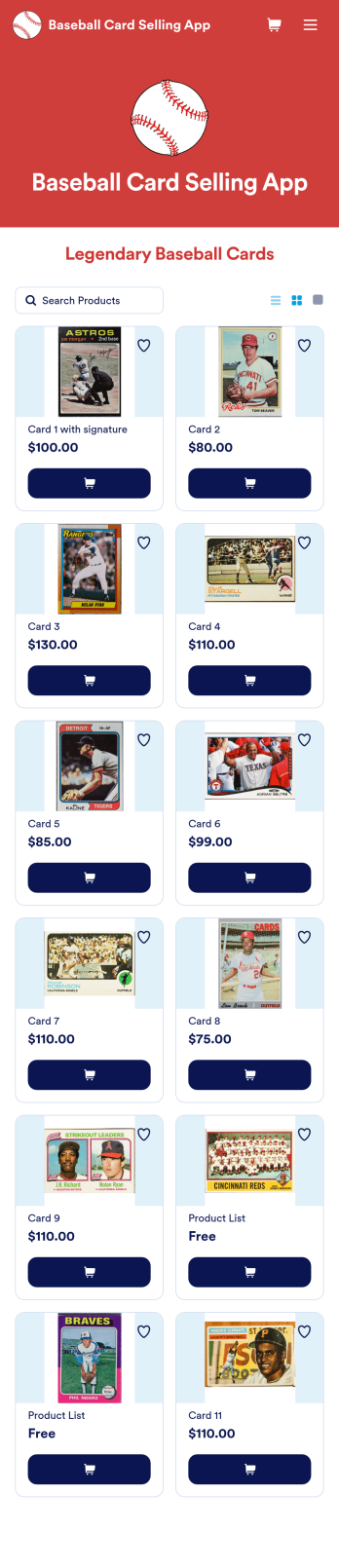
Baseball Card Selling App
Want a fast and secure way to sell your baseball cards online? Give Jotform’s easily customizable Baseball Card Selling App a try. Potential buyers can download your app from any iOS or Android device and purchase the cards they’re interested in. They can even filter by card number or player! All orders will be stored in your centralized Jotform account for easy reference and tracking.Design our Baseball Card Selling App to your liking with our easy drag-and-drop feature. Our no-code builder makes app store design intuitive and fast. Add your business’ logo, list all your available cards, and integrate with 25+ payment integrations to receive payments quickly — paying no extra transaction fees to Jotform. Share your app with your buyers directly or embed a link in your website for easy access. Knock the competition out of the park and create your own Baseball Card Selling App with Jotform.
Go to Category:Product Selling Apps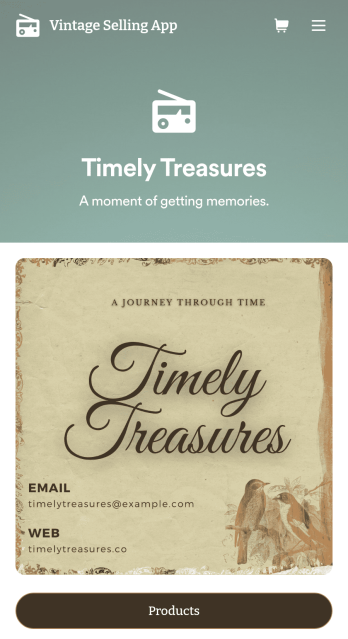
Vintage Selling App
Sell vintage items online with your very own Vintage Selling App. Create a custom app in seconds either from scratch or by choosing one of our ready-made templates — then drag and drop to add products, descriptions, and shipping information. You can also customize your product listings by adding images, videos, customer reviews, and more. Customers can make purchases and payments directly through your app from any smartphone, tablet, or desktop computer.Make this Vintage Selling App your own with Jotform’s intuitive app builder. No coding knowledge required — simply drag and drop to get the look and feel you want. Add form elements, choose fonts and color schemes, install widgets and integrations, link to your social media, and more. Connect to one of our 25+ payment gateways and collect payments without any additional transaction fees. Share your custom app by including a link in your social media bios, generating a scannable QR code, or seamlessly embed it in your website with a copy-paste embed code. Give your vintage items a new home with a fully customizable Vintage Selling App from Jotform.
Go to Category:Online Store Apps
Guitar Selling App
Enjoy a seamless way to sell guitars online with a free Guitar Selling App from Jotform. Whether you manage a guitar store or are an independent seller or collector, you can list your guitars with descriptions, upload photos, and add your pricing in a few quick clicks. You can also personalize other design elements with our drag-and-drop builder. No coding required! Then share your online store as an app for iOS and Android, or embed it in your website.Make changes to this Guitar Selling App’s design without coding using our drag-and-drop builder. Not only can you customize the design to match your branding, you can also integrate with 25+ popular payment gateways — including PayPal, Square, Stripe, Authorize.net, and Worldpay — to accept payments from any device while paying no additional transaction fees to Jotform. Boost the way your business sells guitars with a powerful Guitar Selling App.
Go to Category:Electronics Selling App
Second Hand Bikes App
Need a way to reach a wider audience and sell second hand bikes? With Jotform’s Second Hand Bikes App, you can create your very own online marketplace in seconds without any coding knowledge. Just drag and drop to add products, categories, and pages — then create enticing lists by adding images and descriptions. Collect orders and payments directly through your app and manage everything from your online account with Jotform Tables.Customize this Second Hand Bikes App to get the look and feel you want with Jotform’s no-code app builder. Drag and drop to add powerful form elements, choose fonts and colors, install widgets and 25+ payment integrations, upload your unique branding, and much more. Share your custom app with the world by adding the app link to your social media bios, generating scannable QR codes, or seamlessly embedding it in your website with a copy-paste embed code. Sell second hand bikes online with a custom Second Hand Bikes App that works on any device.
Go to Category:Online Store Apps
Comic Selling App
Need a seamless way to sell comic books or manga online? Whether you sell comics independently or own a small business, you can take this ready-made Comic Selling App and customize it to match your branding — then your customers can download it to buy your comics from any device. Simply add your comics and pricing, share the app or add it to your social media bio, and wait for the orders to stream in.Making changes to this Comic Selling App is easy with our drag-and-drop app builder. Upload your logo, include descriptions and photos of your comics, and update the app’s icon and splash screen without coding. You can even add a payment processor integration like Square, Stripe, or PayPal to accept payments! Stop wondering how to sell comics online and get started with a Comic Selling App from Jotform.
Go to Category:Online Store Apps
Second Hand Clock App
Need to sell your second hand clocks online? With Jotform’s Second Hand Clock App, you can create an online marketplace in seconds. Start from scratch or pick one of our ready-made app templates to get inspired. You can also list all your second hand clocks by uploading images and adding unique product descriptions and pricing. Make your Second Hand Clock App your own and customize with Jotform’s intuitive app builder. Utilize our intuitive drag-and-drop builder to switch up the look and feel of your app. Add useful form elements, widgets, and integrate with one of our 25+ payment processors to match your app to your personal brand. Share your custom app with your customers via link, scannable QR code, or by directly embedding it in your website. Save time and create your own Second Hand Clock App that works on any device.
Go to Category:Apparel Selling Apps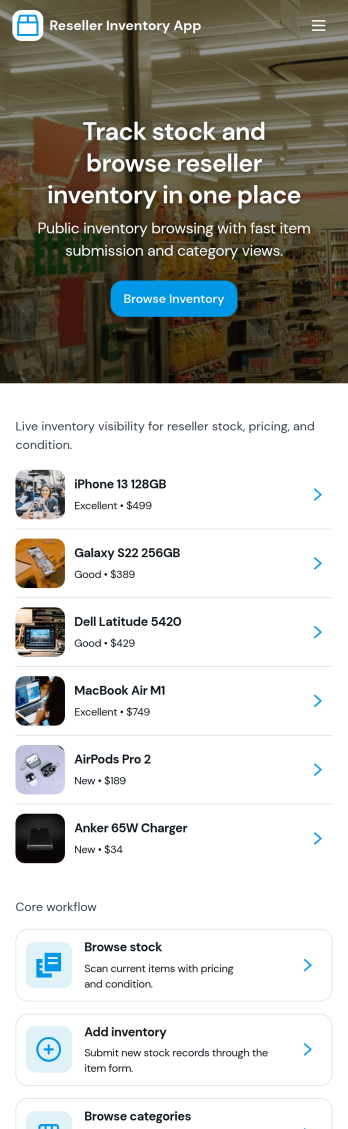
Reseller Inventory App
Reseller Inventory App helps resellers keep product stock organized in one place so you can add new stock, review what you have on hand, and quickly spot items that are running low. It fits common resale workflows like tracking inventory for online marketplaces, pop-up booths, local pickup sales, and small warehouse shelves where quantities change often and accuracy matters. Use it to reduce missed sales from stockouts, avoid overbuying, and keep your catalog up to date as you source new items.With Jotform, you can turn this app template into a branded, self-service inventory experience without coding. Use the drag-and-drop app builder to adjust pages, buttons, and navigation, then connect your inventory list to a form for consistent data collection when you add stock. As your workflow evolves, you can update fields, organize records in Jotform, and share the app with your team so inventory updates stay timely and reliable.
Go to Category:Inventory Apps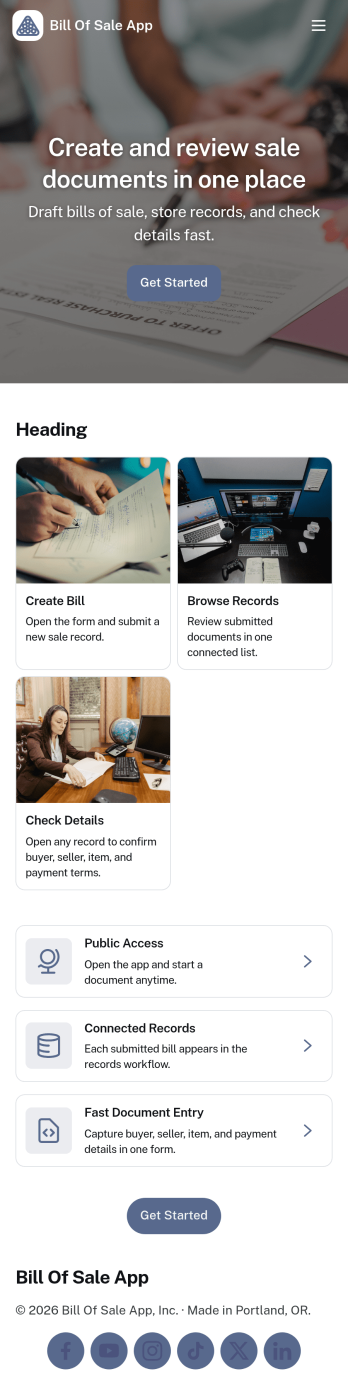
Bill of Sale App
Bill of Sale App helps you create, store, and reference bills of sale in one place, so buyers and sellers can keep transaction records organized from the moment a sale is agreed upon. Use it to start a new bill, capture the key details for each party, and keep a running list of completed documents you can return to later. It’s a practical fit for small dealerships, independent sellers, repair shops that resell equipment, and anyone who needs a consistent way to document item transfers without hunting through emails or paper files.With Jotform’s no-code app builder, you can turn your bill of sale workflow into a simple self-service experience that works on desktop or mobile. Customize pages with a drag-and-drop interface, connect your app to a form for data collection, and keep records organized so you can view bills, revisit your own history, and create another bill in seconds. Jotform makes it easy to publish and share an app template like this as a link or QR code, so your process stays clear for every transaction.
Go to Category:Finance Apps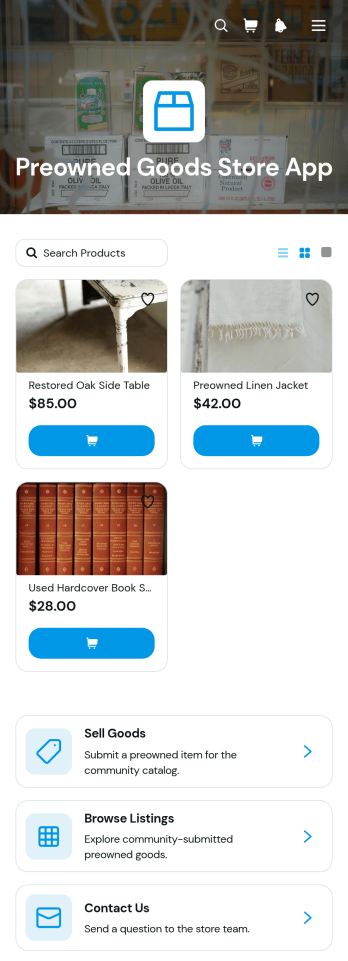
Preowned Goods Store App
Preowned Goods Store App is a ready-to-use marketplace template for resale shops, community sellers, consignment businesses, and organizations that want to present secondhand products in one accessible space. Sellers can submit goods for consideration, while shoppers can browse available listings and review essential details such as category, condition, price, and seller information. Direct email access makes it easy for interested buyers to contact a seller about an item. This app template helps bring product discovery, seller intake, and buyer inquiries together, reducing scattered messages and making inventory easier to explore.Jotform App Templates offer a practical starting point for creating branded digital experiences without writing code. Customize this Preowned Goods Store App with the no-code app builder and its drag-and-drop interface, then connect forms and organized listing data to support your workflow. You can adjust pages, colors, fonts, buttons, and visual elements to reflect your store or community. Once published, the app can be shared by direct link or QR code for convenient mobile access, giving sellers a simple data collection process and shoppers a self-service way to discover available goods.
Go to Category:Second Hand Selling Apps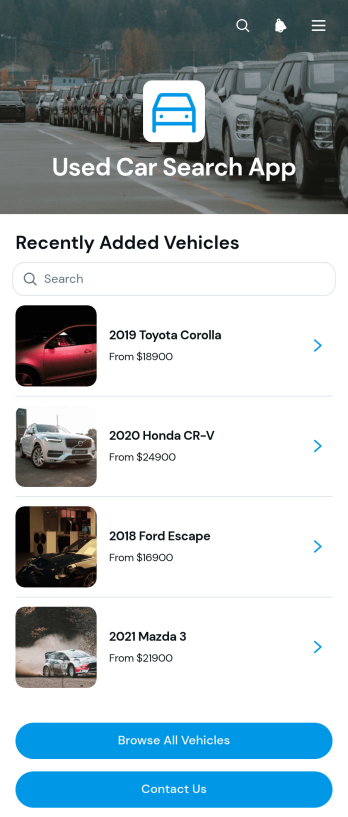
Used Car Search App
The Used Car Search App gives dealerships, independent vehicle sellers, and automotive sales teams a customer-friendly place to present pre-owned inventory. Shoppers can browse available vehicles, open individual listings, review body style, location, images, and overview information, then contact the seller through a connected form. It helps prospective buyers compare options without navigating scattered listings or repeatedly requesting basic details. Sales teams can use this app template to improve vehicle discovery, capture inquiries, and provide convenient self-service access to current inventory from one branded destination.Jotform Apps makes it easy to adapt this experience without writing code. Using the drag-and-drop app builder, sellers can update pages, vehicle cards, navigation buttons, images, and branding to match their inventory process. Forms and Jotform Tables can support data collection and organized follow-up, while connected workflows can notify team members when a shopper submits an inquiry. Like other App Templates from Jotform, the finished app can be shared through a direct link or QR code, providing a mobile-friendly way to promote vehicles and connect interested buyers with the sales team.
Go to Category:Automotive Apps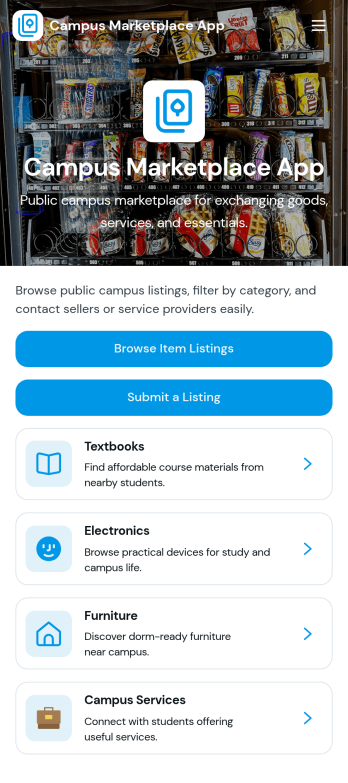
Campus Marketplace App
Campus Marketplace App brings a campus community marketplace into one easy place where students can list items for sale and browse what others are offering. Use it to post used textbooks, electronics, and other student-to-student listings, then share listings quickly so the right buyers find them. With a clear sell item action and simple category browsing, this app works well for student organizations, residence halls, campus groups, and academic departments that want a practical hub for peer-to-peer buying and selling.Jotform makes it simple to publish this kind of self-service experience with customizable App Templates built in a no-code app builder. Use the drag-and-drop interface to adjust pages, update category cards, and connect your marketplace form to the app so listings stay organized and easy to manage. You can share your Campus Marketplace App with a link or QR code, keep everything mobile-friendly, and support smoother workflows for collecting listing details and helping students discover what’s available.
Go to Category:Second Hand Selling Apps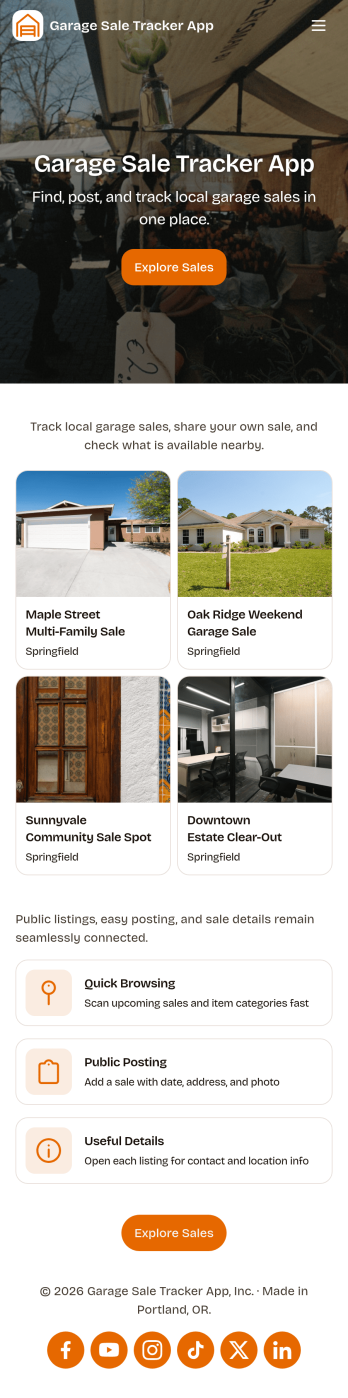
Garage Sale Tracker App
Garage Sale Tracker App helps you stay organized before, during, and after a garage sale by keeping your items and money records in one place. Use it to track inventory, quickly add new items as you price them, and review item details when shoppers ask questions. It’s a practical fit for families, neighbors hosting a community sale, or anyone running multiple sale days who wants a clear view of what’s available and what’s already moved.With Jotform’s no-code app builder, you can turn your Garage Sale Tracker App into a simple self-service hub for your own process, from item entry to daily cash notes. Customize pages with a drag-and-drop interface, connect buttons to forms for fast data collection, and keep everything accessible on mobile so you can update inventory and log cash right at the table.
Go to Category:Second Hand Selling Apps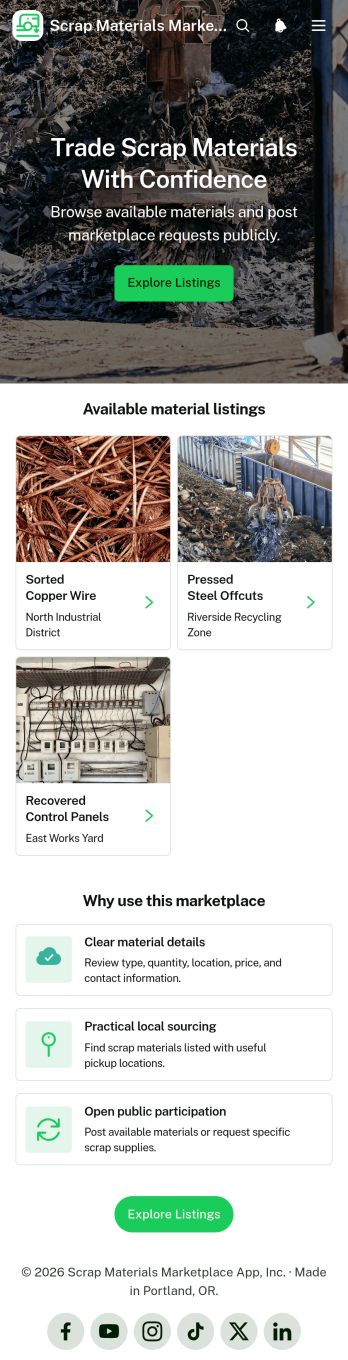
Scrap Materials Marketplace App
The Scrap Materials Marketplace App gives recyclers, salvage operators, contractors, manufacturers, community reuse programs, and independent sellers a central place to advertise and source surplus or recoverable materials. Users can browse available listings, review material requests, and submit a new listing or request through connected forms. Clear details about quantities, locations, pricing, and contacts help potential buyers and suppliers assess opportunities before reaching out. This app template supports local sourcing, reduces scattered inquiries, and makes reusable scrap materials easier to discover without requiring a complicated sales system.Jotform App Templates help organizations turn listings, requests, and resource pages into accessible digital experiences. With Jotform’s no-code app builder and drag-and-drop interface, teams can customize the Scrap Materials Marketplace App with their own branding, navigation, content, and forms. Connected data collection and workflow tools can organize incoming information and notify the appropriate team members when activity occurs. Publish the finished app with a direct link or QR code so participants can access its self-service features from a phone, tablet, or computer.
Go to Category:Second Hand Selling AppsAbout Second Hand Selling Apps
Second Hand Selling Apps are mobile and web apps designed to facilitate the resale of goods, allowing businesses and individuals to manage their second-hand transactions efficiently. These apps are typically utilized for the buying and selling of used items, ranging from electronics to clothing, in industries such as retail, e-commerce, and consumer goods. They enable users to list items for sale, communicate with potential buyers, and manage transactions seamlessly, often integrating payment processing and inventory management features to streamline operations.
Jotform Apps serve as an ideal no-code app builder for creating Second Hand Selling Apps, leveraging Progressive Web App (PWA) technology. This allows users to install apps directly from a browser, eliminating the need for App Store downloads, and ensuring functionality across iOS, Android, tablet, and desktop devices. With Jotform Tables, users can centralize data management, facilitating efficient tracking of sales and inventory. This workflow-oriented approach supports businesses in optimizing their second-hand selling processes, enhancing both operational efficiency and customer experience.
Why Use Second Hand Selling Apps?
- Second Hand Selling Apps streamline the process of listing and managing items for resale, significantly reducing the time and effort needed to update inventories. This operational efficiency allows businesses to focus on expanding their product offerings and reaching a wider audience.
- These apps facilitate seamless communication between buyers and sellers, providing integrated messaging systems that enhance customer service. By improving the customer experience, businesses can increase buyer satisfaction and loyalty, leading to repeat sales.
- Payment integrations within these apps, such as Stripe and PayPal, enable secure and straightforward transactions, reducing the risk of payment disputes and fraud. This reliability in financial transactions builds trust with customers, encouraging more frequent and higher-value purchases.
- With customizable interfaces, businesses can tailor the app's appearance and functionality to suit their branding and operational needs. This flexibility ensures that the app aligns with the company's image, enhancing brand recognition and customer engagement.
- Second Hand Selling Apps allow for real-time updates and notifications, keeping both sellers and buyers informed about new listings, price changes, and promotions. This immediacy in communication helps maintain user engagement and encourages timely sales.
Common Problems Solved by Second Hand Selling Apps
- Traditional second-hand selling methods often involve cumbersome paperwork and manual tracking, leading to inefficiencies and errors. Second Hand Selling Apps digitize these processes, enabling automated inventory management and transaction tracking, thus reducing administrative burdens.
- Sellers frequently struggle with reaching a broad audience, limiting their potential market size. These apps expand market reach by providing easy access to online marketplaces, allowing sellers to connect with a diverse range of potential buyers across different regions.
- Managing customer inquiries and negotiations can be time-consuming and disorganized. With integrated communication features, these apps streamline interactions, allowing for clear and efficient dialogue between buyers and sellers, which enhances the overall transaction experience.
- Price negotiation and payment disputes are common challenges in second-hand sales. The apps' secure payment gateways and clear transaction records help mitigate these issues, providing transparency and reducing conflict between parties.
- Inventory management can become overwhelming, especially for sellers with a large volume of items. The apps offer automated solutions for tracking stock levels, sales trends, and pricing, enabling sellers to make informed decisions and optimize their inventory management strategies.
Matching Use Cases to Features
- For businesses looking to expand their online presence, the Store Builder feature allows for the creation of a fully customized digital storefront. This feature supports brand-specific designs, which can attract more customers and enhance sales.
- Companies aiming to improve customer engagement can utilize Push Notifications to keep users informed about new listings and exclusive offers. By delivering timely updates directly to users' devices, businesses can maintain customer interest and drive prompt purchasing actions.
- Payment Integrations with services like Stripe and PayPal enable sellers to offer secure and diverse payment options, which can accommodate different customer preferences and increase conversion rates.
- Businesses that handle sensitive data can benefit from the varied Publish Options, allowing them to control app accessibility. By setting apps as Public, Private, or Company-only, businesses can manage user access and protect proprietary information.
- With Workflow Automation, companies can streamline repetitive tasks such as order confirmations and shipping updates. This automation reduces manual effort, minimizes errors, and accelerates the sales process, leading to increased operational efficiency.
- Sharing Methods like Direct Link, Email, QR Code, and Social Media make it easy for businesses to promote their apps and listings. These diverse sharing options enhance visibility and attract more potential buyers to the platform.
- Offline Mode, facilitated by Mobile Forms, ensures that sellers can continue to operate and collect data even without internet connectivity. This capability is crucial for maintaining business continuity in regions with unreliable internet access.
How to Create a Second Hand Selling App
- Choose a category-relevant template from the Template List or start from scratch.
- Customize using the Drag-and-Drop Interface to tailor the app to your specific needs and branding.
- Share via Link, QR Code, or Embed to distribute your app widely and effectively.
Top Use Cases for Second Hand Selling Apps
- For Managers: Second Hand Selling Apps offer managers a comprehensive overview of sales operations, enabling them to track inventory, sales performance, and customer interactions in real time. This visibility empowers managers to make data-driven decisions, optimize pricing strategies, and identify trends that can inform future business strategies. By centralizing data management, managers can efficiently oversee multiple locations or departments, ensuring consistent quality and service standards across the board.
- For Teams: For sales and support teams, these apps provide crucial tools to enhance productivity and collaboration. Teams can access up-to-date inventory lists, communicate seamlessly with customers, and process transactions quickly, all from a single platform. This integration reduces the need for multiple systems, minimizing errors and ensuring that team members are aligned in their efforts to deliver exceptional service. Furthermore, automated workflows within the app free up time for teams to focus on more strategic tasks, boosting overall team productivity and morale.
- For Customers: Customers benefit from a user-friendly interface that simplifies the buying process, offering a seamless journey from browsing to purchasing. The app's secure payment options and clear communication channels build trust, making customers feel confident in their transactions. Additionally, features like push notifications keep customers engaged with updates on new items and promotions, encouraging repeat visits and fostering loyalty. By enhancing the customer experience, these apps help businesses cultivate strong, lasting relationships with their clientele.
Summarizing Second Hand Selling Apps
Second Hand Selling Apps provide a robust platform for businesses and individuals looking to optimize the resale of goods. By leveraging Jotform's no-code app builder and PWA technology, users can create fully customized apps that enhance operational efficiency and customer engagement. These apps solve common industry challenges by simplifying inventory management, streamlining communications, and securing transactions, ultimately driving business growth and customer satisfaction.
Frequently Asked Questions
1) Is it free to create and use Second Hand Selling apps on Jotform?
Yes, Jotform offers a Starter plan that allows users to create and use Second Hand Selling apps for free. This plan provides essential features that enable businesses to get started without any initial financial commitment. As your needs grow, Jotform also offers various paid plans with additional capabilities to support your expanding operations.
2) Are the data and payments collected through the app secure?
Absolutely. Jotform prioritizes security and compliance, ensuring that all data and payments collected through the app are protected by industry-standard encryption measures. Moreover, Jotform is GDPR-compliant, providing peace of mind to users regarding the handling of their sensitive information. This commitment to security helps build trust with customers and protects businesses from potential data breaches.
3) Do I need any coding skills to create a Second Hand Selling app with Jotform?
No coding skills are necessary to create a Second Hand Selling app with Jotform. The platform's intuitive drag-and-drop interface allows users to design and customize their apps easily, regardless of technical expertise. This accessibility empowers anyone, from business owners to managers, to develop and deploy apps that meet their specific needs without relying on developers.
4) Can I collect payments for services directly through the app?
Yes, you can collect payments directly through the app using integrations with popular payment gateways such as Stripe and PayPal. These integrations facilitate secure and efficient transactions, allowing you to offer various payment options to your customers. By accommodating different payment preferences, you can enhance the purchasing experience and increase sales.
5) Does Jotform support offline data collection for Second Hand Selling apps?
Indeed, Jotform supports offline data collection via its Mobile Forms feature. This capability is particularly beneficial for businesses operating in areas with unreliable internet connectivity, as it allows them to continue collecting data and processing transactions without interruption. Once connectivity is restored, all offline data is automatically synced, ensuring seamless operations.
6) Are Jotform Apps compatible with both iOS and Android devices?
Yes, Jotform Apps are fully compatible with both iOS and Android devices, thanks to their Progressive Web App (PWA) technology. This cross-platform compatibility ensures that users can access and utilize the app on a wide range of devices, providing flexibility and convenience. Whether on a smartphone, tablet, or desktop, Jotform Apps deliver consistent performance and user experience.
7) How can Second Hand Selling Apps improve inventory management?
Second Hand Selling Apps improve inventory management by providing real-time tracking and automated updates of stock levels. This functionality helps businesses maintain accurate inventory records, preventing overstocking or stockouts. By streamlining inventory processes, these apps enable more efficient resource allocation and decision-making.
8) What role do Second Hand Selling Apps play in enhancing customer engagement?
Second Hand Selling Apps enhance customer engagement by offering personalized and timely interactions through features like push notifications and integrated messaging. These features keep customers informed and connected, encouraging them to frequently return to the app. By fostering strong customer relationships, businesses can boost loyalty and drive repeat purchases.