

Restaurant App Templates

Restaurant Mobile App
You’ve got your hands full trying to run a busy restaurant — so the last thing you want to learn is how to sell food online. Make it easier on yourself with Jotform's free Restaurant Mobile App. With this ready-to-use template, customers can reserve a table, place orders for pick-up or delivery, pay ahead with credit card or through PayPal, and leave reviews for your restaurant. You can upload images to use for the online menu, and even showcase signature dishes on your splash page! Just share a link to your app on your website or social media, and customers can access and download it on any smartphone, tablet, or computer.Want to customize your Restaurant Mobile App to match your restaurant’s branding? Our drag-and-drop interface makes it easy to add or change forms, choose fonts and colors, upload your logo, update the app name or text, and more — all with zero coding. Take your restaurant digital to sell food online and make reservations and orders a breeze with this Restaurant Mobile App.
Go to Category:Booking Apps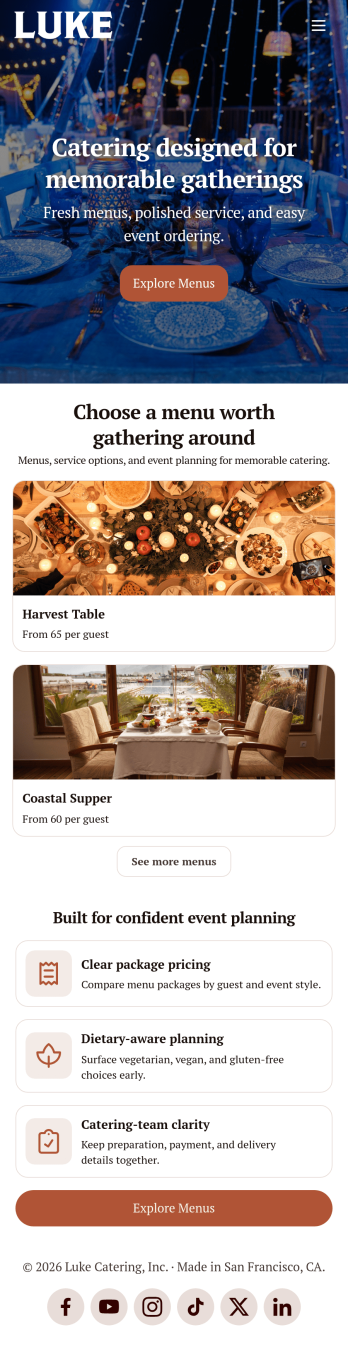
Catering App
Need to find out how to sell catering items online? A catering app allows customers to quickly and easily hire caterers and order food for their events. Get a head start creating an app for your own catering company with our free Catering App. This pre-made template includes a menu and order form for customers to access from their smartphone, tablet, or computer. Customers can easily place their orders from any device, and you’ll receive submissions instantly in your secure Jotform account.Customize your Catering App in just a couple of clicks with our no-code app builder. Simply drag and drop to add more forms, update text, upload images, embed links, and change app settings. When it’s ready, embed the app link in your website or share it on social media to start receiving orders from customers. Take your catering business to the next level and sell catering items online with a professional Catering App.
Go to Category:Delivery Apps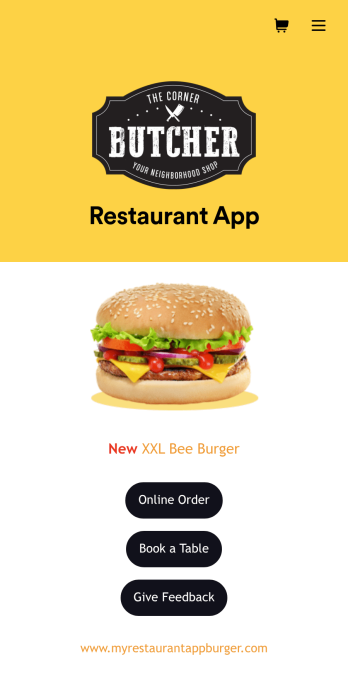
Burger Restaurant App
A burger restaurant app makes it easy for customers to place orders, make reservations, and submit feedback from any device. Whether you cook classic burgers, specialty burgers, or veggie burgers, take your restaurant to the next level with Jotform’s free and customizable Burger Restaurant App. Customers can download your app onto their computer or any iOS or Android device and fill out your online forms from anywhere. You’ll receive form submissions instantly, ready to view in your secure Jotform account.Customize this Burger Restaurant App without any coding. Using our drag-and-drop interface, you can upload your logos and branding, add or remove forms, and include other app elements such as documents, links, buttons, images, and much more. When it’s ready, your app can be shared on your website and social media accounts via the app link — sell burgers online faster than ever. Make it easier for customers to quickly and easily order your tasty burgers with a fully-custom Burger Restaurant App!
Go to Category:Delivery Apps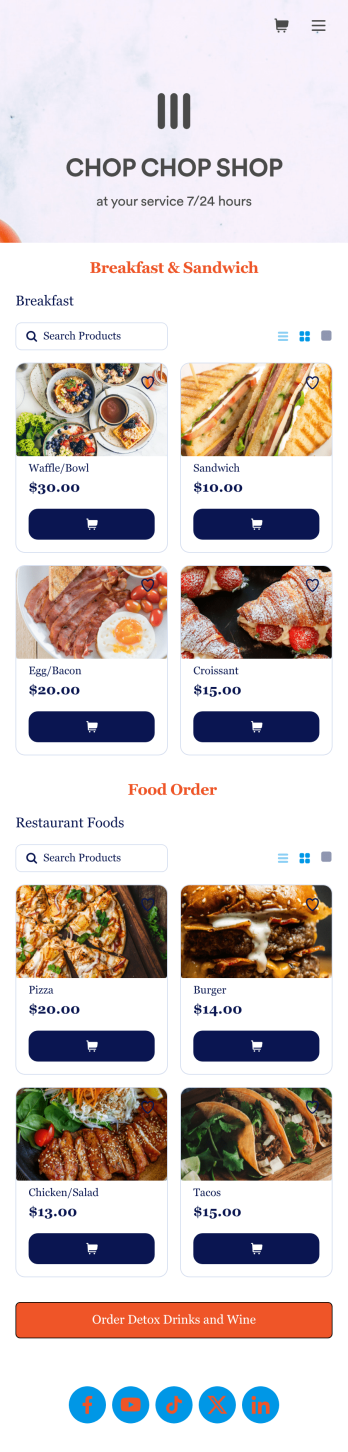
Food Order App
Discover how to sell food orders online with Jotform. No matter what type of cuisine you serve, make online ordering easy for your customers and sell food orders online with Jotform’s free Food Order App! This customizable mobile app bundles together multiple order forms and contact forms. Once they’ve downloaded your app onto their favorite device, customers can easily place their orders and submit payments all in one go. You’ll receive form submissions instantly, so you can begin fulfilling orders without delay.Customize this Food Order App for your business in just a few clicks. Jotform’s drag-and-drop interface makes it easy to create and attach forms, upload logos, add links, and include other elements in your mobile app. When you’re done customizing, share your app with customers by posting the link on your website, social accounts, or in newsletter emails. Customers can save your Food Order App onto their computer or any iOS or Android device, so they can order your food no matter where they are!
Go to Category:Delivery Apps
Customizable Coffee Shop App
Wondering how to sell coffee online? A coffee shop app is used by coffee shops as a way to collect orders from customers. With this app template, you can create an online menu with product thumbnails, descriptions, and prices, and customers can place to-go and delivery orders from their favorite device. You can also easily include item discounts, customer testimonials, location, and contact number, as well as social media links. Orders are immediately synced to your secure Jotform account, which baristas can access from a tablet or desktop at the counter.Want to make changes to this app template? Jotform's intuitive app builder makes it easy for anyone to customize the look and feel of their app with just a few clicks. No coding required — just drag and drop to add or change form elements, choose custom color schemes to match your branding, upload your logo, add payment integrations, and more. Once you’re satisfied with the look and feel of your online menu, you can share your app with customers by embedding it in your website or generating a custom QR code to hang in the window of your coffee shop. Give your customers the option to order ahead from any device and sell coffee online with this Coffee Shop App from Jotform.
Go to Category:Food & Beverage Apps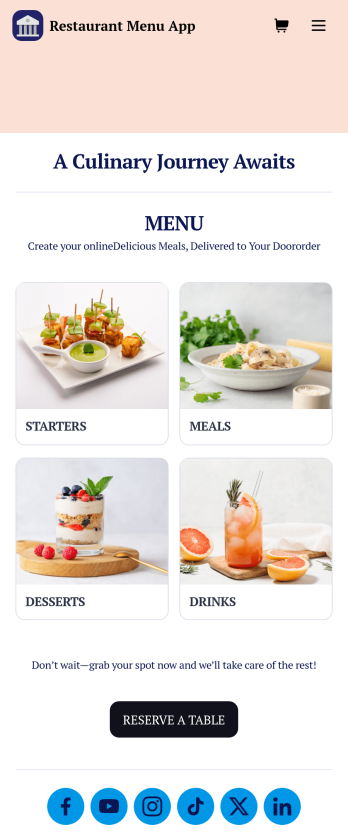
Restaurant Menu App
Need to know how to sell restaurant food online? A restaurant menu app is used by restaurants, cafes, and diners for managing table reservations and taking food and drink orders. This Restaurant Menu App contains three forms which allow customers to reserve tables and order from separate food and drink menus. Customers can place orders before they get to the restaurant, or specify orders for pick-up or delivery. Submissions are instantly synced to your Jotform account, which you and your staff can access from any device.Customize this app template to match your restaurant’s branding using Jotform’s no-code form builder. Just drag and drop to add or change form elements, choose fonts and colors, upload your logo, create a custom app icon, and more. You can also include thumbnail images for menu items and showcase popular dishes on your app’s splash screen. After you’re done, simply share a link on your website or social media, and customers can access and download your app on any smartphone, tablet, desktop. Manage reservations and sell restaurant food online from one convenient app with this Restaurant Menu App.
Go to Category:Food & Beverage Apps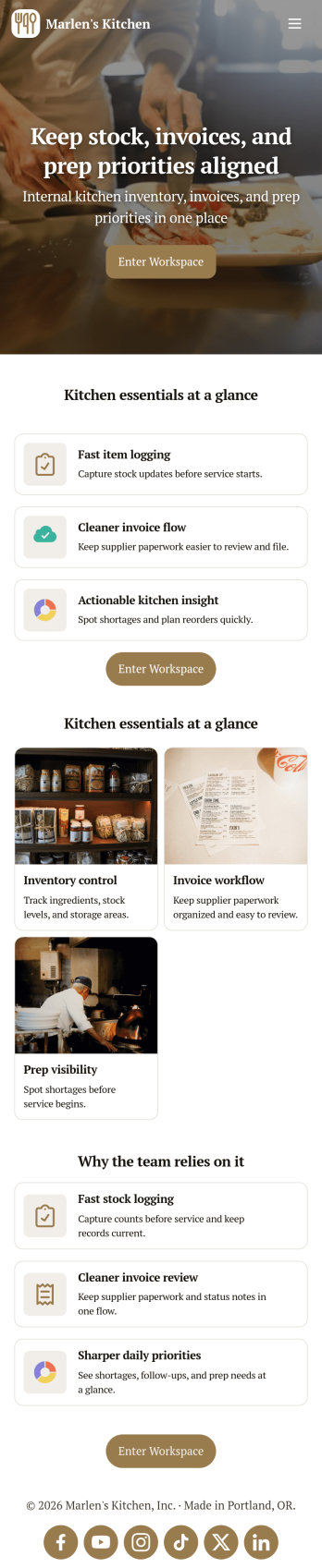
Restaurant Food Inventory App
Restaurant Food Inventory App is an app template designed to optimize the operational workflow of restaurants. It serves as a one-stop solution for restaurant owners, chefs, and kitchen managers to monitor ingredient inventory levels, track usage and expiry dates, manage supplier orders, and optimize food costs through real-time stock visibility. With this app, keeping an eye on food stocks and minimizing waste becomes a hassle-free process. By offering a comprehensive overview of all culinary inventory in one place, it replaces ad-hoc record-keeping practices, leading to more consistent and complete data collection. This app is best suited for those in the food industry who prioritize efficiency, accuracy, and waste reduction in their inventory management.With Jotform's no-code app builder, customizing the Restaurant Food Inventory App to fit your unique requirements is a breeze. The intuitive drag-and-drop interface allows for effortless modifications such as form swapping, font selection, color adjustment, and logo uploading. The result is a tailor-made app that aligns with your restaurant’s branding, without requiring any coding skills. Your app can then be accessed and downloaded onto any smartphone, tablet, or desktop via a shareable link, offering convenient cross-platform compatibility. Furthermore, Jotform Apps provide several publishing options, allowing you to control the accessibility of your app. With Restaurant Food Inventory App from Jotform, streamline your food inventory management and focus on what truly matters: delivering exceptional culinary experiences.
Go to Category:Company Portal Apps
QR Code Menu App
Want to learn how to sell menu items online? A QR menu app is used by restaurants, cafes, and diners who wish to replace a traditional menu with a QR code menu. With this app template, customers can scan a QR code with their smartphones to access your online menu. Once scanned, diners will be presented with your app’s splash screen, where they can navigate between drink and food menus and place no-contact orders for dine-in, pick-up, or delivery. Orders received through your app are automatically synced to your online account, which can be accessed by servers and kitchen staff from any device.Customize this app template to fit your needs using Jotform’s intuitive form builder. No coding required — simply drag and drop to add or change form elements, upload your logo, choose fonts and colors, attach thumbnail images to menu items, and more. You can even create a custom splash screen to run promotions or showcase popular dishes. Once you’re finished, connect your app to a unique QR code, and customers can then scan and access your menu from any smartphone or tablet. Build a custom no-contact online menu in minutes and sell item items online with this free QR Menu App from Jotform.
Go to Category:Food & Beverage Apps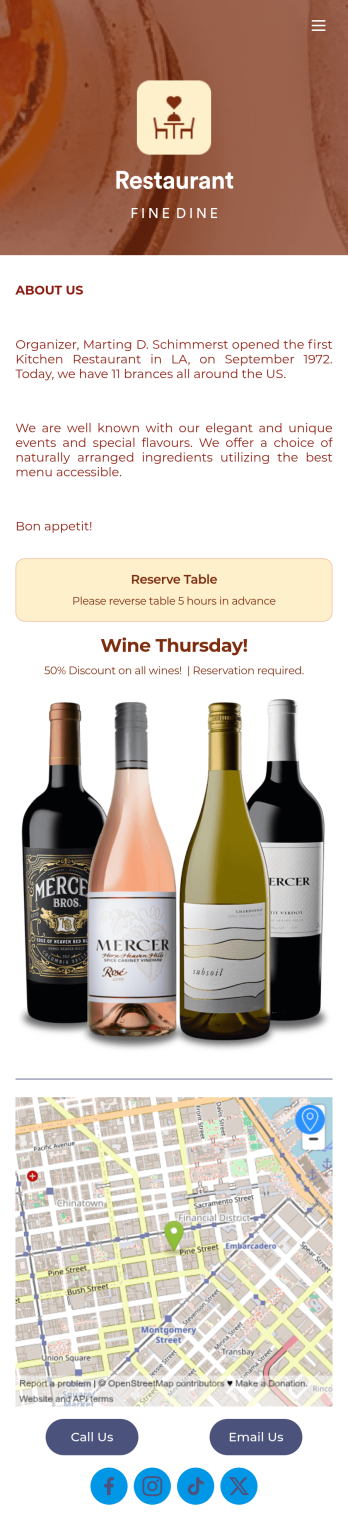
Restaurant Reservation Mobile App
Ditch the pen and paper and keep all your table reservations in one convenient location with our Restaurant Reservation Mobile App. This readymade app template allows guests to easily reserve a table online using their name, email, and phone number. Tapping on the embedded calendar displays all available reservation slots for a particular day. Your reservations are then compiled and stored securely in your account, and viewable in an easy-to-read database from any device.Want to customize this Restaurant Reservation Mobile App to match your restaurant’s branding? Our drag-and-drop interface makes it easy to add or change forms, choose fonts and colors, upload your logo, update the app name or text, and more — all with zero coding. You can even display signature dishes and inform customers of discounts or happy hours on your splash page. Just share a link to your app on your website or social media, and customers can access and download it on any smartphone, tablet, or computer. Start taking online table reservations today with this Restaurant Reservation Mobile App!
Go to Category:Booking Apps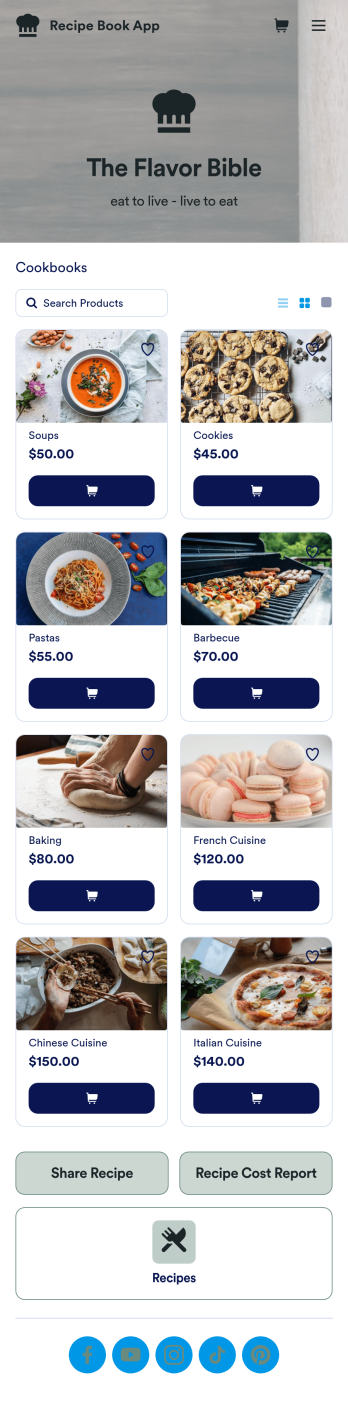
Custom Recipe Book App
As a chef, you’ve probably got a million recipes floating around in your head — so why not keep them all in one convenient place with this Recipe Book App? This free app includes a form where you can record dish type, prep time, ingredients, number of servings, and more — all of which can be viewed and sorted in an easy-to-understand spreadsheet from your Jotform account! There is also an upload form where you can attach notes and images to individual recipes.Want to customize the look of this Recipe Book App? With just a few clicks, our drag-and-drop interface allows you to add or change forms, upload images, change fonts and colors, and more — all with no coding. You can even share your app with other people, who can then add their own recipes to your recipe book from any smartphone, tablet, or computer. Never forget a recipe again with this free Recipe Book App.
Go to Category:Online Store Apps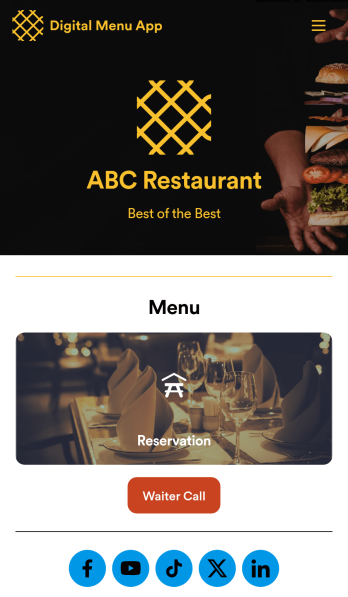
Digital Menu App
A digital menu app is used by restaurant owners to gather food orders or reservations from customers. Need to know how to sell things off your digital menu online? With this free Digital Menu App from Jotform, your restaurant can create a custom app that includes your unique menu items, reservation slots, and even a button that lets customers call your restaurant in a single click. All responses through the app are stored in your Jotform account, ready to view instantly from your own mobile device.Want to change the design of this free app template? Add your logo, update the form designs, include photos of your dishes, update the app’s background and icon, and make other changes with no coding required. Just drag and drop to get the look you want! Then customers can download your custom Digital Menu App onto their smartphone, tablet, or computer to submit orders or reservation requests whenever they like.
Go to Category:Online Store Apps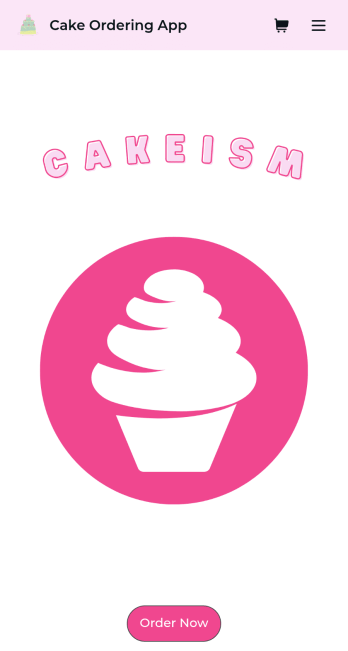
Cake Ordering App
Need an easy way to sell your gourmet cakes online? Try Jotform’s easily customizable Cake Ordering App today. Customers can download your app from any iOS or Android device and purchase or favorite products they’re interested in. All cake ordering data will be stored in your centralized Jotform account for easy reference and access.Decorate your Cake Ordering App to your liking with our easy drag-and-drop feature. Our no-code builder makes app store design intuitive — no previous experience in app design is needed. You can add your cake company’s logo, list all your cake flavors, and integrate with 25 payment integrations to receive payments quickly while paying no extra transaction fees to Jotform. Share your app with your customers directly or embed a link in your website for easy access. Treat yourself and take your Cake Ordering App to the next level with Jotform.
Go to Category:Delivery Apps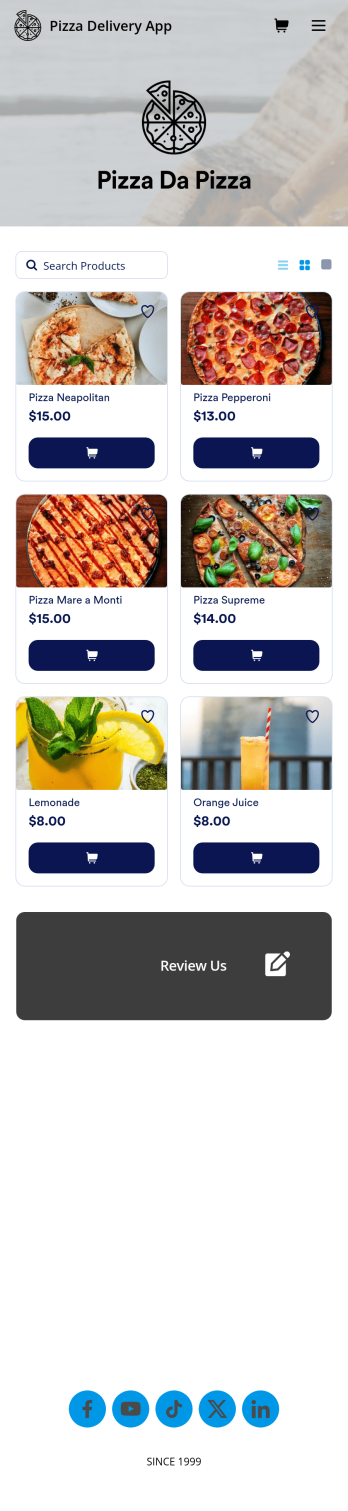
Custom Pizza Delivery App
Need to know how to sell pizza online to take your business to next level? Give your customers an easier way to order pizzas for delivery with this free Pizza Delivery App from Jotform. Start by adding your pizza and topping options to the app using our drag-and-drop builder, then connect the app with your preferred payment gateway to gather payments online — all while paying no extra transaction fees to Jotform! All orders are stored in your Jotform account, ready to be viewed, prepared, and delivered by you and your team.Need to make other changes to this Pizza Delivery App template? Drag and drop to add your company logo, change fonts and colors, and make other design updates with no coding. Not only does the app’s order form integrate with 30+ gateways like PayPal, Stripe, and Square, but it also connects with 100+ apps so you can track orders in other accounts too. Ditch time-consuming phone calls and enjoy a more efficient way to sell pizza online with a Pizza Delivery App.
Go to Category:Delivery Apps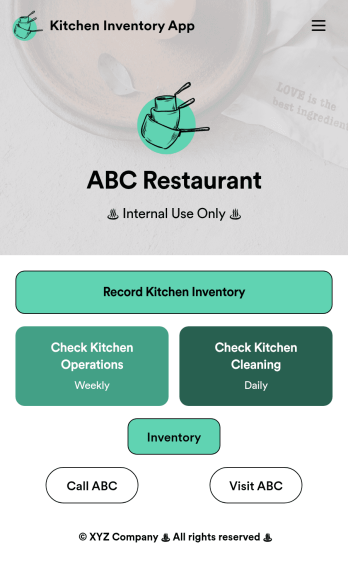
Kitchen Inventory App
Tracking inventory in your kitchen is the key to success for your restaurant. Make inventory a breeze with our free, customizable Kitchen Inventory App! It lets you bundle multiple forms in one app, so you can access our Restaurant Inventory Template and other kitchen forms from anywhere. Supervisors or employees can open the app on any smartphone, tablet, or computer to record stock inventory, report on kitchen operations, and track daily cleaning.This Kitchen Inventory App is ready to use as is, but feel free to make any modifications if necessary. Without any coding, you can add forms, text, images, links, and more. You can even change the name, icon, and splash page for your app for a fully-custom design! Monitor food usage and keep track of your inventory more efficiently with a custom Kitchen Inventory App for your restaurant.
Go to Category:Inventory Apps
Order Ahead App
Wondering how to let customers order ahead online? Giving customers the freedom to order ahead makes everything easier for both parties. With this Order Ahead App, you can collect orders for pick-up or delivery, and take payments with debit or credit cards, or even with PayPal. Customers can open your app from any device, contact your restaurant or leave reviews, and download your app to their smartphone, tablet, or computer.Want to customize your Order Ahead App to match your restaurant’s branding? Our drag-and-drop interface makes it easy to add or change forms, choose fonts and colors, upload your logo or menu thumbnail images, update the app name or text, and more — all with zero coding. After that, simply share the link on your website or social media, and you’re off and running! Make ordering ahead a breeze and sell orders online with your own personal Order Ahead App.
Go to Category:Restaurant Apps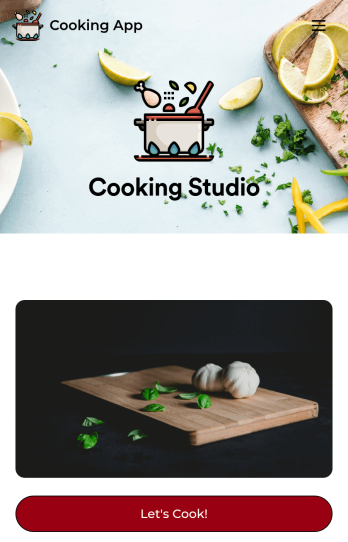
Cooking App
Whether you run a recipe blog or teach online cooking classes, share your recipes with the world using Jotform’s free Cooking App! This readymade app template includes a recipe submission form, recipe log, and feedback form. Users can download your app onto their favorite device and fill out the bundled forms with ease. All entries will be synced to your secure Jotform account. Customize this Cooking App in just a few clicks using Jotform’s drag-and-drop interface. No coding necessary — you can easily add new forms and app pages, upload links and images, display your logo, and include other elements as well. When it’s ready to share, post the app link in your website or social accounts. Users can then open and save your Cooking App on any computer, smartphone, or tablet for easy access to your recipes.
Go to Category:Entertainment Apps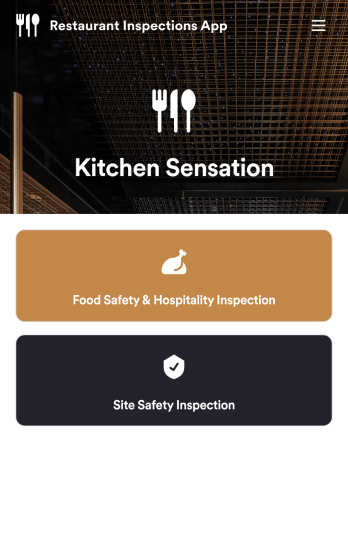
Restaurant Checklist App
A restaurant checklist app is used by restaurant owners and managers to document the condition of a restaurant by filling out inspection forms. This Restaurant Checklist App includes two forms: a food safety and hospitality inspection checklist for recording the cleanliness of the restaurant interior, and a site inspection checklist for recording the safety and cleanliness of the kitchen and service areas. Both checklists allow restaurant inspectors to date and sign inspections using an e-signature field. Reports are instantly synced and stored in your secure Jotform account for ease of access.Customize this app template to match your restaurant’s branding with Jotform’s no-code app builder. Simply drag and drop to add form elements, edit checklist items, personalize your app icon and splash screen, and more. After you’re done, you can share your app by sending a link in an email invite, and employees can then download it onto any smartphone, tablet, or computer. Ensure your restaurant is compliant with health and safety standards by creating your own fully-customizable Restaurant Checklist App.
Go to Category:Checklist Apps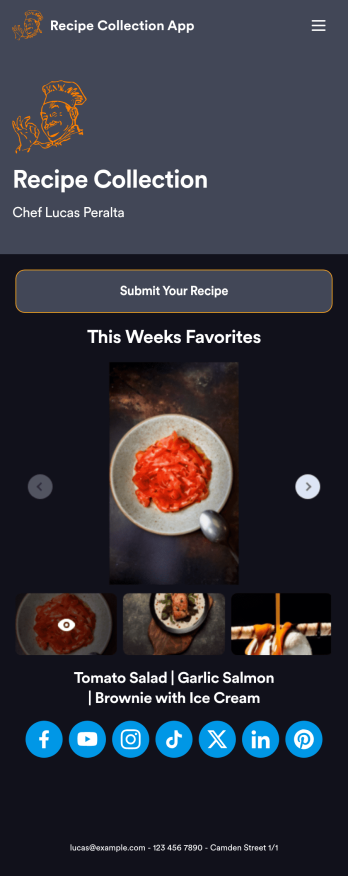
Recipe Collection App
Whether you’re the head chef at a restaurant or learning how to cook at home, keep all your recipes in one place with Jotform’s free Recipe Collection App. This ready-to-use mobile app can be used to add and access recipes from any smartphone, tablet, or desktop computer. Just fill out the form in your app to add recipes for entrees, desserts, and more — you’ll be able to access them from your Jotform account, and you can even add a table of all your recipes in your app.Customize this Recipe Collection App for your kitchen in just a few clicks with our no-code app builder. You can easily add or remove forms, embed links, change the background image, upload your logo, and personalize your app name, icon, and splash screen. When you’re happy with the look and feel of your app, download it onto your favorite device or share it with other chefs to start collecting recipes. With an easy-to-access Recipe Collection App that works on any mobile device, you’ll never lose or forget another recipe again — it’s a recipe for success!
Go to Category:Restaurant Apps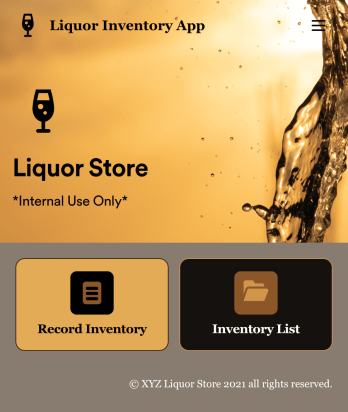
Liquor Inventory App
Whether you own a bar, restaurant, grocery store, or liquor store, keeping an accurate count of your inventory is essential. With this free Liquor Inventory App, you and your employees can easily record and track liquor supplies by type, quantity, price, and proof. Your inventory is then stored in an easy-to-read Liquor Inventory Spreadsheet in your Jotform account.Want to customize your Liquor Inventory App? No problem! Our drag-and-drop interface makes it simple to add or change forms, choose fonts and colors, upload your company’s logo, update the app name or text, and more — no coding necessary. Afterwards, simply download the app onto your device or share the link with your employees and you’re ready to go. Keep every bottle accounted for with this free and fully customizable Liquor Inventory App!
Go to Category:Inventory Apps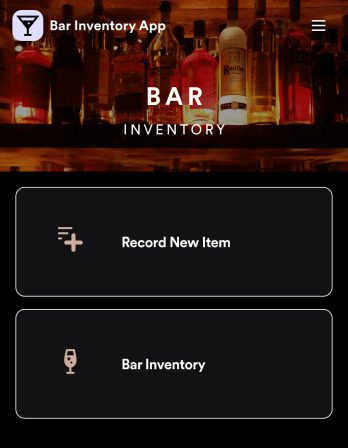
Bar Inventory App
A bar inventory app is used by bar staff to keep track of a bar’s equipment, ingredients, and other beverage information. Stop tracking inventory with pen and paper and enjoy an easier way to do it with a free Bar Inventory App from Jotform. Employees can download the app onto their iOS or Android device and fill it out as they go. All stock take submissions are stored securely in an inventory spreadsheet and viewable directly from the app.Customize this app template using our drag-and-drop app builder. With no coding required you can add your company logo, update forms or spreadsheets, change the background image, and make other design changes in seconds. Help your bar staff save time with a more efficient inventory process using this free Bar Inventory App that downloads onto any computer or mobile device.
Go to Category:Inventory Apps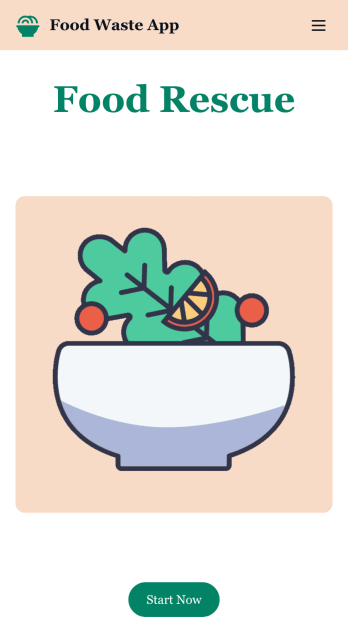
Customizable Food Waste App
Run a nonprofit organization that deals with food waste? Take action to prevent food waste and donate food to charitable organizations with this free Food Waste App from Jotform. Send food requests and schedule pickup times and locations with restaurants, airports, and catering companies by filling out online forms. Responses are stored in your secure Jotform account to be viewed and shared within your organization.Make this Food Waste App your own without any coding knowledge. Drag and drop to add or change form fields and checklist items, create new pages, choose fonts and colors, upload your organization’s unique branding, install helpful widgets and integrations, and much more. After you’re finished, share your app by sending email invites or the app link to businesses. Prevent food waste and help those in need with a fully-customizable Food Waste App that works on any device.
Go to Category:Booking Apps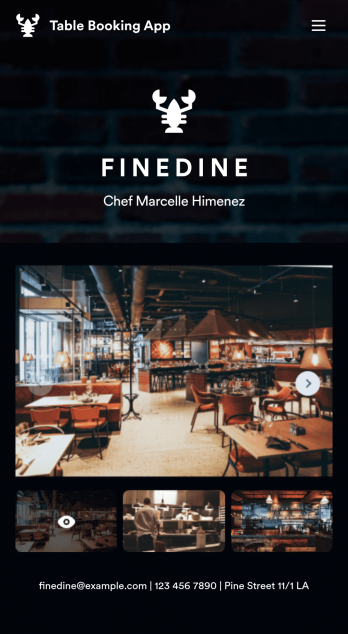
Table Booking App
A table booking app is a great way to build a micro-website for your restaurant. This free and mobile-ready app template allows diners to make table reservations days ahead of time, view photos of the dining area and menu items, and contact your restaurant via email or phone. You can also create additional pages and add them to your app’s topbar with the click of a button. Reservations are instantly stored and synced to your secure Jotform account, and can be accessed by restaurant staff from any device.Making changes to this Table Booking App template is a cinch with Jotform’s intuitive no-code app builder. Simply drag and drop to customize your table reservation page, upload images of your restaurant and entrées to the main page image carousel, add social media widgets, choose fonts and colors, and add your own branding with just a few clicks. Embed a link to your app in your website or share it on social media — diners can then make table reservations from their favorite device. Create a fully customizable mobile-ready app for your restaurant in minutes with this Table Booking App from Jotform.
Go to Category:Booking Apps
Candy Shop App
Want to know how to sell candy online? No matter what types of scrumptious sweets your candy store specializes in, Jotform’s free Candy Shop App can help you run your business more efficiently. This customizable app template includes a candy order form, customer feedback survey, guessing game, and contact buttons all in one easy-to-use mobile app. Customers can download your app onto their smartphone, tablet, or computer, making it easier for them to order their favorite candies wherever they are! Customize your Candy Shop App in just a few clicks with Jotform’s drag-and-drop builder. No coding necessary — simply drag and drop to add forms, links, text, images, documents, tables, and much more. Share your app by sending email invites to customers or posting the app link in your candy store’s website or social media accounts. With a fully-custom Candy Shop App for your store, you’ll simplify online ordering, sell candy online to boost sales and engagement, and make life more sweet for your customers.
Go to Category:Food & Beverage Apps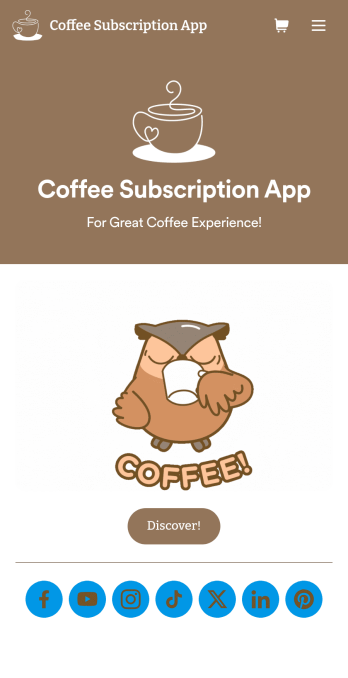
Coffee Subscription App
Get your customers their liquid energy seamlessly with your own Coffee Subscription App. Build your own app from scratch or use one of our ready-made templates to streamline your app creation process. Drag and drop form elements you’d like in your app and then personalize to match your cafe’s theme. List the type of beans you offer, your weekly delivery schedule, how to subscribe, and integrate with 25+ payment gateways to collect annual subscriber fees. You can even set up an automated email response to confirm subscriptions and annual payments.Give your business the caffeine kick it needs and personalize your Coffee Subscription App by uploading your logo, changing colors and fonts, creating a custom URL, and more. When you’re done designing your app, share your app’s link via direct message, scannable QR code, or by embedding it directly into your cafe’s website. You can also link your app on your social media pages to increase membership and general interest. Create your own Coffee Subscription App today with Jotform!
Go to Category:Delivery Apps
Restaurant Mobile App
You’ve got your hands full trying to run a busy restaurant — so the last thing you want to learn is how to sell food online. Make it easier on yourself with Jotform's free Restaurant Mobile App. With this ready-to-use template, customers can reserve a table, place orders for pick-up or delivery, pay ahead with credit card or through PayPal, and leave reviews for your restaurant. You can upload images to use for the online menu, and even showcase signature dishes on your splash page! Just share a link to your app on your website or social media, and customers can access and download it on any smartphone, tablet, or computer.Want to customize your Restaurant Mobile App to match your restaurant’s branding? Our drag-and-drop interface makes it easy to add or change forms, choose fonts and colors, upload your logo, update the app name or text, and more — all with zero coding. Take your restaurant digital to sell food online and make reservations and orders a breeze with this Restaurant Mobile App.
Food Delivery App
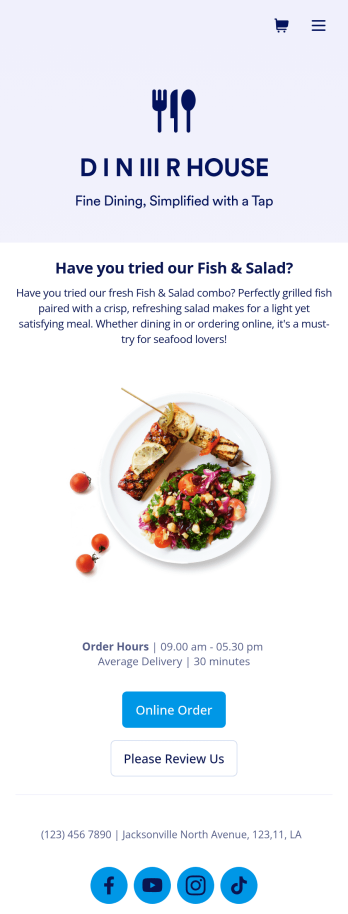
A food delivery app is used by food delivery services to communicate with customers, and drivers, while also providing an enhanced customer experience. This template is ideal for restaurants, food trucks, or anyone who may deliver the food ordered by their customers. Wondering how to sell food deliveries online? Whether you've got a restaurant, diner, or small cafe, our Food Delivery App is the perfect way to take online delivery orders and payments. This app template comes readymade with a product list where customers can view your menu and input their delivery address and payment information. You can even showcase signature and seasonal dishes, run promotional campaigns, and gather feedback. Customers can open and download your app on any smartphone, tablet, or computer.Want to make this Food Delivery App your own? Our drag-and-drop interface allows you to add forms, change fonts and colors, upload your logo and thumbnail images for menu items, and completely customize the look of your app icon — with no coding necessary. After that, simply share the link on your website or social media and you’re off and running. Start taking online delivery orders today to sell food deliveries online with this free Food Delivery App!Please refer to our article for further tips on creating a food ordering and delivery app.
Restaurant Menu App
Need to know how to sell restaurant food online? A restaurant menu app is used by restaurants, cafes, and diners for managing table reservations and taking food and drink orders. This Restaurant Menu App contains three forms which allow customers to reserve tables and order from separate food and drink menus. Customers can place orders before they get to the restaurant, or specify orders for pick-up or delivery. Submissions are instantly synced to your Jotform account, which you and your staff can access from any device.Customize this app template to match your restaurant’s branding using Jotform’s no-code form builder. Just drag and drop to add or change form elements, choose fonts and colors, upload your logo, create a custom app icon, and more. You can also include thumbnail images for menu items and showcase popular dishes on your app’s splash screen. After you’re done, simply share a link on your website or social media, and customers can access and download your app on any smartphone, tablet, desktop. Manage reservations and sell restaurant food online from one convenient app with this Restaurant Menu App.
Kitchen Inventory App
Tracking inventory in your kitchen is the key to success for your restaurant. Make inventory a breeze with our free, customizable Kitchen Inventory App! It lets you bundle multiple forms in one app, so you can access our Restaurant Inventory Template and other kitchen forms from anywhere. Supervisors or employees can open the app on any smartphone, tablet, or computer to record stock inventory, report on kitchen operations, and track daily cleaning.This Kitchen Inventory App is ready to use as is, but feel free to make any modifications if necessary. Without any coding, you can add forms, text, images, links, and more. You can even change the name, icon, and splash page for your app for a fully-custom design! Monitor food usage and keep track of your inventory more efficiently with a custom Kitchen Inventory App for your restaurant.
Restaurant Food Inventory App
Restaurant Food Inventory App is an app template designed to optimize the operational workflow of restaurants. It serves as a one-stop solution for restaurant owners, chefs, and kitchen managers to monitor ingredient inventory levels, track usage and expiry dates, manage supplier orders, and optimize food costs through real-time stock visibility. With this app, keeping an eye on food stocks and minimizing waste becomes a hassle-free process. By offering a comprehensive overview of all culinary inventory in one place, it replaces ad-hoc record-keeping practices, leading to more consistent and complete data collection. This app is best suited for those in the food industry who prioritize efficiency, accuracy, and waste reduction in their inventory management.With Jotform's no-code app builder, customizing the Restaurant Food Inventory App to fit your unique requirements is a breeze. The intuitive drag-and-drop interface allows for effortless modifications such as form swapping, font selection, color adjustment, and logo uploading. The result is a tailor-made app that aligns with your restaurant’s branding, without requiring any coding skills. Your app can then be accessed and downloaded onto any smartphone, tablet, or desktop via a shareable link, offering convenient cross-platform compatibility. Furthermore, Jotform Apps provide several publishing options, allowing you to control the accessibility of your app. With Restaurant Food Inventory App from Jotform, streamline your food inventory management and focus on what truly matters: delivering exceptional culinary experiences.
Kitchen Inventory App
Tracking inventory in your kitchen is the key to success for your restaurant. Make inventory a breeze with our free, customizable Kitchen Inventory App! It lets you bundle multiple forms in one app, so you can access our Restaurant Inventory Template and other kitchen forms from anywhere. Supervisors or employees can open the app on any smartphone, tablet, or computer to record stock inventory, report on kitchen operations, and track daily cleaning.This Kitchen Inventory App is ready to use as is, but feel free to make any modifications if necessary. Without any coding, you can add forms, text, images, links, and more. You can even change the name, icon, and splash page for your app for a fully-custom design! Monitor food usage and keep track of your inventory more efficiently with a custom Kitchen Inventory App for your restaurant.
Liquor Inventory App
Whether you own a bar, restaurant, grocery store, or liquor store, keeping an accurate count of your inventory is essential. With this free Liquor Inventory App, you and your employees can easily record and track liquor supplies by type, quantity, price, and proof. Your inventory is then stored in an easy-to-read Liquor Inventory Spreadsheet in your Jotform account.Want to customize your Liquor Inventory App? No problem! Our drag-and-drop interface makes it simple to add or change forms, choose fonts and colors, upload your company’s logo, update the app name or text, and more — no coding necessary. Afterwards, simply download the app onto your device or share the link with your employees and you’re ready to go. Keep every bottle accounted for with this free and fully customizable Liquor Inventory App!
Bar Inventory App
A bar inventory app is used by bar staff to keep track of a bar’s equipment, ingredients, and other beverage information. Stop tracking inventory with pen and paper and enjoy an easier way to do it with a free Bar Inventory App from Jotform. Employees can download the app onto their iOS or Android device and fill it out as they go. All stock take submissions are stored securely in an inventory spreadsheet and viewable directly from the app.Customize this app template using our drag-and-drop app builder. With no coding required you can add your company logo, update forms or spreadsheets, change the background image, and make other design changes in seconds. Help your bar staff save time with a more efficient inventory process using this free Bar Inventory App that downloads onto any computer or mobile device.
About Restaurant App Templates
Restaurant Apps are crucial for streamlining the diverse operations associated with the food and beverage industry. These apps can facilitate tasks such as managing reservations, processing orders, and coordinating staff schedules, thus enhancing overall efficiency. Industries such as hospitality, catering, and food delivery services find these apps indispensable for optimizing their workflows, ensuring that each aspect of the business runs smoothly.
Jotform Apps, specifically designed as a no-code app builder, leverage Progressive Web App (PWA) technology, allowing you to install apps directly via a browser without the need for an App Store. This technology ensures that the apps are functional across all devices, including iOS, Android, tablets, and desktops. With Jotform Tables, data is centralized, making it easy to monitor and analyze business activities. This setup supports seamless integration into existing workflows, enabling restaurant managers to make data-driven decisions efficiently.
Why Use Restaurant Apps?
- Restaurant apps help streamline operations by automating mundane tasks such as order processing and inventory management. This automation allows staff to focus on delivering excellent customer service, which can lead to increased customer satisfaction and loyalty. Moreover, the time saved from automation can be redirected to strategic initiatives that drive business growth.
- These apps enhance customer engagement by providing features like loyalty programs and personalized promotions. By using push notifications, restaurants can keep customers informed about new menu items or special events. This ongoing engagement fosters a stronger relationship with customers, encouraging repeat business and positive word-of-mouth.
- With integrated payment solutions such as Stripe and PayPal, restaurant apps simplify the payment process for both customers and businesses. This integration ensures that transactions are swift and secure, reducing wait times and improving the overall dining experience. Additionally, it offers restaurants a convenient way to manage finances with minimal manual intervention.
- Restaurant apps contribute to better data management through centralized data collection and reporting. This capability allows managers to access real-time analytics on sales, customer preferences, and operational efficiency. Such insights are invaluable for making informed decisions that can optimize menu offerings and improve service quality.
- By offering a digital platform for reservations and order management, restaurant apps reduce the likelihood of errors and overbooking. This precision ensures that customers have a seamless dining experience from start to finish, which is crucial for maintaining high service standards. Furthermore, it allows restaurants to optimize seating arrangements and reduce wait times.
Common Problems Solved by Restaurant Apps
- Managing reservations manually can lead to overbooking and customer dissatisfaction. Restaurant apps solve this by providing a digital reservation system that automatically updates availability, ensuring accurate bookings. This system reduces the risk of human error and enhances the customer experience, as patrons can easily secure their desired dining times.
- Inefficiencies in order processing can result in delayed service and dissatisfied customers. Apps streamline this process by providing real-time order tracking and communication between the kitchen and service staff. As a result, orders are processed more quickly and accurately, which boosts customer satisfaction and operational efficiency.
- Payment errors and delays can be a significant concern for both customers and restaurant owners. With integrated payment systems in restaurant apps, customers can enjoy a seamless payment experience, while restaurant owners have access to immediate and secure transaction records. This reduces the potential for disputes and improves cash flow management.
- Communication gaps between staff members can lead to operational inefficiencies and service errors. Restaurant apps offer centralized communication platforms that keep everyone on the same page, whether it's updating the day's specials or coordinating staff shifts. This clarity ensures that service is smooth and consistent, which is vital for maintaining a restaurant's reputation.
Matching Use Cases to Features
- For restaurants looking to improve customer engagement, push notifications are a valuable feature. By sending updates about new menu items or special promotions directly to customers' devices, restaurants can maintain a strong connection with their clientele. This feature helps drive repeat business and keeps the brand top-of-mind.
- Businesses that want to offer a seamless payment experience can benefit from Jotform Apps' payment integrations with services like Stripe and PayPal. This feature allows customers to make secure payments directly through the app, enhancing convenience and trust. Consequently, it minimizes friction in the payment process and encourages faster checkouts.
- Restaurants aiming to streamline their order management can leverage the Drag-and-Drop Interface. This feature enables easy customization of the app layout to suit specific operational needs, such as organizing menu items for quick access. By optimizing the order flow, restaurants can reduce wait times and improve service delivery.
- For restaurants that prioritize privacy and internal communication, the Publish Options feature is essential. By choosing between public, private, or company-only access, businesses can control who sees sensitive information. This feature ensures that critical communication remains confidential and is accessible only to relevant parties.
- Sharing Methods like Direct Link, Email, and QR Code are perfect for restaurants that want to expand their reach. By providing multiple sharing options, restaurants can easily distribute their app to customers through various channels, enhancing visibility and accessibility. This versatility ensures that the app is used widely, increasing its impact.
How to Create a Restaurant App
- Choose a category-relevant template from the Template List or start from scratch.
- Customize using the Drag-and-Drop Interface.
- Share via Link, QR Code, or Embed.
Top Use Cases for Restaurant Apps
- For Managers: Restaurant apps provide managers with a comprehensive overview of daily operations, allowing them to track reservations, manage staff schedules, and monitor sales data in real-time. This oversight enables proactive decision-making and optimizes resource allocation for peak times. Managers can analyze trends and adjust strategies to enhance efficiency and profitability.
- For Teams: For restaurant teams, these apps serve as a centralized communication hub, ensuring that all staff members are aligned on daily tasks and objectives. By streamlining order processing and providing instant updates on menu changes, apps help reduce errors and improve service delivery. This coordination enhances teamwork and ensures that customer expectations are consistently met.
- For Customers: From a customer's perspective, restaurant apps offer convenience and personalization. Customers can make reservations, place orders, and pay directly through the app, reducing wait times and enhancing their dining experience. Additionally, personalized promotions and loyalty programs incentivize repeat visits, fostering a stronger relationship with the restaurant.
Summarizing Restaurant Apps
Restaurant apps are indispensable for modernizing and streamlining operations within the food and beverage industry. By facilitating everything from order management to payment processing, these apps enhance efficiency and customer satisfaction. Jotform Apps, with its no-code builder and PWA technology, offers a versatile solution that integrates seamlessly into existing workflows, providing valuable insights through centralized data. By adopting these apps, restaurants can focus on delivering exceptional experiences that drive business growth.
Frequently Asked Questions
1) Is it free to create and use Restaurant apps on Jotform?
Yes, Jotform offers a free Starter plan that allows you to create and use restaurant apps at no cost. This plan provides access to basic features and is ideal for small businesses just starting out. For more advanced features and higher submission limits, businesses can opt for the paid plans, which offer additional capabilities and flexibility.
2) Are the data and payments collected through the app secure?
Absolutely, data and payments processed through Jotform Apps are secure. Jotform employs advanced security measures, including GDPR compliance, to protect user data. Additionally, payment integrations with leading providers like Stripe and PayPal ensure that all transactions are encrypted and safe from unauthorized access.
3) Do I need any coding skills to create a Restaurant app with Jotform?
No coding skills are required to create a restaurant app with Jotform. The platform is designed with a user-friendly, no-code interface, allowing anyone to build and customize apps using its Drag-and-Drop Interface. This accessibility makes it easy for restaurant owners and managers to develop apps tailored to their specific operational needs.
4) Can I collect payments for services directly through the app?
Yes, you can collect payments directly through the app using Jotform's payment integrations. The platform supports various payment gateways, including Stripe and PayPal, enabling secure and efficient transactions. This feature simplifies the payment process, making it convenient for both customers and restaurant owners.
5) Does Jotform support offline data collection for Restaurant apps?
Jotform does support offline data collection through its Mobile Forms feature. This capability is particularly useful for restaurants operating in areas with unreliable internet connectivity. Offline mode ensures that data is captured and stored locally, and then synchronized once the device reconnects to the internet.
6) Are Jotform Apps compatible with both iOS and Android devices?
Yes, Jotform Apps are compatible with both iOS and Android devices due to their PWA technology. This ensures that the apps function seamlessly across different platforms, providing a consistent user experience. Users can access the apps directly through their browsers without needing to download them from an App Store.
7) How can Restaurant apps improve customer engagement?
Restaurant apps improve customer engagement by providing features such as personalized promotions, loyalty programs, and push notifications. These features keep customers informed and engaged with the brand, encouraging repeat visits and fostering loyalty. By offering a tailored experience, restaurants can strengthen their relationship with customers and enhance satisfaction.
8) What customization options are available for Restaurant apps?
Jotform Apps offer extensive customization options, allowing restaurants to tailor their apps to specific needs. Users can modify app layouts using the Drag-and-Drop Interface, integrate payment systems, and choose from various sharing methods. These customization capabilities enable restaurants to create apps that align with their brand and operational goals.