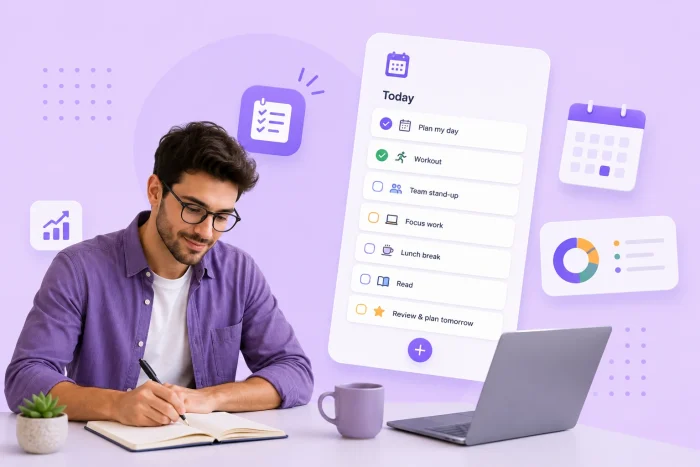
Top daily planning apps is 2026
If you’re constantly losing track of your daily tasks and feeling too mentally cluttered to get things done, a daily planning app can help. Daily planning apps combine tasks, calendars, and reminders into a single interface so that you can visualize your to-dos, set priorities, and manage your day-to-day schedule without increasing your mental load.
These daily planners come in several categories, each designed to solve a different productivity problem:
- Simple task managers for quickly capturing and checking off tasks
- Calendar-first apps for allocating time to meetings and fixed commitments
- Habit tracking apps for long- and short-term goal planning
- AI auto-scheduling tools for automatically organizing tasks around deadlines and availability
Depending on your needs, one app might provide all the features required to plan, stay focused, and get things done. Or you might benefit from a combination of apps to manage your daily tasks effectively, set a schedule, and manage routines.


As a content marketing professional and lawyer, I’ve been using daily planning apps to manage my work and personal commitments for years. For this article, I looked beyond my regular tools and spent days tinkering with nearly 30 of the most popular daily and routine planner apps out there. Below is my take on the 10 best daily planning apps in 2026, including their key features and limitations, so you can choose the right one — or ones — to make your days feel more structured and productive.
10 best daily planning apps in 2026
| Tool | Best for | Planning style | Main limitation |
|---|---|---|---|
 Jotform Apps |
Custom planning apps that you build and share |
Forms and checklists |
You design the app structure yourself |
 Todoist |
Prioritized to-dos and recurring tasks |
To-do lists |
Time blocking requires a paid plan |
 Google Calendar |
Time blocking and schedule visibility |
Time blocking |
Task management is light |
 Notion |
Planning alongside notes and projects |
Custom dashboard |
Setup time and a learning curve |
 Trello |
Visual daily planning with boards |
Kanban boards |
No built-in priority levels |
 Microsoft To Do |
Simple task lists in the Microsoft ecosystem |
To-do lists |
No timeline or calendar view |
 Apple Reminders |
iPhone-first capture and lists |
To-do lists |
For Apple devices only |
 TickTick |
All-in-one tasks, calendar, and habits |
Lists, calendar, and habits |
Calendar view requires Premium plan |
 Motion |
AI auto-scheduling |
AI time blocking |
Little manual control and no free plan |
 Any.do |
Everyday planning with shared lists |
Lists and calendar |
Key features require a paid plan |
1. Jotform Apps
If you can’t find a daily planning app that suits the way you work, Jotform Apps allows you to build your own for check-ins, daily priorities, routines, requests, and logs without knowing a line of code.
For instance, if you need a simple Plan My Day app for yourself or a small team, you can create one in 15 minutes by assembling a set of forms, pages, and app elements into one app-like experience. Start with a daily planning checklist form that includes your top three priorities for the day, schedule blocks, and distractions. Every morning, you can enter the details of the tasks you need to execute, add notes and duration, and check items off as you go through the day. Another form can include fields for end-of-day review such as wins, blockers, and uncompleted tasks. Everything anyone submits lands in Jotform Tables, so you have a running record of what you could and couldn’t accomplish, which you can review at the end of the week. You can also add a resource page with meeting links, focus playlists, and SOPs you need to reference throughout the day so you’re not context-switching every time. Once built, sharing your daily planner is easy using a link or QR code; anyone you’re collaborating with — whether it’s family, friends, or colleagues — can open the app on their phone, add their inputs, and stay organized.
Jotform Apps lets you customize daily planner apps for all kinds of routines, including habit tracking, household chores, shift handoffs, and project check-ins. All apps start from forms that you can customize with different fields and content to track just about any kind of activity. The app runs in a browser on phones, tablets, and desktops, and you can set access to public, private, or company-only, depending on whether it’s a personal daily planning app or a shared team tool. If you’re not sure how to begin structuring your app, Jotform Apps has ready-made daily planner app templates for different use cases that you can duplicate and customize.
- Best for: Building a custom daily planning workflow that you can share as an app-like experience
- Developer: Jotform
- Limitations: Jotform Apps doesn’t give you a planner database where you can flip between calendar, board, and today views; instead, it hands you a canvas and you decide the structure of your app so it does exactly what you design it to do and nothing more; it’s also not a calendar replacement, and it won’t pull in your meetings from Google or Outlook, meaning you’ll need to keep a calendar alongside it
- Plans/pricing:
- Starter: Free
- Bronze: $39 per month (billed monthly)
- Silver: $49 per month (billed monthly)
- Gold: $129 per month (billed monthly)
- Enterprise: Custom pricing
Pro Tip
New to app building? Our guide on how to create an app without coding walks you through the process.
2. Todoist
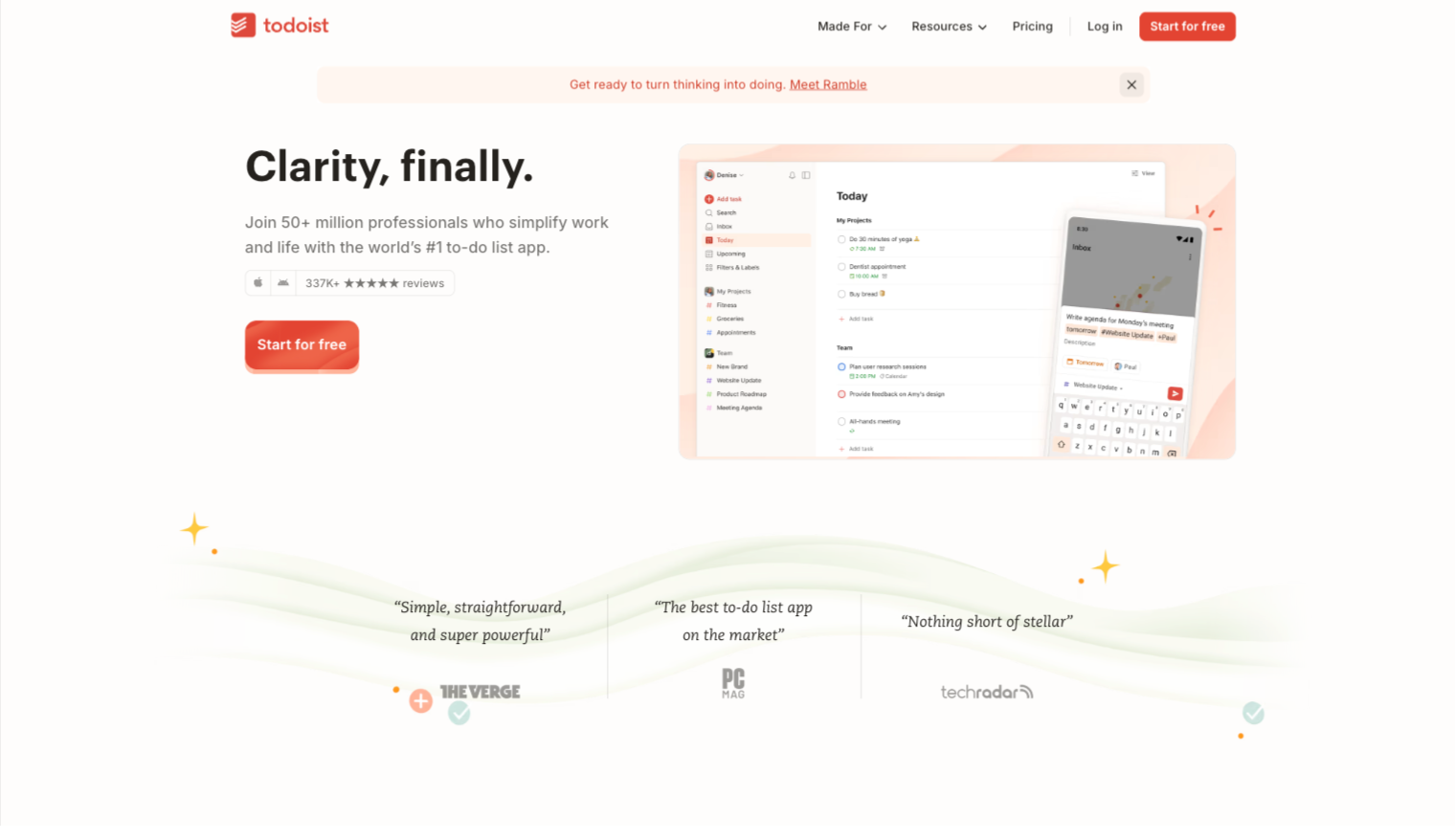
Todoist is built around getting tasks out of your head fast. Its Ramble voice feature lets you capture tasks the moment you think of them. For instance, if you hit the Ramble shortcut on your phone or desktop keyboard and talk as you would to a human, Ramble will structure your thoughts into task lists with due dates and priorities. The voice capture also handles complex recurrence patterns, such as every third Wednesday or every weekday, which makes it as good for tracking habits and recurring commitments as it is for tracking one-off tasks.
For daily planning, the Today view collects everything due today in one place while the Upcoming view gives you a drag-and-drop overview of the week or month ahead. You can set four priority levels on tasks and use labels to group related items across projects — tag tasks with “@errands” or “@waiting,” for example, and pull them up regardless of which project they belong to. You can use filters to create custom saved views, like “all priority-one tasks due this week” in your work project. Plus, AI-powered Filter Assist can even write custom filter queries for you from a plain-language description.
Todoist syncs across web, desktop, mobile, and wearables. It also connects with more than 90 integrations, so tasks captured on your phone show up on your laptop as you work through your day.
- Best for: Prioritized daily to-dos with quick capture and recurring tasks
- Developer: Doist
- Limitations: Todoist is a to-do list first and a scheduler second; its calendar layout is a recent addition and only available on paid plans, so if you plan by assigning every task to a time slot, you’ll likely end up pairing Todoist with a dedicated calendar app on the free account; Ramble is also limited on the free plan
- Plans/pricing:
- Free
- Pro: $7 per user per month (billed monthly)
- Business: $10 per user per month (billed monthly)
3. Google Calendar
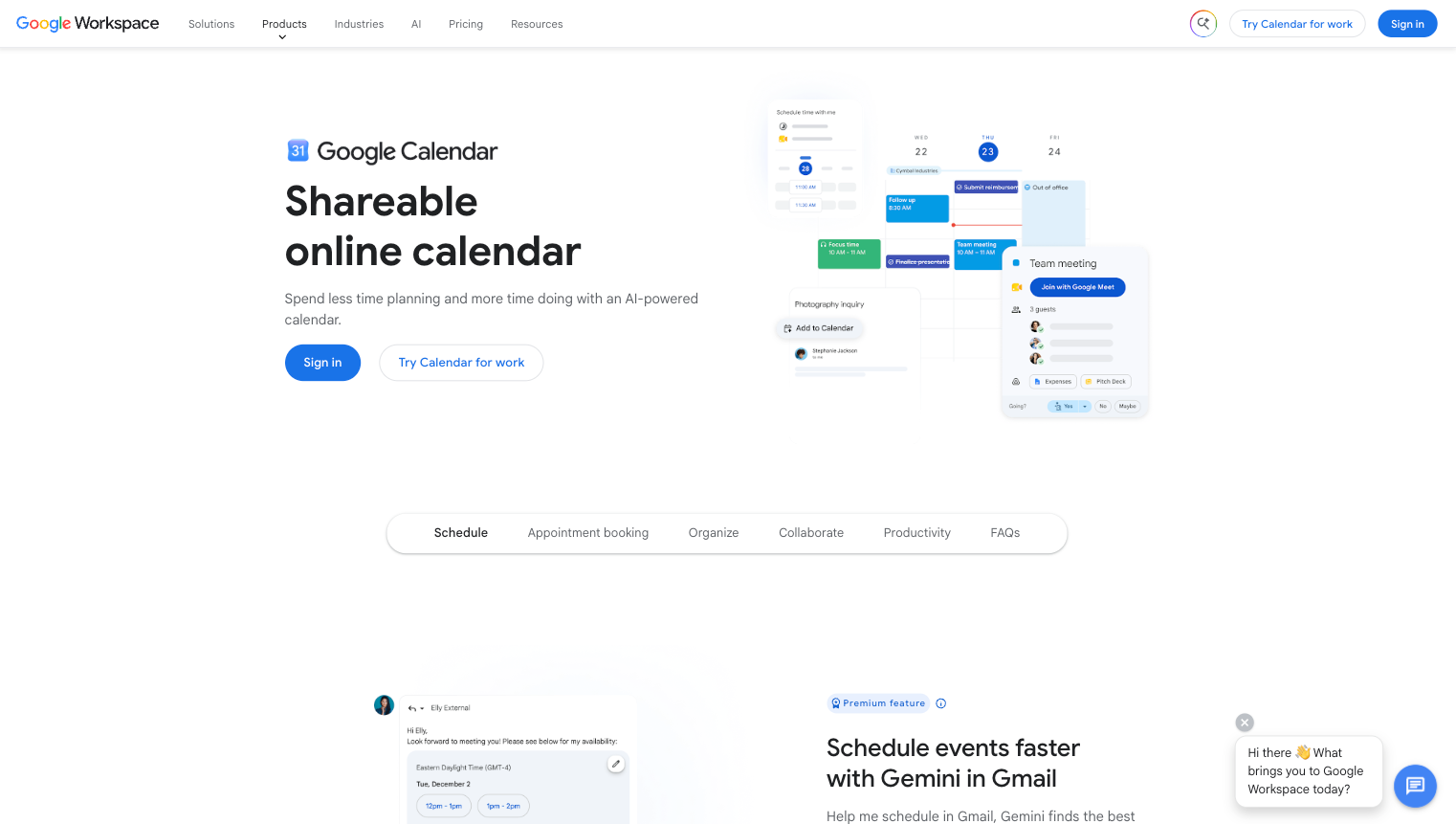
Google Calendar’s biggest strength for daily planning is that your day likely already lives there. Because meetings and appointments land on it by default, turning it into a full daily planner mostly means adding task blocks and plotting time on your calendar.
This is made even easier by Google Tasks working in conjunction with Google Calendar. You can open your to-do list in a side panel right next to your calendar, then drag any task onto an open slot to block time for it. Assign a duration to tasks, and it takes up space on your schedule, so you see exactly when you’ll get it done instead of staring at a long list of everything you haven’t done.
Google Calendar lets you create multiple calendars to keep different areas of your life separate but visible at once. You can run individual calendars for work, personal commitments, and family logistics — each with its own color — and toggle any of them off when you need to focus. For fixed commitments, you can set default notifications per calendar or add custom timings per event with popup and email options at whatever lead time you choose.
Sharing your calendar with others works with permission tiers. For instance, you can give your partner view-only access to your work calendar, while a business partner gets full editing rights. Everything syncs in real time across web, Android, and iOS, and events from Gmail can be added to your calendar automatically.
- Best for: Time blocking and schedule visibility across devices
- Developer: Google
- Limitations: Google Calendar is a solid task and calendar app, but its task management is lighter than that of dedicated task-planning apps like Todoist; you get the basics — due dates, subtasks, recurring to-dos — but there are no priority levels beyond starring, no labels or filters, and no way to organize tasks other than through simple lists; time blocking is also entirely manual: There’s no auto-scheduling, so when a meeting bumps your focus block, you have to find a new slot and move it yourself
- Plans/pricing:
- Free
- Google Workspace: From $8.40 per user per month for Business Starter (billed monthly)
4. Notion
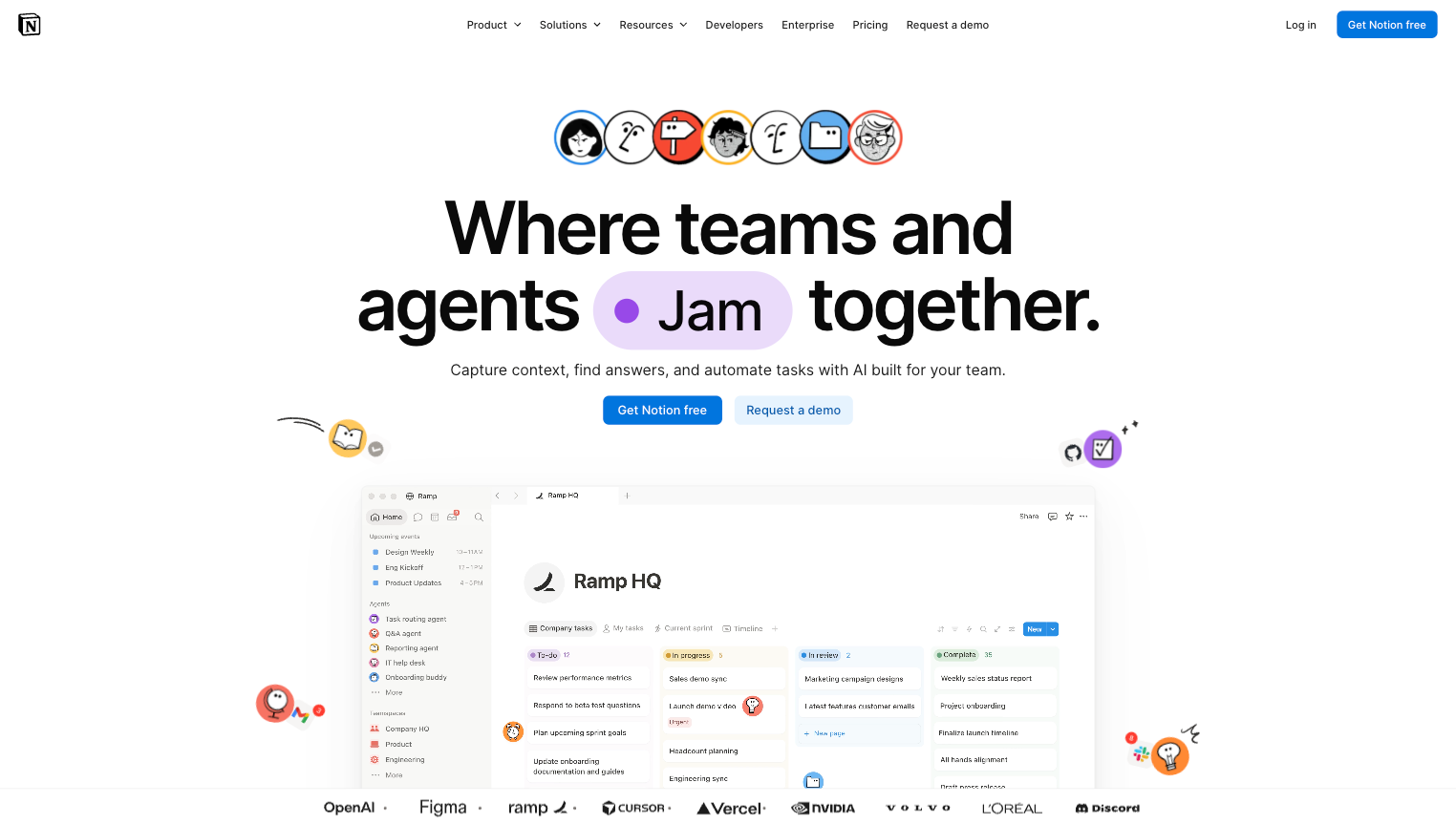
Notion takes the same build-it-yourself approach as Jotform Apps, but everything lives in one workspace that you work inside all day rather than an app you share out. A single Notion page can hold your to-do list, meeting notes, project docs, and a habit tracker all at once — if you want your morning routine, today’s tasks, and this week’s deadlines stacked in three columns, you can build exactly that and open it every morning.
The platform offers task databases that hold every to-do with properties you define — like due dates, priority, project, status, and estimated time — and then shows the same tasks in whatever view fits the moment. That might look like a table for the full backlog, a board grouped by status, a calendar for the week, or a filtered list showing only what’s due today. You can also set a task’s properties once and read your day from any angle without retyping anything. Relations connect databases, too, so a task can link to the project it belongs to and the meeting note it came from.
Notion’s template gallery includes ready-made daily planners with linked databases already wired together, making it easier to build planning dashboards. With them, you can duplicate a to-do list for daily schedules, weekly agendas, habit trackers, or monthly overviews into your workspace and adjust it rather than start from scratch. You can also create recurring database templates for repeating routines, so a “weekly review” or “daily log” page generates automatically on schedule instead of you building it by hand.
- Best for: Planning your day in the same workspace as your notes, docs, and projects
- Developer: Notion Labs, Inc.
- Limitations: Notion’s flexibility comes with a trade-off: Building a planning system that fits you takes real setup time, and databases, relations, and filters come with a learning curve; plus, Notion is a better daily planner app for desktop because its mobile experience is sluggish when navigating nested pages or editing databases
- Plans/pricing:
- Free
- Plus: $12 per user per month (billed monthly)
- Business: $24 per user per month (billed monthly)
- Enterprise: Custom pricing
5. Trello
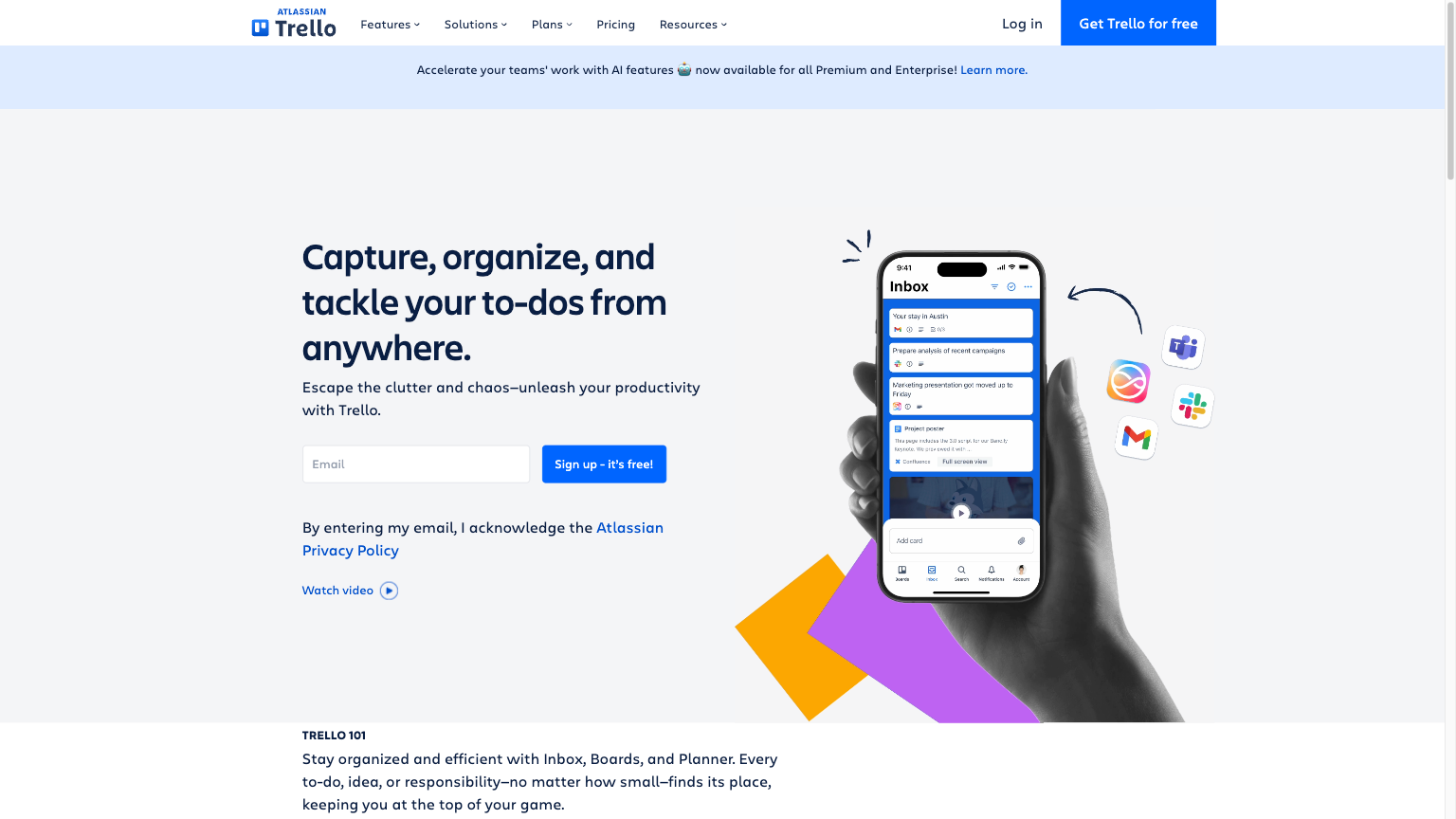
If you’re a visual thinker, Trello lets you plan your day the way you would with a whiteboard. You build a board, fill it with lists like To-do, Today, In Progress, and Done, and add a card for each task. As the day goes on, you drag cards from one list to the next — a task moves from Today into In Progress when you start it, then into Done when you finish. That left-to-right motion allows you to see your entire day laid out and watch it progress at a glance.
Each card on Trello is more than a line of text. Open one, and you can add a due date, a description, attachments, and a checklist that breaks the task into subtasks you tick off as you go. For instance, if one of your tasks for the day is “write a newsletter,” you can break that into six smaller steps inside a Trello card. Due dates change color as they approach and pass, so an overdue card is obvious at a glance. And the mobile app’s My Cards view pulls every card with a due date into a single list, sorted by what’s overdue, due soon, or unscheduled.
Trello also lets you capture tasks quickly using Siri on iOS. Simply say “Add [card name] to Trello” to record a to-do the moment you think of it. The inbox also lets you forward an email or save a Slack message directly to a board, so nothing gets lost between apps. And Butler automation can handle repetitive board chores — move all cards marked done to the Done list at 6pm, or add a fresh checklist to every new card — without you touching them. Boards work solo or shared, so the same system that runs your personal day can coordinate a small team.
- Best for: Visual daily planning with boards
- Developer: Atlassian
- Limitations: Trello’s primary planning style is kanban-style lists, not hourly timelines; if you need to lay out your day on a timeline, its new Planner feature helps with calendar sync and drag-to-schedule time blocking, but full access requires a paid subscription; plus, Trello lacks built-in priority levels for managing daily tasks
- Plans/pricing:
- Free
- Standard: $6 per user per month (billed monthly)
- Premium: $12.50 per user per month (billed monthly)
- Enterprise: $17.50 per user per month (billed annually)
6. Microsoft To Do
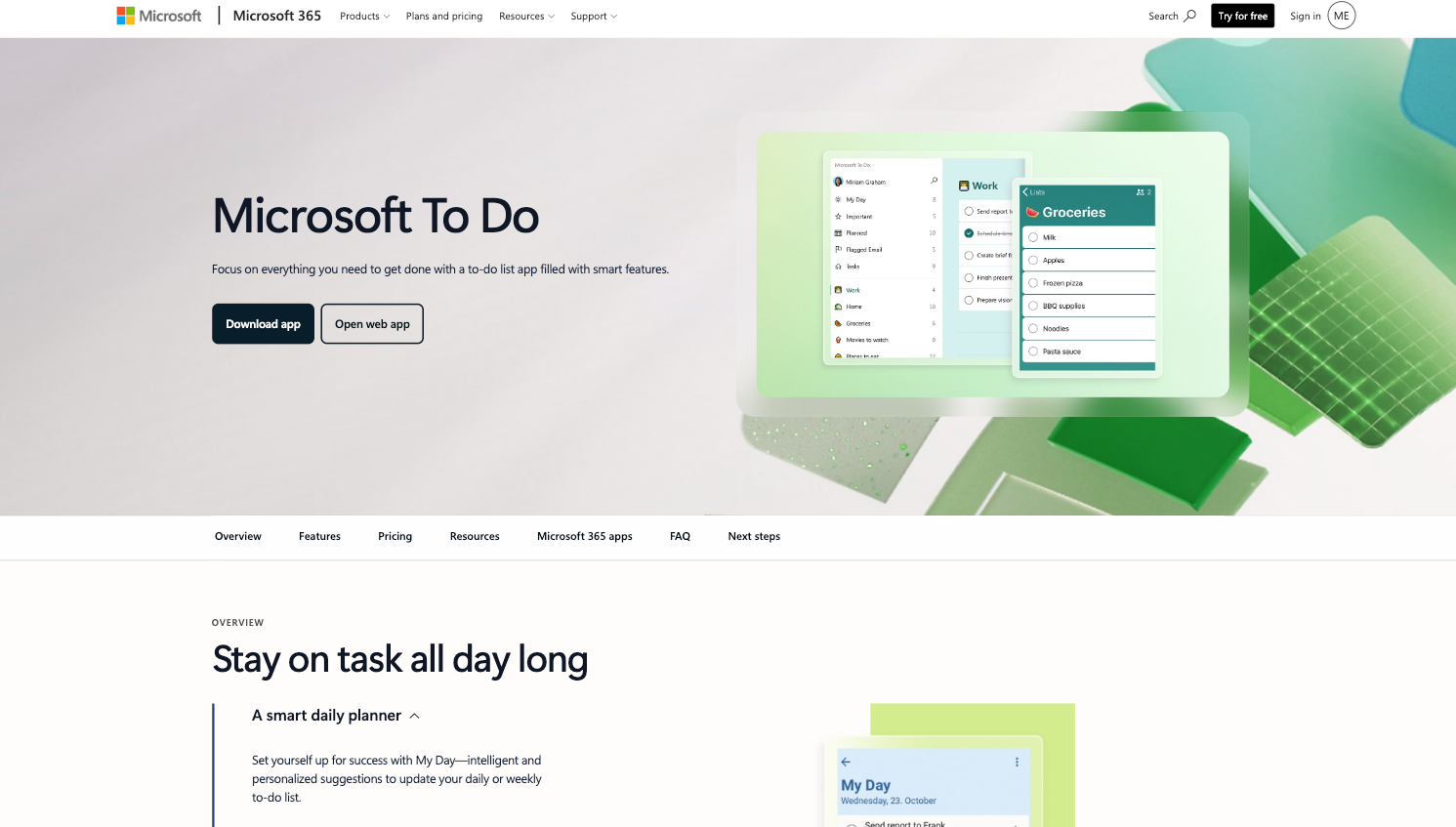
Microsoft To Do keeps daily planning deliberately simple, and its My Day view is the center of that. Every morning, My Day opens as a blank list, and you can fill it by pulling in the tasks you intend to do today, either from your other lists or by typing them in fresh. Tasks due today land there automatically, and a suggestions panel surfaces items from across your lists that you might want to tackle. The list clears and resets at midnight, so tomorrow starts clean — anything you didn’t finish stays safe in its original list rather than disappearing.
Microsoft To Do works best as a personal daily planner rather than a team tool. You can set due dates and one-time or recurring reminders, mark tasks as important with a star, add notes, and break any task into small steps you check off as you go. Because reminders sync across every device — Windows, web, Android, and iOS — a reminder you set on your laptop reaches your phone.
If your work already runs on the Microsoft ecosystem, your to-dos can collect themselves: The app pulls in tasks assigned to you in the planner, turns flagged Outlook emails into tasks automatically, and surfaces everything in one place. Sharing works the same way a shared list should: You can send a list to family, friends, or colleagues, and everyone sees updates as tasks are added, completed, or removed.
- Best for: Simple daily task list, especially if you already work in the Microsoft ecosystem
- Developer: Microsoft
- Limitations: Microsoft To Do’s simplicity is its ceiling — there’s no timeline or calendar view for laying out your day by the hour, no priority system beyond a single “important” star, and no custom fields or dependencies that some other daily planning apps offer
- Plans/pricing: Free with any Microsoft account
7. Apple Reminders
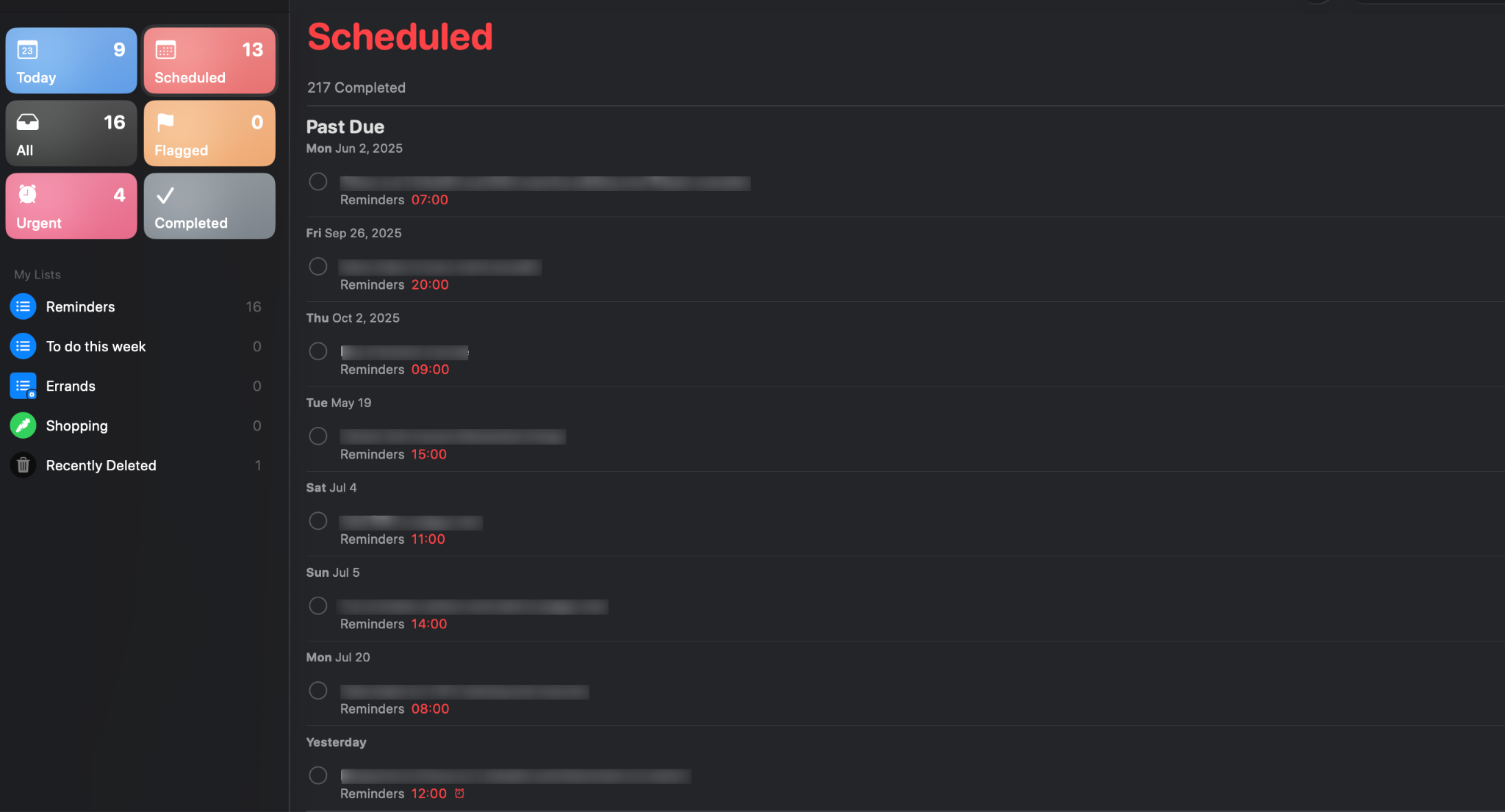
Apple Reminders is the best daily planner app for iPhone because task capture takes almost no effort. Just tell Siri, “remind me to call the accountant at 2pm” or type the same thing in plain language, and the reminder files itself with the time already set. That low-friction capture is the reason many Apple users — including me — plan their days in Reminders rather than in a third-party daily schedule planner app.
Smart Lists turn a pile of reminders into a daily plan. The built-in Today list automatically gathers everything due today plus anything overdue, so your day assembles itself without sorting. You can build custom Smart Lists for bills, subscription services, birthdays, and more that pull in tasks by tag, date, time, location, flag, or priority. So, if you tag a handful of tasks with “#today” or “#calls,” a Smart List automatically collects them and updates as you add more.
Reminders also handle the scheduling details that keep a day on track. You can set time-based reminders, location-based ones that fire when you arrive at or leave a place, and recurring reminders for anything that repeats. You can easily share household to-do lists or grocery lists with family and friends, so everyone sees changes in real time. And because Reminders syncs through iCloud, a reminder set on your iPhone is on your Mac, iPad, or Apple Watch whenever you switch devices.
- Best for: iPhone-first daily planning with fast reminders and lists
- Developer: Apple
- Limitations: Apple Reminders is built for people who live entirely inside Apple’s ecosystem — there’s no Android app and no full-featured web version, so if you use a Windows PC at work or share a household with someone on Android, you can’t reach or share your reminders everywhere; recurring options are also more rigid than dedicated task apps — you get daily, weekly, monthly, and yearly, but not custom intervals like “every 10 days” or “every weekday”
- Pricing: Free on any Apple device
8. TickTick
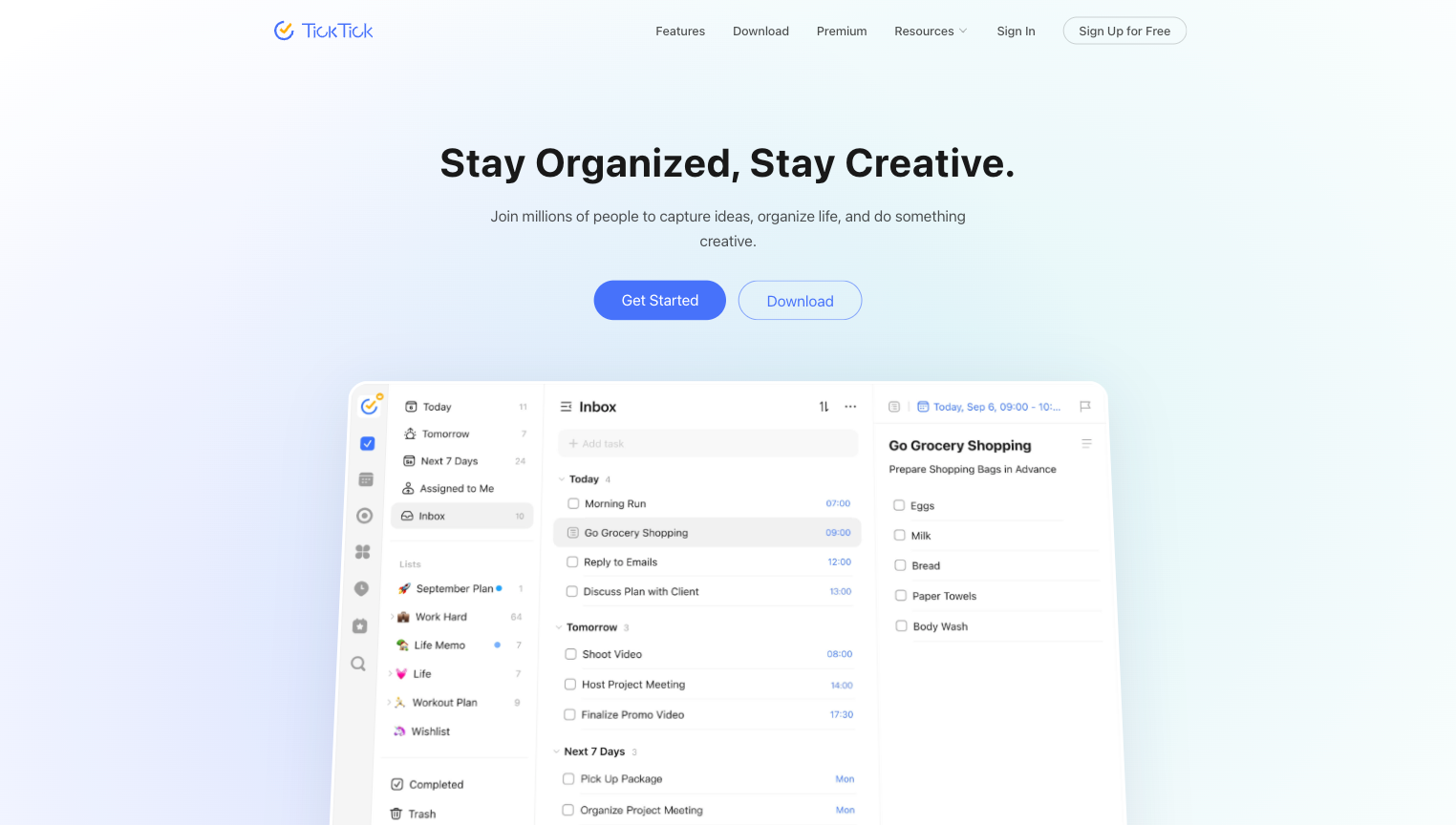
TickTick works as a daily planner by folding several tools into one app, so tasks, a calendar, habits, and a focus timer live in the same place. You can capture a task by typing or speaking it, and smart date parsing can read a phrase like “gym every Monday at 7am” and set the time and recurrence for you. The app includes four priority levels, tags, subtasks, and an Eisenhower matrix view that lets you sort what matters from what can wait.
TickTick offers multiple views, including Calendar, Timeline, Kanban, and List. In Calendar view, you can lay your tasks and events across daily, weekly, monthly, and agenda views, so you can see a single day’s schedule or scan the week to spot where you’re overloaded. You can also connect an external calendar like Google Calendar, Outlook, or iCloud so that your meetings appear alongside your tasks, giving you a single timeline for commitments and to-dos. Plus, recurring tasks handle anything that repeats with flexible rules like “every two weeks from Monday to Thursday.”
TickTick builds routine-tracking into the same daily planning app. Use the habit tracker to set daily or weekly habits, check them off, and watch streaks build over time with progress stats and feedback to keep momentum visible. And when it’s time to stop planning and get to your tasks, a built-in Pomodoro timer runs focus sessions as you work.
- Best for: All-in-one lightweight planner with tasks, calendar view, and habits
- Developer: Appest Limited
- Limitations: TickTick allows you to share lists and assign tasks, but it lacks team boards, workload views, or project management tools for teams planning to collaborate; plus, the calendar view, timeline views, and advanced filters are locked behind the Premium plan
- Plans/pricing:
- Free
- Premium: $35.99 per year
9. Motion
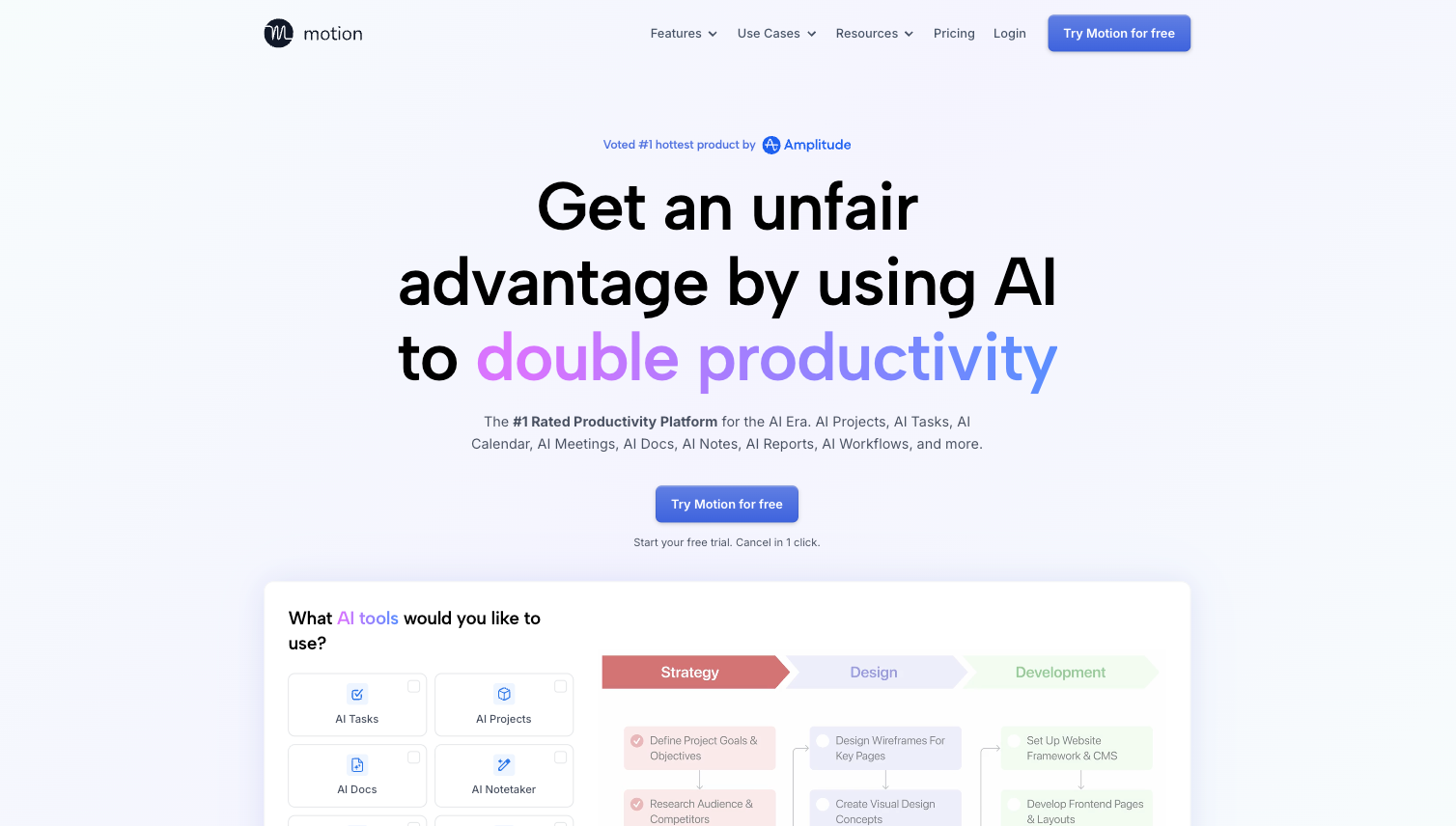
Motion is an AI calendar that plans your day by scheduling meetings, prioritizing tasks, and alerting you of deadlines without you having to do anything manually. Once you specify your tasks for the week, Motion finds open slots for them on your calendar based on deadlines and their priority levels. So, when you open your calendar, your day is already built with each task sitting in a specific time block.
One feature that sets Motion apart from other daily scheduler apps is its ability to automatically replan when things change. For instance, when a meeting runs long or is added at 4pm, Motion automatically reshuffles everything around it so you can stay on track.
This automatic scheduling works because Motion connects your Google, Outlook, and iCloud calendars into one view and treats your meetings as fixed anchors. It fits tasks into the gaps between meetings based on deadlines, priority level, duration, and dependencies, surfacing your single highest-priority item at any given moment. Motion also alerts you when you commit to more than your available hours can hold.
You can shape how the AI schedules tasks by setting work hours, adding buffer time between tasks, and blocking out recurring commitments like lunch or a standing gym slot. Recurring tasks work on daily, weekly, monthly, or quarterly rules. Motion runs on web, desktop, iOS, and Android.
- Best for: Auto-scheduling tasks into your calendar with AI
- Developer: NexusBird, Inc.
- Limitations: Motion is designed for people who want to stop planning — if you get value from sitting down and designing your own order of work, Motion will feel like a loss of control; the app can also pack days too tightly, leaving no slack for the unplanned work that always shows up during the day
- Plans/pricing:
- Individuals: $49 per month (Pro AI) or $69 per month (Business AI), billed monthly
- Teams: $29 per seat per month (Pro AI) or $49 per seat per month (Business AI), billed monthly
10. Any.do
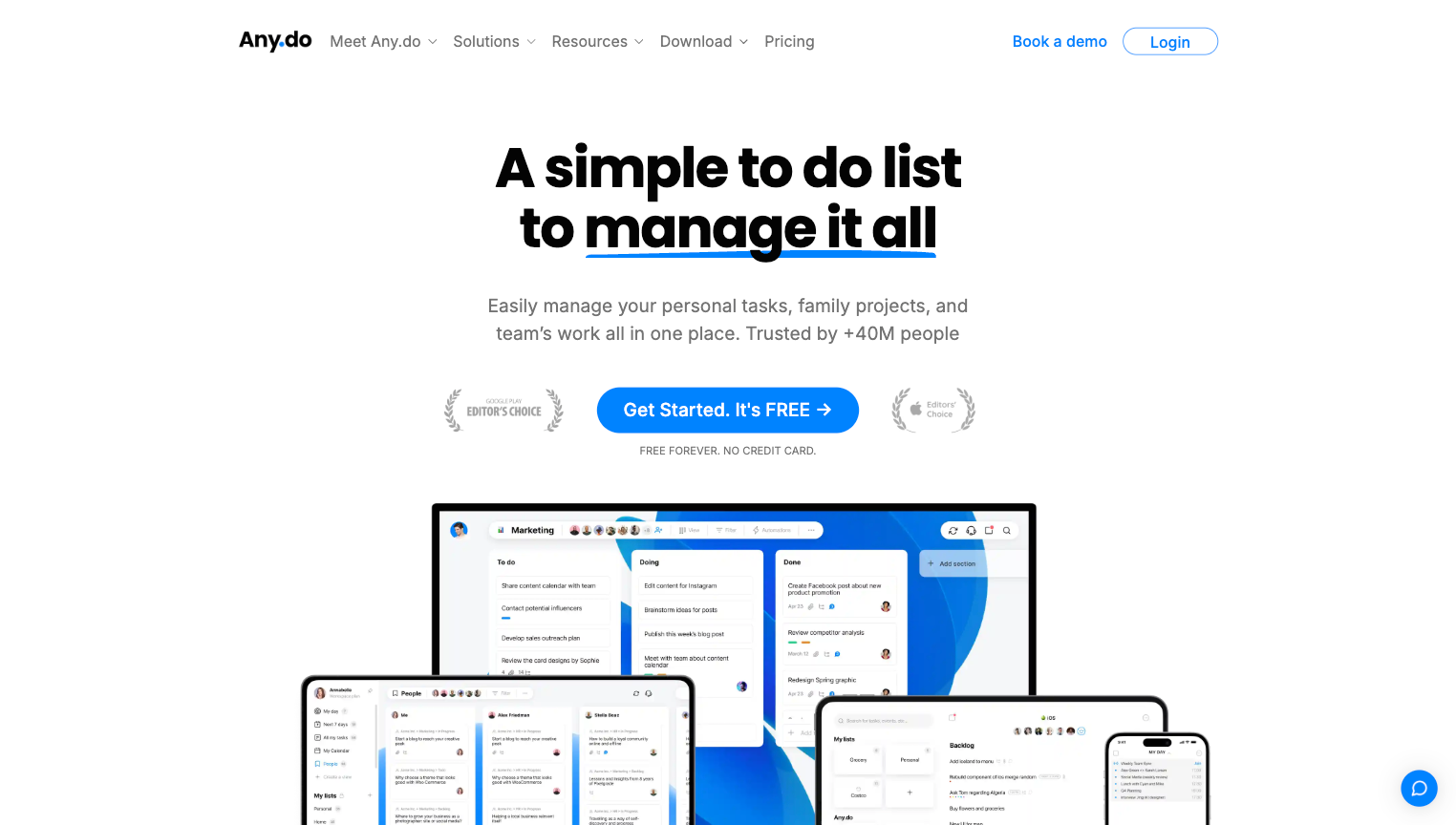
Any.do is a daily planner built for everyday life, not complex project work. It’s the best daily planner for Android devices, it’s quick to pick up, and you can add your first task within minutes of opening the app.
You can create tasks by typing them, dictating them by voice, or sending a message through WhatsApp. Those tasks then go into lists you set up for the different parts of your life, like work, personal, groceries, and errands. The app offers shared spaces that let you run boards with other people: for example, a household board where your family adds groceries and chores or a team board where a small team tracks shared work.
My Day is where daily planning happens. Every morning, Any.do prompts you to review your scheduled tasks and choose which ones belong on today’s list, so you can start the day focused on what’s immediate. Calendar integrations bring your meetings next to your to-dos on a single timeline, allowing you to plan realistically and track due dates and deliverables. Then, smart notifications keep things from slipping through the cracks with location-based reminders on mobile, advanced recurring reminders including WhatsApp messages, and one-time reminders for specific deadlines.
- Best for: Quick everyday planning with shared lists for family or a small team
- Developer: Any.do
- Limitations: While Any.do works fine for teams managing simple tasks, it’s limiting when dealing with detailed subtask trees; plus, many of Any.do’s best features — like recurring reminders, location-based reminders, and color tags — are locked behind paid plans, and it only integrates with a single calendar at a time
- Plans/pricing:
- Personal: Free
- Premium: $7.99 per month (billed monthly)
- Family: $9.99 per month (covers four members, billed monthly)
- Teams: $7.99 per user per month (billed monthly)
What to look for in a daily planning app
While evaluating the daily planner apps above, I focused on tools that make organizing your daily schedule feel lighter, not those that become another system you have to manage. The right tool should cut down on the noise, keep your tasks and commitments in one place, and help you move through your day with less friction.
Here are the most important things to look for when selecting a daily planner.
- Planning style fit: Before comparing planning app features, start by figuring out how you work. If you plan around recurring routines, you’ll benefit from a habit tracking app. If you assign every task to a time slot or need a running list you can easily check off, a time blocking app or a simple to-do app may be more suitable for you. No matter the app you choose, you’ll struggle to use it consistently if it doesn’t suit your planning style.
- Calendar and task integration: If your meetings live in Google Calendar, Outlook, or Apple Calendar, your planning app needs to sync with them or you’ll be checking two places to see your activities for the day. Also, look for tools with bidirectional sync rather than read-only access, so that tasks you schedule in the planner show up in your calendar and vice versa.
- Prioritization tools: A long task list without priorities only makes you feel guilty at the end of the day. Good task and calendar apps should have a way to surface your top tasks by default — whether through a dedicated today view, priority tags, deadline sorting, or an Eisenhower-style urgent/important matrix.
- Accessibility: Choose a daily planning app that works on the web, smartphones, and tablets to enable you to view and update your schedule wherever you are.
- Reminders and notifications: Reminders should reach you the moment you can act. So, in addition to basic time-based alerts, look for tools with location-based reminders that trigger when you arrive, snooze options that reschedule rather than dismiss, and per-task notification settings.
- Templates and recurring routines: Daily planning apps that include templates, themes, and customizable routines make it easier to organize your day and projects without always starting from scratch.
How to choose the right daily planning app for your workflow
Every app covered here works well for the job it’s built for. The right daily planner for you depends on your planning style, device, and integration needs. My recommendation? Test a few to see how they suit your workflow. Some are completely free, while others offer free trials.
That said, here’s a general deciding framework to guide you:
- If you want calendar-first time blocking, choose Google Calendar.
- If you want task-first prioritization, choose Todoist.
- If you want routine building and daily checklists, choose TickTick.
- If you want a planner for a team or shared daily processes, choose Trello.
- If you want to plan your day in the same workspace as your notes and projects, choose Notion.
- If you want a simple daily task list within your Microsoft workspace, choose Microsoft To Do.
- If you want fast task capture on your iPhone or Apple devices, choose Apple Reminders.
- If you want an AI calendar to automatically schedule tasks around your meetings, choose Motion.
- If you want an everyday planner for tasks and shared family lists, choose Any.do.
- If you need a free daily planning app you can customize to your specific process, choose Jotform Apps.
Ready to build your own daily planning app? Try Jotform Apps — it’s free.
This article is for individuals and small teams (students, freelancers, managers, and small-business operators) who want an easy way to plan each day, prioritize tasks, and stay on schedule using a daily planning app (mobile and/or desktop).















































































Send Comment: