
It’s 2 p.m. on a Tuesday, and you’re staring at a spreadsheet that hasn’t been updated since Friday because you’re waiting on an email from IT about a ticket you submitted three weeks ago. You know exactly what needs to be fixed, but… you don’t know how to code.
Time to hop into a phone booth, take off your glasses, and emerge as a super citizen developer.
Building apps and automating complex workflows has historically been the domain of software engineers. Today, that’s changed — with the help of low-code and no-code development platforms, anyone can learn how to create an app without any coding knowledge.
Citizen development doesn’t replace software engineers, of course, but it empowers non-technical people to solve simpler problems and frees up technical teams to focus on more complex tasks. Let’s take a closer look at the concept and how to implement it within your organization.
What is a citizen developer?
A citizen developer is a non-technical user — an employee who typically doesn’t report to a CIO or IT department — who builds applications, workflows, or automations using low-code or no-code tools. They aren’t writing lines of Java, Python, or C++. Instead, they use visual interfaces, drag-and-drop builders, and pre-configured templates to construct business solutions that historically used to require custom code.
In an organization, they play the role of digital problem solvers. Because they sit within business units (like operations, sales, and customer support), they have a front-row seat to the inefficiencies that slow down their teams. They see the broken email chains, the manual data entry errors, and the lost approvals that a developer who isn’t in the weeds might miss.
So, when you ask, “What is citizen development?” you’re really asking about a culture shift. It’s a move away from the centralized gatekeeper models governing tech within organizations toward a more distributed, collaborative model — bypassing traditional bottlenecks to solve business problems in real time.
Citizen developers typically use no-code and low code development platforms that provide the scaffolding (security, governance, and infrastructure) so that users can focus on the logic and design of the solution. It’s about taking the people who know business problems best — the HR managers, the marketing leads, the school administrators, etc. — and giving them the tools to solve those problems independently.
Citizen developers vs professional developers
This topic often generates some anxiety that businesses are trying to replace software engineers. But the reality is that citizen development isn’t a replacement for dedicated engineering. Instead, you should think of citizen developers and professional developers as collaborators, not competitors.
Let’s look at a side-by-side comparison of the two roles:
| Citizen developers | Professional developers | |
|---|---|---|
| Primary goal | Solve immediate business pain points to improve team productivity | Build scalable, secure, and high-performance enterprise systems |
| Skills required | Deep domain and business expertise, basic understanding of logic, competency with no-code tools | Computer science, proficiency with one or multiple coding languages |
| Responsibilities | Building department- and team-level apps, automating workflows, iterating based on team feedback | Designing architecture, managing security and compliance across the enterprise, maintaining core infrastructure |
| Common tasks | Internal dashboards; simple forms and data collection; automated email notifications; niche, team-level apps | Complex integrations, high-traffic and/or customer-facing portals, apps handling sensitive data (requiring strict governance), heavy custom coding tasks |
Citizen developers — and the platforms they use — aren’t equipped to handle the complex, structural coding requirements that software engineers can.
Businesses still need professional developers with deep technical skills in programming languages, database management, and system architecture to build scalable, secure, and complex core systems that power the entire enterprise — regardless of how many citizen developers they employ. They need dedicated professional developers to maintain legacy systems, ensure high-level security compliance, and build customer-facing products that require heavy custom coding.
Citizen developers, on the other hand, can solve immediate business problems and improve efficiency within their specific domain. Their responsibilities are to build and maintain departmental apps, automate routine tasks, and prototype new ideas.
A good mix between the two might look something like this:
- A citizen developer can build an employee onboarding app, automate an approval process for expense reports, or create a customer feedback portal. These are internal, process-driven tools that need to change frequently.
- A professional developer should focus on building the company’s core enterprise resource planning system, managing server infrastructure, or developing high-frequency trading algorithms.
Low-code and no-code tools support both groups by fostering collaboration as well as prototyping and handover:
- Prototyping: Citizen developers can build minimum viable products (MVPs) that serve as a proof of concept before a professional developer dedicates the bandwidth to build it. An MVP often gives IT a clearer blueprint of business user requirements than typical abstract request forms.
- Handover: If a citizen-built project becomes mission-critical or otherwise too big for a citizen developer to manage, engineering can take over. Since low-code and no-code platforms are standardized, this handover can happen with zero fuss, as well as any back-and-forth collaboration between citizen and professional developers.
By handling the low-hanging fruit (the day-to-day requests for forms and simple apps and workflows), citizen developers free up professional developers to focus on the complex, high-value projects that actually require their specialized skills.
Benefits of citizen developers
The rise of the citizen developer concept brings major advantages, both for the organizations that embrace them and the individuals who step into the role.
Organizational benefits
- Reduced IT backlog: The most immediate impact for an organization is a drastic reduction in IT’s workload. In many companies, the IT department is buried under a mountain of tickets for minor changes — a new field on a form, a report update, a simple data entry app. When business units can build their own solutions, the ticket queue shrinks. Citizen development offloads these requests, allowing IT to breathe and focus on security and infrastructure.
- Faster deployment and iteration: A citizen developer can build, test, and deploy a workflow in an afternoon, whereas a traditional development cycle for the same tool might take weeks of scoping, coding, and quality testing. This speed allows businesses to respond to changes in real time. If a marketing team needs a new lead capture form for a campaign launching tomorrow, for example, they can build it themselves rather than filing a request and missing the window.
- Improved innovation and agility: By empowering the people actually doing the work to build solutions, you unlock creative potential previously stifled by technical barriers and bottlenecks. The administrative assistant who’s handled the same messy paperwork for five years knows exactly how to fix the process — giving them a citizen development platform allows that fix to happen.
Individual benefits
- Increased autonomy: There’s nothing more frustrating than knowing how to fix a problem but lacking the tools or technical expertise to make it happen. Becoming a citizen developer gives you more control over your own workflows and processes.
- Upskilling and professional growth: Learning to use a citizen development platform adds a valuable layer to your resume. It signals to employers that you’re a builder and creative problem solver.
- Faster problem-solving for your team and department: When you can solve real problems quickly, like spinning up an app to track inventory or automating a tedious email chain, you become the hero of your team. You directly improve the quality of life for your colleagues.
HR managers can automate leave requests to avoid manually tracking emails. Marketing teams can build internal apps to manage creative assets. Customer support leads can create automated workflows to route tickets based on urgency. These aren’t hypothetical scenarios — they’re citizen-developed solutions to the real problems that non-technical users face every day.
How to become a citizen developer
If you’re sitting there thinking, “This sounds great, but I’m not a ‘tech person,’” I have good news: It’s never been easier for non-technical folks to learn these skills. Becoming a citizen developer is less about learning syntax and more about learning logic.
- You don’t need to know Java, but you do need to know how to think through a problem logically. You need to be able to map out a process: “If this happens, then that should happen.”
- You need digital literacy — a level of comfort when it comes to navigating software interfaces.
- And, most importantly, you need curiosity.
Cultivating the right mindset is also key. When you see a problem or a broken process, ask, “How can I fix this?” instead of “Who can I call to fix this?” Citizen developers are self-starters and collaborative thinkers who are willing to share solutions with others.
In practical terms within your company, start by identifying a pain point close to home. Look for a repetitive task in your daily work that involves manual data entry, endless email chains, or paper forms.
Once you have a target, start small. Don’t try to rebuild your company’s customer relationship management platform on day one. Start with a pilot project, like a team vacation tracker or a meeting agenda collector. Then find a champion in your organization who would benefit from the project or an IT leader who supports citizen development — their support can validate your efforts and help with the broader adoption of your solution when the time’s right.
Finally, embrace low-code and no-code tools. These platforms are designed to be beginner-friendly and to teach you as you build.
How to find the right low-code platform
The market is flooded with low-code and no-code tools, which can make choosing the right one overwhelming. To find your ideal citizen development platform, you need to look past the marketing and focus on specific criteria that match your needs.
Non-negotiables include:
- An easy-to-use drag-and-drop interface: If you have to read a manual to place a button on a form, it’s not the right tool for a citizen developer.
- Robust conditional logic: This enables your apps to make decisions (e.g., “If the expense is over $500, send it to the VP; otherwise, send it to the Manager”).
- Seamless integrations: Being able to link the tool with the software you already use (like Slack, Google Drive, or Salesforce) is vital, as is a wide variety of templates to get you started quickly.
It’s also important to understand the low code vs no code distinction. While often grouped together, they aren’t interchangeable.
- Low-code platforms: These often require some coding knowledge to get the full value out of them, and they’re typically aimed at professional developers who want to work faster.
- No-code platforms: These are truly code-free and designed for business users. As a newbie to citizen development, this is what you’re looking for.
Beyond these must-haves, choosing the best citizen developer platform will depend on your unique goals, the size of your team, and other context around the kind of problem-solving you’ll handle. Small teams that need to move fast may prioritize ease of use and iteration, whereas larger enterprises may look for deeper governance features, even if the learning curve is a bit steeper.
If you’re still unsure which no-code platform(s) to get started with, here are a few good places to start:
- Jotform is a leader for data collection, automation, and approval workflows.
- Airtable is excellent for database-centric applications.
- Zapier is perfect for connecting different apps together.
- Microsoft Power Apps is a heavy-hitter often used in large enterprise environments.
Meet Jotform: The all-in-one tool for citizen developers
If you want a platform that balances power with simplicity, Jotform is a great option. It’s a no-code platform that empowers you to go from idea to launch in minutes, and the team behind it has spent years building an ecosystem that serves as the ultimate all-in-one tool for citizen developers.
With Jotform, you don’t need any coding knowledge whatsoever to build
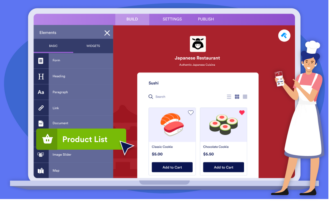
- Online forms: Build everything from surveys to order forms with a simple drag-and-drop form builder.
- Automated workflows: Automate workflows like approvals, sign-offs, and data routing. For example, if a user submits a request, it can automatically go to their manager for approval and then to finance for payment — all without you lifting a finger.
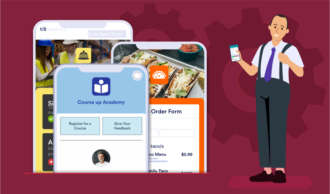
- Apps: Bundle your forms and documents into mobile-ready apps that can be downloaded onto any device.
- AI agents: Jotform AI Agents allow you to deploy autonomous agents to handle tasks like grading, summarizing, or customer interaction.
- Integrations: Connect your data to Salesforce, Google Sheets, Slack, and hundreds of other tools via integrations.
All of Jotform’s features are built specifically for beginners and citizen developers, and use the same simple, intuitive drag-and-drop interface. If you can click a mouse, you can build a form.
You can build smart forms with conditional logic, manage complex approval hierarchies, and generate visual reports instantly. Sharing your solutions is as easy as sending a link, embedding it on your website, or using a QR code. And with thousands of templates for online forms, automated workflows, apps, and AI Agents, you don’t even have to start from scratch.
Our customers are citizen developer extraordinaires. We’ve seen HR teams streamline recruitment, operations managers optimize their supply chains, marketing teams automate lead gen, education administrators simplify enrollment, and so much more.
Time to start building
The era of waiting for technology to catch up with your ideas is over. Citizen developers are reshaping how businesses operate, turning passive employees into active creators.
By embracing citizen development, organizations become faster, smarter, and more resilient — opening the door to increased autonomy, professional growth, and faster problem-solving.
You’ve always had the knowledge and experience to solve problems within your organization, your team, and your own day-to-day. Now, you have the tools to actually build those solutions.
If that sounds enticing, it may be time for you to explore becoming a citizen developer, look into the tools available to you, and try your hand at no-code platforms like Jotform.
Frequently asked questions
“Citizen developer” isn’t really a standalone job title — at least not in most companies — so the salary is based on the person’s primary role.
That said, employees with citizen development skills are often more valuable to their organizations and may command higher salaries or faster promotions because of their ability to improve efficiency and solve problems independently.
A citizen developer identifies gaps in business processes and builds solutions to fix them. They’ll typically use visual, no-code tools to drag and drop in elements, configure logic, and integrate different software systems.
This may involve designing an automated email workflow for new customer onboarding, for example, or building a dashboard to track project status.
Start by identifying a problem in your daily workflow that slows you down. Then, choose a no-code platform like Jotform to build a solution.
As you’re learning, focus on getting to grips with the basics of process logic and data management. Many platforms offer free templates and tutorials (like the Jotform Academy or our blog) to help you get started. The key is to just begin building and pick things up as you go.
This article is for business leaders, digital transformation teams, content managers, and anyone who wants to understand the role of citizen developers and how low-code/no-code tools empower non-technical users to build apps and automate workflows.




























































































Send Comment: