

Hazardous Material Forms

Hazard Report Form
Hazard Report Form is a form template that allows you to quickly capture, organize, and manage safety incident data, making it easier for your team to identify and address workplace hazards with Jotform's user-friendly form builder.
Go to Category:Services Forms
Hazardous Waste Manifest Form
Track hazardous waste shipments from generator to receiving facility with the Hazardous Waste Manifest Form in Jotform, ideal for EHS teams, labs, and industrial sites that need consistent data collection and clear shipment records.
Go to Category:Hazardous Material Forms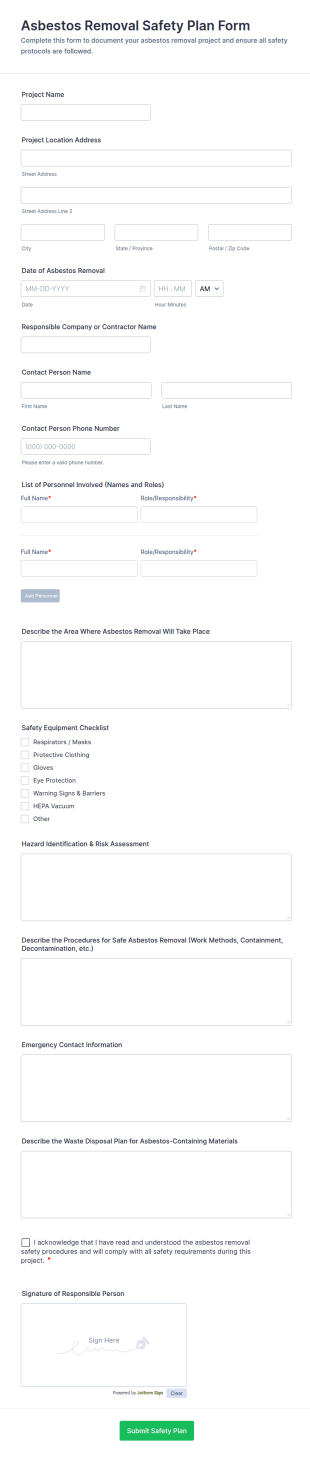
Asbestos Removal Safety Plan Form
Document asbestos removal plans with the Asbestos Removal Safety Plan Form and Jotform, supporting consistent data collection for contractors and facility teams with a customizable form template and reliable form submission tracking.
Go to Category:Construction Forms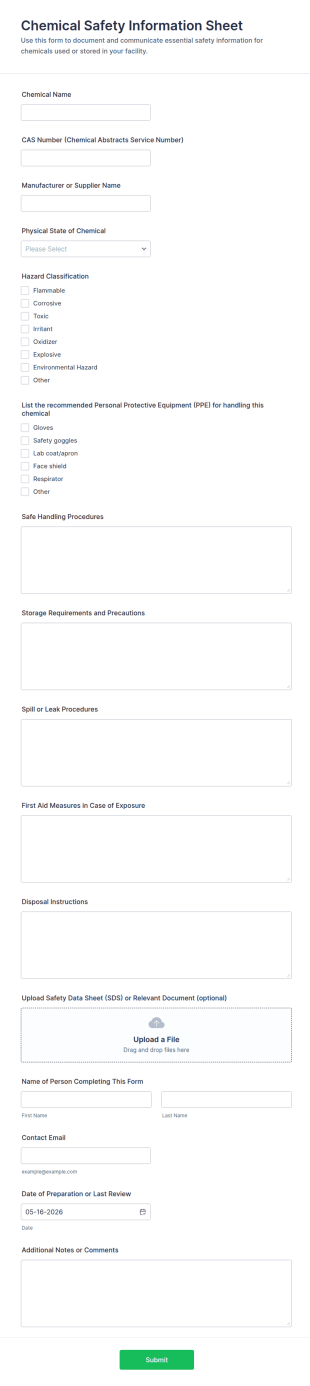
Chemical Safety Information Sheet
Chemical Safety Information Sheet Form helps labs, schools, and worksites collect chemical handling details in one place, standardize safety documentation, and keep data collection consistent with Jotform.
Go to Category:Hazardous Material Forms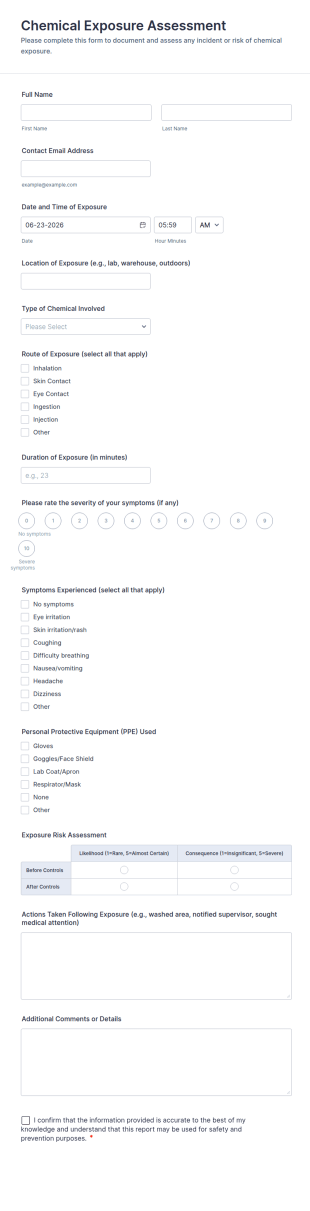
Chemical Exposure Assessment Form
Chemical Exposure Assessment Form helps safety teams document exposure events, assess risk, and standardize incident reporting across labs, warehouses, and worksites using Jotform form templates.
Go to Category:Assessment Forms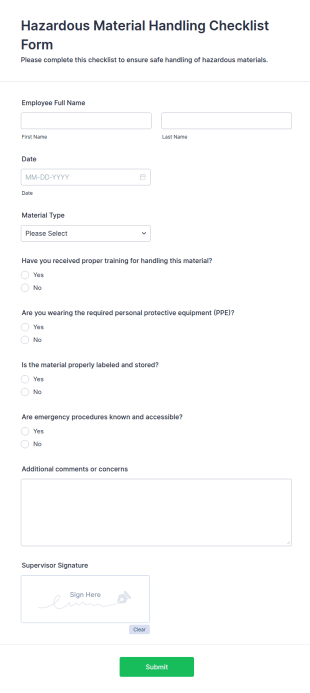
Hazardous Material Handling Checklist Form
Ensure safety and compliance with the Hazardous Material Handling Checklist Form, designed for businesses handling hazardous materials to streamline safety protocols and data collection.
Go to Category:Administrative Forms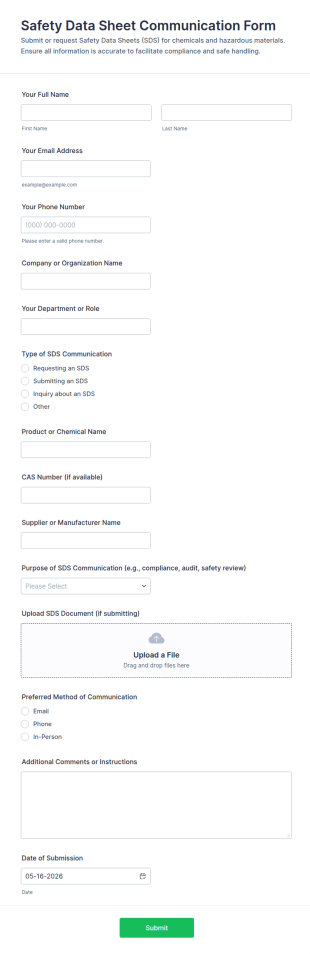
Safety Data Sheet Communication Form
Collect and track SDS requests and communications with the Safety Data Sheet Communication Form, built for EHS, labs, and operations teams to support consistent data collection, document sharing, and follow-up in Jotform.
Go to Category:Safety Inspection Forms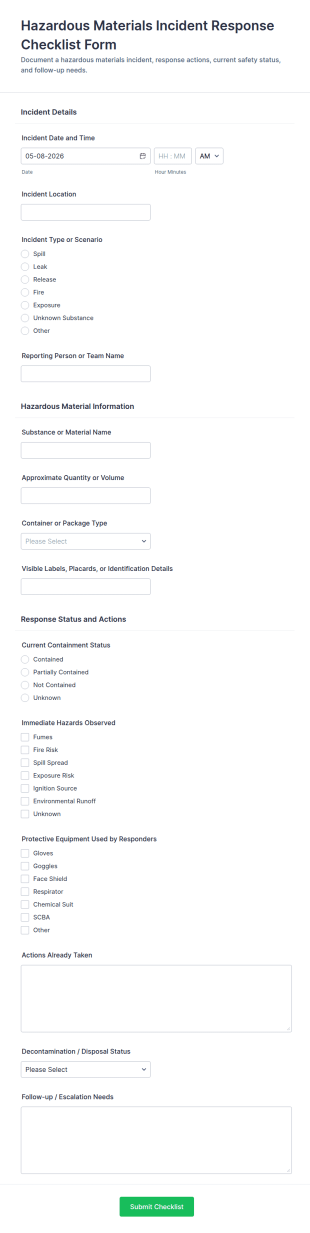
Hazardous Materials Incident Response Checklist Form
Capture key hazmat incident details and response actions with the Hazardous Materials Incident Response Checklist Form, built for safety teams, facilities, labs, and field crews who need consistent documentation and faster follow-up.
Go to Category:Checklist Forms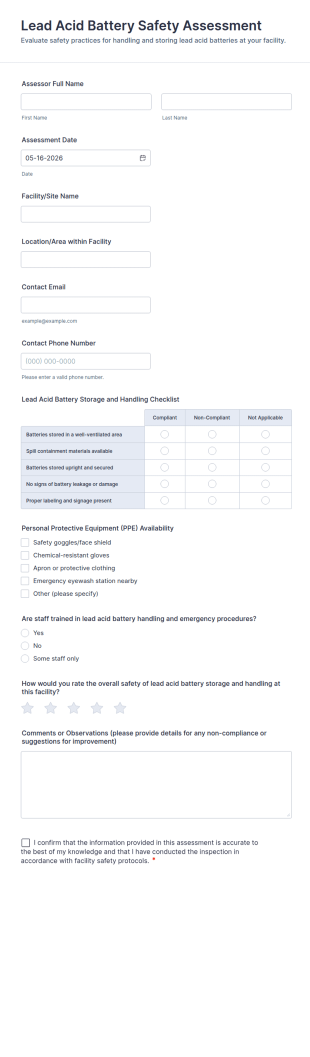
Lead Acid Battery Safety Assessment
Lead Acid Battery Safety Assessment Form Templates by Jotform help safety teams document battery storage and handling inspections, track training readiness, and centralize data collection across facilities with reliable form submission records.
Go to Category:Assessment Forms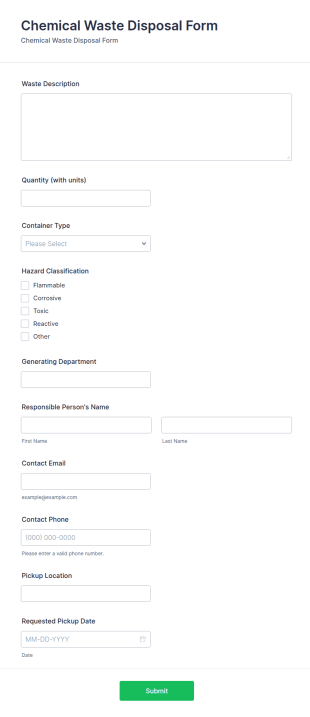
Chemical Waste Disposal Form
Chemical Waste Disposal Form supports labs and facilities teams with consistent chemical waste pickup requests and data collection, helping track disposal details, route requests to the right staff, and manage each form submission in Jotform.
Go to Category:Hazardous Material Forms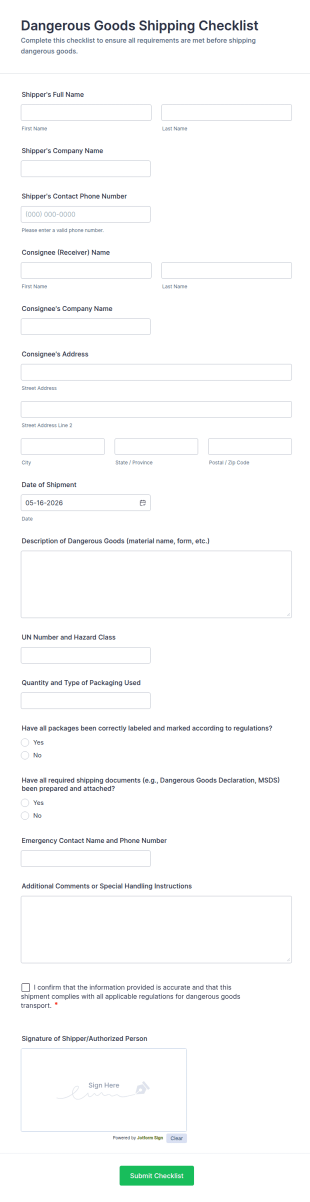
Dangerous Goods Shipping Checklist Form
Dangerous Goods Shipping Checklist Form helps shipping and warehouse teams document hazardous shipment details and confirm packaging and documentation are ready, improving consistency and recordkeeping across outbound logistics.
Go to Category:Checklist Forms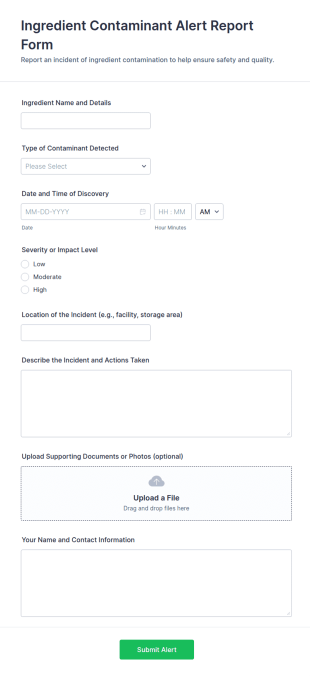
Ingredient Contaminant Alert Report Form
Use the Ingredient Contaminant Alert Report Form from Jotform to log ingredient issues, contaminant type, severity, location, and photos, built with Jotform Form Builder for fast data collection via a drag-and-drop interface.
Go to Category:Report Forms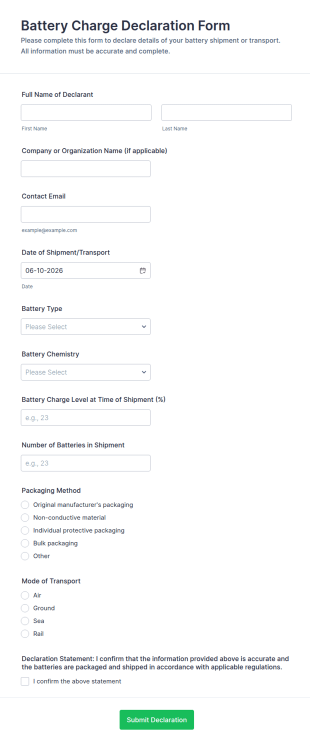
Battery Charge Declaration Form
Battery Charge Declaration Form supports shippers, warehouses, and manufacturers with consistent data collection for battery transport declarations and centralized Jotform form submission records.
Go to Category:Declaration Forms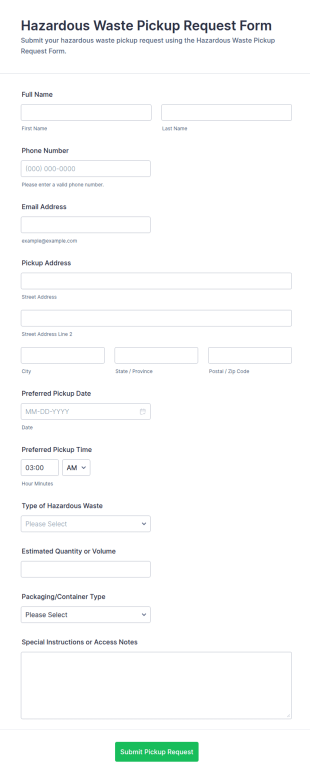
Hazardous Waste Pickup Request Form
Collect hazardous waste pickup requests online with the Hazardous Waste Pickup Request Form, ideal for municipalities, facilities, and waste service providers that need organized scheduling and accurate data collection.
Go to Category:Request Forms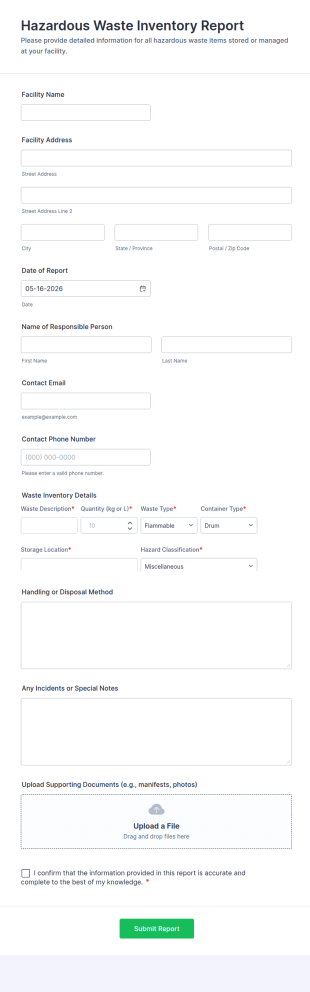
Hazardous Waste Inventory Report
Track facility hazardous waste records with the Hazardous Waste Inventory Report Form for consistent data collection, documentation, and internal review, built in Jotform for fast sharing, updates, and form submission management.
Go to Category:Report Forms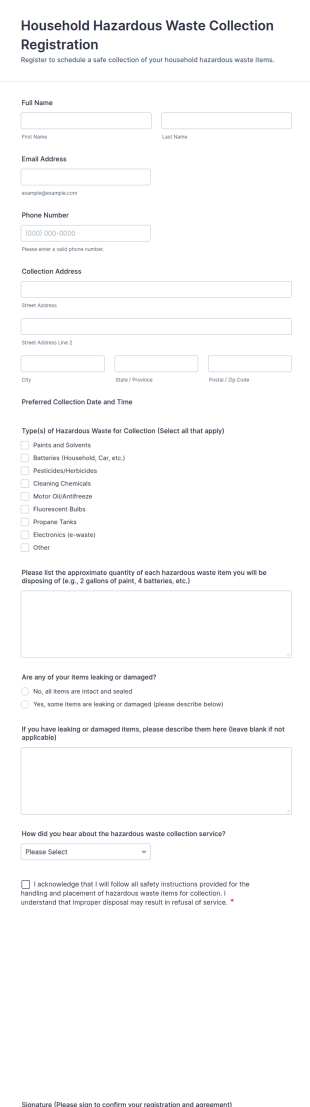
Household Hazardous Waste Collection Registration
Household Hazardous Waste Collection Registration Form Template for scheduling resident pickups and organizing hazardous waste requests for local programs, with Jotform data collection and reliable form submission tracking.
Go to Category:Registration Forms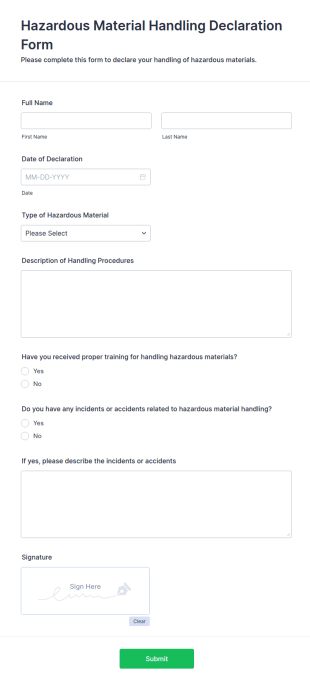
Hazardous Material Handling Declaration Form
The Hazardous Material Handling Declaration Form helps businesses collect essential information on hazardous materials, ensuring compliance and safety in handling protocols.
Go to Category:Business Forms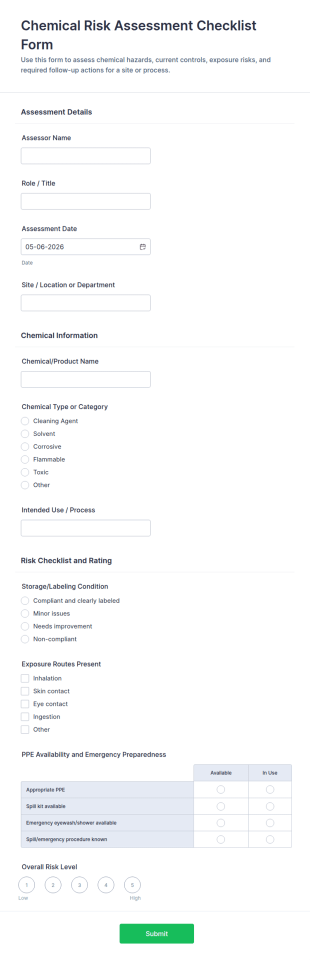
Chemical Risk Assessment Checklist Form
Chemical Risk Assessment Checklist Form supports consistent workplace chemical reviews for labs, plants, and facilities by standardizing evaluations and improving data collection and follow-up using Jotform.
Go to Category:Checklist Forms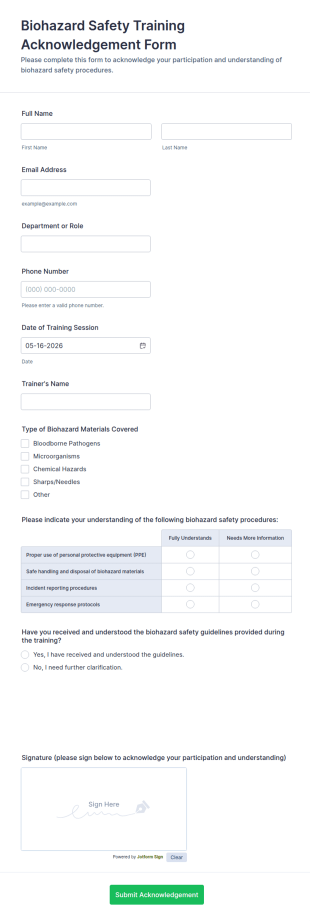
Biohazard Safety Training Acknowledgement Form
Document attendance and understanding after safety sessions with the Biohazard Safety Training Acknowledgement Form, a practical Jotform form template for labs, healthcare teams, and workplaces handling biohazardous materials.
Go to Category:Consent Forms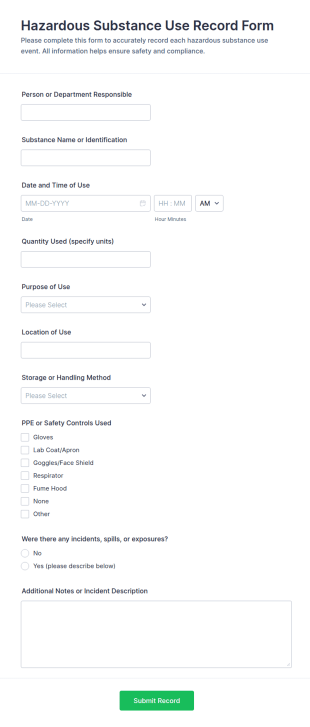
Hazardous Substance Use Record Form
Track hazardous substance usage across departments with the Hazardous Substance Use Record Form in Jotform, supporting consistent data collection for labs, facilities, and safety teams while keeping every form submission organized.
Go to Category:Hazardous Material Forms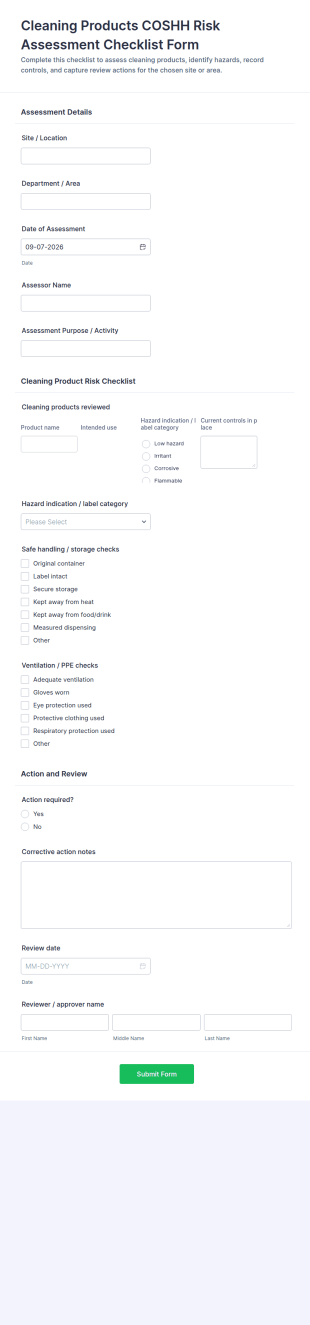
Cleaning Products COSHH Risk Assessment Checklist
Collect consistent cleaning product risk assessments by site with the Cleaning Products COSHH Risk Assessment Checklist Form, ideal for facilities, contractors, and operations teams using Jotform to standardize data collection and review follow-ups.
Go to Category:Checklist Forms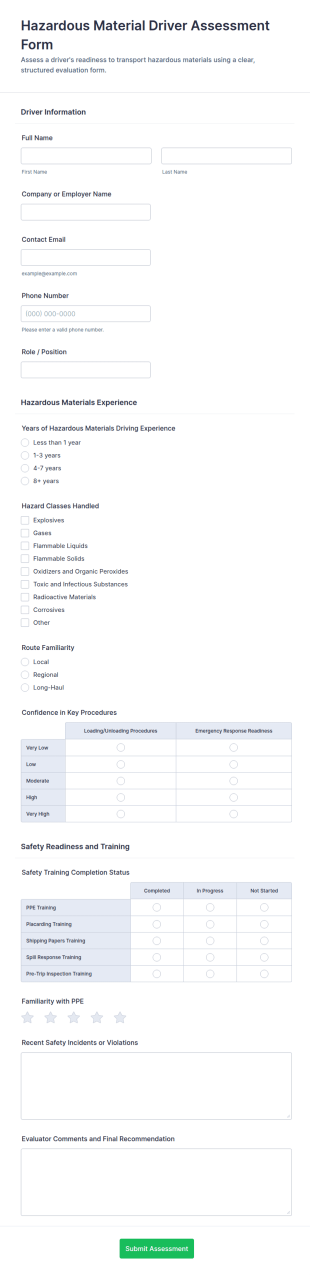
Hazardous Material Driver Assessment Form
Collect consistent driver readiness evaluations for hazardous material transport with the Hazardous Material Driver Assessment Form, ideal for fleet managers and safety teams who need standardized reviews and organized form submissions in Jotform.
Go to Category:Driver Forms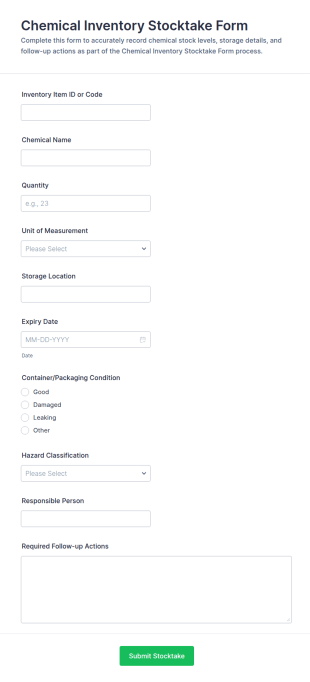
Chemical Inventory Stocktake Form
Chemical Inventory Stocktake Form supports fast, consistent data collection for chemical counts in labs, schools, and facilities, helping teams track inventory status and follow-up actions with Jotform form submissions.
Go to Category:Laboratory Forms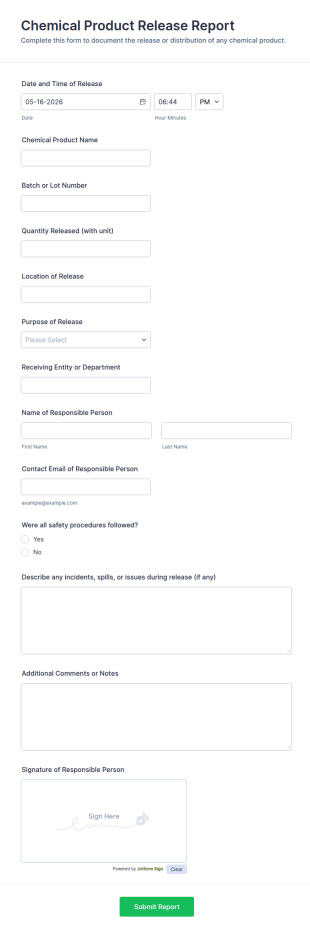
Chemical Product Release Report
Track chemical product releases consistently with a Chemical Product Release Report Form for labs, manufacturing, and facilities teams, making data collection and internal reporting easier with Jotform.
Go to Category:Report FormsAbout Hazardous Material Forms
Hazardous material forms are structured documents used to manage, document, and control activities involving hazardous substances, including handling, storage, transport, disposal, and incident reporting. They help organizations collect consistent information about materials, risks, safety requirements, and compliance steps so hazardous materials are managed safely and in line with regulations and internal policies. Hazardous material forms are commonly used in laboratories, manufacturing sites, warehouses, construction environments, healthcare facilities, and environmental services for workflows like hazardous material inventory, safety checklists, spill reporting, waste disposal requests, and transport declarations. By standardizing hazardous material documentation, these forms reduce safety risks, improve accountability, and support audit readiness.
With Jotform, hazardous material forms can be created quickly using a no-code, drag-and-drop Form Builder and tailored to different material types and safety procedures. Conditional logic can show specific questions based on hazard class or activity type, and file upload fields can collect SDS documents, permits, photos, and compliance records. Submissions are stored in Jotform Tables, making it easy to track materials, approvals, and incidents by site and status. Automated notifications can alert safety teams immediately when spills, exposures, or urgent hazards are reported.
Use Cases of Hazardous Material Forms
Hazardous material forms support safe operations, compliance documentation, and incident response across hazardous substance workflows. Below are common ways these forms are used and the challenges they help solve.
Possible Use Cases:
- Hazardous material inventory and storage documentation
- Hazardous material handling and safety checklist submissions
- Spill, exposure, and incident reporting
- Hazardous waste disposal and pickup requests
- Hazardous material transport declarations and shipment records
- Training acknowledgments and compliance confirmations
Problem-Solving Points:
- Create consistent safety documentation for hazardous materials
- Reduce risk by ensuring procedures and approvals are followed
- Support compliance with audit-ready records and attachments
- Speed incident response with clear reporting and escalation steps
Possible Owners and Users:
- Safety officers and EHS teams
- Lab managers and technicians
- Warehouse and operations staff
- Facilities and waste management coordinators
- Employees handling hazardous materials
Differences of Creation Methods:
- Hazardous material inventory and storage forms focus on material identification, hazard classification, storage location, quantity, container condition, and SDS attachment fields.
- Hazardous material handling and transport forms emphasize task or shipment details, required PPE, labeling and packaging checks, approvals, and chain-of-custody or carrier information.
- Hazardous spill and incident report forms prioritize incident time and location, exposure details, immediate actions taken, severity level, and photo or documentation uploads for investigation.
How to Create a Hazardous Material Form
Creating a hazardous material form with Jotform helps you standardize safety workflows and keep hazardous substance records organized and easy to review.
1. Choose a Template or Start from Scratch
In My Workspace, click “Create” and select “Form.” Start with an incident, inventory, or checklist template and customize it for hazardous materials.
2. Define the Hazardous Material Workflow Type
Add a field for workflow type such as inventory, handling checklist, transport, disposal request, or incident report. Use conditional logic to show the right sections.
3. Add Material and Safety Information Fields
Include chemical or material name, hazard class, quantity, storage location, and required PPE. Add checkboxes for required safety steps.
4. Use Conditional Logic for Different Hazard Types
Show different questions for corrosives vs flammables vs biohazards, and require extra approvals or documentation where needed.
5. Collect Supporting Documents and Evidence
Use file uploads for SDS files, permits, labels, photos, or incident evidence.
6. Publish and Track Submissions in Jotform Tables
Store submissions in Tables and filter by site, hazard type, status, and severity.
Frequently Asked Questions
1. What are hazardous material forms?
Hazardous material forms are documents or online forms used to manage and document hazardous substance workflows such as storage, handling, transport, disposal, and incident reporting.
2. Why are hazardous material forms important?
They support safety and compliance by standardizing procedures, documenting approvals, and creating records for audits and investigations.
3. What information is typically included in hazardous material forms?
Common fields include material identification, hazard class, quantity, location, PPE requirements, SDS attachments, and incident details when applicable.
4. Who uses hazardous material forms?
EHS teams, lab staff, warehouse teams, facilities staff, and employees handling hazardous materials may use these forms.
5. Can hazardous material forms include SDS uploads?
Yes. Jotform file upload fields can collect SDS files, permits, and other required compliance documents.
6. Can hazardous material forms be used for spill reporting?
Yes. Spill and exposure incident forms are a common use case, capturing details for response and investigation.
7. Can hazardous material forms support transport documentation?
Yes. Forms can capture packaging checks, labeling requirements, carrier info, and shipment details for hazardous material transport workflows.
8. Can hazardous material forms be customized by hazard type?
Yes. Conditional logic and custom fields can tailor questions based on hazard classification and required safety procedures.