

Special Education Forms

Special Offers Sign Up Form
Get your users to sign up to your special offers and let them know updates about your special offers via one of our newsletter integrations.
Go to Category:Signup Forms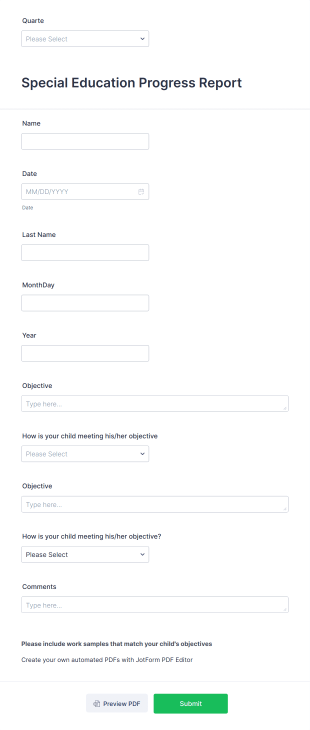
Special Education Progress Report Form
A Special Education Progress Report Form is a digital form created to track and communicate the progress made by students in special education programs.
Go to Category:Education Forms
Special Education Observation Form
Special Education Observation Form supports schools in documenting classroom observations, summarizing student learning and behavior, and planning follow-up steps using Jotform form templates for consistent data collection.
Go to Category:Special Education Forms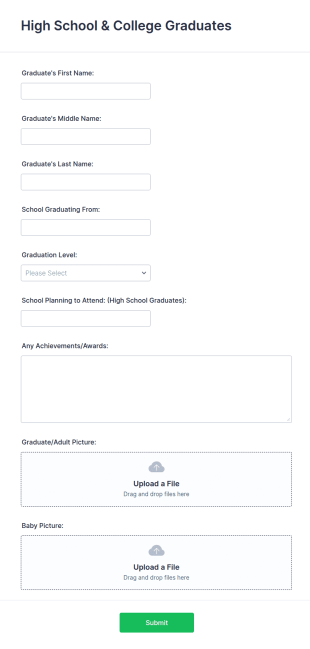
College Graduates Content Request Form Template
A College Graduates Content Request Form helps schools collect student details and photos efficiently, ensuring organized, accurate content for yearbooks and graduation events.
Go to Category:Education Forms
Student ADHD Classroom Observation Form
Track classroom observation notes consistently with the Student ADHD Classroom Observation Form in Jotform, designed for educators and student support teams to document behaviors during instruction and plan follow-up actions.
Go to Category:Education Forms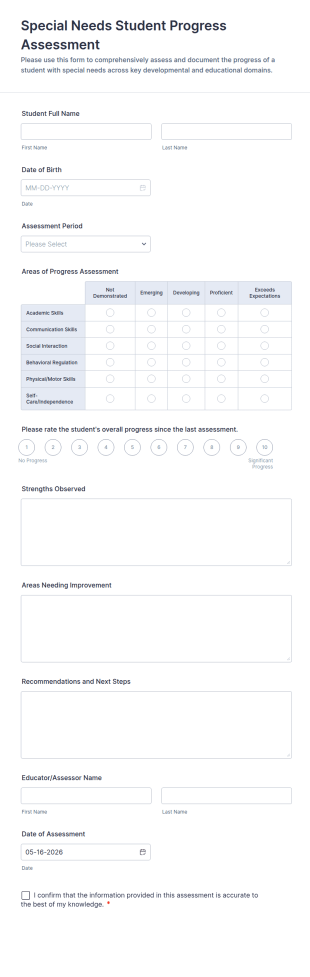
Special Needs Student Progress Assessment Form
Track and document student growth over time with the Special Needs Student Progress Assessment Form, ideal for teachers and support teams who need consistent evaluation records and reliable data collection in one place.
Go to Category:Assessment Forms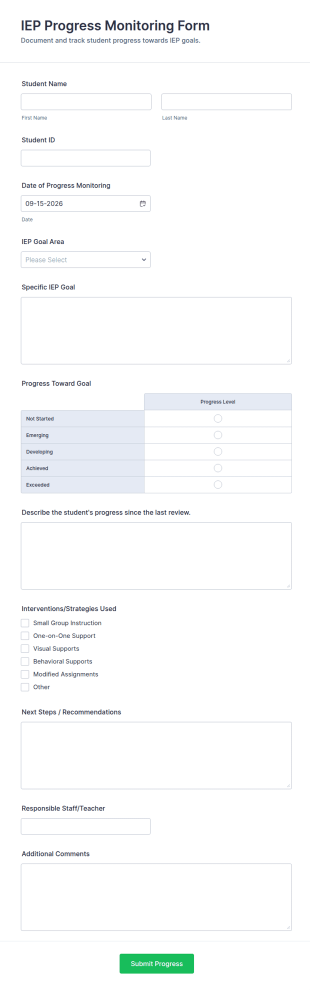
IEP Progress Monitoring Form Template
Track student progress toward IEP goals with the IEP Progress Monitoring Form, designed for special education teams to document updates, interventions, and next steps for consistent data collection over time.
Go to Category:Education Forms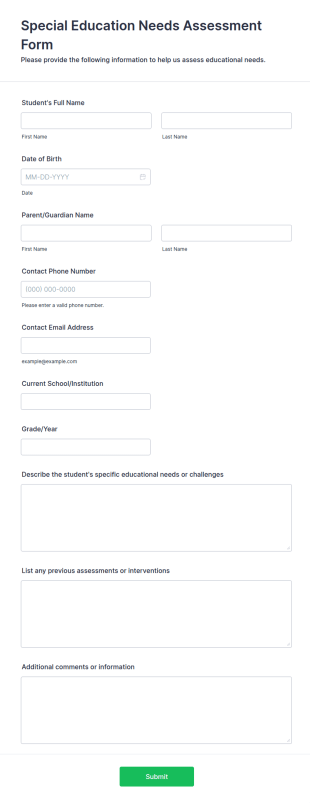
Special Education Needs Assessment Form
The Special Education Needs Assessment Form helps educators and parents evaluate students requiring special education services, ensuring effective data collection and communication.
Go to Category:Assessment Forms
Section 504 Teacher Input Form
Collect consistent classroom input for Section 504 reviews with the Section 504 Teacher Input Form, helping schools and educators document observations quickly and keep data collection organized in Jotform.
Go to Category:K-12 Forms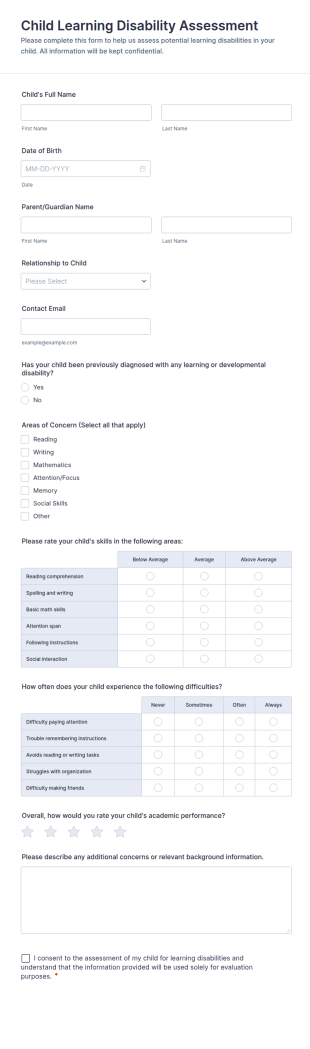
Child Learning Disability Assessment Form
Collect parent and guardian input for evaluations with the Child Learning Disability Assessment Form, ideal for schools and educational support providers using Jotform for consistent data collection and organized form submissions.
Go to Category:Assessment Forms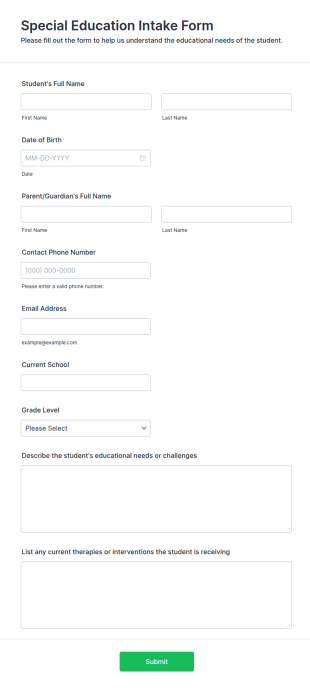
Special Education Intake Form
The Special Education Intake Form helps educators collect essential information from parents of children requiring special education services, ensuring proper support and resources are provided.
Go to Category:Education Forms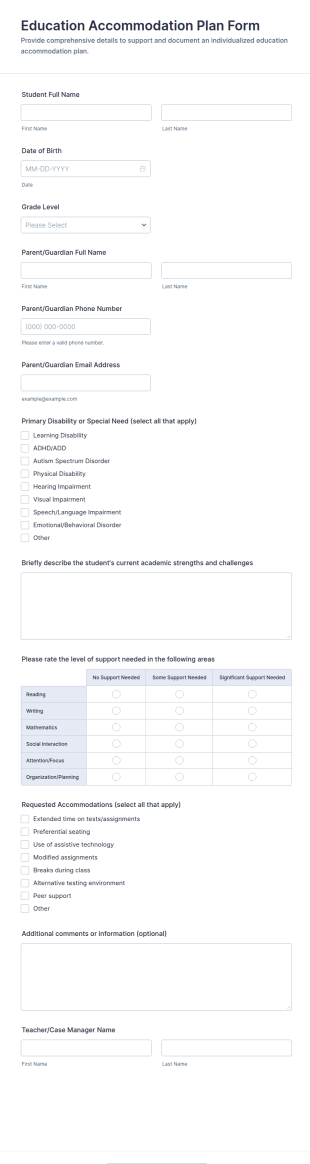
Education Accommodation Plan Form
Education Accommodation Plan Form supports schools in collecting student support needs and requested accommodations, capturing parent or guardian consent, and organizing data collection through Jotform for faster coordination.
Go to Category:Education Forms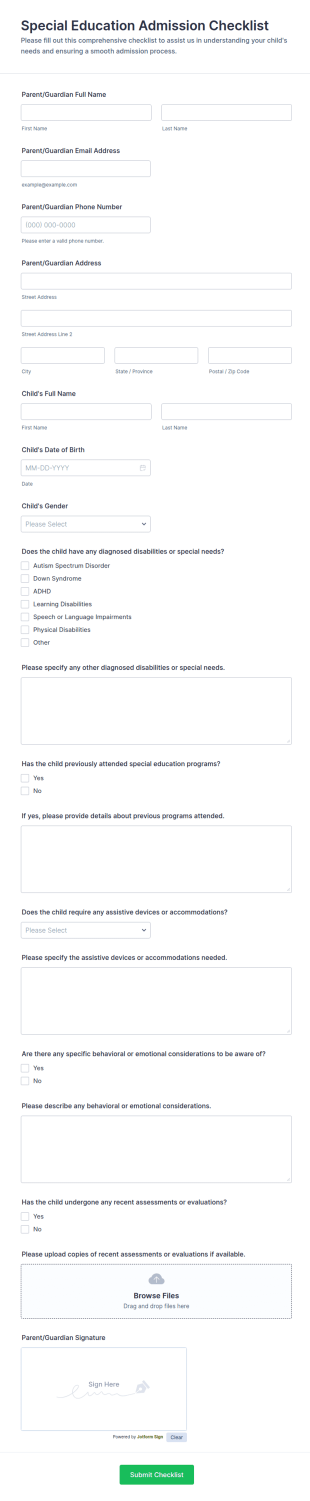
Special Education Admission Checklist Form Template
A Special Education Admission Checklist Form Template is an essential tool for educators and administrators in streamlining the admission process for special education students.
Go to Category:Education Forms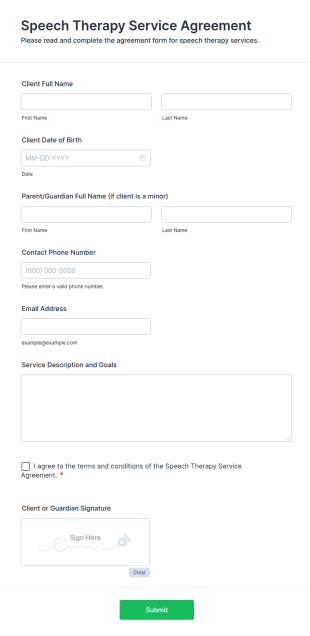
Speech Therapy Service Agreement
The Speech Therapy Service Agreement outlines the terms of therapy services for clients and therapists, ensuring clarity and understanding of the therapy process.
Go to Category:Healthcare Forms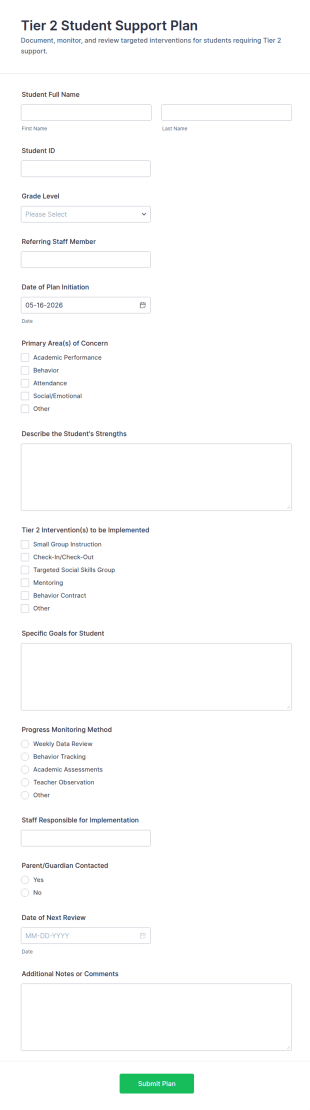
Tier 2 Student Support Plan
Tier 2 Student Support Plan Form helps K-12 teams document interventions, assign responsibilities, and monitor progress with consistent data collection and organized form submissions in Jotform.
Go to Category:K-12 Forms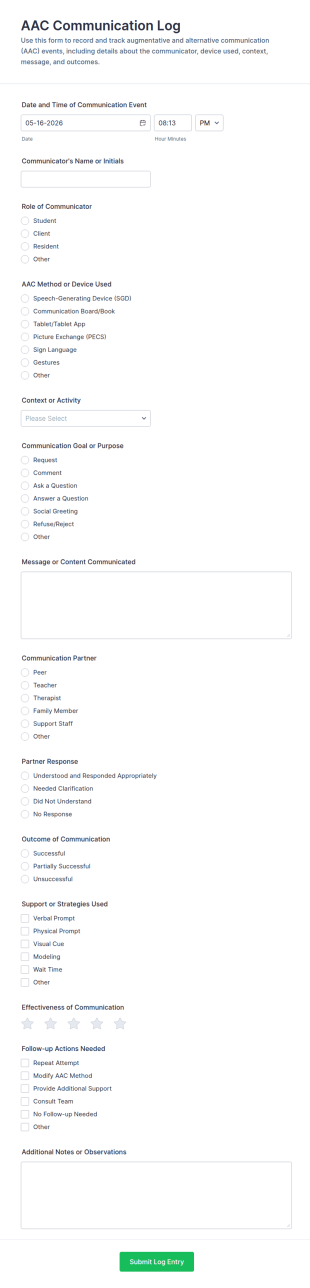
Augmentative And Alternative Communication (AAC) Communication Log
AAC Communication Log Form helps educators, therapists, and caregivers document AAC interactions for better team communication, consistent data collection, and easy review of progress over time with Jotform.
Go to Category:Special Education Forms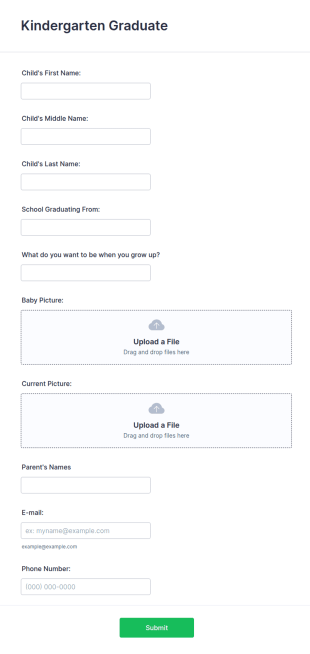
Kindergarten Graduation Information Form
A Kindergarten Graduation Information Form is a template designed to simplify the gathering of critical graduation details. This tool minimizes the workload of educators, allowing them to focus less on administrative tasks. With this template, schools can easily manage all the necessary information.
Go to Category:Education Forms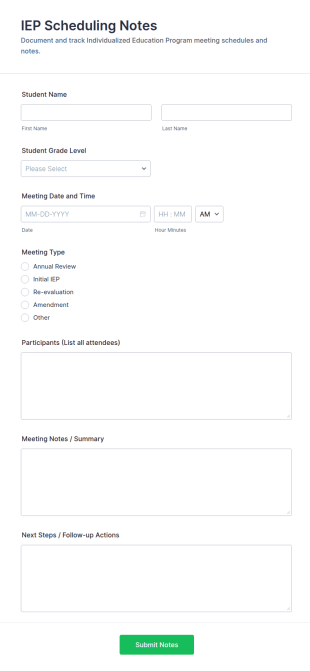
IEP Scheduling Notes
IEP Scheduling Notes Form helps special education teams document IEP meetings, track attendees, record summaries, and log follow-up actions in one organized, reusable Jotform template.
Go to Category:Education Forms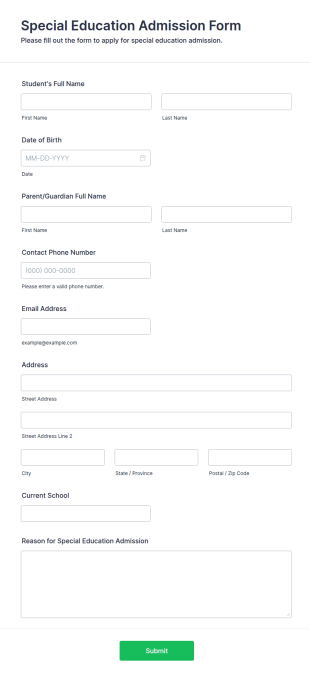
Special Education Admission Form
The Special Education Admission Form helps educational institutions collect essential information for students seeking admission into special education programs, ensuring a smooth and tailored admission process.
Go to Category:Education Forms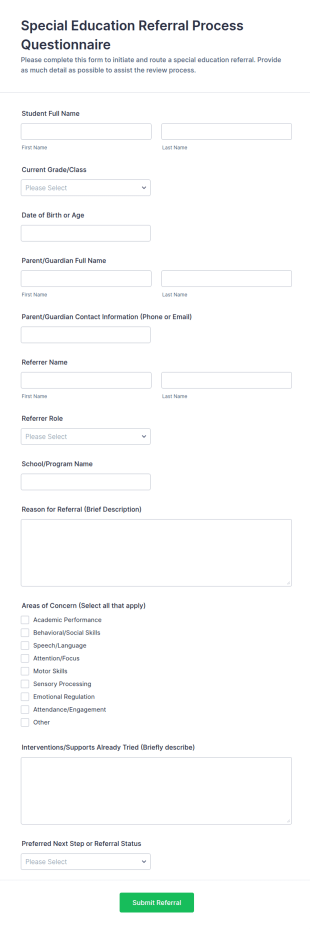
Special Education Referral Process Questionnaire Form
Special Education Referral Process Questionnaire Form helps schools and student support teams standardize referral intake online, centralize data collection, and route requests for review with Jotform.
Go to Category:Questionnaire Templates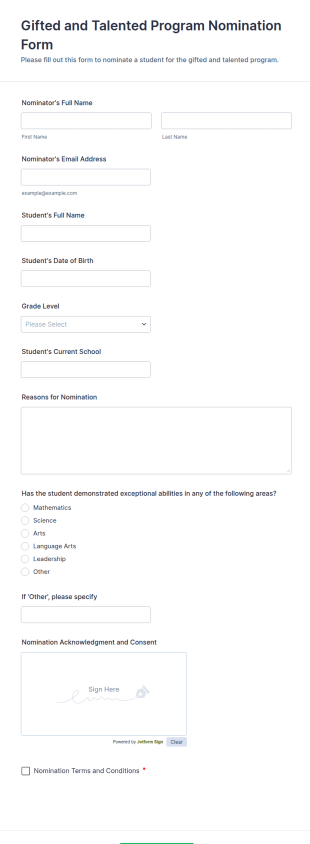
Gifted And Talented Program Nomination Form
Gifted and Talented Program Nomination Form helps schools collect student nominations online, organize referrals for review, and centralize data collection in Jotform for teachers, counselors, and families.
Go to Category:Nomination Forms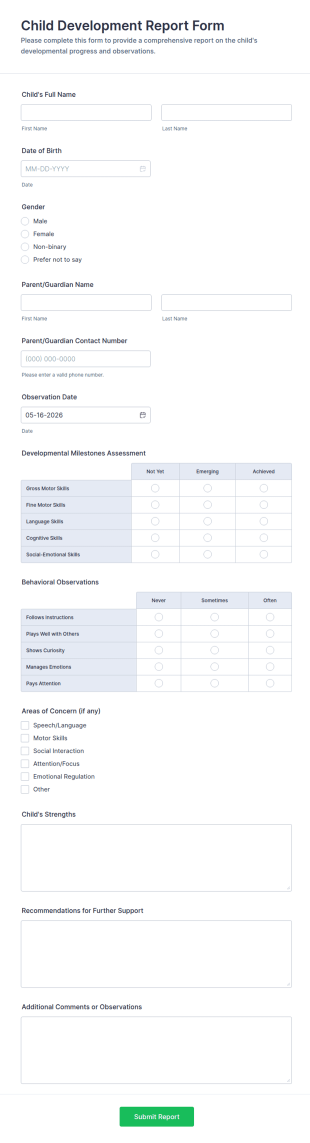
Child Development Report Form
Child Development Report Form helps childcare centers, educators, and support teams document observations and track progress over time using Jotform for consistent data collection and easy sharing.
Go to Category:Report Forms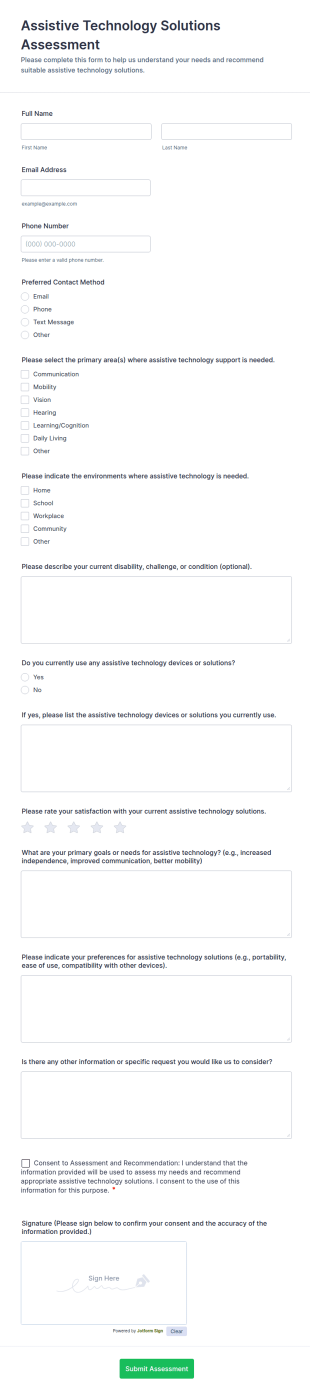
Assistive Technology Solutions Assessment
Assistive Technology Solutions Assessment Form Template for Jotform helps teams collect assessment requests and prepare recommendations for assistive technology needs across home, school, or work settings.
Go to Category:Assessment Forms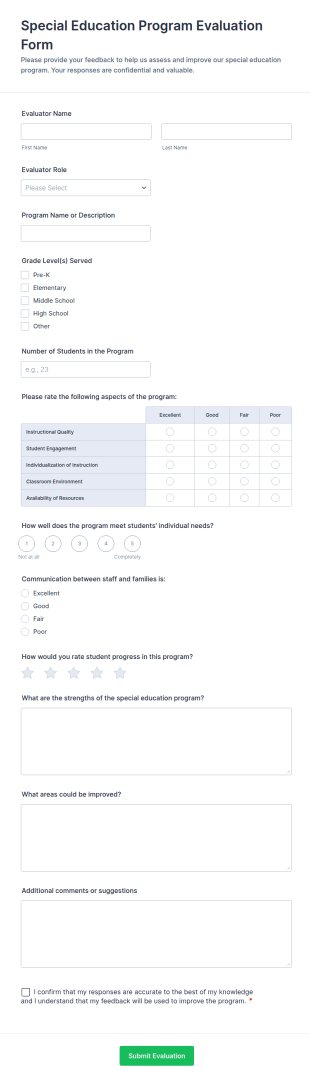
Special Education Program Evaluation Form
Special Education Program Evaluation Form Template for schools and districts to collect program feedback, track perceptions of student progress, and support ongoing improvement using Jotform data collection and form submission workflows.
Go to Category:Special Education FormsAbout Special Education Forms
Special education forms are structured documents used to collect, document, and manage information related to special education services, accommodations, and student support plans. They help schools and support teams coordinate evaluations, eligibility decisions, individualized planning, and ongoing progress tracking in a consistent way. Special education forms are commonly used by schools, special education departments, counselors, psychologists, and family support teams for referrals, assessments, IEP-related documentation, accommodation requests, service delivery records, and parent communication. By standardizing these workflows, special education forms improve clarity, reduce administrative delays, and support better collaboration between educators and families.
With Jotform, special education forms can be created quickly using a no-code, drag-and-drop Form Builder and tailored to different school processes and student needs. Conditional logic can show the right questions based on grade level, referral reason, or service type, while file upload fields can collect supporting documents. Submissions are stored in Jotform Tables, making it easier for authorized staff to review requests, track documentation, and maintain organized records. Automated notifications can help route forms to the correct team members and keep timelines moving.
Use Cases of Special Education Forms
Special education forms support referral, evaluation, planning, and service documentation across student support processes. Below are common ways these forms are used and the problems they help solve.
Possible Use Cases:
- Special education referral and pre-evaluation intake
- Parent or teacher accommodation requests
- Evaluation and assessment documentation collection
- IEP meeting scheduling and participation confirmations
- Service delivery logs and progress monitoring
- Parent communication and consent collection
Problem-Solving Points:
- Centralize student support documentation and reduces scattered communication
- Help teams gather consistent details needed for evaluation and planning
- Support better coordination between teachers, specialists, and families
- Improve record keeping for follow-ups, meetings, and service tracking
Possible Owners and Users:
- Special education coordinators and case managers
- Teachers and classroom staff
- School psychologists and counselors
- Speech, occupational, or behavioral support providers
- Parents or guardians submitting forms and approvals
Differences of Creation Methods:
- Special education referral forms focus on observed concerns, classroom impact, interventions already tried, and why a formal evaluation is being requested.
- Accommodation and support request forms emphasize the student’s needs, requested adjustments, learning environment details, and documentation that supports the request.
- IEP and progress tracking forms prioritize goals, service minutes, progress notes, meeting outcomes, and action items for follow-up.
How to Create a Special Education Form
Creating a special education form with Jotform helps schools collect student support information in a consistent, organized way while keeping workflows clear for staff and families.
1. Choose a Template or Start from Scratch
In My Workspace, click “Create” and select “Form.” You can start from scratch or adapt an education intake template. A Classic Form works well for comprehensive referrals. A Card Form can guide staff or parents through step-by-step questions to reduce missing information.
2. Add Student and Request Context Fields
Use Add Element to collect student name, grade, school, teacher, and guardian contact info. Add a dropdown for request type such as referral, accommodation request, evaluation documentation, or progress update.
3. Collect the Right Information Based on Form Purpose
For referral forms, include fields for observed behaviors, learning challenges, frequency, and how the issue affects academic or social functioning. For accommodation requests, include requested supports, classroom context, and relevant documentation. For progress tracking, include goals, notes, and service details.
4. Use Conditional Logic to Keep the Form Focused
Conditional logic helps show different sections based on grade level, referral reason, or service type. For example, if “Speech support” is selected, show speech-related prompts. If “Behavioral concerns” is selected, show behavior tracking fields.
5. Add Consent and Communication Preferences
Include consent acknowledgments for parent participation and documentation collection if needed. Add communication preference fields for follow-ups and meeting scheduling.
6. Publish, Test, and Manage Submissions in Jotform Tables
Preview and test before sharing. Publish the form link to staff or families via email or your school portal. Submissions are stored in Jotform Tables, where authorized teams can filter by student, request type, and status.
Frequently Asked Questions
1. What are special education forms?
Special education forms are documents or online forms used to manage referrals, accommodations, evaluations, and support planning for students who may need special education services.
2. Why are special education forms important?
They standardize documentation, improve collaboration, and help schools coordinate evaluations and support services more efficiently.
3. What information is typically included in special education forms?
Common fields include student details, observed concerns, interventions attempted, requested supports, evaluation notes, consent acknowledgments, and progress updates.
4. Who uses special education forms?
Special education teams, teachers, counselors, psychologists, service providers, and parents or guardians may all use special education forms.
5. Are special education forms used only for IEPs?
No. They are also used for referrals, evaluations, accommodation requests, service logs, parent consent, and progress monitoring.
6. Can special education forms be completed online?
Yes. Online forms make it easier to collect information from teachers and families and keep records organized in one place.
7. How do special education forms help with coordination?
They create consistent inputs for meetings and planning, reduce missing details, and help route requests to the right staff quickly.
8. Can special education forms be customized by school process?
Yes. Schools can tailor fields, logic, and workflows to fit their referral steps, service models, and documentation requirements.