According to the Substance Abuse and Mental Health Services Administration, over one in five US adults experience mental illness every year. However, affordable care isn’t always accessible. A significant portion of US residents live in areas with a shortage of mental health professionals. And for those without health insurance, finding the cash to pay for services out of pocket can be a struggle.
Mental health and wellness apps help bridge the care gap with accessible features. While they can’t replace professional medical treatment, they provide valuable support for managing day-to-day anxiety, stress, burnout, and sleep issues. Some connect users with licensed mental health providers for online therapy, counseling, and psychiatric care. Users can meet with therapists online and via text, enabling them to get help regardless of their location.
Today’s mental wellness apps include resources such as guided sleep stories, meditations, and cognitive behavioral therapy (CBT) exercises. Some include AI-powered chatbots that users can speak to and get guidance from.
In this guide, we review the 10 best apps for mental health and meditation in 2026. Use it to find your next mental health app or as inspiration for creating your own Jotform wellness apps.
The best mental health apps
Here’s a look at the top mental health and meditation apps from commercial providers. These solutions offer a variety of features that reduce stress, improve sleep, and enhance overall well-being.
 Headspace |  Calm |  Insight Timer |  Talkspace |  BetterHelp |  MindShift CBT |  Dario Mind |  Moodfit |  Wysa |  Daylio | |
|---|---|---|---|---|---|---|---|---|---|---|
| Best for | Building mindfulness skills | Relaxation and stress relief | Beginning to advanced meditators | Full-spectrum therapy and psychiatric care | Online therapy and counseling | Managing day-to-day anxiety and stress | Breaking negative thought patterns | Everyday mood and activity tracking | Anytime wellness chats with AI | Goal-setting and happiness-tracking |
| Core focus | Healthy habits | Better sleep | Meditation | Comprehensive therapy | Virtual therapy | Anxiety management | Life management skills | Wellness monitoring | 24-7 conversational well-being support | Mood diary |
| Live therapy available | ||||||||||
| Free plan/Trial |
1. Headspace
Best for: Building mindfulness skills
Why it made the list: Large library of meditations for anxiety, sleep, and stress
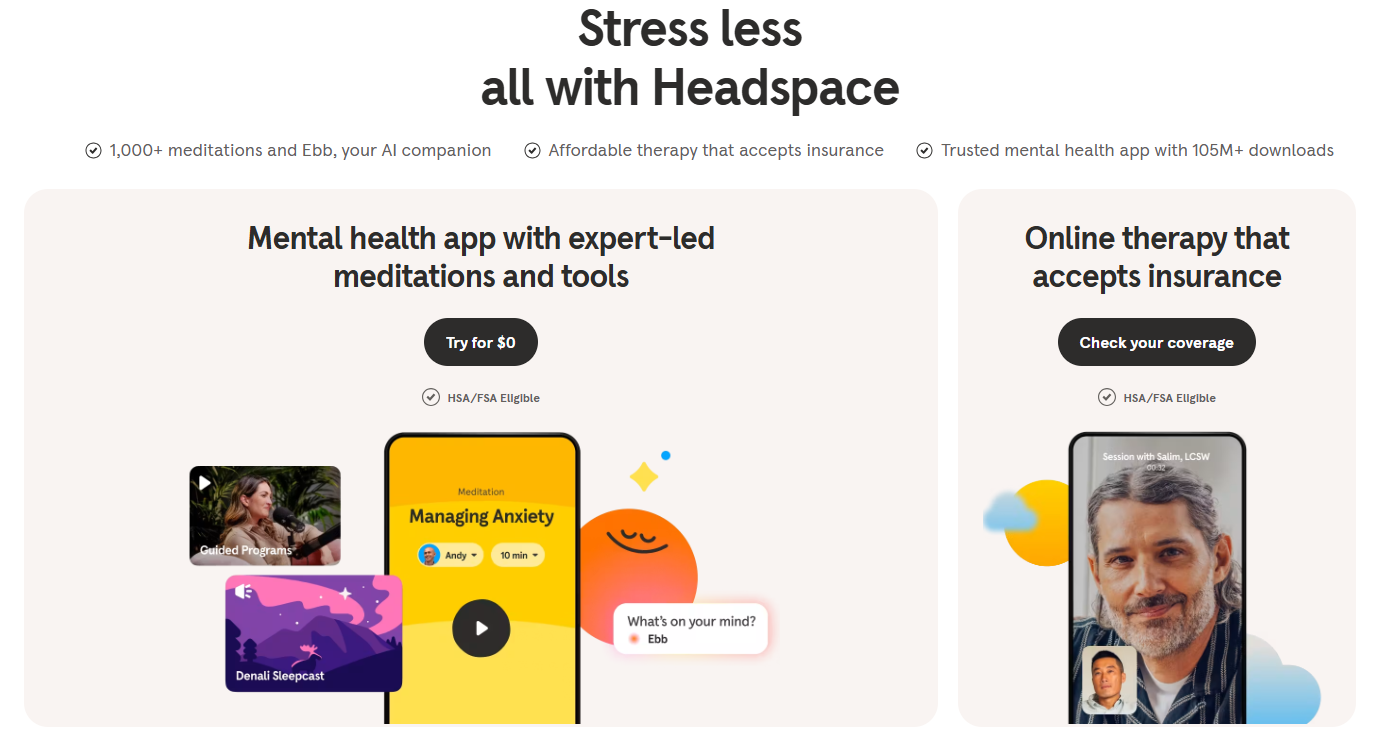
Headspace provides a host of digital resources, including prerecorded meditations and sound playlists, to improve sleep, relieve anxiety, and support overall wellness.
Users who have trouble falling asleep can access the Headspace library of bedtime stories, relaxing music, and guided meditations. The app includes CBT programs that help people understand and process their thoughts, which may help reduce anxiety and depression. Also available are guided yoga and fitness sessions that promote physical and mental wellness.
Headspace also offers virtual therapy. It matches users with a licensed therapist based on their needs. Therapists are certified by accredited institutions or hold a master’s degree in a psychology-related field.
Sessions are often free with a qualifying health insurance plan. Text-based online wellness coaching is available through a monthly plan. Coaches help customers set goals and build healthier habits.
Headspace is one of the more expensive wellness apps, so it may not be suitable for those looking for an affordable option. Experienced meditators may find its beginner-friendly library too basic for their needs.
Pricing
- Annual: $69.99 per year; includes the full Headspace library of meditations, sleep playlists and stories, focus music, and yoga and fitness support.
- Monthly: $12.99 per month; includes all features of the Annual plan.
- Online mental health and wellness coaching: $99.99 per month; includes three 30-minute text-based coaching sessions, plus a personalized development plan.
- Online therapy: Varies by insurance plan; includes live video therapy sessions with a licensed mental health professional.
2. Calm
Best for: Relaxation and stress relief
Why it made the list: Comprehensive library of sleep meditations, stories, and music
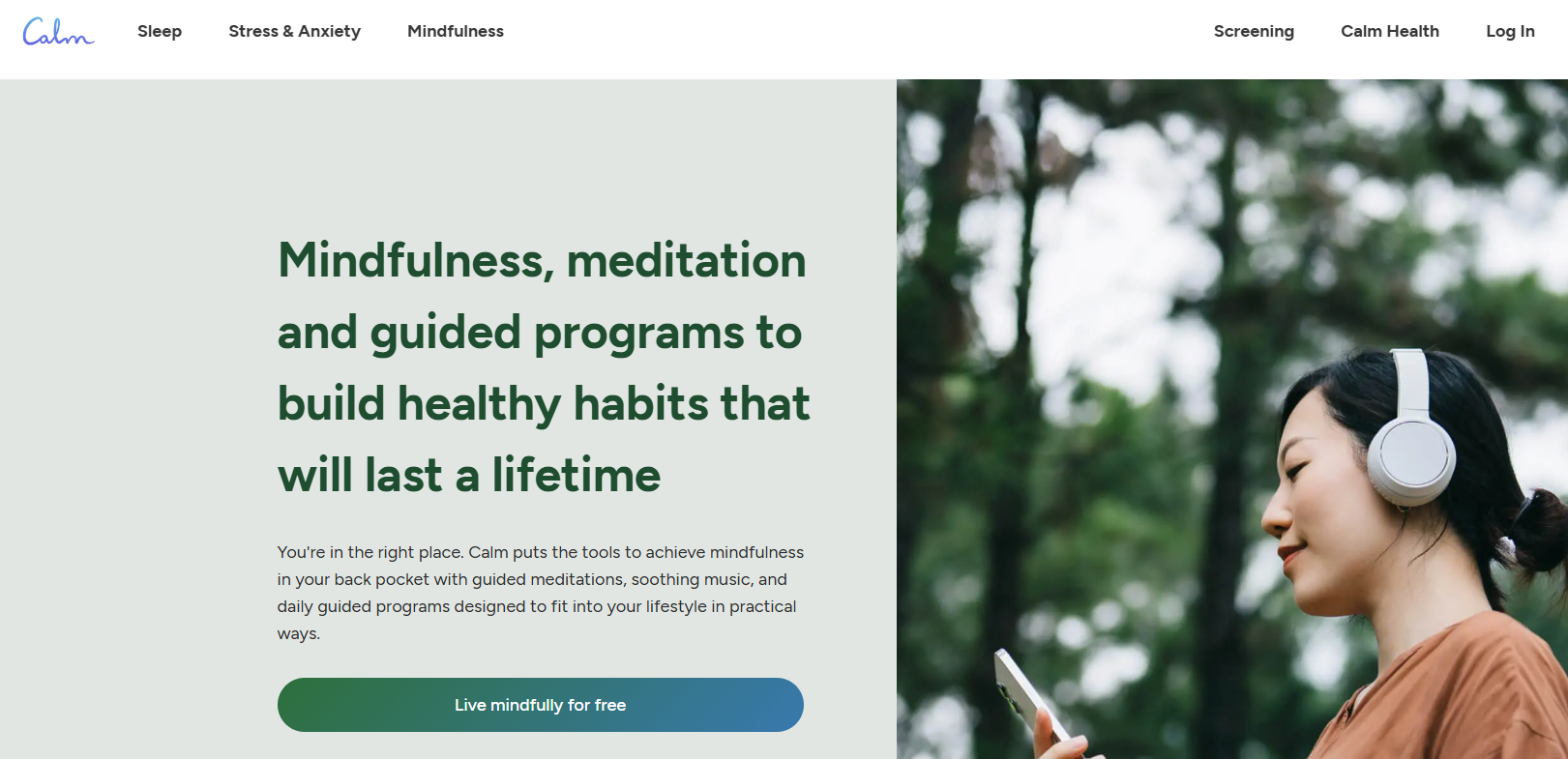
If you struggle to wind down at night, Calm is worth considering. Its primary focuses are stress management and better sleep, and it offers prerecorded meditations, sleep stories, and soundscapes.
Every Calm subscription includes a library of over 500 sleep stories, some of which are narrated by celebrities such as Jennifer Garner and Matthew McConaughey. Stories range from five minutes to over an hour long, so you can pick one that fits your relaxation needs. Nature soundscapes and white-noise tracks that aid sleep are also available.
Those who need help managing stress or improving focus may benefit from Calm’s guided meditations. The catalog includes grounding exercises and breathwork that help redirect negative thoughts.
Although Calm offers extensive content for sleep and anxiety, it doesn’t offer one-on-one therapy or counseling. It’s also more expensive than similar apps (such as Headspace), even though it provides fewer features.
Pricing
- Basic: Calm’s free plan; with it, users get limited access to sleep stories, plus gratitude and mood check-ins.
- Premium: $79.99 per year; includes access to all Calm content, including sleep stories, meditations, soundscapes, and kid-friendly sleep content.
- Premium Family: $99.99 per year; provides six Premium accounts with access to all Calm content. Users don’t have to live in the same household.
3. Insight Timer
Best for: Beginning to advanced meditators
Why it made the list: Huge library of meditations and lots of free content
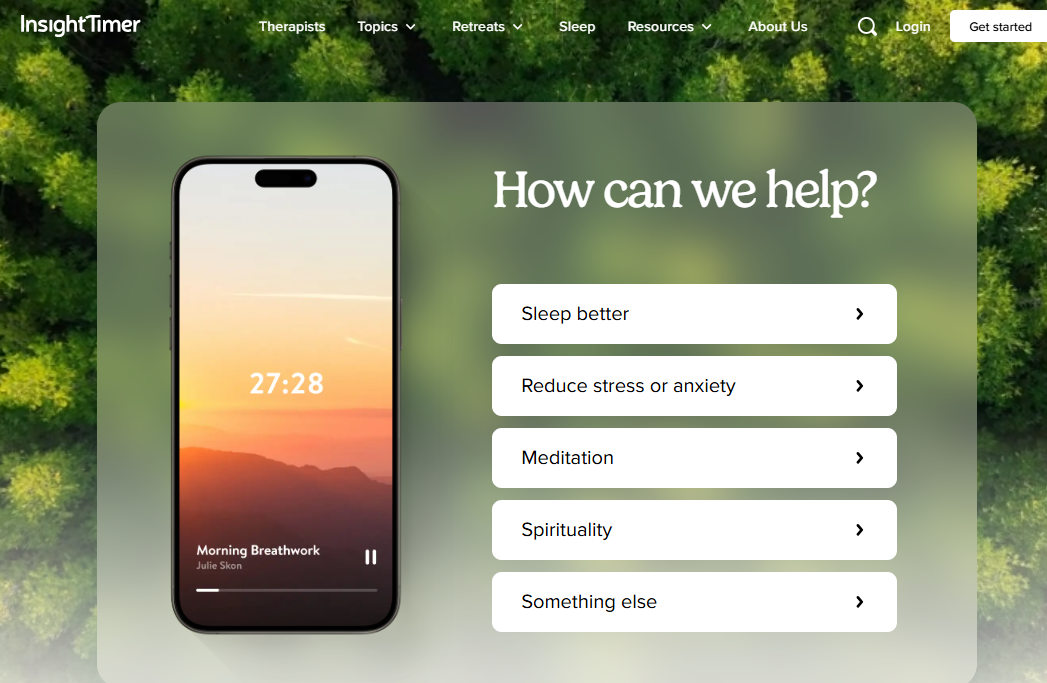
Insight Timer offers over 340,000 meditations, making it the largest meditation library available through any app. Meditations are available to help you sleep, relax, relieve anxiety, and practice self-acceptance. The library also includes support for emotional positivity, happiness, mindfulness, gratitude, and spirituality.
While Insight Timer’s strongest feature is its meditations, it also offers other content, such as soundscapes and bedtime stories. Like Calm, it has tools to help restless kids unwind and fall asleep.
Unique to Insight Timer is its support for in-person meditation retreats. Users can find and book retreats in countries across North America, South America, Europe, Australia, and Asia. Retreats offer activities such as guided meditation, yoga, breathwork, and hiking.
Where Insight Timer shines is its personalization. It recommends meditations and content based on how you’re feeling and what you’re hoping to improve. It also allows you to track your mood and write your thoughts in a journal. However, it lacks the therapy and online coaching features available with other tools.
Pricing
Insight Timer is free. All features, including its over 340,000 meditations, bedtime stories, soundscapes, and journal tools, are accessible to anyone who downloads the app.
4. Talkspace
Best for: Full-spectrum therapy and psychiatric care
Why it made the list: Offers supportive online therapy for over 150 conditions
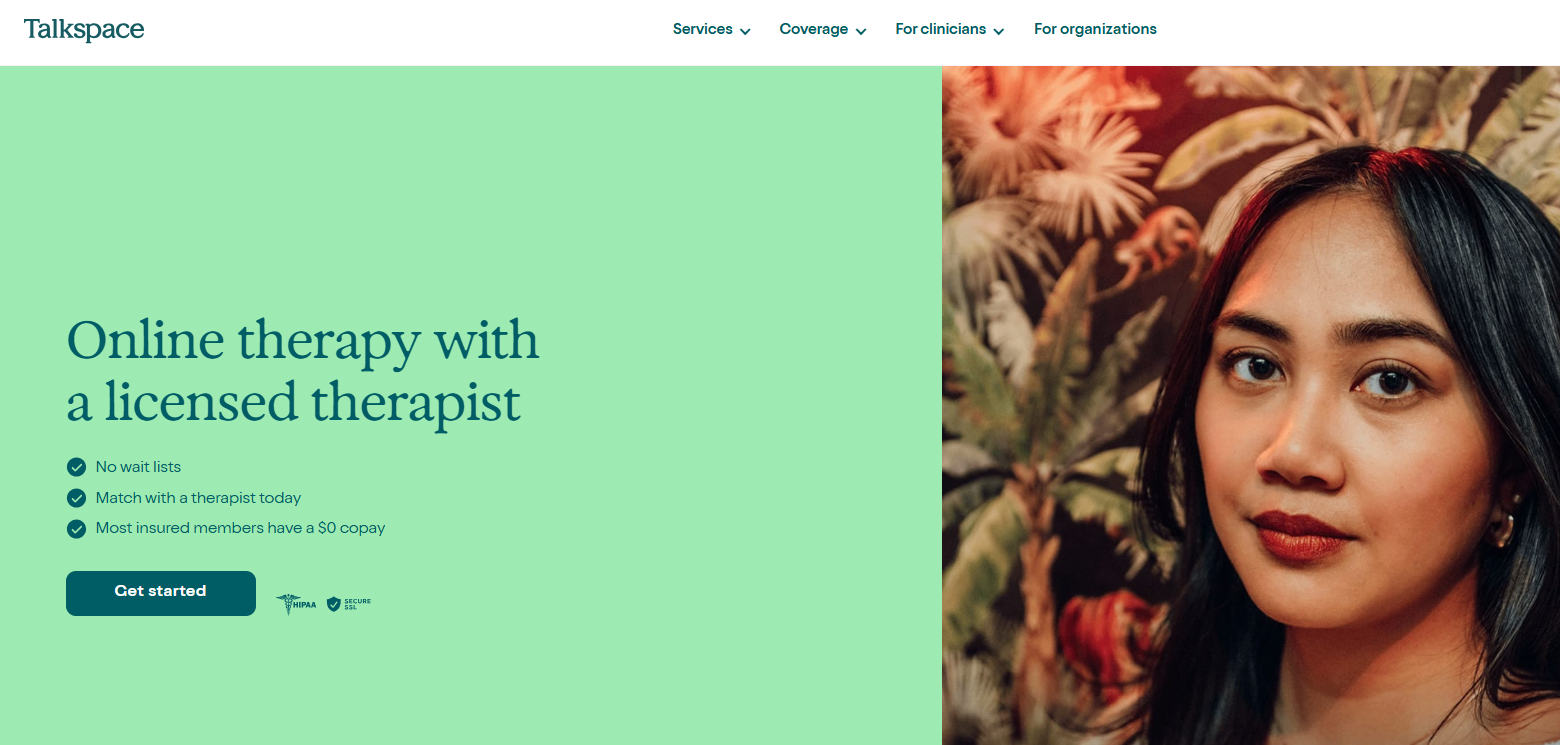
Talkspace is a virtual therapy app. Customers can use the app to connect with licensed therapists online, by phone, or via text.
Therapists offer counseling for many common mental health conditions, including anxiety, depression, insomnia, post-traumatic stress disorder, and bipolar disorder. While other apps focus exclusively on CBT, Talkspace therapists offer other approaches, including emotion-focused, dialectical behavior, and somatic therapy.
Talkspace therapists accept most major US commercial health insurance plans, and some clients may have a $0 co-pay. The average co-pay is $10. And while in-person providers follow general business hours, Talkspace makes it possible to find a therapist who works with your schedule.
Unlike other wellness apps, Talkspace doesn’t offer content libraries. People without health insurance will need to pay for their sessions out of pocket, and some insurance providers charge a co-pay.
Pricing
Talkspace charges by the week. Without insurance coverage, plan costs are:
- Messaging therapy: $69 per week; allows unlimited text, audio, or video messages to your therapist anytime. You’re guaranteed responses five days a week.
- Live session: $99 per week; includes up to four 30-minute video meetings per month, plus unlimited messaging.
- Live session and messaging premium: $109 per week; includes messaging and four monthly video meetings, plus therapist-led weekly workshops.
Support is available for online psychiatric evaluations and medical prescriptions. These costs aren’t included in a subscription but may be partially covered by health insurance.
Specialized therapy for teens and couples is available at an extra cost.
5. BetterHelp
Best for: Online therapy and counseling
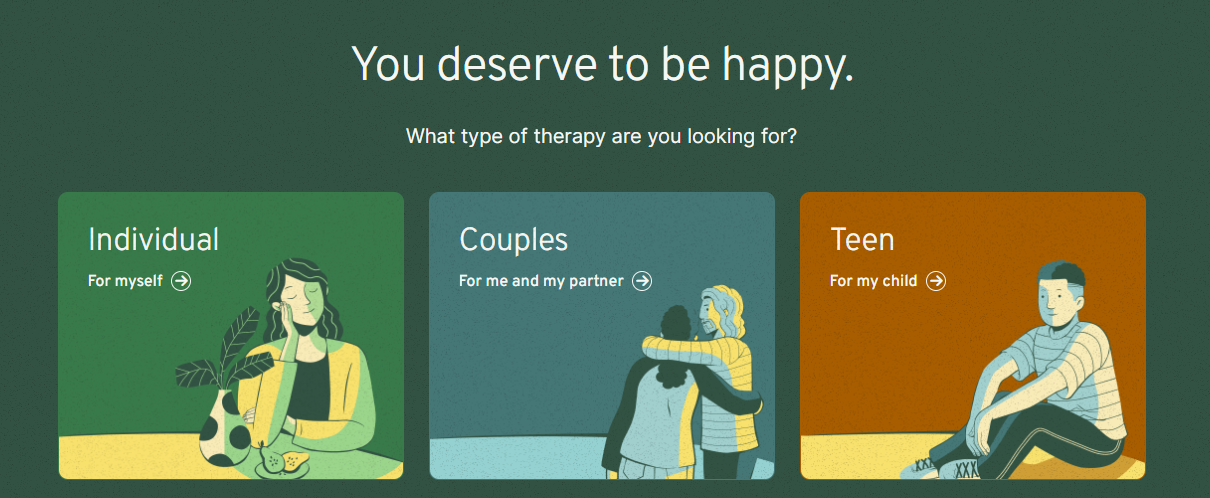
Why it made the list: Provides licensed therapy services for individuals, couples, and teens
BetterHelp offers a wide variety of licensed therapists. It matches users with a practitioner based on their self-assessment, location, insurance coverage, and needs.
Like Talkspace, BetterHelp includes anytime messaging and regular therapy sessions with a licensed provider. Users also get access to a habit tracker and journal, where they can monitor their day-to-day moods and thoughts.
While Talkspace is exclusively available to a US audience, BetterHelp accepts users in Canada, the UK, Australia, France, Germany, and the Netherlands. Its accessibility makes it attractive to overseas clients.
However, BetterHelp lacks the psychiatric care support that Talkspace has. Clients can’t meet with a psychiatrist or obtain prescriptions. This may deter users who need more comprehensive support. It’s also more expensive than Talkspace, although insurance can reduce costs.
Pricing
BetterHelp doesn’t offer set pricing. Instead, it publishes average rates that vary based on your location, therapist availability, insurance coverage, and other factors. Current average rates are $70–$100 per week in the United States, €50–€70 in the European Union, £45–£70 in the UK, and AUD $90–$120 in Australia.
All BetterHelp subscriptions include a weekly live therapy session, anytime messaging, access to support tools, and the app’s built-in journal and habit tracker.
6. MindShift CBT
Best for: Managing day-to-day anxiety and stress
Why it made the list: Offers guided exercises and relaxation tools at no cost
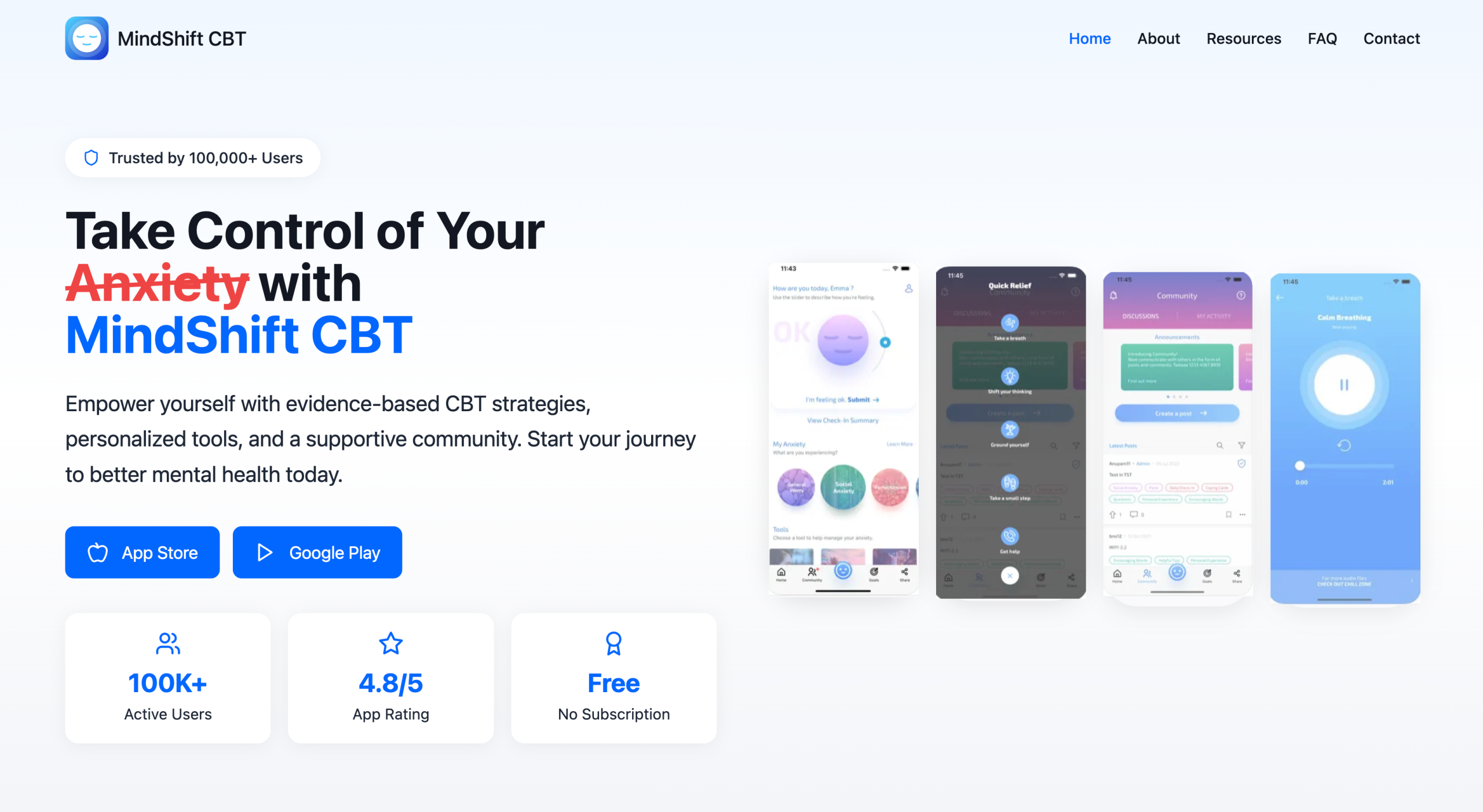
MindShift CBT offers support for anxiety with tools to help you work through everyday stress and acute panic attacks. It uses AI to create a customized plan based on your symptoms and triggers. Its resources include relaxation exercises and CBT strategies to help you manage anxiety.
While MindShift CBT can’t connect you with a licensed therapist, it includes educational videos and articles to help you understand how anxiety works and the best ways to control it. A moderated community support board, where you can share your experiences and connect with others for encouragement, is also available. The app includes a progress tracker, so you can monitor your moods and coping responses over time. Most MindShift CBT features are available offline.
Pricing
MindShift CBT is free to download and use. You don’t need a subscription to access its full set of features.
7. Dario Mind
Best for: Breaking negative thought patterns
Why it made the list: Provides free science-backed activities designed to build healthier habits
Dario Mind (formerly Twill Therapeutics and Happify) helps people reduce stress and ease worries through activities and games. You start by filling out a survey, which Dario Mind uses to recommend a track. Tracks are made up of activities that develop well-being skills. They fit into one of six categories:
- Savor: Teaches users to enjoy the moment
- Thank: Develops gratitude and appreciation
- Aspire: Shows users how to be optimistic about the future and set goals
- Give: Encourages users to be kind and give to others
- Empathize: Teaches users to understand other people’s thoughts and ideas
- Revive: Shows users how to develop better sleeping, eating, and exercise habits
You earn virtual silver and gold medals as you work through each part of the track. Depending on your privacy settings, you can also share insights with the app community.
Dario Mind takes a science-backed approach to mindfulness. Every activity is linked to a research article that explains how it benefits you. And while its content library is far less robust than other apps, it recently introduced over 200 guided meditations.
Pricing
Dario Mind is free. There are no subscriptions, ads, or hidden fees.
8. Moodfit
Best for: Everyday mood and activity tracking
Why it made the list: Strong tracking features and data insights to help users understand what affects their mood
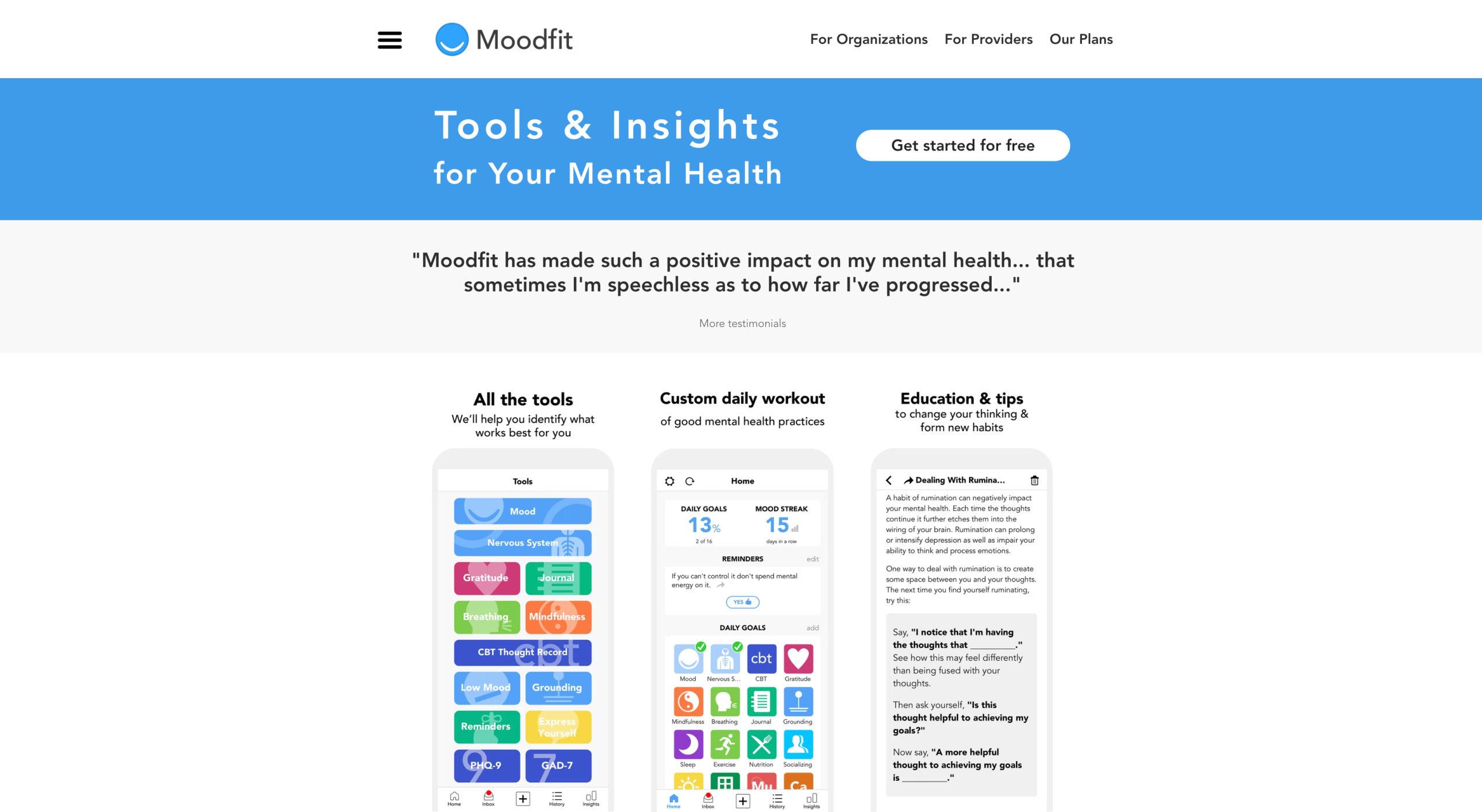
Moodfit is an app you can use to track your mood, diet, exercise, and sleep. You can manually input data into the daily mood tracker and view results over time. You can also create custom trackers for activities not directly supported by Moodfit.
The app’s goal-setting tools let you create daily and long-term objectives and check them off as you complete them. It includes a mood journal, where you can record how you felt during the day and what contributed to it. The journal is shareable, which is useful if you’re working with a therapist.
Every week and month, the app creates an autogenerated summary of your tracking activities. These charts are exportable, so you can save and share your records. Some charts are customizable.
Busy people may find it a challenge to maintain daily entries in Moodfit over the long term. And while it includes some basic meditation and breathwork tools, other apps offer more comprehensive options.
Pricing
- Free: Includes the mood journal and prompts to help you record your thoughts and feelings.
- Premium: $35.99 per year; unlocks mindfulness, meditation, personalized reports and data insights, goal setting, and other features.
9. Wysa AI Self-Help
Best for: Anytime wellness chats with AI
Why it made the list: Provides on-demand support for well-being through conversational AI
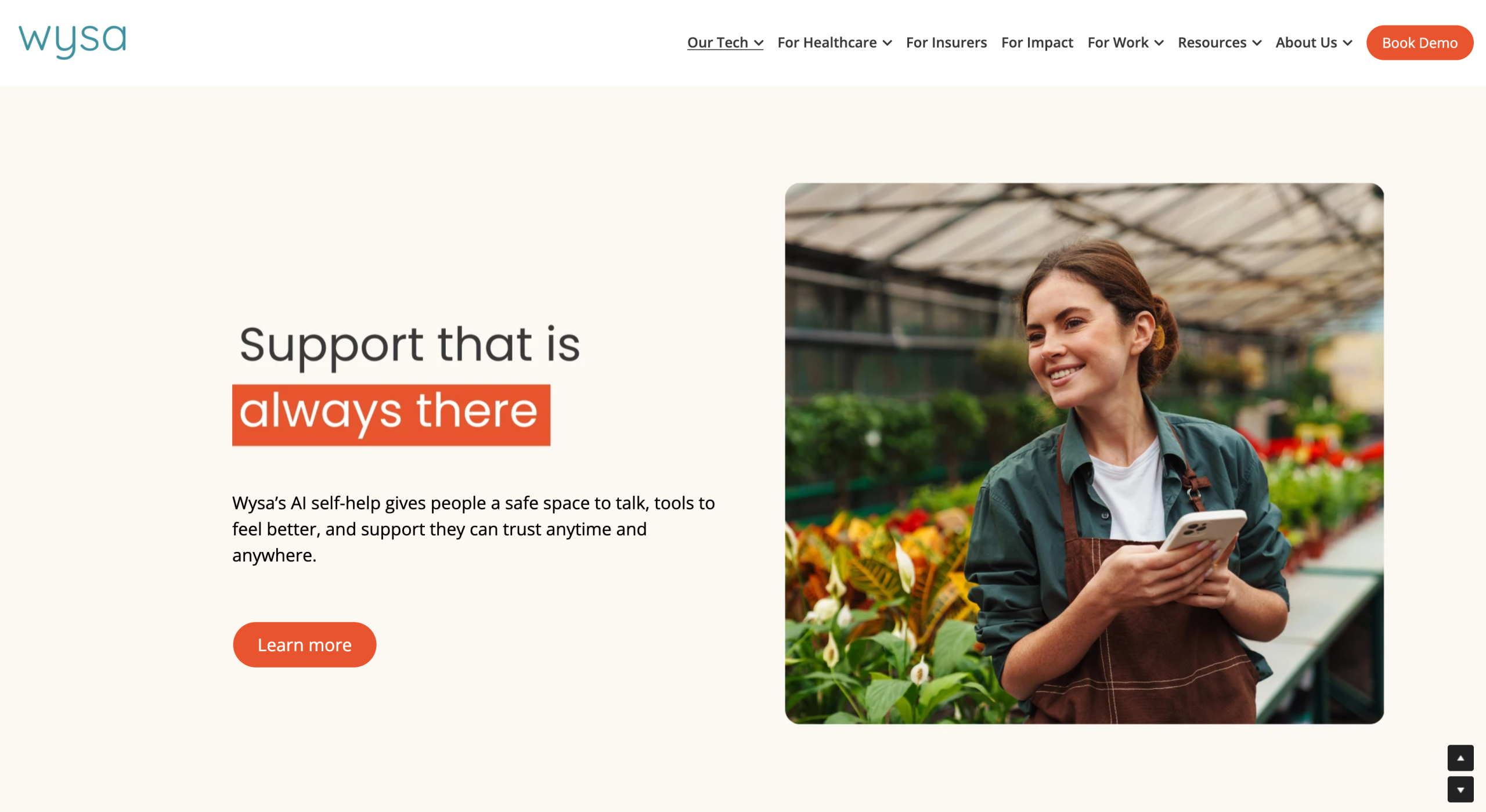
Wysa AI Self-Help offers 24-7 conversational support for everyday well-being issues, such as anxiety, stress, and sleep. You can start a discussion anytime, and Wysa’s AI will provide strategies to work through the problem. Its recommendations are evidence-based and include journaling prompts and mindfulness exercises.
Wysa is an option for those who hesitate to talk to a therapist because of stigma or scheduling issues. Its AI includes resources for breakups, work conflicts, loneliness, and building confidence. Wysa is trained to recognize signs of deeper issues, and it will recommend crisis resources or emergency support if it detects significant distress.
Wysa also offers text-based messaging and video coaching to select US and India subscribers. Opting for a paid plan also unlocks tools such as CBT worksheets and a wellness journal.
Wysa is ideal for users who are unsure about a therapy commitment but still want help. Its online coaching and messaging service is cheaper than alternatives such as Talkspace and BetterHelp, which makes it a good option for those paying out of pocket.
Pricing
- Free: Includes access to Wysa Self-Help AI.
- Premium: $19.99 per month or $104.99 per year; unlocks the Wysa tool library and four 30-minute in-app text sessions with a well-being coach per month.
- Therapist access: $49.99 per week, $124.99 per month, or $239.99 per quarter; includes a weekly 30-minute Zoom video call with a well-being coach.
10. Daylio
Best for: Goal-setting and happiness-tracking
Why it made the list: Ease of use because of simple tracking tools
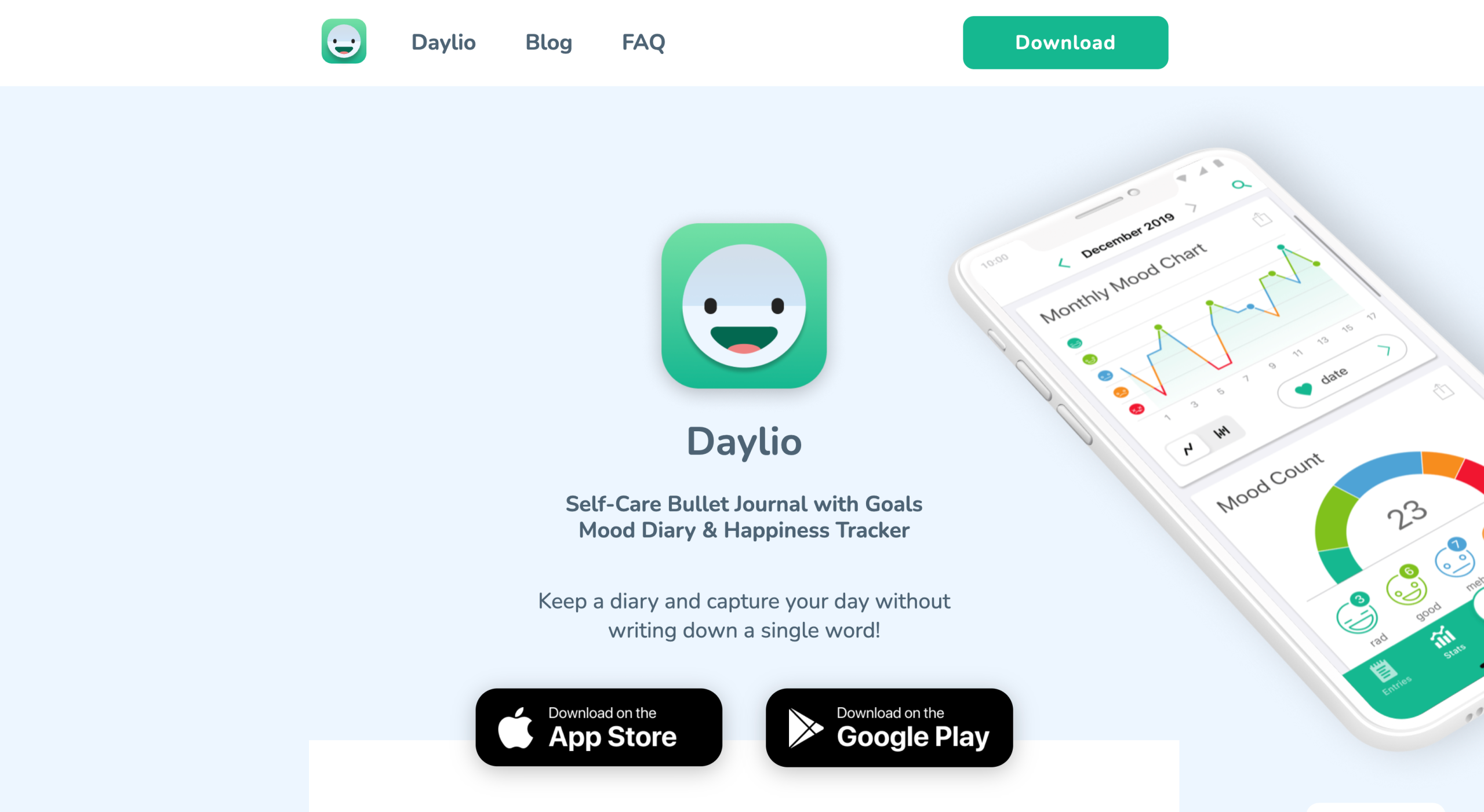
If you’ve noticed recent ups and downs in your mood, Daylio can help you uncover their source. This app encourages you to record how you feel and the activities you do every day. It converts your responses into charts and graphs, helping you pinpoint the activities that make you feel your best and worst.
While Daylio is similar to Moodfit, it’s much more user-friendly. You don’t have to calculate nutrition details or exercise stats. All that’s required is a summary of the activities you do during your day, which you can input with icons.
The ease of use is something of a trade-off. You may be more likely to enter daily details than you would on Moodfit, because it takes only a few minutes. But you also miss out on the deep-dive metrics that Moodfit can provide.
Data from Daylio is available to download, so you can share your logs with family, friends, and health providers. You also get a Year in Pixels, which summarizes your moods and activities for the year.
Pricing
- Free: Includes mood and activity tracker, goal-setting, and basic stats.
- Premium: $4.99 per month, $35.99 per year, or $59.99 for a lifetime subscription; unlocks advanced stats, custom moods, note templates, unlimited goals, and other features.
How to choose the best mental health and meditation app
Mental health and wellness apps offer tools for many concerns, whether you’re struggling with sleepless nights or want to track your overall wellness.
With so much variety, it’s important to determine your primary focus. From there, you can choose an app based on its features, costs, and overall suitability.
Here’s a rundown of our app recommendations based on common pain points and use cases:
- If you’re struggling with poor sleep: Choose Calm, Headspace, or Insight Timer.
- If you want online coaching or therapy: Opt for Talkspace, BetterHelp, or Wysa AI Self-Help.
- If you’re interested in wellness tracking: Choose Moodfit, Daylio, or Dario Mind.
- If you want free mental well-being support: Use Insight Timer, MindShift CBT, or Wysa AI Self-Help.
- If meditation, relaxation, and stress relief are your focus: Go with Headspace, Insight Timer, or MindShift CBT.
- If you want journaling tools: Choose Dario Mind, Insight Timer, or Moodfit.
- If you want community support: Opt for Insight Timer, Dario Mind, or MindShift CBT.
The best app is one that fits into your daily routine, aligns with your needs, and encourages regular self-reflection.
Looking to build your own mental health app? Try Jotform Apps
If you’re a wellness professional, a therapist, or an HR manager hoping to curtail staff burnout, generic commercial apps may not offer the branded customization you’re looking for. If you want to create your own mental wellness app, Jotform Apps, with its free app templates and AI App Builder, is a great resource.
With Jotform, you can create an app without coding. Drag-and-drop functionality lets you customize the app to match your branding and add media elements such as videos and links. You can also add forms and integrations that support appointment scheduling and payment collection.
Jotform has over 40 mental health app templates. Favorites include
- Mental Health Journal App: Ideal for psychiatrists, psychologists, and therapists. Clients can record their feelings and day-to-day notes between sessions and share them with you. Professionals can also embed resources to help clients work through common issues.
- Self Harm Tracking App: Provides a structured space for individuals to record incidents, review patterns over time, and access support resources, including when used alongside a counselor or care team.
- Mindful Meditation App: Perfect for wellness coaches, therapists, and mental health clinics. Use the app to share guided meditations, inform clients of upcoming workshops, and manage appointments.
- Daily Journal App: Suitable for all wellness and mental health practitioners. Use it to set goals, track progress, and manage priorities. Its note feature lets clients record their daily activities and feelings.
If our templates don’t fit your needs, try the Jotform AI App Builder. Simply enter a prompt, image, URL, or file, and Jotform will generate an app that meets your requirements. From there, you can add widgets for daily mood tracking, embed your own meditation audio files, and securely collect patient intake forms. AI-generated apps are fully customizable, including colors, features, elements, and integrations.
Get started with building your own custom mental health app for free with Jotform Apps.
Individuals struggling with anxiety, stress, or sleep who want accessible, mobile-friendly tools to improve their mental well-being. It also targets HR managers, therapists, and life coaches looking for software solutions to support their teams or patients.






























































































Send Comment: