
Building an app used to require a background in software development and extensive coding experience, but that’s no longer the case. Today, you can build an app with AI without writing a single line of code. Emergent and Lovable are both AI app builder platforms that let you describe your idea in plain language and watch AI turn it into a working app before your eyes.
The hard part is choosing the best platform for creating an app without coding. When comparing Emergent vs Lovable, what you care about most in the platform determines the winner.
Here’s the TL;DR version:
- If you need to build a functional, full-stack app quickly, Emergent may be the right choice.
- If your focus is on design, UI, and your app’s look and feel, Lovable may suit you better.
That’s the short answer, but it doesn’t contain all the necessary context, nuance, and detail, such as how credits, pricing, or deployment work. There’s also a third option to consider if you’d rather sidestep the AI builder learning curve altogether.
Scan the following table for a quick side-by-side comparison, and then read on for more information as we break down the Emergent vs Lovable AI app-building platforms.
 Lovable |  Emergent |  Jotform Apps | |
|---|---|---|---|
| Who it's for | Founders and teams who want design-forward apps and sites | SMB owners, PMs, and ops teams who want a working full-stack app | Businesses, schools, nonprofits, and teams that need shareable apps |
| AI features | Chat-based builder that turns prompts into apps | AI agents that design, code, and deploy from a chat interface | Ability to build from scratch or from a prompt or template |
| Design and UI control | Ability to iterate on the design in chat until you like the result | Generated user interface (UI) as part of the full-stack build | Drag-and-drop editor with visuals, videos, links, and branding |
| Free trial | Free to start; paid plans add credits | Free plan with 10 monthly credits | Free Starter plan |
| Try now! |
What is Emergent?
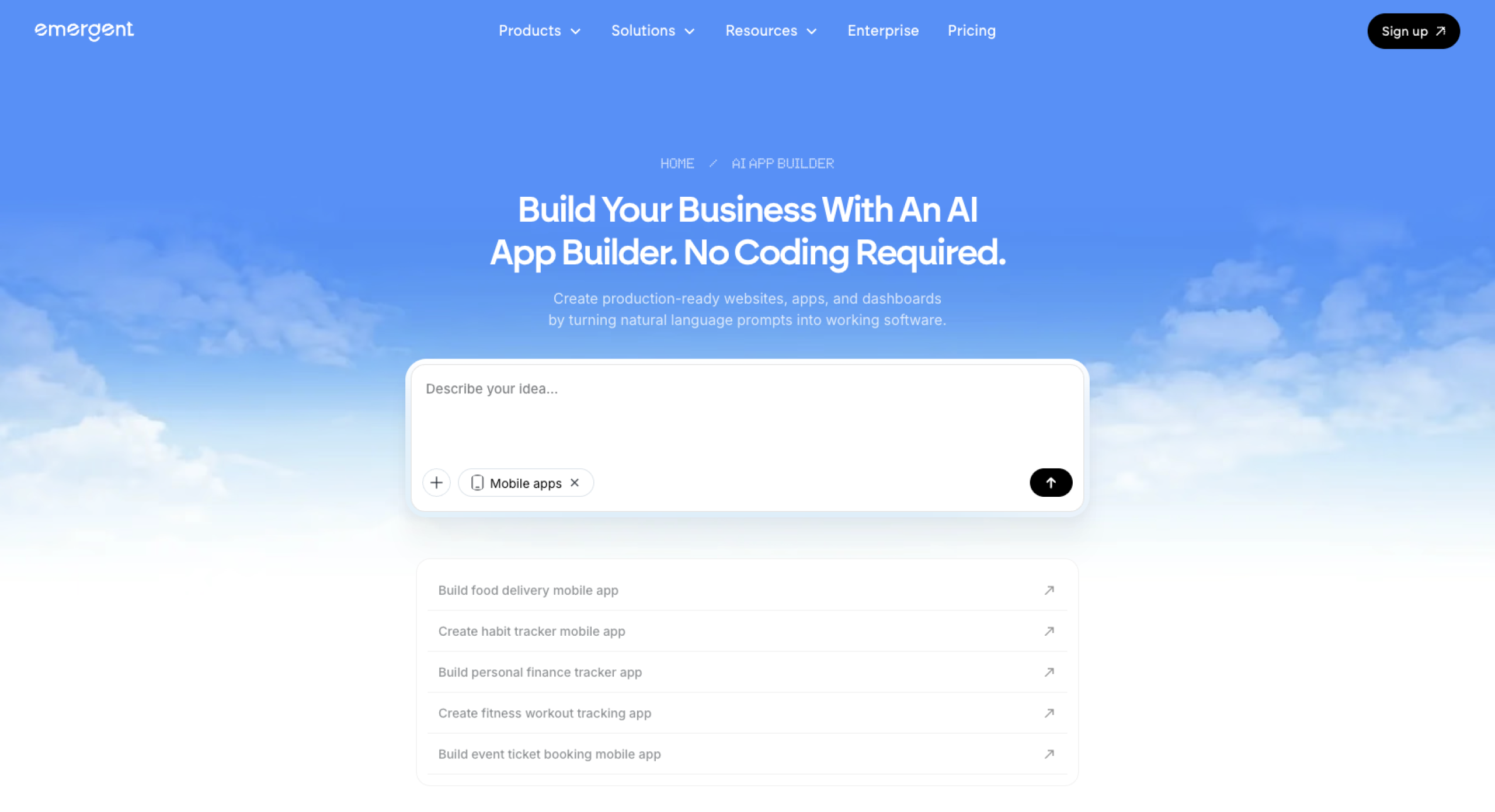
Emergent is an AI platform that builds full-stack web and mobile apps through conversation. You describe what you want in plain language, and its AI agents then handle the coding, design, and deployment.
Who it’s for: Because Emergent requires no programming experience, the platform works for everyone from beginners to experienced developers. The site also has dedicated pages for small-business owners, product managers, operations teams, and IT agencies.
Pros
- Code ownership and portability: You own all the code Emergent produces for your app. You can connect GitHub for version control, and you’re free to download your code, modify it, or host your app wherever you choose. Emergent generates production-ready code using natural language through a chat interface rather than visual drag-and-drop tools.
- Websites and mobile apps from one platform: Emergent builds both app types, promising instant deployment, seamless data connections, and scalability. Even its free plan lists web and mobile experiences, so you can try both before committing to the platform.
- Custom agents beyond app building: Emergent lets you design and deploy domain-specific agents with flexible prompts. You can build a research agent that compiles reports from web searches, a data analyst agent that models data and builds dashboards, or an automation engineer that connects APIs and handles scheduled tasks. (Creating custom agents requires a subscription to Emergent’s Pro plan.)
Cons
- Credit-based usage: Each plan includes a monthly credit allotment (10 credits on the free plan, 100 on Standard, and 750 on Pro), and on paid plans, you can purchase additional credits as you need them. The site doesn’t say how many credits a given app project will use, so costs can be difficult to estimate.
- Key features locked behind paid tiers: GitHub integration, private project hosting, and fork tasks start at the Standard tier ($17–$20 per month). Custom AI agents, system prompt editing, and the 1M context window require Pro ($167–$200 per month). If you’re interested in building your own custom agents, you’ll face a significant price jump.
Pricing and plans
Emergent offers five plan tiers, and you can start for free. Annual billing on Standard and Pro plans is as much as 17 percent less than monthly billing. Each higher tier offers all features from the lower tiers, plus additional functionality and credits.
- Free: $0 per month, with 10 monthly credits
- Standard: $20 per month ($17 per month when billed annually), with 100 monthly credits, private project hosting, GitHub integration, and fork tasks
- Pro: $200 per month ($167 per month when billed annually), with 750 monthly credits, custom AI agents, system prompt editing, and priority support
- Business: Custom pricing, with shared team workspaces, single sign-on (SSO), and role-based access control
- Enterprise: Custom pricing, with user-level credit limits, audit logs, self-hosted database support, and priority service-level agreements and support
Plans and credit amounts change, so check Emergent’s pricing page before you commit. For the custom-priced Business and Enterprise plans, you must book a demo.
What is Lovable?
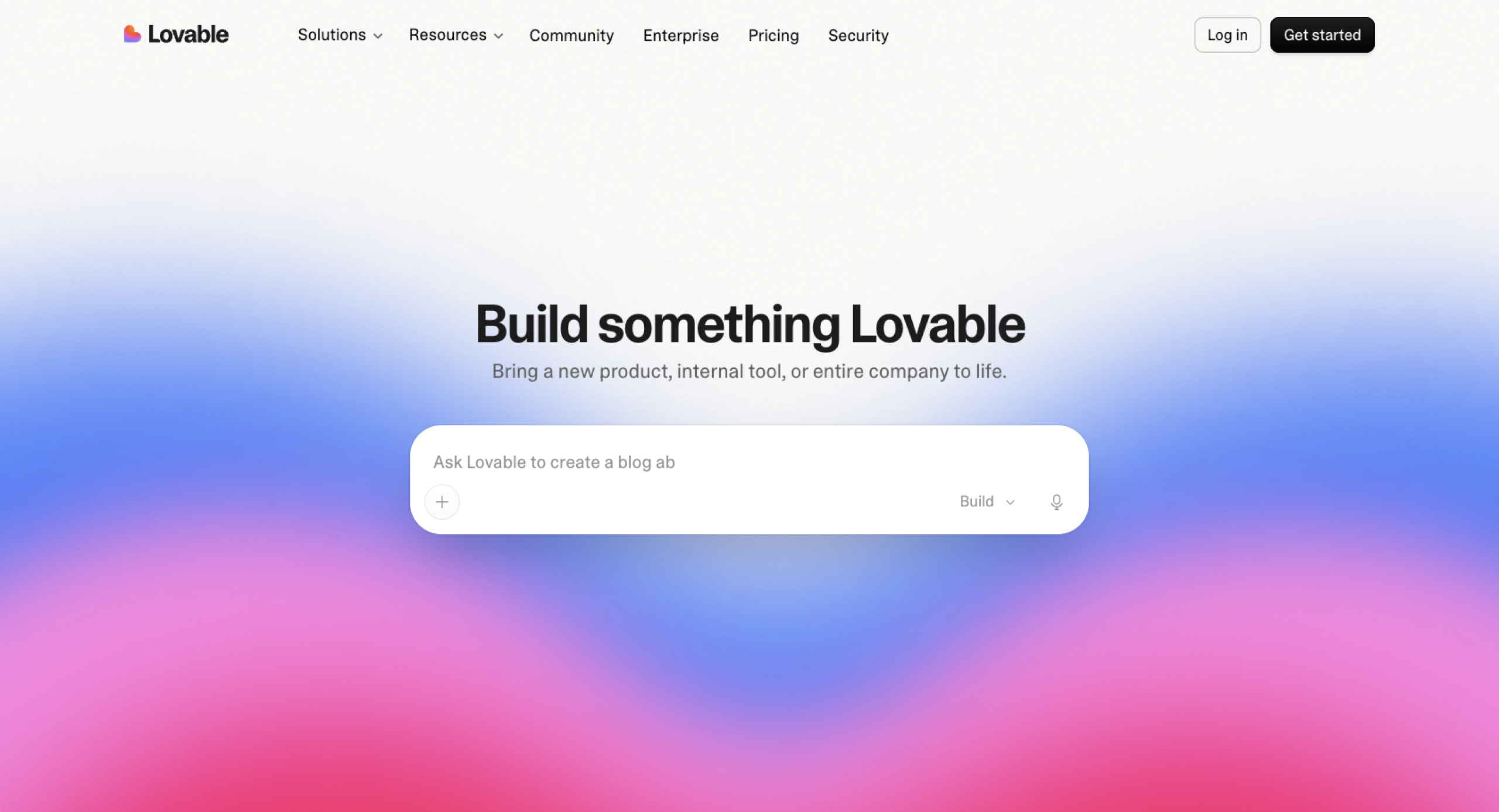
Lovable also appears on lists of the best no-code app builders, letting you create apps and websites while you chat with it. While you describe what you want in plain language, Lovable builds full-stack apps, websites, and internal tools. It leans heavily into design and the front end, allowing you to refine your design and iterate until you’re happy with it.
Who it’s for: Lovable suits founders, designers, and teams who want to build a polished-looking app quickly and easily without knowing code.
Pros
- Chat-to-app building with design iteration: Lovable builds full-stack apps, websites, and internal tools from plain-language descriptions, and you can refine your creation as much as you like.
- A modern, search-friendly default stack: New apps use TanStack Start with server-side rendering, so Lovable renders pages as full HTML that search engines and AI crawlers can read. You can upgrade older React + Vite apps, which use prerendering.
- A built-in back end, with a Supabase option: The built-in back end (Cloud) covers a PostgreSQL database, storage, authentication, real time, and functions with no external setup. You can also connect your own Supabase project, though Cloud-only features such as the in-editor database and storage views don’t carry over.
Cons
- A fixed stack: Lovable doesn’t offer a choice of framework or database. If you need something different, you’ll have to sync a repository via Git and continue outside Lovable. Moving the database also takes extra steps, because there’s no one-click transfer from Cloud to Supabase, and files and database data export separately.
- A single credit balance that covers a lot: Credits pay for building, hosting, the built-in back end, and AI features in deployed apps. If credits run out, backend services pause until you add more, so a busy app’s running costs are as important to watch as the building costs.
Pricing and plans
When it comes to Emergent vs Lovable pricing, Lovable’s is slightly simpler: It has four pricing plans, starting with a free tier. Like most providers, including Emergent, Lovable offers a discount for annual billing, and each higher tier offers the lower-tier features and more.
- Free: $0 per month; five free daily credits (which can build to 30 per month), four monthly AI credits, 20 monthly Cloud credits, and one monthly Connectors credit, along with community support, Cloud access, five Lovable domains, and unlimited collaborators
- Pro: $25 per month ($21 per month when billed annually); unlimited users, the same free grants as the free tier, plus 100 Pro credits, limited credit rollovers, unlimited Lovable domains, user roles and permissions, per-member credit limits, email support, and no Lovable watermark
- Business: $50 per month ($42 per month when billed annually), with 100 Business credits, team workspace, role-based access, personal projects per user, SSO, design templates, and priority support
- Enterprise: Custom, volume-based pricing, with SCIM directory sync, audit logs, publishing and invitation restrictions, scheduled deep security scans, advanced design systems support, and additional technical and security features
Lovable offers a 50 percent discount to verified students. The platform also offers free, classroom-safe access for grades 6–12, including all teaching materials, and provides specific billing and administrative controls for universities and colleges. For Enterprise pricing or campus access, you must contact Lovable’s sales department.
Emergent vs Lovable: A head-to-head comparison
The real differences between two tools that enable app-building via chat interfaces are in the details. This Lovable vs Emergent comparison provides the essentials you need to decide which, if either, is best for your team.
App-building experience
With both platforms, you type what you want, and the AI builds your app. From there, Emergent and Lovable diverge.
Emergent functions as a full-stack builder. Its AI agents design, code, and deploy your app from start to finish, so you can see your idea through from initial prompt to live app without leaving the chat.
Lovable offers a more hands-on, visual experience. You describe your app in the chat, then adjust the layout and look based on the updated preview. If you like to polish as you build, Lovable’s rhythm may suit you.
When comparing the build experience in Emergent vs Lovable, you’ll find that Emergent aims to hand you a finished app, while Lovable invites you to sculpt one.
App design and customization
Design is front and center with Lovable. Its website discusses refining your design and iterating until you like the result. On paid plans, you can edit the generated code directly. If your app’s UI and appearance matter just as much as how it functions, you may skew toward Lovable.
Emergent takes a wider view. Its agents generate your UI as a single component in a full-stack build, along with the code, back end, and deployment. The Pro plan adds custom AI agents and system prompt editing, which affect how the AI builds for you. If an optimally functional app is higher on your priority list than fine-tuning its every design detail, Emergent is a solid choice.
Collaboration features
Lovable gives teams several ways to work together. You can invite people to a single project or an entire workspace, assign roles and permissions, and see changes in real time. Designers, developers, and agencies can all work within the same project space, and every plan includes unlimited collaborators. If your developers prefer their own tools, they can sync code with Lovable through GitHub, GitLab, or Bitbucket.
Emergent’s Business and Enterprise tiers allow team workspaces. For smaller teams, GitHub integration on Standard and Pro lets developers work on the code in their own repository.
A founder, a designer, and a developer working on the same app will find Lovable’s workspace, role, and live-collaboration features best suit that setup. If one person builds and a developer joins later via GitHub, Emergent’s setup can cover it.
Launch and deployment capabilities
Going live is similar on both platforms, with a few differences:
- Emergent AI: Click Deploy, and your app goes live on an emergent.host address. You can link your own domain from the Deployments panel, and Emergent’s Standard pricing tier and above include GitHub integration.
- Lovable AI: Click Publish, and your app goes live on a lovable.app URL with HTTPS included. Publishing is free on every Lovable plan. Custom domains require a paid plan, and you can buy a domain right inside Lovable. Two-way Git sync keeps your code in your own repository.
If you want to share a quick prototype, either tool gets you a live link in a few clicks. Both let you launch a polished web app on your own domain on certain paid tiers. If you want a complete build-to-launch workflow in a single chat, Emergent’s agents handle deployment as part of the build, but Lovable does not. It’s the biggest difference when you compare Emergent AI vs Lovable for launching.
Pricing and plans
Consider monthly pricing, but don’t forget about your cost per app. Both tools operate on credits, and each plan caps how many you get, so a simple app uses fewer credits than a complex one. Lovable’s pricing page lists example prompts costing between 0.50 and 1.70 credits each.
This table compares Emergent vs Lovable pricing tiers at a glance:
Lovable | Emergent | |
|---|---|---|
| Free | No cost; five daily credits (up to 30/month) | No cost; 10 monthly credits |
| Entry paid | Pro: $25/month; 100 credits | Standard: $20/month; 100 credits |
| Next tier | Business: $50/month; 100 credits | Pro: $200/month; 750 credits |
| Top tier | Enterprise: Custom | Enterprise: Custom |
The Emergent vs Lovable cost divide becomes even more evident at the higher tiers: Lovable’s Business plan costs $50 per month with 100 credits, while Emergent’s Pro plan costs $200 per month with 750 credits. Both tools offer a free starter tier, so you can test a small project before committing to a platform.
Emergent vs Lovable: Which one should you choose?
Neither tool wins every round, and neither is the best choice for every team. The right platform depends on what you’re trying to build, who’s building it, and how much you want to tinker before deployment.
These guidelines should help you match your priorities to a tool.
Choose Emergent if
- You want AI to carry the project: Emergent’s agents design, code, and deploy your app in one chat, so you go from first prompt to live app without a handoff between tools.
- You want to own your code: You can download the code Emergent generates, connect GitHub (on the Standard tier and up), and host your app wherever you like.
- You want web apps, mobile apps, and custom AI agents: Emergent builds web and mobile apps from one platform, and the Pro tier adds custom AI agents for work including research and data analysis.
Choose Lovable if
- You prioritize UI look and feel: You can refine and iterate your design in chat until you’re happy with your app, and with paid plans, you can directly edit the generated code.
- You work with a team: Every plan allows unlimited collaborators, and you can invite designers, developers, and agencies; assign roles; and see real-time changes.
- You want a built-in back end and an easy start: Lovable’s back end handles a database, storage, authentication, and more, so you can build your app, publish it to a free lovable.app address, and test your idea without a more complicated setup.
Pro Tip
Emergent and Lovable can both get your app online, but if you want an app your customers can download on their mobile devices, consider Jotform Apps. With Jotform, you can create an app from scratch, a prompt, or a template, then share it via link, email, or QR code. Your users download it straight to a smartphone or computer, with no Google Play or App Store visit required. Putting your app directly on your customers’ devices is one of the biggest advantages of mobile apps for businesses.
Build the exact app you need with Jotform
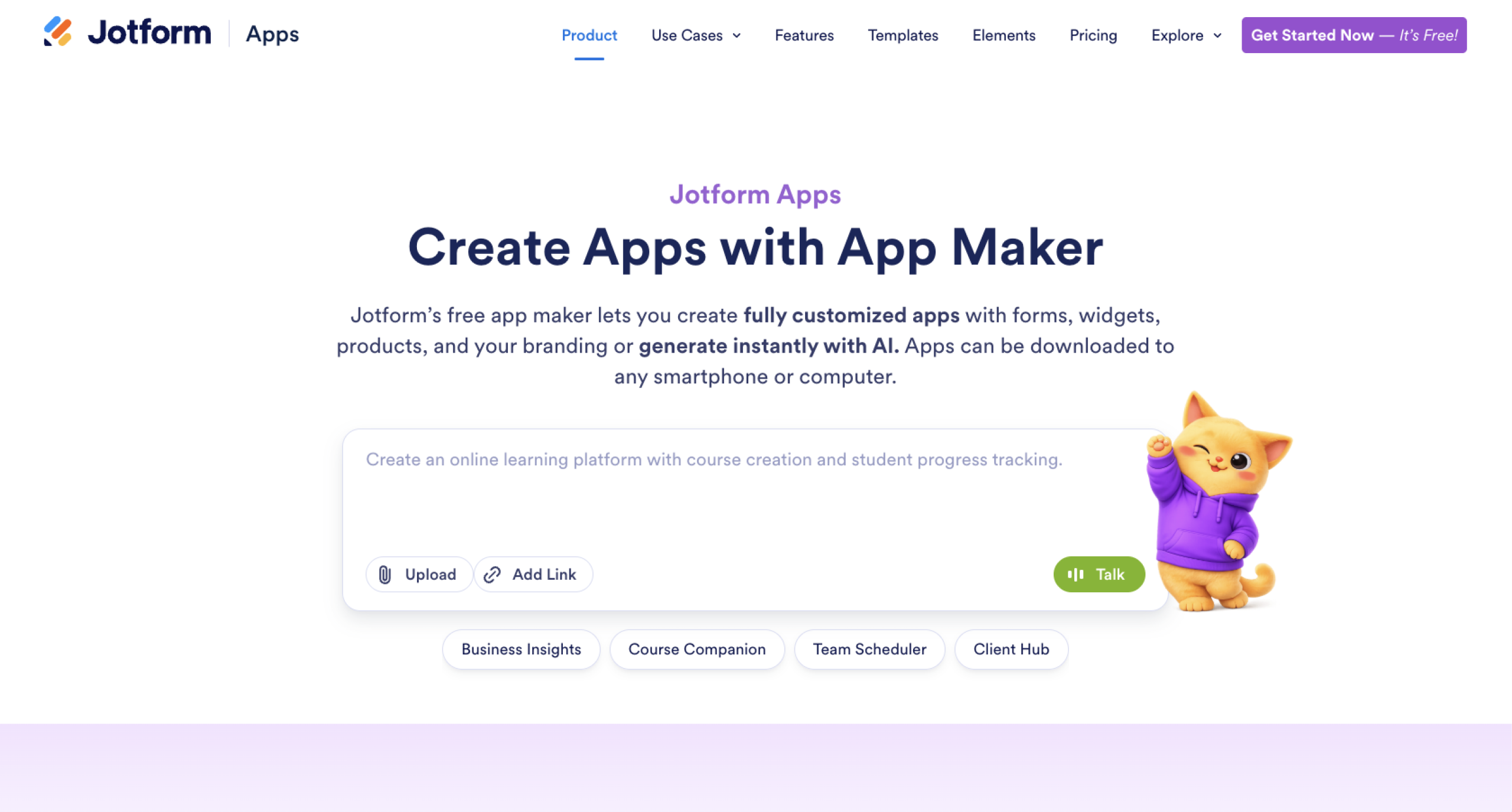
Emergent and Lovable are popular AI app builders, but they aren’t the only choices. If neither platform is pulling ahead in your Emergent vs Lovable comparison, we have another option for you to consider.
If you need to build an app you can launch and share quickly, one that connects to your existing business workflows without requiring a full-stack setup, app store publishing, or extensive development, Jotform Apps fills that need. Its flexible editing capabilities mean you can change the app whenever your workflow changes.
With Jotform Apps, you can
- Start however you like: Describe your app with a natural-language text prompt, use a ready-made app template, or build from scratch with Jotform’s simple drag-and-drop app builder functionality.
- Send push notifications: Drive user engagement and increase conversions by pushing custom messages and alerts to your users.
- Sell online: Jotform’s built-in features include 40-plus payment processor integrations worldwide and secure data collection capabilities.
- Make it yours: Add visuals, videos, links, and more, and then customize your app to match your branding, including colors, logos, and typography.
- Share it anywhere: Send your app to anyone by link, email, or QR code, and users can download it to any device without accessing Google Play or the App Store.
Jotform Apps works for any industry or need, whether you run a bakery, a nonprofit organization, an educational institution, or a dental office. Simply define your goal, then use Jotform Apps as your growth strategy.
FAQs: Emergent vs Lovable
Claude Code is a terminal-based coding agent for developers who want AI help inside an existing codebase. Replit combines an in-browser development environment, AI assistance, and deployment. Lovable is a prompt-first app builder focused on quickly creating and refining web apps, especially for nontechnical teams and design-led projects.
Neither is technically “cheaper” on every level, so the answer comes down to how you use it and what plan works best for your team. Both Emergent and Lovable offer a free starter tier. Lovable provides five daily credits (which can build to 30 per month), while Emergent gives you 10 monthly credits.
In its first paid tier, Emergent’s Standard plan costs $20 per month, and Lovable’s Pro plan costs $25 per month, both including 100 monthly credits. In higher tiers, prices differ widely. Lovable’s Business plan costs $50 per month for 100 credits, and Emergent’s Pro plan costs $200 per month for 750 credits. Credits determine the cost of each app you build, so a small project and a more complex one may accrue costs very differently on either platform. Check both pricing pages and evaluate your planned usage against their credit pricing structures before you pay.
This article is for founders, product managers, entrepreneurs, small business owners, and nontechnical teams who want to build apps without coding and are comparing Emergent and Lovable.



































































































Send Comment: