

Letter of Recommendation Templates

Professional Letter of Recommendation
Create a professional letter of recommendation in seconds. Works great on any device. Android and iOS compatible. Easy to customize and share. No coding required.
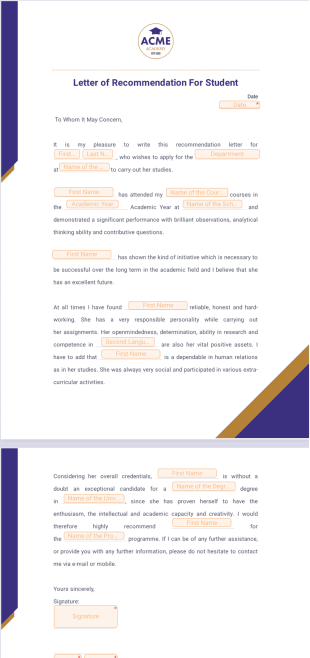
Letter of Recommendation for Student
Create and collect letters of recommendations for students with Jotform Sign. Drag and drop to customize. Works on mobile, tablet, and desktop devices.
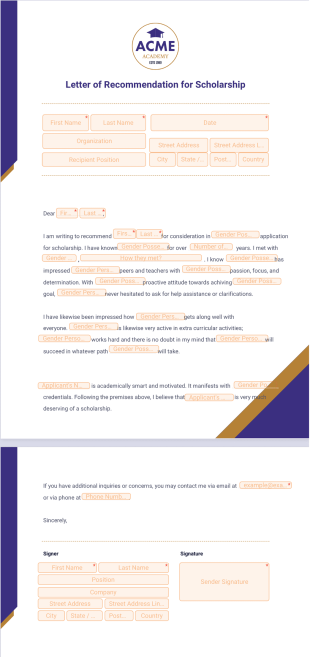
Letter of Recommendation for Scholarship
Create a letter of recommendation for any scholarship application. Drag and drop to design. E-sign in seconds. Works on smartphones, tablets, and desktops.
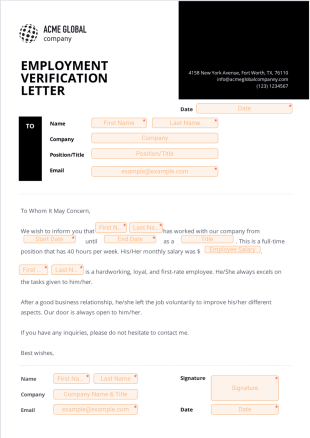
Previous Employment Verification Letter
Gather employment verification letters from your past employers. Create, send, and share. E-sign in seconds. Works on tablets, smartphones, and desktops.
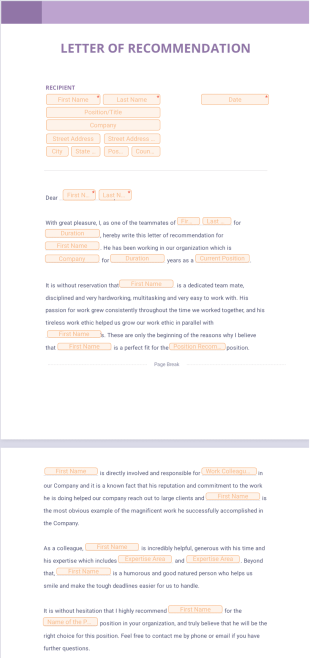
Letter of Recommendation Template for Coworker
Create and collect letters of recommendations for your coworkers. Drag and drop to customize. Works on mobile, tablet, and desktop devices. No coding.
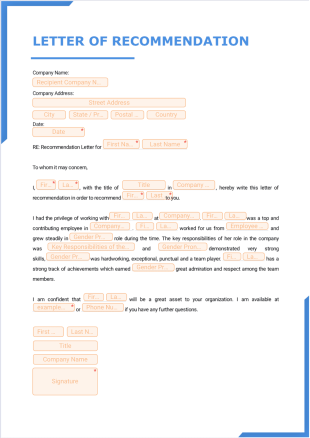
Letter of Recommendation for Employee
Create a letter of recommendation for your employees. E-sign in just seconds. Works on mobile, tablet, and desktop devices. Drag and drop to design.
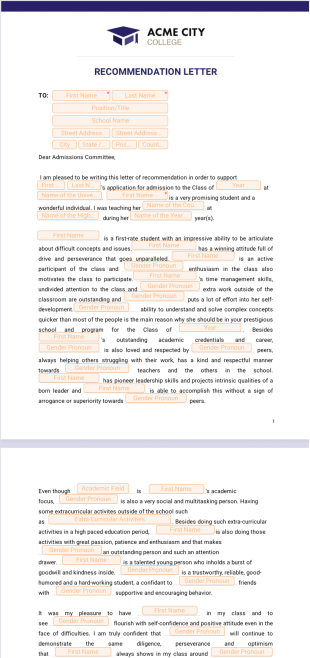
Letter of Recommendation for College
Create a recommendation letter to use for your college applications. Works on smartphone, tablet, and mobile devices. E-sign in seconds. No coding.
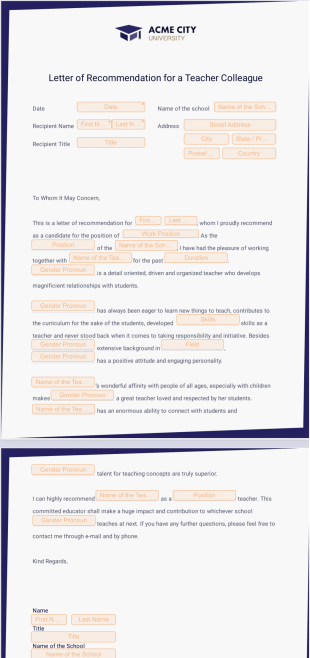
Letter of Recommendation for a Teacher Colleague
Create a letter of recommendation for your teacher colleagues. Create, send, and e-sign in seconds. Drag and drop to customize. No coding required.
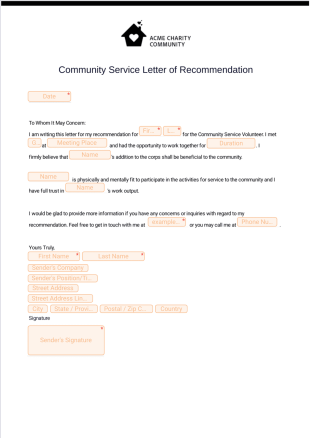
Community Service Letter of Recommendation
Create and collect community service letters of recommendation. Great for volunteer applications. Drag and drop to customize. E-sign in just seconds.
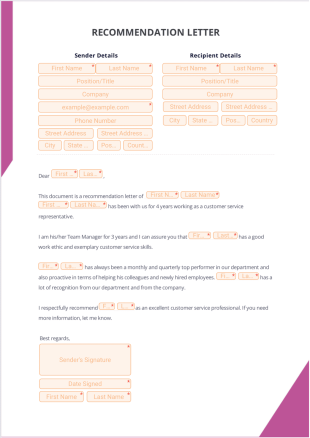
Customer Service Recommendation Letter
Create a customer service recommendation letter fast with Jotform Sign. Fill out and e-sign from any device. Easy to customize and share. No coding.
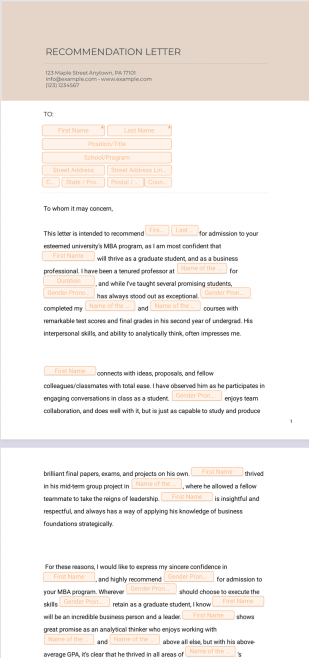
MBA Recommendation Letter
Collect MBA application recommendation letters with Jotform Sign. Works on smartphones, tablets, and desktop devices. E-sign in seconds. No coding.
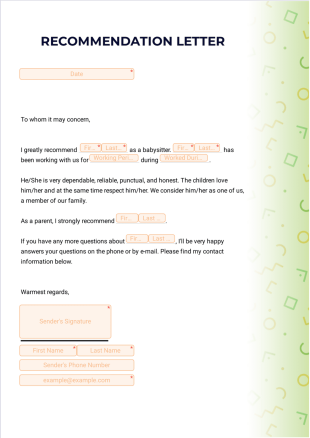
Letter of Recommendation for Babysitter
Collect a letter of recommendation to include in your babysitter application. Create and send to your former employers. E-sign in seconds. No coding.
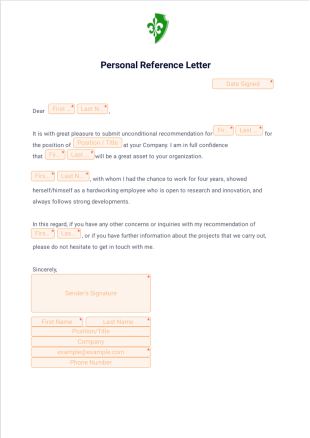
Personal Reference Letter
Generate a personal reference letter with Jotform Sign. Drag and drop to customize. Easy to share. Fill out and e-sign from any device. No coding.
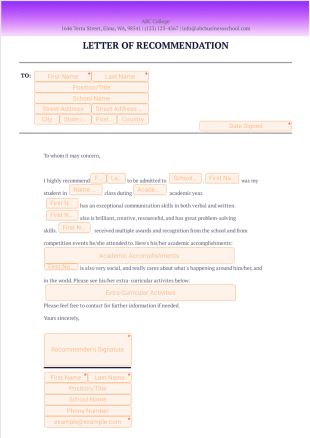
Letter of Recommendation for Graduate School
Create a letter of recommendation for your grad school application. Drag and drop to customize. Works on all mobile, tablet, and desktop devices.
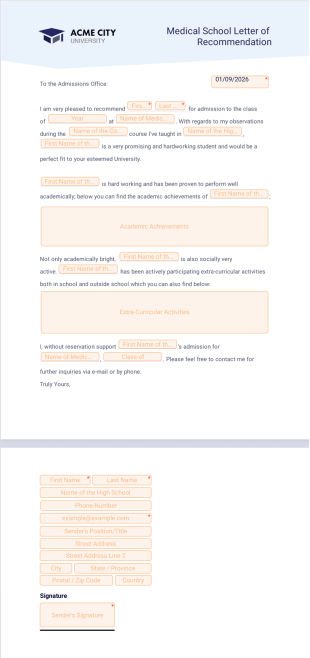
Medical School Letter of Recommendation
Create instant medical school letter of recommendation with using this PDF template. Eliminate the period of thinking through what to put and go directly to the substance of your letter by using this template.
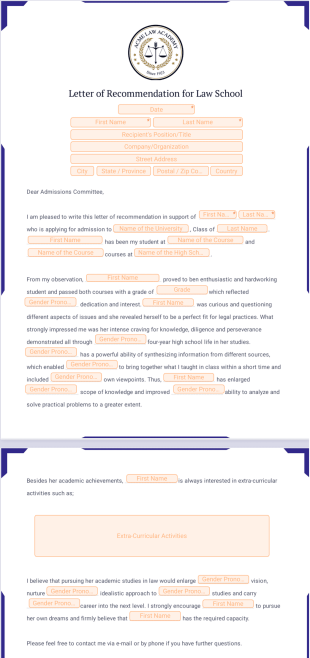
Letter of Recommendation for Law School
Create and collect law school letters of recommendation. Drag and drop to design. Collect e-signatures quickly. Converts to PDF. Works on all devices.
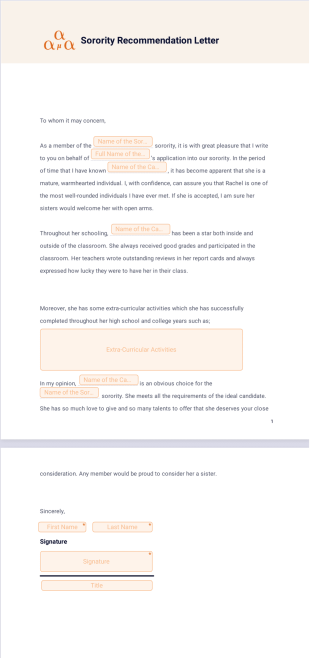
Sorority Recommendation Letter Template
Create a sorority recommendation letter with Jotform Sign. Drag and drop to customize. Works on all devices — desktop, tablet, and mobile friendly. Converts to PDF.
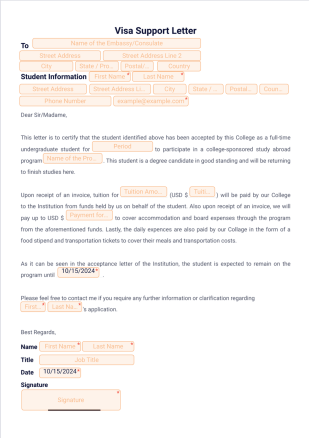
Visa Support Letter
Write or request a support letter for an individual applying for a visa. Converts to PDF. Drag and drop to customize. Access from any type of device.
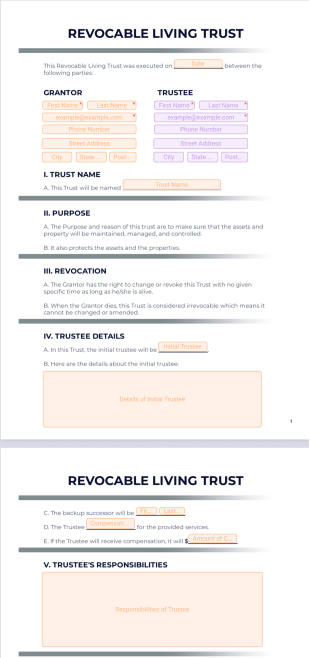
Revocable Living Trust
Create revocable living trust documents. Free template. Easy to customize. Great for law firms and other involved parties. Fill out and e-sign with ease.
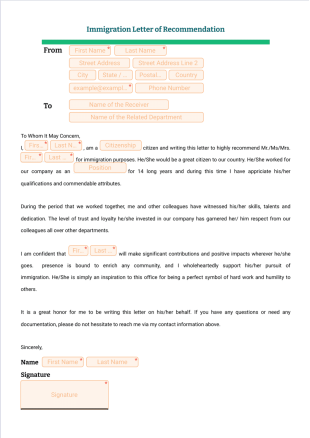
Immigration Letter of Recommendation
Create an immigration letter of recommendation for your application. Collect references and e-signatures. Works on any and all iOS and Android devices.
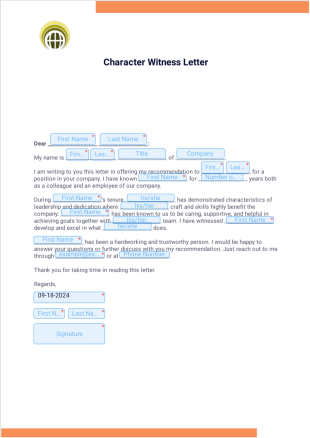
Character Witness Letter
Generate character letters with ease. Collect e-signatures and finalize automatically. Simple drag-and-drop customization. Works great on any device.
About Letter of Recommendation Templates
Letter of Recommendation PDF Templates in the professional world serve as a streamlined solution for creating detailed, personalized recommendations. These templates are particularly beneficial in educational and professional sectors, where recommendations are integral to the admission and hiring processes. They facilitate the creation of polished, consistent documents, ensuring that every recommendation contains the necessary information and presents it in a structured manner. Typically, these templates are used by professors, employers, or colleagues who need to provide a formal recommendation for students, job applicants, or employees. By offering a standardized format, these templates help maintain uniformity and clarity across different recommendations, thereby simplifying the document creation process for busy professionals.
Jotform stands out as the leading online form builder for creating and managing Letter of Recommendation templates. Its user-friendly interface allows for easy customization, enabling users to tailor templates to meet specific requirements. With Jotform, data collection can be automated, ensuring that all necessary information is captured efficiently and securely. Furthermore, Jotform Tables provide a centralized platform for managing and organizing collected data, making it easy to access and utilize information whenever needed. This not only enhances productivity but also ensures that all data is stored in an organized manner, ready for future reference.
Why Use Letter of Recommendation Templates?
- Using Letter of Recommendation templates ensures consistency across all documents, which is crucial when presenting multiple recommendations to a single entity. This consistency helps in maintaining the professional tone and structure expected in formal communications.
- These templates save significant time and effort for individuals tasked with writing multiple recommendations. By providing a pre-defined structure, users can focus on personalizing content rather than formatting, allowing for quicker document creation.
- The accuracy of information is enhanced through the use of predefined fields that guide the user in including all necessary details. This minimizes the risk of omitting important information, which can be detrimental in formal recommendations.
- Professional data handling is facilitated by Jotform's secure data management features. Users can confidently store and manage sensitive information, knowing it is protected by Jotform's robust security measures.
- Letter of Recommendation templates are adaptable to various contexts, allowing users to modify them for different purposes. Whether recommending a student for an academic program or an employee for a job, these templates can be easily adjusted to suit the specific scenario.
Common Problems Solved by Letter of Recommendation Templates
- One of the main challenges in creating recommendations is the time-consuming nature of drafting each one from scratch. Templates eliminate this inefficiency by providing a ready-to-use format that only requires minor adjustments for each new recommendation.
- Manual data entry can lead to errors and inconsistencies, which are mitigated through the use of templates. By automating parts of the data entry process, templates help ensure that each recommendation is accurate and professionally presented.
- Paperwork overload is a significant issue in environments that require numerous recommendations. Templates reduce the amount of paperwork by digitizing the process, making it easier to store and retrieve documents electronically.
- The risk of lost data is minimized with templates, as they can be saved and backed up in digital formats. This ensures that important recommendations are not misplaced and can be accessed whenever needed.
- Templates provide a standardized format, which helps in maintaining a uniform appearance across all recommendations. This is particularly important in professional settings where consistency and clarity are valued.
Matching Use Cases to Features
- For educators writing multiple recommendations, the Drag-and-Drop Form Builder is invaluable. It allows them to quickly create and customize templates, ensuring each recommendation is tailored to the student's strengths while maintaining a consistent format.
- Conditional Logic can be used to tailor recommendations based on specific criteria, such as the applicant’s skills or the job requirements. This feature enhances the relevance of each recommendation, making them more impactful.
- Electronic Signatures (Jotform Sign) streamline the approval process by enabling signatories to sign documents digitally. This is particularly useful in remote work scenarios where physical signatures are impractical.
- The PDF Editor (Automated PDF Generation) turns completed forms into polished PDF documents automatically. This feature saves time and ensures that each recommendation is presented in a professional format.
- The Report Builder can be used to generate summary reports of all recommendations written over a certain period. This is useful for tracking and reviewing the output of recommendations by educators or managers.
- Approval Workflows facilitate the review and approval process, ensuring that all recommendations meet organizational standards before being finalized and sent out.
- Secure Data Management with Jotform Tables ensures that all submitted data is stored securely and can be accessed easily, providing peace of mind when handling sensitive information.
How to Create a Letter of Recommendation Template
- Browse the Template List for a Letter of Recommendation template or start from a blank Template.
- Customize the design and fields using the Drag-and-Drop Form Builder.
- Publish and share via Direct Link, Email, or Website Embed.
Top Use Cases for Letter of Recommendation Templates
- For Managers: Managers often need to provide recommendations for employees seeking internal promotions or new opportunities. Letter of Recommendation templates help managers efficiently create detailed and personalized recommendations that highlight the employee's strengths and achievements. This not only saves time but also ensures that the recommendation is structured in a way that best represents the employee's skills and contributions to the organization.
- For Teams: Teams involved in recruitment or talent development can utilize Letter of Recommendation templates to streamline their processes. By standardizing the format and content of recommendations, teams ensure consistency and professionalism in their communications. This is particularly useful when multiple team members are responsible for writing recommendations, as it maintains uniformity across the board.
- For Customers: Customers who need to provide recommendations for services or products can use these templates to articulate their experiences effectively. By using a structured template, customers can focus on providing valuable feedback without worrying about the formatting. This ensures that their recommendations are clear, concise, and impactful, which can be beneficial for businesses seeking to enhance their reputation and attract new clients.
Summarizing Letter of Recommendation Templates
Letter of Recommendation templates offer significant value by streamlining the creation of professional and consistent recommendations. They address common challenges such as time constraints, data inaccuracies, and paperwork overload, making the recommendation process more efficient and reliable. With Jotform's advanced features, users can customize and manage their templates effortlessly, ensuring that every recommendation is tailored to meet specific needs while maintaining a high level of professionalism. By leveraging these templates, organizations and individuals can enhance their productivity and ensure that all recommendations are presented in the best possible light.
These templates are suggested forms only. If you're using a form as a contract, or to gather personal (or personal health) info, or for some other purpose with legal implications, we recommend that you do your homework to ensure you are complying with applicable laws and that you consult an attorney before relying on any particular form.
Frequently Asked Questions
1) Is it free to create Letter of Recommendation Templates on Jotform?
Yes, Jotform offers free access to a variety of templates, including those for Letters of Recommendation, allowing users to create and customize their documents at no cost.
2) Are the templates and submitted data secure?
Jotform prioritizes data security, implementing robust measures to protect all templates and submitted data, ensuring that sensitive information remains confidential and secure.
3) Do I need coding knowledge to build a Letter of Recommendation template?
No coding knowledge is required to build a Letter of Recommendation template on Jotform. The platform's intuitive drag-and-drop interface makes it easy for users of all skill levels to create and customize templates.
4) What is the purpose of the Hide Empty Fields setting?
The Hide Empty Fields setting automatically excludes any unanswered form questions from appearing on the finalized PDF, which helps in presenting a clean and concise document without unnecessary blank spaces.
5) Can these Templates be used on mobile devices?
Yes, Jotform's templates are fully compatible with mobile devices, allowing users to create, edit, and submit recommendations on-the-go via smartphones or tablets.
6) How does Field Mapping enhance the template process?
Field Mapping allows users to connect individual web form input fields to specific positions on a Smart PDF or PDF Document layout, ensuring that all collected data is accurately reflected in the final document.
7) Can I use Autoresponder PDF Attachment for Letters of Recommendation?
Yes, the Autoresponder PDF Attachment feature allows you to automatically include a generated PDF as an attachment in confirmation emails sent to form submitters, providing them with an instant copy of the recommendation.
8) What is the benefit of using Page Breaks in a multi-page template?
Page Breaks help organize content in a multi-page template by pushing subsequent content onto the next page, ensuring a clean and professional layout across all pages.