


Mental Health Forms
Mental Health Intake Form
Perform patient intake online. Collect medical history, supporting documents, and fee payments. Protect patient data with optional HIPAA enabled features.
Go to Category:Healthcare Forms
Character Profile Form
Character Profile Form is a form template specifically designed for authors, writers, and game developers. This easy-to-use tool helps to flesh out character details, streamline the creative process and ensure consistency throughout.
Go to Category:Report Forms
Mental Health Assessment Form
Determine the mental state of an individual by performing a mental health exam using this Mental Health Assessment Form. This form is effective in diagnosing mental health status.
Go to Category:Healthcare Forms
Mental Health Survey
Conduct mental health assessments with this free survey template for businesses, schools, and more. Easy to customize and fill from any device. No coding.
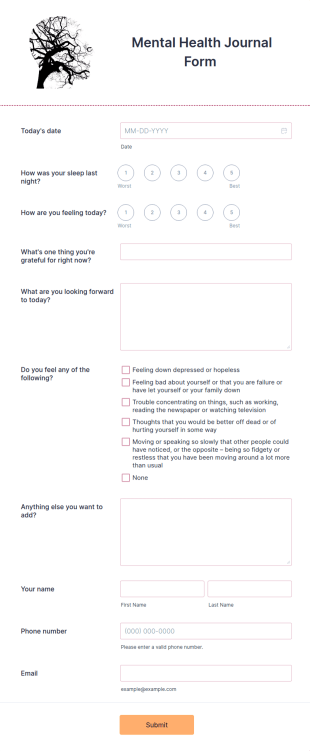
Go to Category:Healthcare FormsMental Health Journal Template
A Mental Health Journal Template is a form template designed to help therapists and counselors track mood and emotions on a daily basis, as well as monitor mental health progress
Go to Category:Healthcare Forms
Psychology Questionnaire Template
A psychology questionnaire is used by clinical psychologists to assess patients as part of the diagnostic process.
Go to Category:Education Forms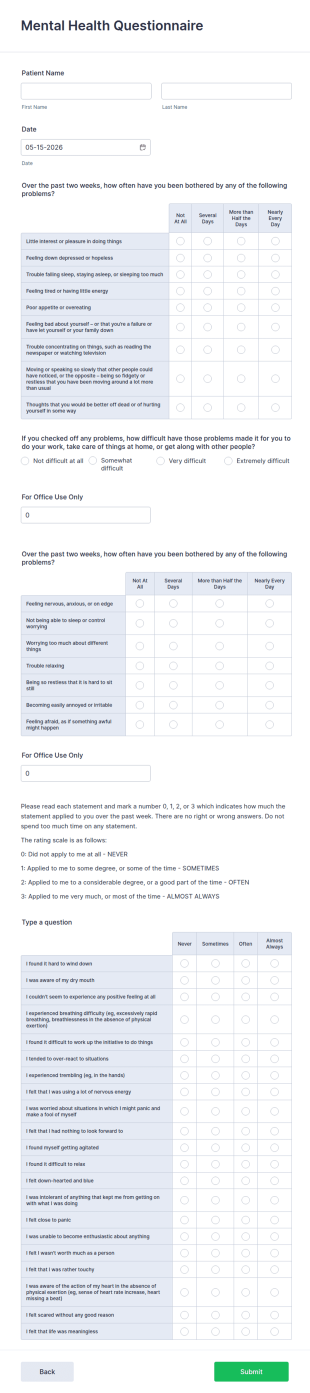
Mental Health Questionnaire
A Mental Health Questionnaire is a form template designed to serve as a valuable tool for assessing and monitoring an individual's mental well-being.
Go to Category:Questionnaire Templates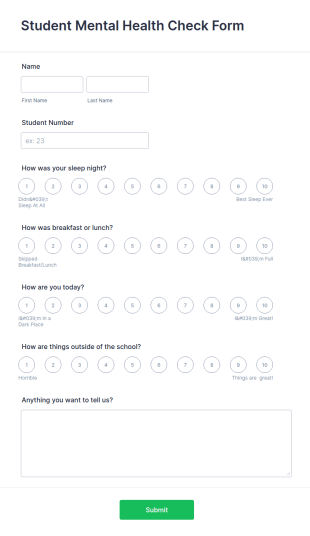
Student Mental Health Check Form
A student mental health check form is used by school psychologists and educators to check up on students’ mental health. No coding!
Go to Category:Education Forms
Psychiatric Intake Form
Assess the psychiatric or mental condition of the patient by using this Psychiatric Intake Form. This template will definitely help the therapist to diagnose the patient accurately.
Go to Category:Healthcare Forms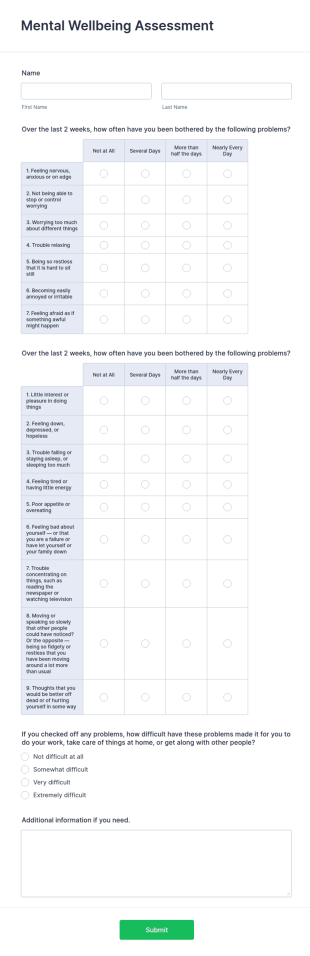
Mental Wellbeing Assessment
A Mental Wellbeing Assessment Form is a document designed to assess and gather information about an individual's mental health and emotional state.
Go to Category:Assessment Forms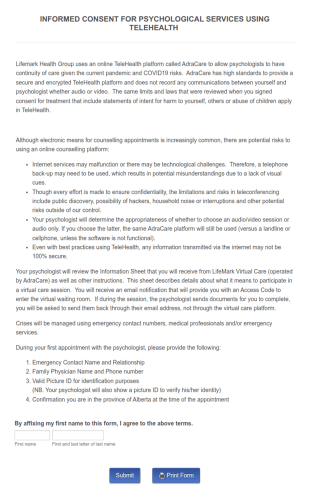
Lifemark Informed Consent Telehealth Treatment
Collect signed patient consent forms online with our free Mental Telehealth Informed Consent Form. Easy to customize and embed. Opt for HIPAA compliance features.
Go to Category:Healthcare Forms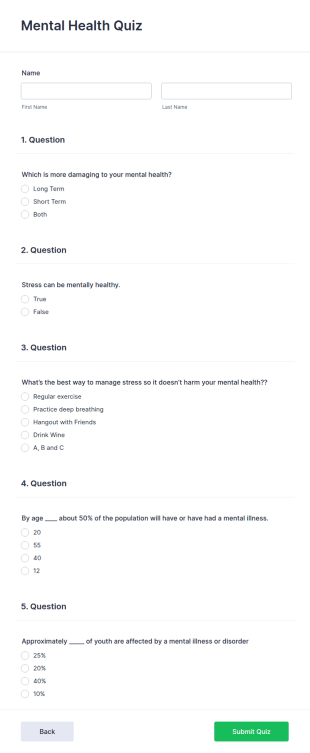
Mental Health Quiz
A Mental Health Quiz is a tool designed to assess and screen for potential mental health concerns, providing individuals with a preliminary self-evaluation of their mental well-being.
Go to Category:Healthcare Forms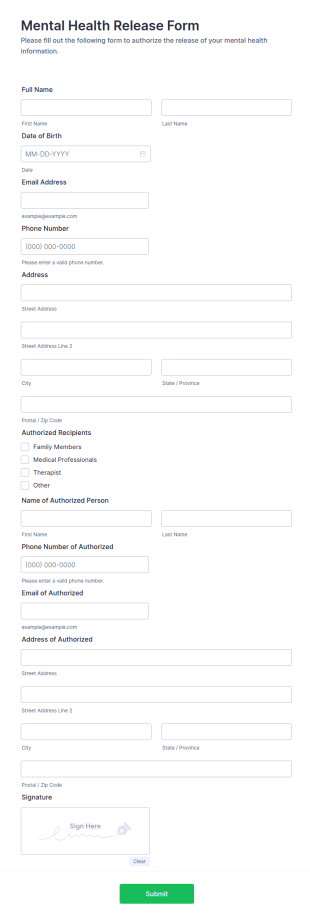
Mental Health Release Form
A mental health release form is used by eating disorder and mental health therapists to inform patients that they will be disclosing information to their medical insurance company.
Go to Category:Healthcare Forms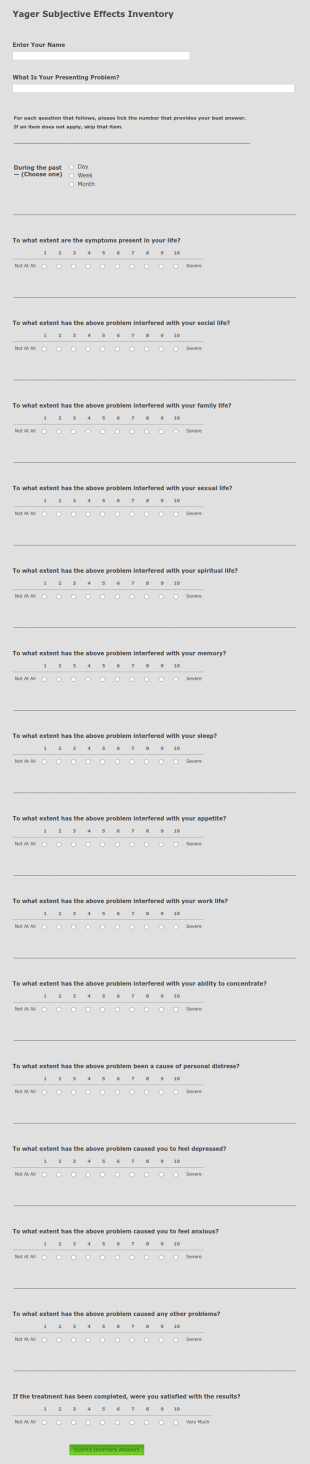
Mental Health Survey
How am I doing? Get thoughts flowing with this mental health form useful for practitioners, counseling services, therapists, etc.
Go to Category:Healthcare Forms
Mental Capacity Assessment Form
A mental capacity assessment form is used by medical doctors or healthcare professionals to determine whether or not a patient has the mental capacity to make their own healthcare decisions.
Go to Category:Healthcare Forms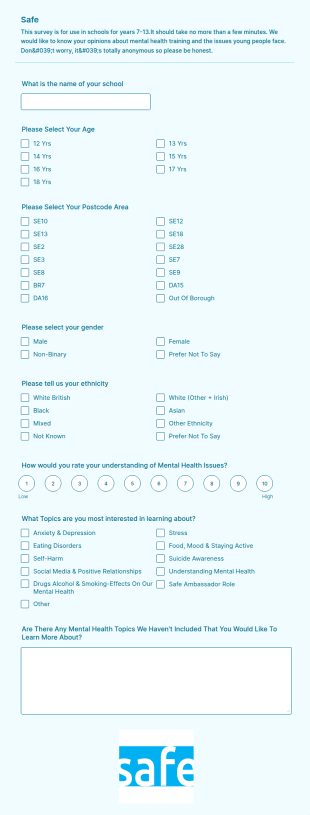
Mental Health Awareness Feedback Form
A mental health awareness feedback form is used by medical professionals and practitioners to gather feedback from patients about their mental health. It may be used by psychiatrists, psychologists, counselors, social workers, and a variety of other medical professionals.
Go to Category:Feedback Forms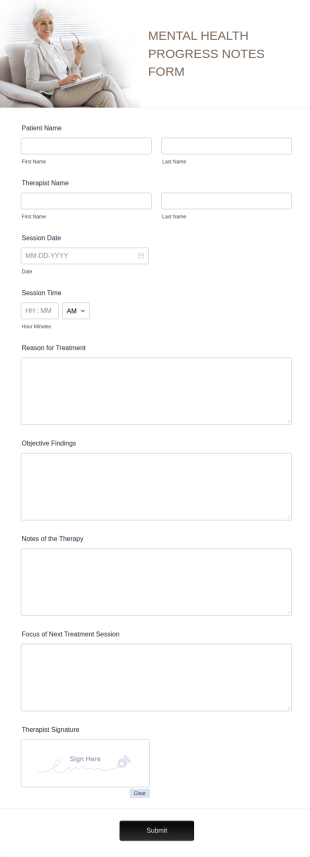
Mental Health Progress Notes Form
A Mental Health Progress Notes Form is a record of mental health therapy for physicians or mental health counselors.
Go to Category:Healthcare Forms
Mental Skills Evaluation Form
This form has all the questions needed to evaluate individuals mental skills. Questions that relates to self motivation, building up confidence, individual visualization, faith, dealing difficult situations and others.
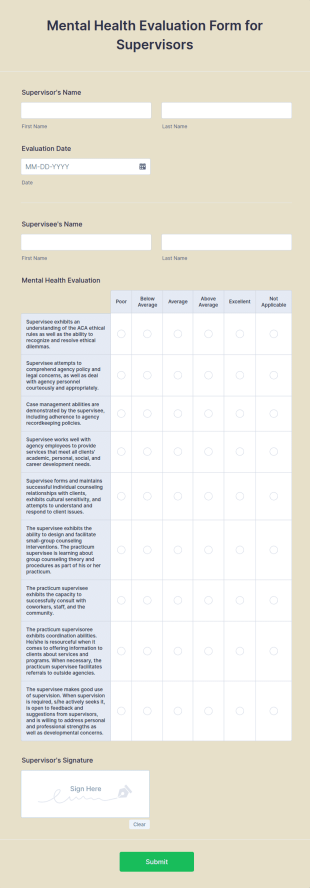
Go to Category:Healthcare FormsMental Health Evaluation Form For Supervisors
A mental health evaluation form for supervisors is used to track employee performance and mental health issues. Customize this template without coding!
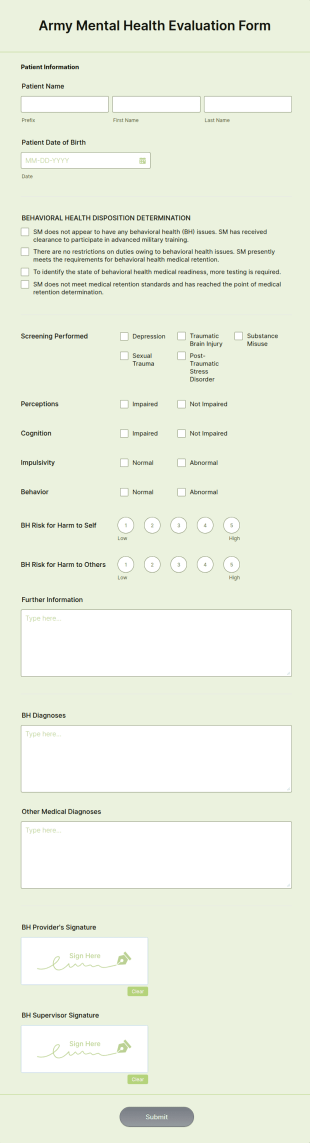
Go to Category:Healthcare FormsArmy Mental Health Evaluation Form
An Army mental health evaluation form is a form used by the US Army to evaluate the mental and psychological health of their soldiers. No coding!
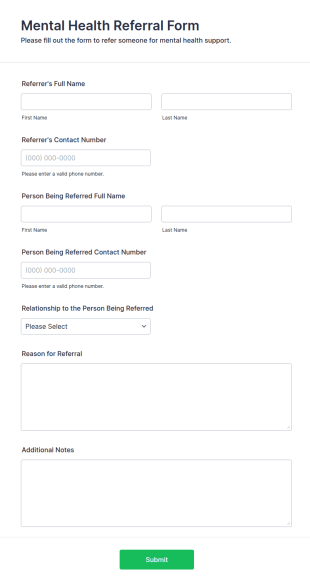
Go to Category:Services FormsMental Health Referral Form
Mental Health Referral Form helps clinics, schools, nonprofits, and counseling teams collect referral requests online and route them to the right staff, using Jotform for reliable data collection and organized form submission tracking.
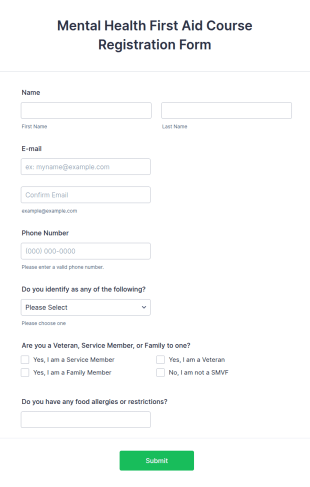
Go to Category:Healthcare FormsMental Health First Aid Course Registration Form
A Mental Health First Aid Course Registration Form is a form template designed to streamline the registration process for mental health first aid training courses.
Go to Category:Healthcare Forms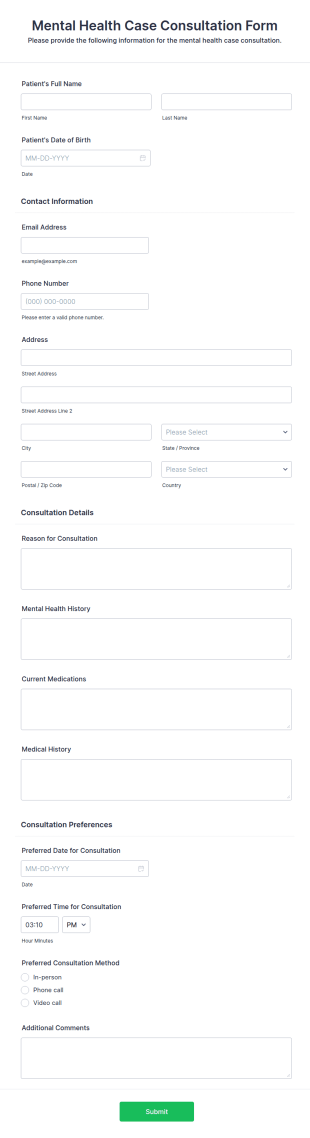
Mental Health Case Consultation Form
A Mental Health Case Consultation Form is a form template designed to facilitate effective communication, documentation, and collaboration among mental health clinicians, psychiatrists, psychologists, and therapists involved in the care of patients.
Go to Category:Healthcare Forms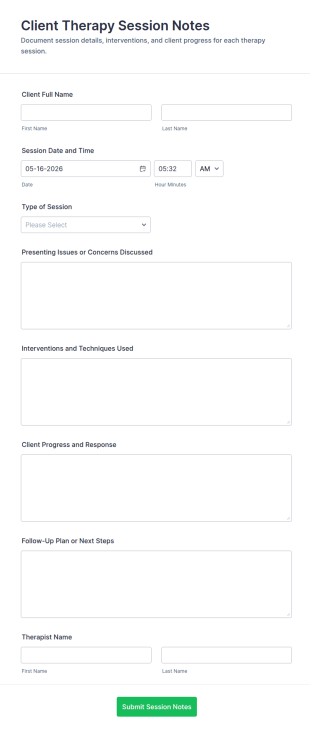
Client Therapy Session Notes
Client Therapy Session Notes Form helps therapists and counselors document session details, interventions, client progress, and follow-up plans in a consistent, searchable digital format.
Go to Category:Therapist FormsAbout Mental Health Forms
Mental health forms are structured documents used to collect, assess, and manage information related to emotional well-being, psychological support, and behavioral health needs. They help professionals understand a person’s mental health context, identify concerns, and document support or care processes in a clear and consistent way. Mental health forms are commonly used by therapists, counselors, psychologists, clinics, schools, wellness programs, and employee assistance programs. Typical use cases include new client intake, mental health screenings, ongoing therapy check-ins, consent documentation, and program feedback. By standardizing how sensitive information is collected, mental health forms support better decision-making, continuity of care, and clearer communication between providers and individuals.
With Jotform, mental health forms can be created quickly using a no-code, drag-and-drop Form Builder and adapted to different care settings. Conditional logic helps show only relevant questions based on responses, making forms easier and less overwhelming to complete. Submissions are stored in Jotform Tables, allowing authorized teams to review responses, track progress, and maintain organized records. Automated notifications and confirmations help streamline workflows while reducing manual follow-ups.
Use Cases of Mental Health Forms
Mental health forms support a wide range of support, assessment, and documentation workflows. Below are common ways these forms are used and the problems they help solve.
Possible Use Cases:
- New client or student mental health intake
- Mental health screenings and wellness check-ins
- Therapy session preparation and follow-up
- Crisis support and referral requests
- Consent and communication preference collection
- Program evaluation for counseling or wellness initiatives
Problem-Solving Points:
- Create a consistent way to collect sensitive mental health information
- Help identify concerns early and route cases appropriately
- Reduce administrative burden for providers and support teams
- Improve continuity by keeping mental health records organized
Possible Owners and Users:
- Therapists, counselors, and psychologists
- Clinics, wellness centers, and telehealth providers
- School counselors and student support services
- HR and employee assistance program teams
- Clients, students, or participants completing forms
Differences of Creation Methods:
- Mental health intake forms focus on background, main concerns, symptom history, triggers, prior treatment, medications, and support systems.
- Mental health screening and check-in forms emphasize structured rating scales and brief prompts to capture current mood, stress or anxiety indicators, functioning, and any risk flags.
- Mental health consent and privacy forms prioritize informed consent acknowledgments, confidentiality boundaries, communication preferences, and required confirmations.
How to Create a Mental Health Form
Creating a mental health form with Jotform helps you collect sensitive information in a clear, respectful, and structured way. A well-designed form should feel easy to complete while still capturing the details needed for support or care decisions.
1. Choose a Template or Start from Scratch
In My Workspace, click “Create” and select “Form.” You can start with a mental health or intake-related template or build a custom form. A Classic Form works well for comprehensive intake, while a Card Form can reduce form fatigue by guiding respondents step by step.
2. Add Identification and Context Fields
Use Add Element to collect basic information such as name, age or date of birth, contact details, and the reason for completing the form. If anonymity is important, make identifying fields optional and explain this clearly in the form description.
3. Build the Core Mental Health Sections
Add sections for concerns or goals, symptom descriptions, duration, and impact on daily life. Use rating scales or multiple-choice questions for mood, stress, or anxiety levels, and include open-text fields only where additional context is helpful.
4. Use Conditional Logic to Keep Forms Focused
Conditional logic helps reduce unnecessary questions. For example, show follow-up questions only if someone reports high stress, low mood, or specific concerns. This makes the form feel shorter while still capturing important details.
5. Add Consent and Communication Preferences
Include required checkboxes for consent, confidentiality acknowledgments, and preferred communication methods. This helps set expectations and supports ethical and professional standards.
6. Publish, Test, and Manage Responses in Jotform Tables
Preview and test the form before publishing. Share it via a secure link, email, or internal portal. All submissions are stored in Jotform Tables, where authorized users can review, filter, and manage responses efficiently.
Frequently Asked Questions
1. What are mental health forms?
Mental health forms are documents or online forms used to collect information related to emotional well-being, psychological support, and behavioral health services.
2. Why are mental health forms important?
They standardize information collection, reduce missing details, and support clearer communication and better-informed support decisions.
3. What information is typically included in mental health forms?
Common fields include background information, current concerns, symptom descriptions, rating scales, consent acknowledgments, and communication preferences.
4. Who uses mental health forms?
Therapists, counselors, schools, clinics, wellness programs, HR teams, and individuals seeking support all use mental health forms.
5. Are mental health forms used only in clinical settings?
No. They are also used in schools, workplaces, community programs, and wellness initiatives.
6. Can mental health forms be completed online?
Yes. Digital forms allow individuals to complete them remotely and help teams manage responses more efficiently.
7. How can mental health forms improve care or support?
They provide structured insights before sessions, help track changes over time, and reduce administrative overhead.
8. How should sensitive mental health data be handled?
Access should be limited to authorized users, only necessary information should be collected, and clear consent and privacy acknowledgments should be included.