





Farmer Forms
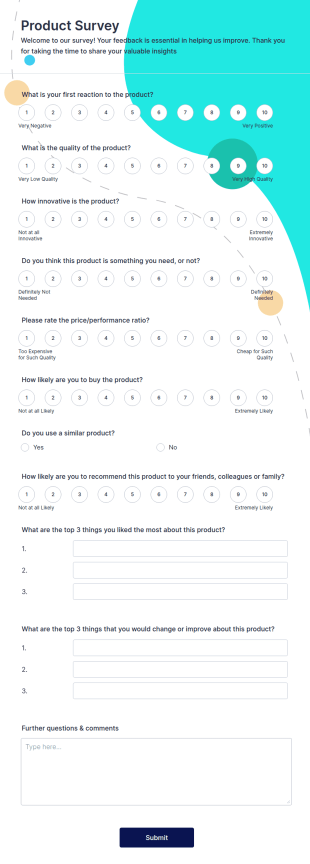
New Product Survey
New Product Survey is an indispensable form template designed to capture vital feedback from consumers. This easy-to-use tool serves as a gateway to gauge customer perceptions, offering you key insights to enhance your offerings.
Go to Category:Customer Service FormsLandowner Hunting Permission Form
Allow the hunter or sportsperson to practice hunting and trapping in the area by having them fill up this Hunting Permission Form. This template can be accessed in any device which includes laptops and mobiles.
Go to Category:Consent Forms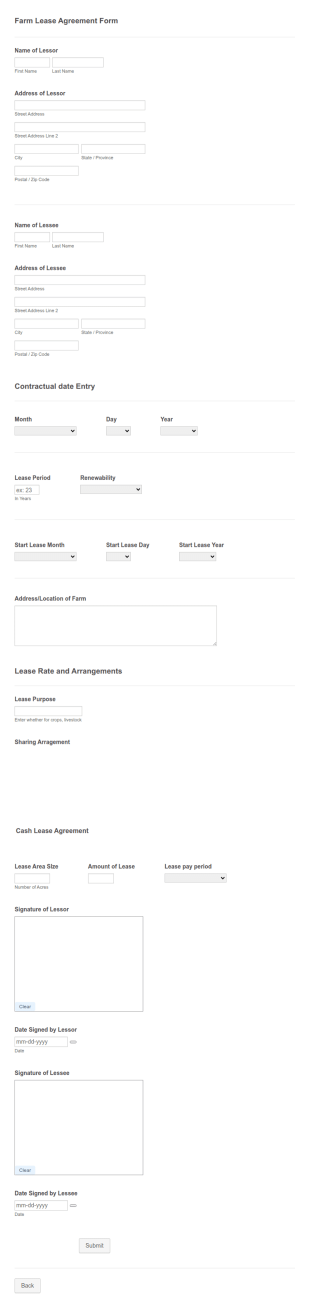
Farm Land Lease Form
Farm Land Lease Form is a form template that streamlines the process of leasing agricultural land by defining the terms between lessor and lessee, making transactions smoother with Jotform's user-friendly design.
Go to Category:Real Estate FormsIrrigation Audit Form
An irrigation audit form is used to track the maintenance of all the irrigation equipment and systems in a home or business.
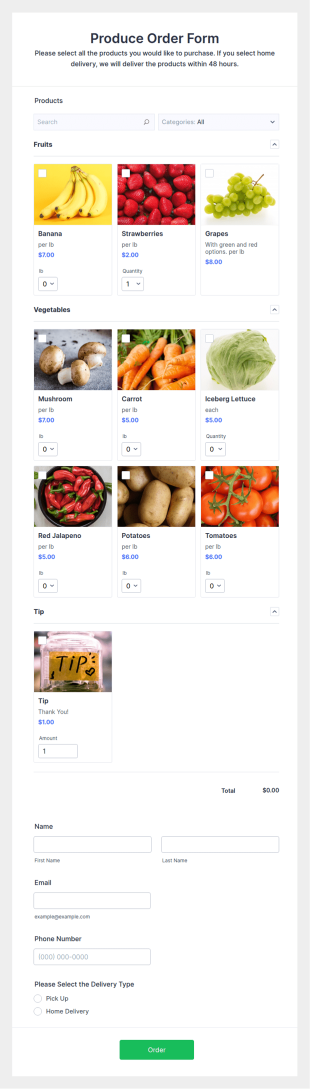
Go to Category:Services FormsProduce Order Form
Sell produce online with this free order form. Easy to customize for your store. Embed anywhere. Accept payments with 30+ gateway integrations. No coding.
Go to Category:Food & Beverage Order Forms
Farm Survey
Farm Survey is a form template that streamlines agricultural data collection. Used by farmers and agronomists, it efficiently tracks crop health, soil quality, and harvest yields. Solve logistic challenges and improve farm productivity with this comprehensive digital form.
Go to Category:Business Forms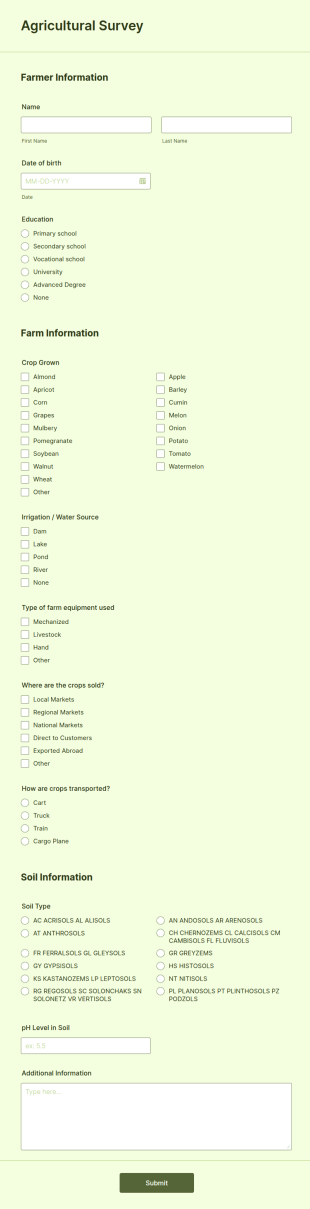
Agriculture Survey
An Agriculture Survey is a form used by farmers and their representatives to collect data about their farms and land. Easy to use. No coding.
Go to Category:Business Forms
Crop Scouting Report Form
A crop scouting form is used by farmers to record data about their crops in order to help ensure successful plants. Free and customizable.
Go to Category:Report Forms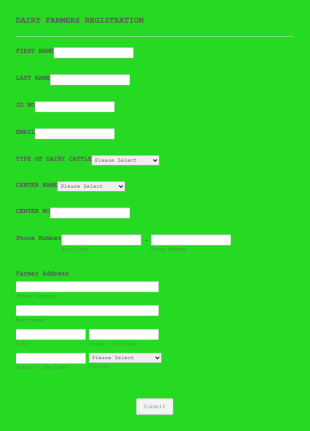
Daily Farmers Registration Form
Daily farmers registration form is a form template that facilitates the organized gathering of personal and occupational details from farmers for agricultural activities, utilizing Jotform's intuitive design and functionality for seamless data collection.
Go to Category:Registration FormsFarm Business Registration Form
Register farms as businesses online. Customize and publish this free, customizable Farm Business Registration Form for your organization.
Go to Category:Business Forms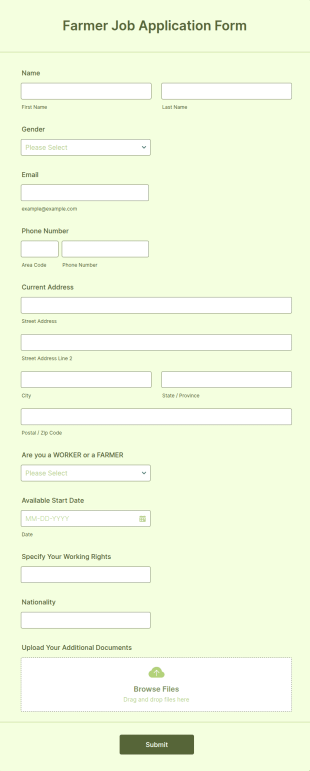
Farmer Job Application Form
A farmer job application form is an online form that can be used on farms to collect information about potential employees.
Go to Category:Job Application Forms
Thanksgiving Turkey Pre Order Form
Manage your turkey pre-orders for this upcoming Thanksgiving event by using this Thanksgiving Turkey Pre-Order Form. This form can be accessed and completed using a desktop, laptop, and mobile devices.
Go to Category:Food & Beverage Order Forms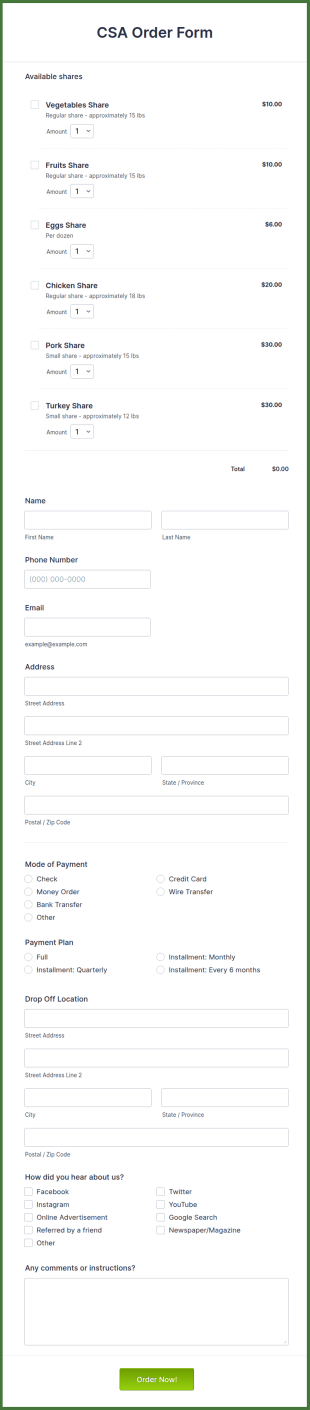
CSA Order Form
Allow the community to help local farmers and producers by using this CSA Order Form to purchase shares. This template is simple yet very persuasive to the customers who want to buy shares.
Go to Category:E-commerce Forms
Beef Cut Order Form
A Beef Cut Order Form is a form template that streamlines your butcher business by tracking customized orders efficiently. This form template simplifies the ordering process, eliminates mistakes, and enhances customer satisfaction. Ideal for butchers, slaughterhouses, and meat shops.
Go to Category:E-commerce Forms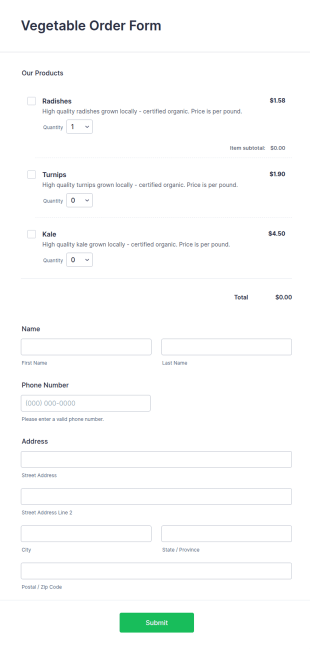
Vegetable Order Form
A vegetable order form is used by grocery stores, farmers, or farmers markets to collect information from customers who have placed online veggie orders.
Go to Category:Order FormsFarm Volunteer Worker Application Form
Allow volunteer applicants to submit their application by using this Farm Volunteer Worker Application Form. This form template can be embedded accessed on a desktop, laptop, or any mobile device.
Go to Category:Volunteer Application Forms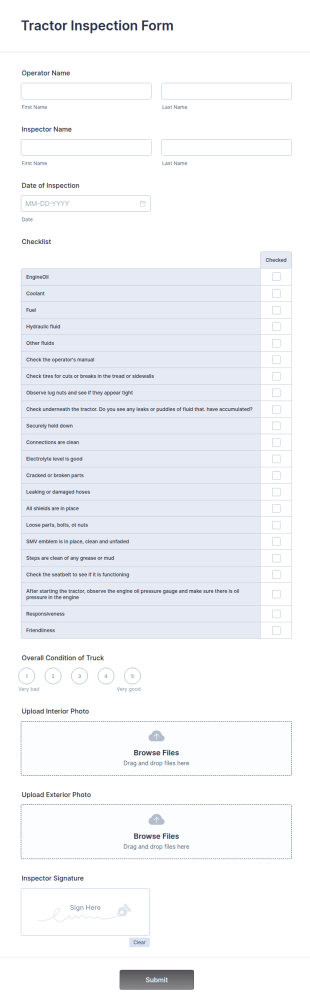
Tractor Inspection Form
A tractor inspection form is a document used by farmers to test the condition of their tractors and other vehicles.
Go to Category:Checklist Forms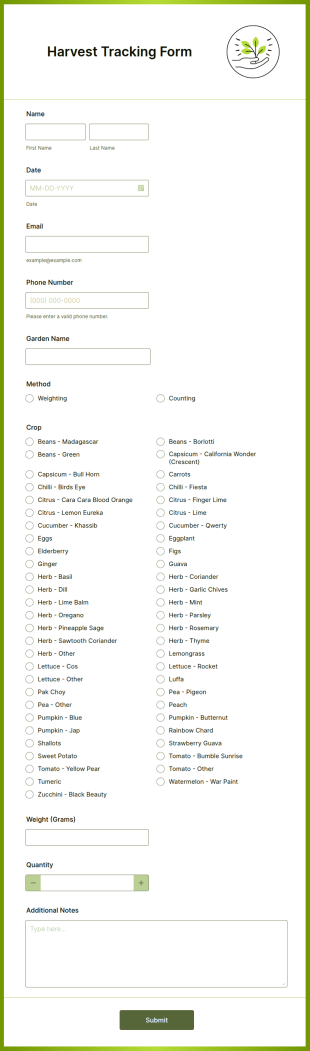
Harvest Tracking Form
A harvest tracking form is used by farmers and gardeners to record precious information about plants in the growing season.
Go to Category:Tracking Forms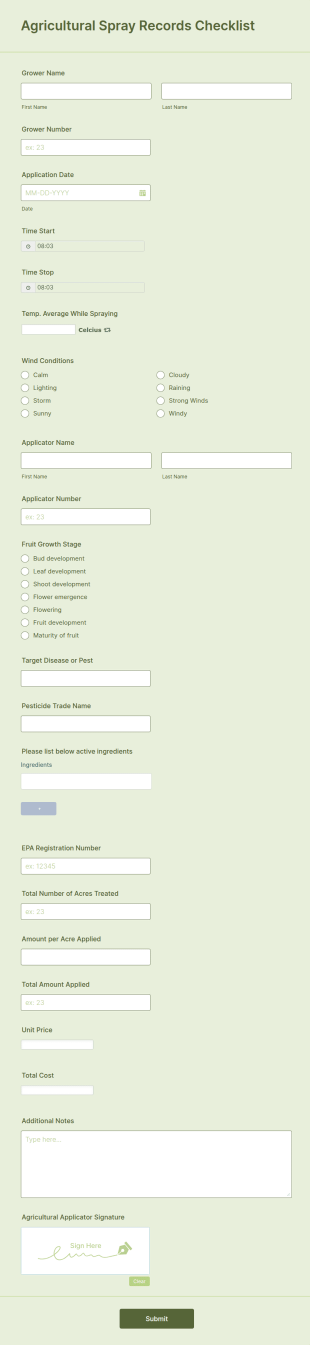
Agricultural Spray Records Checklist
A checklist for agricultural spray records is used by farmers and agricultural industries to keep track of their spray records.
Go to Category:Checklist Forms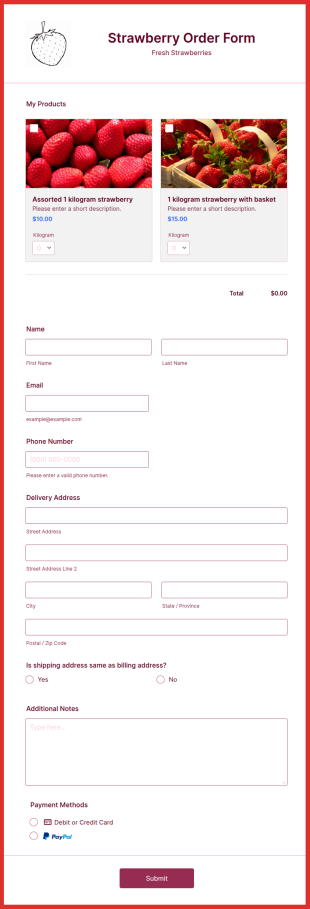
Strawberry Order Form
An online strawberry order form is used by food establishments agricultural distributor to receive an order for strawberries. Get customers to contact you with their strawberry orders!
Go to Category:Food & Beverage Order Forms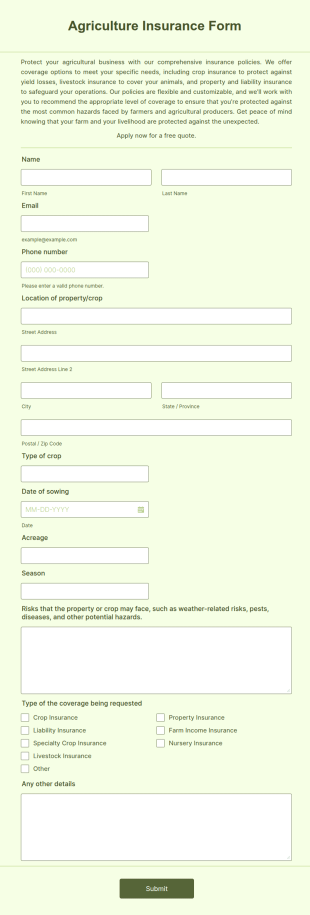
Agriculture Insurance Form
An agriculture insurance form is a document insurers use to issue coverage for farmers and ranchers.
Go to Category:Insurance Forms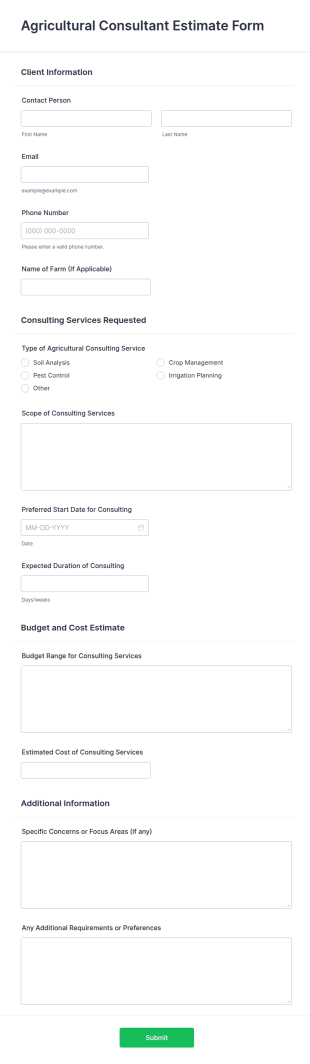
Agricultural Consultant Estimate Form
An Agricultural Consultant Estimate Form is a form template designed to document detailing proposed services and associated costs for agricultural consulting.
Go to Category:Consulting Forms
Farmer Lease Application Form
Open your farm for lease and get to your interested applicants by using this Farmer Lease Application Form template. Just copy this template to your Jotform account and start using this template immediately.
Go to Category:Application Forms
Soil Sample Information Form
A soil sample information form is used to gather information about soil samples that will be sent to a laboratory for analysis. It is fully customizable with no coding.
Go to Category:Information Request FormsAbout Farmer Forms
Farmer Forms are specialized digital forms designed to streamline and optimize the everyday operations of the agricultural industry. These forms cater to various aspects of farming, including crop management, livestock tracking, equipment maintenance, and financial record-keeping. They help farmers efficiently manage their operations by providing a structured way to collect and analyze essential data. By digitizing traditional paperwork, Farmer Forms facilitate real-time data entry and retrieval, thereby enhancing the ability to make informed decisions. Whether it's scheduling harvests, monitoring field conditions, or tracking inventory, these forms support the diverse and complex workflows inherent in farming.
Jotform stands out as the premier online form builder for creating Farmer Forms due to its intuitive and flexible platform. With Jotform’s user-friendly interface, farmers can easily customize their forms to suit specific needs, ensuring they capture the right data every time. The platform's ability to automate data collection processes significantly reduces manual effort, freeing up time for more critical tasks. Additionally, Jotform Tables offers centralized data management, allowing farmers to organize, filter, and analyze their data efficiently. This comprehensive approach to form building and data handling ensures that farmers can maintain precise and accessible records, ultimately driving better operational outcomes.
Why Use Farmer Forms?
- Farmer Forms enhance data accuracy by eliminating the risks of manual data entry errors inherent in traditional paper forms. Digital forms ensure that every entry is legible and correctly formatted, which means more reliable records for audits and decision-making processes.
- The speed of data collection and processing is drastically improved with Farmer Forms, as information is instantly captured and saved in the system. This immediacy allows for better responsiveness to changing conditions, such as weather patterns or market trends, which can directly impact crop yields and profitability.
- Professional data handling is a key advantage of these forms, providing farmers with a robust framework for organizing and storing critical information. This structured approach supports compliance with industry regulations and enhances the ability to share data with stakeholders or regulatory bodies efficiently.
- Customization capabilities with Farmer Forms allow for tailoring each form to fit unique operational requirements. This flexibility ensures that farmers can create forms that reflect their specific processes, from planting schedules to equipment checklists, improving overall workflow efficiency.
- Jotform’s integration capabilities mean that Farmer Forms can seamlessly connect with over 100 third-party applications, such as Google Sheets and Salesforce. This connectivity facilitates the smooth transfer of data across platforms, enabling more comprehensive analysis and reporting.
Common Problems Solved by Farmer Forms
- One of the most prevalent issues in farming is the reliance on paper-based processes, which are prone to errors and loss. Farmer Forms mitigate these risks by digitizing data entry, ensuring that information is both accurate and easily retrievable.
- Manual data entry is time-consuming and often leads to inefficiencies. With Farmer Forms, this process is automated, freeing up farmers’ time to focus on core activities such as crop management and market strategy development.
- Data loss and mismanagement can be detrimental to farm operations, particularly when dealing with compliance and audits. Farmer Forms provide a secure platform for data storage, ensuring that critical information is preserved and accessible whenever needed.
- Communication gaps within farming teams can lead to operational delays and misunderstandings. By using Farmer Forms, all team members have access to up-to-date information, facilitating better coordination and collaboration across various departments.
Matching Use Cases to Features
- For managing farm inventories, the Drag-and-Drop Form Builder is invaluable. It allows farmers to quickly create forms tailored to track equipment, supplies, and produce, ensuring accurate inventory levels and timely replenishments.
- Conditional Logic is perfect for creating dynamic forms that adapt based on user input, which is especially useful for complex processes like livestock tracking or crop rotation planning. This feature streamlines form interactions, making data collection more efficient and user-friendly.
- Farmers handling transactions can benefit from the 30+ Payment Gateways offered by Jotform, such as Stripe or PayPal. This feature facilitates secure, seamless financial transactions directly through forms, improving cash flow management.
- Jotform Sign empowers farmers to collect Electronic Signatures, which is crucial for authorizing contracts and compliance documents. This capability ensures that all agreements are legally binding and stored securely.
- Farmers looking to generate detailed reports can utilize the Report Builder. This feature allows for the creation of comprehensive visual reports based on collected data, aiding in strategic planning and performance analysis.
- The PDF Editor enables automated PDF Generation from form submissions, which is essential for creating professional, standardized documents for record-keeping or sharing with stakeholders.
- Offline Data Collection through Jotform Mobile Forms is a game-changer for fieldwork, allowing farmers to gather data in remote locations without internet access. Once connectivity is restored, data syncs automatically, ensuring continuity in data management.
How to Create a Farmer Form
- Browse the Template List for a Farmers template or start from a blank form. This initial step allows you to find a pre-existing template that closely matches your needs or gives you the flexibility to start from scratch.
- Customize the design and fields using the Drag-and-Drop Form Builder. This step ensures that the form meets your specific operational requirements, from field labels to layout adjustments.
- Publish and share via Direct Link, Email, or Website Embed. This final step makes it easy to distribute your form to the intended audience, facilitating seamless data collection and collaboration.
Top Use Cases for Farmer Forms
- For Managers: Farmer Forms are instrumental for managers overseeing multiple aspects of farm operations. They can use these forms to streamline data collection processes, monitor team productivity, track financial performance, and ensure regulatory compliance. This comprehensive data oversight supports strategic decision-making and optimizes resource allocation.
- For Teams: Teams on the ground benefit from Farmer Forms by having a centralized platform for data input and communication. These forms facilitate real-time updates on field conditions, inventory levels, and task completion, ensuring everyone is aligned and informed. This enhances workflow efficiency and reduces the likelihood of errors or delays.
- For Customers: Customers or clients can experience improved service delivery when Farmer Forms are employed. These forms allow for seamless order placements, inquiries, and feedback collection, ensuring that customer needs are met promptly and accurately. This level of service fosters trust and strengthens business relationships.
Summarizing Farmer Forms
Farmer Forms are a powerful asset for the agricultural industry, providing robust solutions for data collection and management. By leveraging Jotform’s comprehensive platform, farmers can automate many of their operational tasks, resulting in improved accuracy, efficiency, and productivity. These forms not only simplify complex workflows but also enhance data accessibility and security, ensuring that farmers can focus on what they do best—delivering quality agricultural products. In essence, Farmer Forms empower users to optimize their operations, enabling them to navigate the challenges of modern farming with confidence and ease.
Frequently Asked Questions
1) Is it free to create Farmer Forms on Jotform?
Yes, Jotform offers a free plan that allows users to create and use Farmer Forms with a set of basic features. However, for more advanced functionalities and higher submission limits, there are paid plans available.
2) Are the forms and submitted data secure?
Absolutely, Jotform prioritizes data security by implementing industry-standard measures such as SSL encryption and GDPR compliance, ensuring that all form submissions and stored data are protected against unauthorized access.
3) Do I need coding knowledge to build a Farmer Form?
No coding knowledge is required to build a Farmer Form on Jotform. The platform's Drag-and-Drop Form Builder allows users to create and customize forms easily without any programming skills.
4) Can I collect payments directly through my forms?
Yes, you can collect payments directly through Farmer Forms by integrating with any of the 30+ payment gateways Jotform supports, including Stripe, PayPal, and Square, enabling seamless online transactions.
5) Can these forms be used on mobile devices?
Yes, Farmer Forms are fully responsive and can be accessed and submitted from any mobile device, allowing for flexibility and convenience in data collection anywhere, anytime.
6) Can I turn form submissions into professional PDF documents?
Yes, with Jotform's PDF Editor, form submissions can be automatically converted into professional PDF documents, making it easy to share, print, or archive your data in a standardized format.
7) Can Farmer Forms help with compliance tracking?
Indeed, Farmer Forms can be customized to track compliance with agricultural regulations, ensuring that all necessary documentation is collected and easily accessible for audits or inspections.
8) How can Farmer Forms assist in inventory management?
Farmer Forms can be tailored to keep detailed records of inventory levels, track stock usage, and alert users when supplies need replenishing, thus streamlining inventory management processes.