

Medical Claim Forms
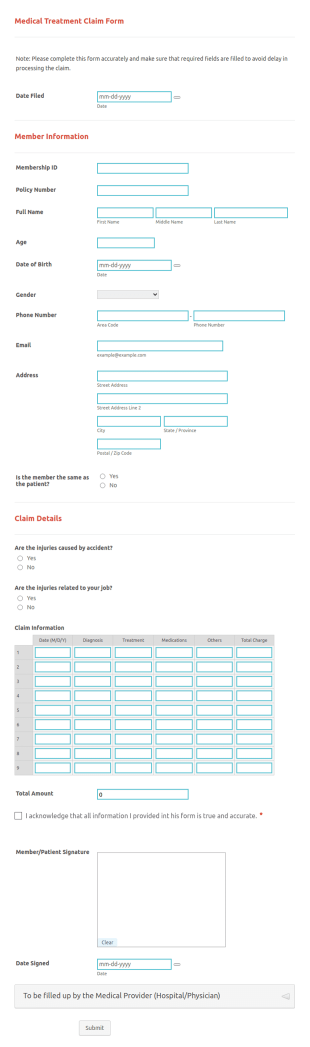
Medical Treatment Claim Form
Automate your insurance company’s claim processing and create secure PDF medical claims for customers instantly. Easy to customize, download, and print.
Go to Category:Healthcare Forms
Health Insurance Claim Form
Health insurance providers can use our Health Insurance Claim Form to process patient claims online. Stay HIPAA-enabled with our Gold plan!
Go to Category:Healthcare Forms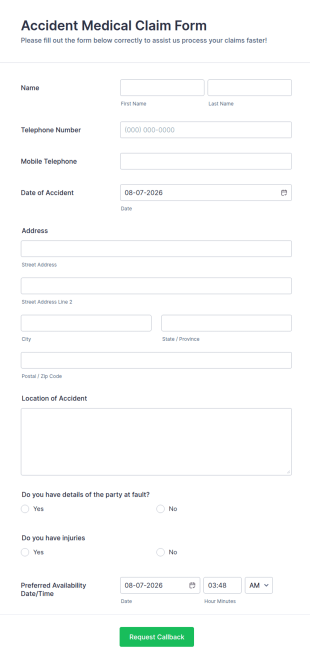
Emergency Claim Form
Maybe you're a health or auto insurance provider then here's a great way to allow your customers to contact and file claims and reports such as an injury or car accident!
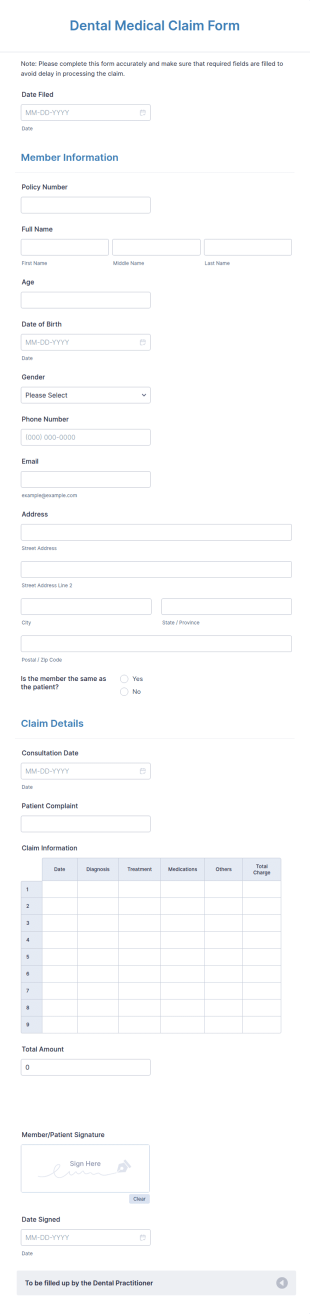
Go to Category:Healthcare FormsDental Medical Claim Form
If you own an insurance company or dental clinic, you need a Dental Medical Claim Form. This claim form is important in improving the process of claiming insurance in an organized manner.
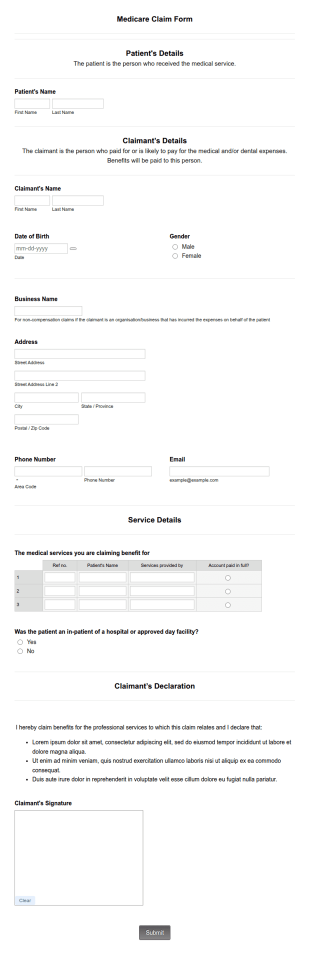
Go to Category:Healthcare FormsMedicare Claim Form Template
A Medicare claim form is a document used by healthcare providers to bill the government insurance program Medicare.
Go to Category:Healthcare Forms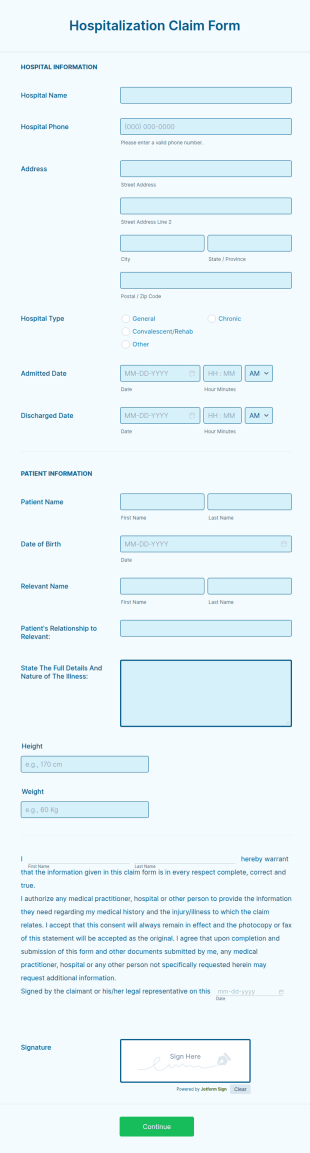
Hospitalization Claim Form
A hospitalization claim form is a document used by medical insurance companies to submit a claim for medical treatment
Go to Category:Healthcare Forms
Dentist Claim Form
A Dentist Claim Form is a form template designed to collect essential information from patients and dentists for the purpose of processing insurance claims, detailing treatment specifics, costs, and payment preferences.
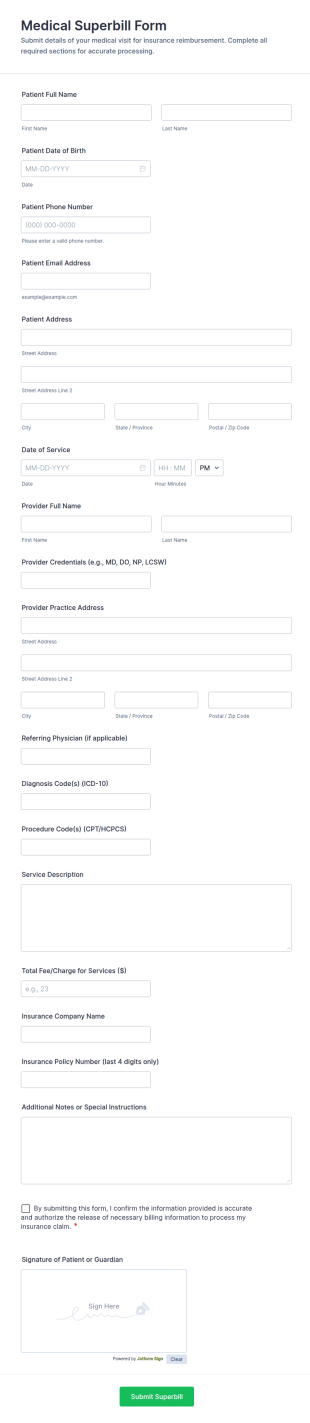
Go to Category:Healthcare FormsMedical Superbill Form
Generate consistent patient superbills with the Medical Superbill Form in Jotform, ideal for private practices and providers who need fast online data collection and easy recordkeeping after each form submission.
Go to Category:Healthcare Forms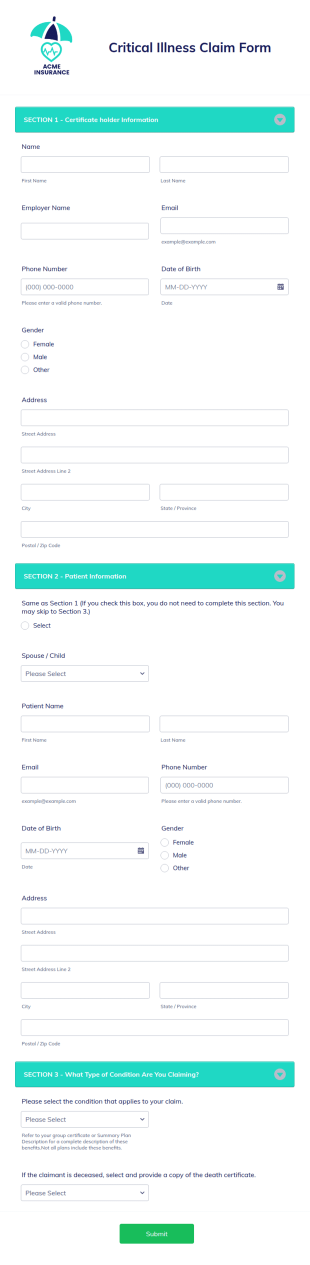
Critical Illness Claim Form
A critical illness claim form is used by health insurance companies and policy holders to inform a provider of a condition or illness that may be eligible for compensation. Choose the Critical Illness Claim Form!
Go to Category:Healthcare Forms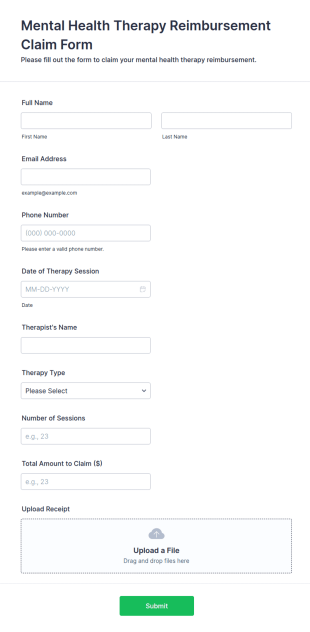
Mental Health Therapy Reimbursement Claim Form
The Mental Health Therapy Reimbursement Claim Form simplifies the process of submitting therapy claims for reimbursement, ensuring efficient data collection and management for mental health professionals and clients.
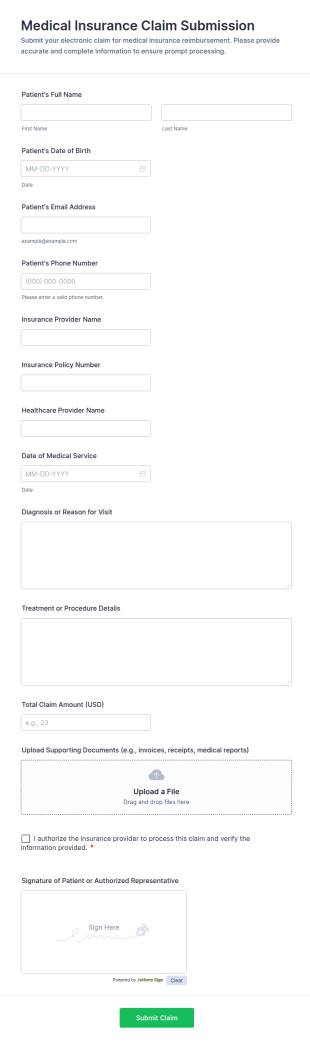
Go to Category:Healthcare FormsMedical Insurance Claim Submission
Collect and organize patient medical insurance claims online with the Medical Insurance Claim Submission Form, including document uploads and e-signatures, so clinics and billing teams can manage claim requests more consistently.
Go to Category:Claim Forms
Durable Medical Equipment Reimbursement Claim Form
Collect durable medical equipment reimbursement claims online with Jotform using a customizable template that helps patients, caregivers, and administrators capture documentation, review requests faster, and keep records organized.
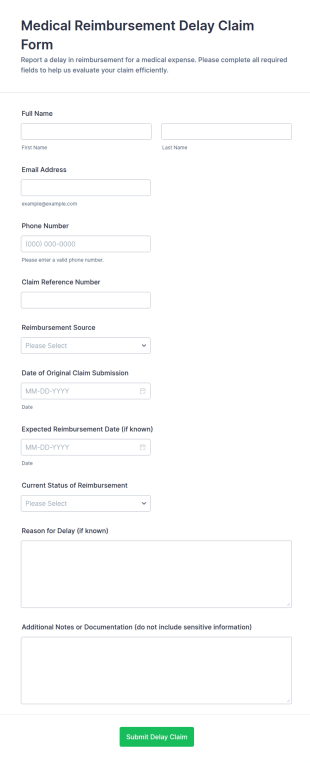
Go to Category:Claim FormsMedical Reimbursement Delay Claim Form
Medical Reimbursement Delay Claim Form helps benefits, finance, and billing teams collect delay reports and track reimbursement issues through a single online workflow in Jotform, improving visibility and follow-up for each form submission.
Go to Category:Claim Forms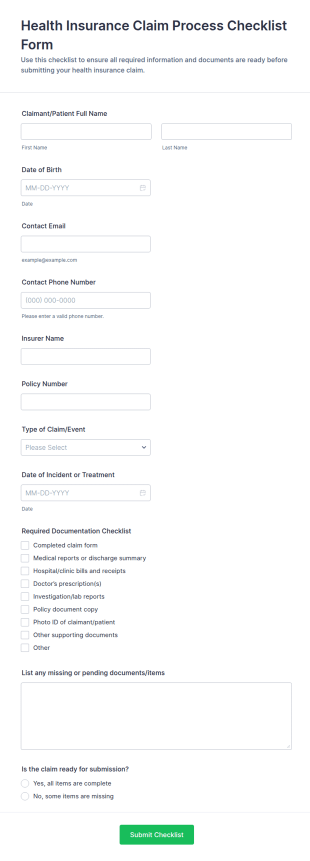
Health Insurance Claim Process Checklist Form
Health Insurance Claim Process Checklist Form helps patients and healthcare offices confirm claim details and documentation readiness before sending to an insurer, improving data collection and reducing delays from incomplete paperwork.
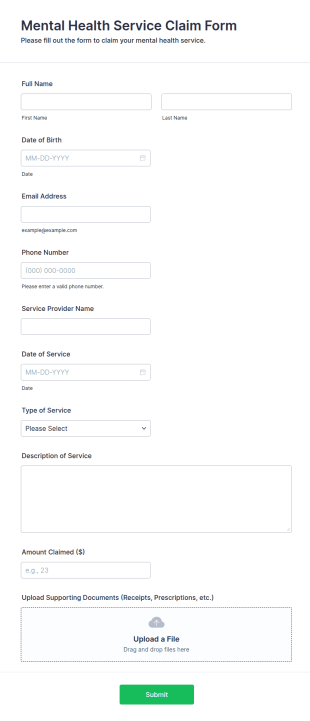
Go to Category:Insurance Claim FormsMental Health Service Claim Form
The Mental Health Service Claim Form helps patients easily submit claims for mental health services, ensuring an efficient reimbursement process for healthcare providers.
Go to Category:Healthcare Forms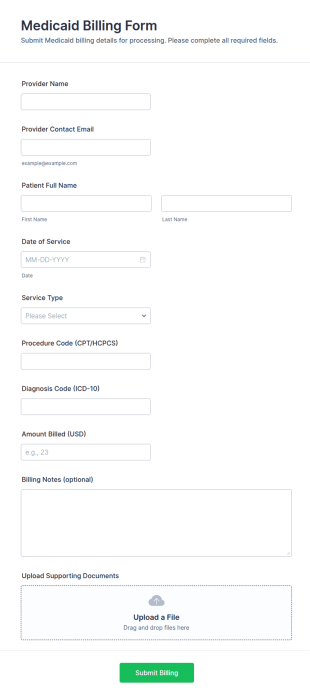
Medicaid Billing Form
Collect Medicaid billing details in one place with the Medicaid Billing Form for clinics and billing teams, making data collection easier and keeping every form submission organized for review and processing in Jotform.
Go to Category:Healthcare Forms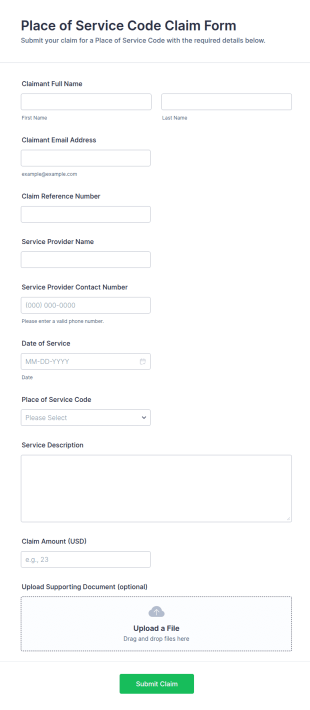
Place Of Service Code Claim Form
Collect and track claims tied to a Place of Service Code using Jotform’s Place of Service Code Claim Form, ideal for clinics, billing teams, and administrators who need consistent online data collection and faster follow-ups.
Go to Category:Claim Forms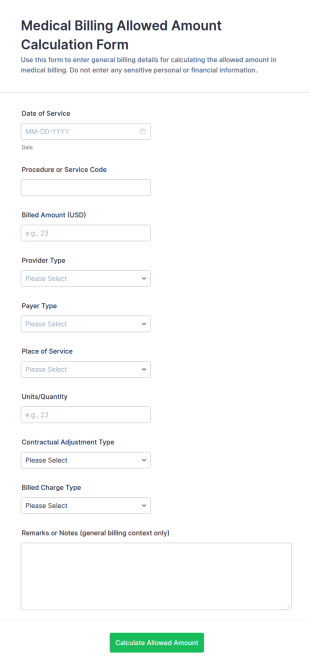
Medical Billing Allowed Amount Calculation Form
Medical Billing Allowed Amount Calculation Form supports billing teams and clinics with consistent allowed-amount calculations for services, making internal review and documentation easier across payers and settings.
Go to Category:Calculation Forms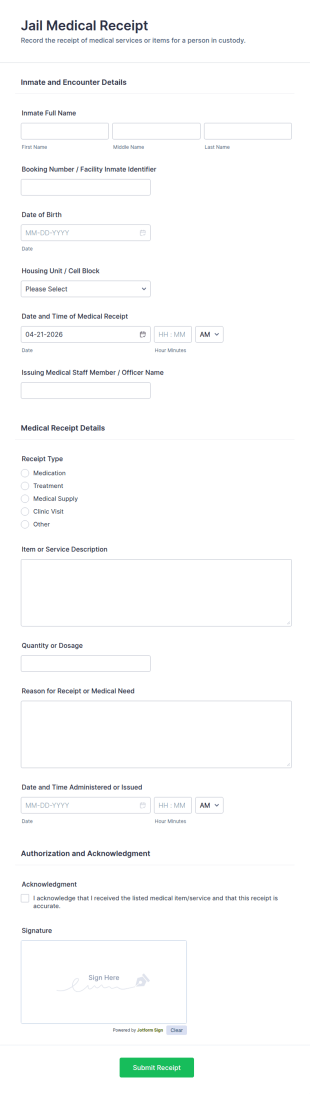
Jail Medical Receipt Submission
Document medical items and services issued in custody with the Jail Medical Receipt Form for correctional facilities, capturing consistent records for internal tracking and fast review in Jotform.
Go to Category:Healthcare Forms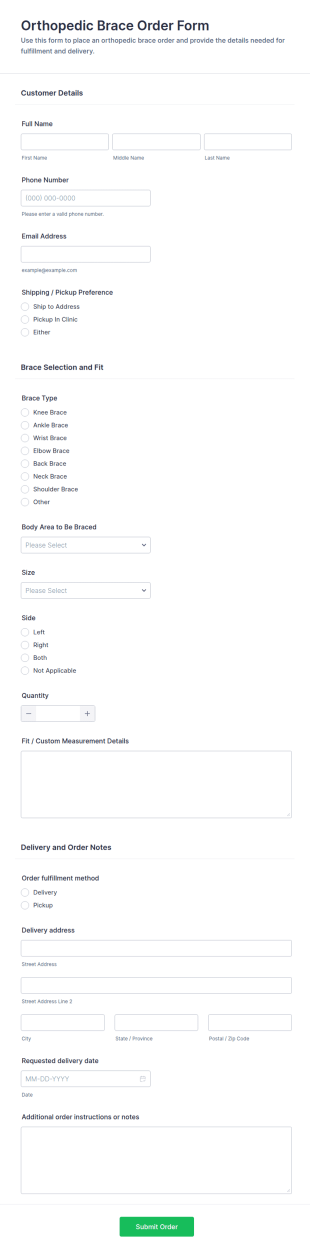
Orthopedic Brace Order Form
Collect orthopedic brace orders online with the Orthopedic Brace Order Form in Jotform, helping clinics and medical supply teams standardize data collection, reduce ordering mistakes, and manage every form submission in one place.
Go to Category:Order Forms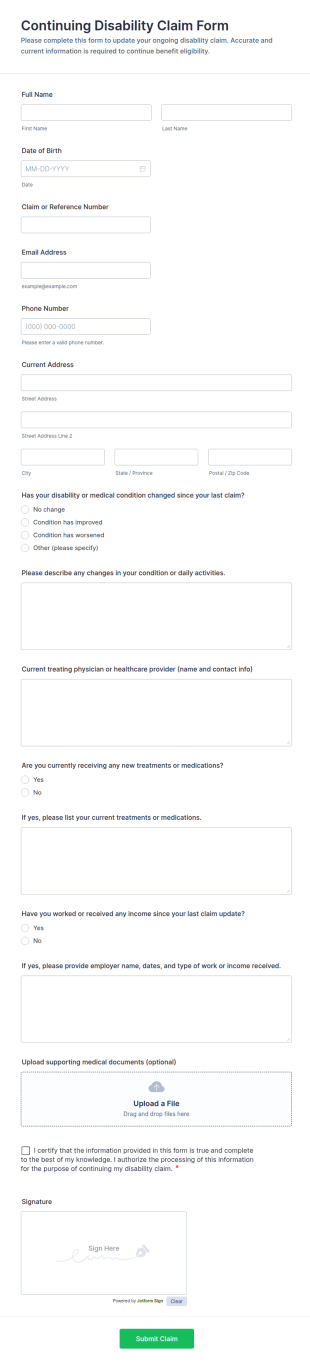
Continuing Disability Claim Form
Collect ongoing disability claim updates with a Continuing Disability Claim Form in Jotform, helping administrators and case managers gather current details, supporting documentation, and signed confirmation online.
Go to Category:Claim Forms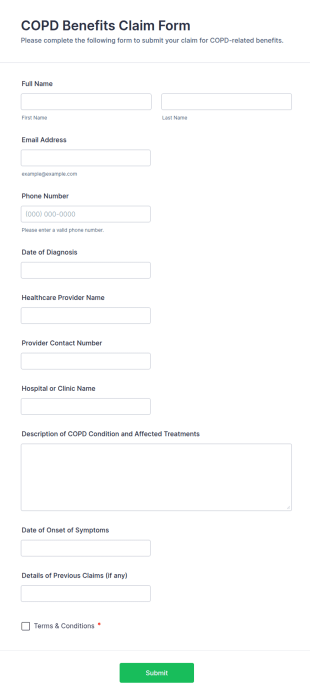
COPD Benefits Claim Form
Collect COPD-related benefits claim requests online with the COPD Benefits Claim Form, ideal for clinics, patient advocates, and benefits teams that need consistent data collection and organized form submissions.
Go to Category:Claim Forms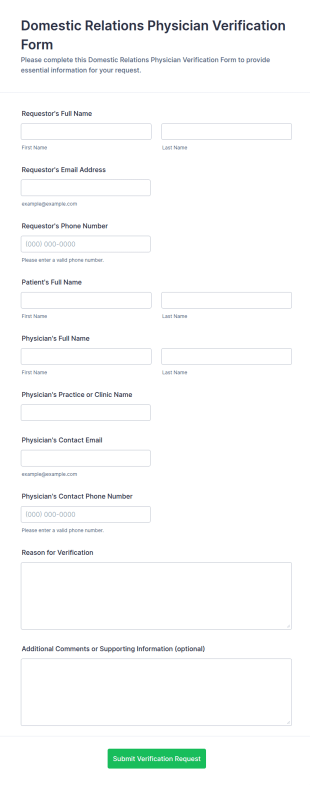
Domestic Relations Physician Verification Form
Collect physician verification requests for domestic relations matters with the Domestic Relations Physician Verification Form in Jotform, ideal for law offices, mediators, and clinic staff who need consistent data collection and fast follow-up.
Go to Category:Verification Forms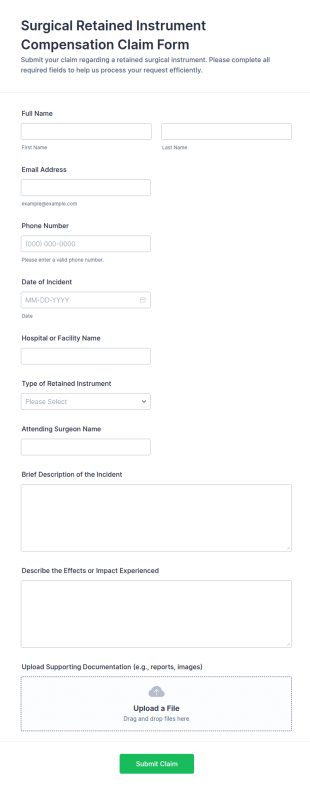
Surgical Retained Instrument Compensation Claim Form
Collect retained surgical instrument compensation claims online with Jotform using the Surgical Retained Instrument Compensation Claim Form, built for patient relations teams that need consistent data collection and fast follow-up after each form submission.
Go to Category:Claim FormsAbout Medical Claim Forms
Medical Claim Forms are essential digital forms used in the healthcare industry to facilitate the submission and processing of claims related to medical services. These forms streamline the workflow by allowing healthcare providers to capture pertinent patient information, treatment details, and billing data efficiently. They are integral in reducing the time spent on manual paperwork, ensuring that claims are processed accurately and swiftly. In real-world workflows, Medical Claim Forms can be used by hospitals, clinics, and insurance companies to verify patient information, document procedures, and ensure that claims are submitted in compliance with healthcare regulations.
Jotform stands out as the premier online form builder for creating and managing Medical Claim Forms. With its intuitive drag-and-drop interface, Jotform offers ease of customization, allowing healthcare organizations to tailor forms to their specific needs. The platform's ability to automate data collection and processing enhances operational efficiency, reducing administrative burdens. Furthermore, Jotform Tables provide a centralized data management solution, ensuring that all collected data is organized, easily accessible, and secure, facilitating seamless integration into existing healthcare workflows.
Why Use Medical Claim Forms?
- Medical Claim Forms provide a streamlined process for collecting accurate patient and treatment information, significantly reducing the risk of errors that can occur with manual data entry. By ensuring that all required fields are completed before submission, these forms enhance the accuracy of the data collected.
- The speed of processing claims is greatly increased when using digital forms, allowing healthcare providers to submit claims promptly. This results in faster reimbursement times, improving cash flow for medical practices and reducing financial strain.
- Professional data handling is a core benefit of using Medical Claim Forms, as they allow for secure data storage and retrieval. This is crucial in maintaining patient confidentiality and meeting compliance standards such as HIPAA.
- By automating routine tasks and workflows, Medical Claim Forms free up valuable time for healthcare staff, allowing them to focus on patient care rather than administrative duties. This leads to improved job satisfaction and better patient outcomes.
- The use of digital forms supports environmentally-friendly practices by reducing the need for paper-based documentation. This not only minimizes waste but also reduces storage space requirements and associated costs.
Common Problems Solved by Medical Claim Forms
- One of the major pain points in the healthcare industry is the cumbersome paperwork associated with claims processing. Medical Claim Forms eliminate the need for physical copies, reducing clutter and the risk of losing critical documents.
- Manual data entry is prone to errors, which can lead to claim denials or delays in processing. By using Medical Claim Forms, healthcare providers can ensure that data is entered correctly the first time, minimizing errors and enhancing the accuracy of claims.
- Lost data is a significant concern in traditional claims processing. Digital forms ensure that all information is securely stored and easily retrievable, preventing data loss and ensuring continuity of care.
- The inefficiency of manual workflows can lead to bottlenecks in the claims process. Medical Claim Forms streamline these workflows, allowing for quicker processing and faster reimbursement, which is vital for maintaining the financial health of medical practices.
Matching Use Cases to Features
- For healthcare providers who need to customize forms for specific specialties or procedures, Jotform's Drag-and-Drop Form Builder offers unparalleled flexibility. This feature enables the easy addition or removal of fields, ensuring forms meet the exact needs of the practice.
- Conditional Logic is a powerful feature that allows forms to dynamically adjust based on user responses. This is particularly useful in Medical Claim Forms to ensure that only relevant information is gathered, enhancing the user experience and data accuracy.
- With the integration of over 30 payment gateways, including Stripe, PayPal, and Square, healthcare providers can collect co-payments or other fees directly through the forms. This streamlines the payment process and reduces the administrative burden on staff.
- Jotform Sign enables the collection of electronic signatures, providing a secure and legally binding way to capture patient consent. This feature is critical in ensuring compliance with healthcare regulations and maintaining the integrity of the claims process.
- For organizations that require comprehensive reporting capabilities, the Report Builder feature allows for the creation of detailed reports based on form submissions. This aids in analyzing data trends and improving overall operational efficiency.
- Jotform's 100+ third-party integrations, such as Google Sheets and Salesforce, allow for seamless data synchronization across platforms. This ensures that information captured in Medical Claim Forms is automatically updated in relevant systems, reducing manual data entry and errors.
How to Create a Medical Claim Form
- Start by browsing the Template List for a Medical Claims template or begin from a blank form to fit your specific requirements.
- Customize the design and fields of your Medical Claim Form using the Drag-and-Drop Form Builder, ensuring it meets your exact operational needs.
- Publish your Medical Claim Form and share it via Direct Link, Email, or Website Embed to facilitate easy access and submission by patients and staff.
Top Use Cases for Medical Claim Forms
- For Managers: Medical Claim Forms offer managers a powerful tool for streamlining administrative processes within their healthcare facilities. By reducing the time spent on manual data entry and paperwork, managers can allocate resources more effectively, ensuring that staff are focused on delivering high-quality patient care. Additionally, the ability to generate reports from form data provides valuable insights into operational efficiencies and areas for improvement.
- For Teams: Healthcare teams benefit greatly from the use of Medical Claim Forms as they facilitate better communication and collaboration. By having a centralized platform for data collection and management, team members can easily access and update patient information as needed. This ensures that all team members are on the same page, reducing the risk of errors and improving the overall quality of care provided to patients.
- For Customers: Patients experience a more streamlined and efficient process when submitting claims through Medical Claim Forms. The ease of use and accessibility of these forms reduce the time and effort required to provide necessary information, enhancing the overall patient experience. Furthermore, the secure handling of personal data instills confidence in patients that their information is being managed responsibly.
Summarizing Medical Claim Forms
Medical Claim Forms are an indispensable component of the healthcare industry's digital transformation efforts. By leveraging Jotform's capabilities, healthcare providers can significantly enhance the efficiency and accuracy of their claims processing workflows. The ability to customize forms, automate data collection, and integrate with other platforms facilitates a seamless operational experience. Ultimately, Medical Claim Forms not only improve administrative efficiency but also contribute to better patient outcomes and satisfaction.
Frequently Asked Questions
1) Is it free to create Medical Claim Forms on Jotform?
Yes, Jotform offers a free plan that allows users to create and manage Medical Claim Forms. However, there may be limitations on the number of submissions and storage, which can be expanded with a paid plan.
2) Are the forms and submitted data secure?
Absolutely, Jotform prioritizes the security of data. All forms and submissions are protected with industry-standard encryption, ensuring compliance with regulations such as HIPAA for handling sensitive patient information.
3) Do I need coding knowledge to build a Medical Claim Form?
No coding knowledge is required to build a Medical Claim Form on Jotform. The platform's intuitive Drag-and-Drop Form Builder allows users to easily create and customize forms without any programming experience.
4) Can I collect payments directly through my forms?
Yes, Jotform supports integration with over 30 payment gateways, enabling you to collect payments directly through your Medical Claim Forms. This feature streamlines the billing process and enhances the patient experience.
5) Can these forms be used on mobile devices?
Yes, Jotform's forms are fully responsive and can be accessed and submitted via mobile devices. This flexibility ensures that patients and healthcare providers can interact with the forms on-the-go, improving accessibility and convenience.
6) Can I turn form submissions into professional PDF documents?
Yes, Jotform includes a PDF Editor that automatically generates professional PDF documents from form submissions. This feature is ideal for creating standardized records of claims for easy sharing and archiving.
7) Can Medical Claim Forms integrate with electronic health record (EHR) systems?
While direct integration with EHR systems may vary, Jotform's extensive third-party integrations allow for data synchronization with platforms that support interoperability with EHR systems, facilitating seamless data exchange.
8) How can Medical Claim Forms improve the patient billing experience?
Medical Claim Forms streamline the billing process by enabling accurate data collection and direct payment processing. This reduces the likelihood of billing errors and expedites the reimbursement process, enhancing overall patient satisfaction.