


Lawyer Forms
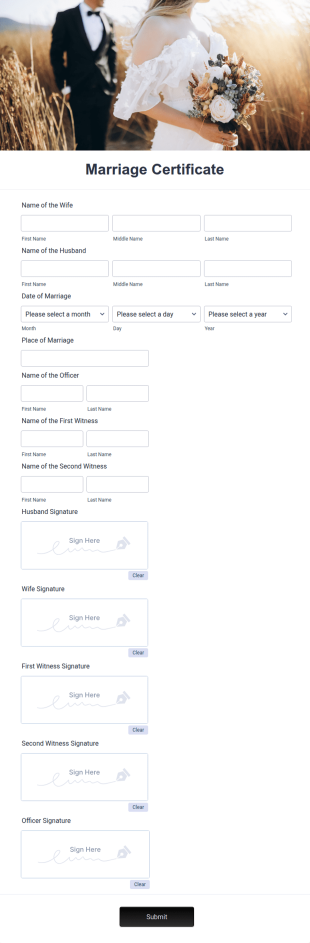
Free Marriage Certificate Form
A marriage certificate is a document that is issued to a married couple and includes their names, the date of the marriage, and their signatures. Use Jotform as proof or a remembrance of your wedding day!
Go to Category:Wedding Forms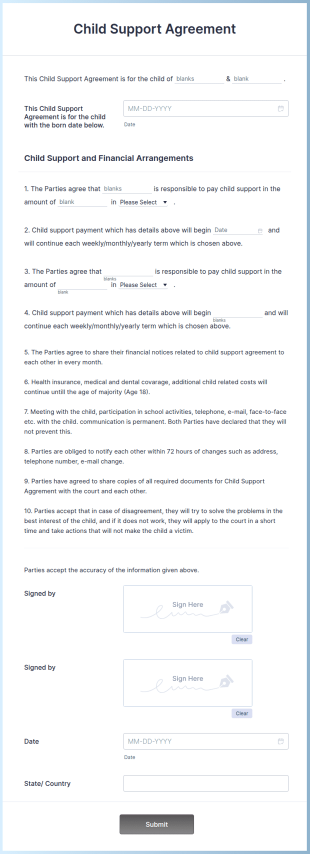
Child Support Agreement Form
A child support agreement is a written contract between parents of a minor child that outlines custody, visitation, and financial responsibilities of each parent
Go to Category:Consent Forms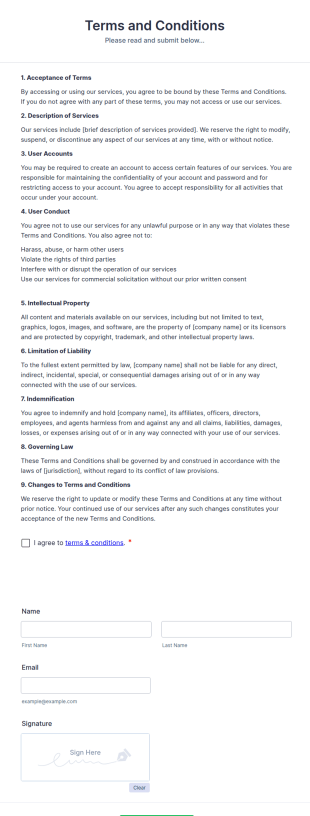
Terms And Conditions Form
A Terms & Conditions document is a form template designed to act as a legally binding agreement between a business and its customers.
Go to Category:Informed Consent Forms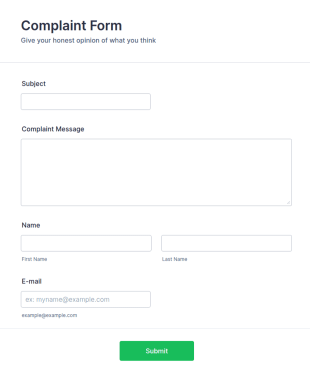
Allegation Form
Use this Allegation Form to get to know about the issue or complaints about your company and get better at customer relationships easily.
Go to Category:Feedback Forms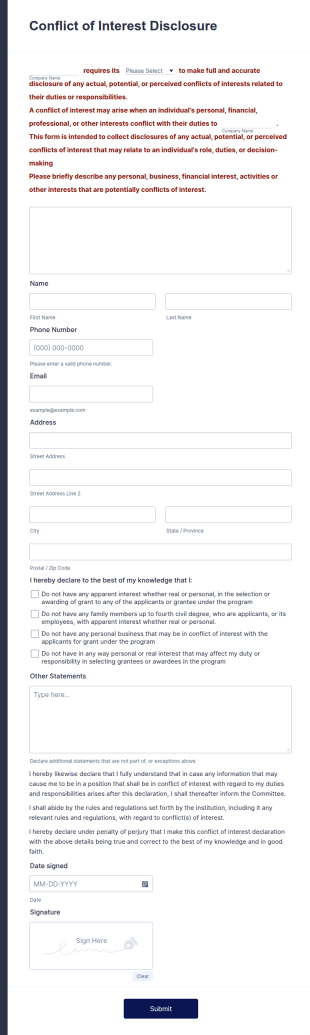
Conflict Of Interest Declaration Form
Have an online-based conflict of interest declaration for your officers and employees with this Conflict of Interest Declaration Form Template.
Go to Category:Information Request Forms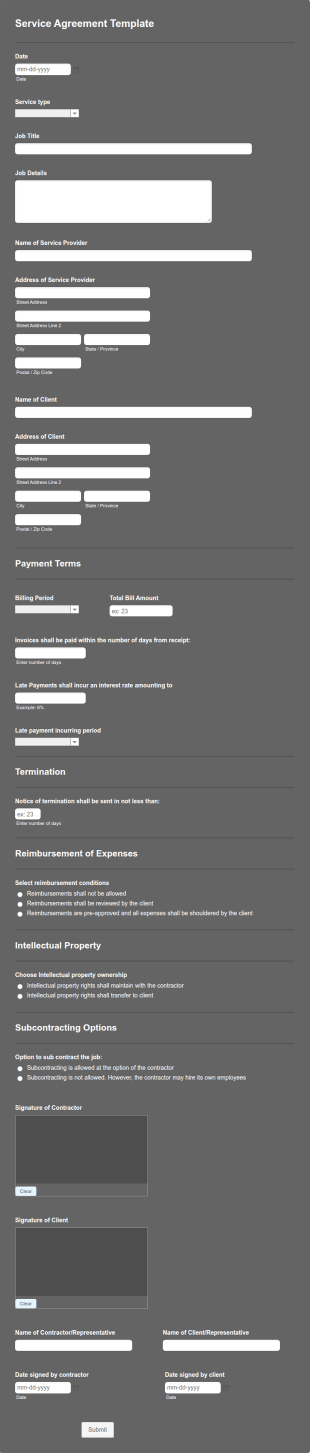
Service Agreement Template
Use this Service Agreement Template and start receiving submissions for the creation of service contracts. Don't waste time building forms in automating your form submissions for receiving service contracts.
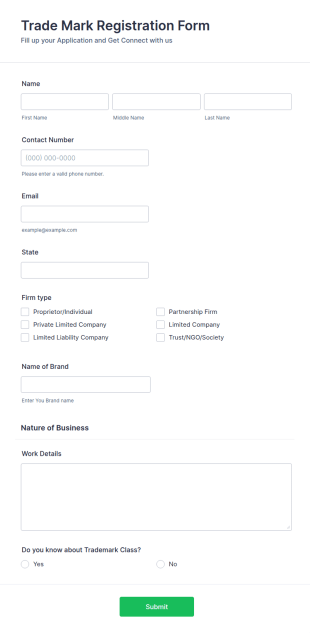
Go to Category:Services FormsTM Registration Form
A TradeMark Registration Form is used by companies who want to register their trademark with the government.
Go to Category:Business Registration FormsDurable Power Of Attorney Form
No need to spend hours or days crafting your durable power of attorney. Cut the drafting time in minutes with this Durable Power of Attorney Form template. Copy this template to your Jotform account for free!
Go to Category:Legal Forms
Legal Client Intake Form
Optimize your professional services using web forms as your intake form to receive legal concerns and close future agreements with web-based walk-ins. Use this Legal Client Intake Form template and never miss a client anymore.
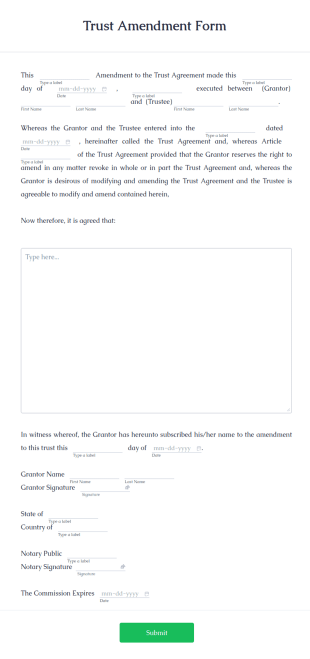
Go to Category:Legal FormsTrust Amendment Form
A Trust Amendment Form is a form template designed to help parties involved in the administration and management of a trust modify its terms and provisions in accordance with the grantor's wishes, changes in circumstances, or legal requirements
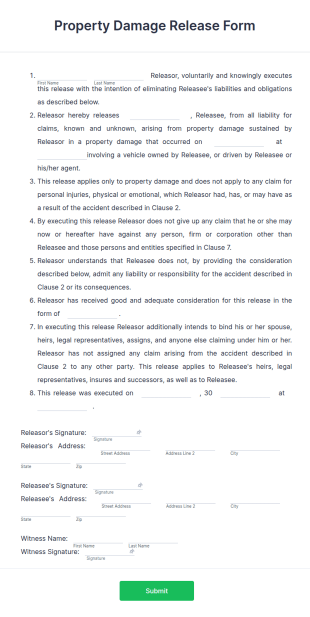
Go to Category:Consent FormsProperty Damage Release Form
A property damage release form is a legal document that states that a person will not hold a party liable for any damage to their premises.
Go to Category:Consent Forms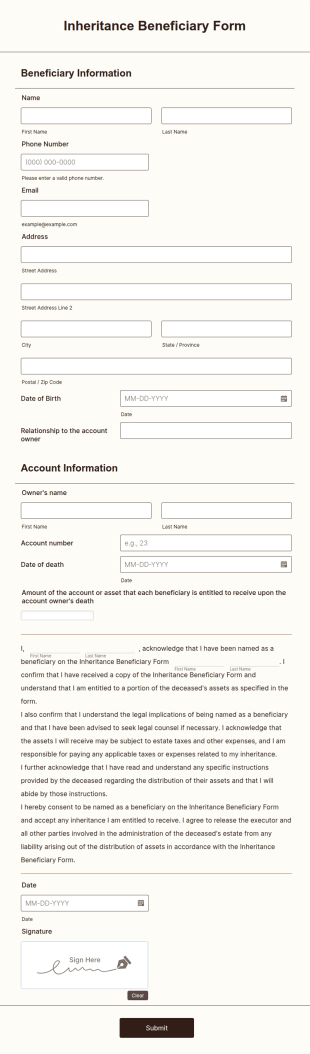
Inheritance Beneficiary Form
An inheritance beneficiary form is used by a person who is inheriting the assets of a person who is deceased.
Go to Category:Consent Forms
Family Law Intake Form
A Family Law Intake Form is a template effortlessly streamlining client data gathering for legal professionals. This customizable tool aids in efficiently capturing critical client information and improving client-lawyer communication. Simplify your law practice and focus on case resolution.
Go to Category:Business Forms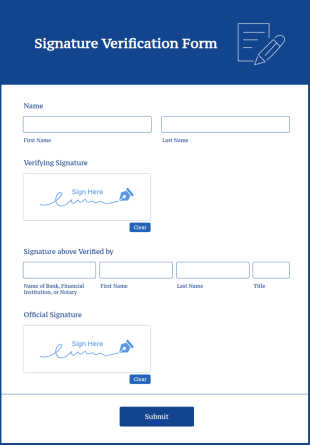
Signature Verification Form
A signature verification form is a tool used by financial institutions to verify the authenticity of signatures.
Go to Category:Banking Forms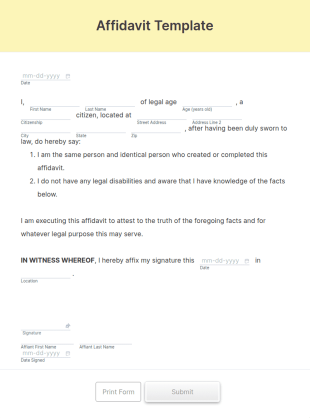
Affidavit Template
Create a statement or oath by using this Affidavit Template which can be later used in court. This template will guide you on how to build this type of legal document from scratch.
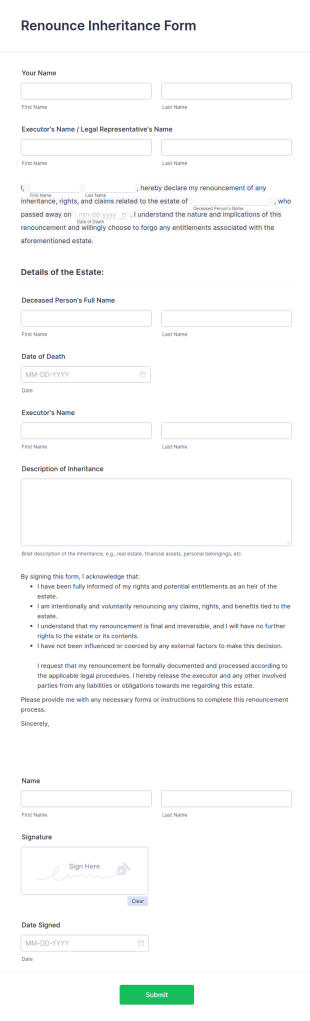
Go to Category:Consent FormsRenounce Inheritance Form
A renounce inheritance form is a document that allows a person to officially revoke a will and prevent him/herself from receiving property.
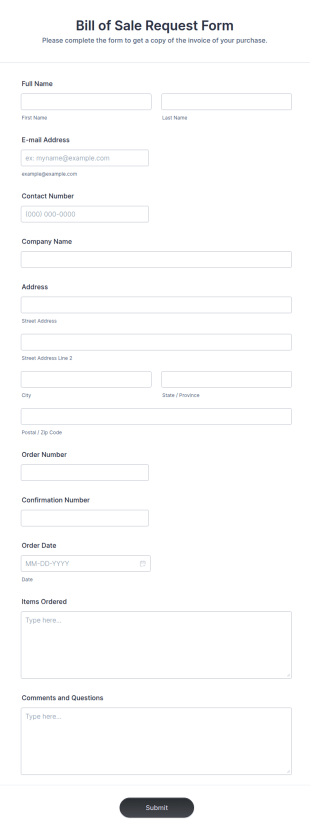
Go to Category:Real Estate FormsBill Of Sale Request Form
A Bill of Sale Request Form is a streamlined template enabling seamless transactions for the sale of goods. Enhance your sales process today!
Go to Category:Business Forms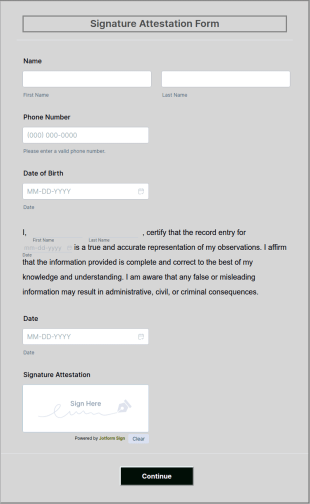
Signature Attestation Form
A Signature Attestation Form is a document used to certify the signature of a person on an official document.
Go to Category:Business Forms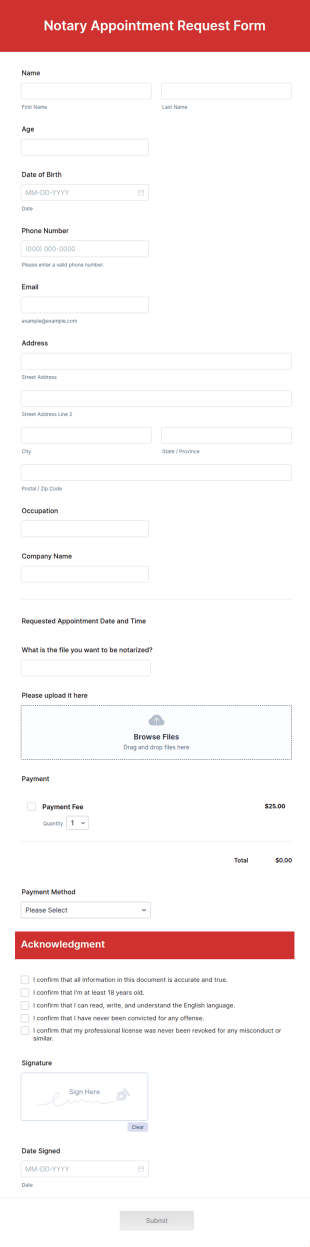
Notary Appointment Request Form
Allow your customers to schedule an appointment for their documents to be notarized by using this Notary Appointment Request Form. In this form template, the customer can just easily select an available date and time for the appointment.
Go to Category:Request Forms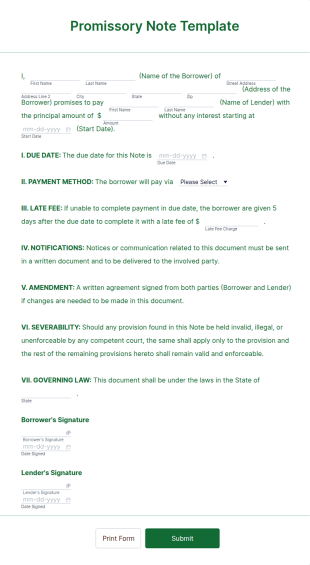
Promissory Note Template
Use this Promissory Note Template if you are unable to make a payment on the deadline or on the due date. This form template is easy to use and can be customized quickly via the Form Builder.
Go to Category:Informed Consent Forms
Parental Leave Request Form
A Parental Leave Request Form is an intuitive template crafted for HR professionals to make it easier for employees to request parental leave.
Go to Category:Human Resources Forms
Personal Injury Intake Form
A personal injury intake form is used by a law firm to take a client's information and gather facts regarding a potential case.
Go to Category:Insurance Forms
Fashion Affiliate Agreement Form
A Fashion Affiliate Agreement Form is a form template designed to streamline the process of creating agreements between fashion companies and their affiliate marketers.
Go to Category:Business Forms
Immigration Intake Form
An immigration intake form is a questionnaire used by immigration lawyers to collect the necessary information for their clients. No coding!
Go to Category:Registration FormsAbout Lawyer Forms
Lawyer Forms are specialized digital forms designed to meet the specific needs of the legal industry. These forms streamline various legal processes, providing an efficient way for legal professionals to gather and manage data. Common use cases for Lawyer Forms include client intake, contract agreements, case documentation, and compliance checks. In real-world workflows, these forms facilitate the seamless collection and organization of information, reducing the time spent on manual paperwork and minimizing errors. Whether it's capturing client information, managing case files, or documenting client interactions, Lawyer Forms play a crucial role in ensuring that legal operations run smoothly and efficiently.
Jotform stands out as the premier online form builder for creating Lawyer Forms, offering a user-friendly platform that simplifies the customization of forms to suit specific legal workflows. With Jotform, legal professionals can automate data collection and streamline processes, ensuring that all data is accurately captured and stored. The platform's centralized data management system, Jotform Tables, allows for easy organization and retrieval of information, enhancing efficiency and productivity. By utilizing Jotform, legal professionals can focus on their core responsibilities, knowing that their data management needs are handled efficiently and securely.
Why Use Lawyer Forms?
- Lawyer Forms are designed to ensure accuracy and reliability in data collection, which is crucial for legal professionals who need to maintain precise records. By using these forms, legal professionals can reduce the risk of errors that often occur with manual data entry, ensuring that all collected information is accurate and complete.
- Speed is another significant advantage of Lawyer Forms, as they allow for quick and efficient data collection and processing. This means legal professionals can gather necessary information in a fraction of the time compared to traditional methods, enabling them to focus more on client interactions and case management.
- Professional data handling is a key feature of Lawyer Forms, as they are specifically designed to meet the unique requirements of the legal industry. This includes ensuring that sensitive client information is handled with the utmost care and confidentiality, which is critical for maintaining trust and compliance with legal standards.
- Customization is a vital aspect of Lawyer Forms, allowing legal professionals to tailor the forms to meet their specific needs. Whether it's adding specific fields or incorporating conditional logic, Jotform provides the flexibility to create forms that align with unique legal processes and requirements.
- Lawyer Forms facilitate seamless integration with existing legal systems, ensuring that data collected through these forms can be easily incorporated into other platforms. This integration capability enhances the overall efficiency of legal operations by ensuring a smooth flow of information across different systems.
Common Problems Solved by Lawyer Forms
- One of the most common issues faced by legal professionals is the overwhelming amount of paperwork involved in their daily operations. Lawyer Forms address this issue by digitizing these processes, significantly reducing the reliance on paper and streamlining document management.
- Manual data entry is another pain point in the legal industry, often leading to errors and inefficiencies. Lawyer Forms automate this process, ensuring that data is accurately captured and readily accessible, thereby minimizing the risk of human error and enhancing operational efficiency.
- Lost or misplaced data can have severe consequences in the legal field, leading to compliance issues and client dissatisfaction. By utilizing Lawyer Forms, legal professionals can store data securely in Jotform Tables, ensuring that all information is easily retrievable and protected against loss.
- Compliance with legal standards and regulations is crucial for law firms, and Lawyer Forms help streamline this process by ensuring that all data collection practices adhere to industry requirements. This not only protects the firm from potential legal issues but also instills confidence in clients regarding the handling of their information.
Matching Use Cases to Features
- Legal client intake processes can be significantly enhanced using the Drag-and-Drop Form Builder, which allows for the easy creation of customized forms tailored to collect specific client information. This feature ensures that all necessary details are captured in a structured manner, facilitating a smooth intake experience.
- Conditional Logic is particularly beneficial for legal professionals who need to create dynamic forms that adapt based on user responses. This feature allows for the creation of intelligent forms that streamline the data collection process by only displaying relevant questions, improving user experience and data accuracy.
- For firms that require secure transactions, the availability of 30+ Payment Gateways, including Stripe, PayPal, and Square, enables the collection of payments directly through the forms. This feature simplifies the payment process, ensuring that transactions are handled securely and efficiently.
- Electronic Signatures via Jotform Sign are essential for legal documents that require formal authorization. This feature allows legal professionals to collect signatures electronically, ensuring that all documents are legally binding and reducing the need for physical paperwork.
- The PDF Editor with Automated PDF Generation is invaluable for legal professionals who need to convert form submissions into professional documents. This feature streamlines the documentation process, enabling the easy creation of well-formatted PDFs that are ready for distribution and storage.
- Integrating Lawyer Forms with third-party platforms such as Google Sheets, Salesforce, and Slack enhances operational efficiency by ensuring seamless data flow across different systems. This capability allows legal professionals to manage data effectively, reducing the likelihood of errors and improving overall productivity.
How to Create a Lawyer Form
- Start by browsing the Template List for a Lawyers template that fits your needs, or begin from a blank form if you wish to create a customized solution.
- Customize the design and fields of your form using the Drag-and-Drop Form Builder. This step allows you to tailor the form to meet your specific legal requirements, ensuring that all necessary information is captured.
- Once your form is ready, publish it and share it with clients or colleagues through a Direct Link, Email, or Website Embed, ensuring that it is accessible to all intended users.
Top Use Cases for Lawyer Forms
- For Managers: Lawyer Forms are indispensable for managers who oversee legal operations within a firm. They facilitate the efficient collection and management of data, allowing managers to monitor workflows and ensure compliance with industry standards. By utilizing these forms, managers can streamline communication, improve decision-making, and enhance overall operational efficiency.
- For Teams: Within legal teams, Lawyer Forms serve as a critical component for collaboration and information sharing. They enable team members to easily collect and access vital case information, ensuring that everyone is on the same page. This promotes a cohesive working environment where data is readily available, allowing teams to focus on delivering high-quality legal services.
- For Customers: For clients, Lawyer Forms provide a seamless and user-friendly way to interact with legal professionals. They simplify the process of providing necessary information, ensuring that all client details are captured accurately and securely. This enhances the client experience by reducing the complexity of legal procedures and building trust in the firm’s commitment to confidentiality and efficiency.
Summarizing Lawyer Forms
Lawyer Forms are a vital asset for the legal industry, offering a structured and efficient way to handle data collection and management. By leveraging Jotform’s capabilities, legal professionals can create customized forms that streamline workflows, ensure compliance, and enhance client interactions. The ability to automate processes and integrate with existing systems further underscores the value of Lawyer Forms in transforming legal operations, making them indispensable for modern legal practices.
Frequently Asked Questions
1) Is it free to create Lawyer Forms on Jotform?
Yes, Jotform offers a free plan that allows users to create and customize Lawyer Forms. While the free version provides basic functionality, there are also premium plans available that offer additional features and resources.
2) Are the forms and submitted data secure?
Absolutely, Jotform prioritizes data security, ensuring that all forms and submissions are protected with industry-standard encryption. This ensures that sensitive client information is safely stored and managed.
3) Do I need coding knowledge to build a Lawyer Form?
No, you do not need any coding knowledge to build a Lawyer Form on Jotform. The platform's Drag-and-Drop Form Builder makes it easy for anyone to create and customize forms without any technical expertise.
4) Can I collect payments directly through my forms?
Yes, you can collect payments directly through your forms by integrating with over 30 payment gateways, including Stripe, PayPal, and Square. This feature allows for secure and efficient transaction processing.
5) Can these forms be used on mobile devices?
Yes, Jotform forms are mobile-friendly and can be accessed and filled out on any device. This ensures that clients and legal professionals can complete and manage forms on the go.
6) Can I turn form submissions into professional PDF documents?
Yes, Jotform’s PDF Editor allows you to automatically generate professional PDF documents from form submissions. This feature ensures that all collected data is neatly organized and easily shareable.
7) Can Lawyer Forms be integrated with case management software?
Yes, Lawyer Forms can be integrated with various third-party platforms, including case management software, enabling seamless data transfer and enhancing workflow efficiency.
8) How do Lawyer Forms help with compliance?
Lawyer Forms help with compliance by ensuring that all data collection practices meet legal standards and regulations. This minimizes the risk of non-compliance and protects the firm from potential legal issues.