




Banking Forms
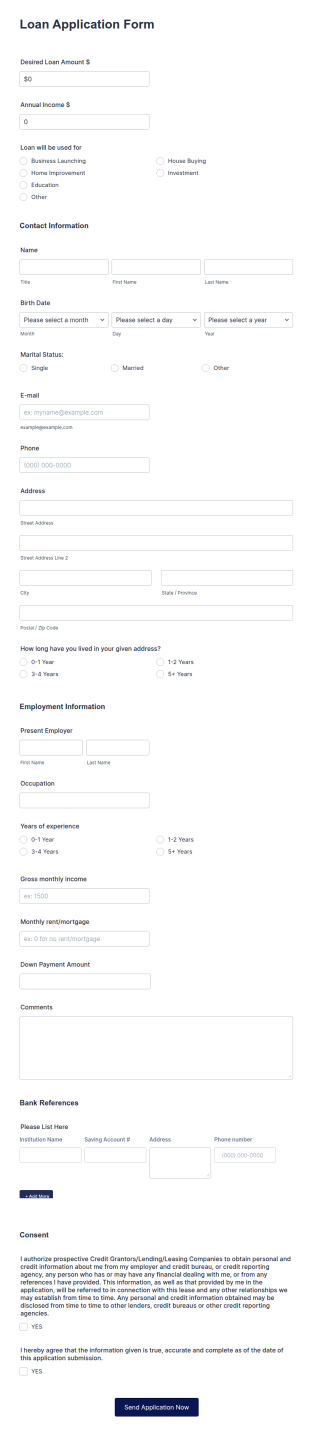
Loan Application Form
A Loan Application Form is a digital form template designed for banks and financial institutions to efficiently document loan terms and collect detailed financial information from applicants
Go to Category:Banking FormsKYC Form
KYC Form is a form template that effortlessly collects necessary customer identification data, streamlining your client onboarding process, presented in a user-friendly design by Jotform.
Go to Category:Banking Forms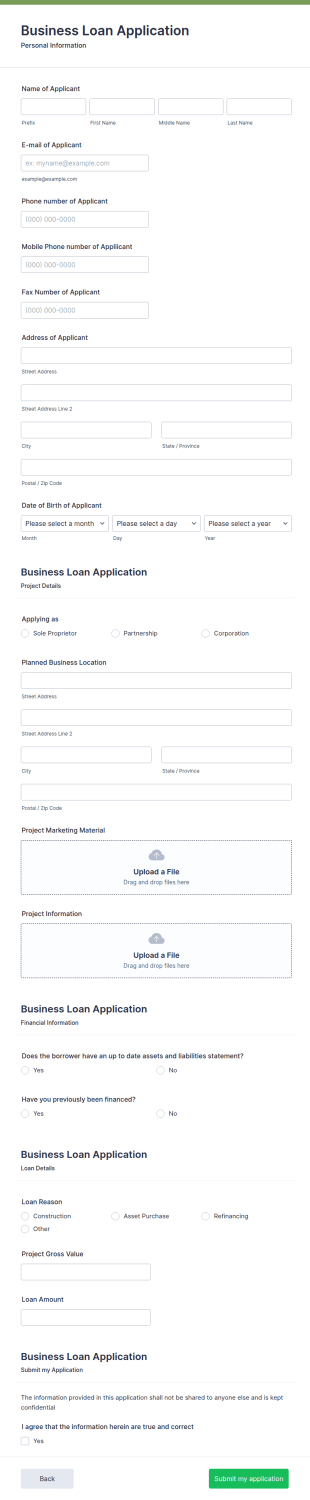
Business Loan Application Form
A template which is helpful for small/medium business owners to easily apply for a loan through four categories to fill as personal information, project details, financial information and loan details.
Go to Category:Banking Forms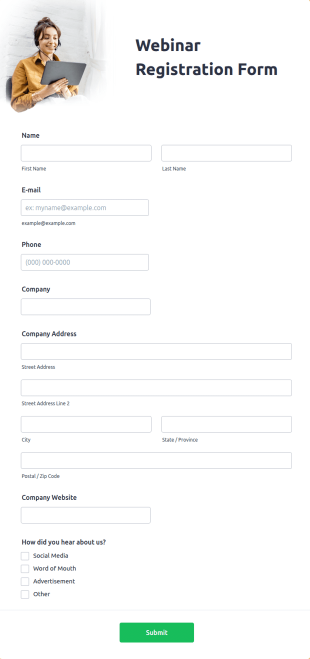
Webinar Registration Form
Increase webinar registrations. Free webinar registration form for your website. Easy to customize and embed. Integrate with Zoom and 100+ apps. No coding.
Go to Category:Banking Forms
Call Back Form
A Call Back Form is a template designed to streamline your communication process. It is ideal for businesses striving to maintain a strong customer relationship by ensuring prompt response.
Go to Category:Banking Forms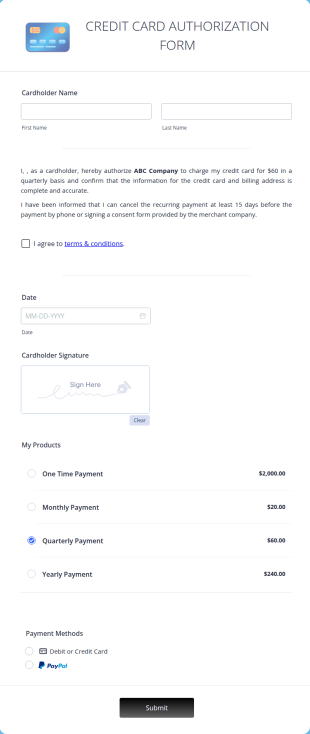
Credit Card Authorization Form
A credit card authorization form is used by small business owners to sign up their customers for a credit card.
Go to Category:Banking Forms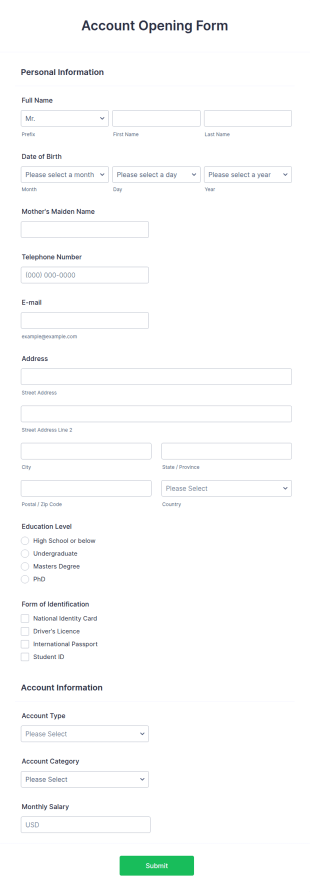
Account Opening Form
An Account Opening Form is a form template designed to streamline the process of opening a bank account, credit union account, or any other financial institution account
Go to Category:Banking Forms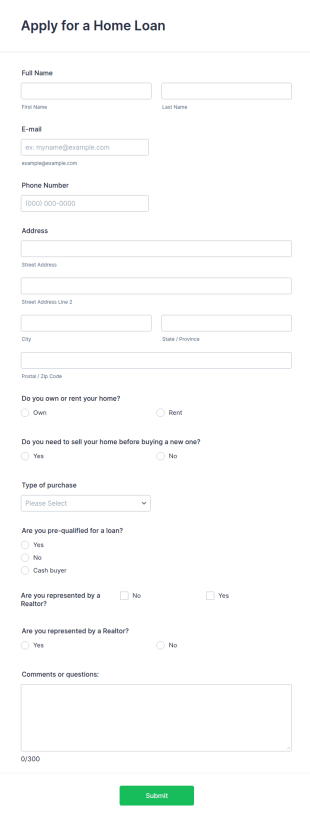
Home Loan Application
A home loan application is a form that is used to get information from a potential borrower to determine if a loan can be approved. Just customize the form to match your requirements. No coding.
Go to Category:Banking FormsIdentity Verification Form
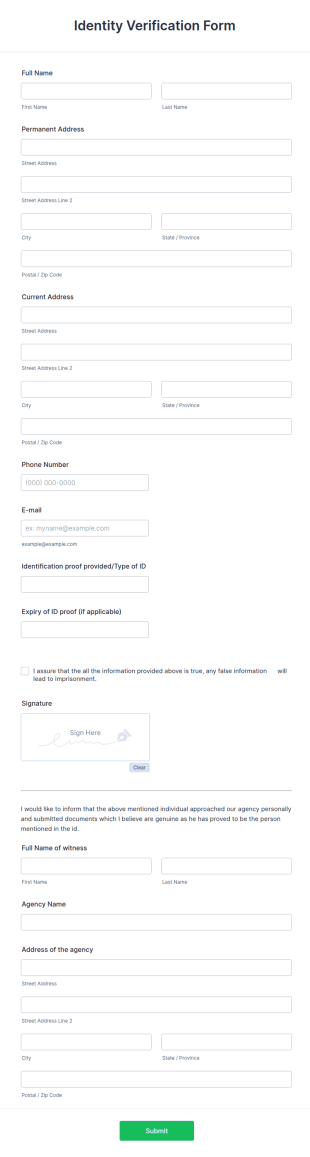
An identity verification form is a questionnaire used by companies to conduct identity checks on new employees.
Go to Category:Consent FormsW9 Form Template
Collect W9 Forms online with Jotform’s Smart PDF Forms. Easy to share or embed in your government website. More efficient than paper forms. Fill out on any device.
Go to Category:Tax Forms
Customer Credit Application Form
The Customer Credit Application Form template is a versatile tool that allows individuals, small business owners, entrepreneurs, corporate entities, and various other entities to apply for credit
Go to Category:Banking Forms
Personal Loan Application Form
Accept loan applications online with a free Personal Loan Application Form. Embed in your bank or credit union’s website. Customize in seconds!
Go to Category:Banking Forms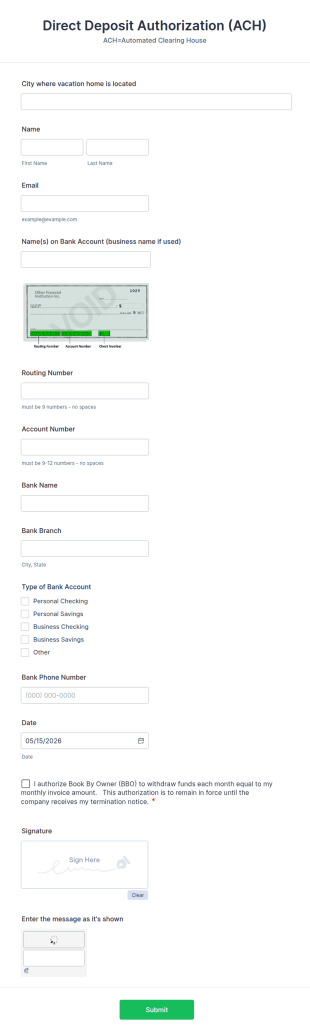
ACH Authorization Form
The ACH Authorization Form template is a convenient tool for account holders, financial institutions, businesses, government agencies, payment processors, compliance officers, auditors, legal representatives, billing services, and service providers
Go to Category:Banking Forms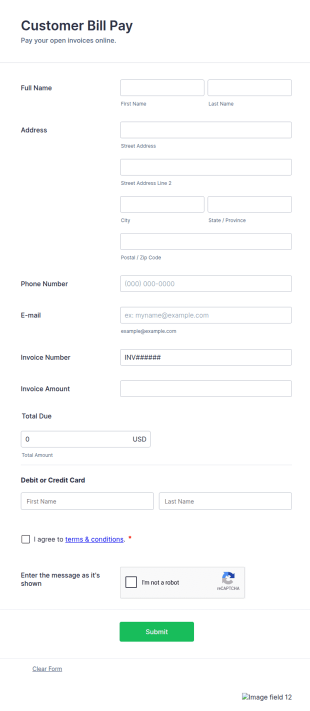
Customer Bill Pay
A customer bill pay form is a template used by businesses to collect information from customers who pay their bills through their website. No coding!
Go to Category:Banking Forms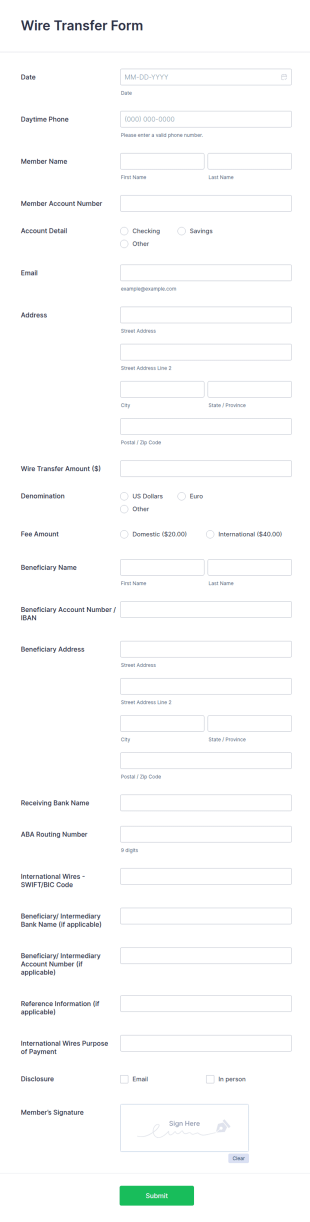
Wire Transfer Form
A Wire Transfer Form is a form template designed to facilitate the transfer of money between bank accounts
Go to Category:Banking Forms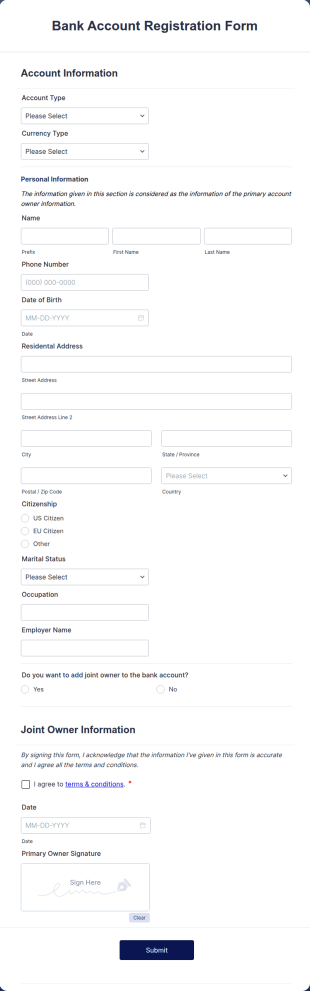
Bank Account Registration Form
A Bank Account Registration Form is a full-featured template from Jotform that makes the banking enrollment process seamless.
Go to Category:Banking Forms
Credit Application For Business Account Form
A Credit Application for Business Account Form is a form template designed to facilitate the establishment of credit accounts between businesses and their suppliers or vendors.
Go to Category:Banking Forms
Car Loan Application Form
A Car Loan Application Form is a form template designed to collect information from individuals seeking a car loan
Go to Category:Banking Forms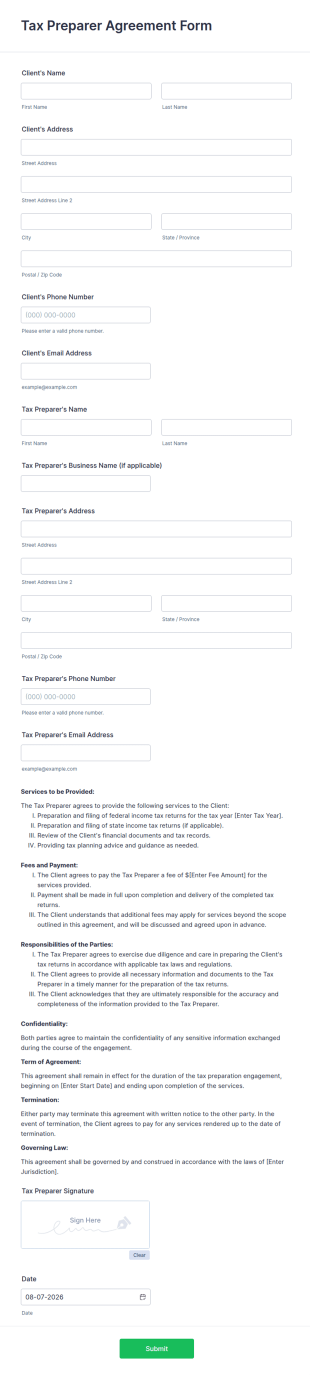
Tax Preparer Agreement Form
Tax Preparer Agreement Form is a form template that facilitates the process of outlining the terms and conditions between tax preparers and their clients, designed with the ease and convenience of Jotform's user-friendly interface.
Go to Category:Banking Forms
Bookkeeping Client Intake Form
A bookkeeping client intake form is a questionnaire that your customers fill when they want your services for the first time.
Go to Category:Banking Forms
Small Business Credit Application Form
A small business credit application form is used by small businesses to apply for a loan.
Go to Category:Banking Forms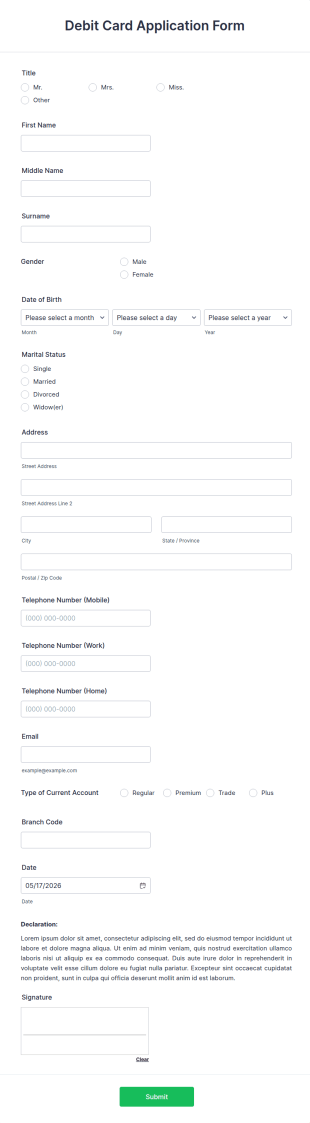
Debit Card Application Form
Process debit card applications online for your bank or credit union. Automatically store submissions in a secure account. Easy to customize and integrate.
Go to Category:Banking Forms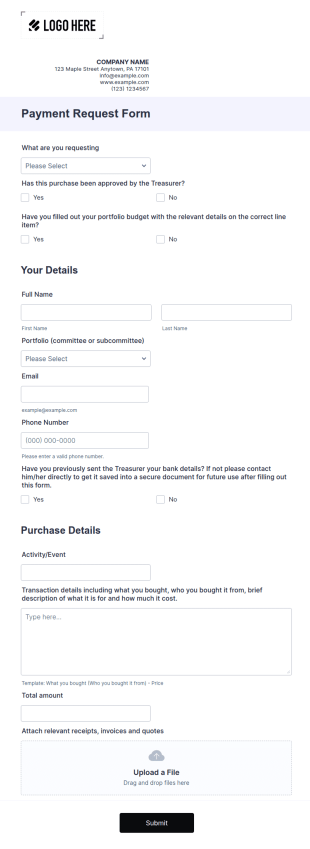
Payment Request Form
A payment request form is a legal document used to request payments for an outstanding debt. No coding!
Go to Category:Banking Forms
Mortgage Loan Application
Banks and moneylenders can use this free Mortgage Loan Application Form to accept loan applications online. Integrate with third-party apps and CRM systems.
Go to Category:Banking FormsAbout Banking Forms
Banking Forms are specialized digital forms designed to facilitate various financial operations within the banking industry. These forms serve as crucial components for managing transactions, customer onboarding, loan applications, and numerous other financial services. In real-world workflows, Banking Forms streamline processes such as account opening, customer inquiries, and compliance procedures, ensuring that data is captured accurately and securely. By digitizing these workflows, banks can enhance customer experiences and improve operational efficiency significantly.
Jotform emerges as the superior online form builder for creating and managing Banking Forms. Its platform offers unparalleled ease of customization, allowing banking professionals to tailor forms to specific needs effortlessly. Jotform's capability to automate data collection reduces manual entry errors and speeds up processing times. Furthermore, centralized data management through Jotform Tables ensures that all information is organized, accessible, and can be analyzed for insights, enhancing decision-making processes within the banking sector.
Why Use Banking Forms?
- Banking Forms are essential for ensuring the accuracy of financial data, as they minimize human errors associated with manual data entry. By automating entries, banks can maintain high levels of precision in their records, which is crucial for audits and regulatory compliance.
- Speed is a significant advantage of using Banking Forms, as they enable rapid processing of financial transactions and customer requests. This efficiency not only improves customer satisfaction but also boosts the overall productivity of banking operations.
- Professional data handling is achieved through Banking Forms by providing a secure and organized method for data collection and management. This ensures that sensitive financial information is protected and easily retrievable for authorized personnel.
- Banking Forms facilitate seamless integration with other banking systems, allowing for real-time data synchronization and improved workflow automation. This integration capability enhances the operational fluidity of banking institutions.
- Customizable templates in Banking Forms allow banks to adapt quickly to changing regulatory requirements and market conditions. This flexibility ensures that banks remain compliant and responsive to industry shifts.
Common Problems Solved by Banking Forms
- One of the primary issues addressed by Banking Forms is the reduction of paperwork. Traditional banking processes often involve copious amounts of paperwork, which can be cumbersome and prone to misplacement. Digital forms eliminate this by providing a reliable digital storage solution.
- Manual data entry is another significant pain point in the banking industry, often leading to errors and inefficiencies. Banking Forms automate this process, ensuring that data is entered accurately and swiftly.
- Lost data is a critical concern, especially in financial transactions where every piece of information is vital. Banking Forms ensure that all data is securely stored and easily accessible, reducing the risk of data loss.
- Compliance management can be complex and time-consuming. Banking Forms simplify this process by automating compliance checks and ensuring that all necessary information is collected and stored according to regulatory standards.
Matching Use Cases to Features
- For customer onboarding, the Drag-and-Drop Form Builder enables banks to create personalized and intuitive forms that streamline the onboarding process, enhancing the customer experience.
- The use of Conditional Logic in Banking Forms allows for dynamic form behavior, adjusting questions based on previous answers. This feature is ideal for loan application forms where different pathways are needed based on customer responses.
- With 30+ Payment Gateways like Stripe and PayPal, Banking Forms facilitate seamless online transactions, making it easy for customers to make payments directly through the forms.
- Electronic Signatures (Jotform Sign) feature is crucial for contract and document approvals, allowing customers to sign documents digitally, thereby speeding up the processing time and reducing the need for in-person visits.
- The PDF Editor (Automated PDF Generation) is beneficial for creating professional, downloadable copies of submitted forms, which can be used for customer records or compliance documentation.
- Secure Data Management through Jotform Tables ensures that all collected data is stored securely, providing banking professionals with peace of mind regarding data protection and organization.
- Approval Workflows streamline the internal review process by automating the flow of form submissions to the relevant departments, ensuring timely actions and decisions.
How to Create a Banking Form
- Browse the Template List for a Bankings template or start from a blank form.
- Customize the design and fields using the Drag-and-Drop Form Builder.
- Publish and share via Direct Link, Email, or Website Embed.
Top Use Cases for Banking Forms
- For Managers: Managers can leverage Banking Forms to gain real-time insights into financial operations and customer interactions. By utilizing Jotform's reporting features, they can analyze trends and make informed decisions that enhance operational efficiency. The centralized data management also ensures that all managerial decisions are based on accurate and up-to-date information.
- For Teams: Banking teams benefit from forms that streamline communication and data sharing. With Jotform's integration capabilities, team members can collaborate seamlessly, ensuring that all departments are aligned and working towards common goals. The automation of routine tasks allows teams to focus on more strategic initiatives, improving overall productivity.
- For Customers: Customers experience a smoother banking process with the use of digital Banking Forms. These forms reduce the need for physical branch visits, enabling customers to complete transactions, applications, and inquiries online at their convenience. The ease of use and accessibility of these forms greatly enhance customer satisfaction and loyalty.
Summarizing Banking Forms
Banking Forms are indispensable in transforming how banks handle data, interact with customers, and manage operations. By digitizing and automating various banking processes, these forms help institutions enhance accuracy, speed, and professionalism in their services. Jotform's online form builder provides the necessary tools to customize and manage these forms efficiently, ensuring that banks can meet both their operational goals and customer expectations. As the banking industry continues to evolve, these forms play a crucial role in maintaining competitive advantage and regulatory compliance.
Frequently Asked Questions
1) Is it free to create Banking Forms on Jotform?
Yes, Jotform offers a free plan that allows users to create and use Banking Forms with some limitations on submissions and features, perfect for small-scale operations or initial trials.
2) Are the forms and submitted data secure?
Absolutely, Jotform ensures the security of all forms and data with advanced encryption protocols and compliance with data protection regulations, guaranteeing the confidentiality and integrity of sensitive information.
3) Do I need coding knowledge to build a Banking Form?
No, Jotform's Drag-and-Drop Form Builder allows you to create fully customized Banking Forms without any coding knowledge, making it accessible and user-friendly for all levels of users.
4) Can I collect payments directly through my forms?
Yes, Jotform supports over 30 payment gateways, including Stripe and PayPal, enabling you to collect payments securely and efficiently through your Banking Forms.
5) Can these forms be used on mobile devices?
Yes, Jotform's forms are fully responsive and can be accessed and filled out on any mobile device, providing flexibility and convenience for both users and customers.
6) Can I turn form submissions into professional PDF documents?
Yes, with Jotform's PDF Editor, you can automatically generate professional PDF documents from form submissions, ideal for record-keeping and sharing with clients or stakeholders.
7) Can Banking Forms integrate with our existing CRM systems?
Yes, Jotform offers over 100 third-party integrations, including Salesforce, allowing seamless data transfer and synchronization with your existing CRM systems for enhanced operational efficiency.
8) How do Banking Forms help with regulatory compliance?
Banking Forms streamline the collection and management of compliance-related data, ensuring that all required information is captured accurately and stored securely to meet industry regulations.