


Human Resources (HR) Form Templates
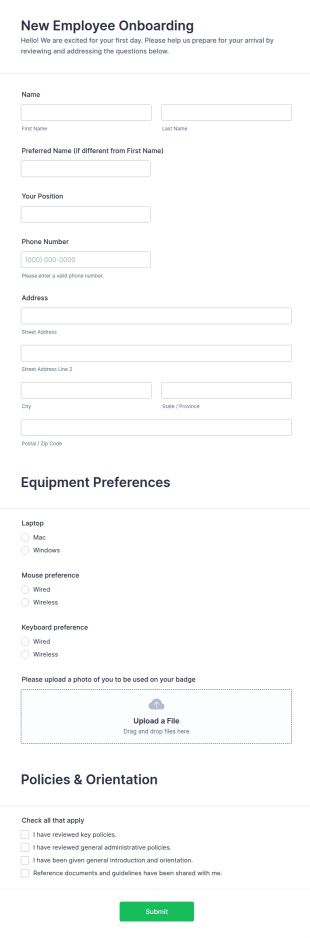
New Hire Onboarding Form
A New Employee Onboarding form is a form template designed to streamline the process of onboarding new hires.
Go to Category:Human Resources Forms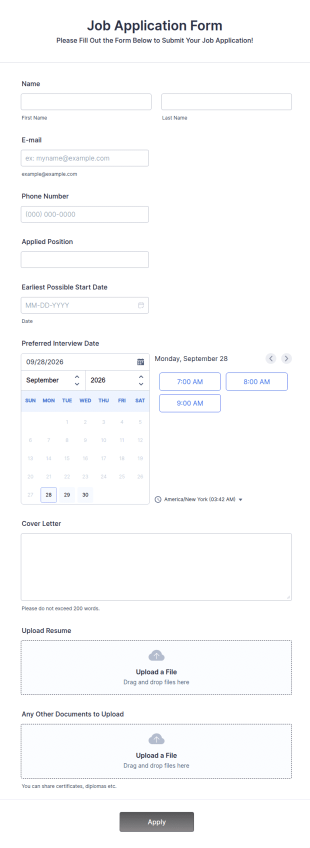
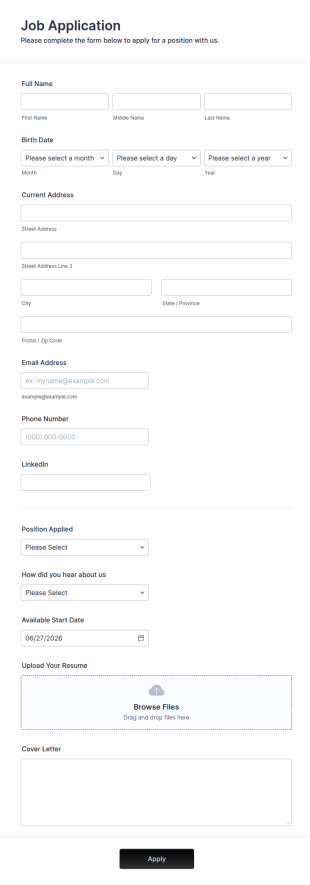
Online Job Application Form
Online Job Application Form is a form template that simplifies the recruitment process by collecting potential employees' details, qualifications, and experiences in a structured manner, provided by Jotform for seamless hiring operations.
Go to Category:Human Resources Forms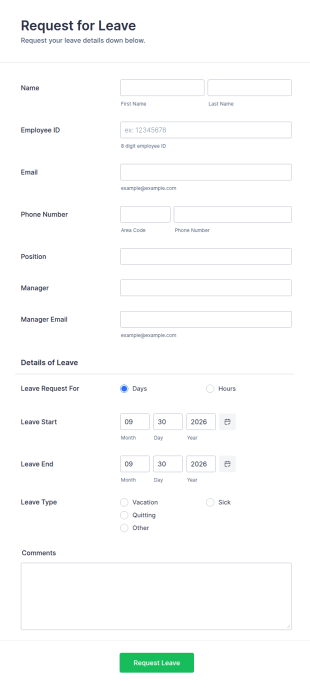
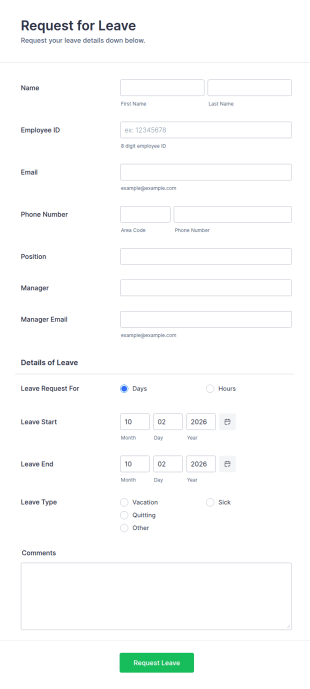
Leave Request Form
The template allows getting instant leave requests from employees with all relevant information that is needed. You can add more customized fields with Jotform.
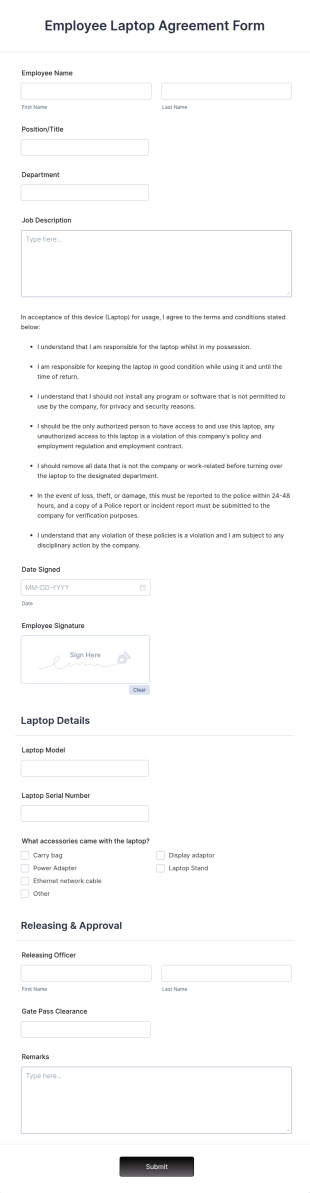
Go to Category:Human Resources FormsEmployee Laptop Agreement Form
An Employee Laptop Agreement Form is designed to document the terms of laptop use and responsibility within an organization
Go to Category:Human Resources FormsSimple Job Application Form
You can use this basic job application form when you need it. It's a simple one-page form that includes personal information, educational background, reference info, and more. The applicant can fill out the form easily.
Go to Category:Human Resources Forms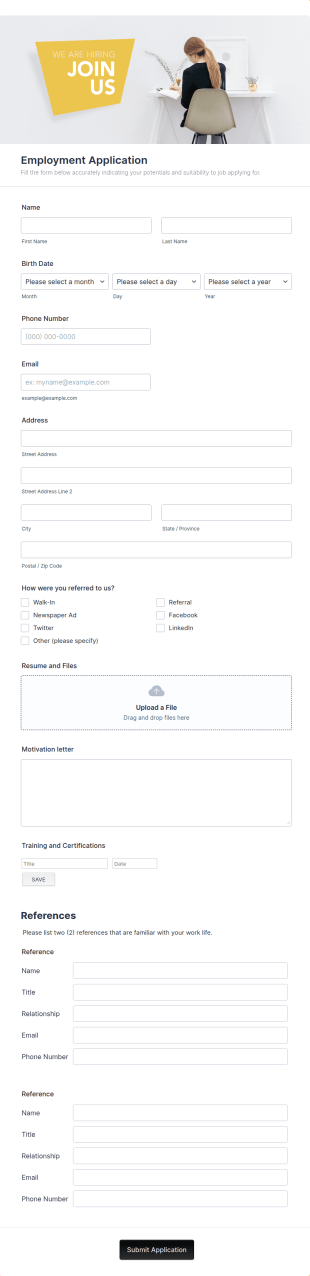
Employment Application Form
An Employment Application Form is a form template designed to streamline the hiring process by collecting essential information from prospective employees.
Go to Category:Human Resources Forms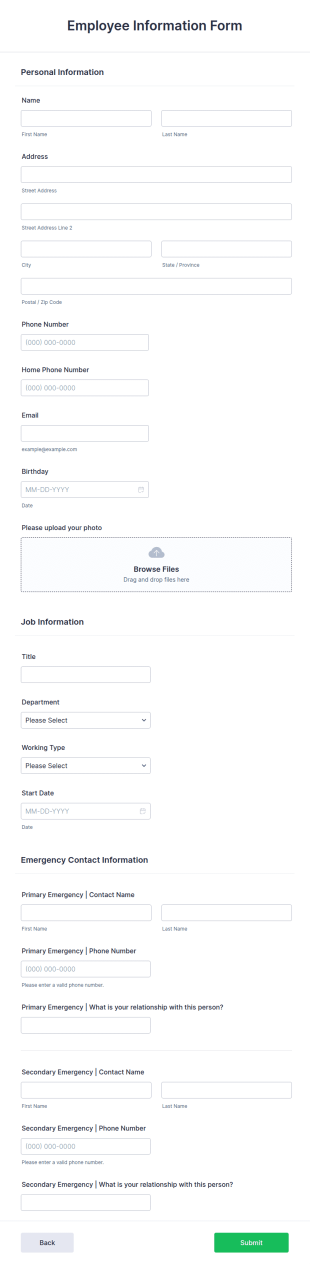
Employee Information Form
An Employee Information Form is a form template designed to help companies record and catalog essential employee details for their database
Go to Category:Human Resources Forms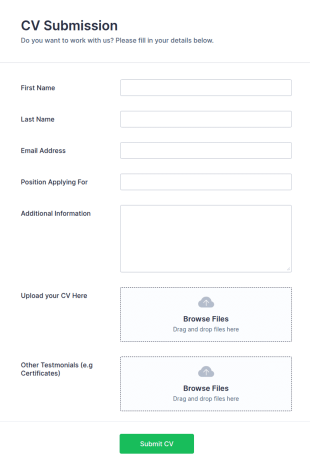
CV Application Form
Template allows you to collect all necessary information regarding the candidate with areas to upload documents and include additional information thus allows an easy CV application procedure.
Go to Category:Human Resources Forms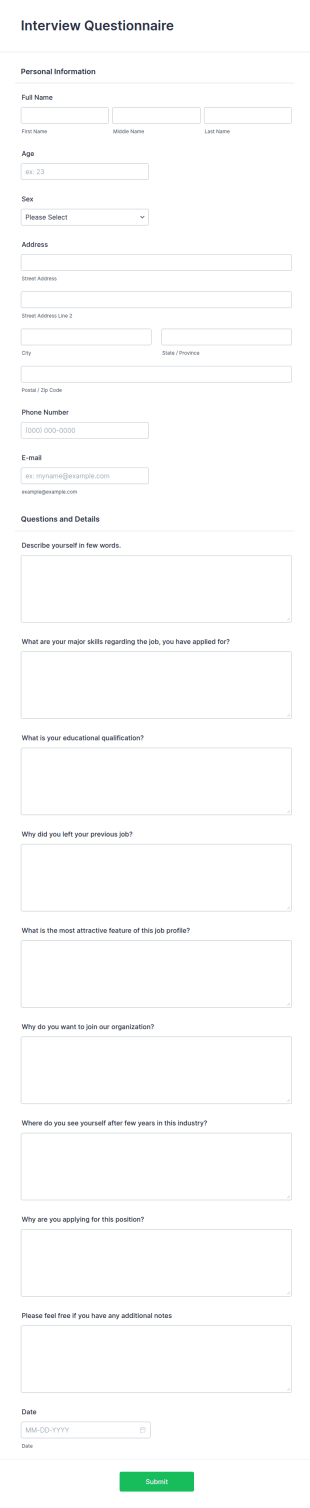
Online Interview Questionnaire Form
An Online Interview Questionnaire Form is a form template designed to help organizations gather important information from their interviewees.
Go to Category:Business Forms
Employee Performance Evaluation Form
An Employee Performance Evaluation Form is a form template designed to track individual performance, monitor employee progress, and provide detailed feedback to employees.
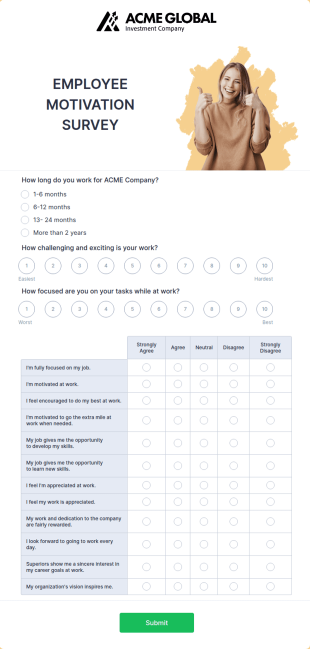
Go to Category:Human Resources FormsEmployee Motivation Survey
Conduct motivation self-assessments on any device with an online Employee Motivation Survey. Free to customize and share. Analyze results to improve your business.
Go to Category:Employee Surveys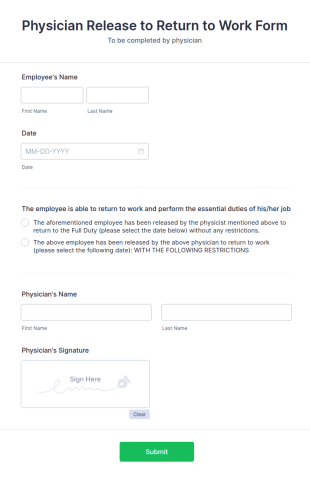
Physician Release To Return To Work Form
A Physician Release to Return to Work Form is a form template designed to showcase an employee's fitness to return to work after a period of illness or injury
Go to Category:Healthcare Forms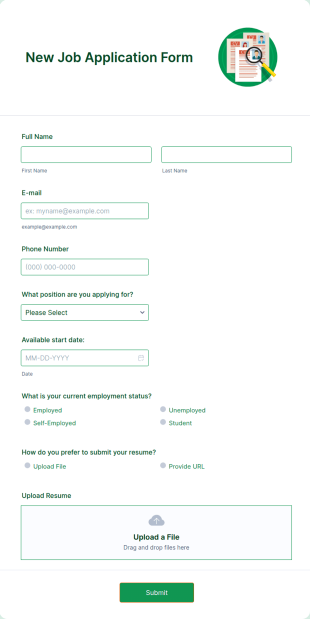
New Job Application Form
A New Job Application Form is a template designed to streamline your hiring process. This easily customizable template helps you attract top talent, save time, and enhance productivity. Perfect for HR teams in any industry, let this template simplify applicant tracking and management activities.
Go to Category:Human Resources Forms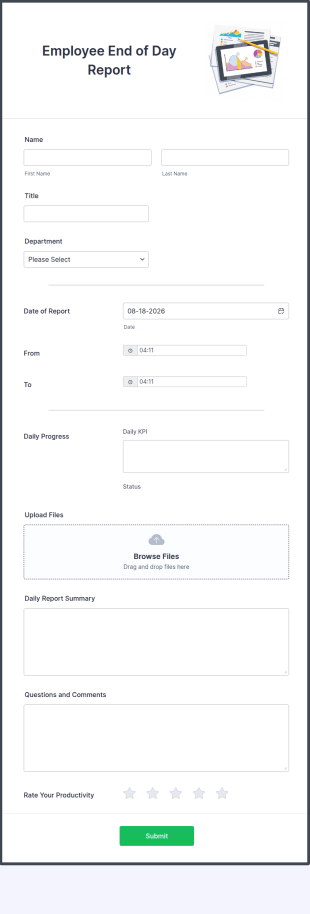
Employee End Of Day Report
An Employee End of Day Report is a form template designed to track employee progress and keep a record of daily accomplishments
Go to Category:Business Forms
Exit Interview Form
HR departments can use this free Exit Interview Form to conduct exit interviews online. Customize the form and share via email to quickly collect employee feedback.
Go to Category:Human Resources Forms
Employee Reference Form
Our employee reference request form is designed to get references from referees listed in candidate applications, in order to get a better approach during the hiring process. Make the most of your references with Jotform!
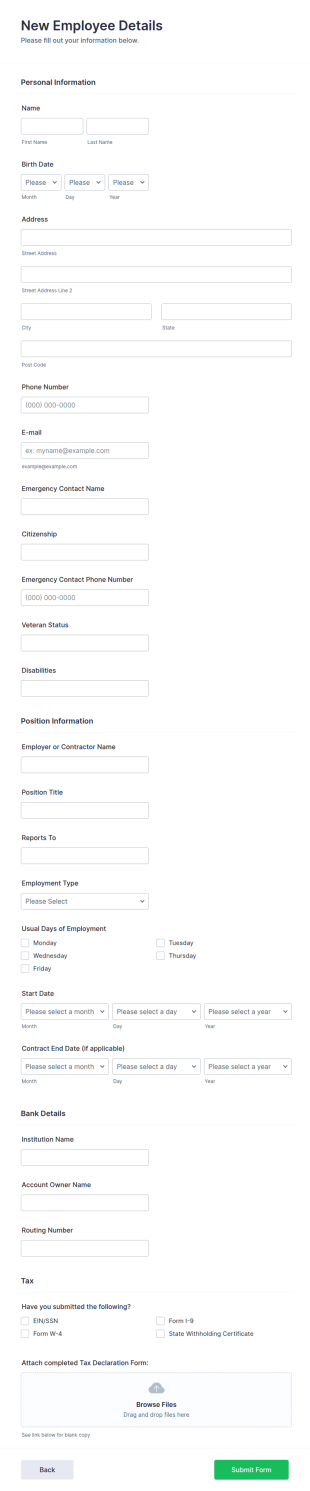
Go to Category:Human Resources FormsNew Employee Details Form
Accelerate and improve your new recruiting process with the new employee details form that provides all the necessary information. No code required!
Go to Category:Human Resources Forms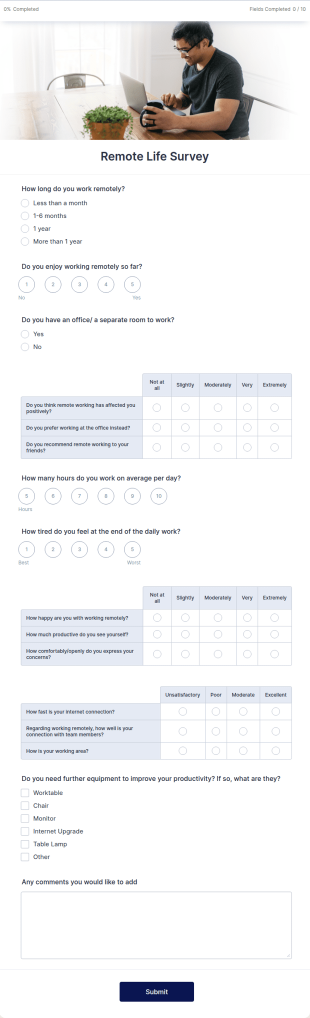
Remote Work Survey
Analyze your current work from home policy with a free online Remote Work Survey. Ideal for coronavirus-related remote workplaces. Sync responses to 100+ apps.
Go to Category:Human Resources Forms
Recruitment Application Form
Do you want to know who are the most fitted on your post? This Recruitment Application Form is a document used to collect information from job applicants.
Go to Category:Human Resources Forms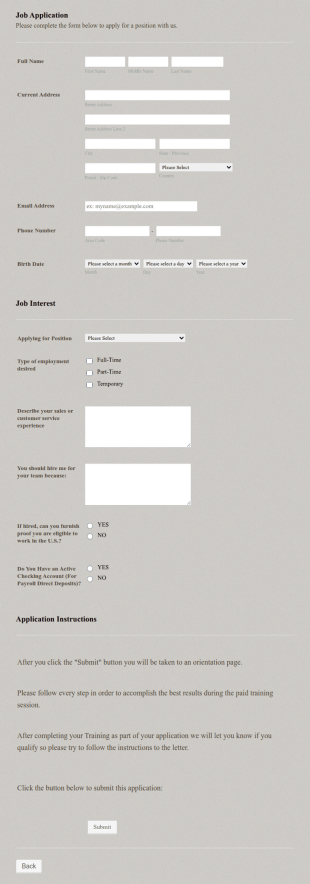
Generic Job Application Form
Generic Job Application Form Template helps collect applicant contact details, qualifications, and work history to support smooth screening and hiring.
Go to Category:Human Resources Forms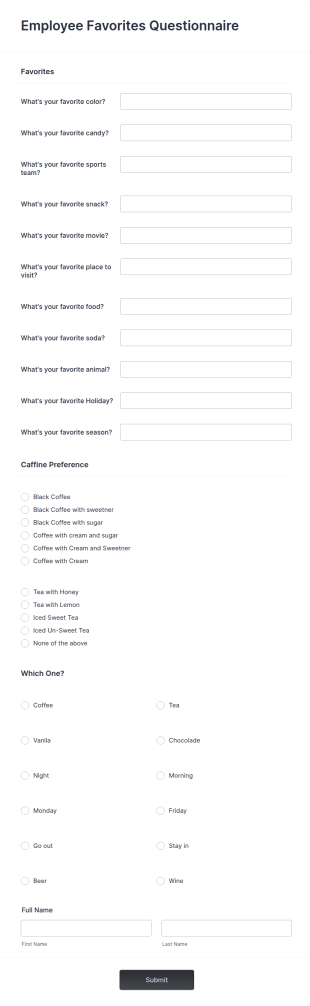
Employee Favorites Questionnaire
An employee favorites questionnaire is a tool used by trainers to find out which popular items an employee likes, dislikes, and whether they’d recommend them to anyone else.
Go to Category:Business Forms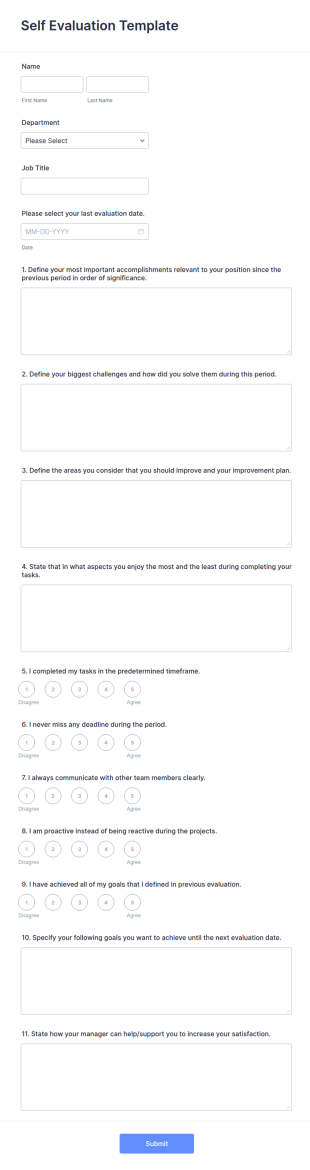
Self Evaluation Template
Create the perfect Self Evaluation Form for your employees. Collect, view, and manage responses on any device. Free to use and easy to customize!
Go to Category:Human Resources FormsEmployee Feedback Form
Identify the current satisfaction of your employees and improve your company culture by using this Employee Feedback Form. This form template is simple and easy to understand.
Go to Category:Human Resources Forms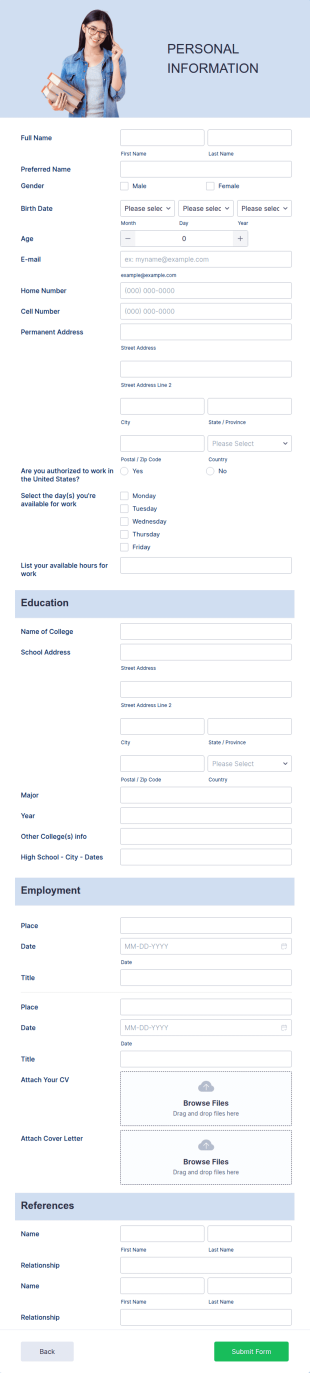
Online Internship Application Form
An online internship application form is used by employers to collect information from potential interns, students, and job applicants.
Go to Category:Human Resources FormsEmployee Performance Evaluation Form
An Employee Performance Evaluation Form is a form template designed to track individual performance, monitor employee progress, and provide detailed feedback to employees.
Remote Work Survey
Analyze your current work from home policy with a free online Remote Work Survey. Ideal for coronavirus-related remote workplaces. Sync responses to 100+ apps.
Self Evaluation Template
Create the perfect Self Evaluation Form for your employees. Collect, view, and manage responses on any device. Free to use and easy to customize!
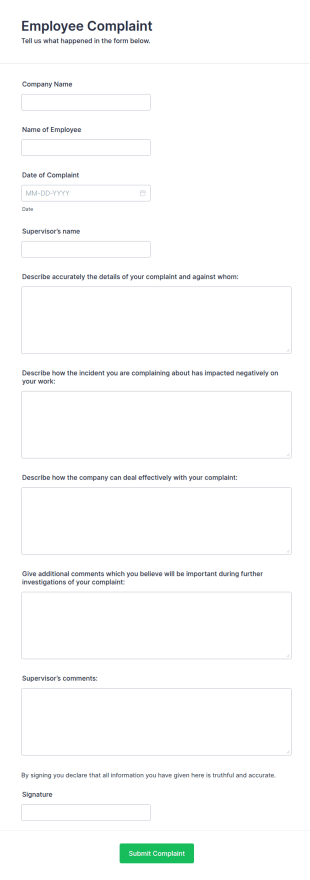
Employee Complaint Form
An employee complaint form is used to document a complaint from an employee against another employee, senior manager, or supervisor.
Employee Reference Form
Our employee reference request form is designed to get references from referees listed in candidate applications, in order to get a better approach during the hiring process. Make the most of your references with Jotform!
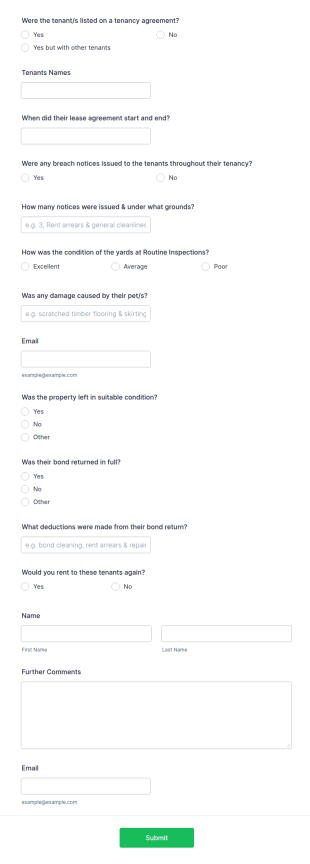
Rental Reference Request
A Rental Reference Request form is a valuable tool for property managers, landlords, and real estate agents to verify rental history and assess tenant reliability.
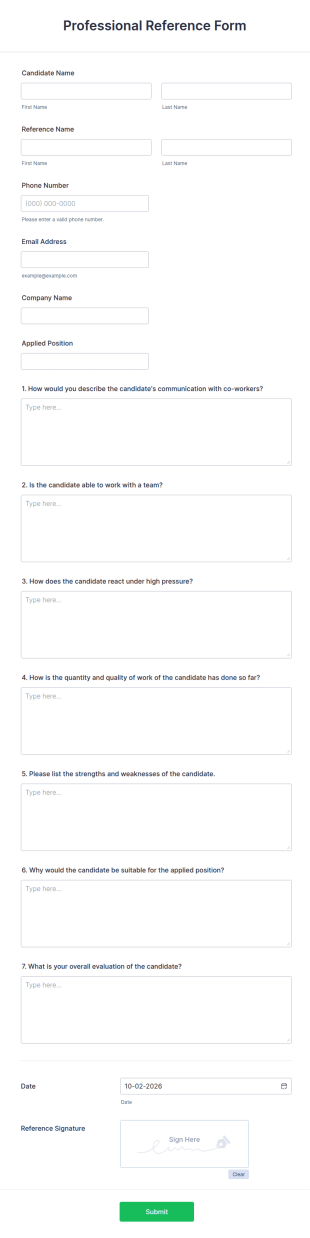
Professional Reference Form
Collect feedback from job applicants’ professional references online. Great for employers or HR professionals. Get responses on any device. Customize with no coding.
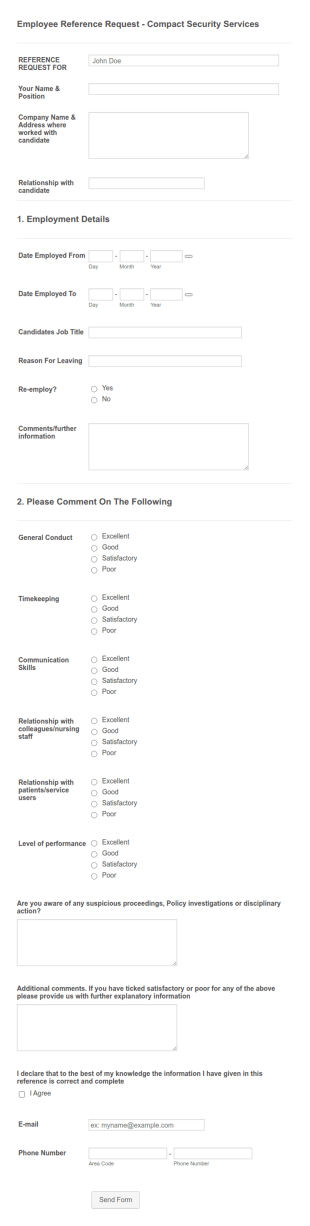
Employee Reference Request Form
The Employee Reference Request Form is a document that can be used by businesses to request information about an employee from a previous employer.
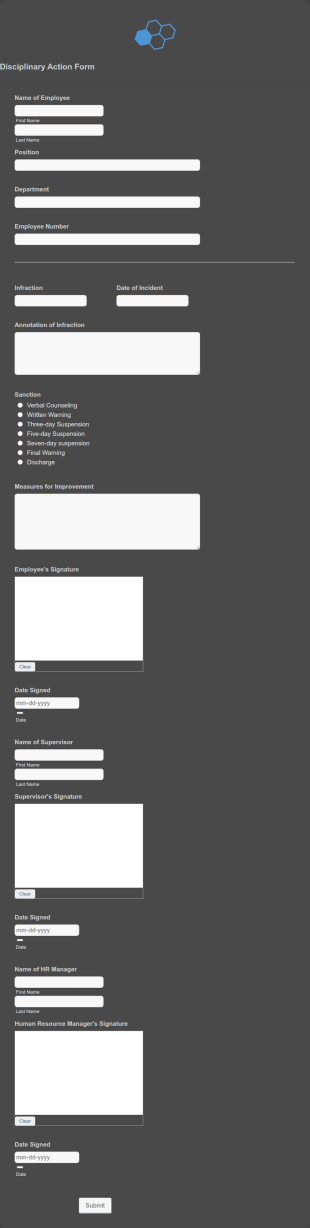
Disciplinary Action Form
Report employees who fail to meet company policies or expectations. Free disciplinary action form for HR. Easy to customize. No coding.

Sexual Harassment Complaint Form
A sexual harassment complaint form is used by employees to report inappropriate behavior and incidents of sexual harassment in the workplace. No coding is required!
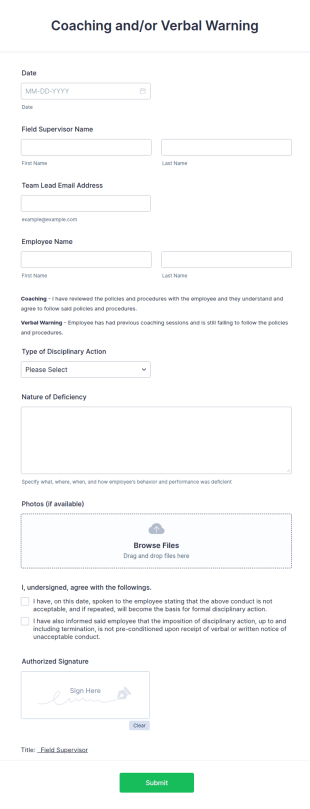
Verbal Warning Form
A Verbal Warning Form is a form template designed to document verbal reprimands given to employees without a written reprimand.
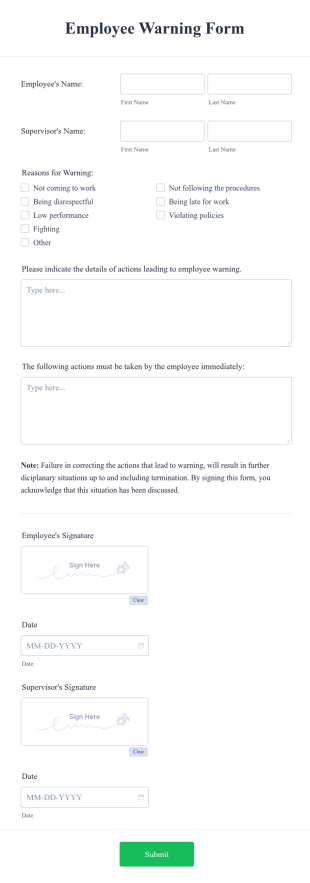
Employee Warning Form
Most effectively warn an employee of their behavior, violations of office rules or constant lateness with no coding. Fully customizable.
About Human Resources (HR) Form Templates
Human Resources (HR) Forms are specialized digital forms designed to streamline various HR processes within an organization. These forms cover a wide range of HR activities, from employee onboarding and performance evaluations to leave requests and exit interviews. In the fast-paced world of HR, these forms help ensure that data is collected efficiently and accurately, reducing the burden on HR teams and enhancing overall operational workflows. Whether managing employee information or tracking training sessions, HR forms play a crucial role in maintaining seamless communication and documentation within a company's HR department.
Jotform serves as the premier online form builder for creating and managing Human Resources (HR) Forms. With its user-friendly interface, Jotform allows HR professionals to customize forms effortlessly, tailoring them to meet specific organizational needs. The platform's ability to automate data collection processes ensures that information is captured consistently and accurately, reducing the risk of errors. Moreover, Jotform Tables offer centralized data management, enabling HR teams to organize, analyze, and access data from a single, secure location. This comprehensive solution empowers HR departments to enhance their efficiency and focus more on strategic HR initiatives.
Why Use Human Resources (HR) Forms?
- Human Resources (HR) Forms significantly boost data accuracy by eliminating the need for manual data entry, which is prone to human errors. By having employees fill out digital forms, organizations ensure that the captured data is precise and reliable, leading to better decision-making processes.
- The speed of data collection is greatly enhanced with HR forms. As opposed to traditional paper forms, digital HR forms enable instant submission and processing of information, allowing HR teams to act swiftly on the data received, whether it be for onboarding new employees or processing leave requests.
- Professional data handling is a hallmark of HR forms, offering a structured approach to managing sensitive employee information. By adhering to industry standards for data protection and confidentiality, HR forms ensure that all collected data is handled with the utmost care and security.
- HR forms facilitate seamless communication between employees and HR departments. By providing a centralized platform for submitting inquiries, feedback, and requests, these forms help streamline communication channels, ensuring that all parties are on the same page.
- Automation of routine HR tasks is made possible with digital forms. By integrating HR forms with existing systems and workflows, organizations can automate repetitive tasks such as sending email confirmations or updating employee records, thereby freeing up valuable time for HR professionals.
Common Problems Solved by Human Resources (HR) Forms
- One of the primary issues HR departments face is the overwhelming amount of paperwork, which can lead to inefficiencies and lost documents. HR forms digitize this paperwork, making it easier to manage and reducing the risk of misplaced documents.
- Manual entry of employee data is not only time-consuming but also increases the likelihood of errors. HR forms automate this process, ensuring that information is accurately captured and reducing the need for redundant data entry.
- Lost data can have significant implications for an organization, especially when it comes to compliance and employee management. HR forms provide a secure and reliable way to store and manage data, ensuring that all information is preserved and easily retrievable when needed.
- Keeping track of employee requests and approvals can be challenging without a standardized process. HR forms streamline these workflows by providing a structured format for submissions and approvals, ensuring that nothing falls through the cracks.
Matching Use Cases to Features
- The Drag-and-Drop Form Builder is ideal for customizing HR forms to suit specific departmental needs. HR professionals can easily add, remove, or modify fields to tailor forms for various purposes, such as performance reviews or employee feedback, ensuring that all necessary information is gathered efficiently.
- Conditional Logic in HR forms allows for dynamic form interactions, making the user experience more intuitive. For instance, forms can be set to display specific questions based on previous answers, streamlining the data collection process and ensuring only relevant information is requested from employees.
- With over 30 Payment Gateways, HR forms can facilitate transactions such as employee reimbursements or event registrations. By incorporating these gateways, organizations can handle financial transactions directly within the form, providing convenience and efficiency.
- Electronic Signatures (Jotform Sign) enable HR departments to collect legally binding signatures directly on forms. This feature is particularly useful for contracts and agreements, ensuring that all documentation is completed and signed in a timely manner.
- The PDF Editor allows for automated PDF generation, creating professional documents from form submissions. This is particularly useful for generating employee records, contracts, or reports, ensuring that all documentation is consistent and easily shareable.
- Jotform's 100+ Third-party Integrations, such as with Google Sheets or Salesforce, enhance workflow efficiency by ensuring that data collected through HR forms is seamlessly integrated into existing systems. This connectivity allows for real-time data updates and streamlined operations.
- Approval Workflows facilitate the routing of forms for necessary approvals, ensuring that requests such as leave applications or expense claims are properly vetted and authorized in a timely manner.
How to Create a Human Resources (HR) Form
- Browse the Template List for a Human Resources (HR)s template or start from a blank form. This step allows you to select a starting point that best fits your organization's requirements.
- Customize the design and fields using the Drag-and-Drop Form Builder. This intuitive process allows you to add or modify fields to create a form that meets your specific data collection needs.
- Publish and share via Direct Link, Email, or Website Embed. This ensures that your form is easily accessible to all intended participants, facilitating smooth data collection.
Top Use Cases for Human Resources (HR) Forms
- For Managers: Managers can leverage HR forms to streamline employee evaluations, goal setting, and feedback collection. By utilizing digital forms, managers can ensure that evaluations are conducted consistently and that feedback is gathered in a structured manner. This not only enhances the performance review process but also aids in identifying areas for employee development and growth.
- For Teams: Teams benefit from HR forms through streamlined communication and collaboration. Forms such as team feedback surveys or inter-departmental requests facilitate efficient information exchange and ensure that all team members are aligned with organizational objectives. This collaborative approach fosters a cohesive work environment and promotes team synergy.
- For Customers: While primarily designed for internal use, HR forms can also enhance customer interactions by ensuring that HR-related inquiries and processes are handled smoothly and professionally. For example, forms can be used to manage client training sessions or to gather feedback on HR service delivery, ensuring that client expectations are met and exceeded.
Summarizing Human Resources (HR) Forms
Human Resources (HR) Forms serve as a vital component in modern HR management, offering a comprehensive solution for streamlining data collection, enhancing communication, and automating routine tasks. By adopting digital forms, organizations can significantly reduce the administrative burden on HR teams, allowing them to focus on strategic initiatives that drive business success. With Jotform's powerful features and integrations, HR departments are equipped with the tools needed to efficiently manage their workflows, ensuring that employee data is handled with precision and security.
Frequently Asked Questions
1) Is it free to create Human Resources (HR) Forms on Jotform?
Yes, Jotform offers a free plan that allows you to create and use Human Resources (HR) Forms with basic features. However, for more advanced functionalities and higher submission limits, you may consider upgrading to one of the paid plans.
2) Are the forms and submitted data secure?
Absolutely, Jotform prioritizes data security and employs industry-standard measures such as SSL encryption to ensure that all forms and submitted data are protected against unauthorized access.
3) Do I need coding knowledge to build a Human Resources (HR) Form?
No, you do not need any coding skills to build a Human Resources (HR) Form on Jotform. The platform's intuitive Drag-and-Drop Form Builder allows you to create and customize forms effortlessly.
4) Can I collect payments directly through my forms?
Yes, Jotform supports over 30 Payment Gateways, enabling you to collect payments directly through your forms for various purposes, such as employee reimbursements or event registrations.
5) Can these forms be used on mobile devices?
Yes, Jotform forms are responsive and can be accessed and filled out on any mobile device, ensuring convenience for employees and HR teams who are on the go.
6) Can I turn form submissions into professional PDF documents?
Yes, with Jotform's PDF Editor, you can automatically generate professional PDF documents from form submissions, making it easy to share and store records.
7) How do HR forms streamline the onboarding process?
HR forms simplify the onboarding process by automating the collection of necessary information and documentation from new hires. This ensures a smooth transition and reduces the administrative workload on HR teams.
8) Can HR forms integrate with our existing HR systems?
Yes, Jotform offers over 100 third-party integrations, allowing HR forms to seamlessly connect with existing HR systems and applications such as Google Sheets, Salesforce, and Slack, enhancing workflow efficiency.