

Legal Apps

Customizable Contract App
A contract app is used by contractors to manage contract status, contract content, and approval status. Contractors can download this ready-made Contract App on any device and record details such as customer contact information, job request description and status, cost estimate, and more. This app template comes bundled with a Contract Approval Form as well as an easy-to-read Contractor Estimate Table for keeping track of contract details in one secure location.Want to make changes to this app template? No problem — just use Jotform’s drag-and-drop app builder to add form elements, edit text fields and checklist items, choose fonts and colors, upload your brand’s unique logo, install widgets and templates, and much more. Once you’re finished, share your custom app with employees by sending email invites or the app link, and they can begin filing contracts right away. Create a mobile-friendly Contract App for documenting and fulfilling job requests with this free app template from Jotform.
Go to Category:Construction Apps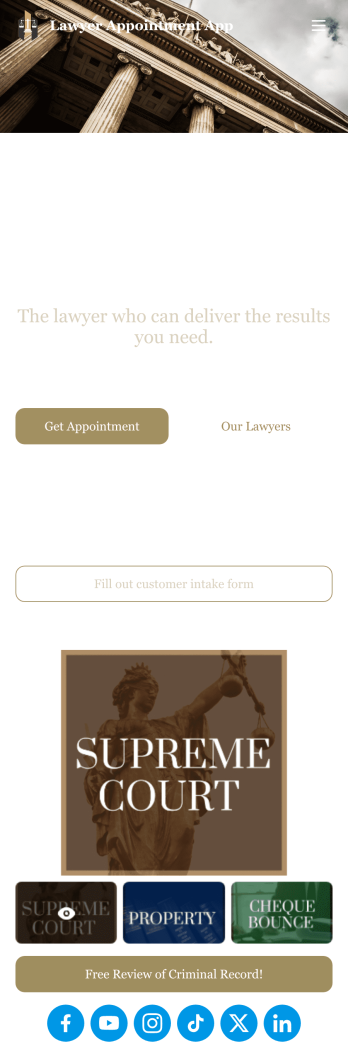
Customizable Lawyer Appointment App
A lawyer appointment app is used by law firms for appointment scheduling and collecting information from new clients. Clients can access and download this free app on any smartphone, tablet, or desktop to get information about the lawyers at your firm, schedule appointments, and fill out a client intake form. Submissions are instantly synced to your secure Jotform account, where you can sort, filter, and search through client applications.Make this lawyer appointment app your own in seconds with Jotform’s no-code app builder. Simply drag and drop to add or modify form elements, edit intake form questions, install widgets and integrations, choose fonts and colors, upload your logo, and more. Share your app by embedding it in your firm’s website or social media, or by sending email invites or the app link to prospective clients. Create a fully-customized app that matches your firm's branding and start taking on new clients right away with this Lawyer Appointment App that works on any device.
Go to Category:Booking Apps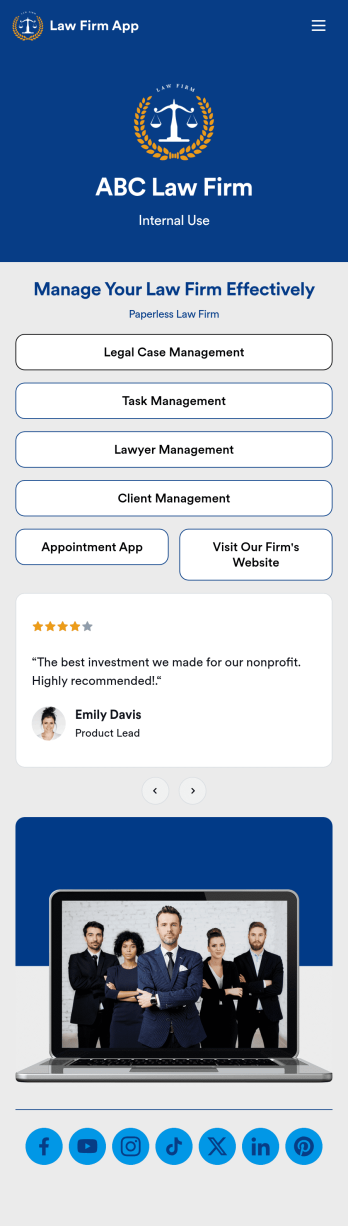
Law Firm App
Need an efficient way to manage your law firm? Keep track of your associates and fellows, manage your case documents, review client forms, and more with our Law Firm App – free from Jotform. With your custom app, you’ll be able to receive and manage all types of internal information. All your data will be stored on your Jotform account in one accessible place – go paperless and manage your firm in a centralized place.Want to give your Law Firm App a professional, polished touch? Jotform’s no-code drag-and-drop app builder allows you to customize your app just the way you want. Use your logo or pick an app icon and background image that represents your firm the best. Your lawyers can access the app through direct messaging, email, or via a scannable QR code. Relieve some of your daily stress and try Jotform’s free Law Firm App today.
Go to Category:Legal Apps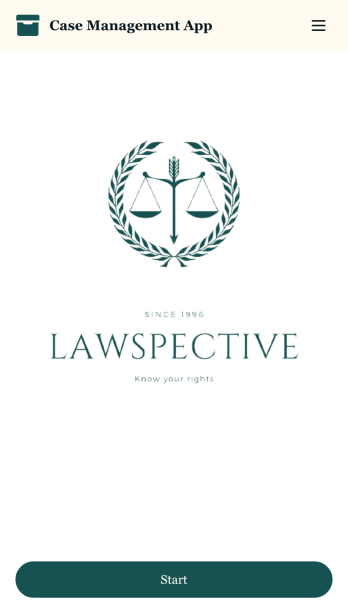
Legal Case Management App
A legal case management app is used by lawyers and law firms to log and track case files. With this Legal Case Management App from Jotform, you can fill out a form with a client’s general contact information, case number and type, a summary of the case, and total billed hours. You can also attach any relevant documents and photos using a drag-and-drop upload form. Keep track of your cases with an easy-to-understand spreadsheet using Jotform Tables.Want to make some changes to this app template? Jotform’s intuitive app builder allows you to make customizations in seconds without any coding. Simply drag and drop to add form elements, edit text fields, install widgets and integrations, choose fonts and colors, upload your law firm’s branding, and much more. Share your custom app with clients and other lawyers by sending email invites or embedding it on your website, where they can then access and download your app on any device. Go paperless and manage your law firm’s case files from a single location with Jotform’s free Legal Case Management App.
Go to Category:Management Apps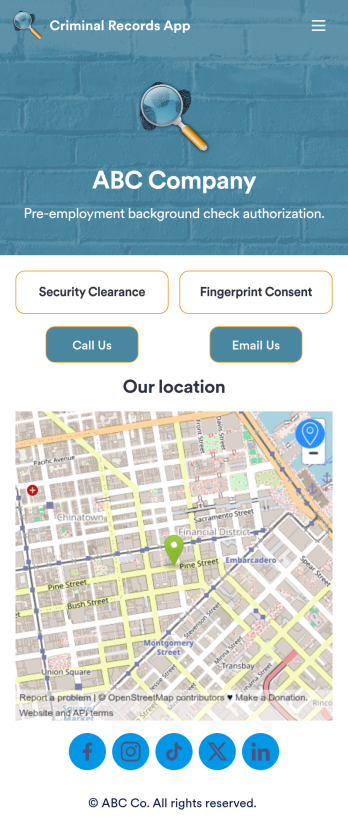
Criminal Records App
A criminal records app is used by companies and HR departments to perform background checks on new job applicants. This free Criminal Records App by Jotform includes both a fingerprint and security clearance consent form. Job applicants can fill out general contact information, answer criminal background questions, upload photos of their IDs, and provide a consent and authorization signature. There is also a place for parents and guardians to sign if the applicant is under 18.Need to customize this Criminal Records App? With our drag-and-drop form builder, you can easily swap out forms, change fonts and colors, upload images, and more — no coding required. Afterwards, just send job applicants a link to your app and have them access or download it on any smartphone, tablet, or desktop. Streamline background checks for new hires with this customizable Criminal Records App.
Go to Category:Report Apps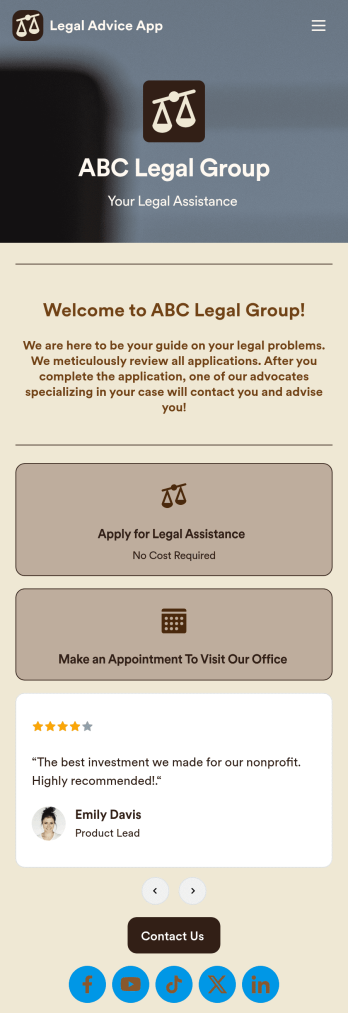
Legal Advice App
A legal advice app provides quality guidance to people dealing with legal issues. With this free Legal Advice App, users can apply for legal aid hassle-free and get connected with specialized advocates who provide assistance either virtually or in-person. All submissions are automatically downloaded into PDFs from your Jotform account so that you can easily review cases and consult with respondents.Feel free to use our pre-made template, or use our drag-and-drop interface to customize the app to your individual needs. Without prior coding knowledge, you can edit or add new forms, integrate with scheduling widgets, update your text and logo, and more. Legal issues are already stressful enough on people — a custom Legal Advice App will smooth out the case-by-case consultation process and let you focus on finding solutions.
Go to Category:Consulting Apps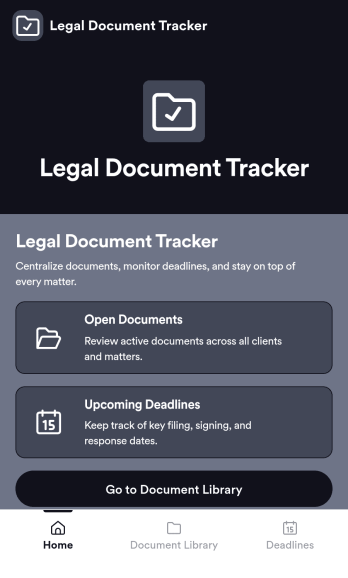
Legal Document Tracker
Legal Document Tracker is an app template designed to streamline and optimize the handling of various legal documents. This robust solution is primarily utilized by legal teams, law firms, compliance departments, and other organizations to effectively manage their document workflows. With its straightforward design and functionality, it collects relevant data pertaining to the status and details of legal documents, offering a superior alternative to ad-hoc data collection methods. The consistent and comprehensive data collection ensures that no critical document details are missed, bringing clarity and consistency to complex legal workflows. The Legal Document Tracker is best suited for environments where tracking and handling various legal documents is a regular operational aspect.Jotform takes the ease of managing legal documents a step further with its distinctive features tailored to support the Legal Document Tracker's workflow. Leveraging Jotform's user-friendly interface, legal teams, law firms, and compliance departments can effortlessly customize the app to their unique needs, without the need for any coding. Jotform's electronic signature feature adds another layer of convenience, allowing for swift and secure document approval processes. Moreover, Jotform's sophisticated system simplifies data collection and helps in compiling sheets and reports, making the document tracking process even more streamlined. All these distinctive features and benefits of Jotform accentuate the practicality and efficiency of the Legal Document Tracker, making it an invaluable asset for any legal or compliance department.
Go to Category:Tracker Apps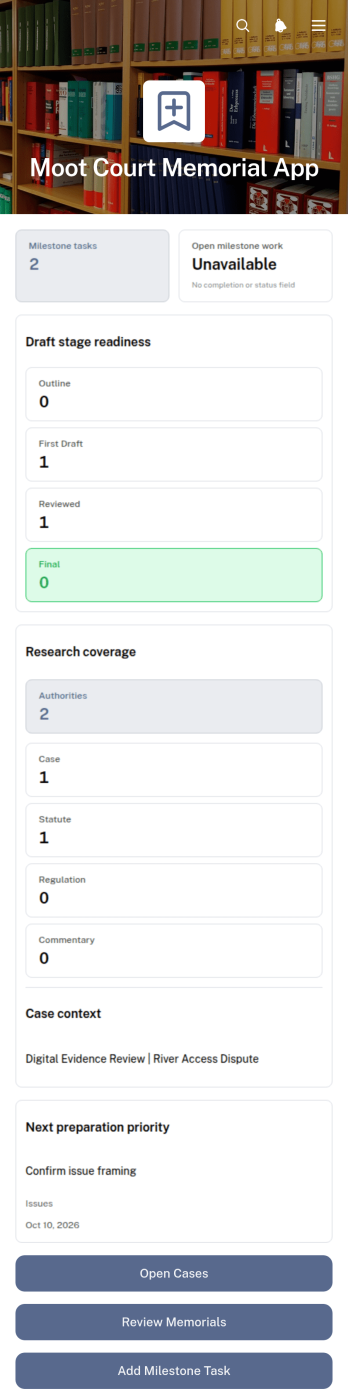
Moot Court Memorial App
The Moot Court Memorial App is an organized workspace for law students, moot court teams, coaches, and faculty advisers preparing written memorials for competitions or classroom exercises. Teams can maintain case records and legal authorities, assign milestone tasks with due dates, and review memorial drafts by stage from one accessible location. This structure helps participants connect research with written arguments, monitor drafting progress, and keep essential competition context visible throughout the preparation period. It is especially useful for teams handling several issues, authorities, deadlines, or draft versions while working toward a complete memorial.Jotform Apps makes this app template easy to adapt without coding. Using the drag-and-drop app builder, organizers can adjust pages, navigation, cards, buttons, colors, and typography to suit a course or competition workflow. Connected forms support data collection for new cases, authorities, tasks, and drafts, while organized records give team members a consistent self-service resource. Once ready, the app can be shared through a direct link or QR code for convenient access on phones, tablets, and computers.
Go to Category:Legal Apps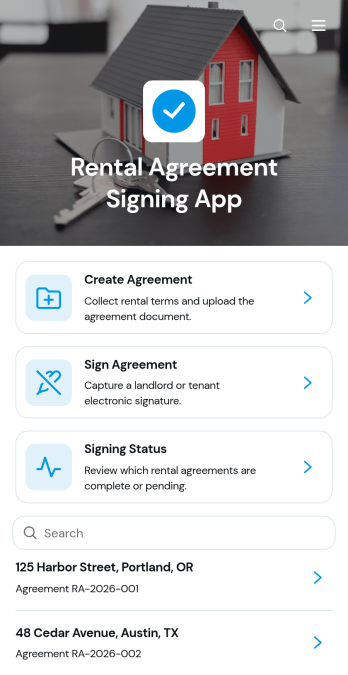
Rental Agreement Signing App
Rental Agreement Signing App is a ready-to-use app template for landlords, property managers, leasing teams, and rental businesses that need one place to prepare and sign rental agreements. Users can create a new agreement, review key rental information, collect signatures, and check signing status without relying on scattered documents or lengthy email exchanges. It supports residential and commercial rental scenarios by keeping agreement details such as the property, parties, lease term, and security deposit easy to review. This organized experience helps teams reduce administrative work, give tenants convenient self-service access, and move each rental toward completion.Jotform Apps makes it easy to adapt the Rental Agreement Signing App with a no-code app builder and an intuitive drag-and-drop interface. Start with one of Jotform’s App Templates, update the branding and navigation, and connect forms, tables, approvals, or notifications to your workflow. You can publish the finished app through a direct link or QR code, providing mobile-friendly access for tenants and staff. As rental needs change, edit content and connected processes without rebuilding the entire experience or writing code.
Go to Category:Rental Apps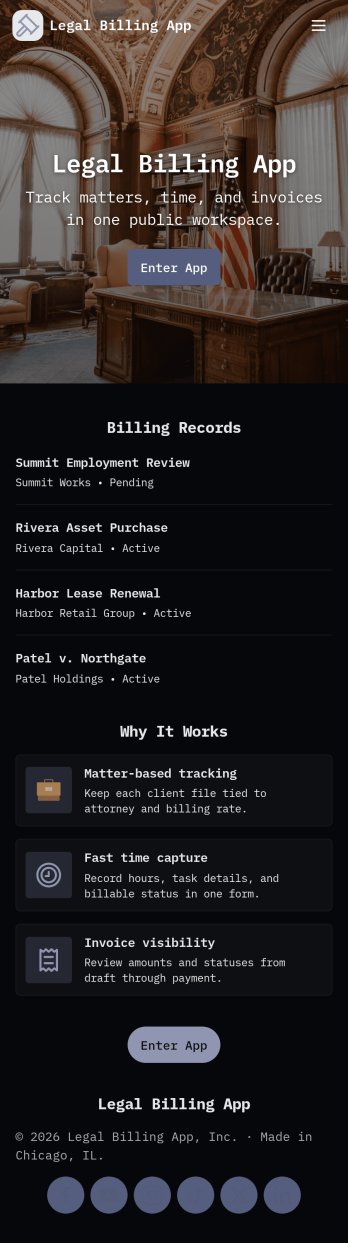
Legal Billing App
Legal Billing App helps law firms and legal teams capture matter details, log billable time, and generate invoices in a consistent, trackable way. It’s a practical fit for solo attorneys, boutique firms, in-house counsel teams, and legal ops staff who need a clearer picture of what work is being performed, what’s ready to bill, and what has already been sent to clients. With guided entry for new matters and time logs, teams can reduce missed billables, keep records organized by matter, and maintain a reliable billing history that’s easy to review.Built with Jotform, this app template combines a no-code app builder experience with a drag-and-drop interface, so you can tailor the layout, fields, and navigation to match how your practice works. Connect the app to your Jotform forms and tables to support ongoing data collection, centralize billing records, and create simple workflows for invoice tracking and internal visibility. Share the app as a self-service workspace for staff, access it on mobile, and update it anytime as your billing process evolves.
Go to Category:Consulting Apps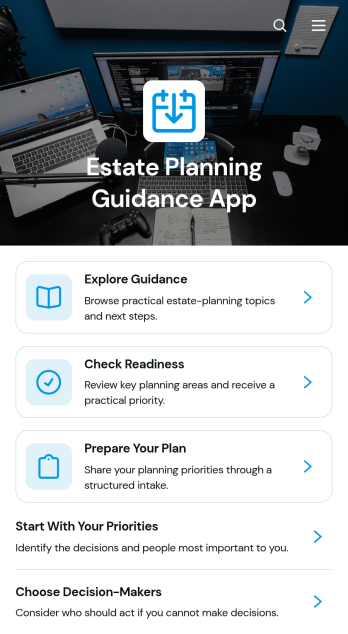
Estate Planning Guidance App
The Estate Planning Guidance App is a digital resource for individuals who want to understand planning considerations, assess their readiness, and prepare information before discussing an estate plan with a qualified professional. It can support legal practices, financial education teams, consultants, and community organizations that provide general planning guidance. Users can explore organized educational content, follow recommended actions, and complete a readiness checklist from one accessible location. This app template helps turn a potentially complex topic into a clear sequence of manageable steps while giving organizations a consistent way to share resources and encourage informed preparation.Jotform App Templates make it easy to customize this experience with a no-code app builder. Using a drag-and-drop interface, teams can update pages, branding, navigation, guidance, and connected forms without programming. The app builder can also connect data collection with tables, notifications, approvals, and other workflow steps, helping staff review readiness responses and coordinate appropriate follow-up. Publish the app for mobile-friendly self-service access, then share it through a direct link, a personalized web address, a scannable code, or an embedded experience.
Go to Category:Legal Apps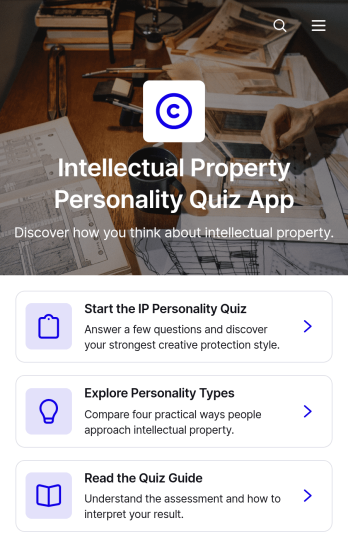
Intellectual Property Personality Quiz App
Intellectual Property Personality Quiz App is a ready-to-use interactive experience for exploring how people approach intellectual property topics, decisions, and responsibilities. Legal consultants, intellectual property educators, innovation teams, entrepreneurs, creators, and training providers can use it to make awareness activities more engaging. Participants can complete the quiz, explore personality types, and review results that highlight a strength, a potential blind spot, and a recommended next action. A supporting quiz guide adds useful context. This app template works well for workshops, educational campaigns, team development sessions, lead generation, and client engagement without presenting the results as legal advice.Jotform App Templates help organizations turn forms and supporting resources into polished, mobile-friendly experiences. With Jotform’s no-code app builder and drag-and-drop interface, you can update quiz content, adjust navigation, apply your branding, and organize data collection without programming. Connect forms with tables, notifications, approvals, and other workflow tools to manage responses or follow-up activities. Once your Intellectual Property Personality Quiz App is ready, publish it through a direct link, share it with a QR code, or embed it online for convenient self-service access.
Go to Category:Quiz Apps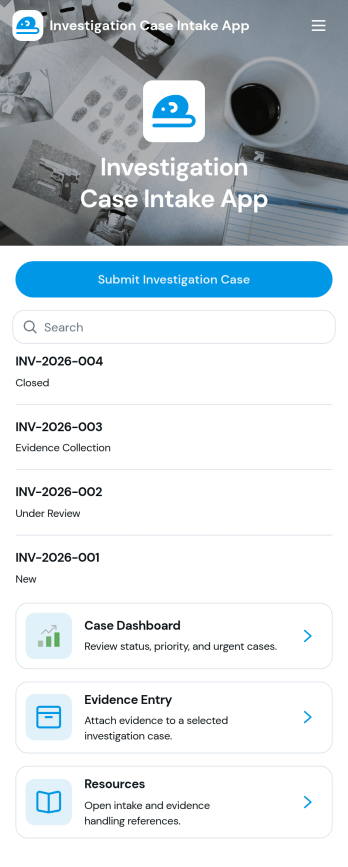
Investigation Case Intake App
Investigation Case Intake App helps teams capture new investigation reports and keep case information organized from the first intake through ongoing follow-ups. It’s a practical fit for HR teams, internal audit groups, compliance and risk teams, security operations, and legal departments that need a consistent way to log incidents, assign urgency, and reference cases without losing critical details. With quick access to case records and a guided path to submit follow-ups, the app supports clearer handoffs, better documentation, and faster internal response when multiple stakeholders are involved.Built with Jotform, this app template can be customized in a no-code app builder using a drag-and-drop interface, so you can match your internal workflow and terminology. Connect intake and follow-up forms to keep data collection consistent, centralize records for easy review, and share the app with the right people through a link or QR code for secure self-service reporting. As your process evolves, you can update pages, add steps, and keep your investigation workflow running smoothly without writing code.
Go to Category:Legal Apps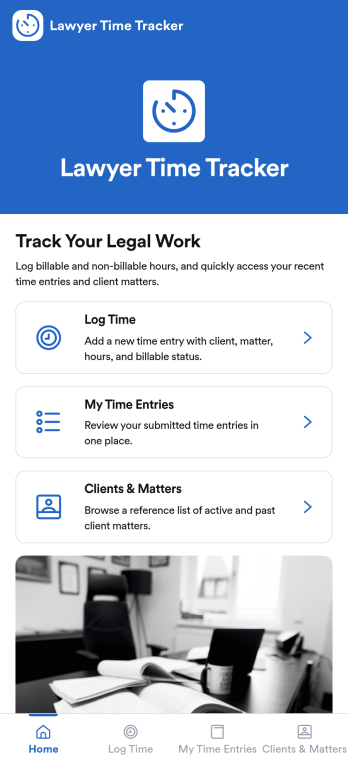
Lawyer Time Tracking App
Lawyer Time Tracking App helps attorneys and legal teams capture billable time in a consistent, matter-based workflow. From a central home screen, team members can log time as they work, review their own time entries, and reference clients and matters so hours are attributed correctly before invoicing. It’s a practical fit for solo practices, boutique firms, and in-house legal departments that need clearer visibility into workload, faster month-end close, and fewer missed billables across calls, research, drafting, and court prep.Jotform makes it easy to turn this experience into a branded, client-ready tool using App Templates and a no-code app builder. With a drag-and-drop interface, you can tailor pages, connect a form for data collection, and keep time records organized in one workflow for self-service entry and review. Share the app via link or QR code, collaborate with your team, and update the layout anytime as your processes evolve.
Go to Category:Activity Tracking Apps
Bail Bond Client Portal App
The Bail Bond Client Portal App gives bail bond agencies a focused digital space for guiding clients and their families through case-related communication. Clients can start case intake, submit document requests, ask questions about payments, and contact the appropriate team from one convenient location. Agencies can use this app template to reduce scattered inquiries, make important actions easier to find, and provide self-service access at any time. It is well suited to bail bond professionals, case coordinators, administrative teams, and clients who need a clear way to begin or follow up on essential requests.Jotform App Templates help organizations create polished digital experiences without writing code. Using Jotform’s no-code app builder and drag-and-drop interface, teams can customize pages, buttons, forms, colors, fonts, and navigation to match their operational needs. Connected forms support consistent data collection, while workflows and notifications can help staff respond to new requests. Once the Bail Bond Client Portal App is ready, it can be shared through a direct link or QR code for convenient mobile access. Agencies can update content as their processes change and keep client resources organized within one branded app.
Go to Category:Legal Apps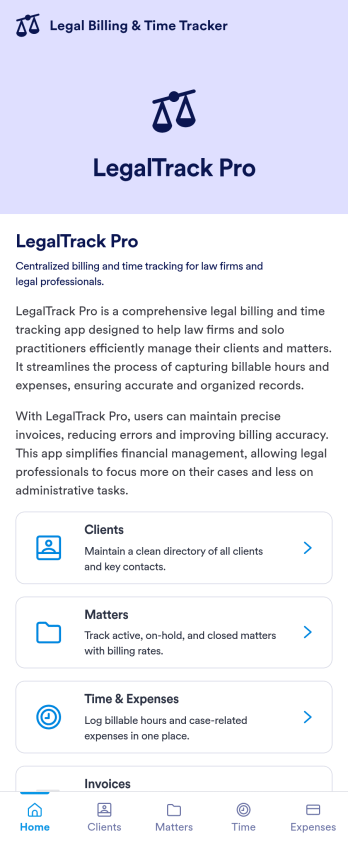
Legal Billing & Time Tracker
Legal Billing & Time Tracker is an app template designed to help law firms, legal professionals, consultants, and organizations efficiently track time spent on legal tasks and manage their billing processes. This template acts as a comprehensive solution for accurate invoicing and practice management, taking into account the unique needs of professionals handling billable work. The template captures critical data, such as hours worked, task details, and billing rates, in an organized manner, thereby providing immediate value by cutting down on administrative tasks and increasing the accuracy of records. By bringing consistency and clarity to the data collection process, it becomes an indispensable part of the everyday workflow of legal professionals. It's perfect for scenarios where one needs to monitor and record billable hours for different clients, making it an excellent fit for law firms and independent legal consultants who handle multiple clients.With Jotform, Legal Billing & Time Tracker can be easily customized to match your brand. The no-code, drag-and-drop interface lets you change forms, choose fonts and colors, upload your logo, and more, without writing a single line of code. Additionally, Jotform’s capacity for collecting electronic signatures makes it simple for clients to authorize invoices directly through the app, streamlining your billing process further. The app offers cross-platform compatibility, enabling your legal team to access and manage their time tracking and billing from anywhere, on any device. This way, you can keep your focus on the legal tasks at hand, while Jotform's Legal Billing & Time Tracker takes care of your operational efficiency.
Go to Category:Tracker Apps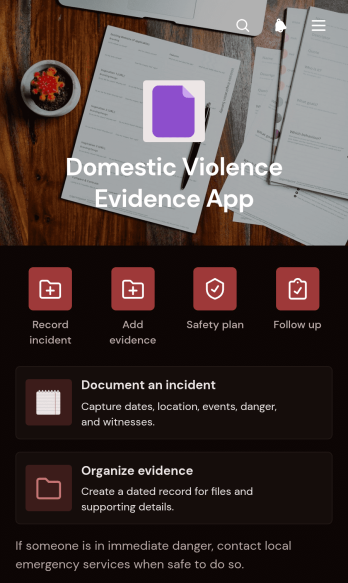
Domestic Violence Evidence App
Domestic Violence Evidence App provides a private, organized space for documenting incidents and maintaining related records. It can support survivors, advocates, counselors, legal support teams, and nonprofit organizations that need a consistent way to record information over time. Users can add an evidence record, organize entries, review individual record details, and retain file references in one accessible location. This can reduce scattered notes, make timelines easier to review, and help users prepare information for conversations with trusted support professionals. The app is not an emergency service or a substitute for legal advice, and access should be managed according to each user’s personal safety needs.Jotform Apps helps organizations turn essential resources and connected processes into convenient digital experiences without coding. Starting with this app template, users can personalize pages through a drag-and-drop interface, connect forms for data collection, and organize navigation around the intended workflow. Branding, text, buttons, and content can be adjusted with the no-code app builder. The finished app can then be shared by link or QR code for mobile-friendly access, making Jotform App Templates useful for guided self-service, record management, and support programs.
Go to Category:Legal Apps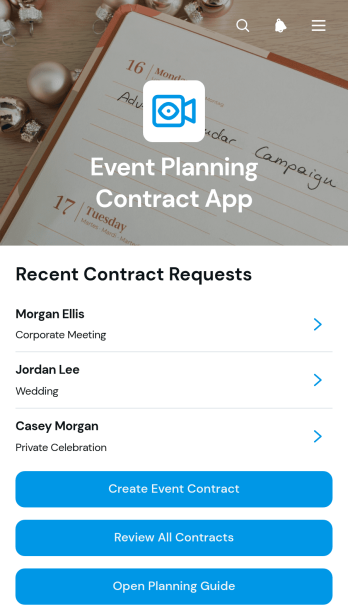
Event Planning Contract App
The Event Planning Contract App is an app template for event planners, coordinators, venues, consultants, and independent professionals who need one place to prepare and manage client agreements. It provides focused access to contract creation, centralized contract review, and a planning guide without making teams search through separate files or disconnected tools. Use it when booking private celebrations, corporate gatherings, community programs, or other managed events where expectations, services, schedules, and costs should be documented clearly. The organized experience helps planners maintain consistent records, revisit client details, reduce missed information, and keep contract tasks connected to the wider planning process.Jotform Apps makes this Event Planning Contract App easy to adapt with a no-code app builder and drag-and-drop interface. Teams can update pages, branding, buttons, and navigation, then connect forms to support data collection and related workflow steps. Jotform App Templates can also bring approvals, payments, tables, and resource links into a mobile-friendly self-service experience. Once customized, the app can be shared through a direct link or QR code, giving staff convenient access from nearly any device while helping the organization maintain a consistent contract process.
Go to Category:Event Planner Apps
Investigation Evidence Management App
The Investigation Evidence Management App brings case records and supporting evidence into one organized, mobile-friendly workspace for investigative teams. Legal departments, workplace investigators, safety teams, insurers, consultants, and internal review groups can use it to browse investigations, examine evidence records, and submit new evidence. Case summaries, assigned investigators, priorities, sources, collection dates, custody statuses, and notes give authorized team members useful context as work progresses. This app template reduces scattered documentation, supports consistent data collection, and makes it easier to locate records when reviewing incidents, claims, complaints, or operational concerns.Jotform provides a no-code app builder that helps teams adapt App Templates to their own processes without programming. Use the drag-and-drop interface to adjust pages, cards, buttons, navigation, colors, and branding, then connect forms, tables, notifications, approvals, and related workflows. The app can be shared through a direct link or QR code for convenient access across devices. With Jotform, organizations can create a focused self-service experience that supports evidence intake, record browsing, team coordination, and ongoing case management from one central location.
Go to Category:Legal Apps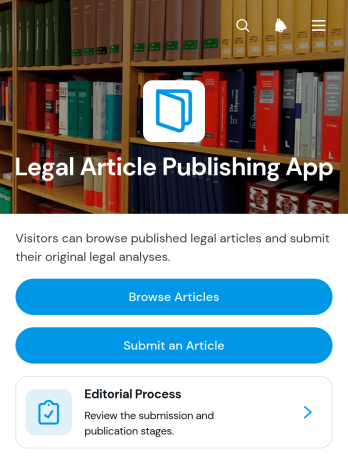
Legal Article Publishing App
Legal Article Publishing App gives law firms, legal publishers, academic departments, professional associations, and editorial teams a central place to collect, review, and present legal writing. Contributors can submit articles for consideration, while editors can review incoming work and guide it through a clearly explained editorial process. Readers can browse published articles and open focused pages showing the author, topic, summary, and full article. This app template helps replace scattered documents and email threads with an organized publishing experience that supports contributors, reviewers, and readers from one accessible destination.Jotform Apps makes it easy to adapt this template without writing code. Use the drag-and-drop app builder to update pages, navigation, colors, typography, and visual elements for your publication. Connect article submissions to forms and tables so editorial teams can organize data collection and maintain a practical workflow as content moves from submission to publication. The finished app can be shared through a direct link or QR code, giving contributors convenient self-service access and helping readers explore legal analysis on mobile or desktop devices.
Go to Category:Legal Apps
Tax And Notary Services App
The Tax And Notary Services App is an app template for tax preparers, notary professionals, consulting offices, and administrative service teams that need a convenient way to manage client requests. Clients can browse available services, review requirements and typical completion times, submit a service request, and check its status from one accessible location. Contact options make it easier to ask for assistance when needed. By bringing service information and request details together, the app supports client self-service, reduces repetitive inquiries, and gives teams a more organized workflow for handling new and returning clients.With Jotform, this Tax And Notary Services App can be adapted using a no-code app builder and an intuitive drag-and-drop interface. Add branded pages, update navigation, revise service content, or connect forms and tables without writing code. The app template supports organized data collection and can help teams keep request information available for follow-up. Publish the finished app with a direct link or QR code so clients can access it from a phone, tablet, or computer. Jotform App Templates also make it simple to expand the experience with approvals, notifications, and other connected workflows as service needs evolve.
Go to Category:Legal Apps
Legal Referral App
The Legal Referral App is a ready-to-use template for legal service teams, referral coordinators, community organizations, consultants, and other groups that connect people with appropriate legal resources. It provides a clear starting point for collecting essential referral details, organizing requests by legal matter type, and reviewing referral progress. Users can also browse relevant resources and view practical guidance before starting a request. By bringing client information, urgency, preferred contact methods, referral pathways, and provider details into one accessible experience, the app helps teams reduce scattered communication, route requests more consistently, and give clients a simpler self-service option.Jotform makes it easy to adapt this app template to an organization’s referral process without writing code. The drag-and-drop App Builder lets teams update pages, navigation, cards, buttons, fonts, colors, and other visual elements while connecting forms and data collection tools to a broader workflow. Teams can publish the finished app through a direct link or QR code for convenient mobile access. With Jotform App Templates, organizations can create a branded referral experience that supports clearer intake, resource navigation, internal collaboration, and timely follow-up.
Go to Category:Legal Apps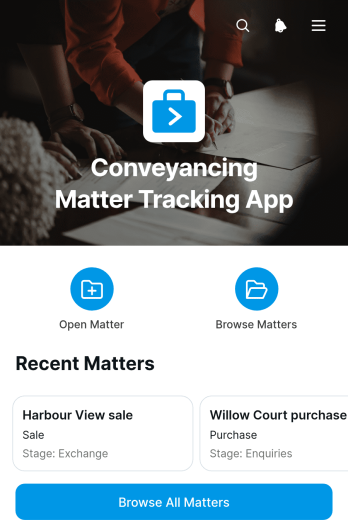
Conveyancing Matter Tracking App
The Conveyancing Matter Tracking App is a centralized workspace for conveyancing firms, property law teams, solicitors, and administrative staff to open matters and monitor property transactions from initial instruction through target completion. Users can browse all active matters, review essential property and client information, and see the matter type and expected completion date without searching across disconnected records. It supports clearer oversight of residential and commercial conveyancing workloads, helps teams prioritize approaching deadlines, and gives authorized colleagues a consistent view of matter details. Firms can use this app template to organize new instructions, coordinate daily case administration, and reduce time spent locating routine updates.Jotform makes the template easy to adapt with a no-code app builder and an intuitive drag-and-drop interface. Teams can modify pages, navigation, branding, and connected forms to reflect their existing workflow, then organize data collection through linked Jotform tools. The app can be shared by a direct link or QR code for convenient access on phones, tablets, and computers. With customizable app templates, connected tables, and automated notifications, Jotform helps conveyancing teams create a practical internal resource that supports collaboration, matter visibility, and day-to-day self-service.
Go to Category:Legal Apps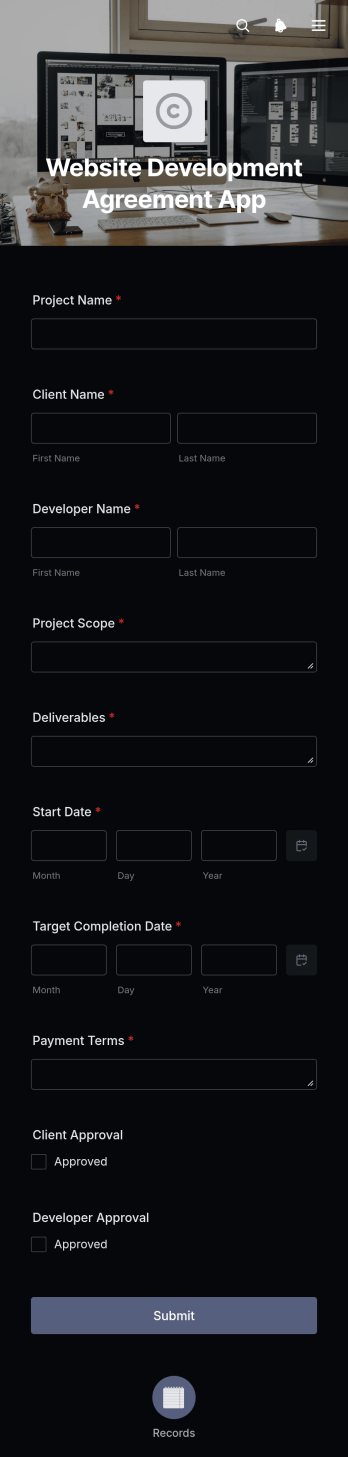
Website Development Agreement App
The Website Development Agreement App provides web development agencies, freelance developers, consultants, and their clients with a central place to review project expectations. It brings scope and deliverables, party responsibilities and payment terms, and approval steps into one accessible experience. Teams can use it when planning a new website, redesign, migration, or ongoing development engagement. By keeping essential agreement information organized and easy to navigate, the app reduces uncertainty, supports clearer project discussions, and gives stakeholders a shared reference throughout the engagement.Jotform App Templates make it easy to adapt this app template to different services, project types, and client processes. With Jotform’s no-code app builder and drag-and-drop interface, users can update pages, branding, navigation, and connected workflows without programming. Forms, tables, payments, and approval flows can be linked to support data collection and client self-service from one mobile-friendly location. Once customized, the app can be shared through a direct link or QR code, helping teams present agreement details and manage project information through a polished digital experience.
Go to Category:Legal AppsAbout Legal Apps
Legal Apps are specialized mobile and web applications designed to streamline and enhance the operational efficiency of legal professionals, law firms, and legal departments across various industries. These apps facilitate the management of client information, document handling, case tracking, and communication within legal services. In real-world scenarios, Legal Apps serve as critical components for law offices looking to digitize workflows, manage client interactions, and ensure compliance with legal standards. By leveraging these apps, legal practitioners can focus more on client advocacy and less on administrative burdens.
Jotform Apps offers a no-code app builder that empowers legal professionals to create highly customized Legal Apps without the need for extensive programming knowledge. Built on Progressive Web App (PWA) technology, Jotform Apps can be easily installed via a browser, eliminating the need for an App Store and ensuring compatibility across all devices, including iOS, Android, tablets, and desktops. With features like centralized data management through Jotform Tables, legal teams can seamlessly integrate data collection and management into their existing workflows, providing a cohesive and efficient operational environment.
Why Use Legal Apps?
- Legal Apps significantly reduce the time spent on administrative tasks by automating data entry and client management processes. This allows legal professionals to allocate more time to critical casework and client interactions, enhancing overall productivity and service quality.
- By providing a centralized platform for document management, Legal Apps enable legal teams to store, access, and share documents securely and efficiently. This reduces the risk of misplacing important documents and ensures that the latest versions are always available to authorized staff.
- The integration of payment processing features allows legal firms to manage client billing and payments directly within the app. This streamlines financial transactions, reduces errors, and improves cash flow management by providing clients with convenient payment options.
- With workflow automation capabilities, Legal Apps help in setting up task reminders, case deadlines, and client follow-ups, ensuring that nothing falls through the cracks. This automation enhances reliability and accountability within legal operations.
- Legal Apps offer robust data security features, safeguarding sensitive client information and ensuring compliance with industry regulations such as GDPR. This builds trust with clients who are assured that their data is handled with stringent security measures.
Common Problems Solved by Legal Apps
- Traditional document management often leads to inefficiencies and potential errors in legal processes. Legal Apps solve this by providing a digital repository where documents can be easily organized, retrieved, and shared among authorized users, reducing the likelihood of errors and enhancing collaboration.
- Legal professionals frequently struggle with managing client relationships and communications effectively. Legal Apps address this issue by centralizing client information and communications, thus facilitating better client service and relationship management.
- Billing and payment collection can be cumbersome and error-prone in legal services. Legal Apps integrate payment systems that streamline billing processes, allowing for accurate invoicing and timely payment collections, which improves financial accuracy and client satisfaction.
- Compliance with legal standards and regulations is a significant concern for legal entities. Legal Apps help by automating compliance checks and maintaining audit trails, ensuring that all legal activities are documented and in line with industry regulations.
- Managing deadlines and tasks manually can lead to missed opportunities and legal repercussions. Legal Apps automate task management and deadline tracking, significantly reducing the risk of oversight and ensuring that all legal obligations are met promptly.
Matching Use Cases to Features
- Legal firms can utilize the Drag-and-Drop Interface to create customized client intake forms, enhancing client onboarding processes. This feature allows for quick adaptation to specific client needs, improving client satisfaction and retention.
- The Store Builder feature can be used to manage and sell legal services or consultations directly through the app, providing a seamless client purchasing experience and expanding the firm's service offerings.
- Push Notifications can be deployed to remind clients of upcoming appointments, case updates, or document submissions, ensuring timely communication and reducing no-shows or delays in case progress.
- By integrating Payment Integrations such as Stripe and PayPal, legal practitioners can offer clients multiple payment options, making it easier to manage and process payments efficiently and securely.
- Publish Options allow legal teams to control access to their apps, whether they are intended for public use, private client interactions, or internal company operations, ensuring that sensitive information is shared with the right audience.
- Sharing Methods such as Direct Link, Email, QR Code, or Social Media allow legal teams to distribute their apps widely and conveniently, ensuring that clients and team members can easily access the app on any device.
- Workflow Automation can be utilized to streamline repetitive processes such as client follow-ups and status updates, freeing up time for legal professionals to focus on more complex legal tasks.
How to Create a Legal App
- Choose a category-relevant template from the Template List or start from scratch.
- Customize using the Drag-and-Drop Interface to tailor the app to your specific legal needs.
- Share via Link, QR Code, or Embed to ensure easy access and distribution among clients and team members.
Top Use Cases for Legal Apps
- For Managers: Legal managers can significantly benefit from Legal Apps by gaining a comprehensive overview of their firm’s operations. They can track case progress, manage staff assignments, and ensure compliance with legal standards all from a single interface, which enhances decision-making and operational efficiency. By centralizing data, managers are equipped to quickly address any issues that arise and ensure a smooth workflow across the firm.
- For Teams: Legal teams can use Legal Apps to collaborate more effectively by sharing documents and case updates in real-time. This promotes a more synchronized approach to handling cases, where team members can easily access the information they need from any device. The automation of routine tasks also allows teams to focus more on strategic planning and client advocacy, improving overall team performance.
- For Customers: Clients benefit from the transparency and convenience provided by Legal Apps. They can easily access updates on their cases, communicate with their legal representatives, and make payments directly through the app. This level of accessibility and ease of use enhances the client experience, builds trust, and encourages stronger client relationships by providing a seamless and professional service.
Summarizing Legal Apps
Legal Apps empower legal professionals and firms to streamline their operations, improve client engagement, and ensure compliance with industry standards. By leveraging features such as workflow automation, payment integrations, and centralized data management, legal entities can enhance their operational efficiency and focus on delivering superior legal services. Jotform Apps, as a no-code app builder, provides the flexibility and ease to create tailored applications that meet the specific needs of the legal industry, making it an invaluable asset for modern legal practices.
Frequently Asked Questions
1) Is it free to create and use Legal apps on Jotform?
Jotform offers a variety of plans, including a free Starter plan that allows users to create and use Legal apps without any initial cost. While the free plan includes essential features and functionalities, users can upgrade to paid plans to access more advanced features and higher usage limits. This flexibility ensures that legal professionals can choose a plan that best fits their operational needs and budget.
2) Are the data and payments collected through the app secure?
Yes, the data and payments collected through Jotform Apps are highly secure. Jotform is committed to maintaining the highest standards of data security and compliance, adhering to GDPR regulations to protect sensitive client information. Payment integrations with trusted providers like Stripe and PayPal further ensure that all financial transactions are processed securely and efficiently.
3) Do I need any coding skills to create a Legal app with Jotform?
No, you do not need any coding skills to create a Legal app with Jotform. The platform is designed to be user-friendly and accessible to all, utilizing a no-code approach that allows legal professionals to build custom apps through a simple Drag-and-Drop Interface. This empowers users to create functional and personalized apps without needing technical expertise.
4) Can I collect payments for services directly through the app?
Yes, you can collect payments for services directly through the Legal app using integrated payment options such as Stripe and PayPal. This feature allows legal professionals to streamline their billing processes, offering clients a seamless and convenient payment experience. By accepting payments directly through the app, firms can enhance their financial management and improve client satisfaction.
5) Does Jotform support offline data collection for Legal apps?
Jotform supports offline data collection, allowing legal professionals to continue gathering information even when an internet connection is unavailable. This is particularly beneficial for legal teams working in areas with limited connectivity, ensuring that data collection processes remain uninterrupted and efficient. Once an internet connection is restored, the collected data can be synced seamlessly to the centralized database.
6) Are Jotform Apps compatible with both iOS and Android devices?
Yes, Jotform Apps are compatible with both iOS and Android devices, as well as tablets and desktops. Built on Progressive Web App (PWA) technology, they can be installed directly via a browser, making them accessible on any device without requiring an App Store. This cross-platform compatibility ensures that users can access and use their Legal apps anytime and anywhere.
7) How can Legal apps improve client communication and engagement?
Legal apps enhance client communication and engagement by providing a centralized platform for interaction. Clients can easily access case updates, submit documents, and communicate with their legal representatives through the app. The use of push notifications keeps clients informed about important developments, fostering transparency and trust in the client-attorney relationship.
8) What role do Legal apps play in ensuring compliance with legal standards?
Legal apps play a crucial role in ensuring compliance by automating compliance checks and maintaining comprehensive audit trails of all legal activities. This reduces the risk of non-compliance and provides legal professionals with peace of mind knowing that their operations adhere to industry regulations. By digitizing compliance processes, legal entities can focus more on strategic legal work rather than administrative compliance tasks.