

Inventory Management Apps

Concession Stand Inventory App
Concession Stand Inventory App helps you keep snack and drink stock under control for busy booths at games, tournaments, fairs, and school events. Use it to view current inventory, add new items as your menu changes, and log restocks so volunteers and staff know what’s available before the next rush. With a dedicated area for operational inventory insights, this app supports day-to-day decisions like which items are running low, what needs replenishing, and how stock levels shift across event days.Jotform makes it easy to turn this Concession Stand Inventory App into a mobile-friendly self-service experience using a no-code app builder with a drag-and-drop interface. Connect your app to Jotform forms and tables for reliable data collection, then share a single link or QR code with your team so updates happen in one place. As your workflow evolves, you can adjust navigation, add pages, and keep inventory records organized without relying on technical help.
Go to Category:Food & Beverage Apps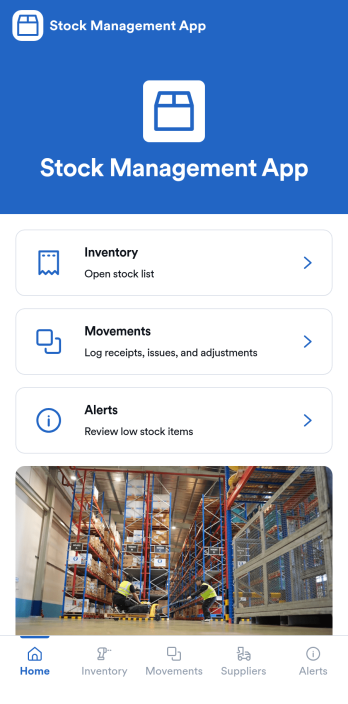
Stock Management App
Stock Management App helps teams track inventory levels, record stock movements, and follow up on low-stock alerts without juggling spreadsheets. It’s a practical fit for retailers, warehouses, small manufacturers, clinics with supply rooms, and field service businesses that need quick visibility into what’s on hand and what’s running out. With dedicated areas for inventory, movements, and alerts, staff can log updates as items are received, used, returned, or adjusted, so everyone works from the same source of truth.Built with Jotform, this app template pairs a mobile-friendly interface with organized navigation and connected data collection. You can add new items, record movements through linked forms, and keep supplier information alongside your inventory records, then share the app as a self-service tool for your team. Using Jotform’s no-code app builder and drag-and-drop interface, it’s easy to adapt the layout, fields, and workflow to match your stock process across one location or multiple sites.
Go to Category:Inventory Apps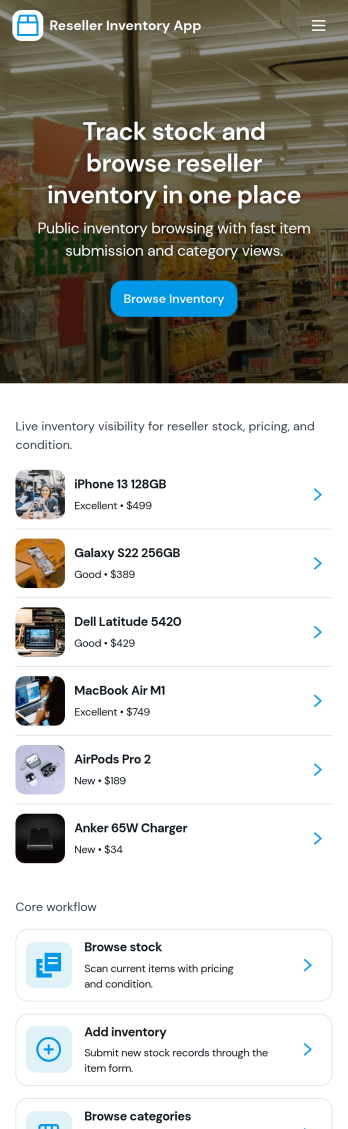
Reseller Inventory App
Reseller Inventory App helps resellers keep product stock organized in one place so you can add new stock, review what you have on hand, and quickly spot items that are running low. It fits common resale workflows like tracking inventory for online marketplaces, pop-up booths, local pickup sales, and small warehouse shelves where quantities change often and accuracy matters. Use it to reduce missed sales from stockouts, avoid overbuying, and keep your catalog up to date as you source new items.With Jotform, you can turn this app template into a branded, self-service inventory experience without coding. Use the drag-and-drop app builder to adjust pages, buttons, and navigation, then connect your inventory list to a form for consistent data collection when you add stock. As your workflow evolves, you can update fields, organize records in Jotform, and share the app with your team so inventory updates stay timely and reliable.
Go to Category:Inventory Apps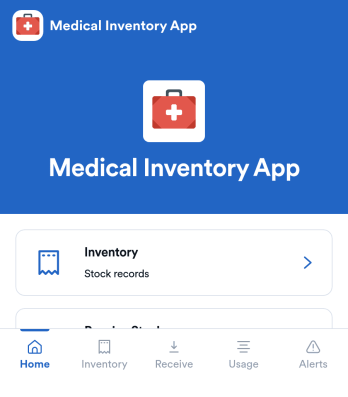
Medical Inventory App
Medical Inventory App helps clinics, private practices, labs, and school health offices keep essential supplies organized so staff can find what they need quickly and record movement as items are received and used. Use it to browse current inventory, capture receiving details when new stock arrives, and maintain a usage log for day-to-day consumption across rooms, carts, or departments. With dedicated areas for low-stock visibility and item-level navigation, teams can reduce guesswork, avoid running out of critical items, and keep purchasing and restocking conversations grounded in up-to-date records.Jotform makes it easy to turn this workflow into a shareable, mobile-friendly experience using App Templates and a no-code app builder. Customize pages with a drag-and-drop interface, connect forms for data collection like stock receiving and usage logging, and keep information organized for simple self-service access. As needs change, you can adjust fields, add steps to your workflow, and publish updates without relying on developers.
Go to Category:Healthcare Apps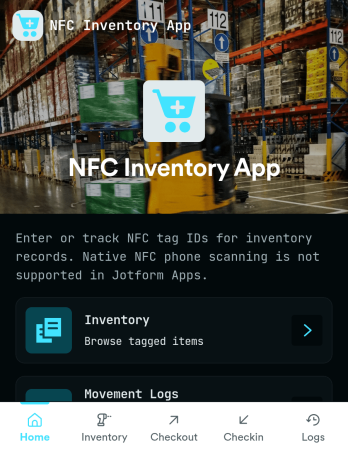
Nfc Inventory App
Nfc Inventory App helps teams track assets by scanning tagged items, logging movement, and reviewing inventory history in one place. It works well for IT closets, equipment rooms, warehouses, school departments, studios, and field teams that need a quick way to identify items, confirm where they are, and keep a consistent record of changes without relying on spreadsheets. With simple navigation for scanning items, recording movement entries, and browsing an asset list, this app supports day-to-day inventory checks, handoffs, and audits while keeping everyone aligned on the latest status.Jotform makes it easy to publish this kind of self-service inventory experience using a no-code app builder and a drag-and-drop interface. Connect your app to a form to collect data consistently, route updates through a workflow your team follows, and keep records organized for fast lookup. You can customize pages, buttons, and branding to match your process, then share the app link with staff so inventory updates happen right when work happens.
Go to Category:Inventory Apps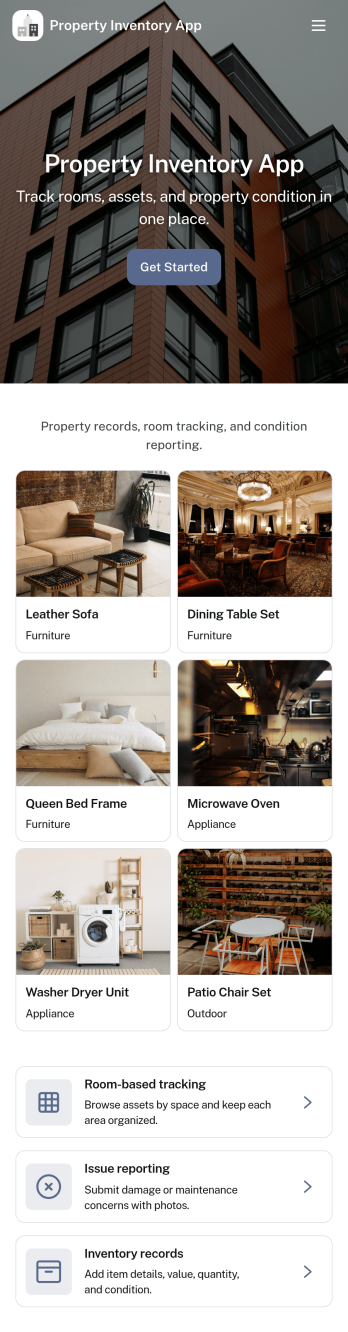
Property Inventory App
Property Inventory App helps you keep a clear, room-by-room record of what’s inside a home, unit, or managed property. Use it to add inventory items with key details, browse rooms to see tracked items at a glance, and flag issues when something is damaged, missing, or needs attention. It’s a practical fit for landlords, property managers, short-term rental hosts, housing providers, and inspection teams who want consistent documentation for turnovers, maintenance follow-ups, and ongoing asset tracking.With Jotform App Templates, you can launch a mobile-friendly inventory experience and tailor it to how your properties operate. Use Jotform’s no-code app builder and drag-and-drop interface to adjust pages, refine data collection fields, and connect the app to your existing workflow, so updates stay organized and easy to share with staff or stakeholders when needed.
Go to Category:Inventory Apps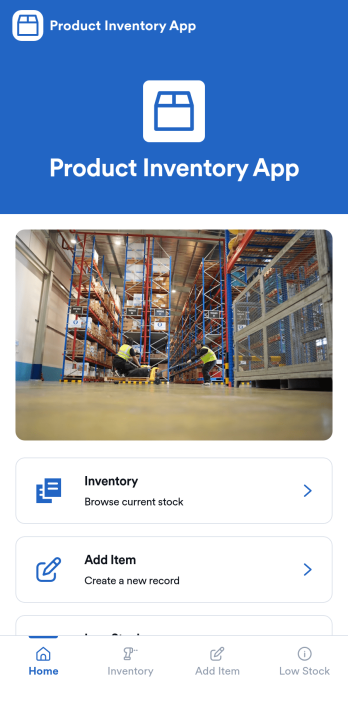
Product Inventory App
Product Inventory App helps teams track stock levels, add new products, and quickly spot items that need replenishing. It fits retail stores, warehouses, e-commerce operations, field teams carrying parts, and any business that wants a clear view of what is on hand without digging through spreadsheets. With inventory browsing, an Add Item flow, and a dedicated Low Stock area, staff can check quantities, keep product details up to date, and trigger restock actions at the right time, whether they are working the sales floor, receiving deliveries, or managing stockrooms.Built with Jotform, this app template gives you a flexible way to organize product data collection and everyday inventory workflow in one place. Use Jotform’s no-code app builder and drag-and-drop interface to adjust pages, navigation, and branding, then connect your inventory form to keep records consistent as your catalog grows. Share the app with your team for self-service access, keep information centralized, and make inventory updates easier to complete from any device.
Go to Category:E-commerce Apps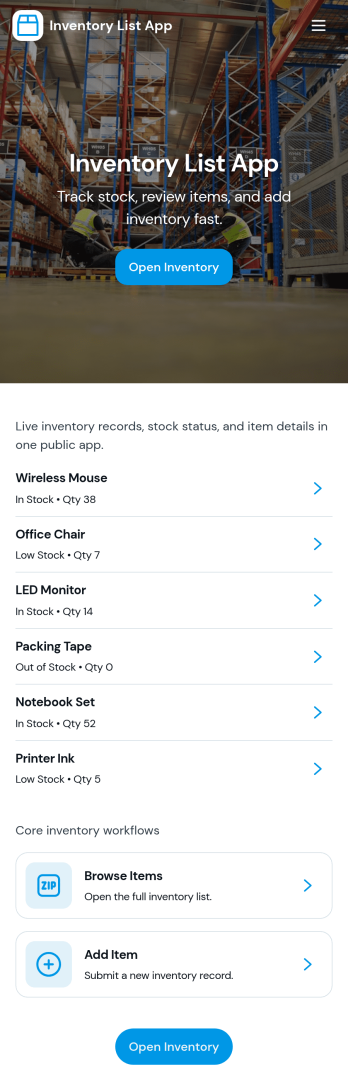
Inventory List App
Inventory List App gives teams a simple way to view what’s in stock, add new items as they come in, and keep a running record of stock movements in one place. It’s a practical fit for retail shops, warehouses, field teams, school departments, studios, and small businesses that need quick visibility into item status without juggling spreadsheets. With an easy Browse Inventory experience and a dedicated Add Item path, staff can keep product records up to date while managers get a clearer picture of what’s available and what needs attention.Built with Jotform App Templates, this app template can be customized in minutes using Jotform’s no-code app builder and drag-and-drop interface. Connect the app to your Jotform form for consistent data collection, then share it as a self-service inventory reference for employees or collaborators. As your workflow evolves, you can adjust pages, navigation, and connected data so inventory updates and stock tracking stay organized across locations and teams.
Go to Category:Inventory Apps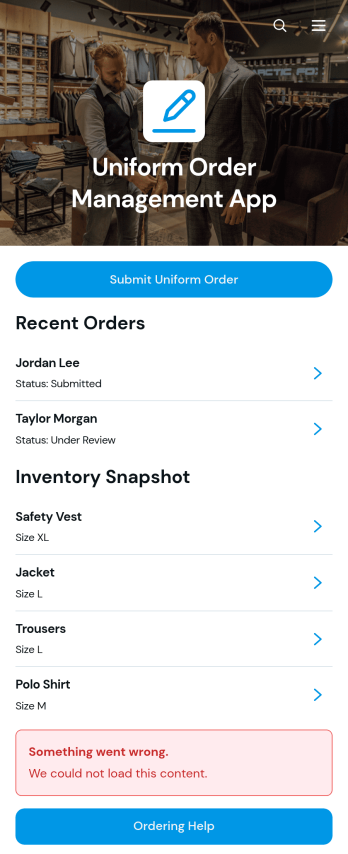
Uniform Order Management App
Uniform Order Management App gives employers a central place to collect employee uniform requests, review order details, monitor fulfillment status, and keep stock information visible. It is well suited to human resources teams, operations managers, warehouse staff, facilities coordinators, and organizations that issue apparel across departments or locations. Employees can submit uniform orders through a guided form, while authorized teams can review requests by employee or uniform type and check available quantities and reorder levels. This reduces scattered requests, improves inventory planning, and helps staff answer delivery and ordering questions with consistent information.Jotform makes this app template easy to adapt without coding. Using the drag-and-drop app builder, teams can update pages, navigation, colors, fonts, buttons, and branding to match their ordering workflow. Connected forms and tables support data collection, inventory organization, and ongoing order management in one mobile-friendly experience. Publish the app through a direct link or QR code to offer convenient self-service access, then refine the layout and connected processes as uniform needs change.
Go to Category:Order & Shipping Portal Apps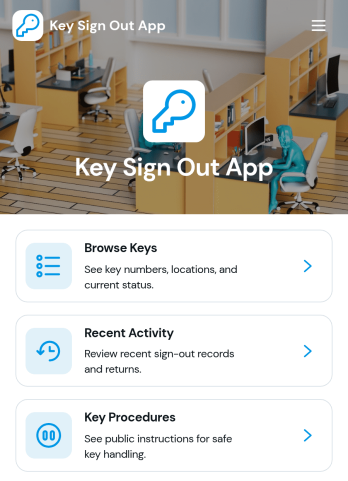
Key Sign Out App
The Key Sign Out App is an app template for recording who has borrowed a key, when it was checked out, and when it was returned. It gives facilities teams, office administrators, property managers, schools, hospitality businesses, warehouses, and service departments a central place to oversee shared keys. Users can browse available keys and review their locations and current status before signing one out. They can also record returns and check recent activity, helping teams maintain clear custody records, resolve questions about missing keys, and replace paper logs or scattered messages. Built-in procedure access can reinforce consistent handoff practices for employees, contractors, and other authorized borrowers.Jotform makes this Key Sign Out App easy to adapt without writing code. Use the no-code app builder and drag-and-drop interface to adjust pages, navigation, colors, fonts, and branding for your organization. You can connect forms and tables to support data collection, organize key records, and create a workflow that fits daily operations. As one of Jotform’s customizable App Templates, it can be shared through a direct link or QR code for convenient mobile access. Teams can publish a polished self-service experience that keeps sign-outs, returns, status checks, procedures, and activity records accessible from one location.
Go to Category:Logbook Apps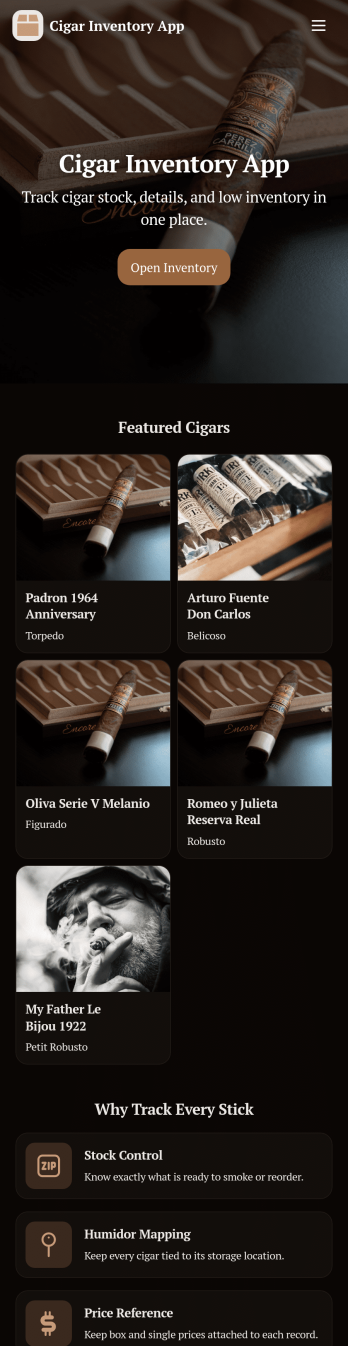
Cigar Inventory App
Cigar Inventory App keeps your humidor or retail stock organized by giving you a simple place to browse what’s on hand, log incoming boxes, and document adjustments when counts change. It’s a practical fit for cigar shops, lounges, distributors, and serious collectors who want clearer visibility across brands and lines without relying on scattered notes or spreadsheets. With an Inventory view for quick lookups, a Receive Stock area for adding new product, and an Adjustments section for corrections, teams can keep day-to-day stock records consistent and easier to trust.Jotform makes it easy to publish and manage app templates like this with a no-code app builder and a drag-and-drop interface. Connect buttons in your app to forms and tables for fast data collection, keep inventory workflows moving with shared access for staff, and make self-service navigation simple on any device. When you’re ready, you can customize pages, branding, and the way inventory information is displayed so the app matches how you track cigars in real life.
Go to Category:Food & Beverage Apps
Purchase Order App
Purchase Order App gives teams a simple place to create new purchase orders, review recent orders, and route requests for approval without juggling spreadsheets or scattered email threads. It works well for office managers, operations teams, procurement coordinators, and department leads who need consistent purchasing records and a clear handoff between requesters and approvers. With dedicated areas for starting a new order, browsing recent activity, and checking approvals, the app supports day-to-day purchasing for supplies, services, and internal needs across one or multiple locations.Jotform helps you turn this workflow into a shareable, self-service experience using App Templates and a no-code app builder. Customize the pages with a drag-and-drop interface, connect the app to the included form for data collection, and keep order information organized for quick viewing. You can publish the Purchase Order App as a link for your team, update content as your process evolves, and build a smoother workflow from request to approval using Jotform.
Go to Category:Finance & Accounting Portal Apps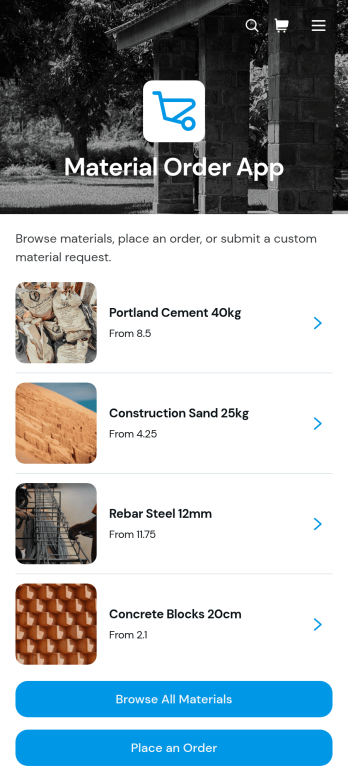
Material Order App
Material Order App is a ready-to-use ordering experience for teams that need a central place to find materials and submit requests. Employees, contractors, construction crews, warehouse staff, purchasing teams, and operations managers can browse a material catalog, review unit prices and availability, and place an order through a connected form. It replaces scattered product lists and informal requests with a consistent self-service process, helping organizations reduce ordering mistakes, give requesters clearer information, and keep material needs easier to review. It is especially useful for job sites, workshops, facilities, warehouses, and businesses that regularly distribute supplies across teams.With Jotform Apps, organizations can adapt this app template without writing code. The no-code app builder and drag-and-drop interface make it easy to update catalog content, adjust navigation, apply company branding, and connect forms, tables, approvals, or other workflow steps. Teams can use the Material Order App to support organized data collection while sharing it through a direct link or QR code for convenient mobile access. Jotform App Templates also provide a practical starting point for expanding the experience as inventory processes, purchasing rules, and operational needs change.
Go to Category:Inventory Management Apps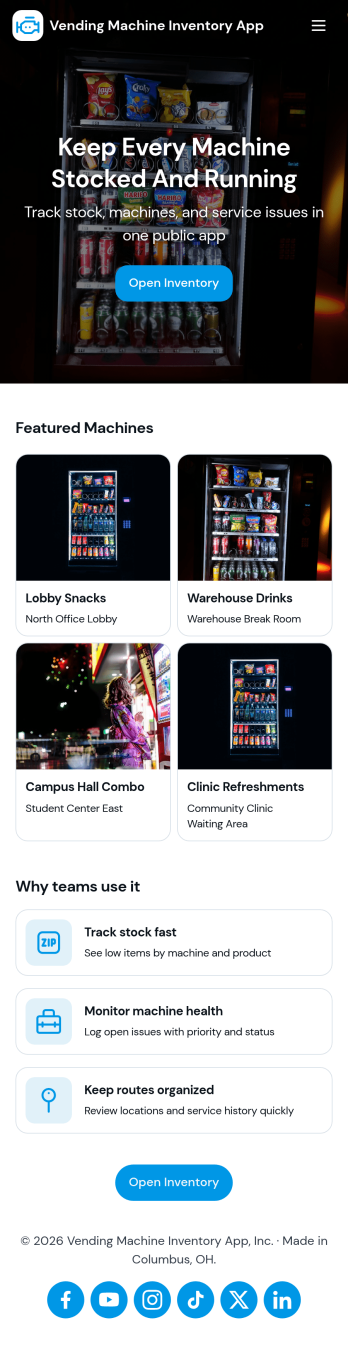
Vending Machine Inventory App
Vending Machine Inventory App helps vending operators and route drivers keep product levels organized across machines and locations while making day-to-day restocking easier to manage. Use the Inventory area to review what’s on hand per machine, then jump into Restock to log restock entries as you refill slots and track what was added on each visit. The Inspect section supports routine checks so teams can record machine condition and keep service notes consistent across the route.Jotform makes it simple to turn this kind of workflow into a shareable, mobile-friendly experience using App Templates and a no-code app builder. With a drag-and-drop interface, you can adjust pages, buttons, and navigation to match your routes, machine IDs, and products, then connect forms and tables to keep data collection and workflow steps in one place. Share the app with your team through a link or QR code so updates happen right at the machine, not back at the office.
Go to Category:Inventory Apps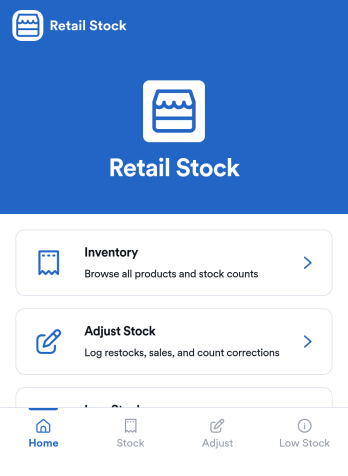
Retail Stock App
Retail Stock App helps stores track inventory levels, record stock coming in, and stay on top of low-quantity items before they become lost sales. It’s a practical fit for shop owners, floor managers, and back-office teams handling multiple SKUs, seasonal products, or fast-moving items who need a simple place to review what’s on hand and what needs attention. With dedicated areas for inventory browsing, stock-in logging, and low-stock review, the app supports day-to-day stock control without relying on scattered notes or disconnected spreadsheets.Jotform makes it easy to build and publish App Templates like this one with a no-code app builder and a drag-and-drop interface that adapts to your workflow. Connect the app to forms and tables to support ongoing data collection, keep a clear record of stock movements, and create a self-service experience for staff who need quick access on the sales floor or in the stockroom. As your operation grows, you can adjust pages, add new steps, and route updates to the right people, all in one Jotform workflow.
Go to Category:Inventory Apps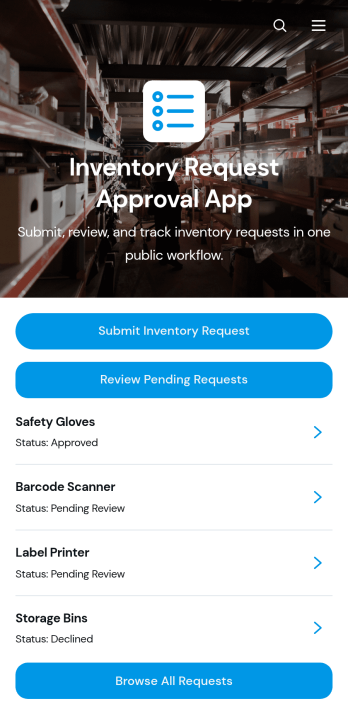
Inventory Request Approval App
Inventory Request Approval App gives employees, department leads, warehouse teams, and purchasing managers one place to submit, review, and manage internal inventory requests. Staff can request an item, specify the quantity and required date, and provide requester and department information. Reviewers can browse all requests, focus on pending entries, open detailed request records, and contact requesters when clarification is needed. This app template is well suited to offices, warehouses, retailers, schools, hospitality businesses, and growing organizations that want clearer oversight of supply demand. It reduces scattered emails, improves visibility across departments, and helps teams make purchasing and allocation decisions using consistent information.Jotform App Templates make it easy to adapt this experience to an organization’s inventory workflow without coding. Using Jotform’s no-code app builder and drag-and-drop interface, teams can update pages, buttons, branding, and navigation while connecting forms, tables, notifications, and approval steps. The finished app can support employee self-service and organized data collection from any device. Share it through a direct link or QR code so requesters and reviewers can access the right actions wherever work happens.
Go to Category:Inventory Management Apps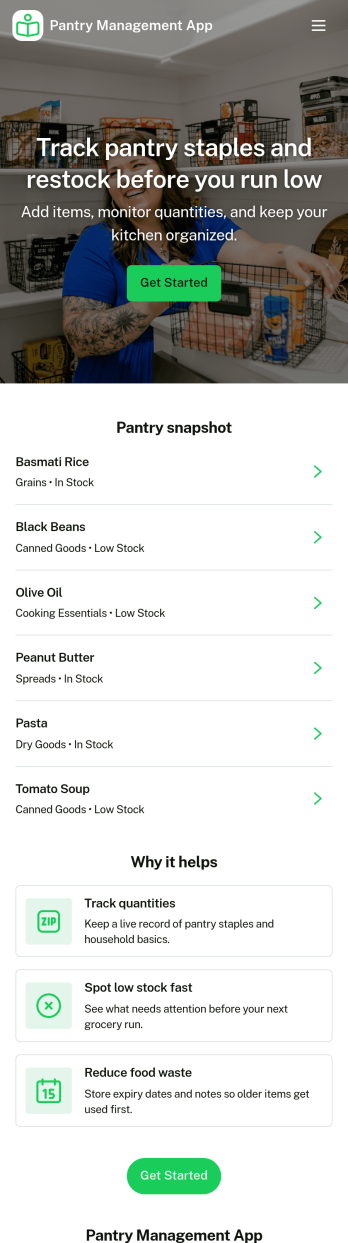
Pantry Management App
Pantry Management App helps households, shared kitchens, and small teams keep track of what’s on hand so restocking is timely and waste is reduced. Use it to review pantry stock at a glance, add new items as they come in, and open a simple review area to double-check what needs attention before the next grocery run. It’s a practical fit for families, roommates, meal-prep enthusiasts, and community kitchens that want one place to browse items and maintain consistency.With Jotform, you can publish this app template and tailor it to your routine using a no-code app builder and a drag-and-drop interface. Connect the app to a form for reliable data collection, keep records organized for quick self-service browsing, and adjust pages and navigation so everyone knows where to view stock, add items, and review updates. Share the app with a link or QR code to make pantry upkeep easier for everyone involved.
Go to Category:Inventory Apps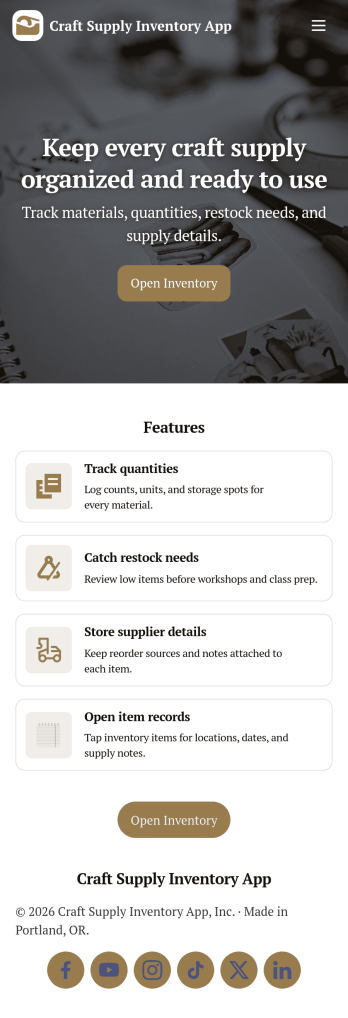
Craft Supply Inventory App
A craft supply inventory app gives you a practical way to organize and monitor the materials that keep your projects moving, from paper, vinyl, and paint to beads, fabric, and tools. This template is useful for small craft businesses, Etsy-style sellers, art classrooms, community studios, and hobby groups that need a clear view of what’s on hand, what’s running low, and what needs to be reordered. With an inventory KPI dashboard and an easy form button to add new supply items, your team can keep records current without digging through spreadsheets or scattered notes.Built with Jotform App Templates, this craft supply inventory app can be tailored with a no-code app builder and a drag-and-drop interface so it fits your workflow. Connect the inventory list to item detail pages for quick lookup, and use restock request forms to collect reorder needs in one place for simple self-service. Jotform helps you centralize data collection, keep inventory and requests organized, and share the app through a link so collaborators can log items and submit restock requests from anywhere.
Go to Category:Inventory Apps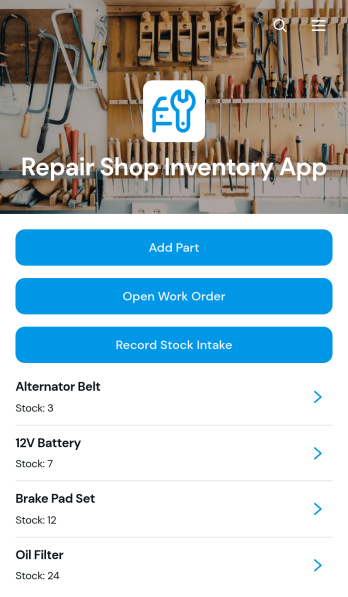
Repair Shop Inventory App
The Repair Shop Inventory App is an app template for repair businesses that need a shared view of parts, stock movements, and parts assigned to active work orders. Shop owners, inventory coordinators, service managers, and technicians can use it to browse part records, record stock intake, open work orders, and document parts used during repairs. It helps teams reduce missing inventory records, avoid delays caused by unavailable parts, and connect material usage with the appropriate repair job. Independent garages, vehicle service centers, equipment repair shops, and maintenance teams can adapt the app to support purchasing decisions, daily stock checks, cost awareness, and clearer coordination between the storeroom and service floor.Jotform Apps makes it easy to turn this Repair Shop Inventory App into a branded, mobile-friendly workspace without writing code. Customize pages and navigation through the drag-and-drop interface, connect forms and tables for data collection, and organize inventory workflows in one accessible location. Jotform App Templates can be adjusted to match a shop’s terminology, processes, and visual identity, then shared by direct link or QR code. Teams can also add notifications, approval steps, or other connected resources as their operations grow, giving employees convenient self-service access to the tools they need.
Go to Category:Inventory Management Apps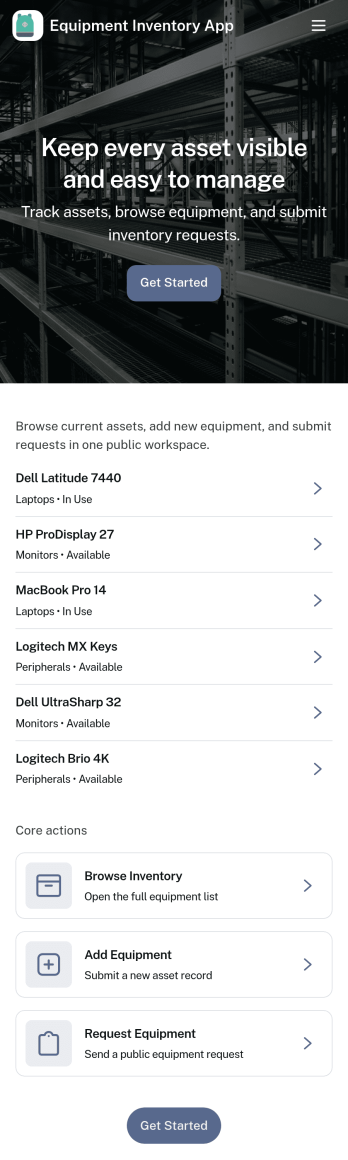
Equipment Inventory App
Equipment Inventory App helps teams catalog, locate, and manage shared equipment in one place, so it’s easier to know what you have, who is using it, and where it’s supposed to be. Use it to centralize equipment records, review an asset overview for quick context, and track equipment movement with a dedicated log. It’s a practical fit for IT departments, facilities teams, schools, construction crews, studios, and any organization that frequently checks gear in and out across people, rooms, job sites, or vehicles.Built with Jotform App Templates, this app template turns everyday inventory tracking into a mobile-friendly self-service experience. Use Jotform’s no-code app builder and drag-and-drop interface to tailor pages, add your branding, and connect the included intake and movement log forms to your workflow. You can also route entries to Jotform Tables for faster search and organization, and share the app link with staff so data collection stays consistent wherever equipment is used.
Go to Category:Equipment Maintenance Software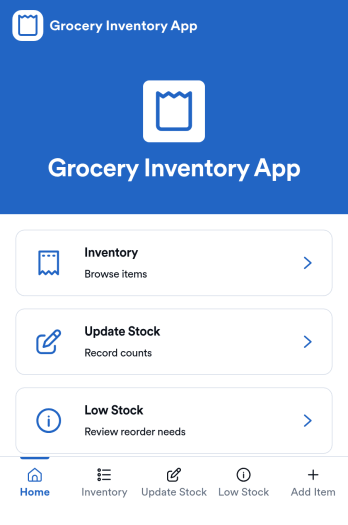
Grocery Inventory App
Grocery Inventory App helps you keep a clear, up-to-date view of grocery items and stock levels in one place. Use it to browse your full inventory list, open individual item details, and quickly record stock changes when new deliveries arrive or shelves need replenishing. It’s a practical fit for small grocery stores, corner markets, food co-ops, pantry managers, and any team that needs a simple way to add items, monitor counts, and surface low-stock products before they become outages.Built with Jotform, this app template pairs a mobile-friendly interface with connected data collection so your team can update inventory from the floor, the back room, or receiving. With Jotform’s no-code app builder and drag-and-drop interface, you can tailor the pages to match your categories and processes, route staff to the right actions like adding items or updating stock, and keep inventory workflows consistent as your product list grows.
Go to Category:Food & Beverage Apps
Material Request Management App
The Material Request Management App is an app template for collecting, organizing, and reviewing internal requests for supplies and materials. Employees can submit a request, browse available materials, and view organized request records from one location. Procurement, warehouse, construction, facilities, and operations teams can use it to capture requester details, department information, quantities, required dates, and the purpose of each request. Centralizing these details reduces incomplete requests, improves visibility into material needs, and helps teams plan purchasing and distribution.Jotform App Templates make it easy to create a branded experience without coding. Customize this Material Request Management App with the no-code app builder and drag-and-drop interface, then connect forms, tables, notifications, and workflows to support data collection and follow-up tasks. Teams can adjust pages, navigation, colors, and content to match their processes. Once published, the app can be shared by direct link or QR code, giving employees convenient mobile-friendly self-service access wherever requests originate.
Go to Category:Inventory Management Apps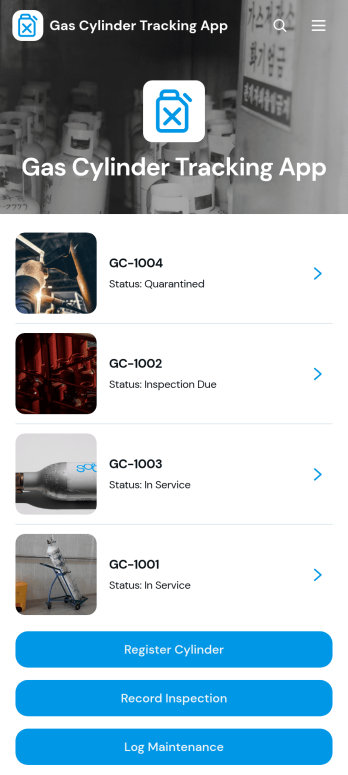
Gas Cylinder Tracking App
Gas Cylinder Tracking App is an app template for monitoring cylinder inventory, locations, ownership, inspection schedules, and maintenance activity from one accessible workspace. It helps warehouse teams, industrial suppliers, maintenance providers, field service crews, laboratories, and facilities managers maintain clearer records as cylinders move between storage areas, job sites, and responsible users. Staff can register cylinders, review individual cylinder details, record inspections, and log maintenance without relying on scattered spreadsheets or paper logs. Centralized information makes it easier to identify each cylinder, confirm where it is stored, plan upcoming checks, and review operational activity when coordinating daily work.Jotform App Templates provide a practical starting point for creating purpose-built business tools without coding. With Jotform’s no-code app builder and drag-and-drop interface, teams can customize the Gas Cylinder Tracking App with branded pages, navigation, forms, and connected workflows. Collected data can be organized through Jotform Tables, while notifications and related processes help teams respond to new records and updates. Publish the finished app with a direct link or QR code to give authorized staff convenient mobile access and support consistent data collection across warehouses, facilities, and field locations.
Go to Category:Inventory Management Apps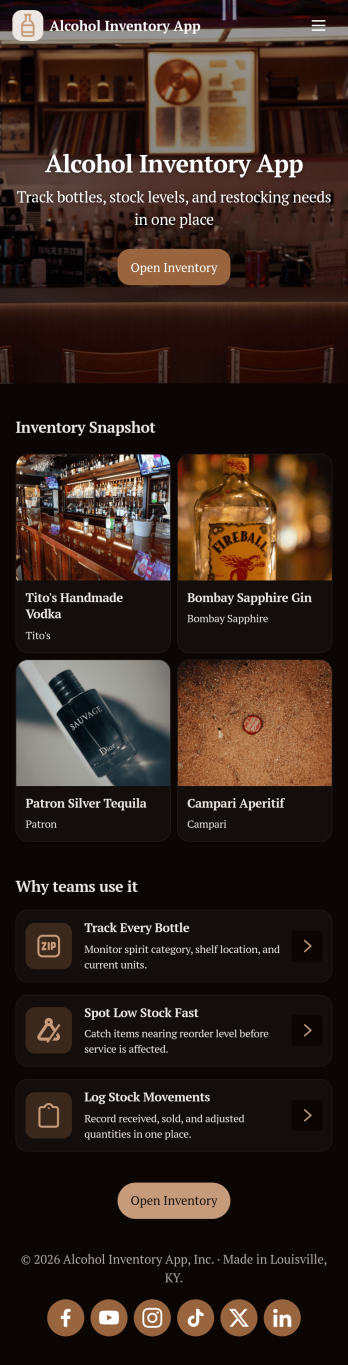
Alcohol Inventory App
Alcohol Inventory App helps bars, restaurants, tasting rooms, and retail beverage teams keep a clear, up-to-date view of what’s on hand and what needs attention. It brings your bottle list into one place for quick inventory browsing, provides a simple way to log stock changes, and highlights low-stock items so managers can act before service is impacted. Whether you’re tracking a busy back bar, a storeroom, or multiple shelving areas, this app supports tighter counts, fewer missed reorders, and smoother handoffs between shifts.With Jotform App Templates, you can turn your inventory workflow into a mobile-friendly, self-service experience without coding. Use Jotform’s no-code app builder and drag-and-drop interface to tailor pages, buttons, and lists to match your venue’s process, then connect your app to forms and tables for consistent data collection. Share a single link with staff, keep stock logs organized, and update the app as your menu or product mix changes.
Go to Category:Food & Beverage AppsAbout Inventory Management Apps
Inventory Management Apps are specialized mobile/web apps designed to streamline the tracking, organizing, and management of inventory across various industries. These apps are essential for businesses that deal with large volumes of inventory, such as retail, manufacturing, logistics, and warehousing. By using these apps, companies can efficiently manage stock levels, track product movements, and maintain accurate inventory records, ensuring smooth operations and reducing the risk of stockouts or overstocking. From supply chain managers to small business owners, these apps support a range of real-world workflows, thereby enhancing productivity and operational efficiency across industries.
Jotform Apps, as a no-code app builder, provides the perfect platform for creating Inventory Management Apps with ease and precision. Utilizing Progressive Web App (PWA) technology, Jotform Apps can be installed directly from a browser, eliminating the need for App Store downloads, and ensuring seamless functionality across iOS, Android, tablets, and desktops. The integration with Jotform Tables allows for centralized data management, providing users with the ability to access and manage inventory data efficiently. This workflow-oriented approach ensures that businesses can build and deploy custom inventory management solutions that align with their specific operational needs.
Why Use Inventory Management Apps?
- Inventory Management Apps provide real-time visibility into stock levels, enabling businesses to make informed purchasing and stocking decisions. This capability ensures that companies can maintain optimal inventory levels, thereby reducing the risk of stockouts or excessive stock that ties up capital.
- These apps facilitate streamlined inventory audits and tracking, reducing the time and effort required to perform these tasks manually. By automating inventory checks, businesses can ensure accuracy and consistency in their inventory records, which is critical for financial reporting and operational efficiency.
- With built-in features for data analytics, Inventory Management Apps help businesses identify trends and patterns in inventory usage, leading to more strategic decision-making. This data-driven approach allows companies to optimize their supply chain processes and improve their overall inventory management strategy.
- The use of Inventory Management Apps enhances collaboration across departments by providing a centralized platform for inventory data. This transparency ensures that all stakeholders have access to the same information, reducing miscommunication and improving coordination.
- These apps support the integration of payment systems, allowing businesses to manage sales and inventory from a single platform. By enabling payment processing within the app, businesses can streamline their sales operations and improve the customer experience.
Common Problems Solved by Inventory Management Apps
- Many businesses face challenges with inaccurate inventory counts, leading to discrepancies in stock levels. Inventory Management Apps address this issue by providing real-time tracking and automated updates, ensuring that inventory records are always current and accurate.
- Overcoming the inefficiencies associated with manual inventory processes is a significant pain point for many industries. By automating these processes, Inventory Management Apps reduce the time and labor costs involved, allowing businesses to focus on more strategic activities.
- Managing inventory across multiple locations can be complex and prone to errors. Inventory Management Apps offer centralized data management, enabling businesses to track and manage inventory across various sites from a single platform, thus enhancing operational efficiency.
- Businesses often struggle with forecasting demand accurately, which can lead to overstock or stockouts. Inventory Management Apps provide data analytics and reporting features that help businesses anticipate demand more accurately, ensuring better inventory planning and management.
Matching Use Cases to Features
- For businesses looking to streamline their inventory tracking, the Drag-and-Drop Interface allows for easy customization of app layouts to suit specific inventory categories and processes. This feature enables users to create intuitive interfaces that facilitate efficient data entry and retrieval, enhancing usability and productivity.
- Companies that need to manage sales alongside inventory can benefit from Payment Integrations such as Stripe and PayPal. This feature allows businesses to process transactions directly within the app, ensuring seamless integration between sales operations and inventory management.
- For organizations that require consistent communication with their teams, Push Notifications provide a reliable method of sending updates and alerts regarding inventory status or changes. This feature ensures that all relevant stakeholders are informed in real-time, improving response times and decision-making.
- Businesses operating in multiple locations or with remote teams can utilize the Publish Options to control app access. By setting apps to Public, Private, or Company-only, businesses can maintain control over who can view and interact with the inventory data, ensuring data security and compliance.
- The need for efficient data sharing is addressed through various Sharing Methods, including Direct Link, Email, QR Code, and Social Media. These options provide flexibility in how inventory apps are distributed and accessed, facilitating easy collaboration and distribution of inventory information.
How to Create a Inventory Management App
- Choose a category-relevant template from the Template List or start from scratch.
- Customize using the Drag-and-Drop Interface to tailor the app to your specific inventory needs.
- Share via Link, QR Code, or Embed to distribute the app to your team or stakeholders.
Top Use Cases for Inventory Management Apps
- For Managers: Inventory Management Apps serve as a powerful tool for managers who need to maintain oversight of inventory levels and operations. They can leverage real-time data analytics to make informed decisions about purchasing and stocking, ensuring that the company's inventory aligns with business goals. Additionally, managers can use these apps to streamline reporting processes, reducing the time spent on manual data entry and improving the accuracy of inventory records. This enhanced visibility and control over inventory operations can lead to cost savings and improved operational efficiency.
- For Teams: Teams can greatly benefit from the collaborative features of Inventory Management Apps, which provide a centralized platform for accessing and updating inventory information. By enabling seamless communication and data sharing among team members, these apps help ensure that everyone is working with the most current inventory data. This collaboration reduces the risk of miscommunication and errors, leading to more efficient workflows and improved team productivity. Teams can also use the app's automation features to streamline routine tasks, freeing up time for more strategic initiatives.
- For Customers: For customers, Inventory Management Apps enhance the shopping experience by providing accurate information about product availability and stock levels. Customers can make informed purchasing decisions based on real-time data, leading to increased satisfaction and loyalty. Moreover, the integration of payment systems within the app allows for a seamless checkout process, further improving the customer experience. By keeping customers informed and engaged, businesses can build stronger relationships and drive repeat business.
Summarizing Inventory Management Apps
Inventory Management Apps are essential for businesses looking to optimize their inventory processes and improve operational efficiency. By providing real-time data, automation, and collaboration features, these apps help businesses reduce errors, save time, and make more informed decisions. Jotform Apps, with its no-code app builder and PWA technology, offers a versatile platform for creating customized inventory management solutions that align with specific business needs. Whether managing inventory for a small business or a large corporation, these apps provide the tools necessary to streamline operations and enhance productivity.
Frequently Asked Questions
1) Is it free to create and use Inventory Management apps on Jotform?
Jotform offers a free Starter plan that allows users to create and use Inventory Management apps without incurring any costs. This plan provides access to basic features, enabling businesses to build and deploy apps tailored to their inventory management needs. For users requiring more advanced features or higher usage limits, Jotform offers paid plans that provide additional capabilities and support. The flexibility of Jotform's pricing plans ensures that businesses of all sizes can find a solution that fits their budget and requirements.
2) Are the data and payments collected through the app secure?
Yes, security is a top priority for Jotform, and the data and payments collected through Inventory Management apps are protected by advanced security measures. Jotform complies with industry standards and regulations, including GDPR, to ensure data privacy and protection. Payment integrations with providers like Stripe and PayPal offer secure transactions, utilizing encryption and other security protocols to safeguard sensitive information. This commitment to security ensures that businesses and their customers can trust the integrity of the data and transactions processed through Jotform apps.
3) Do I need any coding skills to create a Inventory Management app with Jotform?
No coding skills are necessary to create a Inventory Management app with Jotform, thanks to its intuitive no-code app builder. Users can easily design and customize their apps using the Drag-and-Drop Interface, making it accessible to individuals without technical expertise. This user-friendly approach empowers businesses to quickly develop and deploy custom inventory management solutions without the need for expensive development resources. Jotform's platform is designed to simplify the app creation process, enabling users to focus on optimizing their inventory workflows.
4) Can I collect payments for services directly through the app?
Yes, Jotform allows you to integrate payment systems, such as Stripe and PayPal, directly into your Inventory Management app. This feature enables businesses to process payments for services or products within the app, providing a seamless experience for users and customers alike. By consolidating payment processing with inventory management, businesses can streamline their operations and improve efficiency. This capability is particularly beneficial for retail and e-commerce businesses that need to manage sales and inventory in one place.
5) Does Jotform support offline data collection for Inventory Management apps?
Yes, Jotform supports offline data collection through its Mobile Forms feature, which is particularly useful for Inventory Management apps. This capability allows users to collect inventory data even when they are not connected to the internet, ensuring that operations can continue uninterrupted in areas with limited connectivity. Once a connection is reestablished, the data is automatically synced to the centralized database, ensuring that all inventory information remains up-to-date. This feature enhances the flexibility and reliability of inventory management processes across various environments.
6) Are Jotform Apps compatible with both iOS and Android devices?
Jotform Apps are designed to be compatible with both iOS and Android devices, thanks to their Progressive Web App (PWA) technology. This cross-platform capability ensures that users can access and use Inventory Management apps seamlessly on any device, including tablets and desktops, without the need for App Store downloads. The versatility of Jotform Apps allows businesses to provide their teams and customers with consistent access to inventory data, regardless of the device they are using. This compatibility enhances the accessibility and convenience of inventory management solutions.
7) How can Inventory Management apps benefit the retail industry?
Inventory Management apps offer significant benefits to the retail industry by providing real-time tracking of stock levels and streamlining inventory audits. Retailers can use these apps to optimize their stock management processes, reducing the risk of stockouts or overstocking. Additionally, the integration of payment systems within the app allows retailers to manage sales and inventory from a single platform, improving operational efficiency and enhancing the customer experience.
8) Can Inventory Management apps be used for warehouse operations?
Yes, Inventory Management apps are highly effective for warehouse operations, as they provide a centralized platform for tracking inventory across multiple locations. These apps facilitate efficient inventory management by enabling real-time updates and data sharing, reducing the risk of errors and improving coordination among warehouse staff. By automating routine tasks and providing actionable insights through data analytics, these apps help warehouses optimize their operations and improve productivity.